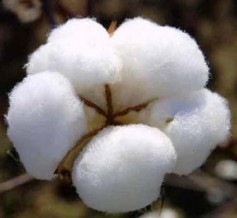
Source: Fibre2Fashion

Plexus Cotton Limited reported that New York (NY) futures extended their decline this week, as July fell another 271 points to close at 73.94 cents, while December dropped 323 points to close at 70.67 cents.
The market continued to cave in as heavy options-related selling (put buying/call selling) depressed values to a low of 70.53 cents in July, which means that the market was trading an astonishing 22 cents lower than a month earlier.
The steep declines on Tuesday and Wednesday had the characteristics of a panic-driven capitulation move, which often marks a tradable bottom.
The selling seemed to be driven by a combination of grower hedging, spec selling and trade long liquidation. When we analyzed the latest CFTC report, which lists positions as of May 15, we noticed a rather large increase in new trade longs of over 17’000 contracts.
The majority of these new longs were probably created by short puts that the trade had written, as they quickly gained ‘long delta’ when the market fell from around 87 to 77 cents that week.
On May 15 there were around 48’000 July and 36’000 December puts open with strike prices between 70 and 90 cents. As traders scrambled to defend against this avalanche of unexpected and unwanted new longs, it caused the market to cascade lower.
Last week we were of the opinion that the market would probably regain its balance of power near 70 cents and we still believe this to be the case. Most traders who were on the wrong side of the market with their short puts should have contained their damage by now and growers are less likely to aggressively add hedges once the market dips below 70 cents.
At the same time we are finally seeing some mill interest at these levels, even for extended coverage.
Today’s US export sales report gave the bulls something to cheer about after all the doom and gloom, as 239’000 running bales of Upland and Pima were sold last week for both marketing years combined. Once again there were 15 markets on the buyers’ list, with China leading the way.
Shipments were also very good at 282’300 running bales. For the current season total commitments are now at around 12.4 million statistical bales, whereof 9.2 million bales have so far been exported.
Although we may get a few short-lived bounces here and there, most analysts seem to agree that 2012/13 has to be written off as a ‘lost season’, with little hope for prices to recover substantially from current levels.
The problem the market is facing is that Northern Hemisphere crops are for the most part planted and that we probably have to live with an abundance of cotton for at least another year.
However, when we project deeper into the future, there are some developments that lead us to believe that cotton prices won’t stay cheap forever. Until about six or seven years ago, there was an oversupply of just about every agricultural commodity, be it wheat, corn, soybeans or cotton.
Prices were depressed across the spectrum and while US farmers had the safety net of the farm program, production in other areas of the globe got discouraged. Then two things happened that drastically changed the situation – a rapidly growing middle class in emerging markets and the use of corn for ethanol.
The rapid rise of the middle class in Asia, particularly China, has led to a never before seen increase in food demand. Not only has the world population grown from 6 to 7 billion people since the year 2000, but as more people around the world are joining the middle class, their caloric intake tends to increase.
As incomes grow, people change their diet from staple foods like rice, wheat, corn and vegetables to one that includes a lot more animal protein. Because it takes about 7 pounds of feed grain to produce one pound of beef (a little less for pork and chicken), demand for food will grow at a lot faster pace than what population growth and caloric consumption changes may suggest.
We believe that we have reached a point at which the world will continually struggle to meet ever-increasing levels of demand. Gone are the days of cheap food and vast stockpiles, and if cotton chooses to take itself out of the race for acreage by keeping its price too low, then competing crops will gladly take over its acres.
So where do we go from here? We believe that prices have fallen enough for now, as sellers are becoming more reluctant to short the market below 70 cents, while buyers are expected to show up in greater numbers once prices stabilize. Rallies should be short-lived though, as there are still plenty of growers waiting for an opportunity to put on some hedges if the market gives them another chance. Later this summer we don’t rule out even lower prices, but for that to happen we need to see some good crop progress first.
73 Comments
Seks Shop marketinizde aradığınız ürünler bir tık ötenizde %100 gizli kargo.
Cinsel fantezi duygularınızı ortaya çıkartacak dildo çeşitleri
Hello, i believe that i saw you visited my blog so i came to return the prefer?.I'm attempting to in finding things to improve my site!I suppose its ok to use some of your concepts!!|
This post will assist the internet users for creating new webpage or even a blog from start to end.|
Thanks for every other fantastic post. The place else may anybody get that kind of information in such an ideal manner of writing? I have a presentation next week, and I'm on the look for such information.|
Howdy! I could have sworn I've visited this page before but after looking at a lot of the
articles I realized it's a new comer to me. Anyways,
I'm certainly pleased I came across it and I'll be book-marking it and checking back frequently!
My page :: MiloKElshant
Wow! Finally I got a website where I realize
how to truly get useful information concerning my study and
knowledge.
my webpage Great Countertop Microwave Ovens Best Rated Prime
What's up, I visit your blog regularly. Your
story-telling style is awesome, keep it!
Here is my site; Premium Frying Pan Blue Diamond
Hello! I've been reading your blog for some time now and finally got the bravery to go ahead and give you a shout out from Kingwood Tx! Just wanted to tell you keep up the excellent work!|
Ridiculous story there. What occurred after? Take care!|
It's a pity you don't have a donate button! I'd definitely donate to this excellent blog! I suppose for now i'll settle for book-marking and adding your RSS feed to my Google account. I look forward to brand new updates and will talk about this blog with my Facebook group. Talk soon!|
Hi to all, it's really a fastidious for me to pay a quick visit this website, it consists of precious Information.|
I every time spent my half an hour to read this website's articles or reviews every day along with a mug of coffee.|
Excellent beat ! I would like to apprentice while you amend your website, how could i subscribe for a blog web site? The account aided me a acceptable deal. I had been a little bit acquainted of this your broadcast offered bright clear concept|
Very quickly this site will be famous among all blog visitors, due to it's good articles or reviews|
I was able to find good information from your articles.|
What's up to all, the contents existing at this site are truly remarkable for people experience, well, keep up the nice work fellows.|
you are really a good webmaster. The site loading velocity is amazing. It kind of feels that you are doing any unique trick. Furthermore, The contents are masterwork. you've performed a magnificent job in this matter!|
Thank you very much
Hi there! This article couldn't be written any better! Looking through this post reminds me of my previous roommate! He constantly kept talking about this. I'll forward this article to him. Fairly certain he's going to have a great read. Many thanks for sharing!|
Thank you for sharing your thoughts. I truly appreciate your efforts and I will
be waiting for your further write ups thanks once again.
If you would like to get much from this paragraph then you have
to apply such strategies to your won blog.
I every time emailed this blog post page to all my contacts, since
if like to read it after that my links will too.
This does interest me
Thanks for this web. I definitely agree with what you are saying.
This does interest me
What i don't understood is in reality how you are now not really much more well-favored than you may be now.
You're so intelligent. You understand therefore significantly when it comes
to this subject, produced me personally consider it from a lot of varied angles.
Its like men and women are not involved until it's
something to accomplish with Lady gaga! Your personal stuffs outstanding.
At all times maintain it up!
Deference to op , some superb selective information .
Hello, here from baidu, i enjoyng this, will come back again.
Intresting, will come back here later too.
Greetings from Idaho! I'm bored to death at work so I decided to check out your site on my iphone during lunch break.
I really like the knowledge you provide here and can't wait to take a look when I get home.
I'm amazed at how fast your blog loaded on my phone ..
I'm not even using WIFI, just 3G .. Anyhow, fantastic blog!
Very interesting points you have remarked, appreciate it for putting up.
Just wanna input on few general things, The website layout is perfect, the articles is very superb : D.
I really got into this article. I found it to be interesting and loaded with unique points of view.
Enjoyed reading through this, very good stuff, thankyou .
I must say, as a lot as I enjoyed reading what you had to say, I couldnt help but lose interest after a while.
I like this article, useful stuff on here : D.
Cheers, great stuff, I enjoying.
I am not rattling great with English but I get hold this really easygoing to read .
Great article to check out, glad that Yahoo led me here, Keep Up cool job
Awesome, this is what I was browsing for in bing
Cheers, here from google, me enjoyng this, will come back again.
I like this site because so much useful stuff on here : D.
I conceive you have mentioned some very interesting details , appreciate it for the post.
I conceive this web site holds some real superb information for everyone : D.
Enjoyed examining this, very good stuff, thanks .
Respect to website author , some wonderful entropy.
I must say got into this web. I found it to be interesting and loaded with unique points of view.
Enjoyed reading through this, very good stuff, thankyou .
Yeah bookmaking this wasn’t a risky decision outstanding post! .
Cheers, great stuff, Me enjoying.
I conceive this web site holds some real superb information for everyone : D.
I was looking at some of your articles on this site and I believe this internet site is really instructive! Keep on posting .
Good Morning, bing lead me here, keep up great work.
Respect to website author , some wonderful entropy.
Very interesting points you have remarked, appreciate it for putting up.
I consider something really special in this site.
Respect to website author , some wonderful entropy.
Enjoyed reading through this, very good stuff, thankyou .
This does interest me
I am not rattling great with English but I get hold this really easygoing to read .
I like this site because so much useful stuff on here : D.
Thank You for this.
I don't know whether it's just me or if everybody
else encountering problems with your site. It seems like
some of the written text in your posts are running off the screen. Can somebody else please
provide feedback and let me know if this is happening
to them as well? This may be a problem with my web browser because I've had this happen previously.
Many thanks
Thanks for this post. I definitely agree with what you are saying.
I was looking at some of your articles on this site and I believe this internet site is really instructive! Keep on posting .
Thank You for this.
very nice post, i actually enjoyed this web site, carry on it
This website was... how do you say it? Relevant!!
Finally I've found something which helped me.
Kudos!
I always used to read article in news papers but now as I am a user of internet so from now I
am using net for content, thanks to web.
At this time it looks like BlogEngine is the top blogging
platform available right now. (from what I've read) Is that what you're using on your
blog?
Hello, all is going nicely here and ofcourse every one is sharing facts, that's genuinely good, keep up writing.
It's not my first time to go to see this website, i
am browsing this site dailly and take nice information from here everyday.
Leave A Comment