Source: BusinessGreen
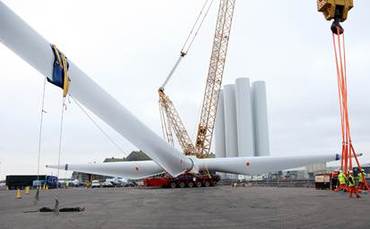
The UK’s burgeoning offshore wind far industry reached another milestone yesterday when EDF Energy Renewables confirmed it had completed the installation of the first 2.3MW turbine at its 62MW Teesside offshore wind farm.
The 27 turbine development, which represents EDF Energy Renewables first UK offshore wind farm, will be located 1.5 kilometres off the North east coast at Redcar and is expected to be fully completed by the spring, should weather conditions allow.
The company said that commissioning tests will now be undertaken on the first turbine with it expected to start transmitting energy to the grid in the coming weeks.
“The installation of the first offshore turbine on our first offshore scheme is a landmark event for the company, supporting the expansion of our onshore wind farm capacity over recent years,” said Christian Egal, chief executive of EDF Energy Renewables.
“Renewable energy will continue to play a key part of the country’s energy mix going forward and the construction of this latest project demonstrates our ongoing commitment to investing in low carbon technologies.”
The company said it now has 224MW of wind energy capacity under construction in the UK, including the Teesside development, in addition to 300MW of onshore wind farm capacity.
The Teesside wind farm is the latest in a wave of offshore developments that have cemented the UK’s position as the world’s leading offshore wind market.
Meanwhile, on the other side of the Atlantic the embryonic US offshore wind market took a major step forward this week with the announcement of plans for a multi-billion dollar offshore transmission line that would run between New York City and southern Virginia and support the development of a fleet of offshore wind farms.
The Atlantic Wind Connection initiative, which is backed by a number of high profile investors including IT giant Google, released its first set of detailed proposals for the project outlining plans for a cable running 12 to 14 miles offshore from New Jersey.
The group said that work on the first phase of the project could get underway in 2016, subject to planning approval, with the link coming online from 2019, potentially brining up to 3GW of wind energy ashore.
The developers maintain the project has the potential to improve grid reliability while slashing greenhouse gas emissions and generating billions of dollars of investment.
However, the project still faces numerous hurdles before work can get underway. For example, New Jersey regulators currently have no policy framework in place to support offshore wind farm developments and the US offshore wind industry remains centred on a single project off the coast of Massachusetts, which itself faced over a decade of planning and legal battles before it received the green light.
In other wind industry news, turbine manufacturer Vestas announced yesterday that it has signed an agreement to provide towers to a number of unnamed non-Vestas projects in North America over the next two years.
The manufacturer typically sells its complete turbines to developers, but it confirmed that it would shift its approach in order to make best use of production capacity at its tower factory in Colorado.
The deal is expected to now make use of 25 per cent of capacity at the plant and create more than 100 jobs in the next few months.
“Vestas is known for having industry-leading quality in our manufacturing processes and facilities, and it is satisfying that other companies recognise this by choosing to use our factories to produce components for their projects,” said Jean-Marc Lechêne, executive vice president for Vestas Wind Systems A/S, in a statement
“Vestas is continuously evaluating its manufacturing footprint and opportunities to utilise the current production capacity better. Producing components for third parties is part of this strategy, and although we have had other smaller orders, this new agreement is the first major step in realising this plan.”
0 Comments
Leave A Comment