By Katherine Martinko / Source: TreeHugger
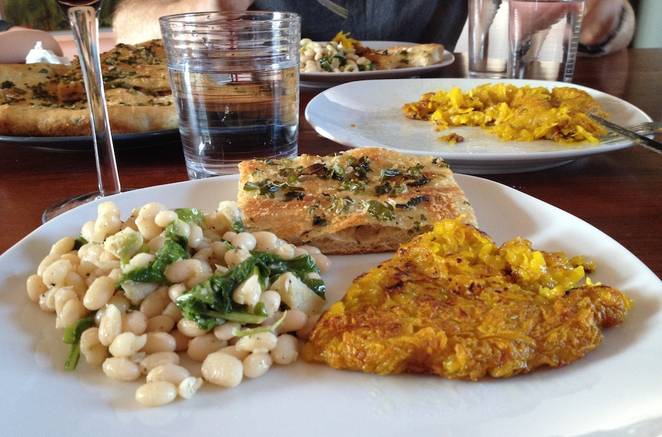
Adopting and maintaining a healthy diet can be challenging, which is why it helps to have a set of basic food rules to use as a reference point.
There is a lot of conflicting advice floating around as to what constitutes a healthy diet. Some people prefer strict rules, opting for vegetarian, vegan, pescatarian, or paleo diets, etc. Others – myself included – prefer a loose set of basic food rules. A recent article in the New York Times called “Simple Rules for Healthy Eating” got me thinking about which rules I apply when making decisions about food for myself and my family. I realize these don’t necessarily work for everyone, nor does anyone in my family have dietary restrictions, but they’ve served me well in the years since I began thinking more in depth about food origins and quality.
1. Is it in local and in season?
If a particular food has a local growing season, then I try to avoid buying it out of season. Of course there are some foods, such as lemons, oranges, avocados, and nuts, that will never grow where I live, so I do buy those, although not often. I believe that the greenest diet is a local and seasonal one.
2. Can I make it from scratch?
I cook a lot not just because I love it, but also because I think it’s important. By not buying pre-made foods, I avoid all the crap that comes along with them –unwanted additives and preservatives, wasteful packaging. It saves money, too, since fresh ingredients are usually cheaper than the marked-up boxed concoctions on supermarket shelves. Cooking doesn’t need to be complicated; often our dinner is a basic stir-fry, curry with rice, or some roasted meat and vegetables. Cooking from scratch is also a way to combat my dessert cravings. If I want something, then I have to make it myself.
3. Minimally processed
Brown rice over white rice, whole grain bread over white, honey and maple syrup over sugar, homemade granola instead of breakfast cereal – whenever possible, I opt for less processed ingredients. The only exception (much to my husband’s chagrin) is pasta, since I’d rather eat white pasta less often than whole wheat pasta frequently.
4. Everything in moderation
Rather than count calories or boycott certain food groups, my philosophy is “everything in moderation.” I don’t skimp on fat or salt while cooking, since these are key to flavoring many of the healthy dishes I make, nor do I control portion sizes. We have juice, milk, coffee, and alcohol in the house, although water is the main source of hydration.
Read more @ TreeHugger
13 Comments
This post is truly a nice one it helps new the web visitors, who are wishing for blogging.
vpn https://www.highlandguides.com
Đến với J88, bạn sẽ được trải nghiệm dịch vụ cá cược chuyên nghiệp cùng hàng ngàn sự kiện khuyến mãi độc quyền.
I always spent my half an hour to read this webpage's
articles or reviews daily along with a cup of coffee.
https://tinyurl.com/yp2uf8pf eharmony special coupon code 2025
I will immediately grab your rss as I can not find your email
subscription link or e-newsletter service. Do you've any?
Please let me know so that I may just subscribe.
Thanks.
Pretty! This has been an incredibly wonderful article. Thank you for
supplying this info. https://tinyurl.com/2dhs6xmh what does a vpn do
I think the admin of this web page is truly working hard in favor of his web page, for the reason that here every material is quality based material.
https://tinyurl.com/23mmjj8a gamefly free trial
Hey there! I've been reading your website for a long time now and finally got the courage to go ahead and give
you a shout out from Atascocita Texas! Just wanted to mention keep up the excellent job!
Here is my blog post - vpn
I am in fact thankful to the owner of this web page
who has shared this wonderful article at here.
my blog post nordvpn special coupon code 2024
Somebody essentially lend a hand to make severely posts I'd state.
This is the very first time I frequented your web page and to this point?
I amazed with the analysis you made to make this particular publish extraordinary.
Great job!
Here is my web site: eharmony special coupon code 2024
Sweet blog! I found it while searching on Yahoo News.
Do you have any tips on how to get listed in Yahoo News?
I've been trying for a while but I never seem to get there!
Thank you
Have a look at my blog facebook vs eharmony
Just desire to say your article is as astounding. The clarity in your submit is just excellent and i could think you're knowledgeable in this subject.
Well with your permission allow me to clutch your feed to stay updated with drawing close post.
Thank you 1,000,000 and please continue the rewarding work.
Here is my website :: vpn code 2024
Someone essentially help to make seriously articles I'd state.
That is the very first time I frequented your
web page and to this point? I surprised with the research you
made to create this actual submit amazing.
Excellent task!
Feel free to surf to my web site; vpn special code
Propecia
Leave A Comment