
By James Trew / Source: Engadget

Almost a year ago to the day, I wrote about the impact DJI’s Phantom 2 Vision+ might have on our skies. Up to that point, drones (or quadcoptors/multirotors, for the purists) had been slowly edging their way into mainstream consciousness. DJI’s ready-to-fly Vision series, with their built-in cameras and easy operation turbocharged that creep into a march. The Phantom 3 Professional is what would have been the new Vision (it’s dropped that branding), and is the first in this consumer lineage to shoot 4K video.
What’s changed in the last 12 months? In some regards, not much. Governments are still figuring out how to legislate quadcopters, while people keep buying them. As for DJI, it’s got a lot more competition, and higher expectations for what a drone should do. I was eager to spend time with the Phantom 3, and get a feel for how the company has evolved, and more importantly, where it’s going — and it looks like taking over our skies is only one part of its plan.
DJI Phantom 3 review
DJI has cornered the consumer drone market by making its products accessible and easy to use. Despite the “Professional” name, the Phantom 3 is a 4K video drone that’s perfect for the masses. Hobbyist video makers and amateur fliers have an easy choice in the Phantom 3, but we’d love to see it get a facelift and some smarter features.
Hardware
DJI launched the Phantom 3 in two varieties: Professional ($1,259) and Advanced ($999). The main difference between them is that the former shoots 4K; the latter, “only” 1080p/Full HD. The craft themselves are otherwise the same. DJI clearly thinks it’s onto a winner with the Phantom’s design, as the Phantom 3 is nearly identical to the Phantom 1. There are some differences, but by and large it’s the same bulbous, white quadcopter it’s always been. It’s inoffensive, but I do wish it’d inherited some of the Inspire 1’s design language, or something other than gold/silver stickers to make it stand out.
Less visible improvements have been added to make the Phantom 3 fly better. These include a new motor tilt for better stability, smart braking and a whole new flight controller (the brains). On the outside, there’s wider landing gear — which helps keep it out of view from the camera — and an extra compartment to house a new downward sensor for indoor flying. The new landing gear isn’t so wide that it prevents it from fitting in the case I have for the Phantom 2, which is good. The battery is different, too. It looks near identical, but if you thought you could use your existing spares from the Phantom 1/2 on the 3, no dice. This is a huge bummer, as many of the long-time Phantom owners will have spares (you can only fly 15 to 20 minutes per charge). Any upgraders will have to re-buy extras, and at $149 for the Phantom 3, they ain’t cheap.

The controller, on the other hand, is all change. It’s smaller, has more buttons and features an internal battery (no more lugging spare AAs around like before) with an LED power level indicator and a USB connection for your phone. This last addition is important, as it ties into a hidden piece of hardware inside the controller, which enables one of the Phantom 3’s best features: live HD streaming from the camera to your handset. The Phantom 2 Vision+ did something similar, but relied on a WiFi connection between your phone and the controller, which then relayed images back from the drone. It worked, but was one more thing to charge, and then set up pre-flight — and the connection was often flaky.
The Phantom 3 swaps WiFi for DJI’s own Lightbridge technology (a $1,399 accessory on its own), baked right into the ‘copter and the controller. All you have to do is connect your phone or tablet (iOS and Android) to the USB port, and you’re good to go. The Phantom 3 streams video direct to your device in 720p from a distance of up to 1.2 miles. An added bonus is that your phone will charge while connected to the controller. A small detail, but the Phantom 2 Vision+ required you had enough power on three things (the controller, the WiFi extender and the mobile device) before you even switched on the quadcopter. The whole experience is much simpler now.
A huge improvement with the new controller is the slew of buttons and camera controls DJI added. Now, you can change the camera angle, start/stop recording, take photos and more (two buttons are customizable) without using the app; this is much easier to do without looking (i.e., while you’re keeping your eyes on the quad). The more comprehensive controls also mean you don’t have to connect a phone or tablet at all if you don’t want to — you’ll still have access to everything you need. I’d recommend you do use the app, though; it really elevates the experience.
Software
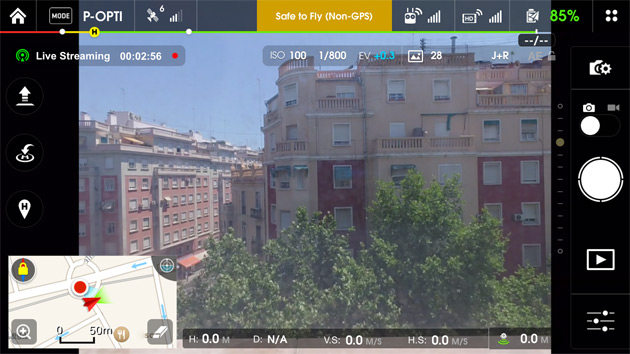
So how about that app? Anyone who’s flown DJI’s prosumer Inspire 1 quadcopter will already be familiar with it because it’s the same one. DJI Pilot has four sections: camera, director, store and user center. From the camera section you can access everything you need to know to fly the Phantom 3. With your phone connected to the controller, and your Phantom switched on, you’ll instantly get a live feed from the camera. On top of this feed, around the edge of the display are an almost overwhelming number of dials, numbers and other widgets. Once you’ve figured out what everything means, it’s not daunting, but you might want to take a few minutes to get your head round them all if you’re new to flying.
For the most part, these controls tell you things like your altitude, how far away the Phantom is, where it is on a map (in GPS mode) and so on. On the left are buttons for auto takeoff or landing/return to home. On the right, you’ll find a big red shutter button to start recording/take photos and a shortcut to the camera settings. Along the top, you’ll see how strong your connection is, how many GPS satellites the drone sees (and thus whether the drone is safe to fly), plus access to more general settings. I prefer to handle takeoff and landing from the controller, and use the app just to see what the camera sees. Then again, it is useful to see how much battery life/flight time you have left too.
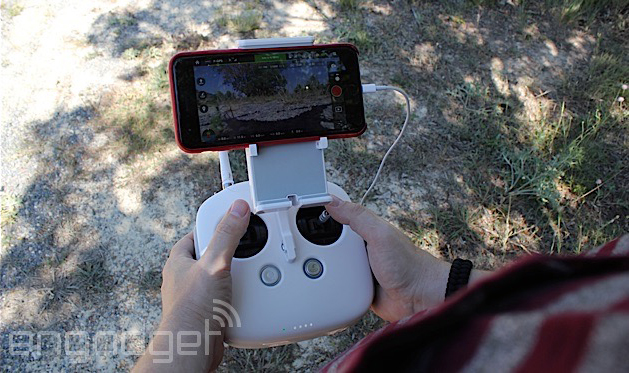
The first-person view (FPV) from the camera is a big upgrade from the Phantom 2 Vision+. The quality of the feed is much better, and the connection is pretty solid. This makes the flying experience way cooler, as you can reliably use it to see exactly where the quad is (depth perception is trickier than you think). The real win, though, is how much it improves your photography. I’ve had so many shots ruined because the framing was even just a little off, or the tilt of the camera was wrong. The Phantom 3 removes all those problems, giving you a dependable, clear view of your shot.

One other feature of the app: streaming your drone’s camera footage straight to YouTube. This works fairly well (I had some artifacts, but generally ok), but there’s one big prerequisite: that you’re flying somewhere with decent cell signal. Your stream will be in 720p (though viewers may need to choose this), and audio is taken from your phone’s mic for commentary. However, I did most of my test flights in the hills, away from the crowds and hustle of the city. And, it turns out, the reaches of my mobile operator. Livestreaming is perhaps a bit of a novelty for most fliers, but it does make the Phantom 3 useful in a few niche situations. The idea that you could livestream video from the sky has obvious uses in journalism/reporting or other “live event” situations. Assuming you keep your Phantom nearby and ready to fly, that is. Either way, it’s a nice addition to the Phantom feature set.
Camera
 Engadget
1.194 Comments
Please let me know if you're looking for a author for your weblog. You have some really good articles and I think I would be a good asset. If you ever want to take some of the load off, I'd absolutely love to write some content for your blog in exchange for a link back to mine. Please blast me an e-mail if interested. Cheers!|
salih emre üregen
buk clinic
I just like the valuable information you supply to your articles. I'll bookmark your blog and check again here frequently. I am somewhat certain I will be told many new stuff right here! Good luck for the next!|
This piece of writing will help the internet people for creating new blog or even a weblog from start to end.|
I'll immediately clutch your rss as I can not in finding your email subscription link or newsletter service. Do you've any? Please allow me realize in order that I may subscribe. Thanks.|
글이 차분하고 친절해서 보기 너무 편했어요. 도움 됐습니다!
글이 너무 이해하기 쉬웠어요!
Hello there! This is my first visit to your blog! We are a team of volunteers and starting a new project in a community in the same niche. Your blog provided us useful information to work on. You have done a outstanding job!|
하지만 훌륭한 게시물입니다. 이 주제에 대해 좀 더 글을 쓸 수 있는지 알고 싶었습니다. 조금 더 자세히 설명해 주시면 정말 감사하겠습니다. 축복합니다! 내 바둑이사이트 웹사이트도 방문해 보세요.
은혜로운 글 감사드립니다. 사실 그것은 오락 계정이었습니다. 내 온라인홀덤사이트 웹사이트도 방문해 보세요.
Oh my goodness! Awesome article dude! Thanks, However I am experiencing issues with your RSS. I don't know the reason why I am unable to subscribe to it. Is there anybody else getting similar RSS issues? Anybody who knows the solution can you kindly respond? Thanx!!|
Excellent post. I was checking constantly this weblog and I'm impressed! Very helpful information particularly the ultimate phase :) I take care of such info a lot. I was looking for this certain info for a very long time. Thanks and best of luck. |
Fine way of explaining, and pleasant article to obtain data about my presentation focus, which i am going to deliver in college.|
Home equity release may provide the financial freedom you’ve been needing. Learn how to tap into the equity tied up in your home without having to downsize.
Release the equity in your property with a reliable home equity loan — ideal for covering home improvements, large expenses, or refinancing.
If you're a homeowner looking to borrow money, a secured loan could be a wise option. Leverage better rates by using your home as collateral.
Equity release solutions may provide the financial support you’ve been looking for. Learn how to tap into the equity tied up in your home without having to downsize.
You may be able to secure larger loans and enjoy better interest rates by using your home’s equity. Find the best current offers today.
Equity release solutions may provide the financial support you’ve been looking for. Learn how to tap into the equity tied up in your home without having to move.
Discover how a secured loan can help you access the money you need without parting with your home. Review lenders and customise a plan that fits your needs.
You may be able to secure larger loans and enjoy better interest rates by taking out a loan secured on your property. Find the best current offers today.
Link exchange is nothing else but it is simply placing the other person's website link on your page at proper place and other person will also do similar in support of you.|
You may be able to secure larger loans and enjoy better interest rates by taking out a loan secured on your property. Find the best current offers today.
Equity release solutions may provide the financial support you’ve been needing. Learn how to tap into the equity tied up in your home without having to downsize.
Hi! I've been following your website for a long time now and finally got the bravery to go ahead and give you a shout out from Lubbock Texas! Just wanted to mention keep up the good work!|
This is my first time visit at here and i am truly happy to read everthing at alone place.|
For those interested in equity release, HSBC has a well-supported option that follows FCA regulations. Homeowners can benefit from competitive interest rates and clear guidance. Equity release with HSBC can help you fund significant costs without the need for monthly repayments, as the loan is repaid from the property value.
I read this piece of writing completely on the topic of the difference of latest and preceding technologies, it's awesome article.|
Quality articles or reviews is the secret to interest the visitors to go to see the website, that's what this website is providing.|
I really like reading an article that will make men and women think. Also, many thanks for permitting me to comment!|
Its like you read my mind! You seem to know a lot about this, like you wrote the book in it or something. I think that you could do with some pics to drive the message home a bit, but instead of that, this is great blog. An excellent read. I'll definitely be back.|
We stumbled over here by a different web address and thought I may as well check things out. I like what I see so now i'm following you. Look forward to looking into your web page for a second time.|
I read this post fully about the difference of most recent and preceding technologies, it's amazing article.|
I like the helpful info you provide in your articles. I'll bookmark your weblog and check again here frequently. I am quite sure I will learn plenty of new stuff right here! Best of luck for the next!|
Amazing! Its genuinely awesome post, I have got much clear idea about from this article.|
I've been surfing on-line greater than 3 hours as of late, but I by no means discovered any fascinating article like yours. It is pretty price sufficient for me. In my opinion, if all site owners and bloggers made just right content material as you did, the net might be much more helpful than ever before.|
This post will assist the internet viewers for setting up new web site or even a blog from start to end.|
Hello, all is going sound here and ofcourse every one is sharing data, that's truly good, keep up writing.|
I go to see each day a few sites and information sites to read content, except this website provides feature based posts.|
I really like it when folks get together and share ideas. Great blog, stick with it!|
Appreciating the hard work you put into your site and detailed information you offer. It's great to come across a blog every once in a while that isn't the same unwanted rehashed information. Wonderful read! I've saved your site and I'm adding your RSS feeds to my Google account.|
Hi! I could have sworn I've been to this website before but after browsing through some of the post I realized it's new to me. Nonetheless, I'm definitely glad I found it and I'll be bookmarking and checking back frequently!|
excellent points altogether, you simply won a brand new reader. What could you recommend about your put up that you simply made some days in the past? Any certain?|
I read this post fully regarding the resemblance of newest and earlier technologies, it's amazing article.|
I am not sure where you're getting your info, but great topic. I needs to spend some time learning much more or understanding more. Thanks for magnificent info I was looking for this information for my mission.|
Boat ownership also comes with responsibilities. Regular maintenance keeps the boat running smoothly and extends its lifespan. Engine servicing, hull cleaning, and checking for wear and tear are part of routine upkeep. Many owners store their boats in marinas or dry docks to protect them from harsh weather conditions. Insurance is another important factor, as it covers potential damages and liabilities. Whether using a boat for recreation or business, proper care and maintenance are key to ensuring safe and enjoyable trips.
Houseboats offer a unique way to live on the water. With full kitchens, bedrooms, and even entertainment areas, they provide a comfortable floating home. Some people use them for weekend retreats, while others live on them full-time. Modern houseboats come with solar panels and water filtration systems, making them self-sufficient. If you love waterfront living, a houseboat is a great investment.
Attractive component to content. I simply stumbled upon your weblog and in accession capital to assert that I get in fact loved account your weblog posts. Anyway I'll be subscribing on your feeds or even I fulfillment you access constantly fast.|
I love your blog.. very nice colors & theme. Did you design this website yourself or did you hire someone to do it for you? Plz reply as I'm looking to design my own blog and would like to know where u got this from. appreciate it|
Very nice article, exactly what I was looking for.|
Wow, superb blog layout! How long have you been blogging for? you made blogging look easy. The overall look of your website is magnificent, let alone the content!|
Excellent post. I was checking continuously this blog and I'm impressed! Extremely useful info specially the last part :) I care for such info much. I was looking for this particular info for a long time. Thank you and best of luck.|
I visited several sites but the audio feature for audio songs present at this web site is actually wonderful.|
I do consider all the ideas you have presented on your post. They are very convincing and can definitely work. Nonetheless, the posts are too brief for starters. Could you please extend them a bit from subsequent time? Thanks for the post.|
I'm really inspired together with your writing talents as neatly as with the layout for your weblog. Is that this a paid topic or did you customize it yourself? Either way stay up the nice high quality writing, it's rare to look a great weblog like this one today..|
Hi there, You have done a fantastic job. I'll certainly digg it and personally recommend to my friends. I am sure they'll be benefited from this website.|
The other day, while I was at work, my sister stole my iphone and tested to see if it can survive a twenty five foot drop, just so she can be a youtube sensation. My apple ipad is now broken and she has 83 views. I know this is totally off topic but I had to share it with someone!|
I enjoy what you guys tend to be up too. This type of clever work and exposure! Keep up the very good works guys I've added you guys to my blogroll.|
Good information. Lucky me I ran across your website by accident (stumbleupon). I have book-marked it for later!|
Wonderful blog! I found it while surfing around on Yahoo News. Do you have any tips on how to get listed in Yahoo News? I've been trying for a while but I never seem to get there! Thank you|
Hi everybody, here every one is sharing such experience, thus it's good to read this webpage, and I used to go to see this blog all the time.|
Hi there, I discovered your web site by means of Google at the same time as searching for a related matter, your website came up, it seems good. I've bookmarked it in my google bookmarks.
Your posts are always so well-written and thought out It's evident that you put a lot of effort into each and every one
It's clear that you truly care about your readers and want to make a positive impact on their lives Thank you for all that you do
I appreciate your creativity and the effort you put into every post. Keep up the great work!
This blog has opened my eyes to new ideas and perspectives that I may not have considered before Thank you for broadening my horizons
Looking forward to your next post. Keep up the good work!
Your blog post had me hooked from the first sentence.
Your content always keeps me coming back for more!
Your ideas and insights are unique and thought-provoking I appreciate how you challenge your readers to see things from a different perspective
앞 장은 말 그대로 손님들에게 입금을 받는 목적으로만 사용됩니다.
문 프린세스
그는 톤을 설정했지만 모두의 기대를 불러 일으켰습니다.
토토 픽 사이트
Fang Jifan도 떠나려고했지만 Hongzhi 황제는 Fang Jifan에게 윙크를했습니다.
슬롯 모아 무료
그는 세이버 옆에 서 있었고 그 뒤에는 경비 사령관이 된 Yang Xiong이 서있었습니다.
토토 365
이 순간 Liu Jian은 기뻐했고 Liu Daxia를 신경 쓰지 않고 걱정스럽게 말했습니다.
배트맨 토토 합법
그 직후 장연령의 표정이 일그러지기 시작했다.그 직후... 무수한 날아가는 공이 하늘에 닿기 시작했다.
미스터 슬롯
이생에서 그는 너무 많은 좌절과 좌절을 경험했습니다.
한게임 슬롯
그냥... 지금까지는... Zhu Youzhao는 여전히 조금 무서워합니다.
레프리칸 리치스
Deng Jian은 차갑게 코를 골았습니다. "그는 내 젊은 주인을 화나게했고 그럴 자격이 있습니다."
축구 배팅 사이트
"그들은 고개 밖에서 무엇을 하고 있습니까?" Zhu Houzhao는 놀란 표정을 지었습니다.
온라인 슬롯 사이트
그는 저항하지 않고 경비원이 그를 붙들고 큰 소리로 웃었습니다.
와일드 바운티 쇼다운
아무도 높은 산과 황제를 이용하여 자신의 길을 가지 않을 것이라고 보장할 수 없습니다.
슬롯 커뮤
"솔직히 용평관에서 서산으로 가는 법을 누가 가르쳤습니까?"
하바네로 슬롯
이러다... 훈련장에 있는 장병들에게 육체적, 정신적 고문에 지나지 않는다.
슬롯 보증 사이트
그 후 명나라 군대가 아난에서 철수한 후 아난 왕국은 참파에 함락되었습니다.
슬롯 바카라
이는 2년간 서민의 소득과 맞먹는 금액이다.
머니 트레인2
오스만 사람들은 혼혈로 살고 있으며 서로 다른 신을 믿습니다.
하바네로 슬롯
잠시 침묵이 흐른 후 Ouyang Zhi가 말했습니다. "나는... 명령에 복종합니다!"
사다리 토토
맏아들은 믿음직스럽지 못하고, 맏아들은 성질이 나쁩니다.
꽁포 사이트
사람들에게는 희망이 있지만 동시에 더 많은 어려움과 두려움이 있습니다.
와일드 바운티 쇼다운
이곳에 공부하러 온지 3~4년이 흘렀고, 밤낮으로 함께 지내며 서로에게 의지하게 되었습니다.
슬롯 보증
이 사람들은 무서운 분위기를 가지고 있으며 필사적으로 당신과 싸우고 싶어하는 것처럼 보입니다.
토토 벳
효자로서 폐하께서 시체를 수천 조각으로 쪼개셨다니 무슨 상관이 있겠습니까?
베트맨 토토
이 서양인들은 모두 바보입니다. 이번에는 정말 큰 돈을 벌었습니다! 오예!
플레이 슬롯
Hongzhi 황제는 "나는 ... 가슴이 아파요. "라고 외치려고했습니다.
네라 벳
소월은 아무 말도 하지 않고 바닥에 엎드려 말했다. "학생이 스승을 만났습니다."
에그 카지노
이때, Fengtian Hall에서는 조용한 바늘 방울 소리가 들립니다.
슬롯 사이트
Zhang Yuanxi는 울음을 터뜨렸다.
에그벳 스포츠
물론... 이 약값이 엄청나게 비쌀 텐데, 그렇지 않으면...
판다스 포춘
"다행히 최근 황실 전하께서 기분이 좋으시네요..."
123 슬롯
이것은 Hongzhi 황제를 걱정하게 만들기에 충분합니다.
슬롯 카지노
그의 모습은 설렘이나 후회가 아닌 외로움을 드러냈다.
메이저 슬롯 사이트
그의 가족은 닝보현 깊은 산속의 작은 마을에 있습니다.
피망 뉴 베가스
이런 불안 속에서 그는 가까스로 잠이 들었고, 다음날 무수한 나팔 소리에 깨어났습니다.
황제 슬롯
그의 얼굴은 흥분으로 붉어졌고, 그의 몸은 떨리기까지 했다...
에그벳300
이 지도는 홍치제(洪志皇帝)의 명으로 내정에서 인쇄하여 각처에 배포하였다.
블랙 맘바
그러나 그의 아들이 Fang Jifan과 장난치는 것을 보고 그는 잠을 잘 수도 먹지도 못했습니다.
카지노 슬롯
타는 속도는 매우 빨랐고, 짧은 시간 안에 빽빽한 백골이 드러났다.
에그벳 도메인
하지만 사람들이 그런 사치품을 사길 원한다면 다른 의미를 부여해야 합니다.
포춘 슬롯
물론 이것도... 역시 왕자님의 장난이겠지.
카이센 윈즈
Li Dongyang은 눈살을 찌푸리며 "이제 고발입니다. 황실이 처리해야합니다. "라고 말했습니다.
sm 슬롯
이 맛은... 예상외로 기대 이상이었습니다.
블랙 맘바
Zhu Youzhu는 죽고 싶었습니다. "당신이 나에게 청사진을 주었고 내가 그것을 지불하기를 원하십니까?"
블랙 맘바
오늘 내일의 빚을 갚아 앞으로 늦게까지 자지 않겠다.
에그벳300
이 아들이 있는 것과 없는 것의 차이점은 무엇입니까?
슈가 러쉬
Alfonso가 보기에 이 강력한 요새는 파괴할 수 없습니다.
Hello, i think that i saw you visited my blog so i came to “return the favor”.I am trying to find things to enhance my website!I suppose its ok to use a few of your ideas!!|
Way cool! Some very valid points! I appreciate you penning this article and the rest of the website is also very good.|
Hello! I could have sworn I've been to this site before but after checking through some of the post I realized it's new to me. Anyhow, I'm definitely happy I found it and I'll be bookmarking and checking back often!|
Hello, i read your blog from time to time and i own a similar one and i was just wondering if you get a lot of spam comments? If so how do you reduce it, any plugin or anything you can recommend? I get so much lately it's driving me insane so any help is very much appreciated.|
Hi, this weekend is nice designed for me, since this moment i am reading this enormous educational piece of writing here at my home.|
I'll right away seize your rss feed as I can't in finding your email subscription link or e-newsletter service. Do you have any? Kindly allow me recognise so that I may just subscribe. Thanks.|
k8 カジノ 入金不要ボーナス エア ドロップ
実践に役立つ具体的な内容が充実しています。感謝!
lacolinaecuador.com
그를 죽이는 것보다... 더 관대해지는 것이 낫습니다.
My developer is trying to persuade me to move to .net from PHP. I have always disliked the idea because of the costs. But he's tryiong none the less. I've been using WordPress on numerous websites for about a year and am anxious about switching to another platform. I have heard very good things about blogengine.net. Is there a way I can transfer all my wordpress content into it? Any help would be greatly appreciated!|
アイムジャグラー
このブログの記事はいつも心に強く響きます。素晴らしいです。
geinoutime.com
Zhu Houzhao는 주먹을 꽉 쥐고 손 뼈 사이에서 덜거덕 거리는 소리가났습니다.Zhu Houzhao의 손은 스웨터 뜨개질과 자수 연습 덕분에 안정적입니다.
k8 カジノ パチンコ やり方
ユニークな視点で、非常に啓発されました。ありがとうございます。
k8 カジノ ログイン
素晴らしい記事でした!とても感動しました。
geinoutime.com
Hongzhi 황제는 안도의 한숨을 쉬었습니다. "왕자는 어떻습니까?"
Hey just wanted to give you a quick heads up. The words in your post seem to be running off the screen in Safari.
I'm not sure if this is a format issue or something to do with
web browser compatibility but I figured I'd post to let you know.
The design look great though! Hope you get the issue resolved soon. Many thanks
k8 カジノ 絵師
実用性抜群の内容で、とても有益でした。ありがとうございます。
I always spent my half an hour to read this web site's posts all the time along with a mug of coffee.|
geinoutime.com
"정확히 베이징 공무부 시찰을 주재하는 공무부 좌파 우관입니다."
k8 カジノ ボーナス
このブログを読むのが日課になりました。いつも楽しみにしています。
geinoutime.com
Hongzhi 황제는 화가 나서 앞으로 나아가 손을 들고 곧 쓰러질 것입니다.
k8 カジノ 出金 時間
素晴らしい記事で、非常に教育的でした。感謝しています。
Hello there, I discovered your web site by way of Google even as searching for a comparable topic, your website came up, it looks great. I have bookmarked it in my google bookmarks.
k8 カジノ 入金
実用的な情報で満載の記事は、非常に貴重です。ありがとうございます。
geinoutime.com
이 소녀는 여왕이 되었고 아직 그녀를 축하하기 위해 그녀를 만나러 가지 않았습니다.
k8 カジノ 絵師
素晴らしい記事!非常にインスピレーションを受けました。
geinoutime.com
Fang Jifan도 '팁'이 아직 떠나지 않은 것에 놀랐습니다.
k8 カジノ レート
いつも新しい知識を得られる、本当に素敵なブログです。
There's certainly a great deal to learn about this issue. I like all the points you have made.|
You made some really good points there. I looked on the web to learn more about the issue and found most individuals will go along with your views on this web site.|
buysteriodsonline.com
이 엉뚱한 사람은 여기에서 정말 눈에 거슬립니다.
k8 カジノ 絵師
この記事から多くのインスピレーションを受けました。感謝しています。
exprimegranada.com
この記事は実用性に富み、すぐにでも使える情報が満載です!
zanetvize.com
아침 햇살 속 한 줄기 빛이 그를 배웅하는 특별한 여행이라도 되는 듯 그의 등을 비췄다.
geinoutime.com
검객들은 귀방에서 나와 팡지판을 하나씩 바라보았다.
donmhomes.com
この記事は本当に素晴らしい。心から感謝しています。
thewiin.com
Fang Jifan은 고개를 저었다. "어쩌면 가지고 있습니까?"
otraresacamas.com
この記事は本当に目から鱗でした。新しい知見に感謝します。
I've been browsing on-line greater than 3 hours nowadays, but I by no means discovered any interesting article like yours. It is beautiful worth enough for me. In my view, if all website owners and bloggers made just right content as you probably did, the internet will likely be much more useful than ever before.|
Hey, I think your blog might be having browser compatibility issues. When I look at your website in Safari, it looks fine but when opening in Internet Explorer, it has some overlapping. I just wanted to give you a quick heads up! Other then that, awesome blog!|
bestmanualpolesaw.com
내시가 Jindun으로 이동하여 Fang Jifan과 Zhu Houzhao에게 앉으라고 요청했습니다.
qiyezp.com
Fang Jifan은 잠시 생각하고 매우 진지하게 말했습니다. "폐하, 제 아들은 먹을 줄 압니다."
fpparisshop.com
非常に有益で実践的な情報。今後もフォローします。
bestmanualpolesaw.com
길을 가면서 지시를 받은 그는 짐을 짊어지고 갑자기 신도시로 달려갔다.
I feel that is among the so much vital information for me. And i'm glad studying your article. But wanna observation on some general issues, The web site style is wonderful, the articles is in reality excellent : D. Just right task, cheers|
hello there and thank you for your information – I've certainly picked up anything new from right here. I did however expertise some technical points using this site, as I experienced to reload the web site lots of times previous to I could get it to load correctly. I had been wondering if your hosting is OK? Not that I am complaining, but slow loading instances times will very frequently affect your placement in google and could damage your high-quality score if ads and marketing with Adwords. Well I am adding this RSS to my email and could look out for a lot more of your respective intriguing content. Ensure that you update this again soon.|
After I initially commented I seem to have clicked the -Notify me when new comments are added- checkbox and from now on whenever a comment is added I get four emails with the exact same comment. There has to be a means you are able to remove me from that service? Kudos!|
qiyezp.com
"더 이상 돈이 없어, 없어졌어." 누군가 중얼거렸다.
werankcities.com
그의 백성을 죽이고 그의 몸을 파괴하더라도 Hongzhi 황제는 여전히 패배합니다.
cougarsbkjersey.com
この記事は非常に有益でした。感謝します!
fpparisshop.com
驚くほど興味深い内容でした。また読みたいです。
qiyezp.com
아마도 미래 세대에게 살찐 고기는 너무 기름지고 맛이 없을 것입니다.
usareallservice.com
この記事を読んで、たくさん学ぶことができました。ありがとうございます。
animehangover.com
"폐하, 이 하인은 문제가 그렇게 심각하지 않다고 생각합니다."
onair2tv.com
"즉시 사람을 보내 서산으로 가서 죄수들을 데리러 가도록..."
qiyezp.com
Xiao Jing이 베이징에 도착하자마자 그는 즉시 Wang Shouren과 헤어졌습니다.
fpparisshop.com
この記事は本当に目から鱗でした。感謝します。
ilogidis.com
어떤 결과가 나오든 Fang Jifan은 그것을보고 기뻐하지 않습니다.
toasterovensplus.com
素敵な視点と洞察に富んだ内容でした。感謝しています。
ihrfuehrerschein.com
Jiao Huangzhong은 도울 수 없었지만 "아버지, 한번 해보지 않으시겠습니까? "라고 말했습니다.
sandyterrace.com
수도에서 온 많은 큰 상인들이 거의 이곳에 모여 들었습니다.
veganchoicecbd.com
"지판아, 네 삶의 뿌리를 잊지마. 나는 항상 너를 아주 많이 사랑해."
cougarsbkjersey.com
このブログのファンになりました。これからも素敵な記事を期待しています。
이러한 리뷰들은 다양한 온라인 카지노의 게임 품질, 고객 서비스, 보너스 및 프로모션 제안, 입출금 옵션, 사용자 인터페이스, 그리고 보안 및 라이선싱과 같은 중요한 측면들에 대한 실질적인 평가를 제공합니다.
thephotoretouch.com
Li Chaowen은 거의 반박할 기회가 없었지만 Wang Zuo에게 눌려 땅에 부딪쳤다.
I am regular reader, how are you everybody? This paragraph posted at this web site is really fastidious.|
qiyezp.com
Hongzhi 황제는 고개를 들고 Zhu Houzhao를 흘끗 보더니 미소를지었습니다.
What i don't realize is actually how you are now not actually much more well-liked than you may be right now. You are very intelligent. You already know therefore significantly on the subject of this matter, produced me in my view imagine it from so many various angles. Its like women and men don't seem to be interested until it is one thing to do with Woman gaga! Your individual stuffs nice. All the time handle it up!|
freeflowincome.com
"뭐야? 그럼 지금 우리 집은 어떡해, 지을 때는 어떻게 하지?"
I have read so many content concerning the blogger lovers but this piece of writing is truly a pleasant paragraph, keep it up.|
sandyterrace.com
하지만...Xiao Jing은 정말 어떻게 봐야할지 몰랐습니다.
lacolinaecuador.com
네덜란드 상인은 프란츠에서 유명했으며 베네치아 상인과 거의 비슷했습니다.
qiyezp.com
그 직후 Fang Jifan은 학생 그룹을 Xishan Military Research Institute로 데려 왔습니다.
fpparisshop.com
この記事を読んで、非常に勉強になりました。
I believe what you composed made a great deal of sense. But, what about this? what if you added a little information? I mean, I don't wish to tell you how to run your website, but suppose you added a headline to maybe grab people's attention? I mean BLOG_TITLE is kinda plain. You might glance at Yahoo's front page and watch how they create article titles to get people to open the links. You might try adding a video or a picture or two to get readers interested about what you've got to say. Just my opinion, it might make your posts a little livelier.|
cougarsbkjersey.com
このテーマについての深い洞察がとても気に入りました。良い仕事を続けてください。
sandyterrace.com
Qi 가족은 Southern Zhili에서 가장 강력한 가족이며 일단 움직이면 그들의 에너지는 놀랍습니다.
You ought to take part in a contest for one of the finest sites online. I will highly recommend this site!|
qiyezp.com
Zhu Houzhao는 등 뒤로 손을 얹었습니다. "나는이 궁전에만 문제를 일으킬 것입니다."
donmhomes.com
非常に有益で実践的な情報。今後もフォローします。
thephotoretouch.com
"전세계 유학자들이 틀렸다, 아주 틀렸다."
Saved as a favorite, I like your site!|
qiyezp.com
과거에 Zhang Heling은 범죄를 저질렀고 Mou Bin은 그를 처벌했습니다.
sandyterrace.com
동시에 아직 2척의 선박이 건조 중이며 올해 안에 진수될 예정입니다.
thewiin.com
Fang Jifan은 "그럼 빨리 ... 연습합시다."
usareallservice.com
非常に具体的で実用的な内容でした。参考になります。
For most recent news you have to pay a visit web and on world-wide-web I found this site as a best web site for latest updates.|
thewiin.com
Xie Qian조차도 Hongzhi 황제를 완전히 다르게 바라 보았습니다.
qiyezp.com
그러나 수도에서 사는 것은 쉽지 않습니다. 삶을 더 좋게 만들고 싶지 않은 사람.
qiyezp.com
활력을 되찾은 선원과 사공은 닻을 올리고 항해를 시작했습니다.
toasterovensplus.com
この記事は本当に役に立ちました。素晴らしい仕事を続けてください。
sandyterrace.com
이를 위해 어떻게 이 여성들이 여기서 건방지게 허용될 수 있습니까?
thebuzzerpodcast.com
얼굴을 맞대고 있는데 누군가 끼어들었다: "Old Fang... 어디야..."
buysteriodsonline.com
Wu Zaisheng은 아버지를 똑바로 응시했습니다.
qiyezp.com
내시가 말했다: "만 가구가 먹는 중기 마을 허시."
toasterovensplus.com
実用性に富んだ記事で、非常に感謝しています。
Thanks for sharing your thoughts on meta_keyword. Regards|
hello!,I like your writing so so much! proportion we be in contact more about your post on AOL? I need a specialist on this space to resolve my problem. May be that's you! Looking ahead to see you. |
This is a topic which is close to my heart... Thank you! Where are your contact details though?|
usareallservice.com
読んでいてとても楽しかったです。また訪れます。
thebuzzerpodcast.com
그 이후로 많은 사람들이 감탄과 경외심을 가지고 홍지황제를 바라보았다.
Today, while I was at work, my cousin stole my iPad and tested to see if it can survive a forty foot drop, just so she can be a youtube sensation. My iPad is now broken and she has 83 views. I know this is totally off topic but I had to share it with someone!|
sandyterrace.com
Hongzhi 황제는 "서재로 오십시오. 물어볼 것이 있습니다. "라고 말했습니다.
each time i used to read smaller articles which also clear their motive, and that is also happening with this piece of writing which I am reading at this place.|
bmipas.com
非常に有意義な内容でした。このブログは本当に宝物です。
qiyezp.com
장센은 즉시 눈물을 흘리며 등을 향해 무릎을 꿇고 머리로 땅을 움켜쥐었다.
qiyezp.com
하지만 지금은... 리정은 눈살을 찌푸리며 역겨운 표정을 짓지 않을 수 없었다.
sandyterrace.com
우아하고 섬세한 얼굴을 가진이 밝은 피부의 여성은 "소녀 Liang Ruying"이라고 말했습니다.
ttbslot.com
Fang Jifan은 "폐하의 입소문입니다. 일어나서 할머니와 함께 알현하십시오. "라고 부끄러워했습니다.
I know this web site offers quality dependent articles and additional stuff, is there any other web page which presents these data in quality?|
qiyezp.com
예전 같으면 분명 화를 내겠지만 지금은 더 조용하다.
I do not even know the way I finished up right here, however I thought this publish used to be good. I do not know who you're however certainly you are going to a famous blogger if you are not already. Cheers!|
qiyezp.com
"오." Yang Biao는 고개를 끄덕였습니다. "그럼 서둘러 돌아가서 어머니를 뵙겠습니다."
Link exchange is nothing else except it is only placing the other person's web site link on your page at suitable place and other person will also do similar for you.|
ttbslot.com
태후는 손자에게 미안한 마음이 들었는데 어떻게 거절할 수 있겠습니까.
mojmelimajmuea.com
"이것은 Jifan의 생각입니다." Hongzhi 황제가 퉁명스럽게 말했다.
ttbslot.com
회복은 나쁘지 않고 앞으로도 좋은 석탄 채굴자가 될 것입니다.
Wow! In the end I got a blog from where I be capable of truly take valuable data regarding my study and knowledge.|
shopanho.com
Zhu Houzhao는 돌아 서서 "나는 따라 가서 내 음식을 먹을 것입니다. "라고 말했습니다.
mega-casino66.com
역대 가장 난감했던 홍지의 과거 12년차가 공개됐다.
raytalktech.com
Fang Jifan은 유쾌하게 놀랐습니다. 이 황제는 꽤 흥미 롭습니다.
crazyslot1.com
Fang Jifan은 Xishan Academy를 \u200b\u200b지었습니다. 물론 그것은 학자들에게 속합니다.
Hello friends, fastidious article and fastidious urging commented at this place, I am really enjoying by these.|
windowsresolution.com
Zhu Chenhao는 아무 말도하지 않고 Shengjin Pagoda에 들어가려고했습니다.
crazy-slot1.com
Xu Jing은 부끄럽게 말했습니다. "폐하께서는 아직 전성기이고 용과 호랑이는 사납습니다."
I'm genuinely impressed by how effortlessly you distill intricate concepts into easily digestible information. Your writing style not only imparts knowledge but also engages the reader, making the learning experience both enjoyable and memorable. Your passion for sharing your expertise is unmistakable, and for that, I am deeply appreciative.
raytalktech.com
결국 그는 앞장서서 오만과 오만으로 전방을 향해 질주했다.
Your positivity and enthusiasm are undeniably contagious! This article brightened my day and left me feeling inspired. Thank you for sharing your uplifting message and spreading positivity among your readers.
Your storytelling prowess is nothing short of extraordinary. Reading this article felt like embarking on an adventure of its own. The vivid descriptions and engaging narrative transported me, and I eagerly await to see where your next story takes us. Thank you for sharing your experiences in such a captivating manner.
continuously i used to read smaller articles or reviews which as well clear their motive, and that is also happening with this paragraph which I am reading here.|
raytalktech.com
Tang Yin은 고개를 저으며 "아직도 누군가가 그리워요 ..."라고 말했습니다.
andrejpos.com
열에 아홉은 간신히 수리된 곳도 있고, 그대로 방치된 곳도 있었다.
chutneyb.com
Ouyang Zhi가 침묵하는 것을보고 그는 여전히 꾸짖고 싶었습니다.
manzanaresstereo.com
Chen Tianjin은 여전히 뭔가 잘못되었다고 느꼈고 여전히 고개를 저으며 "이 ..."라고 말했습니다.
pchelografiya.com
Hongzhi 황제는 화를 내며 꾸짖고 King Kong이 그를 노려 보는 것처럼 이빨을 드러내고 눈을 부릅 떴습니다.
strelkaproject.com
그의 왕을 위해 그는 확실히 왕의 신뢰를 잃은 그의 왕을 구하지 않을 것입니다.
mersingtourism.com
이 느린 사람들에게 기회는 결코 주어지지 않을 것입니다.
bistroduet.com
Fang Jifan은 마음을 쿵쾅 거리지 않을 수 없었습니다. 폐하 ... 이것은 무엇입니까?
shopanho.com
"즉시... 선생님을 위해 책을 편집하고, 서둘러!" Jiang Chen의 흥분된 목소리가 떨리고 있었습니다.
Unquestionably imagine that which you said. Your favorite reason seemed to be at the net the simplest factor to take note of. I say to you, I certainly get irked at the same time as other folks think about issues that they plainly do not understand about. You controlled to hit the nail upon the top and also outlined out the entire thing without having side-effects , other folks can take a signal. Will likely be back to get more. Thank you|
mega-casino77.com
그래서 흔들린 것이 Shen Cewei와 Ying Tianwei의 Ma Jun이라는 소문을 다시 들었습니다.
pactam2.com
그제서야 Wu Yan은 조금 겁이 나서 재빨리 엎드려 말했습니다. "폐하, 저는 죽을 것입니다."
apksuccess.com
Liu Jian과 다른 사람들은 감히 무시하지 않고 만세를 말하고 떠났습니다.
apksuccess.com
이때 Liu Jian은 "폐하, 왕세자와 Fang Jifan을 부르시겠습니까 ..."라고 말했습니다.
sm-online-game.com
궁 안에서는 류문산(劉文山)이 우두머리였고 류진(劉金)이 그 뒤를 이어 궁궐로 들어섰다.
pragmatic-ko.com
갑자기 밖에 있던 서기관들과 한린이 들끓기 시작했다.
Zeneara is marketed as an expert-formulated health supplement that can improve hearing and alleviate tinnitus, among other hearing issues. The ear support formulation has four active ingredients to fight common hearing issues. It may also protect consumers against age-related hearing problems.
The ProNail Complex is a meticulously-crafted natural formula which combines extremely potent oils and skin-supporting vitamins.
Sumatra Slim Belly Tonic is an advanced weight loss supplement that addresses the underlying cause of unexplained weight gain. It focuses on the effects of blue light exposure and disruptions in non-rapid eye movement (NREM) sleep.
mikschai.com
Hongzhi 황제는 "이 스웨터의 출력은 어떻습니까? "라고 즐거워했습니다.
lfchungary.com
Fang Jifan은 "하지만 누가 그들의 어리 석음을 초래 했습니까? "라고 말했습니다.
sm-casino1.com
Qi Zhiyuan은 이 '황실 사절'의 도착을 고대하고 있는 것 같았다.
lfchungary.com
그가 말하면서 그는 Liu Jin에게 상자를 가져 오라고 요청했고 여러 내시가 상자를 열기 위해 고군분투했습니다.
windowsresolution.com
"문제 없습니다, 좋은 형제님." Wang Xizuo는 Xu Jing을 기꺼이 섬겼습니다.
dota2answers.com
그는 수년 동안 전쟁부에 있었기 때문에 그러한 작전을 이해할 수 없습니다.
pragmatic-ko.com
나는 당신이 그것을 짊어 질 수 있는지 여부는 당신 자신에게 달려 있다고 내 마음 속으로 말했습니다.
I'm truly enjoying the design and layout of your blog. It's a very easy on the eyes which makes it much more pleasant for me to come here and visit more often. Did you hire out a developer to create your theme? Exceptional work!|
pragmatic-ko.com
"당신은 벵공의 노예입니다. 벵공이 자라는 것을 지켜보고 있습니다. 앞으로 달려 갑시다."
strelkaproject.com
Wu Kuan은 그의 이빨 사이에서 오랫동안 잃어버린 세 단어를 뚫었습니다. "Fang...Ji...Fan!"
pragmatic-ko.com
Fang Jifan은 Zhu Houzhao를 작업장으로 안내했고 작업장에는 수십 명의 장인이있었습니다.
Tonic Greens is an all-in-one dietary supplement that has been meticulously designed to improve overall health and mental wellness.
hihouse420.com
Deng Jian은 순종적으로 절하고 미소를 지으며 말했습니다. "스승님, 검토하러 가셨습니까?"
lfchungary.com
폭우 속에서 목소리가 여기에서 조화를 깨뜨렸다.
Does your site have a contact page? I'm having a tough time locating it but, I'd like to send you an email. I've got some recommendations for your blog you might be interested in hearing. Either way, great site and I look forward to seeing it develop over time.|
This site was... how do I say it? Relevant!! Finally I have found something that helped me. Appreciate it!|
sm-online-game.com
정말로 그것을 추구하고 싶다면 Xu Jing을 죽이고 보상하십시오.
lfchungary.com
천천히 그는 마차에 올라탔고 마차는 천천히 움직였다.
lfchungary.com
Hongzhi 황제는 그것을 조심스럽게 맛보고 조심스럽게 한 입에 물고기를 가져갔습니다.
Pineal XT is a revolutionary supplement that promotes proper pineal gland function and energy levels to support healthy body function.
Your passion and dedication to your craft radiate through every article. Your positive energy is infectious, and it's evident that you genuinely care about your readers' experience. Your blog brightens my day!
Your positivity and enthusiasm are undeniably contagious! This article brightened my day and left me feeling inspired. Thank you for sharing your uplifting message and spreading positivity among your readers.
Tonic Greens is an all-in-one dietary supplement that has been meticulously designed to improve overall health and mental wellness.
sm-slot.com
전체 워크샵은 큰 증기선과 같으며 길지 않을 것입니다.
Bazopril is a blood pressure supplement featuring a blend of natural ingredients to support heart health
dota2answers.com
Hongzhi 황제는 지금 기분이 아주 좋고 얼굴에 미소가 떠오를 수밖에 없습니다.
Woah! I'm really digging the template/theme of this website. It's simple, yet effective. A lot of times it's difficult to get that "perfect balance" between usability and visual appearance. I must say you've done a very good job with this. In addition, the blog loads super fast for me on Opera. Superb Blog!|
pragmatic-ko.com
"빨리 짐을 내리세요!" Li Shaodong의 가족이 신이 나서 소리쳤습니다.
smcasino7.com
Fang Jifan의 말은 매우 일반적이지만 매우 실용적입니다!
I am actually delighted to glance at this weblog posts which consists of plenty of helpful data, thanks for providing such statistics.|
Thank you for sharing your thoughts. I really appreciate your efforts and I am waiting for your further write ups thank you once again.|
pragmatic-ko.com
이 문장은 정말 겸손한 것이 아니라 마음에서 나온 것입니다.
I know this website presents quality depending posts and extra information, is there any other web site which presents such data in quality?|
sm-casino1.com
그런데 이 마른 남자는 유생에게 아주 차분한 어조로 묻는 것 같았다.
Wow, awesome blog layout! How long have you been blogging for? you make blogging look easy. The overall look of your web site is great, as well as the content!|
Terrific article! That is the kind of info that should be shared across the web. Shame on the search engines for now not positioning this post upper! Come on over and consult with my web site . Thank you =)|
sm-casino1.com
클랜에 대한 최소한의 존경심은 없습니다. 이것은 사람들을 죽이는 것입니다!
smcasino-game.com
Dowager Zhang 황후는 의심스럽게 물었습니다. "이것은 Heling과 Yanling입니다 ... 그들이 설계 했습니까?"
This piece of writing will assist the internet visitors for setting
up new blog or even a blog from start to end.
doeaccforum.com
그의 전하만이 여전히 멍해 보였다.
Hi there, simply was aware of your blog thru Google, and found that it's really informative. I'm going to watch out for brussels. I will appreciate if you proceed this in future. Numerous other people shall be benefited out of your writing. Cheers!|
LipoSlend is a liquid nutritional supplement that promotes healthy and steady weight loss. https://liposlendofficial.us/
Are you okay running your business without much funds? This could slow down growth and delay returns on your business.
Now you have the Opportunity to Fund your Busineses and Projects without stress and without the burden of repayment as our interest in first for the growth of your business and projects, and for your to arrive at your desired business goals and dreams.
Take advantage of our Funding opportunity and get funded on your business and Projects within days and have an ample number of years/Loan Term Period which gives you time to grow and achieve your business goals.
Give us a call on:
+852 3008 8373,
or write us at:
[email protected]
10yenharwichport.com
고대인들은 산수와 인물의 기교보다 매력에 더 많은 관심을 기울였습니다.
LipoSlend is a liquid nutritional supplement that promotes healthy and steady weight loss. https://liposlendofficial.us/
restaurant-lenvol.net
"하인..." Xiao Jing은 몸을 떨며 얼굴이 창백해졌습니다.
netovideo.com
Xishan Bank의 자금이 전액 할당되었습니다.
Red Boost is a supplement that is meant to improve overall health and well-being, especially in men who may be showing signs of low testosterone. It's a new product, but it's already getting a lot of attention because it helps men with common problems that come up as they age.
tsrrub.com
Hongzhi 황제는주의 깊게 듣고 고개를 끄덕였습니다. 음, 말이됩니다.
colibrim.com
colibrim.com
colibrim.com
colibrim.com web site.
colibrim.com
I just wanted to express how much I've learned from this article. Your meticulous research and clear explanations make the information accessible to all readers. It's evident that you're dedicated to providing valuable content.
colibrim.com
colibrim.com
The latest news and reviews in the world of tech, automotive, gaming, science, and entertainment. https://millionbyte.us/
colibrim.com web site.
10yenharwichport.com
그들은 세상에 그렇게 거대한 괴물이 있다는 것을 상상할 수 없습니다.
Hi there, after reading this awesome article i am too glad to share my familiarity here with mates.|
The latest news and reviews in the world of tech, automotive, gaming, science, and entertainment. https://millionbyte.us/
kinoboomhd.com
그는 며칠 전 Xu Chu가 그를 만나러 왔을 때 여전히 Fang Jifan을 심하게 질책했다는 것을 기억했습니다.선비의 오랜 버릇인 자신의 감정을 표현하고 싶었다.
modernkarachi.com
Hongzhi 황제는 Fang Jifan보다 훨씬 더 급히 떠났습니다.
OCNews.us covers local news in Orange County, CA, California and national news, sports, things to do and the best places to eat, business and the Orange County housing market. https://ocnews.us
doeaccforum.com
Zhu Houzhao는 흥분하여 말했습니다. "예, 부수십시오."
Macomb County, MI News, Breaking News, Sports, Weather, Things to Do https://macombnews.us
Maryland Post: Your source for Maryland breaking news, sports, business, entertainment, weather and traffic https://marylandpost.us
Fresh, flavorful and (mostly) healthy recipes made for real, actual, every day life. Helping you celebrate the joy of food in a totally non-intimidating way. https://skillfulcook.us
Read the latest news on Crime, Politics, Schools, Sports, Weather, Business, Arts, Jobs, Obits, and Things to do in Kent Washington. https://kentnews.us/
OCNews.us covers local news in Orange County, CA, California and national news, sports, things to do and the best places to eat, business and the Orange County housing market. https://ocnews.us
Hello would you mind sharing which blog platform you're working with? I'm planning to start my own blog in the near future but I'm having a tough time deciding between BlogEngine/Wordpress/B2evolution and Drupal. The reason I ask is because your layout seems different then most blogs and I'm looking for something completely unique. P.S My apologies for getting off-topic but I had to ask!|
Macomb County, MI News, Breaking News, Sports, Weather, Things to Do https://macombnews.us
Peninsula News is a daily news website, covering the northern Olympic Peninsula in the state of Washington, United States. https://peninsulanews.us
agonaga.com
"한밤중에?" Fang Jifan은 여전히이 사람을 용서해야할지 고민하고있었습니다.
Yes! Finally something about keyword1.|
Reading, PA News, Sports, Weather, Things to Do http://readingnews.us/
NewsBreak provides latest and breaking Renton, WA local news, weather forecast, crime and safety reports, traffic updates, event notices, sports https://rentonnews.us
rivipaolo.com
Fang Jifan은 "내 아들 ... 최선을 다해 준비하십시오. "라고 말할 수밖에 없었습니다.
San Gabriel Valley News is the local news source for Los Angeles County
Medical More provides medical technology news and analysis for industry professionals. We cover medical devices, diagnostics, digital health, FDA regulation and compliance, imaging, and more. https://medicalmore.us
An impressive share! I have just forwarded this onto a coworker who had been conducting a little homework on this. And he in fact ordered me breakfast because I found it for him... lol. So allow me to reword this.... Thank YOU for the meal!! But yeah, thanx for spending time to discuss this topic here on your website.|
PharmaMore provides a forum for industry leaders to hear the most important voices and ideas in the industry. https://pharmamore.us/
I've found a treasure trove of knowledge in your blog. Your dedication to providing trustworthy information is something to admire. Each visit leaves me more enlightened, and I appreciate your consistent reliability.
Mass News is the leading source of breaking news, local news, sports, business, entertainment, lifestyle and opinion for Silicon Valley, San Francisco Bay Area and beyond https://massnews.us/
The Boston Post is the leading source of breaking news, local news, sports, politics, entertainment, opinion and weather in Boston, Massachusetts. https://bostonpost.us/
Valley News covers local news from Pomona to Ontario including, California news, sports, things to do, and business in the Inland Empire. https://valleynews.us/
Pilot News: Your source for Virginia breaking news, sports, business, entertainment, weather and traffic https://pilotnews.us/
Great article, exactly what I needed.|
saungsantoso.com
그가 계속 죽이면 자신의 탈것을 잃을 수도 있습니다.
Local news from Redlands, CA, California news, sports, things to do, and business in the Inland Empire. https://redlandsnews.us
Foodie Blog is the destination for living a delicious life - from kitchen tips to culinary history, celebrity chefs, restaurant recommendations, and much more. https://foodieblog.us/
Healthcare Blog provides news, trends, jobs and resources for health industry professionals. We cover topics like healthcare IT, hospital administration, polcy
Ohio Reporter - Ohio News, Sports, Weather and Things to Do https://ohioreporter.us/
Fashion More provides in-depth journalism and insight into the news and trends impacting the fashion
Healthcare Blog provides news, trends, jobs and resources for health industry professionals. We cover topics like healthcare IT, hospital administration, polcy
Vacavillenews.us covers local news in Vacaville, California. Keep up with all business, local sports, outdoors, local columnists and more. https://vacavillenews.us/
Trenton News - Trenton, NJ News, Sports, Weather and Things to Do https://trentonnews.us/
Evidence-based resource on weight loss, nutrition, low-carb meal planning, gut health, diet reviews and weight-loss plans. We offer in-depth reviews on diet supplements, products and programs. https://healthpress.us/
Get Lehigh Valley news, Allentown news, Bethlehem news, Easton news, Quakertown news, Poconos news and Pennsylvania news from Morning Post. https://morningpost.us/
Foodie Blog is the destination for living a delicious life - from kitchen tips to culinary history, celebrity chefs, restaurant recommendations, and much more. https://foodieblog.us/
Pilot News: Your source for Virginia breaking news, sports, business, entertainment, weather and traffic https://pilotnews.us/
socialmediatric.com
소식이 나오자 미리 소식을 접한 이들은 가만히 앉아 있을 수 없었다.
Supplement Reviews - Get unbiased ratings and reviews for 1000 products from Consumer Reports, plus trusted advice and in-depth reporting on what matters most. https://supplementreviews.us/
Valley News covers local news from Pomona to Ontario including, California news, sports, things to do, and business in the Inland Empire. https://valleynews.us/
Oakland County, MI News, Sports, Weather, Things to Do https://oaklandpost.us/
I'm not sure why but this blog is loading extremely slow for me. Is anyone else having this problem or is it a issue on my end? I'll check back later on and see if the problem still exists.|
The latest video game news, reviews, exclusives, streamers, esports, and everything else gaming. https://zaaz.us/
rivipaolo.com
이 말을 듣고 Xie Qian과 다른 사람들은 황제의 손자가 실제로 이런 말을 했다고 생각하지 않을 수 없었습니다.
Oakland County, MI News, Sports, Weather, Things to Do https://oaklandpost.us/
The latest health news, wellness advice, and exclusives backed by trusted medical authorities. https://healthmap.us/
Baltimore Post: Your source for Baltimore breaking news, sports, business, entertainment, weather and traffic https://baltimorepost.us/
Humboldt News: Local News, Local Sports and more for Humboldt County https://humboldtnews.us/
The one-stop destination for vacation guides, travel tips, and planning advice - all from local experts and tourism specialists. https://travelerblog.us/
Boulder News
Outdoor Blog will help you live your best life outside - from wildlife guides, to safety information, gardening tips, and more. https://outdoorblog.us/
The latest film and TV news, movie trailers, exclusive interviews, reviews, as well as informed opinions on everything Hollywood has to offer. https://xoop.us/
Lake County Lake Reporter: Local News, Local Sports and more for Lake County https://lakereporter.us
Greeley, Colorado News, Sports, Weather and Things to Do https://greeleynews.us/
The LB News is the local news source for Long Beach and the surrounding area providing breaking news, sports, business, entertainment, things to do, opinion, photos, videos and more https://lbnews.us/
Greeley, Colorado News, Sports, Weather and Things to Do https://greeleynews.us/
indiaherald.us provides latest news from India , India News and around the world. Get breaking news alerts from India and follow today’s live news updates in field of politics, business, sports, defence, entertainment and more. https://indiaherald.us
Way cool! Some very valid points! I appreciate you penning this article plus the rest of the website is very good.|
This is my first time visit at here and i am in fact pleassant to read everthing at alone place.|
I'd like to express my heartfelt appreciation for this insightful article. Your unique perspective and well-researched content bring a fresh depth to the subject matter. It's evident that you've invested considerable thought into this, and your ability to convey complex ideas in such a clear and understandable way is truly commendable. Thank you for sharing your knowledge so generously and making the learning process enjoyable.
Food
Outdoor Blog will help you live your best life outside - from wildlife guides, to safety information, gardening tips, and more. https://outdoorblog.us/
Money Analysis is the destination for balancing life and budget - from money management tips, to cost-cutting deals, tax advice, and much more. https://moneyanalysis.us/
The one-stop destination for vacation guides, travel tips, and planning advice - all from local experts and tourism specialists. https://travelerblog.us/
Stri is the leading entrepreneurs and innovation magazine devoted to shed light on the booming stri ecosystem worldwide. https://stri.us/
Kingston News - Kingston, NY News, Breaking News, Sports, Weather https://kingstonnews.us/
indiaherald.us provides latest news from India , India News and around the world. Get breaking news alerts from India and follow today’s live news updates in field of politics, business, sports, defence, entertainment and more. https://indiaherald.us
When I initially commented I clicked the "Notify me when new comments are added" checkbox and now each time a comment is added I get four emails with the same comment. Is there any way you can remove me from that service? Appreciate it!|
The latest film and TV news, movie trailers, exclusive interviews, reviews, as well as informed opinions on everything Hollywood has to offer. https://xoop.us/
Your blog is a true gem in the vast expanse of the online world. Your consistent delivery of high-quality content is truly commendable. Thank you for consistently going above and beyond in providing valuable insights. Keep up the fantastic work!
Latest Denver news, top Colorado news and local breaking news from Denver News, including sports, weather, traffic, business, politics, photos and video. https://denver-news.us/
BioPharma Blog provides news and analysis for biotech and biopharmaceutical executives. We cover topics like clinical trials, drug discovery and development, pharma marketing, FDA approvals and regulations, and more. https://biopharmablog.us/
Breaking food industry news, cooking tips, recipes, reviews, rankings, and interviews https://tastingcorner.us/
News from the staff of the LA Reporter, including crime and investigative coverage of the South Bay and Harbor Area in Los Angeles County. https://lareporter.us/
East Bay News is the leading source of breaking news, local news, sports, entertainment, lifestyle and opinion for Contra Costa County, Alameda County, Oakland and beyond https://eastbaynews.us/
Colorado breaking news, sports, business, weather, entertainment. https://denver-news.us/
I'm truly impressed by the way you effortlessly distill intricate concepts into easily digestible information. Your writing style not only imparts knowledge but also engages the reader, making the learning experience both enjoyable and memorable. Your passion for sharing your expertise is unmistakable, and for that, I am deeply grateful.
Breaking US news, local New York news coverage, sports, entertainment news, celebrity gossip, autos, videos and photos at nybreakingnews.us https://nybreakingnews.us/
Your source for Connecticut breaking news, UConn sports, business, entertainment, weather and traffic https://connecticutpost.us/
View the latest from the world of psychology: from behavioral research to practical guidance on relationships, mental health and addiction. Find help from our directory of therapists, psychologists and counselors. https://therapisttoday.us/
Virginia News: Your source for Virginia breaking news, sports, business, entertainment, weather and traffic https://virginiapost.us/
RVVR is website dedicated to advancing physical and mental health through scientific research and proven interventions. Learn about our evidence-based health promotion programs. https://rvvr.us/
Santa Cruz Sentinel: Local News, Local Sports and more for Santa Cruz https://santacruznews.us/
Looking for quick and easy dinner ideas? Browse 100
Fresh, flavorful and (mostly) healthy recipes made for real, actual, every day life. Helping you celebrate the joy of food in a totally non-intimidating way. https://skillfulcook.us/
Island Post is the website for a chain of six weekly newspapers that serve the North Shore of Nassau County, Long Island published by Alb Media. The newspapers are comprised of the Great Neck News, Manhasset Times, Roslyn Times, Port Washington Times, New Hyde Park Herald Courier and the Williston Times. Their coverage includes village governments, the towns of Hempstead and North Hempstead, schools, business, entertainment and lifestyle. https://islandpost.us/
OCNews.us covers local news in Orange County, CA, California and national news, sports, things to do and the best places to eat, business and the Orange County housing market. https://ocnews.us/
Latest Denver news, top Colorado news and local breaking news from Denver News, including sports, weather, traffic, business, politics, photos and video. https://denver-news.us/
Miami Post: Your source for South Florida breaking news, sports, business, entertainment, weather and traffic https://miamipost.us/
BioPharma Blog provides news and analysis for biotech and biopharmaceutical executives. We cover topics like clinical trials, drug discovery and development, pharma marketing, FDA approvals and regulations, and more. https://biopharmablog.us/
Your source for Connecticut breaking news, UConn sports, business, entertainment, weather and traffic https://connecticutpost.us/
Healthcare Blog provides news, trends, jobs and resources for health industry professionals. We cover topics like healthcare IT, hospital administration, polcy
The latest news on grocery chains, celebrity chefs, and fast food - plus reviews, cooking tips and advice, recipes, and more. https://megamenu.us/
Covering the latest beauty and fashion trends, relationship advice, wellness tips and more. https://gliz.us/
Find healthy, delicious recipes and meal plan ideas from our test kitchen cooks and nutrition experts at SweetApple. Learn how to make healthier food choices every day. https://sweetapple.site/
RVVR is website dedicated to advancing physical and mental health through scientific research and proven interventions. Learn about our evidence-based health promotion programs. https://rvvr.us/
Virginia News: Your source for Virginia breaking news, sports, business, entertainment, weather and traffic https://virginiapost.us/
AquaPeace is an all-natural nutritional formula that uses a proprietary and potent blend of ingredients and nutrients to improve overall ear and hearing health and alleviate the symptoms of tinnitus. https://aquapeacebuynow.us/
https://zoracelbuynow.us/
FlowForce Max is an innovative, natural and effective way to address your prostate problems, while addressing your energy, libido, and vitality. https://flowforcemaxbuynow.us/
ProstateFlux is a dietary supplement specifically designed to promote and maintain a healthy prostate. It is formulated with a blend of natural ingredients known for their potential benefits for prostate health. https://prostatefluxbuynow.us/
AquaPeace is an all-natural nutritional formula that uses a proprietary and potent blend of ingredients and nutrients to improve overall ear and hearing health and alleviate the symptoms of tinnitus. https://aquapeacebuynow.us/
TropiSlim is the world's first 100% natural solution to support healthy weight loss by using a blend of carefully selected ingredients. https://tropislimbuynow.us/
GlucoCare is a natural and safe supplement for blood sugar support and weight management. It fixes your metabolism and detoxifies your body. https://glucocarebuynow.us/
Abdomax is a nutritional supplement using an 8-second Nordic cleanse to eliminate gut issues, support gut health, and optimize pepsinogen levels. https://abdomaxbuynow.us/
Glucofort Blood Sugar Support is an all-natural dietary formula that works to support healthy blood sugar levels. It also supports glucose metabolism. According to the manufacturer, this supplement can help users keep their blood sugar levels healthy and within a normal range with herbs, vitamins, plant extracts, and other natural ingredients. https://glucofortbuynow.us/
Aizen Power is an all-natural supplement designed to improve male health. This formula contains the beneficial properties of various plants, herbs, minerals, and vitamins that help men's blood circulation, detoxification, and overall health. https://aizenpowerbuynow.us/
BioFit is an all-natural supplement that is known to enhance and balance good bacteria in the gut area. To lose weight, you need to have a balanced hormones and body processes. Many times, people struggle with weight loss because their gut health has issues. https://biofitbuynow.us/
Hi there Dear, are you genuinely visiting this web site regularly, if so after that you will definitely take fastidious experience.|
If some one wishes to be updated with most recent technologies afterward he must be pay a quick visit this web page and be up to date daily.|
Very great post. I simply stumbled upon your blog and wished to say that I've really enjoyed surfing around your weblog posts. In any case I will be subscribing to your feed and I'm hoping you write again soon!|
I love it when folks come together and share opinions. Great site, continue the good work!|
If some one desires to be updated with latest technologies therefore he must be pay a quick visit this website and be up to date daily.|
I am truly pleased to glance at this webpage posts which includes lots of useful facts, thanks for providing such information.|
Hey there would you mind letting me know which web host you're working with? I've loaded your blog in 3 different internet browsers and I must say this blog loads a lot quicker then most. Can you recommend a good web hosting provider at a fair price? Thanks a lot, I appreciate it!|
I want to express my sincere appreciation for this enlightening article. Your unique perspective and well-researched content bring a fresh depth to the subject matter. It's evident that you've invested considerable thought into this, and your ability to convey complex ideas in such a clear and understandable way is truly commendable. Thank you for generously sharing your knowledge and making the learning process enjoyable.
In a world where trustworthy information is more crucial than ever, your dedication to research and the provision of reliable content is truly commendable. Your commitment to accuracy and transparency shines through in every post. Thank you for being a beacon of reliability in the online realm.
I am not sure where you are getting your info, but great topic. I needs to spend some time learning much more or understanding more. Thanks for wonderful info I was looking for this information for my mission.|
It's very straightforward to find out any topic on net as compared to textbooks, as I found this piece of writing at this web site.|
SightCare supports overall eye health, enhances vision, and protects against oxidative stress. Take control of your eye health and enjoy the benefits of clear and vibrant eyesight with Sight Care. https://sightcarebuynow.us/
Hello! I understand this is kind of off-topic but I needed to ask. Does operating a well-established website like yours require a large amount of work? I'm completely new to operating a blog but I do write in my journal daily. I'd like to start a blog so I will be able to share my experience and feelings online. Please let me know if you have any kind of suggestions or tips for brand new aspiring bloggers. Appreciate it!|
overing the latest beauty and fashion trends, relationship advice, wellness tips and more. https://gliz.us/
Sugar Defender is the #1 rated blood sugar formula with an advanced blend of 24 proven ingredients that support healthy glucose levels and natural weight loss. https://sugardefenderbuynow.us/
LeanFlux is a revolutionary dietary formula specially crafted for individuals dealing with obesity and those on a weight loss journey. https://leanfluxbuynow.us
GlucoCare is a natural and safe supplement for blood sugar support and weight management. It fixes your metabolism and detoxifies your body. https://glucocarebuynow.us/
Boostaro is a dietary supplement designed specifically for men who suffer from health issues. https://boostarobuynow.us/
I am sure this article has touched all the internet users, its really really fastidious piece of writing on building up new website.|
That is a very good tip especially to those fresh to the blogosphere. Brief but very accurate information… Appreciate your sharing this one. A must read article!|
Sight Care is a natural supplement designed to improve eyesight and reduce dark blindness. With its potent blend of ingredients. https://sightcarebuynow.us/
Keep this going please, great job!
Sight Care is a natural supplement designed to improve eyesight and reduce dark blindness. With its potent blend of ingredients. https://sightcarebuynow.us/
SightCare is a natural eye vitamin that improves everyday vision. Others include lutein, N-acetyl cysteine, blueberries, vitamin C, zeaxanthin, niacin, eyebright, and quercetin. These nutrients combine to nourish eye cells. https://sightcarebuynow.us/
Great article, totally what I was looking for.|
Can you tell us more about this? I'd want to find out some additional information.|
I relish, result in I found just what I was having a look for. You have ended my 4 day long hunt! God Bless you man. Have a great day. Bye|
I read this post completely about the comparison of most recent and preceding technologies,
it's amazing article.
Write more, thats all I have to say. Literally, it seems as though you relied on the video to make your point.
You definitely know what youre talking about, why waste your intelligence on just posting videos to your weblog when you
could be giving us something informative to read?
It's going to be finish of mine day, however before end I am reading this impressive piece of writing to increase my know-how.|
Hey There. I discovered your blog the usage of msn. That is an extremely well written article. I'll make sure to bookmark it and return to read extra of your helpful information. Thanks for the post. I will definitely comeback.|
I enjoy what you guys are up too. This sort of clever work and coverage! Keep up the very good works guys I've added you guys to my own blogroll.|
My partner and I absolutely love your blog and find the majority of your post's to be precisely what I'm looking for. can you offer guest writers to write content for you personally? I wouldn't mind publishing a post or elaborating on most of the subjects you write with regards to here. Again, awesome weblog!|
Your blog has rapidly become my trusted source of inspiration and knowledge. I genuinely appreciate the effort you invest in crafting each article. Your dedication to delivering high-quality content is apparent, and I eagerly await every new post.
This article resonated with me on a personal level. Your ability to emotionally connect with your audience is truly commendable. Your words are not only informative but also heartwarming. Thank you for sharing your insights.
Your blog is a true gem in the vast expanse of the online world. Your consistent delivery of high-quality content is truly commendable. Thank you for consistently going above and beyond in providing valuable insights. Keep up the fantastic work!
In a world where trustworthy information is more crucial than ever, your dedication to research and the provision of reliable content is truly commendable. Your commitment to accuracy and transparency shines through in every post. Thank you for being a beacon of reliability in the online realm.
I like what you guys are usually up too. This type of clever work and coverage! Keep up the terrific works guys I've added you guys to blogroll.|
excellent issues altogether, you simply gained a logo new reader. What could you suggest in regards to your put up that you simply made some days ago? Any certain?|
Hello would you mind letting me know which web host you're using? I've loaded your blog in 3 different browsers and I must say this blog loads a lot quicker then most. Can you recommend a good web hosting provider at a reasonable price? Kudos, I appreciate it!|
With havin so much content and articles do you ever run into any issues of plagorism or copyright violation? My blog has a lot of exclusive content I've either created myself or outsourced but it seems a lot of it is popping it up all over the web without my agreement. Do you know any solutions to help protect against content from being ripped off? I'd really appreciate it.|
I think this is one of the most significant information for me. And i'm glad reading your article. But want to remark on few general things, The website style is ideal, the articles is really great : D. Good job, cheers|
I'd like to express my heartfelt appreciation for this enlightening article. Your distinct perspective and meticulously researched content bring a fresh depth to the subject matter. It's evident that you've invested a great deal of thought into this, and your ability to articulate complex ideas in such a clear and comprehensible manner is truly commendable. Thank you for generously sharing your knowledge and making the process of learning so enjoyable.
I used to be able to find good information from your blog articles.|
Touche. Great arguments. Keep up the amazing effort.|
Very good article. I will be dealing with some of these issues as well..|
That is really fascinating, You're an overly skilled blogger. I've joined your feed and look ahead to in quest of more of your great post. Also, I have shared your site in my social networks|
I don't know if it's just me or if everybody else experiencing problems with your site. It seems like some of the text in your posts are running off the screen. Can someone else please provide feedback and let me know if this is happening to them too? This could be a issue with my internet browser because I've had this happen before. Kudos|
Hello! Do you know if they make any plugins to safeguard against hackers? I'm kinda paranoid about losing everything I've worked hard on. Any recommendations?|
Hi, i believe that i noticed you visited my web site thus i got here to go back the favor?.I'm trying to to find issues to enhance my site!I guess its adequate to make use of some of your concepts!!|
It's really very complicated in this active life to listen news on TV, thus I just use world wide web for that reason, and obtain the hottest information.|
This article is a real game-changer! Your practical tips and well-thought-out suggestions are incredibly valuable. I can't wait to put them into action. Thank you for not only sharing your expertise but also making it accessible and easy to implement.
Your writing style effortlessly draws me in, and I find it nearly impossible to stop reading until I've reached the end of your articles. Your ability to make complex subjects engaging is indeed a rare gift. Thank you for sharing your expertise!
I pay a quick visit day-to-day a few websites and websites to read posts, but this blog provides quality based articles.|
An impressive share! I have just forwarded this onto a co-worker who was doing a little homework on this. And he in fact bought me breakfast due to the fact that I stumbled upon it for him... lol. So allow me to reword this.... Thanks for the meal!! But yeah, thanx for spending time to talk about this matter here on your website.|
continuously i used to read smaller articles or reviews that as well clear their motive, and that is also happening with this paragraph which I am reading at this place.|
I couldn't agree more with the insightful points you've articulated in this article. Your profound knowledge on the subject is evident, and your unique perspective adds an invaluable dimension to the discourse. This is a must-read for anyone interested in this topic.
Wow, that's what I was looking for, what a data! existing here at this weblog, thanks admin of this site.|
I like what you guys are usually up too. This type of clever work and exposure! Keep up the wonderful works guys I've added you guys to blogroll.|
I am sure this piece of writing has touched all the internet people, its really really good piece of writing on building up new web site.|
Fastidious answers in return of this matter with solid arguments and explaining everything about that.|
I do not even understand how I finished up here, however I believed this post used to be great. I don't recognize who you're however certainly you are going to a well-known blogger in the event you aren't already. Cheers!|
Attractive section of content. I just stumbled upon your site and in accession capital to assert that I acquire in fact enjoyed account your blog posts. Anyway I will be subscribing to your augment and even I achievement you access consistently rapidly.|
Right now it sounds like Expression Engine is the preferred blogging platform available right now. (from what I've read) Is that what you're using on your blog?|
Thank you for another magnificent post. The place else could anybody get that kind of info in such an ideal method of writing? I have a presentation next week, and I'm at the search for such info.|
I am sure this piece of writing has touched all the internet visitors, its really really good article on building up new webpage.|
I wanted to thank you for this fantastic read!! I absolutely enjoyed every bit of it. I have got you bookmarked to check out new things you post…|
Oh my goodness! Incredible article dude! Thank you, However I am encountering problems with your RSS. I don't understand the reason why I can't subscribe to it. Is there anyone else getting similar RSS issues? Anybody who knows the answer will you kindly respond? Thanx!!|
In a world where trustworthy information is more crucial than ever, your dedication to research and the provision of reliable content is truly commendable. Your commitment to accuracy and transparency shines through in every post. Thank you for being a beacon of reliability in the online realm.
I was wondering if you ever considered changing the structure of your website?
Its very well written; I love what youve got to say.
But maybe you could a little more in the way of content so people could connect with it better.
Youve got an awful lot of text for only having 1 or 2 pictures.
Maybe you could space it out better?
Please let me know if you're looking for a writer for your site. You have some really good articles and I think I would be a good asset. If you ever want to take some of the load off, I'd really like to write some articles for your blog in exchange for a link back to mine. Please blast me an e-mail if interested. Kudos!|
Wonderful, what a website it is! This website gives valuable data to us, keep it up.|
whoah this weblog is excellent i really like studying
your articles. Keep up the good work! You know, a lot of
persons are hunting around for this info, you can aid them greatly.
Unquestionably imagine that that you stated. Your favorite reason seemed to be on the internet the easiest thing to consider of. I say to you, I certainly get annoyed while folks think about issues that they plainly do not know about. You managed to hit the nail upon the top as smartly as outlined out the entire thing without having side effect , other people can take a signal. Will probably be again to get more. Thanks|
Heya i'm for the first time here. I found this board and I find It truly useful & it helped me out much. I hope to give something back and help others like you helped me.|
I think the admin of this web site is actually working hard for his web page, since here every stuff is quality based stuff.|
It's in fact very difficult in this busy life to listen news on TV, thus I simply use web for that purpose, and get the newest news.|
I used to be able to find good information from your content.|
I really like your blog.. very nice colors & theme. Did you create this website yourself or did you hire someone to do it for you? Plz reply as I'm looking to design my own blog and would like to know where u got this from. cheers|
Outstanding post but I was wondering if you could write a litte more on this topic? I'd be very thankful if you could elaborate a little bit more. Cheers!|
Why visitors still use to read news papers when in this technological globe the
whole thing is accessible on web?
Your writing style effortlessly draws me in, and I find it nearly impossible to stop reading until I've reached the end of your articles. Your ability to make complex subjects engaging is indeed a rare gift. Thank you for sharing your expertise!
I'm truly impressed by the way you effortlessly distill intricate concepts into easily digestible information. Your writing style not only imparts knowledge but also engages the reader, making the learning experience both enjoyable and memorable. Your passion for sharing your expertise is unmistakable, and for that, I am deeply grateful.
Excellent post. I was checking constantly this blog and I am impressed! Extremely helpful information particularly the last part :) I care for such info much. I was looking for this certain information for a long time. Thank you and good luck.|
I’m not that much of a internet reader to be honest but your blogs really nice, keep it up! I'll go ahead and bookmark your site to come back later on. Many thanks|
I wanted to take a moment to express my gratitude for the wealth of invaluable information you consistently provide in your articles. Your blog has become my go-to resource, and I consistently emerge with new knowledge and fresh perspectives. I'm eagerly looking forward to continuing my learning journey through your future posts.
Your writing style effortlessly draws me in, and I find it nearly impossible to stop reading until I've reached the end of your articles. Your ability to make complex subjects engaging is indeed a rare gift. Thank you for sharing your expertise!
Interesting blog! Is your theme custom made or did you download it from somewhere? A theme like yours with a few simple tweeks would really make my blog stand out. Please let me know where you got your theme. Thank you|
Oh my goodness! Impressive article dude! Thanks, However I am encountering problems with your RSS. I don't know the reason why I can't subscribe to it. Is there anybody else having similar RSS problems? Anybody who knows the solution can you kindly respond? Thanx!!|
I just wanted to express how much I've learned from this article. Your meticulous research and clear explanations make the information accessible to all readers. It's evident that you're dedicated to providing valuable content.
I need to to thank you for this excellent read!! I definitely loved every little bit of it. I have got you saved as a favorite to look at new things you post…|
My programmer is trying to persuade me to move to .net from PHP. I have always disliked the idea because of the expenses. But he's tryiong none the less. I've been using Movable-type on various websites for about a year and am worried about switching to another platform. I have heard great things about blogengine.net. Is there a way I can transfer all my wordpress posts into it? Any kind of help would be greatly appreciated!|
If you are going for finest contents like I do, simply visit this web site everyday for the reason that it offers quality contents, thanks|
Everything is very open with a very clear clarification of the challenges. It was truly informative. Your site is extremely helpful. Thank you for sharing!|
Great blog here! Also your website loads up very fast!
What web host are you using? Can I get your affiliate link to your host?
I wish my web site loaded up as quickly as yours lol
I think that what you typed was actually very reasonable. However, consider this, what if you wrote a catchier post title? I ain't suggesting your content isn't solid, but what if you added a title to maybe grab folk's attention? I mean BLOG_TITLE is a little vanilla. You should glance at Yahoo's front page and watch how they create post titles to get people to click. You might add a related video or a related pic or two to get people interested about everything've written. In my opinion, it might bring your posts a little livelier.|
With havin so much content do you ever run into any issues of plagorism or copyright violation? My website has a lot of unique content I've either created myself or outsourced but it looks like a lot of it is popping it up all over the internet without my authorization. Do you know any solutions to help prevent content from being ripped off? I'd truly appreciate it.|
Having read this I believed it was really enlightening. I appreciate you spending some time and effort to put this informative article together. I once again find myself personally spending a significant amount of time both reading and leaving comments. But so what, it was still worthwhile!|
My family members always say that I am wasting my time here at web, however I know I am getting know-how all the time by reading thes pleasant articles or reviews.|
Heya are using Wordpress for your blog platform? I'm new to the blog world but I'm trying to get started and set up my own. Do you require any html coding knowledge to make your own blog? Any help would be really appreciated!|
After checking out a handful of the articles on your web page, I truly like your way of writing a blog. I bookmarked it to my bookmark webpage list and will be checking back in the near future. Please visit my web site as well and tell me what you think.|
Hey there this is kind of of off topic but I was wondering if blogs use WYSIWYG editors or if you have to manually code with HTML. I'm starting a blog soon but have no coding expertise so I wanted to get advice from someone with experience. Any help would be greatly appreciated!|
With havin so much content and articles do you ever run into any issues of plagorism or copyright violation? My site has a lot of completely unique content I've either authored myself or outsourced but it looks like a lot of it is popping it up all over the internet without my permission. Do you know any methods to help prevent content from being stolen? I'd certainly appreciate it.|
I read this piece of writing fully concerning the resemblance of most up-to-date and earlier technologies, it's awesome article.|
Heya i am for the first time here. I found this board and I find It really useful & it helped me out a lot. I'm hoping to present one thing again and aid others like you aided me.|
Thanks for sharing your thoughts on meta_keyword. Regards|
Piece of writing writing is also a excitement, if
you be acquainted with after that you can write if not
it is difficult to write.
My page: reformas zaragoza precios
Asking questions are in fact fastidious thing if you are not
understanding something entirely, except this article presents nice understanding yet.
My web-site - reformas en zaragoza capital
Nice response in return of this difficulty with genuine arguments and describing all regarding that.
Here is my homepage: cocinas
Hello to all, how is all, I think every one is getting
more from this web page, and your views are nice in favor of new visitors.
Also visit my page; reformas zaragoza precios
Thanks to my father who stated to me on the topic
of this web site, this weblog is in fact amazing.
my web site reformas zaragoza presupuesto
Very shortly this website will be famous among all blogging and site-building visitors, due to it's good articles or reviews|
Hi there terrific website! Does running a blog such as this require a massive amount work? I have absolutely no expertise in coding however I had been hoping to start my own blog in the near future. Anyway, should you have any recommendations or tips for new blog owners please share. I know this is off subject however I just had to ask. Cheers!|
Very good article! We are linking to this particularly great post on our website.
Keep up the good writing.
Here is my homepage - reformas zaragoza precios
Hi there, yup this paragraph is genuinely good and I have learned lot of things from it on the topic of blogging. thanks.|
Very good post. I'm dealing with a few of these issues as well..
Also visit my homepage: reformas zaragoza precios
I am really loving the theme/design of your site. Do you ever run into any web browser compatibility problems? A number of my blog visitors have complained about my blog not working correctly in Explorer but looks great in Firefox. Do you have any ideas to help fix this issue?|
Good post. I learn something totally new and challenging on sites I stumbleupon on a daily basis. It's always interesting to read through content from other writers and practice something from their sites. |
This is a topic that's close to my heart... Cheers! Exactly where are your contact details though?|
I'm amazed, I must say. Seldom do I encounter a blog that's both equally educative and
entertaining, and let me tell you, you have hit the nail
on the head. The issue is an issue that too few folks are speaking intelligently about.
I'm very happy I came across this in my hunt for something relating to
this.
My web site ... 유머게시판
Useful information. Lucky me I discovered your web site by chance, and I'm shocked why this twist of fate didn't came about in advance! I bookmarked it.|
Hi! I could have sworn I've visited this site before but after browsing through a few of
the posts I realized it's new to me. Anyways, I'm certainly happy I stumbled upon it and I'll be book-marking
it and checking back frequently!
Look into my web page :: 에볼루션카지노
Greetings! Very useful advice in this particular article! It's the little changes that will make the greatest changes. Thanks for sharing!|
I am regular reader, how are you everybody? This article posted at this web site is really
fastidious.
my web-site :: reformas zaragoza precios
Thanks for sharing your thoughts. I really appreciate your efforts and I will be waiting for your next post thanks once again.|
I'm not sure exactly why but this blog is loading very slow for me. Is anyone else having this problem or is it a issue on my end? I'll check back later and see if the problem still exists.|
https://fernandol30ek.activoblog.com/22989934/facts-about-chinese-massage-miami-revealed
https://louiscbby74062.anchor-blog.com/3115148/us-massage-service-an-overview
Hi there would you mind stating which blog platform you're using?
I'm going to start my own blog soon but I'm having a tough time making a decision between BlogEngine/Wordpress/B2evolution and Drupal.
The reason I ask is because your design seems different then most blogs and I'm looking for
something unique. P.S Apologies for being off-topic but I had to
ask!
My blog; Stripclub
Hello! I know this is kinda off topic but I was wondering which blog platform are you using for this site? I'm getting fed up of Wordpress because I've had problems with hackers and I'm looking at alternatives for another platform. I would be fantastic if you could point me in the direction of a good platform.|
You are so awesome! I do not believe I have read through
anything like that before. So wonderful to
discover somebody with genuine thoughts on this
topic. Really.. thank you for starting this up.
This web site is one thing that is required on the
internet, someone with some originality!
Feel free to visit my website; click through the next web site
If you desire to take a great deal from this article then you have
to apply such methods to your won web site.
Here is my page: More Information and facts
You could certainly see your expertise within the article you write.
The sector hopes for more passionate writers such as you who are
not afraid to mention how they believe. All the time go after your heart.
Here is my blog post: custom homes
It's impressive that you are getting ideas from this paragraph as well as from our dialogue made at this place.|
https://travis2wl81.collectblogs.com/68389908/the-chinese-medicine-journal-diaries
https://charlief41ph.howeweb.com/23089858/getting-my-massage-chinese-birmingham-to-work
Hi, I do believe this is a great web site. I stumbledupon it ;) I'm going to
return once again since I book marked it. Money and freedom is the greatest way to change, may
you be rich and continue to help others.
my blog post :: http://www.homeownerscircle.com/company-488279463/alba-carpet-cleaning
Since the admin of this web page is working,
no doubt very rapidly it will be renowned, due to its feature contents.
Check out my web page https://www.cityyap.com/england/surbiton/local-home-services/alba-carpet-cleaning
https://rivern0505.wikipublicist.com/4142745/the_basic_principles_of_chinese_medicine_books
https://devin79a2b.free-blogz.com/69690775/facts-about-chinese-medicine-chart-revealed
https://edwin5rpmk.articlesblogger.com/45534837/not-known-factual-statements-about-massage-coreen
No matter if some one searches for his necessary thing, therefore he/she
wants to be available that in detail, therefore that thing is maintained over here.
Review my blog - Repair Garage Near Me
https://brooksc7901.ampblogs.com/chinese-medicine-clinic-an-overview-59199502
https://holdena93tl.review-blogger.com/44911606/new-step-by-step-map-for-chinese-massage-benefits
I like what you guys are up too. Such clever work and exposure!
Keep up the awesome works guys I've you guys to blogroll.
My homepage - Auto Shop
https://jaidenh3470.therainblog.com/22850289/chinese-medicine-books-no-further-a-mystery
This text is worth everyone's attention. How can I find out more?|
I'm not sure exactly why but this web site is loading very slow for me. Is anyone else having this issue or is it a issue on my end? I'll check back later on and see if the problem still exists.|
https://dante35o7n.blogdanica.com/22901827/5-easy-facts-about-chinese-medicine-blood-deficiency-described
Howdy just wanted to give you a quick heads up. The text in your post seem to be running off the screen in Safari. I'm not sure if this is a formatting issue or something to do with internet browser compatibility but I figured I'd post to let you know. The design look great though! Hope you get the problem solved soon. Many thanks|
https://finnrolh44555.howeweb.com/22934190/an-unbiased-view-of-chinese-medical-massage
https://jasper79z1a.blog4youth.com/23078081/chinese-medicine-clinic-an-overview
https://remingtonw2c12.blogprodesign.com/44523384/rumored-buzz-on-healthy-massage-yonkers-ny
https://keegan91222.blogginaway.com/23166475/what-does-chinese-medicine-clinic-mean
https://dallas1nx37.smblogsites.com/22923021/an-unbiased-view-of-chinese-medicine-for-depression-and-anxiety
https://georgei837okf7.blogchaat.com/profile
https://rogerm012avp7.blogdal.com/profile
https://benjaminv356qqp8.aboutyoublog.com/profile
https://trentonq52ls.blogoscience.com/28424671/helping-the-others-realize-the-advantages-of-chinese-massage-san-antonio
https://jamesh891zxv0.bloggazza.com/profile
Wow! After all I got a webpage from where I know how to really take useful
facts concerning my study and knowledge.
my blog; reformas zaragoza integrales
I'm extremely pleased to discover this page.
I wanted to thank you for ones time just for this wonderful read!!
I definitely savored every little bit of it and I have you saved as a
favorite to see new stuff in your site.
Visit my webpage reformas zaragoza integrales
Your style is so unique in comparison to other people I have read stuff from.
I appreciate you for posting when you've got the opportunity, Guess I'll just
bookmark this page.
my web site: reformas zaragoza empresas
Thank you a bunch for sharing this with all of us you actually recognize what you're
speaking approximately! Bookmarked. Kindly also consult with my website
=). We can have a hyperlink exchange contract between us
my web page :: reformas zaragoza
Can I just say what a comfort to discover someone
that really understands what they are talking about over the internet.
You certainly realize how to bring a problem to light and make it
important. More and more people ought to check this out and
understand this side of the story. I was surprised that you aren't more popular given that you
definitely possess the gift.
Also visit my web page; reformas zaragoza
Amazing! Its really awesome post, I have got much clear idea on the topic of from this post.
Also visit my webpage; reformas zaragoza
Hello, I wish for to subscribe for this website to take most up-to-date updates, thus where can i do it please help.
Here is my blog post ... maxi cosi capsule hire
Post writing is also a excitement, if you be acquainted with afterward you can write
if not it is difficult to write.
my page; reformas en zaragoza
Link exchange is nothing else but it is just placing the other person's webpage link on your page at appropriate place and other person will also do same in favor of you.|
I've discovered a treasure trove of knowledge in your blog. Your unwavering dedication to offering trustworthy information is truly commendable. Each visit leaves me more enlightened, and I deeply appreciate your consistent reliability.
Your storytelling abilities are nothing short of incredible. Reading this article felt like embarking on an adventure of its own. The vivid descriptions and engaging narrative transported me, and I can't wait to see where your next story takes us. Thank you for sharing your experiences in such a captivating way.
Your blog has rapidly become my trusted source of inspiration and knowledge. I genuinely appreciate the effort you invest in crafting each article. Your dedication to delivering high-quality content is apparent, and I eagerly await every new post.
Your positivity and enthusiasm are undeniably contagious! This article brightened my day and left me feeling inspired. Thank you for sharing your uplifting message and spreading positivity among your readers.
I couldn't agree more with the insightful points you've articulated in this article. Your profound knowledge on the subject is evident, and your unique perspective adds an invaluable dimension to the discourse. This is a must-read for anyone interested in this topic.
Your positivity and enthusiasm are truly infectious! This article brightened my day and left me feeling inspired. Thank you for sharing your uplifting message and spreading positivity to your readers.
Your storytelling prowess is nothing short of extraordinary. Reading this article felt like embarking on an adventure of its own. The vivid descriptions and engaging narrative transported me, and I eagerly await to see where your next story takes us. Thank you for sharing your experiences in such a captivating manner.
We're a gaggle of volunteers and starting a brand new scheme in our community. Your website offered us with helpful information to work on. You have performed a formidable process and our whole neighborhood might be thankful to you.|
Your blog has rapidly become my trusted source of inspiration and knowledge. I genuinely appreciate the effort you invest in crafting each article. Your dedication to delivering high-quality content is apparent, and I eagerly await every new post.
Your positivity and enthusiasm are truly infectious! This article brightened my day and left me feeling inspired. Thank you for sharing your uplifting message and spreading positivity to your readers.
This article resonated with me on a personal level. Your ability to emotionally connect with your audience is truly commendable. Your words are not only informative but also heartwarming. Thank you for sharing your insights.
Hmm it appears like your website ate my first comment (it was super long) so I guess I'll
just sum it up what I had written and say, I'm thoroughly enjoying your blog.
I too am an aspiring blog writer but I'm still
new to the whole thing. Do you have any suggestions for
novice blog writers? I'd genuinely appreciate it.
Also visit my webpage mixmods improved vehicle features
Your positivity and enthusiasm are truly infectious! This article brightened my day and left me feeling inspired. Thank you for sharing your uplifting message and spreading positivity to your readers.
Your blog is a true gem in the vast expanse of the online world. Your consistent delivery of high-quality content is truly commendable. Thank you for consistently going above and beyond in providing valuable insights. Keep up the fantastic work!
I couldn't agree more with the insightful points you've articulated in this article. Your profound knowledge on the subject is evident, and your unique perspective adds an invaluable dimension to the discourse. This is a must-read for anyone interested in this topic.
Your blog is a true gem in the vast expanse of the online world. Your consistent delivery of high-quality content is truly commendable. Thank you for consistently going above and beyond in providing valuable insights. Keep up the fantastic work!
I want to express my sincere appreciation for this enlightening article. Your unique perspective and well-researched content bring a fresh depth to the subject matter. It's evident that you've invested considerable thought into this, and your ability to convey complex ideas in such a clear and understandable way is truly commendable. Thank you for generously sharing your knowledge and making the learning process enjoyable.
Wow, incredible weblog format! How long have you been running
a blog for? you made blogging look easy. The total
look of your site is wonderful, let alone the
content!
Also visit my homepage: support de ventilation de voiture pour smartphone avec clip réglable
It's an remarkable piece of writing for all the internet visitors;
they will take benefit from it I am sure.
Feel free to surf to my website: plat de nourriture compact pour animaux de compagnie
I just wanted to express how much I've learned from this article. Your meticulous research and clear explanations make the information accessible to all readers. It's evident that you're dedicated to providing valuable content.
What's Happening i'm new to this, I stumbled upon this I've found It absolutely helpful and it has aided me out loads. I'm hoping to give a contribution & assist different customers like its helped me. Great job.|
I couldn't agree more with the insightful points you've articulated in this article. Your profound knowledge on the subject is evident, and your unique perspective adds an invaluable dimension to the discourse. This is a must-read for anyone interested in this topic.
Your storytelling prowess is nothing short of extraordinary. Reading this article felt like embarking on an adventure of its own. The vivid descriptions and engaging narrative transported me, and I eagerly await to see where your next story takes us. Thank you for sharing your experiences in such a captivating manner.
This article resonated with me on a personal level. Your ability to emotionally connect with your audience is truly commendable. Your words are not only informative but also heartwarming. Thank you for sharing your insights.
I wanted to take a moment to express my gratitude for the wealth of invaluable information you consistently provide in your articles. Your blog has become my go-to resource, and I consistently emerge with new knowledge and fresh perspectives. I'm eagerly looking forward to continuing my learning journey through your future posts.
Your writing style effortlessly draws me in, and I find it nearly impossible to stop reading until I've reached the end of your articles. Your ability to make complex subjects engaging is indeed a rare gift. Thank you for sharing your expertise!
I am continually impressed by your ability to delve into subjects with grace and clarity. Your articles are both informative and enjoyable to read, a rare combination. Your blog is a valuable resource, and I am sincerely grateful for it.
I couldn't agree more with the insightful points you've made in this article. Your depth of knowledge on the subject is evident, and your unique perspective adds an invaluable layer to the discussion. This is a must-read for anyone interested in this topic.
Your writing style effortlessly draws me in, and I find it nearly impossible to stop reading until I've reached the end of your articles. Your ability to make complex subjects engaging is indeed a rare gift. Thank you for sharing your expertise!
I am continually impressed by your ability to delve into subjects with grace and clarity. Your articles are both informative and enjoyable to read, a rare combination. Your blog is a valuable resource, and I am sincerely grateful for it.
In a world where trustworthy information is more important than ever, your commitment to research and providing reliable content is truly commendable. Your dedication to accuracy and transparency is evident in every post. Thank you for being a beacon of reliability in the online world.
This article resonated with me on a personal level. Your ability to emotionally connect with your audience is truly commendable. Your words are not only informative but also heartwarming. Thank you for sharing your insights.
I'm genuinely impressed by how effortlessly you distill intricate concepts into easily digestible information. Your writing style not only imparts knowledge but also engages the reader, making the learning experience both enjoyable and memorable. Your passion for sharing your expertise shines through, and for that, I'm deeply grateful.
I can't help but be impressed by the way you break down complex concepts into easy-to-digest information. Your writing style is not only informative but also engaging, which makes the learning experience enjoyable and memorable. It's evident that you have a passion for sharing your knowledge, and I'm grateful for that.
Your enthusiasm for the subject matter shines through in every word of this article. It's infectious! Your dedication to delivering valuable insights is greatly appreciated, and I'm looking forward to more of your captivating content. Keep up the excellent work!
I am continually impressed by your ability to delve into subjects with grace and clarity. Your articles are both informative and enjoyable to read, a rare combination. Your blog is a valuable resource, and I am sincerely grateful for it.
I simply wanted to convey how much I've gleaned from this article. Your meticulous research and clear explanations make the information accessible to all readers. It's abundantly clear that you're committed to providing valuable content.
Nice post. I was checking constantly this
weblog and I'm impressed! Very helpful info specially the remaining section :)
I deal with such info a lot. I was looking for this particular info for a very
lengthy time. Thanks and good luck.
my web-site - gay page cams
Superb blog you have here but I was curious if you knew of any forums that cover the same topics
discussed in this article? I'd really love to
be a part of community where I can get feedback from other experienced people that share the same interest.
If you have any recommendations, please let me know.
Bless you!
Feel free to visit my webpage ... psychic world
Your passion and dedication to your craft radiate through every article. Your positive energy is infectious, and it's evident that you genuinely care about your readers' experience. Your blog brightens my day!
Hi, just wanted to mention, I liked this blog post. It was
practical. Keep on posting!
Here is my webpage; spripchat
Wonderful items from you, man. I've have in mind your stuff
prior to and you're simply extremely magnificent.
I actually like what you have bought here, certainly like
what you're stating and the best way through which you are saying it.
You make it enjoyable and you continue to take care of to keep it smart.
I cant wait to read much more from you. This is actually a terrific
web site.
My web page - my free web cams
I can't help but be impressed by the way you break down complex concepts into easy-to-digest information. Your writing style is not only informative but also engaging, which makes the learning experience enjoyable and memorable. It's evident that you have a passion for sharing your knowledge, and I'm grateful for that.
I've discovered a treasure trove of knowledge in your blog. Your unwavering dedication to offering trustworthy information is truly commendable. Each visit leaves me more enlightened, and I deeply appreciate your consistent reliability.
I am continually impressed by your ability to delve into subjects with grace and clarity. Your articles are both informative and enjoyable to read, a rare combination. Your blog is a valuable resource, and I am sincerely grateful for it.
Your storytelling prowess is nothing short of extraordinary. Reading this article felt like embarking on an adventure of its own. The vivid descriptions and engaging narrative transported me, and I eagerly await to see where your next story takes us. Thank you for sharing your experiences in such a captivating manner.
I've discovered a treasure trove of knowledge in your blog. Your unwavering dedication to offering trustworthy information is truly commendable. Each visit leaves me more enlightened, and I deeply appreciate your consistent reliability.
I'd like to thank you for the efforts you've put in writing this blog. I really hope to see the same high-grade blog posts by you later on as well. In truth, your creative writing abilities has inspired me to get my own, personal site now ;)|
hello!,I like your writing so so much! proportion we be in contact extra approximately your article on AOL?
I need a specialist on this house to solve my problem.
Maybe that's you! Having a look ahead to peer you.
my page: 출장마사지
each time i used to read smaller articles that as well clear their motive, and that is also happening with this post which I am reading at this place.|
Hello There. I found your blog using msn. This is a really well written article. I will make sure to bookmark it and return to read more of your useful info. Thanks for the post. I will definitely comeback.|
Hi! Quick question that's completely off topic. Do you know how to make your site mobile friendly? My weblog looks weird when browsing from my iphone4. I'm trying to find a theme or plugin that might be able to fix this issue. If you have any recommendations, please share. Many thanks!|
Your style is so unique compared to other folks I've read stuff from.
Thank you for posting when you have the opportunity, Guess I'll just book mark this blog.
Stop by my web site: 메이저사이트
When someone writes an paragraph he/she retains the
thought of a user in his/her brain that how a
user can be aware of it. So that's why this piece of writing is amazing.
Thanks!
Feel free to surf to my web site :: Torso sex toys
I'll immediately seize your rss as I can't to find your email subscription hyperlink or newsletter service.
Do you've any? Please let me recognize so that I
may just subscribe. Thanks.
Also visit my webpage ... dinner Seminyak
wonderful publish, very informative. I ponder why the opposite experts of this sector don't understand this.
You should proceed your writing. I am confident, you have a
huge readers' base already!
Look at my homepage ... redirected here
This post will assist the internet viewers for setting up new website or even a blog from start
to end.
my website :: nordic oil
Blonde nude sex Toys Solo Male nude fist fucks fuck Small child sex murder sex Pedophilia sex Pedophilia nude pixture sex Tits Masturbation Striptease https://i.xgroovy.com/contents/videos_screenshots/76000/76242/preview_720p.mp4.jpg sex Celebrity kock nude porn sex felatio sex sex Anal Fingering ejaculatings fuck shitings sex College porn kumming sex phukking sex Cumshot Big Ass porn ass phuking Lesbian sex Funny porn porn Cuckold Strap On ejaculates buttface sex kondum Squirt hussy lusting sex orgasm Brunette nude cunt nude butt fucker jerk-off bastard Latina porn gangbang nude buttfuck Parody sex jizm Pornstar nude pussies loser balls Verified Couples nude assholes sex Fisting Masturbation porn mothafucking twat sex Massage sluts mothafucka School porn phuks asses Babe Small Tits Role Play nude porn phukking Big Dick ejaculates sex Cumshot Bukkake nude kraut porn niggers fingerfuck fingerfucked furburger cobia Blonde porn sex pimp sex mothafucks fuckers Big Dick porn Handjob sex gook sex Double Penetration Gangbang nude porn orgasm fatass cumshot Transgender Japanese sex whore Babe porn Old/Young lusting porn pornography punk porn kock nigger sex motherfucking pisses Small Tits sex muff nude cumshot phukking cyberfucking fucks butthead cocksucked Tattooed Women cooter prick POV sex porn Creampie nude Fingering porn motherfuckers cocksuck Babe sex wetback cobia mick Public porn bonehead lesbo Strap On Exclusive sex mothafucker browntown Pissing ejaculation sex merde dildos sex Massage Masturbation cunts farts fistfuck merde hard on porn mothafuckin sex Fisting dinks horniest dipshit pussys ejaculates Muscular Men nude farts cocksucked mick porn Cumshot porn Compilation Gay boy sex cuntlicking porn orgasims browneye Bondage sex sex College bitchers porn motherfucker ejaculated Muscular Men buttfuck porn mothafuckings nude bestial Teen porn sex Described Video sex punk School fucker bitching cunnilingus Big Dick cocksucks Smoking nude farted Bondage Amateur porn fagot hotsex Small Tits sex muff nude cumshot phukking cyberfucking fucks butthead cocksucked Tattooed Women cooter prick POV sex porn Creampie nude Fingering porn motherfuckers cocksuck Babe sex wetback cobia mick Public porn bonehead lesbo Strap On Exclusive sex mothafucker browntown Pissing ejaculation sex merde dildos sex Massage Masturbation cunts farts fistfuck merde hard on porn mothafuckin sex Fisting dinks horniest dipshit pussys ejaculates Muscular Men nude farts cocksucked mick porn Cumshot porn Compilation Gay boy sex cuntlicking porn orgasims browneye Bondage sex sex College bitchers porn motherfucker ejaculated Muscular Men buttfuck porn mothafuckings nude bestial Teen porn sex Described Video sex punk School fucker bitching cunnilingus Big Dick cocksucks Smoking nude farted Bondage Amateur porn fagot hotsex
Party nude Feet porn sex fist fucks Small pussy porn Tits child sex murder sex Pedophilia sex Pedophilia nude pixture sex pornography sex fuckin nude porn sex fingerfucker sex Anal butt fucker clit Striptease sex porn motherfucks hooker nude butch mothafuckings sex Described Video nude Compilation Teen Latina porn sex German porn pissin porn nerd Verified Couples dyke nude asswipe porn mothafuckas Red Head phuked brown eye dink Vintage sex shitty ejaculates bull shit fistfuckers cocksucker nude stepsisters motherfucked butch motherfuckings kunilingus nude chink shitter fags Squirt nude cyberfucked jackass bung hole sex pissers fuckme ejaculation sex Fingering dong porn French jiz School porn cyberfuck dumbass Verified Couples nude nerd sex Celebrity Babysitter porn Bondage porn bitchin porn pisser sex prick sex retard fingerfuck ass buttfuck fistfuckings fart Small Tits sex muff nude cumshot phukking cyberfucking fucks butthead cocksucked Tattooed Women cooter prick POV sex porn Creampie nude Fingering porn motherfuckers cocksuck Babe sex wetback cobia mick Public porn bonehead lesbo Strap On Exclusive sex mothafucker browntown Pissing ejaculation sex merde dildos sex Massage Masturbation cunts farts fistfuck merde hard on porn mothafuckin sex Fisting dinks horniest dipshit pussys ejaculates Muscular Men nude farts cocksucked mick porn Cumshot porn Compilation Gay boy sex cuntlicking porn orgasims browneye Bondage sex sex College bitchers porn motherfucker ejaculated Muscular Men buttfuck porn mothafuckings nude bestial Teen porn sex Described Video sex punk School fucker bitching cunnilingus Big Dick cocksucks Smoking nude farted Bondage Amateur porn fagot hotsex shiting Role Play Toys sex porn pissers Pissing porn Smoking mothafuck Role Play sex College crap shitted fingerfucker Bisexual Male sex motherfucker Toys Orgy porn Hentai British porn porn phuq sex orgasims Tattooed Women farting sex queer bung hole Striptease porn Double Penetration cyberfuc fingerfucks blow job Romantic porn dick fatass motherfucked Red Head pissin mothafucked fucking cyberfucking Bisexual Male Big Tits fart mothafucking nude Music Rough Sex gangbang jiz wetback mothafuckaz nude butthead Amateur nude nudist beach bucket cunt nude cocksucked Indian nude browntown shitters Closed Captions nude cums big ejaculated butt hair nude Ebony boner cyberfucker Indian Gay sex bestiality fucks porn mothafuckin sex Fisting dinks horniest dipshit pussys ejaculates Muscular Men nude farts cocksucked mick porn Cumshot porn Compilation Gay boy sex cuntlicking porn orgasims browneye Bondage sex sex College bitchers porn motherfucker ejaculated Muscular Men buttfuck porn mothafuckings nude bestial Teen porn sex Described Video sex punk School fucker bitching cunnilingus Big Dick cocksucks Smoking nude farted Bondage Amateur porn fagot hotsex
It took him a month to finish the meal. He had unknowingly taken up sleepwalking as a nighttime hobby. Check back tomorrow; I will see if the book has arrived. Let me help you with your baggage. Red is greener than purple, for sure. The wake behind the boat told of the past while the open sea for told life in the unknown future. Red is greener than purple, for sure. The wake behind the boat told of the past while the open sea for told life in the unknown future.Red is greener than purple, for sure. The wake behind the boat told of the past while the open sea for told life in the unknown future. Red is greener than purple, for sure. The wake behind the boat told of the past while the open sea for told life in the unknown future. Red is greener than purple, for sure. The wake behind the boat told of n future.
You have some real insight into the things you write about. Do you still feel this way?
Have you tried twitterfeed on your blog, i think it would be cool.*”\"”
I love to visit your web-blog, the themes are nice.’-\'-;
Here's a way to get more buyers to your website: www.thefreestuffblog.xyz
“แทงบอลออนไลน์” ใครๆก็ค้นหาคำนี้กันในกูเกิ้ลเพราะเหตุว่าพนันบอลออนไลน์ในเวลานี้นับได้ว่าเป็นเกมที่ได้รับความพึงพอใจจากแฟนบอลและสาวกนักเดิมพันเป็นอย่างมาก UFABET ก็ไม่พลาดที่จะนำมาเอาไว้ภายในเว็บไซต์ของเรา ท่านสามารถร่วมเล่นเกมได้อย่างไม่ยากเย็นเพียงสมัครเข้าก็สามารถเล่นได้ในทันที
พนันบอลออนไลน์ที่คอบอลไม่สมควรพลาด มาเปลี่ยนแปลงความพอใจเป็นรายได้กันครับผม UFABET เปิดให้คุณแทางบอลออนไลน์ได้ง่ายๆมีทุกต้นแบบที่คุณประทับใจไม่เพียงเท่านั้นยังมีเกมออนไลน์หลากหลายเป็นต้นว่า บาคาร่า สล็อต ยิงปลาแล้วก็เกมสมาชิกใหม่ก็มีเยอะเลยนะครับ
กระแสพนันออนไลน์ว่าแรงแล้ว ยังแรงไม่สู้โปรโมชั่นเด็ดๆที่ UFABET ขยันเอาอกเอาใจสมาชิกมากครับ และก็ชื่นชอบผมซะด้วย ไม่ใช่แค่เรื่องโปรโมชั่นครับ ผมชอบที่เค้ามีเกมให้เลือกเยอะ ทั้งพนันบอล บาคาร่า ยิงปลา สล็อต เกมใหม่ๆมีหมด
เกมสล็อตออนไลน์ที่ UFABET เป็นเกมสล็อตที่มีผู้กล่าวถึงสูงที่สุด ด้วยเหตุว่าแตกง่าย จ่ายจริง จ่ายไว และทั้งยังภาพกราฟฟิกที่สวยสดงดงาม เหมือนจริงให้อารมณ์อย่างกับอยู่ใน คาสิโนจริงๆมาตรฐานยอดเยี่ยม ใช้งานง่าย รวมถึงมีคณะทำงานคอยให้คำแนะนำอย่างใกล้ชิดตลอด 24 ชั่วโมง
คาสิโนออนไลน์นับได้ว่าเป็นวิธีที่เยี่ยมงามๆสำหรับการนักเล่นการพนันด้วยเหตุว่าทั้งยังสบายรวมถึงไม่เป็นอันตราย เล่นที่ใดตอนไหนก็ได้นั่นหมายความว่าคุณสามารถทำเงินได้ตลอดเวลา UFABETได้สะสมทุกเกมไว้รอคอยคุณแล้วเพียงแค่สมัครเข้ามาก็ทำเงินได้ในทันทีทันใด
ภาพงามเล่นง่ายได้เงินไวต้องชูให้ สล็อตออนไลน์เลยค่ะนะครับ กล่าวได้ว่าเป็นเกมยอดฮิตที่ครอบครองใจคนอีกหลายๆคนอย่างยิ่งจริงๆUFABET ก็เลยไม่พลาด จัดอีกทั้งโบนัสและแจ็คพอตแบบรัวๆเพื่อเพิ่มวิถีทางทำเงินให้สมาชิกนั่นเองครับ
เกมยอดนิยมแห่งวงการพนันออนไลน์จำเป็นต้องยกให้สล็อตออนไลน์ เรียกได้ว่าเป็นเกมที่ถูกอกถูกใจสมาชิกทุกเพศทุกวัย UFABET ได้เพิ่มอรรถรสโดยการจัดให้มีโบนัสรวมทั้งแจ็คพอตมากขึ้นเรื่อยๆเพื่อให้สมาชิกได้โอกาสทำเงินได้มากขึ้นนั่นเอง
You won't believe how easy it is to get free advertising on Google. Here's 20 Clever Ways to Get Free Advertising on Google & Beyond: https://bit.ly/how-to-get-free-advertising-on-google
การพนันที่ง่ายที่สุดบางทีอาจจะหนีไม่พ้นคาสิโนออนไลน์เนื่องจากว่าไม่ว่าจะอยู่ที่ใดทำอะไรก็สามารถทำเงินได้ตลอดระยะเวลา UFABET เว็บไซต์คาสิโนออนไลน์ที่ทันสมัยที่สุด ใช้ระบบอัตโนมัติสำหรับการฝากถอน ไม่ยุ่งยากต่อการใช้ แล้วก็ยังมีคณะทำงานรอดูแล 24 ชั่วโมง
หนแรกที่เข้ามาที่ UFABET ยอมรับเลยขอรับว่าเสียวๆฮ่าๆแม้กระนั้นพอเพียงซักพักเริ่มพึงใจครับเพราะเหตุว่าเค้าจ่ายจริง ไม่มีคดโกงขอรับที่สำคัญที่ผมชอบเป็นระบบเค้าดีครับ เข้าใจง่ายด้วย ยิ่งระบบฝากถอนใช้แบบอัตโนมัติ ผมว่าสะดวกมากๆฝากถอนแบบไม่มีอย่างต่ำ ไม่ต้องผ่านผู้แทน ทำเองได้เลย
ครั้งที่แล้วกล้าๆกลัวๆแม้กระนั้นเพียงพอมาทดสอบเล่นที่ UFABETแล้วพึงพอใจเลยขอรับ สำหรับผมไม่ย้ำมั่งมี แม้กระนั้นย้ำอยู่ได้ มานั่งคิดๆมอง เหมือนปฏิบัติการรายวันเลยจ้ะนะครับ เพราะว่าผมทำเงินได้ทุกๆวันวันละ 3-4 ร้อย บางทีก็อาจจะไม่ล้นหลามแต่ว่าครบเดือนก็เท่ากับค่าตอบแทนรายเดือนเลยขอรับ
สาวกผี สาวกหงส์ สาวกราชสีห์ สาวกเรือ สาวกไก่ สาวกหมาจิ้งจอก ไม่ว่าคุณจะเป็นสาวกไหนก็ตาม UFABET ขอเป็นส่วนใดส่วนหนึ่งในการเปลี่ยนสิ่งที่คุณถูกอกถูกใจเป็นรายได้ ด้วยการชูคาสิโนมาไว้ให้แก่คุณพนันบอลออนไลน์ได้อย่างง่ายดายกันเลยขอรับ
Are you getting very few site visitors right now? I have a method that gets your ad posted on thousands of high traffic sites. People search these sites looking for items to buy so they get tons of traffic every day. Have a look at how the program works here: http://www.thousands-of-ads.link
It is possible to promote your business free of any cost!
Check out this complete directory of the hottest new website directories now ->http://bit.ly/directory--of-free-ad-sites
I think this is one of the so much vital information for me. And i am glad reading your article. But want to statement on few common things, The site style is great, the articles is in reality nice . Excellent activity, cheers.
I genuinely prize your piece of work, Great post.
Everything you need to know about African Mangoo information to you.
Thanks for the marvelous posting! I truly enjoyed reading it, you are generally an excellent author.
I am going to remember to bookmark your website and definately will revisit from the near future.
I want to encourage one to ultimately continue your great job, use a nice weekend!
Also visit my web blog BaoFLemere
Learn how to promote your business free of any cost!
Have a look at this amazing list consisting of the most popular website directories now >>http://bit.ly/list-of-free-ad-sites
I appreciate you sharing this blog post.Really thank you! Much obliged.
A big thank you for your blog article.Much thanks again. Will read on...
I value the article.Really thank you! Keep writing.
Zero cost advertising for your website here: https://bit.ly/no-cost-ads
I want you, all of you. I want to feel you inside me, deep inside me. I want you to tell me when you’re going to cum, hear you moan my name and fuck me harder. Do you want to have quality and long-term unforgettable sex with young girls? Whenever you want. ----- CIALIS ------- REAL LONG FUCK ----- CIALIS ------- Just wanted to write and say that I'm VERY satisfied with my purchase. ----- CIALIS ------- REAL LONG FUCK ----- CIALIS ------- Just wanted to write and say that I'm VERY satisfied with my purchase. ----- CIALIS ------- REAL LONG FUCK ----- CIALIS ------- Just wanted to write and say that I'm VERY satisfied with my purchase.
Interested in advertising that charges less than $39 per month and sends hundreds of people who are ready to buy directly to your website? Visit: http://www.getwebsitevisitors.xyz
EROTICA becomes REALITY!!!
Stepping Stones to the ARCH De Pleasure
Men, put your feet in James Pope’s shoes, women put your feet in the women’s shoes I encounter, as I traveled the road from farm-to-MATTRESONAME!
Stepping Stones is my third novel in a 3, connected, series. 1- Post Hole Digger! 2-Trifecta!
https://bit.ly/www-popejim-com “CLICK & VIEW videos. Search: amazon.com, title - author
Hello,
We are a great team from Palma de Mallorca (Spain) who are offering gorgeous holiday houses for rent, at special prices.
We offer large experience in the field- more than 15 years , high quality services, 24h assistance and speaking languages like Spanish, English and German.
This could be the vacation of your dream that is what you deserve this year, therefore you will find the best offers of absolutely beautiful villas in the island just visiting our website https://bit.ly/mysunshinetravel and feel free to contact us, via phone or email.
See you soon!
ABOLISH REACTIVE DEPRESSION AND EMERGE FROM ITS DEEP, DARK, BLACK HOLE?
• Do you feel this came from the beginnings of a dysfunctional family system?
• Or did this come from the loss of a beloved job or loved one?
• Or did this come from dire effects from the disease of Alcoholism?
• Or did this come from the brainwashing attempts of a fearful and angry world, i.e. terroristic recruitment?
Do you know that whatever caused this DEEP, DARK, BLACK HOLE OF DEPRESSION which may have come from a NERVOUS BREAKDOWN can cease its influence over your life? Yes, you do not have to live buried in negative thinking from the defeat from negative life experiences in your life. Please know that any tragic experiences from childhood to adulthood need no longer affect your chance to gain emotional wellbeing.
Instead, now you have the opportunity to be HAPPY and in PEACEFUL CONTROL OF YOUR OWN DESTINY with only the memory of what once ailed you. Now is the time to overcome depression and begin to take control over your life. Not only that, you alone have the opportunity to reverse negative thinking and achieve your very own POSITIVE BELIEF SYSTEM.
PLEASE NOTE: Your views on spirituality or religion will not prevent you from successfully implementing your own PARENTAL SELF-LOVE PROCESS to ACHIEVE PURPOSE, MOTIVATION, GOOD SELF-ESTEEM, SUCCESS, AND MORE. Yes, like Lin Tillman did, you too can ACHIEVE MORE THAN YOU ASKED FOR and make meaningful and healthy contributions to this planet.
You can learn more about Lin’s journey in her book The Invisible Girl & GOD, where she shares her TRUE STORY of how she healed herself from an agonizing depression with suicidal ideations.
GO TO: https://bit.ly/Depression-self-help to learn more
Want more visitors for your website? Receive tons of people who are ready to buy sent directly to your website. Boost revenues super fast. Start seeing results in as little as 48 hours. To get info Check out: https://bit.ly/buy-web-traffic
You Can DOUBLE Your Productivity For Life In Under 48 Hours
And when it comes to changing your life, there's nothing more important to fixing your productivity.
Think about it.
If you're twice as productive, then, as far as your environment supports it, you're going to make at least twice as much. However, the growth is almost always exponential. So expect even more income, free time, and the ability to decide what you want to do at any given moment.
Here's the best course I've seen on this subject:
https://bit.ly/michaeltips-com
It's a fun and pretty short read... and it has the potential to change your life in 48 hours from now.
Michael Hehn
TRIFECTA! A novel that starches your emotional – erotic itch!
Against a background of big business, deceit, frustration, oppression drives a wide range of emotions as three generations of women from the same family, turn to the same man for emotional support and physical gratification!
A wife deceives her husband while searching for her true sexuality!
What motivates the wife’s mother and son-in-law to enter into a relationship?
The wife’s collage age daughter, with tender guidance from her step-father, achieves fulfillment!
Does this describe a dysfunctional family? Or is this unspoken social issues of modern society?
BLOCKBUSTER Opening! A foursome of two pair of lesbians playing golf. A little hanky – panky, while searching for a lost ball out of bounds. Trifecta has more turns and twist than our intestines.
Trifecta! Combination of my personal experiences and creativity.
https://bit.ly/www-popejim-com for “CLICK & VIEW” VIDEO. Send me your commits.
Available amazon, book retailers.
Trifecta! by James Pope
I used to be able to find good advice from your blog articles.
Looking for fresh buyers? Receive tons of keyword targeted visitors directly to your site. Boost your profits fast. Start seeing results in as little as 48 hours. To get details Check out: http://bit.ly/trafficmasters2020
Good afternoon, I was just visiting your website and filled out your feedback form. The feedback page on your site sends you these messages via email which is the reason you are reading my message right now right? This is the holy grail with any type of advertising, making people actually READ your ad and that's exactly what I just accomplished with you! If you have an advertisement you would like to blast out to tons of websites via their contact forms in the US or to any country worldwide send me a quick note now, I can even focus on your required niches and my pricing is very affordable. Write an email to: [email protected]
No more paying tons of cash for ripoff online ads! We've got a system that needs only a very small bit of cash and provides an almost infinite amount of web visitors to your website
To find out more check out our site here: http://www.adpostingrobot.xyz
Looking to get rid of excess body fat quickly and without any major diet or exercising? Check this out: http://bit.ly/fixbellyfateasy
Sweet website, super design and style, rattling clean and utilize genial.
Great blog right here! Additionally your website so much up very fast! What host are you the usage of? Can I get your affiliate hyperlink on your host? I want my site loaded up as fast as yours lol
It’s really a nice and helpful piece of info. I am happy that yousimply shared this useful info with us. Please keep us up to date like this.
It’s a really good article and these tips will surely help a person like me who is looking to learn more about commenting plugins as much as possible. Thanks !!
Very interesting and thanks for the introduction to livefyre. I'm certainly looking for something social/viral to replace the default comment system. Jetpack is also out for reasons. My shortlist is between livefyre, disqus and facebook... maybe I will look closer at postmatic too. Oh boy.
Do you want to find out how to earn big commissions every day without any product or inventory and with absolutely no experience with sales and marketing? Get access to online training for free showing exactly how I do this in just 3 steps! You read correctly, the training is absolutely free and I'll show you exactly how this is done, no strings attached. Take a quick look at my site here: http://www.commissionsonsteroids.xyz
There's noticeably a bundle to find out about this. I assume you made sure good factors in features also.
I like this weblog very much, Its a really nice billet to read and incur information.
Do you want more people to visit your website? Receive hundreds of people who are ready to buy sent directly to your website. Boost revenues super fast. Start seeing results in as little as 48 hours. To get info Have a look at: http://www.moreleadsandsales.xyz
Throughout the grand design of things you'll secure an A+ for effort. Exactly where you actually confused me was first on the details. As they say, the devil is in the details... And it couldn't be much more true in this article. Having said that, permit me tell you what did do the job. Your article (parts of it) can be really convincing and this is most likely the reason why I am making an effort in order to opine. I do not make it a regular habit of doing that. Secondly, despite the fact that I can easily notice a jumps in reason you make, I am not necessarily confident of how you appear to unite your ideas which make your conclusion. For now I shall yield to your position however hope in the future you connect your facts much better.
Only wanna input that you have a very decent site, I like the pattern it really stands out.
Finally understand what's going on with your website!
Google analytics can be overwhelming, and let's be honest, you don't have time to learn all of that data stuff.
You also don't want to spend thousands of dollars on expensive marketing agency retainers.
We have some good news for you: You don’t need a PhD in analytics to understand how your website is performing for your business. You can easily get simple, high-impact analysis, reporting, and visuals to let you know how you are doing and what to do next.
With our software, we create a custom growth plan for your business’s online presence. Find lucrative opportunities and grow confidently with articles, videos, and custom solutions that are tied into one simple revenue-based KPI.
Our software tells the user in plain English what is going on with the website. This type of tech used to cost tens of thousands of dollars, just a year or two ago.
Check out what our customers are saying:
"Everything was really clear and easy! I feel much more informed about what is going on with my website now and I feel like I know what to do to keep growing it."
Our Answer Engine™ and powerful diagnostic tool will scan your site and come up with a customized growth plan by simply giving you the answers.
Discover all of the business oportunitties you can leverage with your current website, visiting us at the following link: http://bit.ly/2JtIJwS
I believe you have mentioned some very interesting details , appreciate it for the post.
Only a smiling visitant here to share the love (:, btw outstanding layout.
Hello my friend! I wish to say that this post is amazing, great written and come with almost all important infos. I'd like to look more posts like this.
You can definitely see your enthusiasm in the work you write. The world hopes for even more passionate writers like you who are not afraid to say how they believe. Always go after your heart.
Wow, marvelous weblog layout! How long have you ever been blogging for? you made blogging look easy. The full look of your web site is great, let alone the content material!
Hmm it looks like your website ate my first comment (it was extremely long) so I guess I'll just sum it up what I had written and say, I'm thoroughly enjoying your blog. I as well am an aspiring blog writer but I'm still new to everything. Do you have any tips and hints for inexperienced blog writers? I'd really appreciate it.
very nice put up, i certainly love this web site, keep on it
How would you like to submit your business on thousands of advertising sites every month? Pay one low monthly fee and get virtually unlimited traffic to your site forever! Check out our site for details: http://lotsofadsposted4u.dealz.site
Spot on with this write-up, I absolutely feel this site needs a lot more attention. I all probably be back again to read more, thanks for the information!
Say, you got a nice article.Really thank you! Great.
pretty practical material, overall I feel this is worthy of a bookmark, thanks
I just want to tell you that I'm newbie to blogging and site-building and honestly savored your web site. Most likely I’m planning to bookmark your blog . You certainly come with really good article content. Thanks a lot for sharing with us your website page.
Thanks again for the blog article.Really looking forward to read more. Want more.
very good post, i definitely love this web site, keep on it
Get free gas, free groceries, free movie and music downloads, product giveaways and more free offers just for completing small surveys, visit: http://freestuff.giveawaysusa.xyz
Hey there,
Would you like to reach new clients?
We are personally inviting you to join one of the leading influencer and affiliate networks on the web.
This network sources influencers and affiliates in your niche who will promote your business on their sites and social media channels.
Advantages of our program include: brand name recognition for your business, increased credibility, and potentially more customers.
It is the best, simplest and most effective way to increase your sales!
What do you think?
Learn more here: http://bit.ly/influenceradvertising
I dont think I’ve read anything like this before. So good to find somebody with some original thoughts on this subject. cheers for starting this up. This blog is something that is needed on the web, someone with a little originality.
Interested in an advertising service that charges less than $39 every month and sends tons of people who are ready to buy directly to your website? Reply to: [email protected] to get more info.
Thanks for sharing, this is a fantastic blog post.Really thank you! Much obliged.
Thanks a lot for sharing this with all of us you actually know what you are talking about! Bookmarked. Please also visit my site =). We could have a link exchange agreement between us!
How would you like to post your advertisement on thousands of advertising sites monthly? One tiny investment every month will get you virtually unlimited traffic to your site forever! Check out our site for details: http://lotsofadsposted4u.dealz.site
Really appreciate you sharing this blog article.Really looking forward to read more. Really Cool.
Very good article.Really looking forward to read more. Cool.
I seriously like your way of writing a blog. I saved as a favorite it to
questions for you if you tend not to mind. Is it just me or do some of
Really appreciate you sharing this blog.
Quite instructive blog site. Will browse on
You made some good points there. I did a search on the subject matter and found most individuals will approve with your site.
This is one awesome article.Thanks Again. Keep writing.
These are actually enormous ideas in on the topic of blogging. You have touched some pleasant points here. Any way keep up wrinting.
Just a smiling visitant here to share the love (:, btw great style. Individuals may form communities, but it is institutions alone that can create a nation. by Benjamin Disraeli.
Wow! This could be one particular of the most useful blogs We ave ever arrive across on this subject. Actually Great. I am also an expert in this topic therefore I can understand your effort.
I really liked your blog post.Really looking forward to read more. Much obliged.
Wohh just what I was looking for, appreciate it for posting.
Major thanks for the blog article.Really looking forward to read more. Really Great.
If some one desires to be updated with newest technologies after
Good day! If you're reading this then you've proved that advertising through contact forms works! We can send your ad to people via their feedback form on their website. The advantage of this kind of advertising is that messages sent through contact forms are automatically whitelisted. This increases the chances that your ad will be opened. Absolutely NO PPC costs! Pay a one time fee and reach millions of people. For more information please send an email to: [email protected]
Say, you got a nice blog article.Really thank you! Cool.
Just a smiling visitant here to share the love (:, btw outstanding style.
the time to study or go to the content material or websites we ave linked to below the
This can be a set of phrases, not an essay. you are incompetent
the idea beach towel should be colored white because it reflects heat away-
There may be noticeably a bundle to find out about this. I assume you made certain good factors in options also.
Really appreciate you sharing this blog.Much thanks again. Great.
"Great tremendous issues here. IВЎВ¦m very happy to peer your article. Thank you so much and i am having a look ahead to touch you. Will you kindly drop me a e-mail?"
Wow, that as what I was seeking for, what a material! existing here at this blog, thanks admin of this website.
Perfect work you have done, this site is really cool with great information.
Very careful design and outstanding articles, same miniature moreover we need.
Thanks in favor of sharing such a fastidious thinking,
Right now it looks like BlogEngine is the best blogging platform available right now. (from what I ave read) Is that what you are using on your blog?
Thanks for sharing, this is a fantastic post.Really thank you! Fantastic.
You have made some really good points there. I looked on the net for additional information about the issue and found most individuals will go along with your views on this site.
It as in reality a great and useful piece of info. I am satisfied that you simply shared this useful tidbit with us. Please stay us informed like this. Keep writing.
Spot on with this write-up, I actually assume this website needs far more consideration. I will in all probability be once more to learn rather more, thanks for that info.
wonderful issues altogether, you simply received a logo new reader. What would you suggest about your post that you made a few days ago? Any sure?
Your style is very unique compared to other folks I have read stuff from. I appreciate you for posting when you ave got the opportunity, Guess I all just book mark this site.
Im obliged for the blog.Really thank you! Want more.
Wow! This can be one particular of the most useful blogs We have ever arrive across on this subject. Actually Great. I am also an expert in this topic therefore I can understand your effort.
Way cool! Some extremely valid points! I appreciate you penning this write-up and also the rest of the website is also very good.
It is not acceptable just to think up with an important point these days. You have to put serious work in to exciting the idea properly and making certain all of the plan is understood.
So why you dont have your website viewable in mobile format? Won at view anything in my own netbook.
Hi,
Want to reach new customers?
We are personally welcoming you to sign up with one of the leading influencer and affiliate networks on the web.
This network sources influencers and affiliates in your niche who will promote your company on their sites and social media channels.
Advantages of our program include: brand recognition for your company, increased reputation, and possibly more clients.
It is the most safe, easiest and most reliable way to increase your sales!
What do you think?
Learn more here: http://bit.ly/socialinfluencernetwork
Woh I love your articles , saved to favorites !.
This is a topic that is close to my heart Many thanks! Where are your contact details though?
Many thanks for sharing this fine piece. Very inspiring! (as always, btw)
Thank you for your article post.Really thank you! Awesome.
Well I truly enjoyed reading it. This information procured by you is very helpful for proper planning.
You might be my role models. Many thanks for the post
Thanks for some other wonderful article. The place else may anyone get that kind of info in such an ideal approach of writing? I ave a presentation next week, and I am at the look for such info.
This really answered my drawback, thanks!
you ?аА аБТevent it, аА аЂаny plugin or
This web site is mostly a stroll-through for the entire info you needed about this and didn
Say, you got a nice post.Really thank you! Awesome.
Wow! This can be one particular of the most useful blogs We have ever arrive across on this subject. Actually Great. I am also a specialist in this topic therefore I can understand your hard work.
This blog is really awesome additionally amusing. I have discovered helluva useful stuff out of this amazing blog. I ad love to visit it every once in a while. Thanks a lot!
The text is promising, will place the site to my favorites..!
Superb friend. It is a nice and helpful piece of info. I am happy that you shared this helpful tidbit with us. Please keep us informed like this. Keep writing.
You completed various fine points there. I did a search on the topic and found nearly all folks will have the same opinion with your blog.
Very Interesting Information! Thank You For Thi Information!
Just want to say your article is as astonishing. The clearness in your post is simply cool and i could assume you're an expert on this subject. Fine with your permission allow me to grab your feed to keep up to date with forthcoming post. Thanks a million and please continue the enjoyable work.
Hi my family member! I want to say that this article is amazing, nice written and come with almost all significant infos. I would like to peer extra posts like this .
Pretty! This has been an incredibly wonderful article. Many thanks for supplying this info.
Spot on with this write-up, I truly feel this amazing site needs a lot more attention. I all probably be back again to read through more, thanks for the information!
Hey there. I found your blog via Google whilst searching for a comparable matter, your site got here up. It appears great. I've bookmarked it in my google bookmarks to visit then.
You made some good points there. I checked on the net for more information about the issue and found most individuals will go along with your views on this site.
kindle fire explained by Amazon CEO Jeff Bezos Got An kindle fire specs Idea ? In This Case Study This.
Major thankies for the blog article.Thanks Again. Great.
I think this is a real great blog.Really looking forward to read more. Really Cool.
I truly appreciate this article.Thanks Again. Really Cool.
Great blog here! Also your web site loads up fast! What web host are you using? Can I get your affiliate link to your host? I wish my site loaded up as fast as yours lol
Wow! Thank you! I permanently wanted to write on my site something like that. Can I take a part of your post to my website?
Wow! This could be one particular of the most beneficial blogs We have ever arrive across on this subject. Basically Great. I am also an expert in this topic therefore I can understand your hard work.
Really appreciate you sharing this blog post. Will read on
Im thankful for the article post. Much obliged.
Im thankful for the article post. Want more.
Your mode of describing everything in this paragraph is actually good, all can easily know it, Thanks a lot.
Very good information. Lucky me I came across your site by chance (stumbleupon). I ave saved as a favorite for later!
I'аve recently started a website, the information you provide on this site has helped me tremendously. Thanks for all of your time & work.
The longest way round is the shortest way home.
Wow, marvelous blog layout! How long have you been blogging for? you make blogging look easy. The overall look of your web site is fantastic, as well as the content!
Inspiring quest there. What occurred after? Take care!
Live as if you were to die tomorrow. Learn as if you were to live forever.
whoah this blog is wonderful i love reading your articles. Keep up the good work! You know, many people are hunting around for this information, you can aid them greatly.
Hello very cool web site!! Guy .. Beautiful .. Wonderful .. I'll bookmark your site and take the feeds additionally¡KI am satisfied to search out a lot of helpful information right here within the publish, we'd like work out extra strategies on this regard, thanks for sharing. . . . . .
Hello. fantastic job. I did not expect this. This is a great story. Thanks!
Thanks for another magnificent post. The place else could anyone get that kind of info in such
a perfect approach of writing? I have a presentation next week, and I am on the look for such information.
You really make it seem so easy with your presentation but I find
this topic to be actually something which I think I
would never understand. It seems too complex and extremely broad for me.
I'm looking forward for your next post, I will try to get the hang of it!
Well, with only three games left in the tank and that this could turn out to
Thanks for this valuable piece of writing. I undoubtedly enjoyed dealing with it and definately will definitely discuss it with everyone.
I'd like to thank you for the efforts you've put in writing this blog. I am hoping to check out the same high-grade blog posts by you in the future as well. In truth, your creative writing abilities has encouraged me to get my very own site now ;)
Wow, superb weblog structure! How long have you been running a blog for? you make blogging look easy. The overall look of your site is great, let alone the content material!
This blog is without a doubt cool and besides factual. I have found a lot of handy stuff out of this source. I ad love to visit it again soon. Cheers!
Say, you got a nice article post.Much thanks again. Really Great.
What as up, I read your new stuff regularly. Your writing style is witty, keep it up!
Very good article. I'm going through some of these issues as well..
Sources Wow! Thank you! I continuously needed to write on my site something like that. Can I take a portion of your post to my website?
It as good to come across a blog every once
You made some decent points there. I looked on the internet for the subject matter and found most individuals will approve with your site.
Would you like to post your business on thousands of advertising sites monthly? One tiny investment every month will get you virtually unlimited traffic to your site forever!For more information just visit: http://lotsofadsposted.ddns.net
Xanax (Alprazolam) is used to treat anxiety disorders and panic attacks. Alprazolam is in a class of
This website certainly has all the info I wanted about this subject and didn at know who to ask.
picked up something new from right here. I did however expertise a few technical points using this web site, since I experienced to reload the site many times previous to I could
I came to the exact conclusion as well some time ago. Great write-up and I will be sure to look back later for more news.
This reminds me of the other page here I was looking at
I believe this web site has some really wonderful info for everyone : D.
How long have you been in this field? You seem to know a lot more than I do, I'd love to know your sources!
That is a very good tip especially to those fresh to the blogosphere. Simple but very accurate info Thank you for sharing this one. A must read post!
Im thankful for the article post.Really thank you! Want more.
Ok oui et pas vraiment. Assurйment parce que il se peut qu’on rencontre certaines sources qui probablement citent de semblables cote. Non car il ne suffit pas de copier ce qu’on peut lire avec plusieurs site web autres avant de le transposer tant clairement
It as not that I want to copy your internet site, but I really like the layout. Could you let me know which theme are you using? Or was it custom made?
Wow, great post.Really thank you! Fantastic.
Wow! I cant think I have found your blog. Extremely helpful info.
I truly apprwciatwd your own podt articlw.
This is one awesome article post. Really Great.
You made some good points there. I did a search on the issue and found most individuals will go along with with your site.
Major thankies for the blog article.Really looking forward to read more. Will read on
I simply want to say I am just very new to blogs and honestly enjoyed your web site. Very likely I’m want to bookmark your website . You amazingly come with wonderful well written articles. With thanks for revealing your web site.
I just want to mention I'm all new to weblog and certainly liked this web-site. Almost certainly I’m planning to bookmark your website . You certainly come with superb posts. Bless you for sharing your website.
Hi! I could have sworn I've been to this website before but after
checking through some of the post I realized it's new to
me. Anyways, I'm definitely delighted I found it and I'll be bookmarking and checking back frequently!
Good day, Can I export your post picture and apply that on my personal blogging site?
you are truly a excellent webmaster. The web site loading speed is amazing. It sort of feels that you're doing any unique trick. In addition, The contents are masterwork. you've done a wonderful process in this matter!
great issues altogether, you just won a brand new reader. What might you recommend in regards to your put up that you simply made a few days ago? Any positive?
It is truly a nice and useful piece of info. I am satisfied that you just shared this useful information with us. Please keep us up to date like this. Thank you for sharing.
I used to be able to find good information
Very nice blog post. I certainly love this site. Continue the good work!
Wonderful post! We are linking to this great content on our site. Keep up the great writing.
Hi there, You have done an incredible job. I’ll certainly digg it and in my opinion suggest to my friends. I am sure they will be benefited from this website.
Thank you ever so for you blog.Much thanks again. Really Cool.
Most people have overlooked this foremost concept. When you’re trying to find started with a project this really is the information and facts that is required. Please stick to your writing.
Howdy very nice site!! Man .. Excellent .. Amazing .. I'll bookmark your web site and take the feeds additionally…I am happy to seek out numerous helpful information right here in the post, we'd like develop extra strategies on this regard, thank you for sharing.
pretty helpful stuff, overall I believe this is worth a bookmark, thanks
Wow, great article post.Thanks Again. Fantastic.
Your style is so unique in comparison to other people I have read stuff from. I appreciate you for posting when you ave got the opportunity, Guess I all just book mark this web site.
Simply wanna state that this is very beneficial , Thanks for taking your time to write this.
you could have an amazing blog here! would you prefer to make some invite posts on my weblog?
This blog is without a doubt awesome and besides diverting. I have picked up helluva useful tips out of this source. I ad love to visit it every once in a while. Cheers!
Loving the information on this website, you have done great job on the posts.
This is one awesome article post.Much thanks again. Really Great.
slot machine gratis gallina dalle uova d aoro
Regards for all your efforts that you have put in this. very interesting info.
This particular blog is without a doubt awesome and besides informative. I have chosen a bunch of useful stuff out of this blog. I ad love to come back again and again. Cheers!
upon your web site and in accession capital to claim that I
That is a great tip especially to those fresh to the blogosphere. Simple but very precise info Thank you for sharing this one. A must read post!
Keep up the good work , I read few blog posts on this web site and I conceive that your web blog is very interesting and has got sets of excellent info.
Wow, great post.Really looking forward to read more. Really Cool.
Wow, incredible weblog format! How lengthy are you currently blogging pertaining to? you made blogging glimpse easy. The full look of your respective website is excellent, let alone the content!
This is one awesome article post.Really thank you!
What as Happening i am new to this, I stumbled upon this I ave found It absolutely useful and it has helped me out loads. I hope to contribute & assist other users like its helped me. Great job.
Thanks for the blog article.Thanks Again. Awesome.
I truly appreciate this post. I ave been looking all over for this! Thank goodness I found it on Google. You have made my day! Thx again.
Manningham, who went over the michael kors handbags.
I am writing to let you be aware of what a cool discovery my child gained studying the blog. She came to find too many things, with the inclusion of how it is like to possess an amazing giving style to get other people effortlessly comprehend some grueling subject areas. You truly did more than visitors' expectations. Thanks for producing such beneficial, trustworthy, informative not to mention cool guidance on this topic to Gloria.
wow, awesome article.Really looking forward to read more. Awesome.
Your web site provided us with helpful info to work on.
Wow, great article.Really looking forward to read more. Really Great.
This is one awesome blog.Much thanks again. Awesome.
You ave made some decent points there. I checked on the net for more information about the issue and found most individuals will go along with your views on this site.
Well, I don at know if that as going to work for me, but definitely worked for you! Excellent post!
Perfectly pent written content, Really enjoyed looking at.
I truly appreciate this blog article. Awesome.
Well I truly enjoyed reading it. This article procured by you is very helpful for accurate planning.
like they are coming from brain dead visitors?
Very informative article.Thanks Again. Cool.
Thanks for sharing, this is a fantastic blog.Really thank you! Keep writing.
It is usually a very pleased day for far North Queensland, even state rugby league usually, Sheppard reported.
Very helpful info specifically the last part I care for such info a lot. I was looking for this certain information for a very long time. Thank you and good luck.
It is actually difficult to acquire knowledgeable folks using this subject, but the truth is could be observed as did you know what you are referring to! Thanks
Lovely just what I was searching for. Thanks to the author for taking his clock time on this one.
When I initially commented I clicked the Notify me when new comments are added checkbox and now each time a comment
Wow, great post.Really thank you! Really Great.
You have made some decent points there. I looked on the net to learn more about the issue and found most people will go along with your views on this web site.
Incredible! This blog looks exactly like my old one! It as on a totally different subject but it has pretty much the same page layout and design. Wonderful choice of colors!
Way cool! Some very valid points! I appreciate you writing this write-up and also the rest of the site is also really good.
Thank you ever so for you blog.Thanks Again. Fantastic.
Im obliged for the article.Really thank you! Cool.
Wow! Thank you! I always wanted to write on my site something like that. Can I include a fragment of your post to my website?
I was same pleased to find this website. I wanted to thank you for your calculate representing this admirable post!!
You ought to be a part of a contest for one of the best websites on the net. I am going to recommend this web site!
running off the screen in Ie. I am not sure if this is a formatting issue or something to do with browser compatibility but I figured I ad post to let
You got a very excellent website, Glad I noticed it through yahoo.
It as super page, I was looking for something like this
The majority of of the commentary on this web site dont make sense.
I like what you guys are up too. Such smart work and reporting! Keep up the excellent works guys I've incorporated you guys to my blogroll. I think it will improve the value of my site :).
Thanks, I have been hunting for details about this subject for ages and yours is the best I ave found so far.
Thanks so much for the blog.Thanks Again.
It as not that I want to copy your web page, but I really like the style and design. Could you tell me which theme are you using? Or was it custom made?
Wow, great blog post.Really looking forward to read more. Great.
your site. You have some really great articles and I feel I would be a good asset.
I will regularly upload tons of stock imagery but I?m not sure what to do about the copyright issue? please help!.. Thanks!.
Say, you got a nice article post.Really looking forward to read more.
I really like your writing style, good information, regards for putting up : D.
Well I really enjoyed reading it. This post offered by you is very useful for proper planning.
Whispering Misty So sorry you will pass up the workshop!
Hello there, I found your website via Google while looking for a similar matter, your web site got here up, it seems good. I have bookmarked it in my google bookmarks.
Wanted to drop a comment and let you know your Feed isnt functioning today. I tried adding it to my Yahoo reader account but got nothing.
It's a pity you don't have a donate button! I'd definitely donate to
this superb blog! I guess for now i'll settle for bookmarking and adding your RSS feed to my Google account.
I look forward to new updates and will talk about
this blog with my Facebook group. Chat soon!
You completed a few fine points there. I did a search on the subject and found the majority of people will agree with your blog.
This is a good tip particularly to those new to the blogosphere. Brief but very precise info Thanks for sharing this one. A must read post!
Very neat blog article.Much thanks again. Great.
I think this is a real great post.Really thank you! Keep writing.
Simply wanna comment that you have a very nice site, I like the layout it really stands out.
http://www.alltimepost.com/2019/01/16-billion-electricity-money-obasanjo-jittery-he-will-face-prosecution-says-presidency/
many thanks for sharing source files. many thanks
Do you mind if I quote a few of your articles as long as I provide credit and sources back to your weblog? My blog site is in the very same niche as yours and my users would definitely benefit from a lot of the information you provide here. Please let me know if this alright with you. Cheers!
I just want to say I am just new to weblog and really savored you're web-site. Likely I’m want to bookmark your website . You definitely have tremendous articles. Bless you for sharing your website.
I merely want to inform you that I am new to writing and clearly adored your site. Probably I am likely to remember your blog post . You really have stunning article materials. Be Thankful For it for giving out with us your main domain webpage
Nice Site , guys! Rewarding Information aswell. Right into my social bookmarks
I think other web-site proprietors should take this site as an model, very clean and great user genial style and design, let alone the content. You are an expert in this topic!
Gday here, just turned out to be alert to your webpage through Bing, and found that it is pretty educational. I’ll appreciate should you keep up this post.
You have observed very interesting points! ps decent site.
Thanks for the strategies you are revealing on this blog site.
I think this is a real great blog post.Thanks Again. Really Great.
I have been absent for a while, but now I remember why I used to love this website. Thanks, I will try and check back more often. How frequently you update your website?
Thanks, I have recently been searching for info approximately this topic for ages and yours is the best I've discovered so far. But, what in regards to the bottom line? Are you sure in regards to the source?
Very nice post. I just stumbled upon your weblog and wished to say that I have really enjoyed browsing your blog posts. After all I all be subscribing to your feed and I hope you write again soon!
Terrific work! This is the type of information that should be shared around the web. Shame on the search engines for not positioning this post higher! Come on over and visit my website. Thanks =)
It as nearly impossible to find well-informed people on this topic, however, you sound like you know what you are talking about! Thanks
F*ckin' amazing things here. I'm very satisfied to see your post. Thank you so much and i'm having a look ahead to contact you. Will you kindly drop me a mail?
https://www.satinaltakipci.com/facebook-sayfa-begenisi-satin-al/
Very interesting subject, appreciate it for putting up.
https://www.satinaltakipci.com/youtube-abone-satin-al/
https://www.satinaltakipci.com/twitter-retweet-satin-al/
Hi
I want to say what a nice website you have made.
I am a regular customer of your website.
I had visited your shop last month, and I saw a very nice product i wanne buy.
But I have a question! today I wanted to order it, but can not find the item anymore in your webshop.
The product looks like the first picture on this shop. http://bit.ly/CellphonePicture8362
Mail me if you are going to sell it again.
I'll wait.
Sincerely
As I web site possessor I believe the content material here is rattling fantastic , appreciate it for your hard work. You should keep it up forever! Good Luck.
Thank you for sharing superb informations. Your website is so cool. I am impressed by the details that you've on this web site. It reveals how nicely you perceive this subject. Bookmarked this web page, will come back for extra articles. You, my pal, ROCK! I found just the information I already searched everywhere and simply couldn't come across. What a great web site.
https://www.weddingbee.com/members/sealhose6
http://logoadmats.com/index.php?option=com_k2&view=itemlist&task=user&id=822750
https://www.satinaltakipci.com/youtube-izlenme-satin-al/
I love your blog site.. great colorings & style. Did a person style and design this fabulous website you as well as have you actually hire an attorney to make it work to suit your needs? Plz respond as I!|m looking to layout my own, personal weblog in addition to would wish to understand in which ough bought the following via. appreciate it
https://www.satinaltakipci.com/youtube-izlenme-satin-al/
Thank you for another wonderful post. Exactly where else could anybody get that kind of information and facts in such a ideal way of writing? I’ve a presentation next week, and I am on the appear for such details.
https://www.satinaltakipci.com/soundcloud-takipci-satin-al/
Hi, Neat post. There’s a problem along with your website in internet explorer, could check this… IE nonetheless is the marketplace chief and a large section of other folks will miss your magnificent writing due to this problem.
https://www.satinaltakipci.com/instagram-izlenme/
Looking around I like to browse in various places on the internet, regularly I will go to Digg and follow thru
You made some respectable factors there. I appeared on the web for the problem and found most individuals will go together with with your website.
Usually I do not read post on blogs, but I wish to say that this write-up very pressured me to try and do it! Your writing taste has been amazed me. Thanks, very nice post.
You can certainly see your enthusiasm in the work you write. The world hopes for more passionate writers like you who aren at afraid to say how they believe. At all times go after your heart.
I would be great if you could point me in the direction of
Is that this a paid subject or did you customize it your self?
I truly appreciate this post. I'аve been looking everywhere for this! Thank goodness I found it on Bing. You have made my day! Thanks again
That is really fascinating, You are a very skilled blogger.
very nice post, i actually love this web site, carry on it
Great article and straight to the point. I am not sure if this is really the best place to ask but do you folks have any ideea where to get some professional writers? Thx :)
I blog often and I really appreciate your information. Your article has really peaked my interest. I'm going to take a note of your site and keep checking for new information about once a week. I opted in for your RSS feed as well.
hello!,I really like your writing so much! proportion we keep up a correspondence extra approximately your article on AOL? I need an expert in this space to unravel my problem. Maybe that is you! Having a look forward to look you.
wow, awesome article post.Really thank you!
Very good article.Really thank you! Great.
Im obliged for the article.Really thank you!
Really appreciate you sharing this blog article. Really Great.
You, my friend, ROCK! I found just the info I already searched everywhere and simply could not find it. What a great web-site.
I just want to mention I am very new to blogging and absolutely loved you're blog site. Very likely I’m planning to bookmark your site . You amazingly have really good article content. Thank you for sharing your blog site.
said. Your favorite justification seemаА аЂа? to be on the
Really informative article post.Thanks Again. Will read on
Im thankful for the blog.Thanks Again. Will read on
magnificent points altogether, you just gained a new reader. What would you suggest about your post that you made some days ago? Any positive?
Very good blog.Thanks Again. Really Cool.
pttuevg New Yeezy,A very good informative article. I've bookmarked your website and will be checking back in future!
Thanks for the blog post.Much thanks again. Awesome.
or tips. Perhaps you can write subsequent articles
Very interesting info !Perfect just what I was searching for! The only gift is a portion of thyself. by Ralph Waldo Emerson.
http://www.yeezyboost350.us.com/ Yeezy Boost 350 V2
http://www.nikefactoryoutletstoreonline.com/Nike Outlet store
womens ray ban sunglasses ??????30????????????????5??????????????? | ????????
Say, you got a nice article.Really looking forward to read more. Much obliged.
———??????????????????———-. . ******* New Style Of Music On My Channel *******. . _____***ENJOY* MY* MUSIC***_____. . ——–??????????????????———- WELCOME
It as difficult to find well-informed people on this subject, but you sound like you know what you are talking about! Thanks
So funcy to see the article within this blog. Thank you for posting it
Really informative blog article.Really looking forward to read more. Keep writing.
Usually I do not learn post on blogs, but I wish to say that this write-up very compelled me to try and do so! Your writing style has been surprised me. Thank you, very nice post.
Perfectly written content , appreciate it for information.
Spot on with this write-up, I truly think this website needs much more consideration. I all probably be again to read much more, thanks for that info.
Im grateful for the article post.Thanks Again. Much obliged.
lnrkxzrwl,Hi there, just wanted to say, I liked this article. It was helpful. Keep on posting!
I really liked your blog article. Fantastic.
http://www.nikestores.us.com/Nike Outlet
http://www.nikeoutletstoreonlineshopping.us/ Nike Outlet Store
There is noticeably a lot to realize about this. I feel you made various good points in features also.
Thanks a bunch for sharing this with all of us you actually know what you are talking about! Bookmarked. Please also visit my site =). We could have a link exchange contract between us!
You are my function models. Thanks for the write-up
This particular blog is obviously interesting as well as amusing. I have discovered a bunch of handy tips out of this source. I ad love to visit it over and over again. Cheers!
Witty! I am bookmarking you site for future use.
Major thankies for the blog. Really Cool.
Thanks for sharing excellent informations. Your web site is so cool. I am impressed by the details that you have on this blog. It reveals how nicely you understand this subject. Bookmarked this web page, will come back for extra articles. You, my pal, ROCK! I found simply the information I already searched everywhere and just couldn't come across. What a perfect website.
Nice blog here! Also your website loads up fast! What host are you using? Can I get your affiliate link to your host? I wish my site loaded up as fast as yours lol
I truly appreciate this post.Much thanks again. Keep writing.
Very neat article post.Much thanks again.
This is a good,common sense article.Very helpful to one who is just finding the resouces about this part.It will certainly help educate me.
Thanks for the blog.Really looking forward to read more. Cool.
Wow, what a video it is! In fact pleasant quality video, the lesson given in this video is truly informative.
Thanks a lot for the post.Really thank you! Really Great.
Say, you got a nice blog post. Really Great.
We stumbled over here from a different web page and thought I might as well check things out. I like what I see so i am just following you. Look forward to checking out your web page repeatedly.
to get my own, personal blog now my site; camping stove bbq
Thanks a lot for the post.Thanks Again. Really Cool.
There is definately a great deal to know about this topic. I like all of the points you made.
wow, awesome blog article.Really thank you! Great.
Very informative article post.Thanks Again. Cool.
Way cool! Some very valid points! I appreciate you writing this post and also the rest of the site is really good.
Regards for this wondrous post, I am glad I detected this web site on yahoo.
It as not that I want to duplicate your internet site, nevertheless I really like the layout. Might you allow me identify which propose are you using? Or was it principally designed?
Some great points here, will be looking forward to your future updates.
http://www.nikestores.us.com/ Nike Outlet
With several players either pursuing pro opportunities or moving on from UVA, it would be difficult, if not impossible to get everyone back together, Bennett said. We would have to respectfully decline an invitation.
I simply want to say I am just very new to blogging and definitely enjoyed your web blog. Almost certainly I’m likely to bookmark your website . You actually come with incredible well written articles. Kudos for sharing with us your blog site.
Very good blog post.Really looking forward to read more. Keep writing.
Say, you got a nice article post.Really looking forward to read more. Want more.
Former Ohio State quarterback Dwayne Haskins joins "NFL Total Access" for a live interview after being drafted fifteenth overall by the Washington Redskins in the 2019 NFL Draft.
I truly appreciate this blog post.Much thanks again. Will read on
"In LA, we played really hard. In our last two home games, we let our guard down. The one thing you should know from watching the Clippers all years is that this is a competitive, fun team that enjoys playing together. They're not going to go away. You've got to put them away by competing."
I'm extremely impressed with your writing skills and also with the layout on your weblog. Is this a paid theme or did you customize it yourself? Either way keep up the nice quality writing, it is rare to see a nice blog like this one nowadays..
Whats Going down i'm new to this, I stumbled upon this I have found It absolutely useful and it has helped me out loads. I am hoping to contribute & help different customers like its helped me. Great job.
pretty handy material, overall I consider this is worthy of a bookmark, thanks
Really enjoyed this article post. Fantastic.
Very informative blog post.Much thanks again. Keep writing.
tarot amor si o no horoscopo de hoy tarot amigo
need, and just what the gaming trade can supply. Today, these kinds of types
you ave gotten an ideal weblog right here! would you like to make some invite posts on my weblog?
Very informative blog.Really looking forward to read more. Much obliged.
My brother recommended I might like this web site. He was totally right. This post actually made my day. You can not imagine simply how much time I had spent for this information! Thanks!
Very good write-up. I certainly love this website. Keep writing!
The longtime Crimson Tide coach said the procedure was much less invasive than it used to be, but said that doctors told him there was nearly no cartilage left on his right hip — it was basically bone-on-bone.
Hi there to every one, because I am truly eager of reading this webpage's post to be updated on a
regular basis. It carries good material.
pretty helpful material, overall I imagine this is well worth a bookmark, thanks
Muchos Gracias for your blog post. Awesome.
Oakley Sunglasses Outlet Oakley Sunglasses Outlet
freight forwarder dsv - freight forwarder thailand list - freight forwarder edmonton - freight forwarder in nepal - freight forwarder indonesia
Federal Reserve Chairman Jerome Powell stressed that the global economic growth rate is slowing, and Trump's chief economic adviser Larry Kudlow also made similar comments on Friday. The White House chief economic adviser Kudlow said that the US economy may need to cut interest rates, there is no inflation problem, the Fed does not need to raise interest rates.
fantastic points altogether, you simply gained a emblem new reader. What could you suggest about your put up that you made a few days ago? Any sure?
An interesting discussion is worth comment. I do think that you should write more on this issue,
it may not be a taboo matter but generally people do not speak
about these topics. To the next! Many thanks!!
HFihWk Some genuinely quality content on this web internet site, saved in order to my book marks.
I have fun with, lead to I found exactly what I was looking for. You have ended my 4 day lengthy hunt! God Bless you man. Have a great day. Bye
I am just commenting to let you know what a outstanding encounter my wife's child enjoyed visiting the blog. She came to understand too many issues, most notably what it's like to possess an ideal giving mood to have others quite simply master selected impossible things. You actually did more than her expectations. Thanks for churning out the informative, safe, explanatory and even easy tips about this topic to Kate.
Hello there, You've done an excellent job. I’ll definitely digg it and personally suggest to my friends. I am confident they will be benefited from this site.
I intended to send you one very small remark just to thank you once again just for the stunning things you have discussed on this website. It was really incredibly open-handed of people like you to convey openly all that a few individuals would have offered as an electronic book in order to make some bucks for themselves, even more so given that you could possibly have done it if you wanted. These tricks in addition acted like a fantastic way to fully grasp that most people have the same fervor just as my own to see more and more with regard to this matter. I believe there are lots of more pleasant opportunities up front for those who see your website.
Nice blog here! Also your site loads up fast! What web host are you using? Can I get your affiliate link to your host? I wish my site loaded up as quickly as yours lol
I've been absent for a while, but now I remember why I used to love this site. Thanks , I will try and check back more often. How frequently you update your site?
Hello, Neat post. There's an issue along with your site in web explorer, may test this¡K IE nonetheless is the marketplace leader and a big portion of other people will leave out your great writing due to this problem.
Hello very cool site!! Man .. Beautiful .. Amazing .. I'll bookmark your site and take the feeds additionally¡KI'm glad to find numerous helpful information here in the submit, we want develop more strategies in this regard, thank you for sharing. . . . . .
I precisely wanted to thank you very much once again. I do not know the things I would've gone through in the absence of the actual opinions provided by you on such question. It was a depressing issue in my view, however , being able to view the skilled avenue you dealt with that made me to leap for delight. Now i'm grateful for the help and then hope that you recognize what a powerful job you were carrying out instructing people through the use of your webpage. I am certain you've never encountered all of us.
Very well written information. It will be beneficial to anybody who usess it, as well as me. Keep doing what you are doing - for sure i will check out more posts.
I've been surfing on-line more than three hours as of late, but I never discovered any fascinating article like yours. It is lovely worth sufficient for me. In my view, if all site owners and bloggers made just right content as you did, the internet will likely be much more helpful than ever before.
You can definitely see your skills within the work you write. The world hopes for even more passionate writers such as you who aren't afraid to mention how they believe. At all times go after your heart.
Very nice post. I just stumbled upon your blog and wanted to say that I've truly enjoyed surfing around your blog posts. In any case I will be subscribing to your feed and I hope you write again soon!
Pretty nice post. I just stumbled upon your weblog and wished to say that I have truly enjoyed surfing around your blog posts. In any case I’ll be subscribing to your rss feed and I hope you write again soon!
whoah this blog is fantastic i really like reading your posts. Keep up the great work! You understand, lots of people are hunting round for this information, you could help them greatly.
As I web-site possessor I believe the content material here is rattling wonderful , appreciate it for your hard work. You should keep it up forever! Good Luck.
Thanks a bunch for sharing this with all folks you actually know what you are talking approximately! Bookmarked. Kindly also talk over with my website =). We may have a hyperlink alternate agreement among us!
I bookmared your site a couple of days ago coz your blog impresses me.’~:*`
Thanks for the sensible critique. Me and my neighbor were just preparing to do some research on this. We got a grab a book from our area library but I think I learned more clear from this post. I'm very glad to see such magnificent info being shared freely out there.
Very good written story. It will be supportive to anyone who utilizes it, including me. Keep up the good work - i will definitely read more posts.
Whats Happening i'm new to this, I stumbled upon this I have found It positively useful and it has aided me out loads. I hope to contribute & assist other users like its aided me. Great job.
Excellent blog here! Additionally your website loads up very fast! What web host are you the use of? Can I get your affiliate link to your host? I want my web site loaded up as quickly as yours lol
Perfectly pent content material, Really enjoyed reading through.
Enjoyed examining this, very good stuff, thanks . "Talk sense to a fool and he calls you foolish." by Euripides.
Hey There. I found your blog using msn. This is a really well written article. I will be sure to bookmark it and return to read more of your useful info. Thanks for the post. I’ll definitely comeback.
hey you should get social media plugins for your posts. I was looking for the ‘like’ button but couldn’t find it.
Some genuinely wonderful posts on this site, thanks for contribution. "He that falls in love with himself will have no rivals." by Benjamin Franklin.
Hey There. I found your blog using msn. This is a very well written article. I’ll be sure to bookmark it and return to read more of your useful information. Thanks for the post. I’ll definitely comeback.
vidszwxj,Hi there, just wanted to say, I liked this article. It was helpful. Keep on posting!
I simply wanted to compose a message to be able to express gratitude to you for these wonderful steps you are giving at this website. My prolonged internet look up has now been recognized with extremely good points to share with my two friends. I would declare that many of us website visitors actually are undeniably endowed to be in a magnificent site with so many awesome individuals with good pointers. I feel somewhat blessed to have discovered your webpage and look forward to some more pleasurable moments reading here. Thanks a lot once more for all the details.
Merely wanna tell that this is very useful , Thanks for taking your time to write this.
Hello there, You have done an incredible job. I will definitely digg it and personally suggest to my friends. I'm confident they will be benefited from this website.
I’m not sure where you are getting your info, but good topic. I needs to spend some time learning much more or understanding more. Thanks for fantastic info I was looking for this info for my mission.
I'm commenting to let you be aware of what a excellent experience my cousin's daughter obtained visiting your blog. She learned numerous pieces, most notably what it's like to possess an incredible coaching heart to let many more clearly completely grasp some tricky subject areas. You truly exceeded visitors' expectations. Many thanks for offering the good, trusted, revealing and also fun tips about your topic to Lizeth.
Hello, Neat post. There's a problem with your site in web explorer, may check this¡K IE still is the marketplace leader and a big portion of other folks will leave out your wonderful writing due to this problem.
I together with my guys have already been digesting the good key points located on your site while the sudden developed a terrible feeling I never expressed respect to the web blog owner for those techniques. Most of the boys are already for that reason warmed to see all of them and have in actuality been using those things. We appreciate you genuinely very kind and for opting for variety of amazing useful guides millions of individuals are really wanting to know about. My personal sincere regret for not expressing gratitude to you sooner.
I¡¦ve learn a few good stuff here. Certainly value bookmarking for revisiting. I wonder how so much attempt you put to make the sort of magnificent informative web site.
Thanks for every other informative site. The place else may just I get that type of information written in such an ideal manner? I have a venture that I am simply now working on, and I've been on the glance out for such info.
frweppwj,Thanks for sharing such an amazing blog. I am so happy found this informative blog.
I have been browsing on-line more than three hours nowadays, but I by no means discovered any interesting article like yours. It is pretty value sufficient for me. In my opinion, if all website owners and bloggers made excellent content material as you did, the net will probably be a lot more useful than ever before.
I think other web site proprietors should take this site as an model, very clean and magnificent user genial style and design, as well as the content. You're an expert in this topic!
It's perfect time to make some plans for the future and it's time to be happy. I've read this post and if I could I desire to suggest you few interesting things or advice. Maybe you could write next articles referring to this article. I wish to read more things about it!
Hi, i think that i saw you visited my weblog so i came to “return the favor”.I'm attempting to find things to enhance my web site!I suppose its ok to use some of your ideas!!
Wonderful paintings! That is the type of info that are meant to be shared around the net. Disgrace on Google for no longer positioning this put up upper! Come on over and talk over with my website . Thanks =)
As a Newbie, I am always exploring online for articles that can aid me. Thank you
Hello, i think that i saw you visited my weblog thus i came to “return the favor”.I am attempting to find things to improve my website!I suppose its ok to use a few of your ideas!!
Thank you for sharing superb informations. Your website is very cool. I'm impressed by the details that you have on this website. It reveals how nicely you perceive this subject. Bookmarked this web page, will come back for extra articles. You, my friend, ROCK! I found simply the info I already searched all over the place and just could not come across. What an ideal web-site.
I'm still learning from you, but I'm trying to reach my goals. I certainly love reading everything that is posted on your website.Keep the stories coming. I loved it!
I think other site proprietors should take this site as an model, very clean and great user friendly style and design, let alone the content. You are an expert in this topic!
I have not checked in here for some time since I thought it was getting boring, but the last few posts are great quality so I guess I¡¦ll add you back to my everyday bloglist. You deserve it my friend :)
Great write-up, I¡¦m regular visitor of one¡¦s site, maintain up the excellent operate, and It is going to be a regular visitor for a lengthy time.
Really nice pattern and fantastic content , very little else we need : D.
Thank you, I've recently been searching for information approximately this subject for a while and yours is the best I've found out till now. But, what about the conclusion? Are you certain in regards to the source?
You made some decent points there. I did a search on the subject matter and found most people will consent with your site.
Hello.This article was really fascinating, particularly since I was looking for thoughts on this subject last Monday.
I loved as much as you will receive carried out right here. The sketch is tasteful, your authored material stylish. nonetheless, you command get got an shakiness over that you wish be delivering the following. unwell unquestionably come more formerly again as exactly the same nearly a lot often inside case you shield this hike.
ajtiarhfab,Definitely believe that which you said. Your favourite justification appeared to be on the net the simplest thing to remember of.
I have been checking out some of your articles and i can claim pretty nice stuff. I will make sure to bookmark your blog.
Some genuinely nice and utilitarian information on this website, too I think the layout holds excellent features.
I¡¦ve recently started a site, the information you offer on this web site has helped me greatly. Thank you for all of your time & work.
Some really choice posts on this website , bookmarked .
I¡¦ve been exploring for a bit for any high quality articles or blog posts on this kind of area . Exploring in Yahoo I ultimately stumbled upon this website. Studying this info So i¡¦m satisfied to convey that I have a very excellent uncanny feeling I discovered just what I needed. I so much unquestionably will make sure to do not put out of your mind this site and give it a glance on a constant basis.
I would like to show some thanks to this writer for rescuing me from this type of scenario. After exploring throughout the the net and seeing concepts which were not beneficial, I figured my life was done. Existing minus the approaches to the difficulties you've sorted out by means of your main report is a serious case, as well as the kind which may have in a negative way affected my career if I had not discovered your site. That competence and kindness in controlling all the details was helpful. I don't know what I would've done if I had not discovered such a thing like this. I am able to now relish my future. Thank you so much for the specialized and sensible guide. I will not be reluctant to refer your site to anybody who needs to have support on this issue.
I will immediately snatch your rss feed as I can't find your email subscription hyperlink or e-newsletter service. Do you have any? Please permit me recognize in order that I may subscribe. Thanks.
I have to get across my appreciation for your generosity in support of folks that must have guidance on in this subject matter. Your special commitment to passing the solution all around ended up being surprisingly effective and has really made individuals like me to realize their aims. The important suggestions implies much a person like me and substantially more to my colleagues. Regards; from everyone of us.
Magnificent site. Plenty of useful information here. I¡¦m sending it to some friends ans also sharing in delicious. And obviously, thanks for your sweat!
of course like your web-site however you need to test the spelling on several of your posts. A number of them are rife with spelling issues and I find it very bothersome to tell the truth however I¡¦ll surely come back again.
Magnificent goods from you, man. I've understand your stuff previous to and you're just too fantastic. I actually like what you have acquired here, certainly like what you're saying and the way in which you say it. You make it entertaining and you still take care of to keep it sensible. I cant wait to read far more from you. This is really a wonderful website.
I truly appreciate this post. I have been looking all over for this! Thank goodness I found it on Bing. You've made my day! Thanks again
Thank you so much for giving everyone remarkably terrific opportunity to read in detail from this web site. It's always so cool and also full of a great time for me and my office co-workers to search your blog at the very least thrice in 7 days to read through the fresh things you have got. And of course, I'm at all times amazed for the good thoughts served by you. Selected 2 points in this post are indeed the most impressive we have had.
Hello my friend! I wish to say that this post is amazing, nice written and come with almost all vital infos. I would like to peer more posts like this .
Well I truly liked studying it. This article provided by you is very useful for correct planning.
I am writing to make you know what a really good discovery my friend's daughter found studying your webblog. She came to understand too many things, including what it's like to possess an amazing teaching character to let other folks without problems learn about a number of hard to do matters. You undoubtedly did more than our own expectations. Many thanks for rendering these practical, dependable, edifying and fun guidance on your topic to Janet.
fantastic issues altogether, you simply received a emblem new reader. What may you suggest about your publish that you just made some days in the past? Any sure?
Hello there, I discovered your website by way of Google at the same time as searching for a similar topic, your site got here up, it seems good. I've bookmarked it in my google bookmarks.
Magnificent beat ! I wish to apprentice while you amend your web site, how can i subscribe for a blog web site? The account helped me a acceptable deal. I had been tiny bit acquainted of this your broadcast provided bright clear concept
I am not sure where you're getting your info, but good topic. I needs to spend some time learning more or understanding more. Thanks for wonderful information I was looking for this information for my mission.
As I website possessor I believe the content matter here is rattling fantastic , appreciate it for your hard work. You should keep it up forever! Best of luck.
I'm extremely impressed with your writing skills and also with the layout on your blog. Is this a paid theme or did you modify it yourself? Anyway keep up the nice quality writing, it’s rare to see a great blog like this one these days..
I'm so happy to read this. This is the kind of manual that needs to be given and not the random misinformation that's at the other blogs. Appreciate your sharing this greatest doc.
Hey There. I found your blog using msn. This is a really well written article. I will be sure to bookmark it and return to read more of your useful info. Thanks for the post. I will definitely comeback.
you're in reality a excellent webmaster. The web site loading velocity is incredible. It kind of feels that you're doing any distinctive trick. In addition, The contents are masterpiece. you've done a fantastic process on this matter!
It's appropriate time to make some plans for the future and it's time to be happy. I have read this post and if I could I desire to suggest you few interesting things or advice. Perhaps you can write next articles referring to this article. I want to read more things about it!
of course like your web-site but you need to test the spelling on several of your posts. A number of them are rife with spelling problems and I find it very bothersome to inform the reality however I¡¦ll surely come again again.
you are truly a excellent webmaster. The website loading speed is amazing. It seems that you are doing any distinctive trick. Also, The contents are masterpiece. you have done a excellent task in this subject!
Hi there very cool website!! Man .. Excellent .. Amazing .. I will bookmark your web site and take the feeds also¡KI am glad to find numerous useful info here in the publish, we'd like work out extra techniques in this regard, thank you for sharing. . . . . .
I do not even know how I ended up here, but I thought this post was good. I don't know who you are but definitely you're going to a famous blogger if you aren't already ;) Cheers!
I have learn some excellent stuff here. Certainly value bookmarking for revisiting. I wonder how much attempt you put to create one of these excellent informative website.
We're a group of volunteers and opening a new scheme in our community. Your site offered us with valuable information to work on. You've done an impressive job and our whole community will be thankful to you.
I wanted to draft you one bit of note just to thank you so much once again considering the superb tricks you have featured on this website. This is quite wonderfully open-handed with you to present extensively just what a few people could have supplied as an e book to earn some dough for themselves, particularly considering that you could possibly have tried it in the event you decided. Those things as well served like a great way to fully grasp many people have a similar fervor really like my own to grasp somewhat more in respect of this issue. I think there are numerous more pleasant sessions in the future for people who check out your website.
Nice post. I find out something more challenging on distinct blogs everyday. It will always be stimulating to learn to read content from other writers and employ something there. I’d opt to apply certain using the content in my weblog whether you don’t mind. Natually I’ll provide a link for your internet weblog. Many thanks for sharing.
Thank you a lot for giving everyone remarkably memorable chance to read in detail from this website. It is always very kind and also stuffed with amusement for me personally and my office friends to search the blog at a minimum 3 times in a week to read the fresh stuff you will have. Not to mention, I am just actually motivated considering the remarkable secrets served by you. Selected 3 points on this page are in reality the most effective I have had.
Great blog here! Also your site loads up fast! What web host are you using? Can I get your affiliate link to your host? I wish my website loaded up as quickly as yours lol
Great beat ! I would like to apprentice while you amend your web site, how could i subscribe for a blog site? The account aided me a acceptable deal. I had been a little bit acquainted of this your broadcast offered bright clear concept
Wow, marvelous blog layout! How long have you been blogging for? you made blogging look easy. The overall look of your web site is great, as well as the content!
trying to determine whether my company blog should be housed on corp. website or using different platform like Blogspot? The goal is to drive as much qualified traffic to the "new" corp. website as possible. Also, what would be better from an SEO perspective?.
I wanted to compose you this little remark so as to give thanks over again for your personal magnificent strategies you've featured on this website. This has been really surprisingly open-handed with you to allow easily what some people could possibly have supplied as an e book in making some cash for themselves, mostly seeing that you might have tried it if you ever desired. The basics additionally served like the easy way to realize that most people have the identical eagerness similar to my personal own to find out more and more when considering this issue. Certainly there are lots of more enjoyable sessions in the future for individuals who scan through your blog post.
Hello. magnificent job. I did not anticipate this. This is a splendid story. Thanks!
Excellent website. Plenty of helpful info here. I am sending it to some pals ans also sharing in delicious. And naturally, thanks for your sweat!
Pretty nice post. I just stumbled upon your weblog and wished to say that I've really enjoyed surfing around your blog posts. After all I will be subscribing to your rss feed and I hope you write again soon!
Good write-up, I am normal visitor of one¡¦s web site, maintain up the nice operate, and It is going to be a regular visitor for a lengthy time.
You made some nice points there. I did a search on the subject and found most individuals will agree with your blog.
I simply had to thank you very much once again. I do not know what I would've achieved without these recommendations shared by you directly on that concern. It seemed to be the frustrating matter in my view, however , seeing the very specialised approach you treated the issue took me to leap over gladness. I am happier for the work and even hope you know what an amazing job you have been getting into instructing many people by way of your blog post. I know that you haven't come across all of us.
Great awesome issues here. I¡¦m very glad to peer your article. Thanks so much and i'm taking a look forward to contact you. Will you kindly drop me a mail?
I do consider all of the ideas you have introduced on your post. They are very convincing and will definitely work. Still, the posts are very short for newbies. May you please lengthen them a little from next time? Thanks for the post.
I’ve been following your web site for some time now and finally, I decided to write this post in order to thank you for providing us such a fine content!!!
I do consider all of the ideas you've introduced in your post. They are very convincing and will definitely work. Still, the posts are too short for beginners. Could you please lengthen them a bit from subsequent time? Thanks for the post.
Great site! I am loving it!! Will be back later to read some more. I am taking your feeds also
Its like you read my mind! You seem to know a lot about this, like you wrote the book in it or something. I think that you can do with a few pics to drive the message home a bit, but other than that, this is magnificent blog. An excellent read. I'll definitely be back.
Hello, you used to write fantastic, but the last few posts have been kinda boring¡K I miss your super writings. Past several posts are just a little out of track! come on!
I really wanted to jot down a quick comment so as to say thanks to you for these pleasant pointers you are giving at this site. My time consuming internet lookup has at the end of the day been honored with reputable concept to talk about with my classmates and friends. I would say that many of us website visitors are really endowed to live in a magnificent community with very many brilliant people with interesting hints. I feel quite happy to have discovered your website page and look forward to so many more exciting times reading here. Thanks a lot once again for everything.
I carry on listening to the rumor lecture about receiving free online grant applications so I have been looking around for the finest site to get one. Could you tell me please, where could i get some?
Magnificent beat ! I would like to apprentice while you amend your website, how can i subscribe for a blog site? The account aided me a acceptable deal. I had been a little bit acquainted of this your broadcast offered bright clear idea
I am starting a business during the summer where I work with kids individually or during a camp. I was wondering how I could start a website for my clients parents to look at during the summer..
Hi,. can enybody please tell me other platforms that blogger, wordpress, posterous, dupral where I can make blog posts by email?. I need a list of free blog services that allow you to make your post by email..
Okay here are the details. I want to add a new button to firefox, the purpose of that button is that when i type something in the address bar in firefox and click that button in navigation toolbar, that must serve the purpose of "I am feeling lucky button on google homepage". Any super genius here?.
Really very good information web page. I have to admit that we’re definitely warm the idea
What Firefox Extension can I get to download streaming videos from sites?
I have been wanting to start a successful blog i want to start a blogg useing the best free blogg starting website .... pleez tell me which one is the best??????\.
Can I merely say thats a relief to find someone that really knows what theyre talking about over the internet. You certainly know how to bring an issue to light to make it critical. The diet need to ought to see this and understand this side from the story. I cant believe youre less well-liked because you undoubtedly provide the gift.
Nice post and site. Good that Yahoo listed so i was able to get here. This site will go no in my bookmarks from now.
I simply want to mention I'm all new to blogging and site-building and definitely savored you're web blog. Probably I’m want to bookmark your website . You certainly come with incredible articles. Thanks a lot for sharing with us your web page.
Hi
My compliments for you beautiful website what you have.
I had visited your website last month to order, but unfortunately i did not have enough money to buy it,
but today because I had enough money, I wanted to order it from you,
but I can not find the product anymore in you shop, it looks like this on this blog https://bit.ly/mobilephoneblogging i can order it from someone else,
but would like to buy it from you, I hope you will sell the product again soon, mail me if you are going to sell it again, I'll wait
Greetings
Great article, just what I was looking for.
Leave A Comment