
By Eleanor Goldberg / Source: HuffPost
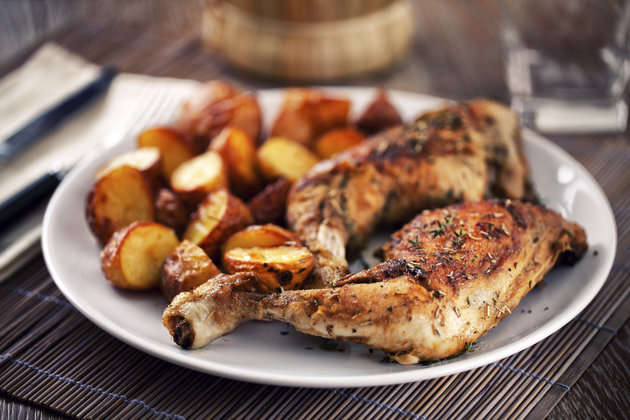
On the heels of the World Health Organization’s blistering report about processed meat, a new study has found that chicken also has some problematic characteristics — though they’re not the cancer-causing kind.
Oxfam America recently released an eye-opening study that details how chicken has skyrocketed in popularity — and profits — in the U.S., but how conditions for workers in the industry have only worsened over time. The comprehensive report found that poultry workers in the $50 billion industry earn near-poverty-level wages, face increasing health risks in the workplace and have minimal job security, but are often too fearful to speak out.
The report, which calls on the four major players in the industry to reform their policies, includes accounts from more than 1,000 former and current industry workers, along with interviews with attorneys, medical experts, analysts and others who are involved in the community.
Oxfam reached out to Tyson Foods, Pilgrim’s, Perdue and Sanderson Farms — which together own 60 percent of the market — but only Tyson Foods responded.
The organization pointed to the major grievances workers decried and outlined a plan to improve the companies’ practices.
Companies Pay Unlivable Wages
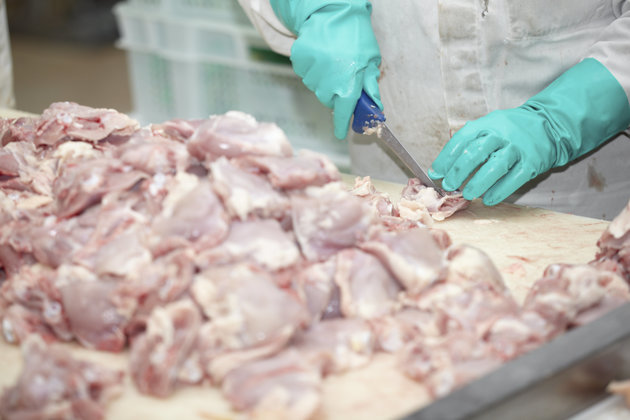
Since about 1978, output in the chicken industry in the U.S. has tripled and the size of the work force has doubled, according to the Oxfam report. But the “real value” of wages has declined by more than 40 percent over the same period.
Workers typically put in more than the standard 40-hour workweek, earn about $11 an hour and often aren’t paid overtime. The average annual income for a poultry worker comes in between $20,000 and $25,000.
The wages are so low that the average full-time poultry worker with two children qualifies for a number of federal benefits programs, including Head Start, SNAP and the National School Lunch Program.
Compounding the issue is the fact that the industry is known to deprive workers of compensation owed to them.
Across the board, 60 percent of poultry companies were guilty of wage theft and hour violations, Kim Bobo noted in her 2011 book “Wage Theft in America.”
And, a 2000 Department of Labor study found that 100 percent of companies neglected to compensate for lunch breaks and for the time it takes to put on and take off safety equipment.
Pilgrim’s and Tyson paid out settlements in two separate cases, and Tyson told Oxfam that it pays its workers “appropriately.” The company added that it commissioned a wage survey and concluded that it pays wages that exceed those of its competitors. Oxfam, however, couldn’t verify the results of the survey.
Oxfam’s proposals: The aid group is urging companies to pay its workers fairly, be more transparent in their policies and commit to “core labor rights.”
Workers Incur Debilitating Injuries And Illnesses
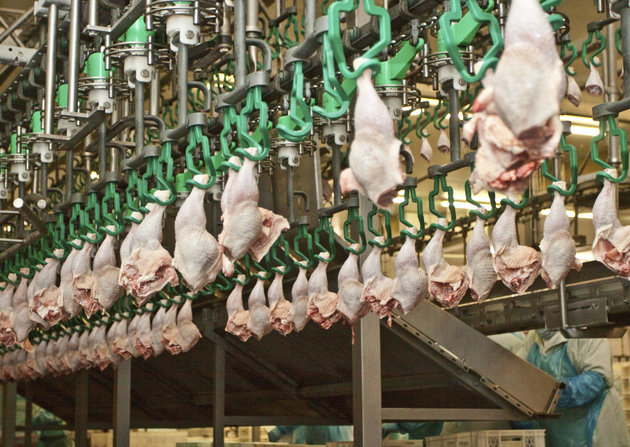
Due to the nature of the work and the speed at which employees are expected to produce, workers in the meat and poultry industry face one of the highest rates of injury and illness.
The most common reported ailment is the development of musculoskeletal injuries, which are due to repeating the same motion. The risks increase when workers are forced to produce at a faster pace, which has been the trend across the industry.
In 1979, the upper limit for line speed was 70 birds per minute. That figure has since doubled, according to the Oxfam report.
Some employees noted that even as the day wears on, so does the speed at which they’re expected to work.
Juanita, who worked the night shift at a Tyson plant in North Carolina, said that after the first shift left, the line would speed up and the process would “get hard.”
“You can’t stand the pain on your shoulders, your hands, because of that repetitive movement,” she told the interviewers. “That’s when you start hurting, rotating your hands and using the scissors in one hand and using the other for another thing. It is just too much.”
These injuries are often exacerbated by the cold temperatures and humidity inside the plants.
But even when workers speak up about injuries, they say they aren’t met with proper care.
When workers seek help, they’re often referred to medical personnel who work on site, may not have the skills to address the injury at hand and have the companies’ interest at heart. Plants and insurers often challenge their claims for workers’ compensation, with companies arguing that the problems aren’t work related.
Other common injuries include cuts and lacerations. Some workers have reported losing the tips of or entire fingers. They face respiratory hazards due to exposure to dust and dander from live chickens, animal waste and ammonia from the cleaning process.
Workers also say they are prone to developing infections due to the fact that they’re deterred from taking bathroom breaks. The issue is that there aren’t enough workers who can stand in for employees when they step away from the job.
Read more @ HuffPost
8 Comments
Very nice article. I definitely appreciate this website.
Keep it up! https://www.highlandguides.com/ vpn
You need to take part in a contest for one of the greatest sites on the web.
I am going to recommend this site! Eharmony special coupon code 2025 https://tinyurl.com/yt83ggsk
This web site really has all the info I wanted about this subject and didn't know who to ask.
what is a vpn https://tinyurl.com/2ytofo73
whoah this weblog is great i really like studying your posts.
Keep up the good work! You already know, many persons are looking round
for this info, you could aid them greatly.
My web page :: nordvpn special coupon code 2024
Hey! This is my first visit to your blog! We are a group
of volunteers and starting a new initiative in a community in the same niche.
Your blog provided us valuable information to work on. You
have done a outstanding job!
Also visit my blog post :: eharmony special coupon code 2024
Thanks for finally writing about > Sorry, But You Can’t Feel Good About Eating Chicken Either –
Orta Blu facebook vs eharmony to find love online
I know this website presents quality depending articles and additional stuff, is there any other web page which offers
these things in quality?
My web page: vpn special coupon
We're a group of volunteers and opening a new scheme in our community.
Your web site offered us with valuable info to work
on. You have done an impressive job and our whole community will be grateful to you.
My homepage vpn special coupon code 2024
Leave A Comment