by Amy DuFault in Fashion
SeriesPart 3: The fashion industry is emerging from its cocoon post-recession, a changed sector where consumers are more cautious, manufacturers are on their toes and designers are struggling to stay afloat doing business as usual. In this five-part series, we take a hard look at the fashion world, speaking with industry leaders, luminaries and experts. This week we ask: Now more than ever, is eco-fashion inextricably linked to conscious connections with land and place?
We might attribute eco-fashion to ’60s youths, with their natural approach to style, but the official terminology came much later. The term “eco-fashion” came into the mainstream in the late ’90s, and 2005 was perhaps the most significant year. EcoSalon’s Louise Lagosi writes, “In 2005, it became a marketing tool which is why we suddenly knew about it. Capitalists needed to bank on a trend and this was something they couldn’t ignore. It became the tipping point for eco-fashion.”
While eco-fashion most certainly did become a focal point for all industry sectors circa 2005, if we take a look at why it has stuck, we might be surprised.
A Consciousness We May Not Be Conscious Of
Owyn Ruck, General Manager of the Textile Arts Center in Brooklyn, says our green awareness has gone beyond being just “eco-friendly” to a deeper understanding of how things are made.
“Understanding not only reminds you of the impact of an object on the environment, but also allows for the true appreciation of the object. Things from our past are easily represented through physical objects, and by understanding more about the making, we pay more respect to our past – and thus ourselves and current environment,” says Ruck.
Pioneering women have entered the sustainable scene, with many dropping the “eco” terminology altogether, introducing heritage craft with natural textiles and dyeing to further promote this awareness. These designers and entrepreneurs have taken our appreciation of what is eco to a new level, where natural materials are not only being used, but are being designed to biodegrade to leave virtually no footprint at all. But there’s something deeper yet at work – something bordering on the primitive.
Ruck says the growing desire to go past the surface of the eco label is a weighty subject.
“What does this even mean to the average person, who may know nothing about the production of the product? The more prevalent these words become, the more people want to understand them. People are not stupid,” says Ruck. “They want to understand what this movement is about, what do these words mean, why the large price tag on designers using natural and sustainable methods? Maybe it’s not to the point yet where the H&M’s of the world using such terms are ignored, but it’s a step in the right direction.”
She adds that education is key, as well as knowing the person or the story behind the brand.
A New Seasonality
Sasha Duerr, Founder and Co-Director of the Permacouture Institute in San Francisco, author of The Handbook of Natural Plant Dyes and co-designer for Adie+George, is one of those pioneering women willing to educate and create in concert. Duerr says creating her line has been an experiment and a labor of love fusing natural textiles with a desire to test out a new seasonality.
Having just completed a full collection of Northern California artisan spun (fair trade), local and seasonal naturally-dyed knits, Adie + George hopes to broaden the topic of biodiversity for color, while also looking at connections to the physical source of materials. Duerr says she hopes her collection will ultimately finish in the compost pile after a very long and well-loved life to create more food, color and fiber for future fashion.
She also asks us to consider something we’re not used to when it comes to fashion: seasonal colors based on what’s in season, as we do with food. Though she says it takes more care, thought, and common sense to understand the benefit of why we should use natural dyes, following what makes the most sense for nature is not always perfect, and it is not always commercial.
“Fashion seasonality in the industry is so far out of sync with actual seasons, that it is difficult to sync your samples to your production process with batch dyeing. So we choose some plant dyes that are always readily available in the urban environment (example: avocado pits). This created the mauves, grays, and pinks in our collection. For the other color [yellow], we derived a system to use two weed dye plants that bookend each other in wet and dry season so that we know if one is not available the other will be,” says Duerr.
Can there be four seasons in fashion when designers are creating this way?
“I think there can absolutely be four local seasons of fashion in sync with what makes the most sense for nature and culture,” she says. “Refining the process is ongoing and creating a healthy and thriving life for ourselves as designers and human beings, also means saying ‘no’ to the insanity of how the industry currently functions on the expectations of ‘fast fashion’ seasonality. Time after time, appreciating more with less is usually the most satisfying.”
Primitive Permaculture
Another design duo working closely with nature is designer John Patrick of John Patrick Organic, in collaboration with knitwear designer Amanda Henderson, for the A/W 2011 season. To document the story of the collection, Patrick collected video footage and provided visuals of his supply chain onto a Sourcemap to document the garments from fiber collection through manufacturing and production local to the Eastern United States. See the inspiring video here about the people behind his collection.
The supply chain began with wool fibers sourced in upstate New York at Hudson Valley Sheep and Wool Company. After the wool was sorted and washed, it traveled to either a mill in Canton, Massachusetts, or directly to Queens, New York to be knit into hand crafted sweaters by Henderson. The fabric used in the collection was created at Draper Knitting in Massachusetts, then cut and sewn in NYC’s historic garment district and finally previewed and exhibited at New York Fashion Week in February 2011.
I asked Henderson if she thinks designers need to have a better connection to where they’re getting their materials. She believes it’s “a fundamental connection that greatly inspires the end result,” and adds that elements of story-telling and honor in fashion has been lost to the past and that perhaps we need to have more of it when considering clothing.
“Native Americans would worship the animals that brought to them necessities for survival. They adorned simple garments beautifully and meticulously in order to honor that animal and what was provided to that individual person and what it meant to them,” says Henderson. “That is the element of fashion I wish to resurrect, which is why this project with Organic meant so much to me. Why I felt that establishing a connection with my materials, and the story of those wools, was so important to both John and me.”
But with a hungry society enamored with fast fashion’s quick catering to trends and bargain basement pricing strategy, can this story really matter to the consumer? Do we as a society have the patience to hear it?
“Now is a perfect time for the consumer to cease spending on numerous new garments with short-lived spans, especially from designers who consider price over both human and clothing quality of life. Rather, to invest in few, very selective pieces, with great meaning to that person, at a higher material quality and technique level. Timeless clothing with hand-made history, and primal human meaning. After all, clothing has been around since the early beginnings of human existence, and can inspire a modern person to consider their roots. That ancestral element, to be passed through the generations,” says Henderson.
Fashioning Self In Relation To Environment
Abigail Doan, fashion writer for EcoSalon, textile artist and founder of Ecco Eco, says that while she is an “eternal optimist” regarding consumer’s connections to clothing, she isn’t so sure that we are closer to being significantly connected to what we wear as a result of a raised fashion consciousness.
Doan says cost and overall availability are things that still influence which items consumers select and incorporate into their wardrobes. Someone living a few hours from a major city is likely to either shop at a local mall, a local main street retailer, or hunt for bargains online when trying to locate new fashion acquisitions.
“This is why I feel that ‘conscious fashion’ also needs to incorporate ideas about fashioning self in relation to the environment as a complete approach to how clothes shopping relates to one’s ethical and environmental views,” says Doan. “Being connected to nature via our clothes must first come from an awareness that is generated by the individual in response to how to create or style an identity that reflects one’s awareness about conservation, materials, and craft.”
Doan, who grew up in a household where hand spinning and sheep shearing were regular activities, goes on to say, “From this platform one can build a wardrobe that reflects a connectedness that is meaningful and perhaps even sustainable.”
Not everyone can have this deep connection to fiber. Doan admits to being biased, as making things by hand and recycling were part of her family’s livelihood. She does, however, believe that using one’s hands is a great way of bringing us closer to any meaningful activity.
“Making things also helps us to understand just how challenging it is to make things well, and this is a great way to understand the value of any product, be it a juicy heirloom tomato or a hand-knit shawl,” she says. “The good news is that many fashion designers are including unique handmade elements in their current collections, and in addition to the beauty that this adds to certain designs, it quite often connects production to local enterprises that utilize raw materials like sustainable fibers, wool, alpaca, or even recycled textiles. I think that it is tremendously satisfying to combine something you have made yourself with an outfit that you might have saved up for or unearthed at a vintage store. Creativity really makes a person radiant, and in the same way that a hike makes us feel good after hours on the trail, working for our fashion might also make us look even more stunning given the energy that we have put into it.”
Designers will always have to make money and consumers will always want something new, but the psychology of fashion is changing.
Duerr-Fossel says it will all come down to our individual lifestyles – that this consciousness extends beyond fashion to many areas including food, transportation and even the way we love one another.
“It is an overall choice to do things that help the environment, in many aspects of your life, and when you start with one, it’s easier to keep going. Which we can see with this idea of homesteading very clearly. I think all these changes and movements feed off one another in a nice way that keeps our society changing to something more positive,” Duerr says.
Our hearts are set on it.
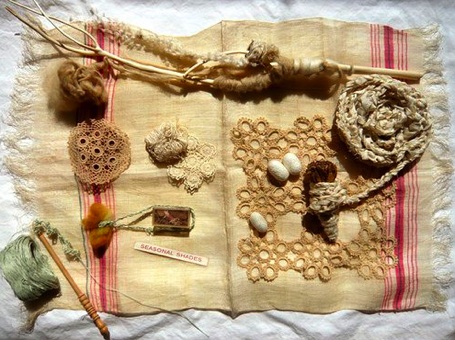
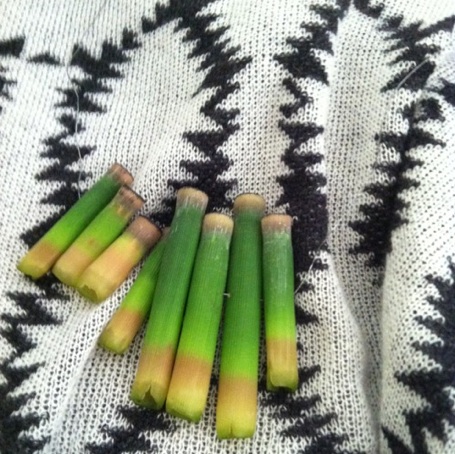
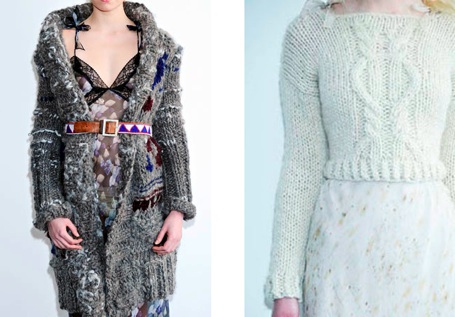

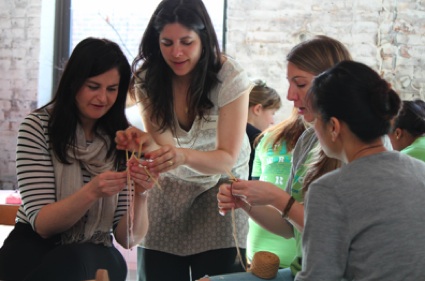
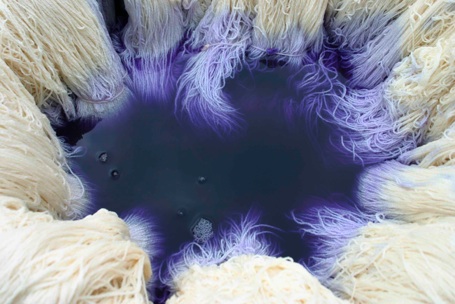
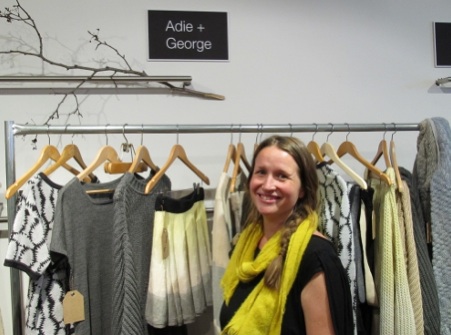
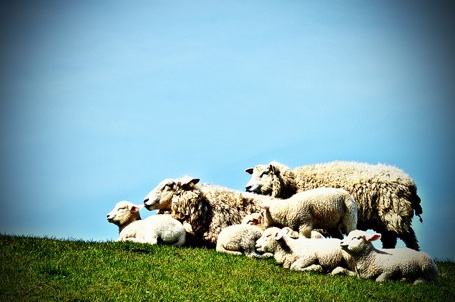
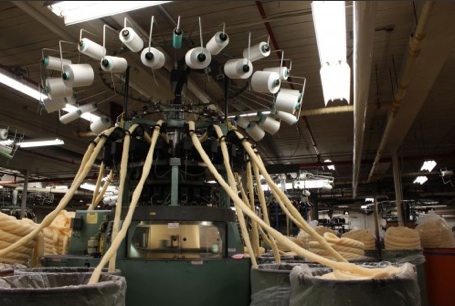
Image: sydigill, b3d, Dan Zen
(Source: www.ecosalon.com )
14 Comments
I couldn't resist commenting. Well written!
Hi every one, here every person is sharing these familiarity, so it's fastidious to
read this webpage, and I used to pay a quick visit this website everyday.
Hi there, just became alert to your blog through Google, and
found that it is really informative. I'm gonna watch out for brussels.
I'll appreciate if you continue this in future.
Lots of people will be benefited from your writing. Cheers!
Hey there would you mind sharing which blog platform you're working
with? I'm going to start my own blog in the near future but I'm having a hard time making
a decision between BlogEngine/Wordpress/B2evolution and Drupal.
The reason I ask is because your design and style seems
different then most blogs and I'm looking for something completely unique.
P.S Apologies for getting off-topic but I had to ask!
Does your website have a contact page? I'm having a tough
time locating it but, I'd like to send you an e-mail. I've got some suggestions for
your blog you might be interested in hearing. Either way, great site and I look forward to seeing it grow over time.
Hello There. I discovered your blog using msn. This is a very well written article.
I'll be sure to bookmark it and return to learn extra of your useful info.
Thank you for the post. I will certainly comeback.
This is really interesting, You are a very skilled blogger.
I have joined your feed and look forward to seeking more of your excellent post.
Also, I've shared your site in my social networks!
I believe what you published was actually very reasonable.
However, consider this, what if you wrote a catchier
post title? I ain't suggesting your information isn't solid, but suppose you added a headline that grabbed a person's
attention? I mean The Post-Recession Fashion Industry: A
Return to Nature – Orta Blu is a little boring. You ought
to look at Yahoo's home page and watch how they create news headlines to
grab viewers to click. You might add a related
video or a related picture or two to grab people excited
about what you've written. Just my opinion, it would make your website a little livelier.
Thank you a bunch for sharing this with all of us you actually realize what you are talking about!
Bookmarked. Please also talk over with my web site =).
We will have a hyperlink trade agreement among us
Have you ever considered writing an ebook or guest authoring
on other blogs? I have a blog based upon on the same topics you discuss and would
love to have you share some stories/information. I know my subscribers would value your work.
If you're even remotely interested, feel free
to send me an e mail.
I do not even know the way I ended up here, however I believed this publish was good.
I don't understand who you're but certainly you're going
to a famous blogger in case you are not already.
Cheers!
What's up, I want to subscribe for this website
to take latest updates, so where can i do it please assist.
I really like what you guys are up too. Such clever work and reporting!
Keep up the terrific works guys I've included you guys to our blogroll.
hi!,I really like your writing very so much! percentage
we be in contact extra about your article on AOL?
I require an expert on this area to unravel my problem.
Maybe that is you! Having a look forward to look you.
Leave A Comment