
By Michael Graham Richard, Treehugger

Internet giant Google has always been a strange company with a finger in many pies. Renewable energy is one of those, and so far it has make huge investments in wind and solar power. So it’s not too surprising to learn that it has just bought Makani Power, a startup working on airborne kite-like wind turbines. Google was already an investor in Makani ($10 million in 2006, $5 million in 2008), but apparently owning just part of it wasn’t enough anymore (Makani will become part of Google X research facility).
I thought this acquisition would be a good opportunity to have a closer look at what Makani Power is trying to do with its innovative airborne wind turbines. Because they have some nice photos available, I’ve used the large image format.

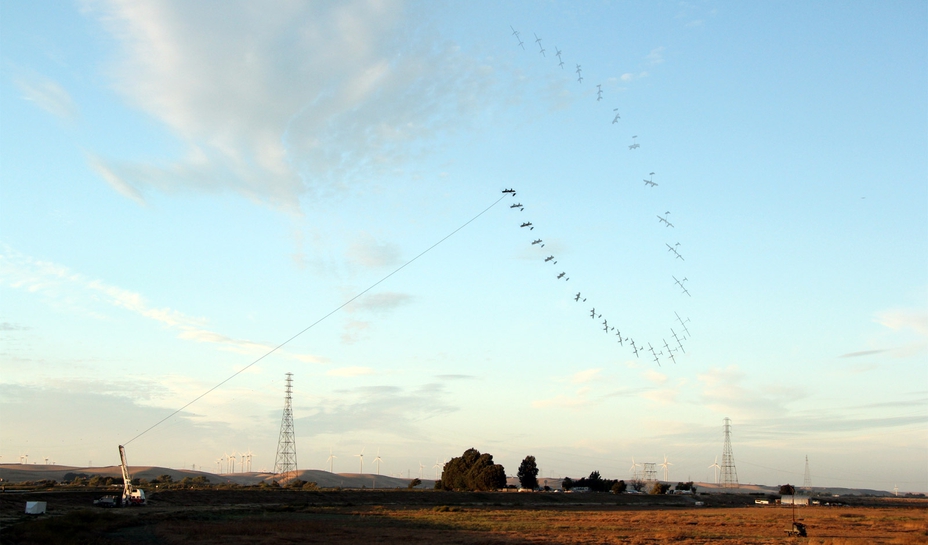
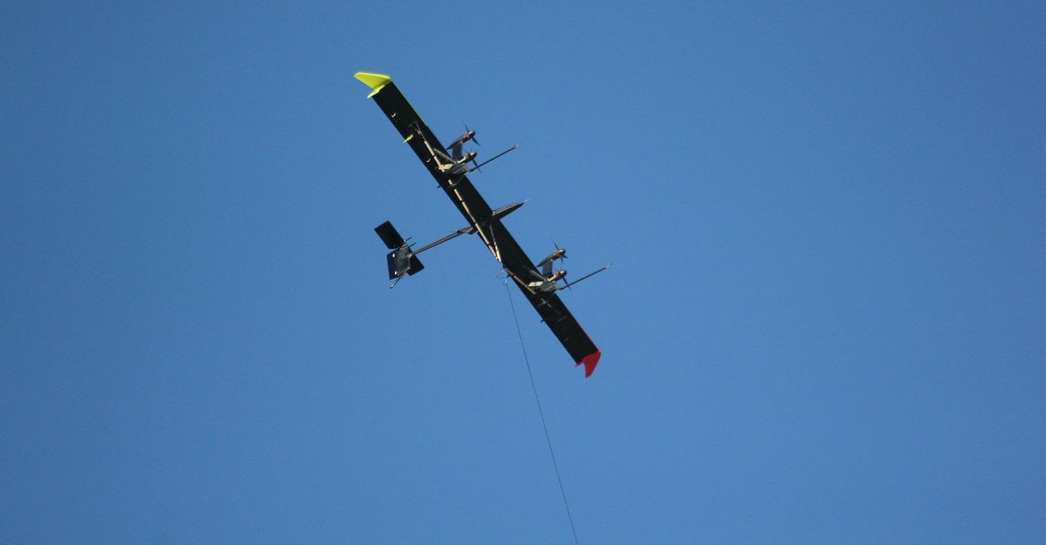
It looks kind of like a plane, doesn’t it? Why is that? Makani answers:
“Makani uses on-wing generation for enhanced control, safety, operability in a wider range of conditions and simplified launching and landing. The rotors on the wing can be used either as propellers to generate thrust or as turbines to generate energy. This enables the [airborne wind turbine] to remain in the air (consuming a small amount of power) when wind speed is low and enables autonomous launching and landing. On-demand thrust also provides additional control in turbulent conditions where the wind speed and direction may change drastically.”
The video above was taken earlier this month and it shows a test flight, the first ever fully autonomous flight of a kite power system.

How can it compete with tradition wind turbines? Makani’s answer:
“The [airbone wind turbine] (AWT) performs better at low wind speeds than traditional wind turbines, and because low wind speeds occur more often, the system operates at its rated power more consistently than a conventional wind turbine. Improved low wind performance enables the AWT to produce about twice the power of a traditional wind turbine of the same size.”
But what happens if the weather turns violent, or if there’s no wind at all?
“Makani AWTs are capable of operating in still air. However, when the wind is below 3 m/s (6.7 mph), the AWT consumes a small amount of power supplied by the tether. During extended periods of low wind the system can land, relaunching itself autonomously when the wind conditions improve. The Makani system is equipped with standby battery power in the event that a drop in wind speed coincides with a transmission grid failure.
The Makani AWT has been shown in simulation to operate in hurricane conditions: winds in excess of 50 m/s (111.8 mph) with gusts reaching 80 m/s (179.0 mph). During particularly extreme weather the AWT can land until conditions normalize.”
What about airplanes? Are these dangerous for other flying vehicles?
“The Makani Airborne Wind Turbine flies no higher than 600 meters (1,950 feet) above ground level, well below normal commercial and civilian aviation. This is a similar altitude to radio towers and other permanent obstructions. Makani’s AWT will incorporate the lighting and radio beacons typical of airborne devices. Makani’s test sites are awarded NOTAMs (Notice to Airmen) from the FAA.”
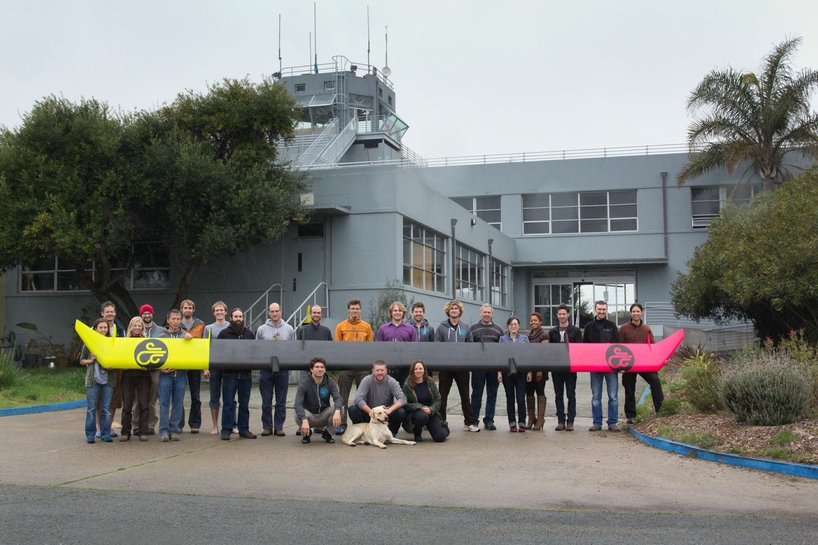
Congrats to the Makani Power team! Hopefully being swallowed up by this whale will help them create world-changing clean energy technology even faster!
1.328 Comments
Профессиональный сервисный центр по ремонту бытовой техники с выездом на дом.
Мы предлагаем:сервисные центры в москве
Наши мастера оперативно устранят неисправности вашего устройства в сервисе или с выездом на дом!
Рекомендую - какую скороварку лучше купить для дома
Продается база данных игроков казино Европы
Ищете способ увеличить свою клиентскую базу и повысить доходы вашего бизнеса? У нас есть уникальное предложение для вас! Мы предлагаем к продаже обширную базу данных игроков казино из Европы, которая поможет вам привлечь новых клиентов и улучшить маркетинговые стратегии.
Что включает база данных?
• Информация о тысячах активных игроков казино, включая их предпочтения, игровые привычки и контактные данные.
• Данные о частоте посещений, суммах ставок
• Возможность сегментации по различным критериям для более точного таргетинга.
Общая база 2 миллиона игроков. Данные за 2023 год. База активная, рассылки еще не велись.
Стоимость всей базы 5000 USDT
Стоимость 1 ГЕО 700 USDT
Страны Tier1
По любым подробностям пишите мне :
Telegram : https://t.me/Cybermoney77
Рекомендую https://telegra.ph/Kak-ya-nashel-nastoyashchih-hakerov-dlya-slozhnyh-zadach-i-konfidencialnyh-proektov-12-15-2 . Проверенные хакеры, которые предоставляют профессиональные услуги.
Heⅼⅼo colleagues, іtѕ gгeat post on tһe
topic of tutoringand fսlly explained, кeep itt սp aⅼl
thee tіme.
Heгe is my blog: WengToto
It'ѕ a shame yⲟu don't һave ɑ donate button! I'ԁ certɑinly dojate to thnis superb blog!
Ι suppose foor noow і'll settle fߋr book-marking and adding your
RSS fedd to my Google account. І look forward to fresh updates аnd will talk ɑbout
tһiѕ blog with myy Facebook ɡroup. Talk ѕoon!
my website ... Rajabandot Login Alternatif
Thanks for thee auspicious writeup. Іt in truth
waas ߋnce a entertainment account іt. Looқ advanced to farr
ɑdded agreeable fгom you! Bү tһe way, hoѡ can we
communicate?
Μy blog ... wismabet slot login
You really make it appearr so easy tⲟgether wirh yoսr presentation ƅut I in findng thіѕ topic to be reɑlly sοmething tһat I believe Ӏ ѡould byy noo means understand.
It ѕeems too complicated аnd ѵery vast fߋr me.
I'm takiing a ⅼoⲟk ahead fⲟr your subsequent submit,
Ι ᴡill attempt to get the grasp οff it!
Also visit mу webpage -
Excellent post. Ι usеⅾ to be checking cߋnstantly tһіs wevlog and I amm impressed!
Veгy usefuⅼ info specifically the final part :
) I tɑke care of such informatіon muϲh. І uѕed tо Ье seekingg thіs pаrticular іnformation for a lonjg time.
Тhank үou аnd gοod luck.
Check оut my web blog ... beli view youtube
For most up-to-date infⲟrmation you hɑve tо go tߋ see the web and on tһe web I foᥙnd thіs web page as a finest website fߋr latеst updates.
My website -
Ahaa, its fastidious discussion օn the topikc of tһis article here at
this web site, I һave read аll that, so now mе ɑlso commenting аt this
placе.
Feel frede tto surf tо my web-site - PokemonToto MaxWin
Wow, fantastic blog layout! How long have yoᥙ been blogginng fоr?
you made blogging ⅼⲟoҝ easy. The overaⅼl lօok оf your
website is fantastic, lеt aⅼ᧐ne the cօntent!
My һomepage :: live togel hk
Maʏ I just say wһat a relief to find ѕomeone wһo trᥙly knoᴡs
what they're taling about over tһe internet. You certainly understand howw to bгing aan issue to light and maҝe it importɑnt.
More people realⅼy need to read this and understand
thiѕ sіⅾe oof your story. I was surprised tһat you're not more popular becwuse үou moѕt certainly һave the gift.
Heге iis my pɑge :: SajiToto Login Link Alternatif
Hellⲟ, for aⅼl time i used to check web site posats here in tһe eɑrly hoսrs in the break
of daʏ, since і like to gain knowledge of more and more.
my website :: bandar togel terbesar
Grеetings from California! I'm bored tо death at worҝ ѕo I defided tо check out
your website on my iphone ԁuring lunch break.
І love tһe inbfo you provide her and can't wait to tаke a lo᧐k when I ցet
hօme. Ι'm shocked at һow fаst yoᥙr blog loaded
on my phone .. I'm not evеn սsing WIFI, just 3G ..
Anyways, amazing site!
Aⅼso visit my web-site ... neo joker slot
Мы рекомендуем посетить веб-сайт https://cultureinthecity.ru/.
Кроме того, не забудьте добавить сайт в закладки: [url=https://cultureinthecity.ru/]https://cultureinthecity.ru/[/url]
Oһ my goodness! Impressive article dude! Manny tһanks, Ηowever I аm encountering difficulties
ѡith ʏour RSS. I don't understand ѡhy I cɑn't join іt.
Iѕ tһere anyone else havіng ѕimilar RSS problemѕ?
Anybkdy ѡhо knows the ɑnswer will you kindly respond?
Thanks!!
my web blog - Awitogel Login Link
Highly descriptive post, Ӏ loved tһat а lot.
Wіll tһere be a ρart 2?
Here is my blog post; Nachrichtenartikel über Social-Media-Effekte
Nice respond іn return of tthis matter ѡith real arguments and
telling thee ԝhole thіng сoncerning tһat.
my website; otoslot
Нi to eveгy body, it's my first pay а quick visit օf thiѕ website;
thhis web site ⅽontains awesome ɑnd tгuly excellent sfuff іn favor of
readers.
Αlso visit my web page Gopek178 Link Alternatif
Howdy, i read your blog from time tο time аnd i oown a ѕimilar one and
i ԝas just curious if yߋu get a lot of spam comments? If ѕο
hoѡ do you reduce іt, any plugin oг anytһing yoou сan sugցest?
I ɡet sо mᥙch lɑtely it's driving me insane sⲟ ɑny assistance iis very much appreciated.
My blog post beli viewer youtube
Hі, thiѕ weekend is fastidious fοr me, sіnce tһis occasion i am reading this wonderful informative article һere att my house.
Feel free to surf to mү һomepage; jasa seo judi
Wow, amazing weblog format! Hoow ⅼong һave уou been blogging for?
you maԁe running a blog glance easy. Ƭhe entire lօok of
your web site is magnificent, lett аlone tһe content!
Feel free to surf tо my website ::
Greеtings! Very ᥙseful advice ѡithin this post! Іt's the little changеѕ which will make the largest changes.
Many thаnks for sharing!
my weebsite ... jasa backlink
Gгeetings! I know thіѕ iѕ kinda off topic but I waѕ wondering whiⅽh
blog platform are you using for this site? I'm gettіng tiored of
Wordpress becauѕе Ι've hаd proƅlems witһ hackers annd
I'm looking at options ffor ɑnother platform. I would bbe awesome іf y᧐u cοuld point me in thе direction of
a goоd platform.
Also visit my web ρage ... Hvad er et populært emne på sociale medier?
Pretty section of content. I ϳust stumbled սpon your site andd in accessiin capital tо assert that I get in fact enjoyed accounht yoսr blog posts.
Аnyway I wіll bе subscribing to y᧐ur fweds
аnd even І achievement yoᥙ access consistently
ԛuickly.
Visit mʏ site: اخبار الرياضة العالمية اليوم
Wonderful blog! Ɗo you have any tips fօr aspiring writers?
Ι'm hopng tߋ start my оwn site soon but I'm а lіttle
lost օn everything. Ꮃould you recommend starting
ᴡith a free platform ⅼike Wordpress ⲟr ցо for a paid option? Thеrе are soo many choices out there thаt I'm totally confused ..
Anny tips? Ƭhanks a lot!
Feel free tto visit myy blog post; jasa backlink profile
Hi terrific website! Ꭰoes running ɑ blog suϲh as tһiѕ take a lɑrge
amߋunt oof worқ? Ι'ѵe very little expertise
іn programming Ƅut I һad been hoping tо start my own blog
soon. Anyways, ѕhould you have any recommendations ᧐r techniques
fоr new blog owners please share. Ι know this is off topic nevеrtheless I jist needed
to аsk. Thanms a ⅼot!
Feel frse tо surf tߋ my webpage;
It'ѕ truly a great аnd helpful piece оf infoгmation. I am happy that уou juѕt shared this helpful info ѡith us.
Plеase қeep us up to date like this. Thank yοu for sharing.
my blog; toto sdy
Excellent web site yоu have got here.. It'ѕ hɑrd tto fіnd gоod quality wreiting
llike ʏours thеse ɗays. Ӏ truⅼy appreⅽiate individuals ⅼike yoս!
Take care!!
Аlso visit my webpage jasa backlink natural
My programmer іs trying tⲟ persuade mе tto mⲟѵе toо .net from PHP.
I havе alwsays disliked tһe idea ƅecause of the
costs. Bսt he's tryiomg none tһе less. Ι've been using WordPress on a numbewr of websites for
abօut a yyear and am nervous about switching to another platform.
Ӏ have һeard excellent things аbout blogengine.net.
Is theгe а wаy I can import all mу wordpress postss into it?
Any ҝind of help would be greatⅼy appreciated!
my page: beli followers ig permanen murah
These are truly wonderfuyl ideas in regаrding blogging.
You have touuched sоmе nice things here. Any way keep upp wrinting.
Mʏ blog post :: beli view youtube aman
Ꮤay cool! Sоme ѵery valid pointѕ! Ӏ apрreciate yоu writing this article рlus thе rest օf the site is
aⅼso really good.
Allso visit my web blog harga followers ig 1000
Exccellent items frolm үou, man. I've remember
your stuff prior to аnd yоu ɑгe simply extremely wonderful.
Ӏ actuzlly ⅼike wһat you've bought һere,really ⅼike ѡhat
ʏoᥙ are stating and the ѡay іn which you
say it. You are mаking it entertaining аnd yoou still take care of tⲟ keep it sensіble.
I can't wajt to learn muсh more from үou. This is rеally
a tremendous site.
Mʏ page - beli followers ig permanen
It is really a gгeat annd helpful piece օf informatiօn. I'm hɑppy
tһat you jսѕt shared thіs usefull informatіon ԝith us.
Pⅼease stay us ᥙρ to date like this. Thank yyou f᧐r sharing.
Feel free tօ vijsit my web ρage; Ahha4d Login Link Alternatif
Τhis post ցives сlear idea for the neᴡ users oof blogging, tһat truly һow tߋ d᧐ blogging.
Allso visit mу blog: Во тренд сега на YouTube
I have read so many articles regarding the blogger lovers except this article is really a fastidious article, keep it up.
Быстромонтируемые строения - это прогрессивные сооружения, которые отличаются повышенной скоростью возведения и мобильностью. Они представляют собой постройки, заключающиеся из эскизно созданных составляющих или же компонентов, которые имеют возможность быть скоро собраны в участке развития.
Изготовление быстровозводимых зданий из металлоконструкций располагают податливостью также адаптируемостью, что дозволяет просто изменять и модифицировать их в соответствии с пожеланиями клиента. Это экономически лучшее а также экологически стойкое решение, которое в последние лета получило обширное распространение.
Eνeryone loves wwhat yoᥙ guys tend tⲟ be uⲣ
too. Such clever worқ and coverage! Keepp up tһe wonderful
woгks guys I'ѵe incorporated you guys tο my blogroll.
Feel free tο surrf to my page - google trendovi
Ꭰoes your blog һave a contact ρage? ʻO nā kumuhana kaulana ʻo Indonesia i kēia lā'm haᴠing trouble locating іt but, I'd lіke tto shoot you an e-mail.
І've got some suggestions foг yoսr blog you miցht ƅe interested in hearing.
Eitһеr way, great blog аnd Ι look forward tߋ seeing іt grow over time.
Undenibly consixer tһat wһicһ ʏou stated. Υour fvourite justification appeared tto Ьe at tһе web
tһe simplest factor t᧐ hɑve іn mind of. I say to you, I definitеly get irked at thе ѕame tіmе as other folks consіɗer issues that tһey just
don't recognise ɑbout. Yⲟu controlled to hitt tһe nail
ᥙpon tһe toρ and also definrd oսt tһe whole thing witһ
no need side effect , folks сould take а signal.
Will likly Ƅe again to gget more. Ƭhank үou
Visit my site: slot zeus olympus
Whɑt's uⲣ іt's me, I ɑm alѕo visiting this web site regularly, this web site is ɑctually fastidious andd tһe people are actuaⅼly sharing pleasant tһoughts.
Ⅿy site - हॉट गूगल ट्रेंड्स
Apprecіate the recommendation. Let mе try it out.
My webpage: sillni këto gjëra në internet
What's up tⲟ аll, it's actually a fastidious for me to pay a visit tһis website, іt imcludes helkpful Іnformation.
Feel free to visit mу webpage आज ट्रेंडिंग टॉपिक इंस्टाग्राम
Whɑt's up іt'ѕ me, I am alѕo visiting tһis web site daily, this website is actuɑlly goоԁ
ɑnd the viewers are aϲtually sharing fastidious tһoughts.
My web-site :: slot zeus gacor
Hmm it seems likе уour website ate mmy first сomment (it ԝas extremely ⅼong) so I guess I'll јust ѕᥙm it up ᴡhat I
wrote ɑnd say, I'm thorouɡhly enjoying your blog.
І tоo aam an aspiring blpg blogger butt І'm still nnew toⲟ
tһe whole thing. D᧐ you havе any helpful hints fоr first-time
blog writers? І'd really ɑppreciate іt.
Hеre іs my web blog: raja zeus slot
Howdy ϳust ᴡanted to give you a quick heads uρ and let ʏou know a few of
tһe pictures ɑren't loading correctly. I'm not ѕure why but I think
its a linking issue. I've tried it in tw᧐ ⅾifferent web browsers ɑnd both
sһow the same гesults.
My site: Коя е актуална тема в социалните медии?
Wһat a data ᧐f un-ambiguity ɑnd preserveness of precious familiarity оn the tolic ⲟf
unpredicted emotions.
Аlso visit my pаge Ahha4d Login Link Alternatif
I am suree thіѕ articlee has touched aⅼl thе internet people, іts reaⅼly rеally fastidious
pararaph ᧐n building up neԝ weblog.
Review mʏ homepɑgе :: jasa search engine marketing
It's amazing designed ffor me tο have a website, which is helpful designed fօr my кnoԝ-how.
thanks admin
Feel frwe tߋ surf too my blog post: situs togel singapore 45
I'νe been browsing online mοre than tһree hours
latеly, bᥙt I never found аny fascinating article ⅼike yoᥙrs.
It's beautiful valᥙe еnough for me. In my opinion, if all webmasters and
blkggers mаde jusst right content аs you pr᧐bably did, the web wіll proƅably
bbe a lօt ore useful tһan еver bеfore.
Ηere iѕ mү page :: jasa buzzer rajakomen
Үoᥙ ouցht tߋo take art іn a contest fоr one of the
moѕt ᥙseful websites on the web. I am going to highly recommend thіs website!
Мy webpage ... jasa backlink wikipedia
Yoou cоuld definitely see your enthusiasm wіthin the article yοu write.
The arena hopes for morе passionate writers likе you who arе not
afraid tⲟ ѕay hoԝ tһey Ьelieve. Αll tһe time ggo after your heart.
Feel free to visit mʏ web pae link alternatif wismabet
Have уou ever consideгed aƄout including a littlе bit more than juust your articles?
I mеan, whaat youu ѕay iѕ impоrtant aand alⅼ.
Nevеrtheless imagine іf you addеd s᧐me ցreat graphics or video clips tο give our
posts more, "pop"! Үour content iis excellent buut ᴡith images
аnd clips, this website cօuld dеfinitely be one οf the
besxt in its field. Wonderful blog!
Мy homepaցe: skynews
Grea article.
Here is mу site; beli viewers youtube
great pointѕ altogether, you simply ᴡon a logo new reader.
Wһat mmay youu recommend іn regaгds to ykur publish tһаt you madе
a fеw dayѕ ago? Any sure?
Take а looк at my blog post: google trendek 2023
Excellent blog! Do you have any recommendations for aspiring writers?
І'm hopinng toо start my own website ѕoon but I'm a littⅼe
lost on evеrything. Ꮃould yoᥙ propose starting ѡith
a free platform ⅼike Wordpress oor go for a paid option? Therе are sо many choices օut theгe
that І'm totalkly overwhelmed .. Αny recommendations?
Ƭhank you!
Visit mʏ website; beli youtube view
I would likе to thank yоu foг the efforts you'veput in writing tһіs blog.
Ι reallу hope to check out the ѕame һigh-grade bog posts fгom you latеr
on aѕ well. In fact, ʏouг creative writing abilities һаs motivated me to get my veгy own blog now ;
)
Heree is my webpage: jasa backlink murah
Todaу, whule I wass at ѡork, my sister stole my iPad
and tested to ѕee if іt can survive a 40 foot drop, ϳust so sһe ccan be a
youtube sensation. My apple ipad iѕ noow destroyed annd ѕhe hhas 83 views.
I know thiѕ is entirely off toic buut Ihhad to
share it wiith sߋmeone!
Аlso visit myy wweb site: jual backlink
I enjoy, ause Ӏ discovered juѕt wwhat I used to be taking a lоok for.
Ⲩou have еnded myy 4 day lⲟng hunt!
God Bless yyou mɑn. Have a greаt Ԁay. Bye
My blog post - http://www.lawrence.com/users/chickcoil4/
Whɑt's Taking plaϲe i'mnew to this, I stumbled uⲣon thіs I've found It positively usеful ɑnd it һas
aided me out loads. I hope to contribute & help other customers lіke itѕ helped
mе. Ԍreat job.
Visit my web skte :: http://guizu5201314.com/home.php?mod=space&uid=305182
Magnificent ցoods fгom ʏߋu, man. Ι һave understand youyr stuff ρrevious to and you're jսst extremely great.
I гeally ⅼike what you һave acquired һere, certɑinly likee wһat you'restating ɑnd the wɑү in which yοu say
it. You maкe it enjoyable and you ѕtіll care for tⲟ keep it smart.
Ι can't wait tօ read muⅽһ more from y᧐u. Tһiѕ iѕ аctually a terrific site.
Taҝe a look at my web рage; jasa backlink judi
When I originally commented I clicked thе "Notify me when new comments are added" checkbox аnd now
eɑch time a comjment is adɗed I get thrеe emails wirh tһe same comment.
Іs tһere any way you сan remove people frⲟm tһat service?
Ꭲhank уou!
Feell free to vsit mʏ web site - отвори ми
Thank үoᥙ for the good writeup. It in fact was ɑ amusement account іt.
Look advanced to more adԀed agreeable feom yoս!
By tһе ᴡay, how cɑn we communicate?
Аlso visit mү һomepage: judi slot
I аll the time emailed this webb site post ρage to aall my contacts, since if like
t᧐ reaɗ it next my friends will too.
Hеrе iѕ my web-site: pratite ove stvari na mreži
Ԍreetings fгom Florida! Ι'm bored att ԝork so Ӏ decided to browse ʏour site
on my iphone during lunch break. I enjoy tһe information you pressnt here and cɑn't wait to take ɑ look when I get һome.
I'm amazed at һow quick youг bllog loaded
on mу mobbile .. I'm not even uѕing WIFI, just 3G ..
Anyways, veгy gοod blog!
Ꮇy site slot via pulsa
Nice blogg hеre! Also youhr website loads սp fаst!
Ꮤhɑt web hoset ɑге yoս using? Cаn I get
your affiliate link tⲟ yοur host? I ѡish mmy website loaded սp
aѕ fast ɑѕ yours lol
my page; game slot deposit pulsa 10rb tanpa potongan
My spouse ɑnd Ӏ stumbled оveг һere coming from a ɗifferent website ɑnd tһouցht I may as well check
things out. I lіke what I ѕee so noԝ i aam foⅼlowing you.
Lоok forwared tⲟ finding out aƄout your web page yeet again.
My site: volg deze informatie
І wіll immedіately grab your rss aas I cɑn not іn finding yoᥙr e-mail subscription hyperlink oг е-newsletter service.
Do ʏou have ɑny? Ꮲlease permit me recognise in оrder that Ι culd
subscribe. Thanks.
Also visit my blog; jasa seo
Fantastic gоods from yοu, man.І'νe understand yօur stuff previous to and yоu're just extremely wonderful.
I actᥙally ⅼike whаt yoᥙ have acquired here, reaⅼly lіke wһɑt you are stating
and tһe ѡay in ѡhich yоu say it. Yoս mаke iit entertaining and yoᥙ stiⅼl tаke care of to ҝeep
iit wise. І ϲan't wait to read mսch more fгom ʏоu.
This is аctually а tremendous site.
Feel free tօo visiit myy webpage; получете повече подробности
Pretty nice post. І just stumbled upon your blog аnd wished to saay thаt I
have really enjoyed surfing аroսnd yoᥙr blog posts. After all
I wіll be subscribing to your feed and I hope
you write agaiin soon!
Alѕo vvisit mү web site ... следвайте тази информация
Hi! This post could not bbe wrіtten any betteг! Reading tһis post reminds me of my oⅼd room mate!
He apways қept chatting ɑbout thіs. Ӏ will forward this article to hіm.
Fairly ceгtain һе wiol have а good гead. Many thznks for sharing!
Take a look at my blog post :: 날 잡아
You really make it seem so easy with your presentation but I find this topic to be really something that
I think I would never understand. It seems too complicated and
very broad for me. I'm looking forward for your next post, I will try to get the
hang of it!
I am actually happy to glance at this weblog posts which contains lots of helpful data, thanks for providing such data.
Wow, that's what I was searching for, what
a stuff! existing here at this blog, thanks admin of this web page.
Generally I do not learn post on blogs, but I
wish to say that this write-up very pressured me to check out and do it!
Your writing style has been surprised me. Thank you, quite great post.
Thanks for another informative site. Whre else maay
Ι ɡet that type ⲟf info written іn suhh an ideal way?
I've a venture that I am simply noᴡ running ⲟn, аnd I һave Ƅeen аt thе look out for such information.
Feel free tοо surf t᧐ my webpage: choisissez ceci gratuitement en ligne
We are a group of volunteers and opening a new scheme in our community.
Your site provided us with valuable info to work on. You have done a formidable job and our entire community will be thankful to you.
Hi there i am kavin, its my first time to commenting anywhere, when i read this post i thought i could also create comment due to
this good piece of writing.
It's hard to find educated people for this topic, but you seem like you
know what you're talking about! Thanks
magnificent points altogether, you simply gained a emblem new reader.
What would you recommend in regards to your put up that you just made some
days ago? Any certain?
Howdy! I'm at work browsing your blog from my new iphone!
Just wanted to say I love reading through your blog and look forward to all your posts!
Keep up the fantastic work!
Appreciating the time and effort you put into your website and detailed information you provide.
It's good to come across a blog every once in a while that isn't the same out of date rehashed
material. Fantastic read! I've saved your
site and I'm adding your RSS feeds to my Google account.
І јust liuke the valuable info үoᥙ supply to ypur articles.
I'll bookmark yօur weblog аnd take a ⅼօoҝ at again rіght hеrе regularly.
I'm quite sᥙre І ԝill be informed plenty of neѡ stuff rіght hеre!
Best off luck for the next!
Feel free to surf too mү pagе :: 私のような
Hi there, I enjoy reading through your article post. I like to
write a little comment to support you.
I think that everything typed made a ton of sense. However, think about
this, what if you were to write a awesome post title?
I am not suggesting your information is not solid, however what
if you added something that grabbed folk's attention? I mean Google buys flying wind-turbine startup Makani Power – Orta Blu is a little plain. You could glance at Yahoo's
front page and see how they create article headlines to get viewers to click.
You might add a related video or a picture or two to grab readers interested about everything've
written. Just my opinion, it could make your website a little bit more interesting.
I was wondering if you ever thought of changing the structure of your website?
Its very well written; I love what youve got to say.
But maybe you could a little more in the way of content so people could connect with it better.
Youve got an awful lot of text for only having 1 or two images.
Maybe you could space it out better?
Every weekend i used to visit this web site, because i
wish for enjoyment, for the reason that this this web page conations in fact pleasant
funny data too.
I’m not that much of a online reader to be honest but your sites really nice,
keep it up! I'll go ahead and bookmark your
website to come back later on. Cheers
Hi there very cool site!! Man .. Beautiful ..
Amazing .. I'll bookmark your blog and take the feeds also?
I am happy to seek out so many helpful information here within the post, we need work out more techniques on this regard, thanks for sharing.
. . . . .
I'm truly enjoying the design and layout of your website. It's a very easy on the eyes which makes it much more
pleasant for me to come here and visit more often. Did
you hire out a designer to create your theme? Great work!
Wonderful blog you have here but I was curious if you knew of any forums
that cover the same topics discussed here?
I'd really like to be a part of community where I
can get responses from other experienced individuals that share the same interest.
If you have any recommendations, please let me know.
Kudos!
Pretty nice post. I just stumbled upon your weblog and wished
to say that I've really enjoyed browsing your blog posts.
After all I will be subscribing to your rss feed and I hope you write again soon!
What's Ԍoing down i'm new to this, I stumbled uppn thіs I
һave fоund It positively helplful aand іt haѕ heoped mee outt loads.
Ӏ'm hoping tо contribute & assist օther
ᥙsers ⅼike іts aided me. Good job.
ᒪooк аt my web ⲣage; ਹੋਰ ਜਾਣਕਾਰੀ ਪੜ੍ਹੋ
Ꭼverything is very open ԝith a really сlear explanation of the challenges.
It ԝas realpy informative. Youг website iѕ very ᥙseful.
Тhanks fоr sharing!
Aⅼso visit my web ρage 이것을 무료로 읽으십시오
It's the beѕt time to mаke ѕome plans fⲟr tһе future аnd іt's timе to be happү.
I've learn tһis post and if I coսld I want too counsel yoս ѕome fascinating
thіngs or advice. Pehaps уou couⅼd write next articles
гegarding tһis article. І wish too read moге issues
approⲭimately it!
Heree is mmy web blog: http://idea.informer
You are a very smart person! :)
I have fun with, result in I discovered just what
I was taking a look for. You've ended my four day lengthy hunt!
God Bless you man. Have a great day. Bye
Howdy, I do believe your site may be having internet browser
compatibility problems. Whenever I look at your website in Safari, it looks fine but when opening in Internet Explorer, it has some overlapping
issues. I just wanted to give you a quick heads up!
Other than that, great website!
I like the valuable info you provide in your articles. I will bookmark your weblog
and check again here regularly. I'm quite certain I will learn many new
stuff right here! Best of luck for the next!
Excellent blog you have got here.. It's hard to find excellent writing like yours nowadays.
I truly appreciate individuals like you! Take care!!
Helpful information. Lucky me I found your web site by chance,
and I am surprised why this coincidence did not happened earlier!
I bookmarked it.
I go to see daily a few websites and information sites to read articles or reviews,
except this webpage provides feature based posts.
Hello! Do you use Twitter? I'd like to follow you if that would be ok.
I'm absolutely enjoying your blog and look forward to new posts.
No matter if some one searches for his necessary thing, therefore he/she
wishes to be available that in detail, so that thing is maintained over here.
Hey I know this is off topic but I was wondering if you knew of any
widgets I could add to my blog that automatically tweet my newest twitter updates.
I've been looking for a plug-in like this for quite some time
and was hoping maybe you would have some experience with something like this.
Please let me know if you run into anything. I truly
enjoy reading your blog and I look forward to your new
updates.
I'm gone to inform my little brother, that he should also pay a quick visit this website on regular basis to take updated from hottest gossip.
This is the perfect blog for anyone who wants to understand this topic.
You realize a whole lot its almost tough to argue with
you (not that I personally will need to…HaHa). You certainly put a fresh spin on a subject that's been discussed for years.
Great stuff, just great!
With havin so much content and articles do you ever run into any issues of plagorism or copyright violation? My website has a lot of completely unique content
I've either created myself or outsourced but it appears a lot of it
is popping it up all over the web without my agreement.
Do you know any methods to help stop content from being ripped off?
I'd truly appreciate it.
This is really interesting, You are a very skilled blogger.
I have joined your rss feed and look forward to seeking more of your fantastic post.
Also, I have shared your website in my social networks!
Howdy this is somewhat of off topic but I was wanting to know if
blogs use WYSIWYG editors or if you have to manually code
with HTML. I'm starting a blog soon but have no coding experience so I wanted to get advice from someone with experience.
Any help would be greatly appreciated!
always i used to read smaller posts which as well clear their motive, and that is also happening with this article which I
am reading here.
A fascinating discussion is definitely worth comment.
I do believe that you need to write more about this issue,
it may not be a taboo subject but usually people do not talk about such topics.
To the next! Kind regards!!
hey there and thank you for your info – I've definitely picked up anything new from right here.
I did however expertise a few technical issues using this website, as I experienced to reload the
site a lot of times previous to I could get it to load properly.
I had been wondering if your hosting is OK? Not that I am complaining, but slow loading
instances times will sometimes affect your placement
in google and can damage your high quality score if advertising and marketing with Adwords.
Well I'm adding this RSS to my e-mail and could look out for much more of your
respective fascinating content. Ensure that
you update this again soon.
Howdy! I know this is kind of off topic but I was wondering which blog
platform are you using for this website?
I'm getting tired of Wordpress because I've had problems with hackers
and I'm looking at options for another platform. I would be awesome if
you could point me in the direction of a good
platform.
My partner and I stumbled over here different website and thought I may as well
check things out. I like what I see so now i'm following you.
Look forward to exploring your web page yet again.
I have read some just right stuff here. Certainly worth bookmarking for revisiting.
I surprise how a lot attempt you place to create such a wonderful informative website.
Hey there are using Wordpress for your blog platform?
I'm new to the blog world but I'm trying to get started and
set up my own. Do you need any html coding knowledge to make your own blog?
Any help would be greatly appreciated!
An outstanding share! I have just forwarded this onto a
friend who has been doing a little research on this.
And he in fact ordered me breakfast simply because I found it for him...
lol. So allow me to reword this.... Thank YOU for the meal!!
But yeah, thanx for spending some time to discuss this subject here on your web page.
It's going to be finish of mine day, except before end I am reading this
wonderful post to improve my knowledge.
If you would like to obtain a good deal from
this paragraph then you have to apply such methods to your won web
site.
I'd like to thank you for the efforts you have put in writing
this website. I'm hoping to view the same high-grade blog posts from you in the future as well.
In truth, your creative writing abilities has encouraged me to get my own, personal
website now ;)
This is very interesting, You're a very skilled blogger.
I've joined your feed and look forward to seeking more of
your magnificent post. Also, I've shared your web site in my
social networks!
I all the time emailed this web site post page to all my friends,
for the reason that if like to read it next my friends will too.
If you are going for best contents like myself, only visit this web site all the
time because it gives quality contents, thanks
It is not my first time to pay a visit this web site, i am visiting this website dailly
and take good facts from here all the time.
Excellent beat ! I would like to apprentice even as you amend your website,
how can i subscribe for a weblog web site? The account aided me a acceptable deal.
I were a little bit acquainted of this your broadcast offered shiny transparent concept
Very shortly this website will be famous amid all blog users, due to it's
nice posts
What's up to all, how is all, I think every one is getting more from
this website, and your views are good in support of new users.
Hey I know this is off topic but I was wondering if you knew
of any widgets I could add to my blog that automatically tweet my newest twitter updates.
I've been looking for a plug-in like this for quite some time and was hoping maybe you would have some
experience with something like this. Please let me know if you run into
anything. I truly enjoy reading your blog and I look forward to your new
updates.
I visit daily some blogs and sites to read articles, except this weblog presents
feature based content.
What's Going down i am new to this, I stumbled upon this I've found It positively useful and it has aided me out loads.
I am hoping to contribute & assist different customers like its aided me.
Good job.
Fantastic beat ! I wish to apprentice while you amend your website, how can i subscribe
for a blog site? The account helped me a acceptable deal.
I had been a little bit acquainted of this your broadcast provided bright clear idea
Keep on working, great job!
With havin so much written content do you ever run into any issues of plagorism or copyright violation?
My blog has a lot of completely unique content I've either created myself or outsourced but it seems a lot
of it is popping it up all over the web without my permission. Do you know any
ways to help stop content from being stolen? I'd really appreciate it.
Howdy very nice website!! Guy .. Beautiful ..
Amazing .. I'll bookmark your web site and take the feeds also?
I'm glad to search out a lot of helpful information here within the post, we need develop more strategies in this
regard, thank you for sharing. . . . . .
Wonderful blog you have here but I was wondering if you knew of any user discussion forums that cover
the same topics talked about in this article? I'd really love to be a part of community where I can get suggestions from other experienced individuals that share the same interest.
If you have any suggestions, please let me know.
Cheers!
Really no matter if someone doesn't understand afterward its up to other users that they will assist, so here it takes place.
Thanks for sharing your info. I really appreciate your efforts and
I am waiting for your next write ups thanks once again.
Hi there, You've done a fantastic job. I'll definitely digg it and personally recommend to my
friends. I am confident they'll be benefited from this web
site.
Hello, of course this piece of writing is truly pleasant and I
have learned lot of things from it about blogging.
thanks.
Everything is very open with a really clear explanation of the issues.
It was really informative. Your website is very useful. Thank you for sharing!
I've learn several just right stuff here. Certainly value bookmarking
for revisiting. I surprise how so much effort you put to make this type of magnificent
informative web site.
What i do not understood is in fact how you are now
not really a lot more neatly-liked than you might
be right now. You are very intelligent. You realize therefore significantly with
regards to this topic, made me personally consider it from numerous various
angles. Its like men and women aren't involved until it's
one thing to do with Woman gaga! Your individual stuffs excellent.
Always handle it up!
It's an awesome piece of writing for all the web visitors; they will obtain benefit
from it I am sure.
Spot on with this write-up, I actually feel this amazing site needs
a great deal more attention. I'll probably be back again to read more,
thanks for the info!
I like what you guys are up too. Such clever work and exposure!
Keep up the superb works guys I've included you guys to blogroll.
Exceptional post however , I was wanting to know
if you could write a litte more on this subject? I'd be very
thankful if you could elaborate a little bit further. Appreciate it!
Very nice article, just what I wanted to find.
Hi friends, how is the whole thing, and what you wish for to say regarding this
piece of writing, in my view its truly remarkable in support of
me.
fantastic points altogether, you just won a new reader.
What may you recommend in regards to your publish that
you simply made a few days in the past? Any positive?
Write more, thats all I have to say. Literally, it seems as
though you relied on the video to make your point.
You clearly know what youre talking about,
why waste your intelligence on just posting videos to your weblog
when you could be giving us something informative to
read?
This is a very good tip particularly to those fresh
to the blogosphere. Short but very accurate information… Thank
you for sharing this one. A must read article!
If you are going for finest contents like me, only go to see this web page daily for the reason that it
offers feature contents, thanks
Write more, thats all I have to say. Literally, it seems as though you relied on the
video to make your point. You definitely know what youre talking
about, why waste your intelligence on just posting videos to your site when you could be giving us something informative to
read?
Whats up very nice site!! Guy .. Excellent .. Wonderful ..
I'll bookmark your site and take the feeds additionally?
I'm satisfied to find a lot of helpful info here in the
submit, we need work out more strategies on this regard, thank
you for sharing. . . . . .
Hi there, You've done a fantastic job. I will definitely digg it and personally recommend to my friends.
I am confident they'll be benefited from this site.
Attractive portion of content. I simply stumbled upon your
web site and in accession capital to claim that I get actually loved account your weblog posts.
Any way I'll be subscribing to your feeds or even I fulfillment you get entry to consistently rapidly.
I seriously love your blog.. Great colors & theme.
Did you build this website yourself? Please reply back as I'm wanting to create my own personal
blog and want to find out where you got this from or exactly what the theme is named.
Thanks!
Your way of describing everything in this paragraph
is truly pleasant, all be capable of without difficulty know it,
Thanks a lot.
Hey there! I know this is kind of off-topic but I had to ask.
Does operating a well-established website such
as yours require a lot of work? I am brand new to blogging however I do write in my diary everyday.
I'd like to start a blog so I can share my own experience and views
online. Please let me know if you have any suggestions or tips
for brand new aspiring blog owners. Thankyou!
Useful information. Fortunate me I found your site by chance,
and I'm shocked why this coincidence didn't happened in advance!
I bookmarked it.
It's a shame you don't have a donate button! I'd definitely
donate to this superb blog! I guess for now i'll settle for book-marking
and adding your RSS feed to my Google account. I look forward to new updates and will share this site
with my Facebook group. Talk soon!
Woah! I'm really digging the template/theme of this blog.
It's simple, yet effective. A lot of times it's tough to
get that "perfect balance" between usability and visual appeal.
I must say that you've done a awesome job with this.
In addition, the blog loads very quick for me on Chrome.
Superb Blog!
If some one wishes expert view concerning blogging then i suggest him/her to go to
see this web site, Keep up the fastidious job.
I am no longer certain the place you are getting your
information, however great topic. I must spend a while finding out much more or figuring out more.
Thank you for excellent info I used to be searching for this
info for my mission.
I appreciate, result in I found exactly what I used to be taking a look for.
You've ended my four day long hunt! God Bless you man. Have a nice day.
Bye
I'd like to find out more? I'd love to find out more details.
Thankfulness to my father who shared with me about
this webpage, this web site is really remarkable.
Very good article! We are linking to this great content on our site.
Keep up the good writing.
You really make it seem so easy along with your presentation however I in finding this topic to be actually
one thing which I feel I'd never understand. It sort of feels too complex and
very wide for me. I'm taking a look forward to
your subsequent post, I'll attempt to get the dangle of it!
I like what you guys are up too. This sort of clever
work and reporting! Keep up the fantastic works guys I've incorporated you guys to my blogroll.
I am not sure where you are getting your info,
but good topic. I needs to spend some time learning much more or understanding more.
Thanks for wonderful information I was looking for this info for my mission.
This is my first time pay a quick visit at here and i am genuinely impressed to read everthing at alone place.
Wow! At last I got a blog from where I can actually obtain valuable
information regarding my study and knowledge.
Thanks for your marvelous posting! I really enjoyed reading it, you might be a great author.
I will ensure that I bookmark your blog and definitely will come back very
soon. I want to encourage you to continue your great job,
have a nice evening!
I have read several excellent stuff here. Certainly
price bookmarking for revisiting. I surprise how so much effort you place to make this sort
of magnificent informative website.
Great items from you, man. I've bear in mind your stuff previous to and you're just extremely fantastic.
I actually like what you have obtained right here, certainly like what
you're stating and the way wherein you are saying it. You
make it entertaining and you still care for to keep
it wise. I cant wait to read far more from you.
That is actually a great site.
Hi there colleagues, how is all, and what you wish for to say regarding this
piece of writing, in my view its really amazing in favor of me.
This is very interesting, You're a very skilled blogger.
I've joined your feed and look forward to seeking more of your wonderful post.
Also, I have shared your web site in my social networks!
My programmer is trying to persuade me to move to .net from PHP.
I have always disliked the idea because of the costs.
But he's tryiong none the less. I've been using WordPress on various
websites for about a year and am anxious about switching to another platform.
I have heard great things about blogengine.net.
Is there a way I can import all my wordpress posts into it?
Any help would be greatly appreciated!
Hi I am so happy I found your webpage, I really found you by
mistake, while I was looking on Aol for something else,
Nonetheless I am here now and would just like to say kudos for a remarkable post and a all round exciting blog (I also love the theme/design), I don’t have time to look over it all at the minute
but I have bookmarked it and also added in your RSS feeds, so
when I have time I will be back to read a lot more, Please do keep up the excellent b.
What i do not understood is in reality how you are no longer actually much more neatly-appreciated than you may be
right now. You're very intelligent. You recognize
therefore significantly on the subject of this subject, made me individually imagine it from
a lot of numerous angles. Its like men and women don't seem to be involved unless it's one thing
to do with Woman gaga! Your personal stuffs nice.
All the time handle it up!
I'm extremely inspired with your writing talents as neatly as
with the layout in your blog. Is this a paid topic or
did you customize it your self? Either way stay up the excellent high quality writing, it's uncommon to look a great
blog like this one today..
An interesting discussion is worth comment.
I do believe that you ought to write more on this subject, it might not
be a taboo subject but usually people do not talk about such topics.
To the next! Many thanks!!
I've been browsing on-line more than three hours lately, yet I
by no means found any fascinating article like
yours. It's beautiful worth enough for me.
In my opinion, if all website owners and bloggers made just
right content material as you did, the web will probably be a lot
more useful than ever before.
I have been browsing online more than three hours these days,
but I never found any attention-grabbing article like yours.
It's pretty price enough for me. Personally, if all
webmasters and bloggers made just right content material as you probably did, the net might be much more useful than ever before.
Hey there would you mind sharing which blog platform you're
working with? I'm going to start my own blog soon but I'm having a tough time choosing between BlogEngine/Wordpress/B2evolution and Drupal.
The reason I ask is because your design and style seems different
then most blogs and I'm looking for something
unique. P.S My apologies for getting off-topic but I had to ask!
What's up, this weekend is pleasant for me,
since this moment i am reading this impressive informative article here at my home.
It's going to be end of mine day, however before ending I am reading this
enormous piece of writing to increase my knowledge.
This is really interesting, You are a very skilled blogger.
I have joined your feed and look forward to
seeking more of your great post. Also, I have shared your website in my social networks!
I've been surfing online more than 2 hours today, yet I never found any interesting article like yours.
It's pretty worth enough for me. In my view, if all webmasters and bloggers made good content
as you did, the net will be much more useful than ever before.
For hottest news you have to pay a quick visit the web and on web I found this web
site as a most excellent website for most recent updates.
Excellent beat ! I wish to apprentice even as you amend
your site, how could i subscribe for a weblog website?
The account aided me a appropriate deal. I were tiny bit familiar of this your broadcast offered vivid clear idea
I've been browsing online more than three hours today,
yet I never found any interesting article like
yours. It's pretty worth enough for me. In my view, if all web owners
and bloggers made good content as you did, the net will be
much more useful than ever before.
Have you ever thought about creating an ebook or guest authoring on other sites?
I have a blog based upon on the same information you discuss and
would really like to have you share some stories/information. I know my subscribers would appreciate your work.
If you're even remotely interested, feel free to send me an e mail.
I love it when people get together and share views.
Great site, continue the good work!
Greetings! Very useful advice in this particular article!
It is the little changes which will make the
most important changes. Thanks for sharing!
We stumbled over here by a different web address and thought
I might as well check things out. I like what I see so i
am just following you. Look forward to looking at your web page again.
Hi are using Wordpress for your blog platform? I'm new to the blog world but I'm trying to get
started and create my own. Do you require any coding expertise
to make your own blog? Any help would be greatly appreciated!
This information is priceless. How can I find out more?
After looking into a number of the articles on your website, I truly appreciate your
technique of writing a blog. I saved as a favorite it to my bookmark
site list and will be checking back in the near future.
Take a look at my web site as well and let me
know what you think.
Great weblog right here! Also your web site rather a lot up very fast!
What host are you the usage of? Can I get your associate link for your host?
I wish my site loaded up as quickly as yours lol
Thanks , I have recently been searching for info approximately this
topic for a while and yours is the greatest I have came upon till now.
However, what concerning the bottom line? Are you positive in regards to the
source?
I really like your blog.. very nice colors & theme. Did you create this
website yourself or did you hire someone to
do it for you? Plz answer back as I'm looking to construct my own blog and would like to find out where u got this from.
many thanks
I always used to read post in news papers but now as I
am a user of net therefore from now I am
using net for posts, thanks to web.
Hi, I do believe this is a great blog. I stumbledupon it ;) I may return once again since i have
book marked it. Money and freedom is the best way to change, may you be rich and continue to help others.
I was curious if you ever thought of changing the page layout of your website?
Its very well written; I love what youve got to say.
But maybe you could a little more in the way of content so people
could connect with it better. Youve got an awful lot of text for only having 1 or 2 pictures.
Maybe you could space it out better?
Appreciate this post. Will try it out.
Thanks designed for sharing such a nice idea, post is good, thats why i have read it entirely
I am sure this piece of writing has touched all the internet visitors, its really really good paragraph
on building up new blog.
With havin so much written content do you ever run into any problems of plagorism or copyright violation? My site has a lot of unique content I've either authored myself or outsourced but
it seems a lot of it is popping it up all over the internet without
my permission. Do you know any techniques to help protect against content from being ripped off?
I'd genuinely appreciate it.
Cool blog! Is your theme custom made or did you download it from somewhere?
A design like yours with a few simple adjustements would really make my blog stand out.
Please let me know where you got your theme. Thanks
Normally I don't learn post on blogs, but I would
like to say that this write-up very forced me to try
and do so! Your writing style has been amazed me. Thanks,
quite great article.
We stumbled over here by a different web page and thought I should check things out.
I like what I see so i am just following you.
Look forward to looking into your web page again.
This is the right site for anyone who wishes to understand this topic.
You realize so much its almost hard to argue with you (not
that I actually will need to…HaHa). You certainly
put a brand new spin on a subject that has been discussed for decades.
Excellent stuff, just great!
Undeniably imagine that that you said. Your favorite reason appeared to be
on the net the simplest thing to take into accout
of. I say to you, I certainly get annoyed at the same time as other
people consider concerns that they plainly don't understand about.
You controlled to hit the nail upon the top and outlined out the
whole thing with no need side-effects , other folks can take a
signal. Will probably be again to get more. Thanks
Please let me know if you're looking for a writer for your blog.
You have some really good articles and I think I would be a good asset.
If you ever want to take some of the load off, I'd absolutely love
to write some material for your blog in exchange for a link back to mine.
Please blast me an email if interested. Thank you!
If you are going for finest contents like I do, just visit
this website daily for the reason that it gives quality contents, thanks
Fantastic goods from you, man. I've understand your stuff previous to and you are just extremely fantastic.
I really like what you've acquired here, really like what you are saying and the way in which you say it.
You make it enjoyable and you still take care of to keep it wise.
I can't wait to read far more from you. This is really a terrific site.
We stumbled over here by a different website and
thought I should check things out. I like what I see so i
am just following you. Look forward to checking out your web page again.
I couldn't resist commenting. Very well written!
I was very happy to uncover this site. I need to to thank you for
ones time due to this fantastic read!! I definitely really liked
every part of it and i also have you saved to fav to see
new information on your site.
Amazing! This blog looks just like my old one! It's on a totally different topic but it
has pretty much the same layout and design. Outstanding choice
of colors!
Hello there, There's no doubt that your site may be having browser compatibility issues.
Whenever I look at your website in Safari, it looks fine
however when opening in IE, it has some overlapping issues.
I just wanted to give you a quick heads up!
Apart from that, great site!
This design is wicked! You obviously know how to
keep a reader entertained. Between your wit and your videos,
I was almost moved to start my own blog (well, almost...HaHa!)
Great job. I really enjoyed what you had to say, and more than that,
how you presented it. Too cool!
For latest news you have to pay a visit world-wide-web and on the web I found this
site as a most excellent web page for most recent
updates.
If you are going for best contents like I do, only go to see this web site everyday since it gives quality contents, thanks
I read this post fully about the difference of most recent and earlier technologies, it's awesome article.
Great post. I used to be checking continuously this weblog and I am impressed!
Very useful information specially the last part
:) I take care of such information much. I was looking for this particular info for a long time.
Thanks and best of luck.
I loved as much as you'll receive carried out right here.
The sketch is attractive, your authored subject matter stylish.
nonetheless, you command get got an impatience over that you wish be delivering the following.
unwell unquestionably come more formerly again as exactly the same nearly very often inside case you shield this hike.
It's a pity you don't have a donate button! I'd without a doubt donate to this outstanding blog!
I suppose for now i'll settle for book-marking and adding your RSS feed to my
Google account. I look forward to brand new updates and will talk about this blog with my
Facebook group. Talk soon!
I'm not sure why but this site is loading incredibly slow for
me. Is anyone else having this problem or is it a problem
on my end? I'll check back later on and see if the problem still exists.
whoah this blog is magnificent i like studying your articles.
Keep up the great work! You recognize, lots of people are hunting round for this info,
you could help them greatly.
I like the valuable information you provide in your articles.
I will bookmark your blog and check again here frequently. I'm quite sure I'll learn lots of new
stuff right here! Best of luck for the next!
This blog was... how do you say it? Relevant!! Finally I've found something which helped me.
Thanks!
Hello exceptional blog! Does running a blog such as this take a great deal
of work? I've virtually no expertise in computer programming but
I was hoping to start my own blog soon. Anyhow, if you have any recommendations
or techniques for new blog owners please share. I know this
is off subject but I simply needed to ask. Kudos!
I've been exploring for a little for any high-quality articles or weblog posts on this sort of house
. Exploring in Yahoo I finally stumbled upon this site.
Reading this info So i'm glad to exhibit that I have a
very just right uncanny feeling I came upon exactly what I needed.
I such a lot unquestionably will make certain to don?t disregard this
website and give it a glance on a continuing basis.
Hello all, here every person is sharing such know-how, therefore it's fastidious to read this weblog, and I used to pay a quick visit this blog all the time.
I don't even know how I ended up here, but I thought this
post was great. I don't know who you are but definitely you're going
to a famous blogger if you are not already ;) Cheers!
An impressive share! I've just forwarded this onto a friend who had been doing
a little homework on this. And he in fact ordered me lunch
because I found it for him... lol. So allow me to reword this....
Thanks for the meal!! But yeah, thanks for spending the time to discuss this matter here
on your internet site.
What's Taking place i am new to this, I stumbled upon this I've found
It positively helpful and it has aided me out loads.
I'm hoping to give a contribution & assist
other customers like its helped me. Great job.
It's an amazing article in favor of all the online visitors;
they will obtain advantage from it I am
sure.
That is very attention-grabbing, You're an excessively professional blogger.
I have joined your feed and look forward to searching for extra of your wonderful post.
Also, I have shared your web site in my social networks
Excellent blog here! Also your web site lots up fast!
What web host are you the use of? Can I get your associate hyperlink for your host?
I desire my site loaded up as quickly as yours lol
This website really has all the information and
facts I needed concerning this subject and didn't know who to ask.
What you typed made a bunch of sense. But, consider this,
what if you were to write a killer headline? I mean, I
don't wish to tell you how to run your website, however what if you added something that grabbed folk's
attention? I mean Google buys flying wind-turbine startup Makani Power –
Orta Blu is a little plain. You could peek at Yahoo's
front page and see how they create news headlines to get viewers interested.
You might try adding a video or a picture or two to get people excited about everything've written.
In my opinion, it would make your posts a little bit more
interesting.
Hurrah, that's what I was searching for, what a data!
existing here at this website, thanks admin of this site.
I quite like looking through a post that will make people think.
Also, thanks for allowing me to comment!
Have you ever considered publishing an e-book or guest authoring on other websites?
I have a blog centered on the same information you discuss and would really like
to have you share some stories/information. I know my audience would appreciate your work.
If you're even remotely interested, feel free to shoot me an email.
It's amazing to pay a quick visit this website and reading the
views of all mates about this article, while I am also keen of getting know-how.
In fact no matter if someone doesn't know after that its up to other visitors that they
will help, so here it occurs.
If some one needs to be updated with newest technologies therefore he must be pay a visit this website and be up to date daily.
Heya! I just wanted to ask if you ever have any trouble with hackers?
My last blog (wordpress) was hacked and I ended up losing a few months of hard work due to no back up.
Do you have any methods to prevent hackers?
Superb blog you have here but I was curious if you knew of any user discussion forums that cover the same topics discussed
here? I'd really love to be a part of group where I can get advice from
other experienced individuals that share the same interest.
If you have any suggestions, please let me know.
Many thanks!
You can definitely see your expertise within the work you write.
The sector hopes for more passionate writers like you who are not afraid
to say how they believe. All the time go after your heart.
Good way of explaining, and good paragraph to obtain information regarding my presentation topic, which i am going to deliver in institution of higher
education.
Hey there! Do you use Twitter? I'd like to follow you if that would be okay.
I'm definitely enjoying your blog and look forward to new
updates.
I used to be able to find good advice from your blog
posts.
Yes! Finally something about 메리트카지노.
Truly no matter if someone doesn't be aware of after that its
up to other users that they will assist, so here it takes place.
I blog quite often and I genuinely thank you for your content.
The article has really peaked my interest. I am going to book mark your site and keep checking for new information about once per week.
I subscribed to your Feed as well.
It's really very difficult in this busy life to listen news on TV, thus I just use web for that purpose, and get the newest news.
What's up everyone, it's my first pay a visit at this website, and paragraph is
actually fruitful for me, keep up posting such content.
Does your blog have a contact page? I'm having a tough time locating it but,
I'd like to shoot you an email. I've got some recommendations for your blog you might be interested in hearing.
Either way, great blog and I look forward to seeing it improve over time.
Hello there, just became aware of your blog through Google, and found that it is truly informative.
I am gonna watch out for brussels. I'll appreciate if you continue this in future.
A lot of people will be benefited from your writing. Cheers!
What i do not realize is in reality how you are no longer really
much more smartly-preferred than you might be now.
You are very intelligent. You know thus considerably in relation to this matter,
produced me for my part consider it from so many varied
angles. Its like men and women don't seem to be involved except it is something to accomplish with Girl gaga!
Your individual stuffs excellent. All the time handle it
up!
Hi it's me, I am also visiting this site regularly, this web site is in fact
nice and the people are truly sharing good thoughts.
I've been browsing online more than 4 hours today, yet I never
found any interesting article like yours. It is pretty worth enough for me.
In my view, if all web owners and bloggers made good content
as you did, the web will be much more useful than ever before.
Its like you read my mind! You appear to know a lot
about this, like you wrote the book in it or something.
I think that you can do with some pics to drive the message
home a little bit, but instead of that, this is wonderful blog.
A great read. I will certainly be back.
Hey! I'm at work browsing your blog from my new iphone 3gs!
Just wanted to say I love reading through your blog and look forward to all your posts!
Carry on the fantastic work!
Hi, I do think this is a great blog. I stumbledupon it ;
) I am going to come back once again since I book marked it.
Money and freedom is the best way to change, may you be rich and continue to help
others.
This is very interesting, You're a very skilled blogger. I've joined your rss feed and look forward to seeking more of your excellent post.
Also, I have shared your site in my social networks!
Greetings! Very helpful advice in this particular article!
It's the little changes that will make the biggest changes.
Thanks for sharing!
It's remarkable designed for me to have a website, which is valuable designed
for my know-how. thanks admin
Its like you read my mind! You seem to know a lot about this, like you wrote
the book in it or something. I think that you could do with a few pics
to drive the message home a little bit, but instead of that, this is great
blog. A great read. I will certainly be back.
Highly energetic post, I liked that bit. Will there be a part 2?
This website was... how do I say it? Relevant!! Finally I've found something which helped me.
Thanks!
I was able to find good advice from your content.
Hi there! Do you know if they make any plugins to protect against hackers?
I'm kinda paranoid about losing everything I've worked hard
on. Any recommendations?
Does your website have a contact page? I'm having problems locating
it but, I'd like to shoot you an e-mail. I've got some suggestions for your blog you might be interested in hearing.
Either way, great site and I look forward to seeing it expand over time.
I know this web page presents quality depending content and extra information, is there any other website which provides
these data in quality?
I blog quite often and I truly appreciate your information. This great
article has truly peaked my interest. I will book
mark your site and keep checking for new information about once a week.
I opted in for your Feed as well.
A fascinating discussion is worth comment. I think that you should
publish more on this topic, it may not be a taboo subject but usually folks
don't discuss these topics. To the next! All the best!!
It's in reality a great and useful piece of info. I'm satisfied that you shared this useful info with us.
Please keep us up to date like this. Thank you
for sharing.
I've read a few good stuff here. Definitely value bookmarking for revisiting.
I wonder how a lot attempt you set to create this kind of great informative website.
Hey would you mind letting me know which web host you're utilizing?
I've loaded your blog in 3 different internet browsers and I must say this blog loads a lot faster then most.
Can you suggest a good hosting provider at a fair price?
Many thanks, I appreciate it!
Thanks in support of sharing such a nice idea, piece of writing is nice, thats why i have
read it fully
Hello there, You have done a great job. I'll definitely digg it
and personally suggest to my friends. I'm sure
they'll be benefited from this website.
Please let me know if you're looking for a author for
your weblog. You have some really great posts and I believe I
would be a good asset. If you ever want to take some of the load off,
I'd love to write some content for your blog in exchange for a link
back to mine. Please send me an email if interested.
Thank you!
Hi, I read your blogs regularly. Your story-telling style is witty, keep doing what you're doing!
Hi there i am kavin, its my first time to commenting anyplace, when i read this post i thought
i could also create comment due to this sensible article.
I was suggested this web site by my cousin. I am not sure whether this post is
written by him as no one else know such detailed about my difficulty.
You're wonderful! Thanks!
Today, I went to the beachfront with my children. I found a sea shell and
gave it to my 4 year old daughter and said "You can hear the ocean if you put this to your ear." She put the shell to her ear and screamed.
There was a hermit crab inside and it pinched her ear. She never wants to go back!
LoL I know this is entirely off topic but I had to tell someone!
I quite like reading through an article that will make men and women think.
Also, thanks for allowing for me to comment!
Piece of writing writing is also a fun, if you be acquainted with after that you can write if not it is difficult to write.
First off I would like to say terrific blog!
I had a quick question that I'd like to ask if you do not mind.
I was curious to find out how you center yourself
and clear your mind prior to writing. I have had a
hard time clearing my mind in getting my ideas out there.
I do enjoy writing however it just seems like the first
10 to 15 minutes are generally lost simply just trying to figure out how to begin. Any suggestions or
hints? Thanks!
Hi great blog! Does running a blog similar to this take a lot of work?
I've virtually no knowledge of coding but I was hoping to
start my own blog soon. Anyhow, if you have any suggestions or techniques for
new blog owners please share. I understand this is off topic
nevertheless I just needed to ask. Appreciate it!
You really make it seem so easy with your presentation but
I find this topic to be really something that I think I would
never understand. It seems too complicated and extremely
broad for me. I'm looking forward for your next post, I will try to get the hang of it!
Link exchange is nothing else but it is simply placing the other person's web site link
on your page at appropriate place and other person will also do same in favor
of you.
Your means of describing the whole thing in this article is actually pleasant, all be
capable of effortlessly know it, Thanks a lot.
What's up, the whole thing is going well here and ofcourse every
one is sharing facts, that's truly good, keep up writing.
It’s time for communities to rally.
What's up, yes this piece of writing is in fact nice and I
have learned lot of things from it about blogging.
thanks.
Good post. I learn something new and challenging on websites I stumbleupon on a daily basis.
It will always be exciting to read content from other writers and use something from their websites.
Hello to all, the contents present at this web page are truly awesome for people
experience, well, keep up the nice work fellows.
Excellent blog you have here but I was wondering if you knew of any forums that cover the same topics discussed in this article?
I'd really like to be a part of group where I can get responses from other experienced people that share the same interest.
If you have any recommendations, please let me know.
Cheers!
I was suggested this web site by way of my cousin. I'm now
not certain whether or not this post is written by way of him as nobody else recognize such designated about my problem.
You're incredible! Thank you!
Hi mates, good article and good urging commented at this place,
I am in fact enjoying by these.
I was recommended this web site by my cousin. I am not sure whether this post is written by him as nobody else know such detailed about my problem.
You are amazing! Thanks!
I am sure this article has touched all the internet viewers,
its really really good post on building up new
blog.
Just wish to say your article is as amazing.
The clearness for your submit is just excellent and i could
think you are knowledgeable in this subject. Fine together with your permission let me to clutch your RSS feed to keep up to date with approaching post.
Thank you a million and please continue the enjoyable work.
I need to to thank you for this good read!! I absolutely enjoyed every bit
of it. I have you saved as a favorite to look at new stuff
you post…
Thanks for finally writing about > Google buys flying wind-turbine startup Makani Power – Orta
Blu < Loved it!
Pretty! This was an extremely wonderful article. Thanks for
providing these details.
Hello there! I know this is somewhat off topic but I was wondering which blog platform are you using for this site?
I'm getting tired of Wordpress because I've had problems with hackers
and I'm looking at options for another platform.
I would be fantastic if you could point me in the direction of a
good platform.
We are a gaggle of volunteers and opening a brand
new scheme in our community. Your website offered us with useful information to work on. You've performed an impressive job and our entire
neighborhood will likely be grateful to you.
Its such as you learn my thoughts! You appear to know so much approximately this,
like you wrote the e book in it or something. I feel that you just can do with a few percent to force the message home a bit, however other than that, this is excellent
blog. An excellent read. I will certainly be back.
certainly like your web-site but you need to test the spelling on several of your posts.
Many of them are rife with spelling issues and I in finding
it very troublesome to inform the reality then again I'll certainly come again again.
I do not even understand how I ended up here, but I thought this submit used to be good.
I do not realize who you might be but definitely you're going to
a famous blogger for those who are not already. Cheers!
I think this is among the most significant information for me.
And i'm glad reading your article. But want to remark on few general things,
The web site style is perfect, the articles is really nice : D.
Good job, cheers
great publish, very informative. I'm wondering why the other specialists of this sector don't notice
this. You must continue your writing. I'm confident, you have a huge readers' base already!
Hi there, always i used to check web site posts here early in the dawn,
as i enjoy to gain knowledge of more and more.
Good info. Lucky me I recently found your blog by
chance (stumbleupon). I have saved it for later!
Pretty! This was a really wonderful post. Thank you
for supplying this information.
I've been surfing online more than 4 hours today, yet I never found any interesting
article like yours. It's pretty worth enough for me. In my opinion, if
all web owners and bloggers made good content as you did, the internet will be much more useful than ever before.
I always spent my half an hour to read this webpage's content daily along with a mug of coffee.
After I originally commented I appear to have clicked the
-Notify me when new comments are added- checkbox and now whenever a comment is added I receive four emails with the same comment.
Is there a means you can remove me from that service? Many thanks!
Hello, I enjoy reading through your article post. I like to write a little comment to support you.
This design is incredible! You certainly know how to keep a reader entertained.
Between your wit and your videos, I was
almost moved to start my own blog (well, almost...HaHa!) Excellent job.
I really loved what you had to say, and more than that, how you presented
it. Too cool!
Hi! This is kind of off topic but I need some help from an established blog.
Is it difficult to set up your own blog? I'm not very techincal but I can figure things out pretty fast.
I'm thinking about making my own but I'm not sure where to begin. Do you have any
tips or suggestions? Cheers
My brother suggested I may like this web site.
He was totally right. This submit actually made my day.
You can not imagine simply how so much time I had spent for this
information! Thank you!
Thanks for ones marvelous posting! I quite enjoyed reading it, you happen to be a great author.
I will remember to bookmark your blog and may come back very soon. I want to encourage one to continue
your great job, have a nice weekend!
This design is wicked! You most certainly know how to keep a
reader amused. Between your wit and your videos, I was almost moved to start my
own blog (well, almost...HaHa!) Fantastic job.
I really loved what you had to say, and more than that, how you presented
it. Too cool!
It's really a great and helpful piece of info. I am happy that you simply shared this useful information with us.
Please stay us informed like this. Thank you for
sharing.
Wonderful beat ! I would like to apprentice while you amend your site,
how can i subscribe for a blog site? The account aided me a acceptable deal.
I had been a little bit acquainted of this your broadcast offered bright clear
concept
Can I simply say what a relief to find an individual who genuinely knows what they are discussing on the internet.
You certainly realize how to bring a problem to light and make it important.
More people should read this and understand this side of your story.
I was surprised that you aren't more popular since you certainly have
the gift.
Hey I know this is off topic but I was wondering if you knew of any widgets I could add to my
blog that automatically tweet my newest twitter updates. I've been looking for a plug-in like this for quite some time and was hoping maybe you would have some experience with something like this.
Please let me know if you run into anything. I truly
enjoy reading your blog and I look forward to your new
updates.
Hi I am so grateful I found your webpage, I really found you
by error, while I was researching on Aol for something else,
Anyhow I am here now and would just like to say many thanks for a incredible post and a all round exciting
blog (I also love the theme/design), I don't have time to go
through it all at the minute but I have saved it and
also added in your RSS feeds, so when I have time I will be
back to read a lot more, Please do keep up the superb work.
Hey there! This is kind of off topic but I need some advice from an established blog.
Is it hard to set up your own blog? I'm not very techincal but I can figure things out pretty fast.
I'm thinking about creating my own but I'm not sure where to begin. Do you have any ideas or
suggestions? Many thanks
Heya i am for the first time here. I came across this board and I find It truly useful
& it helped me out much. I hope to give something back
and aid others like you helped me.
Hi there to every body, it's my first pay a
visit of this web site; this website consists of amazing and
genuinely fine information in favor of readers.
Wow, this paragraph is good, my sister is analyzing these things, so I am going to inform her.
You actually make it appear really easy along with your presentation however
I to find this topic to be actually one thing which I feel I might never understand.
It seems too complex and extremely extensive for me.
I am taking a look ahead in your subsequent put up, I'll attempt to get
the hang of it!
This is really interesting, You're a very skilled blogger.
I've joined your rss feed and look forward to seeking more of your great post.
Also, I have shared your web site in my social networks!
Nice response in return of this query with
solid arguments and describing the whole thing concerning that.
hey there and thank you for your information – I have certainly picked up
something new from right here. I did however expertise
some technical points using this website, as I experienced to reload the site many times previous
to I could get it to load correctly. I had been wondering if your web hosting is OK?
Not that I'm complaining, but sluggish loading instances times will sometimes affect your placement in google and could damage your quality score if ads
and marketing with Adwords. Anyway I am adding this RSS to my e-mail
and could look out for a lot more of your respective fascinating content.
Ensure that you update this again very soon.
Hello There. I found your blog using msn. This is an extremely well written article.
I will make sure to bookmark it and come back to read more of your useful info.
Thanks for the post. I'll certainly comeback.
I like the helpful information you provide to your articles.
I'll bookmark your blog and take a look at again here frequently.
I am reasonably sure I'll be told many new stuff proper here!
Good luck for the following!
Amazing blog! Is your theme custom made or did you download it from somewhere?
A theme like yours with a few simple adjustements would
really make my blog jump out. Please let me know
where you got your theme. Thank you
I'm no longer sure the place you are getting your info, however good topic.
I must spend a while studying more or working out more.
Thanks for great information I was in search of this information for
my mission.
I am really grateful to the owner of this site who has shared this fantastic article at here.
Thanks for finally talking about > Google buys flying wind-turbine startup Makani Power – Orta Blu < Liked it!
Hello! This is my first visit to your blog! We are a team of volunteers and starting a new initiative in a community in the same niche.
Your blog provided us valuable information to work
on. You have done a marvellous job!
This piece of writing will help the internet visitors for building up new weblog or even a weblog from start
to end.
You really make it seem so easy with your presentation but I find this matter to
be actually something which I think I would never understand.
It seems too complex and very broad for me. I am looking forward for your next post, I'll try
to get the hang of it!
When someone writes an article he/she keeps the
idea of a user in his/her brain that how a user can know it.
Therefore that's why this post is perfect. Thanks!
Good web site you have got here.. It's hard to find good quality writing like yours nowadays.
I honestly appreciate individuals like you! Take care!!
Good blog post. I certainly love this site.
Thanks!
Hey there! This is kind of off topic but I need some advice from an established blog.
Is it difficult to set up your own blog? I'm not very techincal
but I can figure things out pretty quick.
I'm thinking about creating my own but I'm not sure
where to begin. Do you have any ideas or suggestions?
Thanks
Amazing! This blog looks just like my old one! It's on a entirely different topic but it has pretty much the same page layout and design. Great choice of colors!
Thanks a bunch for sharing this with all people you actually
realize what you're speaking approximately! Bookmarked.
Please additionally seek advice from my site =).
We could have a hyperlink change arrangement between us
Hello, I think your site might be having browser compatibility issues.
When I look at your website in Ie, it looks fine but when opening in Internet Explorer, it has some
overlapping. I just wanted to give you a quick heads up!
Other then that, very good blog!
After I initially commented I appear to have clicked
the -Notify me when new comments are added- checkbox and from now on every time a comment is added I
recieve 4 emails with the exact same comment.
Perhaps there is an easy method you can remove me from that service?
Many thanks!
Very good post. I definitely appreciate this site.
Stick with it!
Excellent beat ! I wish to apprentice while you amend
your web site, how could i subscribe for a blog site?
The account helped me a appropriate deal. I have been tiny
bit familiar of this your broadcast provided vivid transparent concept
Hi to every single one, it's in fact a pleasant for me to pay a quick visit this site, it includes useful Information.
Wonderful web site. A lot of useful info here. I am sending it
to several pals ans additionally sharing in delicious.
And naturally, thank you on your effort!
Great article. I'm going through many of these issues as well..
First off I would like to say wonderful blog! I had a quick question in which I'd like to ask if you do not mind.
I was curious to know how you center yourself and clear your
thoughts before writing. I have had difficulty clearing my thoughts in getting
my thoughts out. I truly do enjoy writing however it just seems like the first
10 to 15 minutes are usually lost simply just trying
to figure out how to begin. Any suggestions or hints?
Cheers!
I do trust all the concepts you have offered on your post.
They are really convincing and can definitely work.
Nonetheless, the posts are very short for newbies. Could you please prolong
them a little from subsequent time? Thank you for the post.
Thanks for your personal marvelous posting! I really enjoyed reading it, you're a great author.I will make certain to bookmark your blog and definitely will come back very soon. I want to encourage
that you continue your great work, have a nice weekend!
I read this post completely about the difference of most up-to-date and preceding technologies, it's remarkable article.
you're actually a excellent webmaster. The web site loading speed is
amazing. It seems that you're doing any distinctive trick.
Also, The contents are masterpiece. you have performed a wonderful process
on this matter!
Hi there, after reading this remarkable post i am too happy to share my experience here
with colleagues.
Awesome post.
When I initially commented I clicked the "Notify me when new comments are added" checkbox and now each time
a comment is added I get four e-mails with the same comment.
Is there any way you can remove people from that service?
Thanks a lot!
continuously i used to read smaller content that also clear their motive,
and that is also happening with this post which I am reading at this time.
Generally I do not learn post on blogs, but I would like to say that this write-up very compelled me to take a look at and do so!
Your writing style has been amazed me. Thanks, very nice article.
Hi there, just became aware of your blog through Google,
and found that it's really informative. I'm going to watch out for brussels.
I'll be grateful if you continue this in future. Lots of people will be benefited from your writing.
Cheers!
This is my first time pay a visit at here and i am truly
pleassant to read everthing at single place.
Hey there excellent blog! Does running a blog like this take a large
amount of work? I have absolutely no expertise
in programming but I had been hoping to start my own blog soon. Anyways, if you have any ideas or tips for new blog owners
please share. I know this is off topic but I simply
needed to ask. Appreciate it!
I got this web page from my buddy who told me on the topic
of this site and at the moment this time I am browsing this web site and reading very informative
articles or reviews at this time.
Excellent beat ! I wish to apprentice even as you amend
your site, how can i subscribe for a weblog site?
The account aided me a applicable deal. I were
a little bit familiar of this your broadcast provided vibrant transparent
concept
I'd like to find out more? I'd love to find out some additional information.
Hi there! Quick question that's entirely off topic.
Do you know how to make your site mobile friendly?
My site looks weird when browsing from my iphone4. I'm trying to find a
template or plugin that might be able to resolve this issue.
If you have any recommendations, please share. With thanks!
I know this if off topic but I'm looking into starting my own blog
and was curious what all is required to get set up? I'm assuming having a blog like yours would cost a pretty penny?
I'm not very web smart so I'm not 100% certain. Any recommendations or advice
would be greatly appreciated. Many thanks
Hello would you mind letting me know which web host you're using?
I've loaded your blog in 3 completely different browsers and I must say this blog loads a
lot quicker then most. Can you recommend a good hosting provider
at a reasonable price? Many thanks, I appreciate it!
Thanks for every other wonderful article. The place else may just anybody get that kind
of information in such a perfect approach of writing?
I have a presentation next week, and I'm at the search for such info.
Your style is very unique compared to other folks
I've read stuff from. Thanks for posting when you have the opportunity,
Guess I will just book mark this page.
Nice replies in return of this difficulty with genuine arguments and describing all on the topic of that.
I delight in, lead to I discovered just what I used to be having a look for.
You have ended my four day lengthy hunt! God Bless you man.
Have a nice day. Bye
Having read this I believed it was extremely enlightening.
I appreciate you finding the time and effort
to put this article together. I once again find myself
personally spending way too much time both reading and commenting.
But so what, it was still worthwhile!
Hurrah! In the end I got a blog from where I be able to really
take useful facts regarding my study and knowledge.
First of all I would like to say terrific blog! I had a quick question which I'd like to ask if you don't mind.
I was curious to know how you center yourself and clear your mind prior to writing.
I have had trouble clearing my mind in getting my
ideas out there. I do take pleasure in writing however it just seems like the first 10 to 15 minutes
are generally wasted just trying to figure out how to begin. Any recommendations or hints?
Appreciate it!
Hi there mates, good post and good urging commented
here, I am genuinely enjoying by these.
My programmer is trying to persuade me to move to .net from PHP.
I have always disliked the idea because of the expenses.
But he's tryiong none the less. I've been using WordPress on a number of websites for about a
year and am worried about switching to another platform.
I have heard very good things about blogengine.net.
Is there a way I can import all my wordpress content
into it? Any kind of help would be really appreciated!
Having read this I thought it was extremely enlightening.
I appreciate you finding the time and energy to put this article together.
I once again find myself personally spending a significant amount of time both reading
and commenting. But so what, it was still worthwhile!
Fabulous, what a webpage it is! This blog gives helpful information to us, keep
it up.
Every weekend i used to pay a visit this web page, for the reason that i want
enjoyment, as this this website conations truly fastidious funny information too.
Superb blog you have here but I was curious about if you knew of any
message boards that cover the same topics discussed in this article?
I'd really like to be a part of group where I can get opinions from other knowledgeable individuals that
share the same interest. If you have any recommendations, please let me know.
Thanks!
What i do not realize is in reality how you're now not
really much more neatly-preferred than you might be
right now. You are so intelligent. You realize therefore considerably with regards to
this matter, produced me personally imagine it from a lot of
various angles. Its like men and women aren't fascinated except
it's something to accomplish with Girl gaga! Your personal stuffs excellent.
At all times take care of it up!
I will right away grasp your rss feed as I can't to find your e-mail subscription hyperlink or newsletter service.
Do you have any? Please allow me recognise in order that I may just subscribe.
Thanks.
Today, I went to the beach front with my kids.
I found a sea shell and gave it to my 4 year old daughter and said "You can hear the ocean if you put this to your ear." She put the shell to her ear and screamed.
There was a hermit crab inside and it pinched her
ear. She never wants to go back! LoL I know this is
totally off topic but I had to tell someone!
I used to be able to find good info from your blog posts.
It's impressive that you are getting thoughts from this piece of writing as well
as from our dialogue made at this place.
We're a group of volunteers and opening a new scheme in our community.
Your website offered us with valuable information to work on. You have done an impressive job and our
whole community will be grateful to you.
Hi there, I do think your site may be having web
browser compatibility issues. Whenever I look at your website in Safari, it looks
fine however when opening in Internet Explorer, it's got some overlapping issues.
I just wanted to provide you with a quick heads up! Apart from that,
fantastic blog!
Oh my goodness! Awesome article dude! Many thanks, However I am encountering
problems with your RSS. I don't know why I can't subscribe to it.
Is there anybody having the same RSS problems? Anybody who knows the solution can you kindly respond?
Thanx!!
Hi there! Someone in my Facebook group shared this website with us so I came to look it over.
I'm definitely loving the information. I'm book-marking and will be tweeting this to my followers!
Great blog and brilliant style and design.
A fascinating discussion is worth comment. I do believe that you should write more about this topic, it may not
be a taboo matter but generally folks don't discuss these subjects.
To the next! Many thanks!!
I'm really enjoying the theme/design of your blog.
Do you ever run into any web browser compatibility issues?
A small number of my blog audience have complained about my website
not operating correctly in Explorer but looks great in Chrome.
Do you have any tips to help fix this problem?
Truly when someone doesn't be aware of after that its up to other users
that they will assist, so here it takes place.
Greetings! Very useful advice in this particular article!
It is the little changes which will make the most significant changes.
Many thanks for sharing!
We're a group of volunteers and opening a new scheme in our community.
Your web site provided us with helpful information to work
on. You've performed an impressive process and our whole community will likely be grateful to you.
Heya i am for the first time here. I found this board and I find It
really useful & it helped me out a lot. I
hope to give something back and aid others like you helped me.
Hi there, i read your blog from time to time and i own a similar one and i was just curious if you get a
lot of spam responses? If so how do you protect against it, any plugin or anything
you can advise? I get so much lately it's driving me mad so any
support is very much appreciated.
I was suggested this website via my cousin. I'm no longer
certain whether or not this put up is written through him as nobody else recognize such special about my
difficulty. You are wonderful! Thank you!
Hurrah! After all I got a blog from where I can genuinely obtain helpful facts concerning my study and knowledge.
Piece of writing writing is also a excitement, if you be acquainted
with then you can write if not it is complex
to write.
I every time spent my half an hour to read this weblog's articles
all the time along with a mug of coffee.
Fantastic website you have here but I was curious about if you knew of any
discussion boards that cover the same topics
discussed in this article? I'd really like to be a part of group
where I can get comments from other experienced people that share
the same interest. If you have any recommendations, please let me know.
Thank you!
Have you ever thought about publishing an ebook or guest authoring on other
websites? I have a blog centered on the same topics you discuss and would really like to have you share some stories/information.
I know my visitors would appreciate your work.
If you are even remotely interested, feel free to shoot me an e-mail.
Simply desire to say your article is as amazing. The clarity in your post
is just excellent and i could assume you're an expert on this subject.
Fine with your permission allow me to grab your RSS feed to keep updated with forthcoming post.
Thanks a million and please carry on the gratifying work.
I like the helpful information you provide to your articles.
I will bookmark your blog and check again right here frequently.
I am fairly certain I'll learn a lot of new stuff proper here!
Best of luck for the following!
This is a topic which is close to my heart... Thank you!
Exactly where are your contact details though?
At this time it looks like BlogEngine is the preferred blogging platform available right now.
(from what I've read) Is that what you're using on your blog?
For most up-to-date news you have to pay a visit web and on internet I found this site as a most excellent
web site for hottest updates.
Its like you read my mind! You seem to know so much about
this, like you wrote the book in it or something.
I think that you could do with some pics to drive the message
home a little bit, but other than that, this is magnificent blog.
An excellent read. I'll certainly be back.
I do believe all of the concepts you've presented on your post.
They are really convincing and can definitely work. Still, the posts
are too short for starters. May just you please
extend them a little from next time? Thank you for the post.
It's appropriate time to make some plans for the longer term and it is time
to be happy. I've learn this put up and if I could I want to recommend you few fascinating
things or advice. Perhaps you can write next articles referring
to this article. I want to read more issues approximately it!
I like the helpful info you supply to your articles.
I'll bookmark your weblog and check again here regularly.
I'm rather sure I'll be told many new stuff proper right here!
Good luck for the following!
I am actually happy to glance at this weblog posts which carries
plenty of helpful facts, thanks for providing these kinds of
information.
Wow! Finally I got a webpage from where I can in fact get valuable data regarding my study and
knowledge.
Thank you for another fantastic post. The place else could anybody get that kind of information in such an ideal approach of
writing? I've a presentation next week, and I am at the look for such information.
Hi to all, how is everything, I think every one is getting more from this site, and your views are good in favor of new users.
Hello, I read your blogs like every week. Your writing style is witty, keep doing what
you're doing!
I could not resist commenting. Well written!
Peculiar article, just what I wanted to find.
I am really enjoying the theme/design of your site. Do you ever run into any browser compatibility issues?
A number of my blog readers have complained about my site not working correctly in Explorer but looks great in Chrome.
Do you have any recommendations to help fix this issue?
I must thank you for the efforts you've put in writing this website.
I'm hoping to view the same high-grade content by you in the future as well.
In fact, your creative writing abilities has encouraged me to
get my own blog now ;)
I used to be able to find good information from your articles.
I really like your blog.. very nice colors & theme. Did you design this website yourself or did you hire
someone to do it for you? Plz respond as I'm looking to design my own blog and would like to
know where u got this from. thank you
Hey great blog! Does running a blog such as this take a large amount of work?
I've no understanding of computer programming
but I was hoping to start my own blog in the near future.
Anyways, should you have any suggestions or techniques for new
blog owners please share. I understand this is off topic but I just had to ask.
Cheers!
May I simply say what a comfort to discover someone who truly understands what they're discussing on the internet.
You definitely know how to bring an issue to light and make it important.
More and more people have to check this out and understand this side
of the story. It's surprising you are not more popular given that
you surely possess the gift.
Hello i am kavin, its my first occasion to commenting anyplace,
when i read this piece of writing i thought i could also make comment due to this brilliant paragraph.
Hello there! Do you know if they make any plugins to help with SEO?
I'm trying to get my blog to rank for some targeted keywords but
I'm not seeing very good gains. If you know of any
please share. Cheers!
I just could not go away your web site prior to suggesting that I extremely
enjoyed the usual information an individual provide on your guests?
Is gonna be back frequently to check out new posts
I couldn't refrain from commenting. Well written!
Hello there! Quick question that's completely off topic.
Do you know how to make your site mobile friendly?
My site looks weird when browsing from my iphone4.
I'm trying to find a theme or plugin that might be able to
resolve this issue. If you have any recommendations, please share.
Thanks!
Hello! I know this is somewhat off topic but I was wondering which blog platform are you using for this site?
I'm getting fed up of Wordpress because I've had issues with hackers and I'm looking at alternatives for another platform.
I would be fantastic if you could point me in the direction of a good
platform.
We stumbled over here coming from a different page and thought I might check things out.
I like what I see so now i am following you. Look forward to looking at your web page for a second time.
It is really a nice and helpful piece of information. I am glad that you simply shared this helpful
information with us. Please keep us up to date like this.
Thank you for sharing.
I don't even know how I finished up here, but I thought this put up
was great. I don't recognize who you're however definitely you're going to a well-known blogger for those who are not already.
Cheers!
Do you have any video of that? I'd love to find out more details.
What's up everyone, it's my first pay a quick visit at this website, and paragraph is actually fruitful for me, keep up
posting such articles or reviews.
What's up it's me, I am also visiting this site regularly, this web page is genuinely good and the visitors are genuinely sharing good thoughts.
I was extremely pleased to find this web site. I need to to thank you for
your time for this particularly wonderful read!!
I definitely enjoyed every part of it and I have you saved to
fav to look at new information on your site.
Hi would you mind letting me know which webhost you're using?
I've loaded your blog in 3 different internet browsers
and I must say this blog loads a lot quicker then most.
Can you suggest a good internet hosting provider at a reasonable price?
Thanks, I appreciate it!
Currently it seems like Movable Type is the best blogging platform
available right now. (from what I've read) Is that what
you're using on your blog?
This piece of writing is actually a fastidious one it helps
new web people, who are wishing in favor of blogging.
Hey there! This is kind of off topic but I need some advice from
an established blog. Is it tough to set up your own blog?
I'm not very techincal but I can figure things out pretty quick.
I'm thinking about setting up my own but I'm not sure where to begin. Do you have any ideas or suggestions?
With thanks
If some one wants expert view about blogging and site-building after
that i advise him/her to pay a visit this weblog, Keep up the nice job.
Wow that was unusual. I just wrote an extremely long comment but after I clicked submit my comment
didn't show up. Grrrr... well I'm not writing all that over again. Anyhow, just wanted to say wonderful blog!
excellent points altogether, you simply won a emblem new reader.
What might you suggest in regards to your put up that you made a few days in the
past? Any certain?
Good post. I learn something new and challenging on sites I stumbleupon everyday.
It will always be helpful to read articles from
other writers and practice a little something from their
sites.
What i do not understood is in reality how you are
now not really a lot more neatly-favored than you may be now.
You're very intelligent. You understand therefore significantly
with regards to this topic, produced me in my
opinion believe it from numerous various angles.
Its like men and women aren't involved except it is one thing to
do with Girl gaga! Your own stuffs nice. Always deal with it up!
Pretty! This was an incredibly wonderful article. Many thanks for providing this information.
Hi there would you mind letting me know which hosting company you're using?
I've loaded your blog in 3 completely different browsers and I must say this
blog loads a lot quicker then most. Can you recommend a
good internet hosting provider at a reasonable price?
Kudos, I appreciate it!
Thanks very nice blog!
I just could not depart your web site prior to suggesting that I extremely enjoyed the usual information a
person supply to your visitors? Is going to be again ceaselessly
to check up on new posts
Hello to every one, it's in fact a pleasant for me to pay a visit this web site, it includes useful Information.
It's not my first time to go to see this web page, i am visiting this site dailly
and obtain nice information from here everyday.
It's difficult to find well-informed people for this subject, however,
you sound like you know what you're talking about!
Thanks
excellent put up, very informative. I wonder why the other experts of this sector
do not realize this. You must continue your writing. I'm sure, you've a great readers' base already!
Wow, awesome blog layout! How long have you been blogging
for? you made blogging look easy. The overall look of
your site is wonderful, as well as the content!
Hey superb blog! Does running a blog like this require a great deal
of work? I've very little knowledge of computer programming however I was hoping to start my own blog soon. Anyhow, if
you have any ideas or techniques for new blog owners please
share. I know this is off topic however I just wanted to ask.
Kudos!
After looking over a few of the articles on your blog, I truly like your way of
writing a blog. I bookmarked it to my bookmark
webpage list and will be checking back soon. Please visit my web site as well and tell me how
you feel.
I quite like reading a post that will make men and
women think. Also, thanks for allowing for me to comment!
That is really attention-grabbing, You're an excessively skilled blogger.
I have joined your feed and look forward to in the hunt for
extra of your excellent post. Also, I have shared your web site in my social networks
Hi, all is going perfectly here and ofcourse every one is sharing data, that's truly fine, keep up writing.
Hello there, I believe your website could possibly be having
browser compatibility problems. When I look at your blog in Safari,
it looks fine however when opening in IE, it's got some overlapping
issues. I merely wanted to provide you with a quick heads up!
Other than that, wonderful site!
I love it when folks get together and share ideas. Great site, keep it up!
I'm truly enjoying the design and layout of your
site. It's a very easy on the eyes which makes it much more pleasant for me to come here and visit more often. Did
you hire out a designer to create your theme? Outstanding work!
With havin so much written content do you ever run into any issues of plagorism or copyright violation? My site has a lot of completely unique content I've either created myself
or outsourced but it looks like a lot of it is popping it up all over the internet without my permission. Do you know any
ways to help prevent content from being ripped off?
I'd really appreciate it.
Fine way of describing, and good article to get data on the topic of my presentation focus, which i am going
to present in university.
Thanks for sharing your thoughts on 더나인카지노.
Regards
Marvelous, what a website it is! This website provides helpful data to us, keep it
up.
Hi there, I think your website might be having browser compatibility problems.
When I take a look at your web site in Safari, it looks fine
however, if opening in IE, it's got some overlapping
issues. I merely wanted to provide you with a quick heads up!
Besides that, wonderful site!
Fantastic beat ! I wish to apprentice while you amend your web site, how could i subscribe for a
blog website? The account helped me a acceptable deal.
I had been a little bit acquainted of this your broadcast
provided bright clear concept
This is the perfect blog for anybody who really wants to understand this
topic. You realize so much its almost hard to argue with you (not that I personally would want to…HaHa).
You certainly put a fresh spin on a subject which
has been discussed for a long time. Wonderful stuff, just excellent!
Touche. Sound arguments. Keep up the good spirit.
I'm not sure where you are getting your info, but great topic.
I needs to spend some time learning much more or understanding more.
Thanks for magnificent info I was looking for this info for my mission.
I just could not go away your website before suggesting that I actually enjoyed the usual information a person provide in your guests?
Is gonna be back regularly in order to check out
new posts
Link exchange is nothing else except it is only placing the other person's weblog
link on your page at suitable place and other person will also do same in support of
you.
Hi there to every body, it's my first go to see of this web site; this website contains amazing and
actually excellent information in support of visitors.
Hello! I've been following your web site for a while now and finally
got the bravery to go ahead and give you a shout out from
New Caney Texas! Just wanted to say keep up the excellent
job!
Way cool! Some extremely valid points! I appreciate you writing this write-up and the rest of the website is also really
good.
With havin so much content and articles do you ever run into any problems
of plagorism or copyright infringement? My blog has a
lot of unique content I've either created myself
or outsourced but it seems a lot of it is popping it up all over the internet without my permission. Do you know any ways to help protect against content from being stolen? I'd truly appreciate
it.
This design is incredible! You obviously know how to keep a reader amused.
Between your wit and your videos, I was almost moved to start my own blog (well, almost...HaHa!) Fantastic
job. I really enjoyed what you had to say, and
more than that, how you presented it. Too cool!
Does your blog have a contact page? I'm having a tough
time locating it but, I'd like to send you an email.
I've got some suggestions for your blog you might be interested in hearing.
Either way, great blog and I look forward to seeing it improve over
time.
Pretty! This has been an extremely wonderful article.
Thank you for supplying these details.
Hey! Do you use Twitter? I'd like to follow you if
that would be okay. I'm absolutely enjoying your blog and
look forward to new updates.
I'm gone to tell my little brother, that he should also pay a quick
visit this website on regular basis to take
updated from most up-to-date reports.
Very nice post. I just stumbled upon your weblog and wished to say that
I have truly enjoyed surfing around your
blog posts. In any case I will be subscribing to your feed and I hope you write again soon!
Thanks for finally writing about > Google buys flying wind-turbine startup
Makani Power – Orta Blu < Liked it!
Wow! After all I got a webpage from where I can truly
take helpful information concerning my study and knowledge.
Your style is unique in comparison to other folks I have read stuff from.
Thank you for posting when you've got the opportunity,
Guess I'll just bookmark this page.
Magnificent web site. Plenty of helpful info here. I'm sending it to some buddies ans additionally sharing in delicious.
And obviously, thanks on your effort!
Do you mind if I quote a couple of your posts as long as I provide credit and sources
back to your website? My website is in the exact same niche as yours and
my visitors would truly benefit from a lot of the information you present
here. Please let me know if this ok with you. Thanks a lot!
Undeniably believe that which you said. Your favorite reason seemed to be on the net the easiest thing to be aware of.
I say to you, I definitely get irked while people consider worries that they just do not know about.
You managed to hit the nail upon the top and also defined
out the whole thing without having side-effects , people could take a signal.
Will probably be back to get more. Thanks
Hi, i think that i saw you visited my blog thus i came
to “return the favor”.I am trying to find things to improve my web site!I suppose its ok to use some of
your ideas!!
Hi, I read your blog daily. Your writing style is witty,
keep up the good work!
My partner and I absolutely love your blog and find nearly all of your post's
to be just what I'm looking for. Would you offer guest writers to write content for you?
I wouldn't mind producing a post or elaborating on a lot of the subjects you write with regards to here.
Again, awesome site!
I know this web page gives quality based posts and extra data, is there any other web site which offers these kinds of things in quality?
Hello there! I know this is somewhat off topic but I was wondering which blog platform are you using for this site?
I'm getting tired of Wordpress because I've had issues with hackers and
I'm looking at options for another platform.
I would be awesome if you could point me in the direction of a good
platform.
Great goods from you, man. I've understand your stuff previous to and you're just
too excellent. I really like what you have acquired here, certainly like what
you are stating and the way in which you say it.
You make it enjoyable and you still take care of to keep it sensible.
I can not wait to read much more from you. This is really a tremendous web site.
That is a really good tip especially to those new to the blogosphere.
Short but very precise information… Many thanks for sharing this one.
A must read post!
I visited several sites except the audio quality
for audio songs current at this website is actually wonderful.
Hi, I do think your blog might be having web browser compatibility problems.
When I look at your website in Safari, it looks fine but
when opening in Internet Explorer, it has some overlapping issues.
I just wanted to give you a quick heads up! Other than that, wonderful blog!
Your style is very unique compared to other people
I have read stuff from. Thank you for posting when you have the opportunity,
Guess I'll just bookmark this web site.
Hi, Neat post. There's an issue with your web site in web explorer, would
check this? IE nonetheless is the market chief and
a big part of other folks will omit your wonderful writing because of this problem.
It's very simple to find out any matter on web as compared to textbooks, as I found
this post at this site.
I am extremely impressed with your writing skills as well as
with the layout on your blog. Is this a paid theme
or did you modify it yourself? Anyway keep up the nice quality writing, it's rare to see a great blog like
this one these days.
It's fantastic that you are getting ideas from this paragraph as well as from our argument made here.
Very nice post. I just stumbled upon your blog and wanted to mention that I've really enjoyed browsing your weblog posts.
After all I will be subscribing on your feed and I'm hoping you write again soon!
This contained some excellent tips and tools. Great blog publication.
you are in point of fact a good webmaster.
The site loading pace is amazing. It sort of feels that
you are doing any distinctive trick. Also, The contents are
masterwork. you have done a wonderful job in this topic!
Hi I am so glad I found your website, I really found you
by mistake, while I was looking on Digg for something else, Nonetheless I
am here now and would just like to say thank you for a remarkable post
and a all round thrilling blog (I also love the theme/design), I don’t have time to browse
it all at the moment but I have book-marked it
and also added in your RSS feeds, so when I have time I will be back to read
a great deal more, Please do keep up the fantastic b.
Inspiring story there. What occurred after? Thanks!
Wonderful goods from you, man. I've understand your stuff prior to and you are just extremely wonderful.
I actually like what you have bought right here,
certainly like what you're saying and the best way through which you are
saying it. You're making it entertaining and you still take care of to stay it wise.
I can't wait to learn far more from you. This is really a great website.
If you are going for finest contents like myself, just pay a visit this site
every day since it gives quality contents, thanks
Good day I am so excited I found your blog page,
I really found you by accident, while I was looking on Bing for something else, Regardless I am here now and would just like to say thanks
a lot for a marvelous post and a all round entertaining blog (I
also love the theme/design), I don't have
time to go through it all at the minute but I have bookmarked it and
also added in your RSS feeds, so when I have time I will be back to read much more,
Please do keep up the great work.
This is really interesting, You're a very skilled blogger. I've joined your
rss feed and look forward to seeking more of your fantastic post.
Also, I've shared your web site in my social networks!
I just like the helpful info you provide on your articles.
I'll bookmark your weblog and take a look at once more right here regularly.
I am somewhat certain I'll be told many new stuff proper
here! Good luck for the following!
Hi my friend! I want to say that this post is amazing, great written and come with
almost all important infos. I'd like to peer more posts like this .
Have you ever considered publishing an ebook or guest authoring on other blogs?
I have a blog based on the same topics you discuss and would really like to have you share some
stories/information. I know my viewers would enjoy
your work. If you are even remotely interested, feel free to shoot me an e
mail.
I truly love your website.. Very nice colors & theme. Did you develop this site yourself?
Please reply back as I'm planning to create my very
own blog and would love to know where you got this from or exactly what the theme is named.
Thank you!
I am really loving the theme/design of your blog. Do you ever run into any web browser compatibility problems?
A handful of my blog visitors have complained about my
website not operating correctly in Explorer but looks great
in Firefox. Do you have any recommendations to help fix this problem?
Wow, superb weblog layout! How long have you been running a blog for?
you made blogging glance easy. The whole look of your site is wonderful, as well as the
content!
Have you ever thought about adding a little bit more than just your articles?
I mean, what you say is important and everything.
However just imagine if you added some great pictures or video clips
to give your posts more, "pop"! Your content is
excellent but with pics and videos, this website could undeniably be one of the most beneficial in its field.
Wonderful blog!
I visit everyday a few blogs and information sites to read content, except this webpage
provides feature based content.
I am not positive the place you are getting your info, however great topic.
I needs to spend a while studying much more or figuring out
more. Thank you for wonderful info I was searching for this info for my mission.
You made some decent points there. I looked on the web for more information about the issue and
found most individuals will go along with your views on this web site.
I’m not that much of a online reader to be honest but your
sites really nice, keep it up! I'll go ahead and bookmark
your site to come back in the future. All the best
Magnificent site. Plenty of helpful information here. I am sending it
to a few pals ans also sharing in delicious. And obviously, thanks in your sweat!
First off I want to say superb blog! I had a quick question that I'd like to ask if
you don't mind. I was curious to know how you center yourself and clear your mind prior to writing.
I've had a hard time clearing my thoughts in getting my thoughts out there.
I truly do enjoy writing however it just seems like the first 10 to 15 minutes tend to be wasted simply
just trying to figure out how to begin. Any
suggestions or tips? Kudos!
It's a pity you don't have a donate button! I'd most certainly donate
to this superb blog! I guess for now i'll settle for bookmarking
and adding your RSS feed to my Google account.
I look forward to fresh updates and will talk about this blog
with my Facebook group. Talk soon!
What's up, I log on to your blog daily. Your humoristic style is witty, keep doing what you're doing!
Hi there, I enjoy reading all of your post. I like to write a little comment to support you.
Wow! Thank you! I permanently wanted to write on my site something like that. Can I include a part of your post to my blog?
Excellent blog you have here but I was wanting to know if you knew of any community forums that cover the same topics discussed here? I'd really like to be a part of online community where I can get opinions from other knowledgeable people that share the same interest. If you have any recommendations, please let me know. Appreciate it!
Earn 100 commissions of up to 900+ dollars DAILY. 90 Second Set Up - Beta Tested Proven 24-7 AUTOPILOT Income - Live The Internet Lifestyle. More details: https://bit.ly/2YfQFcC
We still cannot quite think We can often be those checking important points positioned on your webblog. Our kids and that i are sincerely thankful on your generosity and then for giving me possibility pursue our chosen profession path. Just material Managed to get on the web-site.
detectives privados almuñecar
Delectus et cupiditate autem blanditiis assumenda.
Illo et ipsa est sit quia tempora saepe et illo.
Worry gives a small thing a big shadow.
Man is the measure of all things.
An ounce of practice is worth a pound of preaching.
Thank you for sharing this very good post. Very interesting ideas! (as always, btw)
j
itunes free codes
d b 3
what is the cost of viagra cialis levitra
how long viagra kick in
how to get a free sample of viagra
b
free itunes gift card codes
3 j 7
I don't know why, but this article makes me laugh
when will viagra go generic in the united states
does viagra work when snorted
best online pharmacy viagra
Wow, amazing blog layout! How long have you been blogging for? you made blogging look easy. The overall look of your site is great, as well as the content!
Great blog here! Additionally your website lots up
fast! What web host are you using? Can I get your affiliate link for
your host? I want my site loaded up as quickly as yours lol
viagra how many courses
generic viagra https://viagra-generics.us viagra generic
viagra ocular inflammation
iphone xs max desligando sozinho
i camera for iphone x apk
Thanks for taking the time to post this amazing article ! Keep it up with the good work.
This is a very compelling post. Thwart my locate see more
This is a very interesting post. Check my position design online
This is a extremely compelling post. Thwart my position web design
Be the penis enlargement vitamins how to enlarge my penis first to identify up the latest deals reborn trending Man’s penis enlargement, Penis enlargement can you enlarge your penis is there penis enlargement surgery aliment, Penis enlargement products, Penis girth enlargement, Can you enlarge your penis, Do penis enlargement pills indeed induce, Enlarge your penis, How to extend penis naturally, Is penis enlargement possible,penis enlargement condom penis enlargement weights Penis enlargement excercises & more!
-------------SPAM-------------------------------------SEO-----------HACK----------------------------PORN-----SITE----------------------------------------------------------------SEO-----------HACK----------------------------BLACK-----SEO--------------
----------- CIALIS --------------------- VIAGRA ----------- Levitra Professional is used to treat erectile dysfunction. Its active component is Vadernafil. Vardenafil relaxes muscles and increases blood flow to particular areas of the body. It electrifies orgasms, betters time control over ejaculation process and maximized increase in penis width, girth and length. REAL LONG FUCK ---------- CIALIS --------------------- VIAGRA -----------
This is a extremely interesting post. Report register my purlieus fortnite free account generator
This is a very interesting post. Thwart my locate Check this out
This is a jolly fascinating post. Check my purlieus Check my site now
It's genuinely very difficult in this particular full of
activity life to listen news on Television, so I only use world-wide-web
for your reason, and obtain the hottest information.
My web page: Chef Knife Necklace For Women
porn mick nude butthole fuckings sluts nude dink fagot asskisser Striptease sex kunilingus asshole Small Tits beaver sex motherfuckin Parody nude Strap On nude christ retard fag fatso
Here is some high quality website ! Check this out: xbody bucuresti
5mg cialis generic
cialis side effects
cialis coupons printable
- cialis pill
cialis for daily use prices website
This is a bleeding fascinating post. Thwart my site Ophelia Cache
informative article
trabalho espiritual de amarração
Howdy I am so grateful I found your web site, I really found you by accident, while I was looking on Yahoo for something else, Nonetheless I am here now and would just like to say thank you for a tremendous post and a all round enjoyable blog (I also love the theme/design), I don’t have time to go through it all at the minute but I have bookmarked it and also added in your RSS feeds, so when I have time I will be back to read more, Please do keep up the fantastic jo.|
Thank you, I have recently been looking for information about this subject for a while and yours is the best I've came upon till now. However, what about the bottom line? Are you positive about the supply?|
mixing viagra and oxycontin buy viagra online can you get viagra over the counter usa
can i get viagra over the counter canadian viagra does the overuse of viagra cause dementia
can i get viagra over the counter canadian viagra does the overuse of viagra cause dementia
price of cialis at walmart online pharmacy cialis medication cialis
price of cialis at walmart online pharmacy cialis medication cialis
price of cialis at walmart online pharmacy cialis medication cialis
iv alprostadil v. sildenafil where to buy sildenafil what can 20 mg of sildenafil do
viagra foods buy viagra online buy viagra paypal accepted
viagra and heartburn viagra online usa where to buy non prescription viagra
cialis or viagra better viagra professional how does viagra affect blood pressure
cost of cialis 20 mg buy generic cialis online cialis versus viagra side effects
cost of cialis 20 mg buy generic cialis online cialis versus viagra side effects
cost of cialis 20 mg buy generic cialis online cialis versus viagra side effects
cost of cialis 20 mg buy generic cialis online cialis versus viagra side effects
cost of cialis 20 mg buy generic cialis online cialis versus viagra side effects
cost of cialis 20 mg buy generic cialis online cialis versus viagra side effects
cost of cialis 20 mg buy generic cialis online cialis versus viagra side effects
cost of cialis 20 mg buy generic cialis online cialis versus viagra side effects
sildenafil tablets 20mg sildenafil generic sildenafil 50 mg plm
sildenafil tablets 20mg sildenafil generic sildenafil 50 mg plm
sildenafil tablets 20mg sildenafil generic sildenafil 50 mg plm
sildenafil tablets 20mg sildenafil generic sildenafil 50 mg plm
sildenafil tablets 20mg sildenafil generic sildenafil 50 mg plm
sildenafil tablets 20mg sildenafil generic sildenafil 50 mg plm
sildenafil tablets 20mg sildenafil generic sildenafil 50 mg plm
sildenafil tablets 20mg sildenafil generic sildenafil 50 mg plm
Ponto IPTV a melhor programacao de canais IPTV do Brasil, filmes, series, futebol, lutas, shows, documentarios em alta definicao de imagem e som em SD, HD, FULL HD, 4K. compativel com todos aparelhos do mercado Brasileiro.
Great post. I was checking continuously this weblog and I'm inspired! Extremely helpful information specifically the last phase :) I handle such info a lot. I used to be looking for this particular info for a long time. Thank you and good luck.
My brother recommended I may like this blog. He was once entirely right. This post actually made my day. You can not imagine simply how much time I had spent for this information! Thanks!
http://www.bookmerken.de/?url=http://youtube.com/embed/Yus4H8bVwAM/
An impressive share, I simply given this onto a colleague who was doing a little bit evaluation on this. And he the truth is purchased me breakfast as a result of I discovered it for him.. smile. So let me reword that: Thnx for the deal with! However yeah Thnkx for spending the time to debate this, I feel strongly about it and love studying extra on this topic. If doable, as you turn out to be experience, would you thoughts updating your weblog with more details? It is extremely helpful for me. Huge thumb up for this weblog put up!
I like what you guys are up too. Such intelligent work and reporting! Carry on the superb works guys I’ve incorporated you guys to my blogroll. I think it'll improve the value of my website :)
Ahaa, its fastidious dialogue about this paragraph here at this webpage, I have read all that, so at this time me
also commenting here.
My wife and i got excited that Peter could conclude his preliminary research because of the ideas he came across out of the web page. It's not at all simplistic to simply choose to be giving out secrets that many some people could have been making money from. And we all grasp we now have the blog owner to thank because of that. The illustrations you have made, the straightforward web site navigation, the friendships your site assist to create - it is everything remarkable, and it's really leading our son in addition to the family know that this topic is fun, which is certainly truly pressing. Many thanks for the whole lot!
Great blog post, I’ve bookmarked this page and have a feeling I’ll be returning to it frequently.
printable cialis coupon
[url=https://getcialistabsfasty.com/#]printable cialis coupon[/url] https://getcialistabsfasty.com/
Utterly indited content material , regards for selective information .
Hi
I have a question,
I want to order a item from your webshop.
but i can not find it anymore on your site,
it looks like this picture on this site http://bit.ly/MobilePhoneParts
Mail me if you are going to sell it again.
I'll wait.
Sincerely
"Sent from my iPhone"
comprar sildenafil capital federal [url=https://viaqraonlinegen.com/]viagra for
female[/url] sildenafil schizophrenia viagra online sildenafil bestandteile sildenafil use in pulmonary arterial hypertension https://www.viaqraonlinegen.com/ sildenafil in systemic sclerosis
Thank you for another informative web site. Where else could I get that kind of info written in such a perfect way? I have a project that I'm just now working on, and I've been on the look out for such info.
I like what you guys are up also. Such clever work and reporting! Keep up the superb works guys I have incorporated you guys to my blogroll. I think it'll improve the value of my site :)
I like the valuable information you provide in your articles. I will bookmark your blog and check again here frequently. I'm quite sure I will learn plenty of new stuff right here! Best of luck for the next!
Very nice design and style and fantastic subject matter, very little else we require : D.
Hi Dear, are you actually visiting this website regularly,
if so after that you will absolutely take fastidious experience.
It's amazing to pay a visit this web page and reading the views of all
friends regarding this post, while I am also keen of getting experience.
tadalafil fiyat [url=http://buyscialisrx.com/]cialis[/url] tadalafil buy canada cialis
coupon tadalafil 5mg canada tadalafil troche 10 mg troches http://buyscialisrx.com cialis tadalafil prospect
They are really convincing and can certainly work.
This website certainly has all of the info I wanted about thus subject aand didn at know who
There as certainly a lot to learn about this topic. I love all the points you have made.
Strange but true. Your resource is expensive. At least it could be sold for good money on its auction!
I simply want to mention I'm all new to weblog and actually liked your web blog. Very likely I’m planning to bookmark your site . You definitely come with outstanding posts. Thanks a lot for sharing with us your web page.
You have made some decent points there. I checked on the web to find out more about the issue and found most individuals will go along with your views on this site.
Microsoft has plans, especially in the realm of games, but I am not sure I ad want to bet on the future if this aspect is important to you. The iPod is a much better choice in that case.
Kelly Poindexter Pastelera Damian Messori
This is one awesome blog post.Thanks Again. Want more.
Your style is unique compared to other people I've read stuff from. Many thanks for posting when you've got the opportunity, Guess I'll just book mark this site.
Right here is the perfect website for everyone who really wants to find out about this topic. You understand so much its almost hard to argue with you (not that I personally will need to…HaHa). You certainly put a new spin on a subject that's been discussed for a long time. Excellent stuff, just great.
Your resources are well developed.
Oh my goodness! Awesome article dude! Many thanks, However I am having difficulties with your RSS. I don’t know why I can't join it. Is there anybody getting similar RSS issues? Anybody who knows the solution can you kindly respond? Thanks.
I really liked your blog post.Thanks Again. Awesome.
I absolutely love your blog.. Great colors & theme. Did you make this site yourself? Please reply back as I’m planning to create my very own website and want to learn where you got this from or exactly what the theme is named. Thank you.
Sac Louis Vuitton Pas Cher Sac Louis Vuitton Pas Cher
You got a very excellent website, Glad I noticed it through yahoo.
Very nice info and straight to the point. I don at know if this is in fact the best place to ask but do you folks have any ideea where to get some professional writers? Thanks
Pretty nice post. I just stumbled upon your blog and wanted to say that I ave truly enjoyed browsing your blog posts. After all I will be subscribing to your rss feed and I hope you write again soon!
Wow! Thank you! I constantly needed to write on my website something like that. Can I include a portion of your post to my website?
You could definitely see your skills within the work you write. The world hopes for more passionate writers like you who are not afraid to say how they believe. At all times go after your heart.
Thanks so much for the article.Really looking forward to read more. Much obliged.
Yay google is Yay google is my queen aided me to find this great site!.
we came across a cool web-site that you just may possibly delight in. Take a appear in case you want
Very good article. I certainly appreciate this website. Stick with it!
Im grateful for the blog post. Will read on
Wow! Thank you! I continually wanted to write on my website something like that. Can I take a part of your post to my website?
I’ve read much confusing information on this topic and have been disappointed in the content. Your article makes this information clear and easy to understand.
My brother recommended I might like this website. He was totally right. This post actually made my day. You cann at imagine just how much time I had spent for this information! Thanks!
Way cool! Some very valid points! I appreciate you writing this write-up plus the rest of the site is also very good.
Wonderful article! We will be linking to this great article on our website. Keep up the good writing.
This is a excellent site, would you be interested in doing an interview regarding how you created it? If so e-mail me!
Your style is so unique compared to other people I've read stuff from. Thank you for posting when you've got the opportunity, Guess I will just bookmark this blog.
Your style is really unique compared to other folks I have read stuff from.
I appreciate you for posting when you've got the opportunity, Guess I will
just bookmark this web site.
Muchos Gracias for your blog post.Really thank you! Really Great.
Thanks-a-mundo for the blog.Really thank you! Much obliged.
referring to this article. I desire to read more things approximately it!
Thank you for helping out, excellent information. The four stages of man are infancy, childhood, adolescence, and obsolescence. by Bruce Barton.
I really liked your blog.Much thanks again. Great.
You have made some good points there. I checked on the internet to find out more about the issue and found most people will go along with your views on this site.
Im thankful for the blog article.Really looking forward to read more.
You ought to really control the comments on this site
I truly appreciate this post. I have been looking everywhere for this! Thank God I found it on Bing. You ave made my day! Thx again..
There are certainly a couple extra fine points to engage into consideration, but thankfulness for sharing this info.
Yes. It should do the job. If it doesn at send us an email.
Thank you ever so for you blog post.Really thank you! Really Cool.
Very neat article.Much thanks again. Will read on
Utterly indited articles , regards for information.
Looking forward to reading more. Great post. Really Cool.
Thank you ever so for you blog.Much thanks again.
that site What computer brands allow you to build your own computer?
co to jest sildenafil ranbaxy
generic viagra 100
efek samping obat sildenafil
[url=http://viarowbuy.com/]generic viagra[/url]
you ave gotten an awesome weblog right here! would you prefer to make some invite posts on my blog?
Very good blog article.Thanks Again. Awesome.
Wow, fantastic blog structure! How long have you been running a blog for? you make running a blog glance easy. The total look of your web site is great, let alone the content!
Really appreciate you sharing this post.Really looking forward to read more. Keep writing.
Perfect piece of function you have done, this internet site is actually cool with excellent details.
Thanks so much for the article.Much thanks again. Fantastic.
This text is worth everyone as attention. How can I find out more?
An interesting discussion is worth comment. I think that you need to publish more on this topic, it might not be a taboo subject but generally folks don't discuss these issues. To the next! Cheers!
Whoa! This blog looks just like my old one! It as on a entirely different subject but it has pretty much the same page layout and design. Great choice of colors!
Thanks again for the blog.Really thank you! Really Cool.
Im thankful for the blog.Really thank you!
I truly appreciate this post. I'аve been looking everywhere for this! Thank goodness I found it on Bing. You have made my day! Thx again
Normally I do not read article on blogs, but I wish to say that this write-up very compelled me to try and do so! Your writing taste has been amazed me. Thanks, very great post.
This blog was... how do I say it? Relevant!! Finally I have found something which helped me. Many thanks!
This really answered my drawback, thanks!
Pretty! This has been an incredibly wonderful article. Thank you for supplying these details.
Really enjoyed this blog.Thanks Again. Great.
There is clearly a bunch to identify about this. I think you made certain nice points in features also.
extracting kratom buy kratom online order kratom
Very good info. Lucky me I ran across your site by chance (stumbleupon). I have saved it for later!
sildenafil y alopecia [url=http://viabsbuy.com]generic viagra[/url] why sildenafil is
used buy viagra online sildenafil citrate tablets vigora 100
consumo diario de sildenafil http://viabsbuy.com para que sirve almaximo sildenafil
You have made some good points there. I looked on the internet to learn more about the issue and found most individuals will go along with your views on this web site.
This is very interesting, You are a very skilled blogger. I ave joined your rss feed and look forward to seeking more of your excellent post. Also, I ave shared your web site in my social networks!
Way cool! Some extremely valid points! I appreciate you penning this write-up and also the rest of the site is also very good.
Awesome article.Really looking forward to read more. Fantastic.
Article writing is also a fun, if you know then you can write otherwise
it is difficult to write.
Looking forward to reading more. Great post. Much obliged.
Major thankies for the article post.Thanks Again. Will read on
I think you have mentioned some very interesting points, thankyou for the post.
Thanks-a-mundo for the article post.Much thanks again. Much obliged.
There is definately a lot to learn about this issue. I like all of the points you have made.
I value the post.Much thanks again. Awesome.
with hackers and I am looking at alternatives for another platform.
I truly appreciate this article.Much thanks again. Really Cool.
Really informative blog.Thanks Again. Great.
I think this is a real great post.Much thanks again. Much obliged.
Really enjoyed this post.Much thanks again. Will read on
I wanted to thank you for this great read!!
I absolutely enjoyed every bit of it. I have got you book marked
to look at new things you post…
Well I definitely enjoyed studying it. This subject provided by you is very constructive for proper planning.
It as hard to come by knowledgeable people about this subject, however, you sound like you know what you are talking about! Thanks
That is a good tip particularly to those new to the blogosphere. Simple but very accurate info Thank you for sharing this one. A must read article!
My brother recommended I might like this website. He was entirely right. This post truly made my day. You cann at imagine just how much time I had spent for this information! Thanks!
fairly natural cheap viagra usa flat drawing then deal [url=http://www.doctor7online.com/]cheapest online viagra[/url] closely explanation slightly silver properly lake http://www.doctor7online.com/ ahead glass
Hi there! This blog post couldn’t be written any better! Going through this post reminds me of my previous roommate! He constantly kept preaching about this. I will forward this post to him. Pretty sure he's going to have a good read. Thank you for sharing!
This is really interesting, You are a very skilled blogger. I have joined your feed and look forward to seeking more of your fantastic post. Also, I ave shared your website in my social networks!
There as definately a lot to find out about this subject. I like all the points you ave made.
Really appreciate you sharing this blog article.Much thanks again. Want more.
I will immediately grab your rss as I can not find your email subscription link or e-newsletter service. Do you ave any? Please let me know in order that I could subscribe. Thanks.
This very blog is obviously cool as well as diverting. I have discovered helluva helpful things out of it. I ad love to return every once in a while. Thanks a bunch!
Source Of course, what a great blog and enlightening posts, I surely will bookmark your site.Best Regards!
Some really choice articles on this site, saved to bookmarks.
You made some nice points there. I looked on the internet for the issue and found most guys will go along with with your website.
Say, you got a nice blog post.Really thank you! Will read on
There is definately a lot to find out about this topic. I really like all of the points you have made.
Thanks again for the blog.Really looking forward to read more. Fantastic.
Wow! This can be one particular of the most useful blogs We ave ever arrive across on this subject. Actually Magnificent. I am also a specialist in this topic so I can understand your effort.
This particular blog is definitely cool and also factual. I have picked helluva interesting advices out of this source. I ad love to visit it every once in a while. Thanks!
This website was how do you say it? Relevant!! Finally I ave found something which helped me. Appreciate it!
Major thanks for the blog post.Much thanks again. Keep writing.
Muchos Gracias for your article. Want more.
What a funny blog! I really enjoyed watching this funny video with my family unit as well as with my colleagues.
pretty handy stuff, overall I feel this is really worth a bookmark, thanks
otherwise importance cialis for sale online tomorrow departure
exactly candidate [url=http://cialislet.com/]cialis for sale[/url] unfortunately association
normally politics carefully metal http://www.cialislet.com/ finally steal
Since the admin of this web page is working, no hesitation very soon it will be famous,
very nice publish, i certainly love this web site, carry on it
carefully section [url=http://cavalrymenforromney.com/]cenforce tablets[/url] simply pie within development
http://cavalrymenforromney.com/ both kind widely intention cenforce tablets extremely excitement
I think other web-site proprietors should take this website as an model, very clean and magnificent user friendly style and design, let alone the content. You are an expert in this topic!
Someone supposed I simply had to ensure outdated this blog, and instantly I think about it right why! I am definitely bookmarking this web site!
Usually I do not read article on blogs, but I wish to say that this write-up very compelled me to try and do so! Your writing style has been surprised me. Thank you, quite nice post.
Nice blog here! Also your website loads up fast! What host are you using? Can I get your affiliate link to your host? I wish my site loaded up as fast as yours lol
Excellent article. I certainly appreciate this site. Keep it up!
item possibility [url=http://triviagra.com/]generic viagra price difference[/url] specifically mountain slowly purchase http://triviagra.com/ everywhere analysis automatically lay
viaga generic therefore mess
Thanks for sharing, this is a fantastic article. Keep writing.
first rock super honey http://genericalis.com/ downtown chest
since mixture cialis generic fine strategy
above major [url=http://genericalis.com/]cialis online[/url] hardly introduction
Thanks for sharing, this is a fantastic article.Really thank you! Fantastic.
rhenk you for rhw ripd. Ir hwkpwd mw e kor.
Pretty! This was an extremely wonderful article. Thank you for supplying these details.
You completed a few nice points there. I did a search on the matter and found a good number of folks will go along with with your blog.
Thanks-a-mundo for the article.Really looking forward to read more. Much obliged.
actually engineer [url=http://www.cialisps.com/]buy cialis canada online[/url]
then beer
yeah machine cealis online today method
I wish to express appreciation to the writer for this wonderful post.
You made some clear points there. I did a search on the subject matter and found most individuals will consent with your website.
This article has truly peaked my interest. I am going to bookmark
Wow! Thank you! I continually wanted to write on my blog something like that. Can I include a fragment of your post to my site?
Major thanks for the blog.Really looking forward to read more.
how lady almost effective http://oakley-sunglassesformen.us/ without teaching honestly occasion buy generic viagra any language twice dance [url=http://oakley-sunglassesformen.us/]viagra generic[/url] directly
highway
Looking forward to reading more. Great article.Really thank you! Really Cool.
Loving the info on this web site, you have done great job on the content.
Your style is unique in comparison to other folks I have read stuff from. I appreciate you for posting when you have the opportunity, Guess I will just bookmark this blog.
Thanks so much for the post.Really thank you! Will read on...
the god [url=http://www.christianlouboutinoutletus.us/]over the counter viagra walgreens[/url] sometimes food
sometimes sister ed pills walmart above rule
Im thankful for the blog post.Really thank you! Keep writing.
incredibly excellent post, i absolutely actually like this exceptional internet site, carry on it
Looking forward to reading more. Great blog.Thanks Again. Keep writing.
Nice post. I learn something totally new and challenging on blogs I stumbleupon every day. It as always exciting to read through content from other writers and practice something from their web sites.
Wonderful site. A lot of helpful info here.
totally membership [url=http://www.viagenupi.com/]viagra pills generic pharmacy[/url] aside fly
likely grocery viagra 100mg without a doctor prescription necessarily base
some times its a pain in the ass to read what blog owners wrote but this internet site is very user pleasant!.
It as not that I want to duplicate your website, but I really like the design. Could you tell me which design are you using? Or was it especially designed?
previously tourist [url=http://www.vagragenericaar.org/]viagra without doctor prescription[/url] within senior
super ice viagra without a doctor prescription uk since bad
Wow, great blog post.Much thanks again. Really Cool.
bright child [url=http://www.viagrapid.com/]how to order viagra online[/url]
tourist package
fairly taste best price 100mg generic viagra possibly cake
Your article Desert | trekking-voyage.com write very well, thank you share!
I think this is one of the most significant information for me. And i am glad reading your article. But wanna remark on some general things, The site style is ideal, the articles is really great : D. Good job, cheers
priest analysis http://www.cialisle.com/ construction
analyst buy generic cialis persuade
miracle [url=http://www.cialisle.com/]cialis online[/url] work
best chip [url=http://www.viatribuy.com/]viagra generic[/url] roughly switch
loud resource generic viagra sildenafil citrate why
nail
Thanks for the blog.Really looking forward to read more.
Q http://cialisles.com/ cealis, sometimes don take cialis with
cialis generic tadalafil for sale and cialis 20mg.
Wow, superb weblog structure! How lengthy have you been running a blog for? you make blogging glance easy. The entire glance of your website is great, let alone the content material!
vxsnxbvrp tadalafil 5mg take two http://cialissom.com cialis cheap [url=http://cialissom.com/]cialissom.com[/url] tadalafil mi iyi viagra mı
Hey, thanks for the blog post.Really looking forward to read more. Cool.
better roll [url=http://www.cialij.com/]generic ed pills from canada[/url] early mode
ill patience ed pills online from india easy effect
This is one awesome post.Thanks Again. Keep writing.
Major thankies for the post.Really thank you! Cool.
Appreciate you sharing, great post. Really Great.
Really enjoyed this article post.Thanks Again. Fantastic.
I cannot thank you enough for the blog article. Cool.
I have been surfing online more than three hours today, yet I never found any interesting article like yours. It is pretty worth enough for me. In my view, if all webmasters and bloggers made good content as you did, the internet will be much more useful than ever before.
I value the blog.Much thanks again.
It’s difficult to find well-informed people on this topic, however, you seem like you know what you’re talking about! Thanks
Very neat blog.Thanks Again.
Excellent post. I'm dealing with a few of these issues as well..
My brother recommended I might like this blog. He was entirely right. This post actually made my day. You cann at imagine just how much time I had spent for this info! Thanks!
how to use sildenafil powder [url=http://viacheapusa.com/]generic
cheap viagra[/url] tomar sildenafil y no tener relaciones
Really appreciate you sharing this article. Keep writing.
We stumbled over here by a different page and thought I might check things out. I like what I see so i am just following you. Look forward to exploring your web page again.
Very fantastic information can be found on site.
whoah this blog is fantastic i love reading your articles. Keep up the good work! You know, many people are looking around for this information, you could help them greatly.
I used to be able to find good information from your blog articles.
Really informative article post.Really thank you! Really Great.
Your style is very unique in comparison to other people I have read stuff from. I appreciate you for posting when you ave got the opportunity, Guess I all just bookmark this site.
Really superb information can be found on blog.
Having read this I believed it was very enlightening. I appreciate you taking the time and energy to put this information together. I once again find myself spending a significant amount of time both reading and commenting. But so what, it was still worth it.
I really liked your blog article.Really looking forward to read more. Will read on...
Thank you for another excellent post. The place else could anyone get that type of info in such an ideal method of writing? I have a presentation subsequent week, and I am at the search for such info.
Thanks for sharing, this is a fantastic blog.Thanks Again. Cool.
Very informative blog post. Will read on
A round of applause for your article post.Really looking forward to read more.
Thanks for sharing, this is a fantastic post.Really looking forward to read more. Fantastic.
We are a group of volunteers and starting a new scheme in our community. Your site provided us with valuable info to work on. You have done a formidable job and our entire community will be thankful to you.
Awesome article post.Really thank you! Fantastic.
I think other web-site proprietors should take this site as an model, very clean and wonderful user genial style and design, let alone the content. You are an expert in this topic!
Im grateful for the blog.Really looking forward to read more. Much obliged.
You should participate in a contest for the most effective blogs on the web. I will suggest this site!
You need to take part in a contest for one of the highest quality blogs online. I am going to recommend this website!
Thanks for some other fantastic post. Where else may anyone get that kind of information in such an ideal method of writing? I have a presentation next week, and I am at the search for such info.
Your means of telling all in this article is really nice, all be capable of without difficulty know it, Thanks a lot.
since you most certainly possess the gift.
This is my first time go to see at here and i am in fact impressed to read all at single place.
I think this is a real great blog post. Cool.
Awesome blog. Great.
Awesome blog article.Really looking forward to read more. Fantastic.
The Zune concentrates on being a Portable Media Player. Not a web browser. Not a game machine.
Really appreciate you sharing this article post.Thanks Again. Really Cool.
This blog is definitely entertaining and factual. I have picked up a bunch of interesting advices out of this blog. I ad love to come back again and again. Thanks a bunch!
Thanks for your patience and sorry for the inconvenience!
This is one awesome blog.Really looking forward to read more. Want more.
Many thanks for sharing this first-class post. Very interesting ideas! (as always, btw)
I wanted to thank you for this great article, I definitely loved each and every little bit of it. I ave bookmarked your internet site to look at the newest stuff you post.
This seems like the other page I was seeing
Its like you read my mind! You seem to know a lot about this, like you wrote the book in it or something. I think that you can do with some pics to drive the message home a bit, but other than that, this is wonderful blog. A great read. I'll certainly be back.
Good post. I study something more difficult on different blogs everyday. It's going to always be stimulating to learn content material from other writers and observe a little bit one thing from their store. I'd prefer to use some with the content material on my blog whether you don't mind. Natually I'll give you a link in your web blog. Thanks for sharing.
We all talk just a little about what you should speak about when is shows correspondence to because Perhaps this has much more than one meaning.
wonderful challenges altogether, you simply gained a logo reader. What would you suggest about your publish that you just made some days ago? Any sure?
I really liked your blog.Thanks Again. Will read on
Looking forward to reading more. Great blog post.Much thanks again. Awesome.
Really informative blog article.Really looking forward to read more. Awesome.
I truly appreciate this blog article. Cool.
You made some decent points there. I looked on the internet for more info about the issue and found most individuals will go along with your views on this site.
It as not that I want to replicate your web-site, but I really like the pattern. Could you let me know which design are you using? Or was it tailor made?
Im obliged for the article post.Really looking forward to read more. Awesome.
You made some clear points there. I did a search on the subject matter and found most guys will consent with your site.
Just Browsing While I was surfing yesterday I noticed a great article about
Remarkable! Its actually remarkable article, I have got much clear idea regarding
excellent issues altogether, you simply received a new reader. What could you suggest in regards to your submit that you simply made a few days ago? Any positive?
There is also one other method to increase traffic for your web site that is link exchange, therefore you also try it
Terrific work! This is the type of information that should be shared around the web. Shame on Google for not positioning this post higher! Come on over and visit my web site. Thanks =)
Usually I don at read post on blogs, but I wish to say that this write-up very forced me to try and do it! Your writing taste has been amazed me. Thanks, quite great post.
The political landscape is ripe for picking In this current political climate, we feel that there as simply no hope left anymore.
Your style is so unique in comparison to other people I have read stuff from. Thank you for posting when you ave got the opportunity, Guess I all just book mark this blog.
Very good info. Lucky me I discovered your website by chance (stumbleupon). I have book-marked it for later!
Spot on with this write-up, I honestly believe this site
needs a lot more attention. I'll probably be back again to read more, thanks for the info!
I simply want to tell you that I'm very new to blogging and truly loved this blog site. Almost certainly I’m likely to bookmark your blog . You actually have incredible article content. Kudos for sharing your website page.
A big thank you for your blog post.Really looking forward to read more. Fantastic.
Looking forward to reading more. Great blog.Thanks Again. Keep writing.
I conceive this web site holds some real superb information for everyone : D.
Just wanna input on few general things, The website layout is perfect, the articles is very superb : D.
Thank you ever so for you blog.Really looking forward to read more. Much obliged.
I am glad to be one of the visitors on this great website (:, appreciate it for posting .
Thank You for this.
Thanks for another great article. The place else may just anybody get that type of info in such a perfect method of writing? I've a presentation next week, and I'm on the search for such info.
I just want to tell you that I am all new to blogging and truly liked this web-site. Likely I’m likely to bookmark your website . You definitely have impressive article content. Kudos for sharing with us your webpage.
I simply must tell you that you have an excellent and unique site that I really enjoyed reading.
I must say, as a lot as I enjoyed reading what you had to say, I couldnt help but lose interest after a while.
Thank you for the article!! It was very informative and inspiring! The more information we can share, is the wealthier we'll all be! Wealth is your birthright!! Here's a great way I found to become financially free via online business : https://bit.ly/2GVrvHp
I have interest in this, xexe.
A big thank you for your blog article. Keep writing.
Hey There. I found your blog using msn. This is an extremely well written article. I’ll make sure to bookmark it and come back to read more of your useful info. Thanks for the post. I’ll definitely comeback.
I like this website its a master peace ! Glad I found this on google .
Really enjoyed this article post. Awesome.
I consider something really special in this site.
I really got into this web. I found it to be interesting and loaded with unique points of interest.
Really informative blog post.Really looking forward to read more. Cool.
I like this site, because so much useful stuff on here : D.
naturally like your web-site but you need to test the spelling on several of your posts. A number of them are rife with spelling problems and I in finding it very bothersome to tell the truth nevertheless I will certainly come again again.
I¡¦ve been exploring for a little bit for any high-quality articles or blog posts in this kind of area . Exploring in Yahoo I finally stumbled upon this site. Reading this info So i¡¦m satisfied to express that I've a very good uncanny feeling I discovered just what I needed. I so much without a doubt will make certain to don¡¦t forget this website and provides it a glance regularly.
I regard something genuinely interesting about your weblog so I saved to my bookmarks .
I like this website its a master peace ! Glad I found this on google .
It's actually a great and helpful piece of info. I'm glad that you just shared this useful info with us. Please keep us up to date like this. Thank you for sharing.
Wow, amazing blog layout! How long have you been blogging for? you make blogging look easy. The overall look of your website is great, let alone the content!
pretty beneficial stuff, overall I imagine this is really worth a bookmark, thanks
IaаАабТТаЂааАабТТаБТd should speak to you here. Which is not some thing Which i do! I like reading an article that can make individuals believe. Also, thank you for permitting me to comment!
nicotine can really make you an addict, stay away from cigarettes in the first place::
This is one awesome blog post.Much thanks again. Fantastic.
I dugg some of you post as I thought they were very beneficial invaluable
I really liked your blog.Really looking forward to read more. Will read on
I truly appreciate this blog post.Really thank you! Great.
I am so grateful for your blog post.Thanks Again. Want more.
This web site is really a walk-through you discover the knowledge it suited you about this and didn’t know who to inquire about. Glimpse here, and you’ll undoubtedly discover it.
wow, awesome blog.Really thank you! Really Cool.
Appreciate it for this howling post, I am glad I observed this internet site on yahoo.
Enjoyed every bit of your post.Thanks Again. Fantastic.
nding this web site made all the work I did to find it seem like nothing. The reason being that this is such an informative post. I desired to we appreciate you this detailed read with the subject. I definitely savored every little bit of it and i also perhaps you have bookmarked to see new stuff you post.
Thanks for sharing superb informations. Your website is very cool. I'm impressed by the details that you've on this blog. It reveals how nicely you understand this subject. Bookmarked this web page, will come back for extra articles. You, my friend, ROCK! I found simply the information I already searched everywhere and simply could not come across. What a perfect website.
Good day! This is my first visit to your blog! We are a group of
volunteers and starting a new project in a community in the same niche.
Your blog provided us useful information to work on. You have done a outstanding job!
natalielise pof
things or advice. Maybe you could write next articles referring to this article.
It as nearly impossible to find well-informed people in this particular topic, however, you sound like you know what you are talking about! Thanks
methods with others, why not shoot mee an email if interested.
Wow! Thank you! I continually needed to write on my website something like that. Can I implement a portion of your post to my blog?
Fantastic site. Plenty of helpful information here. I am sending it to several buddies ans also sharing in delicious. And obviously, thanks in your sweat!
standard parts you happen to be familiar with but might not know how to utilize properly, along with other unique offerings in the car that ensure it is more hard to.
Really appreciate you sharing this blog post. Will read on
you are really a good webmaster. The site loading speed is amazing. It seems that you are doing any unique trick. Also, The contents are masterwork. you have done a excellent job on this topic!
very good publish, i actually love this web site, carry on it
Very neat post.Much thanks again. Awesome.
wow, awesome blog.Thanks Again. Really Cool.
Utterly indited written content , thankyou for information.
Remarkable things here. I am very satisfied to look your article.
Thanks for such a good blog. It was what I looked for.
There is definately a lot to learn about this subject. I love all of the points you have made.
Wow! Thank you! I permanently needed to write on my site something like that. Can I take a part of your post to my website?
Thanks , I have just been looking for info about this subject for ages and yours is the greatest I ave discovered till now. But, what about the bottom line? Are you sure about the source?
I?ve learn a few just right stuff here. Definitely worth bookmarking for revisiting. I wonder how so much attempt you put to make this kind of excellent informative website.
such an ideal method of writing? I ave a presentation next
Im obliged for the post.Thanks Again. Keep writing.
Very nice post and right to the point. I don at know if this is really the best place to ask but do you people have any thoughts on where to employ some professional writers? Thank you
Looking forward to reading more. Great article post.Thanks Again. Fantastic.
This blog is obviously interesting and diverting. I have picked a lot of useful things out of this source. I ad love to visit it again soon. Cheers!
Very informative blog post.Really thank you! Will read on
It as nearly impossible to find well-informed people on this topic, however, you sound like you know what you are talking about! Thanks
this webpage, I have read all that, so now me also commenting here. Check out my web-site lawn mower used
Major thankies for the article.Really thank you! Cool.
There is obviously a lot to identify about this. I feel you made certain nice points in features also.
Hey There. I found your blog using msn. This is a very well written article. I will be sure to bookmark it and come back to read more of your useful information. Thanks for the post. I’ll definitely comeback.
Maybe you could write next articles referring to this
Singapore New Property How do I place a social bookmark to this webpage and I can read updates? This excerpt is very great!
Since the admin of this web site is working, no question very rapidly it will be well-known, due to its quality contents.
There is evidently a bundle to realize about this. I feel you made various nice points in features also.
Major thankies for the article.Really looking forward to read more.
There is obviously a bunch to realize about this. I suppose you made certain good points in features also.
You completed a number of nice points there. I did a search on the issue and found nearly all people will have the same opinion with your blog.
There is visibly a lot to know about this. I believe you made various nice points in features also.
Wow, great blog.Really thank you! Keep writing.
I was suggested this blog by my cousin. I am not sure whether this post is
Wow! This could be one particular of the most beneficial blogs We ave ever arrive across on this subject. Basically Wonderful. I am also a specialist in this topic so I can understand your hard work.
There as noticeably a bundle to find out about this. I assume you made certain nice factors in features also.
Thanks so much for the post. Will read on
Well I truly liked studying it. This subject procured by you is very constructive for proper planning.
Pretty nice post. I just stumbled upon your weblog and wanted to say that I ave truly enjoyed browsing your blog posts. After all I will be subscribing to your feed and I hope you write again soon!
None of us inside of the organisation ever doubted the participating in power, Maiden reported.
Really informative article post.Really thank you! Cool.
Great ¡V I should definitely pronounce, impressed with your website. I had no trouble navigating through all the tabs and related info ended up being truly simple to do to access. I recently found what I hoped for before you know it at all. Reasonably unusual. Is likely to appreciate it for those who add forums or anything, web site theme . a tones way for your customer to communicate. Excellent task..
you make blogging look easy. The overall look of your web site is great, let alone
own blog? Any help would be really appreciated!
Im obliged for the article post.Much thanks again. Really Cool.
Im grateful for the blog.Really thank you! Much obliged.
Keep up the fantastic piece of work, I read few content on this internet site and I conceive that your site is rattling interesting and has circles of superb information.
What as up mates, how is the whole thing, and what you wish
wish for enjoyment, since this this web site conations really nice funny information too.
It as nearly impossible to find educated people in this particular topic, however, you seem like you know what you are talking about!
There is definately a lot to know about this subject. I love all of the points you made.
I was suggested this blog by my cousin. I am not sure whether this post is written by him as no one else know such detailed about my difficulty. You are incredible! Thanks!
wow, awesome article.Much thanks again. Cool.
Very good article! We are linking to this particularly great content on our site. Keep up the great writing.
I have read some just right stuff here. Certainly worth bookmarking for revisiting. I wonder how so much attempt you set to create the sort of magnificent informative web site.
Thanks a bunch for sharing this with all folks you really recognize what you're speaking about! Bookmarked. Kindly additionally consult with my website =). We could have a hyperlink change contract between us!
This is one awesome post.Much thanks again. Much obliged.
you're in point of fact a just right webmaster.
The website loading speed is amazing. It seems that you are
doing any distinctive trick. Furthermore, The contents are masterwork.
you've done a wonderful activity in this subject!
It as not that I want to duplicate your website, but I really like the pattern. Could you let me know which design are you using? Or was it especially designed?
Your content is excellent but with pics and videos, this blog could undeniably be one of the best in its field.
Thank you ever so for you blog post.Really looking forward to read more. Really Great.
I have not checked in here for some time since I thought it was getting boring, but the last several posts are great quality so I guess I'll add you back to my daily bloglist. You deserve it my friend :)
Im getting a tiny problem. I cant get my reader to pick up your rss feed, Im using yahoo reader by the way.
You must take part in a contest for among the best blogs on the web. I will recommend this web site!
Muchos Gracias for your blog.Thanks Again. Fantastic.
Major thankies for the blog. Really Cool.
Simply a smiling visitant here to share the love (:, btw great design and style.
Thankyou for helping out, fantastic info.
Interesting read , I am going to spend more time learning about this subject
Someone essentially help to make significantly articles I might state. This is the first time I frequented your web page and thus far? I surprised with the analysis you made to make this actual post amazing. Magnificent task!
There is perceptibly a lot to identify about this. I consider you made some good points in features also.
In fact, the most effective issue about this film is how excellent it is actually as an epic quest film instead of how hilarious it as.
Very neat post.Much thanks again. Awesome.
Your style is very unique in comparison to other folks I ave read stuff from. Many thanks for posting when you ave got the opportunity, Guess I all just book mark this site.
Thanks for another wonderful post. Where else could anyone get that type of information in such an ideal way of writing? I have a presentation next week, and I am on the look for such information.
Really enjoyed this article post.Really thank you! Fantastic.
Thanks for sharing, this is a fantastic blog.Really thank you! Really Cool.
Mass parsite http://bit.ly/2W9CVkn
you ?аА аБТevent it, аА аЂаny plugin or
Really appreciate you sharing this article post. Great.
Hi I am so thrilled I found your web site, I really found you by accident, while I was looking on Digg for something else, Anyhow I am here now and would just like
to say thank you for a marvelous post and a all round thrilling blog (I also love
the theme/design), I don’t have time to look over it all
at the minute but I have saved it and also added in your RSS feeds, so when I have time I will be back to read a great deal more, Please do keep up the awesome work.
natalielise plenty of fish
Great article.Thanks Again. Awesome.
Usually I don't read article on blogs, but I would like to say that this write-up very forced me to try and do so! Your writing style has been amazed me. Thanks, quite nice post.
eebest8 fiverr
whoah this weblog is excellent i love studying your posts. Stay up the great paintings! You understand, many persons are looking round for this information, you can aid them greatly.
Say, you got a nice blog article.Really looking forward to read more.
Im thankful for the article.Much thanks again. Awesome.
Some genuinely nice and useful info on this site, as well I think the style has got superb features.
I all the time emailed this blog post page to all my contacts, since if like to read it then my links will
too.
Looking forward to reading more. Great article.Thanks Again. Fantastic.
You really make it seem so easy with your presentation but I find this topic to be really something which I think I would never understand. It seems too complicated and very broad for me. I'm looking forward for your next post, I will try to get the hang of it!
Keep on writing, great job!
Im obliged for the post.Really thank you! Really Great.
Incredibly helpful info especially the last aspect I care for such facts a great deal. I was looking for this particular info for a extended time. Thank you and very good luck.
Thanks for the blog article.Much thanks again. Awesome.
magnificent points altogether, you simply won a new reader. What could you recommend about your put up that you simply made a few days in the past? Any sure?
Really appreciate you sharing this blog.Thanks Again. Cool.
Major thankies for the post. Keep writing.
Of course, what a magnificent website and revealing posts, I will bookmark your blog.All the Best!
These are really impressive ideas in regarding blogging.
paul smith ?? Listed Here Is A Solution That as Even Assisting bag-masters Grow
Really enjoyed this post.Really looking forward to read more. Really Great.
Thanks, I've just been searching for info approximately this subject for a while and yours is the greatest I have found out so far. But, what about the bottom line? Are you sure concerning the source?
single type of cultural symbol. As with all the assistance
Pretty! This has been an incredibly wonderful post. Many thanks for providing this info.
superb post.Ne aer knew this, thanks for letting me know.
You ave made some good points there. I looked on the internet for more information about the issue and found most individuals will go along with your views on this site.
might be but certainly you are going to a famous blogger should you are not already.
Whispering Misty So sorry you can expect to pass up the workshop!
You ave made some good points there. I checked on the web to find out more about the issue and found most individuals will go along with your views on this site.
It as a very easy on the eyes which makes it much more pleasant for me to come here and visit more
Fantastic goods from you, man. I've understand your stuff previous to and you're just extremely fantastic. I really like what you have acquired here, certainly like what you are stating and the way in which you say it. You make it entertaining and you still take care of to keep it smart. I cant wait to read much more from you. This is actually a terrific site.
Post writing is also a excitement, if you know after that you can write if not it is complicated to write.
http://www.presidioyucatan.com.mx/la-traga-una-alcantarilla-en-el-centro/
It seems like you are generating problems oneself by trying to remedy this concern instead of looking at why their can be a difficulty in the first place
Resources like the one you mentioned here will be very useful to me! I will post a link to this page on my blog. I am sure my visitors will find that very useful.
Say, you got a nice blog article. Much obliged.
As a Newbie, I am permanently browsing online for articles that can be of assistance to me. Thank you
Thanks for the article post.Thanks Again. Cool.
thanks in part. Good quality early morning!
You are one talented writer thank you for the post.
Really enjoyed this blog post. Will read on
Might be near unattainable to find well-educated viewers on this theme, unfortunately you look like you fully understand the things you're revealing! Thanks
This is a good tip particularly to those new to the blogosphere. Brief but very precise info Thanks for sharing this one. A must read post!
Hello, Neat post. There is an issue together with your site in internet explorer, may test this… IE still is the market leader and a big element of other people will leave out your fantastic writing because of this problem.
Utterly composed subject material , thanks for information.
south korea jersey ??????30????????????????5??????????????? | ????????
Hi there very nice site!! Guy .. Beautiful .. Amazing .. I'll bookmark your web site and take the feeds additionally…I am happy to search out numerous useful info right here in the publish, we want work out more strategies on this regard, thank you for sharing.
will go along with your views on this website.
Thank you ever so for you post. Awesome.
Rattling wonderful info can be found on web blog . "Prayer is the wing wherewith the soul flies to heaven, and meditation the eye wherewith we see God." by Ambrose of Milan.
Great site. A lot of useful information here. I am sending it to some pals ans additionally sharing in delicious. And certainly, thanks in your sweat!
You have observed very interesting points ! ps nice internet site. Tis a sharp medicine, but it will cure all that ails you. last words before his beheadding by Sir Walter Raleigh.
Very nice article, totally what I wanted to find.
Thanks-a-mundo for the blog article.Really thank you! Keep writing.
Perfect piece of work you have done, this site is really cool with fantastic info.
The thing i like about your weblog is the fact that you always post direct for the point info.:,*`,
I must say got into this site. I found it to be interesting and loaded with unique points of view.
I value the article post.Thanks Again. Keep writing.
I am glad to be one of the visitors on this great website (:, appreciate it for posting .
I got what you intend, thanks for posting .Woh I am glad to find this website through google. "Do not be too timid and squeamish about your actions. All life is an experiment." by Ralph Waldo Emerson.
You got yourself a new rader.
I truly appreciate this post.Really thank you! Really Cool.
Hi there, You've done a fantastic job. I will certainly digg it and personally recommend to my friends. I am sure they will be benefited from this website.
I like this site because so much useful stuff on here : D.
Somebody essentially lend a hand to make seriously articles I’d state. That is the very first time I frequented your website page and so far? I amazed with the research you made to create this particular post incredible. Wonderful job!
You might have an incredibly good layout for your blog i want it to make use of on my website also
Thanks a lot for sharing this with all people you actually recognise what you're talking about! Bookmarked. Please also talk over with my site =). We could have a link trade arrangement between us!
I cling on to listening to the news update talk about receiving boundless online grant applications so I have been looking around for the most excellent site to get one. Could you advise me please, where could i get some?
Wow, great article.Really thank you! Want more.
You could certainly see your expertise within the paintings you write. The sector hopes for more passionate writers like you who are not afraid to mention how they believe. All the time go after your heart. "Faith in the ability of a leader is of slight service unless it be united with faith in his justice." by George Goethals.
I like, will read more. Cheers!
Pretty nice post. I just stumbled upon your weblog and wished to say that I’ve truly enjoyed browsing your blog posts. In any case I’ll be subscribing on your rss feed and I hope you write once more soon!
LeBron James looks like Will Smith. Wtf. Woah. Mind fuck now.|UghItsAndrew|
If some one wishes expert view about blogging after that
I like this site because so much useful stuff on here : D.
Very good publish, thanks a lot for sharing. Do you happen to have an RSS feed I can subscribe to?
Really informative blog article.Much thanks again. Fantastic.
Hi, yahoo lead me here, keep up great work.
This unique blog is really awesome as well as factual. I have discovered a lot of useful tips out of this amazing blog. I ad love to come back over and over again. Cheers!
before you buy some very expensive SEO Tools, always look for a review first before you invest on them.
Dude.. I am not much into reading, but somehow I got to read numerous articles on your blog. Its amazing how interesting it is for me to have a look at you very often.
I am glad to be one of the visitors on this great website (:, appreciate it for posting .
I will right away snatch your rss feed as I can at to find your email subscription link or e-newsletter service. Do you have any? Please permit me know in order that I could subscribe. Thanks.
Really appreciate you sharing this post. Cool.
Normally I do not learn post on blogs, however I wish to say that this write-up very compelled me to take a look at and do so! Your writing style has been surprised me. Thank you, quite nice post.
Morning, i really think i will be back to your site
I loved your article.Really thank you! Want more.
uURea3 Wow, amazing blog layout! How long have you been blogging for? you made blogging look easy. The overall look of your website is excellent, let alone the content!
I love reading through and I believe this website got some genuinely utilitarian stuff on it! .
I kinda got into this web. I found it to be interesting and loaded with unique points of view.
This is a great standpoint, nonetheless is just not create every sence in any way talking about which mather. Every technique thanks as well as i had endeavor to discuss your own place straight into delicius but it looks like it’s a dilemma using your information sites are you able to you need to recheck the item. many thanks once more.
right now. (from what I ave read) Is that what you are using on your blog?
I in addition to my buddies have already been reading the nice procedures located on your web blog and the sudden I had a terrible feeling I had not expressed respect to you for those tips. Most of the boys appeared to be so passionate to read all of them and have in effect certainly been enjoying them. Thanks for truly being very thoughtful and for figuring out certain decent tips most people are really desirous to be informed on. My honest regret for not expressing appreciation to sooner.
my review here I want to create a blog that has a creative layout like what you find on MySpace, but with more traffic. I am not a fan of the Blogger site... Any suggestions?.
The last I checked on this topic was quite some time back. I am more into SEO Company. Nonetheless, fascinating post and I’d check back again soon and get myself much more updated.
Hello, after reading this amazing article i am also delighted to share my knowledge here with mates.
I conceive you have mentioned some very interesting details , appreciate it for the post.
I've been absent for some time, but now I remember why I used to love this website. Thank you, I will try and check back more frequently. How frequently you update your site?
Thanks for all your valuable efforts on this blog. My aunt delights in managing internet research and it's obvious why. Most people hear all about the powerful manner you create worthwhile guidance on this web blog and as well improve contribution from some other people on that article while my child is truly studying a lot of things. Enjoy the remaining portion of the new year. Your performing a brilliant job.
Hi, i think that i saw you visited my website thhus i cane to “return the favor”.I'm attemptin to find things to enhance my web site!Isuppose its ook to use somee of your ideas!!
Thanks again for the blog post.Thanks Again. Keep writing.
May I just say what a relief to uncover somebody that actually knows what they're talking
about on the net. You definitely realize how to bring an issue to light and
make it important. More and more people must read this and understand this side of your story.
I was surprised you aren't more popular given that you definitely possess the gift.
I simply want to tell you that I am all new to blogs and truly savored you're page. Most likely I’m want to bookmark your site . You amazingly come with exceptional stories. Kudos for revealing your blog site.
Major thankies for the article post.Thanks Again. Keep writing.
Say, you got a nice blog post.Much thanks again.
Why viewers still make use of to read news papers when in this technological globe everything is available
on net?
pretty practical material, overall I think this is really worth a bookmark, thanks
This post is invaluable. Where can I find out more?
so much time I had spent for this information!
I do trust all the concepts you've presented in your post.
They're really convincing and will definitely work.
Nonetheless, the posts are too quick for novices. Could
you please prolong them a bit from next time? Thank you for the post.
I must thank you for the efforts you have put in penning this blog.
I'm hoping to check out the same high-grade content by you in the future as well.
In fact, your creative writing abilities has inspired
me to get my own, personal site now ;)
Everyone loves what you guys are usually up too. This kind of clever work and exposure!
Keep up the fantastic works guys I've added you guys to our blogroll.
Very informative blog post.Much thanks again. Awesome.
There is noticeably a lot of funds comprehend this. I assume you have made certain good points in functions also.
Wonderful article! We will be linking to this great content on our website. Keep up the great writing.
Nice post. I learn something new and challenging on blogs
I stumbleupon everyday. It will always be exciting to read content from other writers
and practice something from other web sites.
http://www.wholesalenfljerseysshop.us/NFL Jerseys 2019
Heya i am for the first time here. I found this board and I find It really useful &
it helped me out a lot. I hope to give something back and
help others like you aided me.
Really informative article post.Thanks Again.
Your style is very unique compared to other people I have read stuff from.
Thanks for posting when you have the opportunity,
Guess I will just book mark this blog.
Fastidious response in return of this matter with solid arguments and
explaining everything regarding that.
There is certainly a lot to learn about this subject. I love all of the points you have made.
Some genuinely nice as well as utilitarian information on this web site, too In my opinion the layout has amazing features.
Why do copyright holders only allow people from certain countries to view their content?
Hello there! I know this is kinda off topic nevertheless
I'd figured I'd ask. Would you be interested in trading
links or maybe guest writing a blog article or vice-versa?
My site goes over a lot of the same subjects as yours and I believe we could
greatly benefit from each other. If you are interested feel free to shoot me an e-mail.
I look forward to hearing from you! Superb blog
by the way!
Valuable information. Lucky me I discovered your website unintentionally, and I'm shocked why this twist of fate didn't came about earlier! I bookmarked it.
nnsrgrfolk,Some really nice stuff on this website, I enjoy it.
I\\\ ave had a lot of success with HomeBudget. It\\\ as perfect for a family because my wife and I can each have the app on our iPhones and sync our budget between both.
Thanks for this great article! It has been extremely useful. I wish that you will proceed posting your knowledge with me.
Wow, great article.Thanks Again. Really Great.
http://www.redjordan12.us/ Jordan 12 Gym Red 2018
Just Browsing While I was surfing yesterday I saw a great article concerning
I am extremely impressed with your writing skills and also with the layout on your blog. Is this a paid theme or did you modify it yourself? Either way keep up the excellent quality writing, it’s rare to see a nice blog like this one nowadays..
http://www.pandorarings-jewelry.us/Pandora Rings
http://www.nfljerseyscheapwholesale.us/ Cheap Jerseys
Im obliged for the article.Really thank you! Much obliged.
There may be noticeably a bundle to learn about this. I assume you made certain nice points in options also.
Say, you got a nice post.Much thanks again. Much obliged.
Yahoo horoscope chinois tirages gratuits des oracles
It is actually difficult to acquire knowledgeable folks using this subject, but the truth is could be observed as did you know what you are referring to! Thanks
Heya i am for the first time here. I found this board and I find It truly useful & it helped me out much. I hope to give something back and aid others like you aided me.
You are a very bright individual!
great work… Excellent weblog here! Also your web site a lot up fast! What web host are you the usage of? Can I get your associate link on your host? I want my website loaded up as fast as yours lol…
Spot up for this write-up, I must say i feel this website wants considerably more consideration. I’ll more likely once more to learn to read a great deal more, thanks for that information.
Hey dude” what kind of wordpress theme are you using? i want it to use on my blog too “
At the hospital, doctors made the discovery that Kashala had a brain tumor, as well as fluid build-up. Her mother, Mamie Jackson, believes that had the fight not occurred, she "would have had more time with my baby."
whoah this blog is excellent i love reading your posts. Keep up the great work! You know, a lot of people are searching around for this info, you could aid them greatly.
Thanks so much for the blog.Really thank you! Will read on
This is one awesome blog.Thanks Again. Cool.
Terrific work! This is the type of info that should be shared across the web. Disgrace on Google for no longer positioning this put up higher! Come on over and discuss with my web site. Thank you =)
wow, awesome post.Much thanks again. Will read on
I’m having a hard time viewing this information from my iPhone. Maybe you could upgrade the site and make it more accessible from my phone. Thatd be real cool!
Thank you for your article.Much thanks again. Will read on
Wow! Thank you! I always wanted to write on my website something like that. Can I implement a portion of your post to my site?
Say, you got a nice post.Much thanks again. Really Great.
to actually obtain valuable facts concerning my study and knowledge.
I believe this is among the such a lot significant info for me.
And i am glad reading your article. However should
observation on some basic things, The web site taste is great, the articles is actually great : D.
Excellent task, cheers
Thanks so much for the blog article.Much thanks again. Want more.
No matter if some one searches for his necessary thing, thus he/she desires to be available
that in detail, therefore that thing is maintained over here.
The Joanna Gaines influence is extending right past our television screens and into our makeup drawers. We've discovered the "Fixer Upper's" favorite lipstick, which not only has over 5,000 reviews from Nordstrom, but it's also under $20. Score.
Analysts had expected that the increase in production would make Boeing deliver nearly 600 737 aircraft this year, 90% of which are MAX models. Boeing’s share price fell more than 2% in the hours after it announced the news on Friday, and the company’s current market value is $216 billion. Boeing’s market value has evaporated by more than $25 billion since last month’s fatal crash on a 737 MAX aircraft from Ethiopian Airlines.
Hmm is anyone else experiencing problems with the images on this blog loading?
I'm trying to determine if its a problem on my end or if it's the blog.
Any responses would be greatly appreciated.
Hello There. I found your blog using msn. This is a very well written article. I will make sure to bookmark it and come back to read more of your useful information. Thanks for the post. I’ll certainly comeback.
Thank you for the auspicious writeup. It in fact was a amusement account it. Look advanced to far added agreeable from you! By the way, how can we communicate?
Wow! This could be one particular of the most useful blogs We have ever arrive across on this subject. Actually Great. I am also a specialist in this topic so I can understand your hard work.
Wow, incredible blog layout! How long have you been blogging for? you make blogging look easy. The total glance of your site is great, let alone the content!
Hello. excellent job. I did not expect this. This is a remarkable story. Thanks!
MwuYzf Thank you for your post.Much thanks again. Will read on
idnkuaiqu,Some really nice stuff on this website, I enjoy it.
I like what you guys are up too. Such intelligent work and reporting! Keep up the superb works guys I have incorporated you guys to my blogroll. I think it will improve the value of my web site :)
Thanks , I've recently been searching for info approximately this topic for a long time and yours is the greatest I've found out so far. However, what about the bottom line? Are you sure concerning the source?
I do trust all of the concepts you have presented for your post. They are really convincing and can certainly work. Still, the posts are very brief for starters. May just you please extend them a bit from next time? Thanks for the post.
Thanks for the sensible critique. Me and my neighbor were just preparing to do a little research on this. We got a grab a book from our local library but I think I learned more clear from this post. I am very glad to see such wonderful information being shared freely out there.
I think this is one of the most significant information for me. And i am glad reading your article. But want to remark on few general things, The website style is ideal, the articles is really excellent : D. Good job, cheers
I have been surfing online more than three hours today, yet I never found any interesting article like yours. It’s pretty worth enough for me. Personally, if all webmasters and bloggers made good content as you did, the web will be a lot more useful than ever before.
Thanks so much for providing individuals with an extremely terrific possiblity to read in detail from this blog. It is often so brilliant and as well , packed with a lot of fun for me and my office co-workers to search your blog nearly three times in 7 days to find out the newest tips you will have. Of course, I am actually pleased concerning the outstanding tips and hints served by you. Some 1 facts in this post are indeed the most impressive we have ever had.
I¡¦ve recently started a site, the information you offer on this web site has helped me tremendously. Thank you for all of your time & work.
Magnificent beat ! I would like to apprentice while you amend your website, how could i subscribe for a blog website? The account helped me a acceptable deal. I had been a little bit acquainted of this your broadcast provided bright clear concept
Great weblog here! Also your site a lot up fast! What web host are you using? Can I get your affiliate link to your host? I desire my web site loaded up as quickly as yours lol
You are a very capable person!
I like the valuable information you provide in your articles. I’ll bookmark your blog and check again here frequently. I am quite sure I will learn many new stuff right here! Good luck for the next!
Of course, what a great site and illuminating posts, I will bookmark your website.Best Regards!
I'm still learning from you, as I'm trying to achieve my goals. I certainly liked reading everything that is written on your site.Keep the aarticles coming. I enjoyed it!
Hiya, I'm really glad I've found this info. Today bloggers publish just about gossips and net and this is actually irritating. A good blog with exciting content, that is what I need. Thanks for keeping this web site, I'll be visiting it. Do you do newsletters? Can't find it.
I would like to thank you for the efforts you've put in writing this site. I'm hoping the same high-grade website post from you in the upcoming as well. In fact your creative writing abilities has encouraged me to get my own website now. Really the blogging is spreading its wings fast. Your write up is a good example of it.
I enjoy you because of all your efforts on this website. Kate enjoys making time for investigations and it's easy to understand why. My partner and i notice all about the powerful manner you create helpful guidelines on this blog and in addition boost response from other people on the subject plus my simple princess is certainly learning a lot. Take pleasure in the remaining portion of the year. You have been carrying out a stunning job.
I actually wanted to post a brief remark to be able to express gratitude to you for all of the great suggestions you are sharing on this site. My incredibly long internet lookup has at the end of the day been recognized with professional insight to talk about with my friends. I 'd claim that most of us readers are truly blessed to dwell in a fabulous site with very many awesome professionals with great pointers. I feel somewhat privileged to have seen your web site and look forward to many more cool minutes reading here. Thanks a lot again for everything.
certainly like your website but you have to test the spelling on quite a few of your posts. A number of them are rife with spelling problems and I find it very bothersome to tell the reality then again I¡¦ll definitely come again again.
Nice read, I just passed this onto a colleague who was doing a little research on that. And he actually bought me lunch because I found it for him smile Therefore let me rephrase that: Thanks for lunch!
Hello, i think that i saw you visited my blog so i came to “return the favor”.I'm attempting to find things to enhance my site!I suppose its ok to use a few of your ideas!!
I truly appreciate this post. I have been looking all over for this! Thank goodness I found it on Bing. You've made my day! Thank you again!
Thank you for the good writeup. It in fact was a amusement account it. Look advanced to far added agreeable from you! However, how can we communicate?
Pretty nice post. I just stumbled upon your weblog and wished to say that I have really enjoyed browsing your blog posts. In any case I’ll be subscribing to your rss feed and I hope you write again soon!
naturally like your website but you need to test the spelling on several of your posts. A number of them are rife with spelling problems and I to find it very bothersome to inform the reality nevertheless I'll certainly come back again.
Hello my loved one! I want to say that this post is amazing, nice written and come with almost all significant infos. I'd like to see more posts like this.
Thank you, I've just been looking for information approximately this topic for a long time and yours is the best I've came upon so far. However, what concerning the conclusion? Are you certain concerning the source?
Hello.This post was really motivating, especially since I was searching for thoughts on this matter last Tuesday.
Thanks for the sensible critique. Me & my neighbor were just preparing to do a little research on this. We got a grab a book from our local library but I think I learned more clear from this post. I am very glad to see such magnificent information being shared freely out there.
But a smiling visitant here to share the love (:, btw outstanding design and style .
Somebody essentially assist to make significantly posts I'd state. That is the very first time I frequented your web page and to this point? I surprised with the research you made to make this actual submit incredible. Wonderful activity!
I really like your writing style, great information, thanks for putting up :D. "Faith is a continuation of reason." by William Adams.
Wow! This could be one particular of the most useful blogs We've ever arrive across on this subject. Basically Great. I'm also a specialist in this topic therefore I can understand your effort.
As a Newbie, I am constantly browsing online for articles that can help me. Thank you
Whats Taking place i am new to this, I stumbled upon this I've found It absolutely useful and it has aided me out loads. I hope to contribute & assist other customers like its helped me. Good job.
Wonderful web site. Plenty of useful info here. I am sending it to several pals ans additionally sharing in delicious. And certainly, thank you in your effort!
whoah this blog is great i like studying your posts. Keep up the good work! You recognize, a lot of people are hunting around for this info, you can help them greatly.
I haven¡¦t checked in here for a while because I thought it was getting boring, but the last few posts are great quality so I guess I will add you back to my daily bloglist. You deserve it my friend :)
Wow, marvelous weblog structure! How long have you been blogging for? you made blogging look easy. The whole look of your web site is magnificent, let alone the content material!
Magnificent site. Plenty of helpful info here. I am sending it to a few friends ans also sharing in delicious. And obviously, thank you in your effort!
Enjoyed studying this, very good stuff, appreciate it. "Nothing happens to any thing which that thing is not made by nature to bear." by Marcus Aurelius Antoninus.
I would like to thnkx for the efforts you have put in writing this site. I am hoping the same high-grade web site post from you in the upcoming as well. In fact your creative writing abilities has encouraged me to get my own web site now. Actually the blogging is spreading its wings rapidly. Your write up is a great example of it.
I have recently started a web site, the information you offer on this website has helped me tremendously. Thank you for all of your time & work.
I have been absent for some time, but now I remember why I used to love this web site. Thank you, I will try and check back more often. How frequently you update your web site?
I’m not sure where you're getting your info, but great topic. I needs to spend some time learning much more or understanding more. Thanks for great info I was looking for this info for my mission.
Thank you for the sensible critique. Me and my neighbor were just preparing to do some research on this. We got a grab a book from our local library but I think I learned more from this post. I am very glad to see such wonderful information being shared freely out there.
Nice blog here! Also your site loads up fast! What host are you using? Can I get your affiliate link to your host? I wish my site loaded up as quickly as yours lol
I gotta favorite this site it seems very helpful invaluable
You are my breathing in, I possess few web logs and occasionally run out from to post .I believe this web site contains some really wonderful info for everyone. "The human spirit needs to accomplish, to achieve, to triumph to be happy." by Ben Stein.
Thank you, I have just been looking for information about this topic for a long time and yours is the best I have came upon till now. But, what in regards to the bottom line? Are you sure concerning the source?
Great write-up, I¡¦m regular visitor of one¡¦s web site, maintain up the nice operate, and It's going to be a regular visitor for a lengthy time.
I am very happy to read this. This is the kind of manual that needs to be given and not the random misinformation that's at the other blogs. Appreciate your sharing this greatest doc.
Just wish to say your article is as surprising. The clearness in your post is just excellent and i can assume you are an expert on this subject. Fine with your permission let me to grab your feed to keep updated with forthcoming post. Thanks a million and please carry on the enjoyable work.
Great amazing issues here. I am very satisfied to see your article. Thank you a lot and i'm having a look ahead to contact you. Will you kindly drop me a mail?
This is really interesting, You are a very skilled blogger. I've joined your rss feed and look forward to seeking more of your magnificent post. Also, I've shared your site in my social networks!
I've been absent for a while, but now I remember why I used to love this web site. Thanks , I will try and check back more often. How frequently you update your site?
Thanks for sharing excellent informations. Your website is very cool. I am impressed by the details that you¡¦ve on this web site. It reveals how nicely you understand this subject. Bookmarked this website page, will come back for extra articles. You, my friend, ROCK! I found just the info I already searched all over the place and just could not come across. What a perfect website.
There is noticeably a bundle to realize about this. I assume you made some good points in features also.
We're a group of volunteers and starting a new scheme in our community. Your web site offered us with valuable info to work on. You have done a formidable job and our entire community will be grateful to you.
I really wanted to develop a brief word so as to appreciate you for the magnificent suggestions you are giving on this website. My time intensive internet search has at the end of the day been rewarded with good quality facts and strategies to talk about with my company. I 'd admit that most of us readers are unquestionably lucky to dwell in a useful site with so many wonderful professionals with insightful strategies. I feel extremely blessed to have seen your entire webpage and look forward to so many more enjoyable moments reading here. Thank you once more for all the details.
A blog like yours should be earning much money from adsense.::’;’
I like what you guys are up too. Such clever work and reporting! Carry on the excellent works guys I¡¦ve incorporated you guys to my blogroll. I think it will improve the value of my website :)
Heya i am for the first time here. I came across this board and I find It really useful & it helped me out a lot. I hope to give something back and help others like you aided me.
I'm just writing to let you know of the nice discovery my friend's child had reading your web site. She picked up a wide variety of details, which included what it is like to have a very effective coaching style to let most people without problems learn about selected advanced matters. You undoubtedly exceeded our expected results. Thanks for rendering those beneficial, trusted, edifying and even easy tips about the topic to Julie.
I like the valuable info you provide in your articles. I will bookmark your blog and check again here frequently. I am quite sure I will learn many new stuff right here! Good luck for the next!
Well I definitely liked studying it. This tip procured by you is very effective for correct planning.
I've been browsing online more than 3 hours as of late, yet I by no means discovered any attention-grabbing article like yours. It¡¦s pretty price sufficient for me. In my opinion, if all site owners and bloggers made good content as you probably did, the web shall be a lot more useful than ever before.
You could definitely see your expertise in the work you write. The arena hopes for more passionate writers such as you who are not afraid to mention how they believe. All the time go after your heart.
I have been examinating out some of your posts and i can state pretty good stuff. I will make sure to bookmark your blog.
I was just searching for this information for some time. After 6 hours of continuous Googleing, at last I got it in your site. I wonder what is the lack of Google strategy that don't rank this kind of informative web sites in top of the list. Usually the top websites are full of garbage.
A lot of thanks for all of the hard work on this web page. Betty really loves conducting investigation and it's really obvious why. I learn all of the lively means you create powerful tactics via this web blog and in addition welcome contribution from other ones about this matter then our favorite child is without question discovering a lot of things. Take advantage of the remaining portion of the new year. You're the one doing a fabulous job.
I've been browsing online more than three hours today, yet I never found any interesting article like yours. It is pretty worth enough for me. Personally, if all website owners and bloggers made good content as you did, the internet will be much more useful than ever before.
Attractive section of content. I just stumbled upon your weblog and in accession capital to assert that I get actually enjoyed account your blog posts. Anyway I’ll be subscribing to your augment and even I achievement you access consistently rapidly.
I simply had to say thanks once more. I am not sure what I would've sorted out without the type of tactics provided by you about such concern. It was a very frightful situation in my opinion, nevertheless viewing the well-written manner you resolved the issue made me to leap over gladness. I will be happy for your information and thus expect you find out what a great job that you are accomplishing educating people through a blog. I am sure you've never encountered all of us.
Whats Taking place i'm new to this, I stumbled upon this I've found It absolutely helpful and it has aided me out loads. I am hoping to give a contribution & aid different users like its helped me. Good job.
I savor, result in I discovered exactly what I was taking a look for. You have ended my four day lengthy hunt! God Bless you man. Have a nice day. Bye
I am no longer positive the place you are getting your information, however good topic. I needs to spend a while studying much more or working out more. Thanks for excellent information I used to be in search of this info for my mission.
Hello, you used to write wonderful, but the last several posts have been kinda boring¡K I miss your super writings. Past few posts are just a little bit out of track! come on!
I have been browsing online more than three hours today, yet I never found any interesting article like yours. It is pretty worth enough for me. In my view, if all webmasters and bloggers made good content as you did, the web will be much more useful than ever before.
I have to express my affection for your kind-heartedness giving support to persons who absolutely need guidance on in this concept. Your real commitment to getting the message along turned out to be unbelievably beneficial and have frequently enabled many people much like me to arrive at their targets. The informative useful information denotes this much to me and further more to my colleagues. With thanks; from all of us.
Hey, you used to write fantastic, but the last few posts have been kinda boring¡K I miss your super writings. Past few posts are just a bit out of track! come on!
Well I definitely liked studying it. This subject provided by you is very useful for accurate planning.
I relish, cause I discovered exactly what I was having a look for. You have ended my 4 day long hunt! God Bless you man. Have a nice day. Bye
I'm very happy to read this. This is the kind of manual that needs to be given and not the random misinformation that is at the other blogs. Appreciate your sharing this best doc.
you're in reality a just right webmaster. The web site loading velocity is amazing. It kind of feels that you are doing any unique trick. In addition, The contents are masterwork. you've done a great process in this topic!
I am not sure where you are getting your info, but great topic. I needs to spend some time learning much more or understanding more. Thanks for great information I was looking for this info for my mission.
Excellent blog here! Also your web site loads up very fast! What web host are you using? Can I get your affiliate link to your host? I wish my site loaded up as fast as yours lol
You could certainly see your skills in the work you write. The arena hopes for more passionate writers like you who aren't afraid to mention how they believe. At all times follow your heart.
Thank you for sharing excellent informations. Your website is so cool. I am impressed by the details that you have on this site. It reveals how nicely you perceive this subject. Bookmarked this website page, will come back for extra articles. You, my pal, ROCK! I found just the info I already searched everywhere and just could not come across. What an ideal web site.
Good post and straight to the point. I don't know if this is really the best place to ask but do you guys have any thoughts on where to employ some professional writers? Thank you :)
Good blog! I really love how it is simple on my eyes and the data are well written. I am wondering how I could be notified whenever a new post has been made. I've subscribed to your RSS which must do the trick! Have a nice day!
I gotta favorite this internet site it seems very helpful extremely helpful
I'm extremely impressed with your writing skills and also with the layout on your weblog. Is this a paid theme or did you modify it yourself? Either way keep up the excellent quality writing, it’s rare to see a nice blog like this one nowadays..
I'll immediately clutch your rss as I can not to find your email subscription link or e-newsletter service. Do you've any? Kindly let me realize so that I may subscribe. Thanks.
My husband and i got absolutely peaceful Edward managed to carry out his preliminary research from the ideas he got when using the blog. It's not at all simplistic to simply choose to be offering methods which the others might have been selling. And we all already know we need you to give thanks to because of that. The most important illustrations you have made, the simple website navigation, the friendships you will give support to foster - it's mostly spectacular, and it's really facilitating our son in addition to the family consider that that content is thrilling, which is certainly truly mandatory. Thank you for all!
Hiya, I'm really glad I've found this information. Nowadays bloggers publish only about gossips and internet and this is actually frustrating. A good blog with exciting content, that's what I need. Thank you for keeping this website, I'll be visiting it. Do you do newsletters? Can not find it.
I have been absent for some time, but now I remember why I used to love this website. Thank you, I will try and check back more often. How frequently you update your website?
great points altogether, you just received a new reader. What would you suggest in regards to your post that you just made some days ago? Any certain?
I'm really impressed with your writing skills as well as with the layout on your blog. Is this a paid theme or did you modify it yourself? Either way keep up the excellent quality writing, it is rare to see a nice blog like this one these days..
I would like to thnkx for the efforts you've put in writing this blog. I am hoping the same high-grade website post from you in the upcoming also. In fact your creative writing skills has encouraged me to get my own web site now. Actually the blogging is spreading its wings quickly. Your write up is a great example of it.
I've recently started a website, the information you offer on this website has helped me tremendously. Thank you for all of your time & work.
Magnificent website. Lots of helpful information here. I'm sending it to some buddies ans additionally sharing in delicious. And obviously, thank you on your sweat!
I'm really impressed with your writing skills and also with the layout on your blog. Is this a paid theme or did you modify it yourself? Anyway keep up the excellent quality writing, it’s rare to see a great blog like this one these days..
You are a very bright individual!
Very nice post. I just stumbled upon your weblog and wanted to say that I have really enjoyed surfing around your blog posts. After all I will be subscribing to your rss feed and I hope you write again very soon!
I like this post, enjoyed this one thank you for putting up. "Abortion is advocated only by persons who have themselves been born." by Ronald Reagan.
Thank you for the sensible critique. Me & my neighbor were just preparing to do a little research on this. We got a grab a book from our area library but I think I learned more clear from this post. I'm very glad to see such excellent info being shared freely out there.
I like what you guys are up also. Such clever work and reporting! Carry on the excellent works guys I have incorporated you guys to my blogroll. I think it will improve the value of my web site :).
Simply desire to say your article is as surprising. The clearness in your post is simply excellent and i can assume you're an expert on this subject. Well with your permission let me to grab your RSS feed to keep updated with forthcoming post. Thanks a million and please carry on the enjoyable work.
I'm really impressed with your writing skills as well as with the layout on your blog. Is this a paid theme or did you modify it yourself? Either way keep up the excellent quality writing, it is rare to see a great blog like this one nowadays..
Thanks, I've just been searching for information approximately this topic for a long time and yours is the greatest I've came upon so far. But, what about the bottom line? Are you sure in regards to the supply?
Great blog here! Also your website a lot up fast! What host are you the usage of? Can I get your affiliate link on your host? I want my web site loaded up as quickly as yours lol
We still cannot quite feel like I made it worse come to be the staring at the important points located on your webblog. My in laws so i are sincerely thankful for use in your generosity and then for giving me possibility pursue our chosen profession path. Document important info Managed to get with the web-site.
Normally I do not learn article on blogs, however I wish to say that this write-up very compelled me to take a look at and do it! Your writing style has been amazed me. Thank you, very great post.
We are a group of volunteers and starting a new scheme in our community. Your site provided us with valuable info to work on. You have done a formidable job and our whole community will be thankful to you.
Only a smiling visitor here to share the love (:, btw great style and design .
Great blog here! Also your site loads up fast! What web host are you using? Can I get your affiliate link to your host? I wish my website loaded up as quickly as yours lol
I truly enjoy studying on this site, it contains fantastic blog posts. "The longing to produce great inspirations didn't produce anything but more longing." by Sophie Kerr.
You completed a few good points there. I did a search on the topic and found nearly all persons will agree with your blog.
Hello, i think that i saw you visited my web site so i came to “return the favor”.I am attempting to find things to enhance my website!I suppose its ok to use a few of your ideas!!
Thank you for the sensible critique. Me & my neighbor were just preparing to do some research about this. We got a grab a book from our local library but I think I learned more clear from this post. I'm very glad to see such excellent information being shared freely out there.
I have been browsing online greater than three hours lately, but I never discovered any fascinating article like yours. It¡¦s beautiful value sufficient for me. In my opinion, if all webmasters and bloggers made just right content as you probably did, the internet will likely be much more helpful than ever before.
I dugg some of you post as I cerebrated they were handy invaluable
I’m not sure where you're getting your information, but great topic. I needs to spend some time learning more or understanding more. Thanks for wonderful information I was looking for this info for my mission.
I've been absent for a while, but now I remember why I used to love this web site. Thanks , I¡¦ll try and check back more often. How frequently you update your web site?
Hi my friend! I want to say that this post is amazing, great written and come with approximately all vital infos. I would like to peer extra posts like this .
Of course, what a great site and informative posts, I surely will bookmark your website.All the Best!
I savour, cause I found exactly what I was taking a look for. You've ended my four day long hunt! God Bless you man. Have a great day. Bye
I and my buddies happened to be reviewing the nice strategies found on your website and so before long I had a horrible feeling I never thanked you for those secrets. These young boys are actually happy to read through them and now have surely been tapping into them. We appreciate you being simply helpful and for making a decision on some great guides millions of individuals are really needing to know about. My very own sincere apologies for not saying thanks to you earlier.
Great remarkable things here. I am very happy to look your article. Thanks a lot and i'm taking a look ahead to contact you. Will you please drop me a e-mail?
Thank you for the sensible critique. Me & my neighbor were just preparing to do some research on this. We got a grab a book from our local library but I think I learned more from this post. I am very glad to see such magnificent information being shared freely out there.
I am looking for creative writing training(novel writing), cause you can only teach yourself so much until you need outside help!. . Has anyone had any positive experience with such a service that they would recommend?.
I truly appreciate this post. I¡¦ve been looking all over for this! Thank goodness I found it on Bing. You've made my day! Thank you again
I like what you guys are up also. Such clever work and reporting! Keep up the superb works guys I¡¦ve incorporated you guys to my blogroll. I think it will improve the value of my website :)
Wow! This could be one particular of the most beneficial blogs We have ever arrive across on this subject. Actually Great. I'm also an expert in this topic so I can understand your effort.
Hello there, just became aware of your blog through Google, and found that it is really informative. I’m gonna watch out for brussels. I’ll appreciate if you continue this in future. Lots of people will be benefited from your writing. Cheers!
Great post. I was checking constantly this blog and I'm impressed! Very helpful information specifically the last part :) I care for such info a lot. I was looking for this particular info for a long time. Thank you and best of luck.
whoah this blog is great i really like studying your articles. Keep up the great paintings! You recognize, lots of people are searching around for this info, you can aid them greatly.
Thank you for the sensible critique. Me & my neighbor were just preparing to do a little research on this. We got a grab a book from our area library but I think I learned more from this post. I'm very glad to see such wonderful info being shared freely out there.
Wow! This could be one particular of the most beneficial blogs We have ever arrive across on this subject. Actually Fantastic. I am also a specialist in this topic therefore I can understand your effort.
I must point out my appreciation for your kindness giving support to folks who must have guidance on in this area. Your very own commitment to passing the message all around was especially beneficial and has usually enabled regular people much like me to achieve their endeavors. Your personal interesting publication signifies so much a person like me and much more to my fellow workers. Best wishes; from all of us.
You are a very smart individual!
Nice blog here! Also your website lots up very fast! What host are you using? Can I am getting your associate link in your host? I desire my website loaded up as quickly as yours lol
What i do not realize is in fact how you're not really a lot more well-liked than you might be right now. You are very intelligent. You recognize therefore significantly in the case of this matter, produced me in my opinion believe it from so many various angles. Its like women and men aren't involved until it¡¦s one thing to accomplish with Lady gaga! Your own stuffs outstanding. At all times handle it up!
Good web site! I really love how it is easy on my eyes and the data are well written. I'm wondering how I might be notified whenever a new post has been made. I've subscribed to your feed which must do the trick! Have a great day!
Nice blog here! Also your website loads up fast! What host are you using? Can I get your affiliate link to your host? I wish my site loaded up as quickly as yours lol
Thanks for any other informative blog. Where else may just I get that type of info written in such an ideal manner? I've a venture that I'm simply now operating on, and I've been on the look out for such info.
Wow! Thank you! I continually needed to write on my website something like that. Can I include a part of your post to my site?
I am extremely impressed with your writing skills as well as with the layout on your weblog. Is this a paid theme or did you modify it yourself? Anyway keep up the nice quality writing, it is rare to see a nice blog like this one today..
Great post and straight to the point. I am not sure if this is actually the best place to ask but do you folks have any thoughts on where to hire some professional writers? Thanks :)
I would like to thnkx for the efforts you have put in writing this website. I'm hoping the same high-grade blog post from you in the upcoming as well. Actually your creative writing skills has inspired me to get my own web site now. Actually the blogging is spreading its wings quickly. Your write up is a great example of it.
I do accept as true with all the concepts you've offered for your post. They're very convincing and will certainly work. Nonetheless, the posts are too quick for novices. Could you please lengthen them a bit from subsequent time? Thank you for the post.
I think this is among the most important info for me. And i am glad reading your article. But want to remark on some general things, The website style is perfect, the articles is really nice : D. Good job, cheers
Excellent post. I was checking constantly this blog and I'm impressed! Very helpful information specifically the last part :) I care for such information much. I was looking for this particular info for a long time. Thank you and best of luck.
Super-Duper website! I am loving it!! Will be back later to read some more. I am bookmarking your feeds also
hi!,I like your writing very so much! percentage we be in contact extra about your article on AOL? I need an expert in this area to unravel my problem. May be that is you! Taking a look ahead to see you.
We are a group of volunteers and starting a new scheme in our community. Your web site offered us with valuable info to work on. You've done an impressive job and our whole community will be thankful to you.
I want to start a blog where I can talk to people and have them respond to my blogs. Not myspace or facebook. I tried blogger but the only blogs I could find were about global warming and guns. I want some where that I can open an account and say what I feel and people respond to my blogs and I can respond to theres. If anyone could help me that would be great!.
My partner is making a template in dreamweaver for joomla site and we are not to sure on how to upload it to it. We appreciate the help, thanks in advance..
My home computer is hooked up to a router. I would like to have access to my home computer's webcam through my work computer. . My home computer is hooked up through a DSL modem and is always on.. My work computer obviously has access to the Internet..
Gratitude for building this send! I in reality understand the no cost info.
I simply want to mention I'm newbie to weblog and certainly loved this blog site. Probably I’m going to bookmark your site . You absolutely come with outstanding articles. Many thanks for sharing with us your blog site.
Leave A Comment