By Anders Kelto, Source: NPR
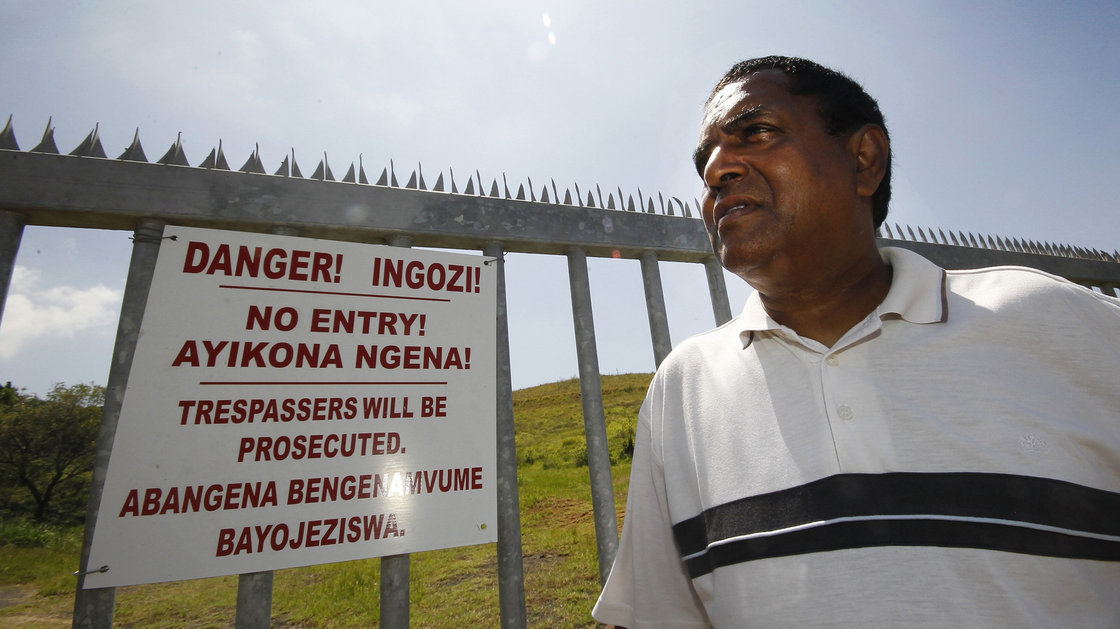
The landfill was located in South Durban — an industrialized city teeming with petrochemical plants, paper mills and oil refineries. D’Sa and his family had been forcibly relocated to the area by the apartheid government in the 1970s, together with thousands of other Indian and black South Africans. The apartheid government was notorious for forcing nonwhite laborers to live in the industrial areas where they worked.
In 2009, the landfill — which had operated for nearly 20 years — was looking to extend its lease. That’s when D’Sa, the coordinator of the South Durban Community Environmental Alliance, began fighting back. Earlier this year, he was awarded the prestigious Goldman Environmental Prize for his efforts. We asked D’Sa about his quest to keep his community clean.
Why did you become an environmental activist?
In the early 1990s, I was working for the state oil corporation. I worked in a chemical plant, and I had done safety and risk [assessment], so I saw the damage to workers and that made me realize that the work we were doing was quite toxic and dangerous, and could affect our community as well.
At night I started to go to the [safety research] lab to get documents, and I would read up and try to understand what was going on [with hazardous waste disposal]. When I confronted management, they said, “We don’t need people like you here.” In 1998, I was fired while I was on holiday. That’s when I began working full-time as an environmental activist. They unleashed a monster.
What was the key to your campaign against the landfill?
Carefully documenting everything. We brought in health experts and researchers from the Durban University of Technology and from the U.S. We got people in the community to write down the problems they were experiencing. We took photos and videos, and collected [water and air] samples and worked with researchers to analyze them.
Beyond that, the key is very simple: Work all the time and talk a lot. Get up early in the morning, and get on the road. Talk to people in communities and churches. Leave your cellphone on.
Was it difficult to get people’s support?
During the apartheid era, the government placed toxic landfill sites in poor black communities — it was a common practice. It’s only after [South Africa’s first democratic elections in] 1994 that people realized they can stand up and fight.
There are a lot of people who are willing to help. They’re in universities and communities. They’re retired people. There are lots of people who are ready to pick up their backpack and say “let’s do this together.”
Read more at: NPR
0 Comments
Leave A Comment