By Natalia Lima / Source: Ecorazzi
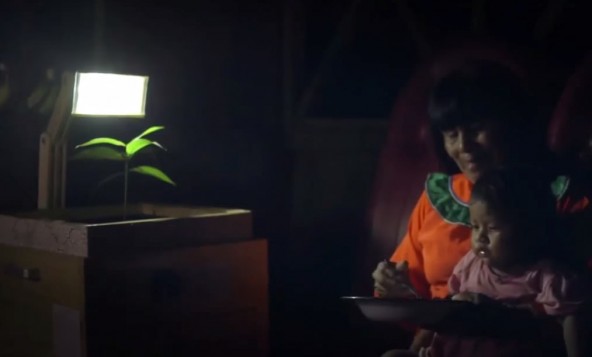
Over 42 percent of people in the rainforest do not have electricity so scientists at the Universidad de Ingeniería y Tecnología (UTEC) in Peru have come up with a way to light their homes with what they have most around them: plants and soil.
Using principles and findings from previous studies and researches from around the world, the group of engineers developed their own clean energy system prototype.
“Every plant produces nutrients and these nutrients —in contact with microorganisms in the earth called geobacter— undergo an oxidation process generating free electrons that are captured through electrodes,” explains Elmer, a UTEC faculty member in a video released by UTEC. “These electrodes are in a grid. This energy is stored in a conventional battery to be used to light an LED light bulb.”
Ten ‘plant-lamps,’ as they named the invention, have been given to families living in the rainforest villages of Nuevo Saposoa and Pucallpa in Peru. The villages do have an electrical grid but in March a flood damaged it, leaving everyone without access to electricity since. Students have been forced to study using kerosene lamps that are bad for their eyes and lungs, bringing smoke inside the house. Mothers also have had a hard time taking care of children after dark.
“We didn’t know that a plant could provide electricity for us to use,” said one resident. “You know that electricity is life for our children as well.”
The plant-lamps look like wooden boxes with a grid inside and a plant on top with a rectangular LED light bulb. The researchers hope the invention can help even more families in the future.
Read more @ Ecorazzi
9 Comments
Hi there to all, how is everything, I think every one is getting more from this web site, and your views are good designed for new visitors.
vpn https://www.highlandguides.com
What's Happening i'm new to this, I stumbled upon this I've found It positively useful and it has helped me out
loads. I hope to contribute & aid other users like its aided me.
Great job. Eharmony special coupon code 2025 https://tinyurl.com/ywzs4a4o
Thanks in favor of sharing such a nice thought, piece of writing is nice, thats why i have
read it fully
I read this article fully concerning the difference of
most up-to-date and earlier technologies, it's awesome article.
Hey! Do you know if they make any plugins to assist with Search Engine Optimization?
I'm trying to get my blog to rank for some targeted keywords but
I'm not seeing very good gains. If you know of any please share.
Appreciate it! https://tinyurl.com/2xsenm6a what does a vpn do
Hello, I enjoy reading through your article post.
I like to write a little comment to support you.
gamefly https://tinyurl.com/2cab6g88
It's a pity you don't have a donate button! I'd most certainly donate to this outstanding blog!
I guess for now i'll settle for book-marking and adding your RSS
feed to my Google account. I look forward to fresh updates and will talk about
this blog with my Facebook group. Talk soon!
My page - nordvpn coupons inspiresensation (wc.tv.br)
Wonderful post! We will be linking to this great article on our site.
I appreciate you sharing this blog post. Thanks Again. Cool.
Leave A Comment