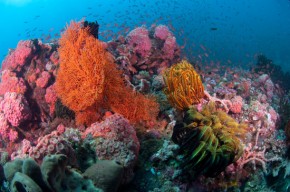
By Elizabeth Selign and Will Turner, Source: The Huffington Post
When you consider that SCUBA diving has only been around since the 1940s, it’s not surprising that we still frequently discover new species in the ocean. As new technologies let us explore ever deeper and more remote areas of our oceans, we are learning more and more about the amazing bounty of life they harbor.
Understanding where marine species are and how healthy they are becomes increasingly important as we better grasp the many ways our lives, livelihoods, enjoyment, and economies depend on our oceans and the species within them. Like all life on earth, different marine species are found in different places, and to date we’ve had an incomplete picture of life beneath the waves.
To sustain the oceans’ incredible diversity, we have to identify the places that harbor the greatest numbers of species or great concentrations of endemic species — those species that are unique to a particular place or region. Then, to guide efforts to conserve marine life, we need to know which of these essential areas are most and least impacted by human activities.
A recently published study by scientists at Conservation International, the University of California – Santa Barbara, Albert-Ludwigs-University of Freiburg, the International Union for the Conservation of Nature, and Birdlife International brought together an extensive set of maps on marine species, detailing where some 12,500 different fish, marine mammals, seabirds, corals and other species are located, along with data on where the risks of damage from impacts like overfishing, climate change, marine-based pollution from shipping and ports, and land-based pollution such as the run-off of fertilizers used for farming are highest.
This study gives us the best picture to date of where important concentrations of marine biodiversity are and where they are most and least threatened by human activities.
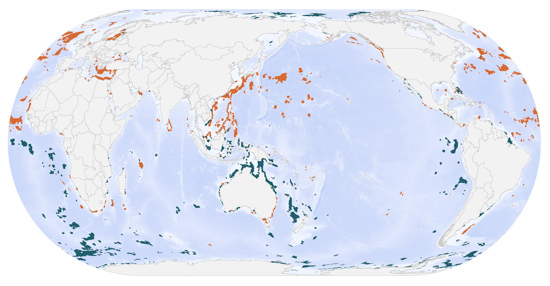
This information is already proving essential as conservation organizations and development institutions target efforts to sustain the oceans we depend on.
Here are some of the countries that have the greatest extent of marine priority areas within their waters:
1. Australia
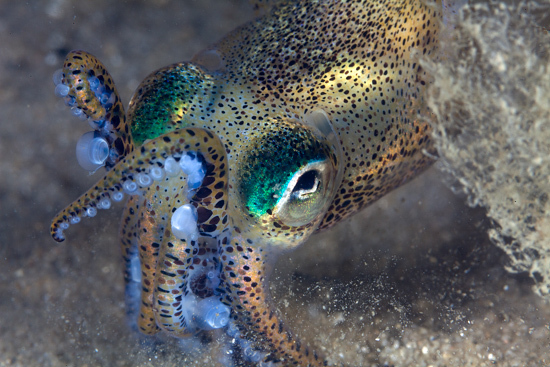
Famous for its Great Barrier Reef, the largest in the world, Australia’s vast ocean territory supports billions of dollars in tourism and fisheries. Though its waters have long been considered among the best-managed in the world, some believe recent policy changes in Australia put that distinction in question.
2. Indonesia
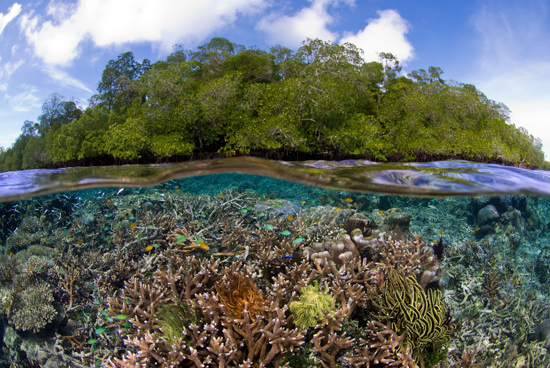
Home to the highest concentrations of marine biodiversity on Earth – more coral species can be seen on a single dive here than in the entire Caribbean – Indonesia’s waters support essential nutrition and livelihoods for tens of millions of people. Some of Indonesia’s marine ecosystems remain comparatively healthy, and the area in marine protected areas has multiplied 3-4 times in recent years. Yet damaging dynamite fishing, mangrove destruction, and shark fishing are widespread and growing rapidly, and policies that emphasize unsustainable fishing levels continue to deplete Indonesia’s marine natural capital.
3. Antarctica

Although Antarctica is famous for its extreme environments, its oceans are highly productive and support many seabirds, large mammals, and krill. Marine ecosystems in Antarctica are historically less impacted due to their remote locations and the unique Antarctic Treaty System, but climate change looms as a major potential impact.
4. Russia

Many unique coldwater species can be found in Russian waters. Currently, there are comparatively fewer human activities impacting Russia’s marine environments, but melting ice in the Arctic is already increasing the possibility for increased damage from new fishing, shipping, and mining in areas that were previously inaccessible.
5. Japan

See the rest of the list at: The Huffington Post
0 Comments
Leave A Comment