By Bret Stetka / Source: ScientificAmerican
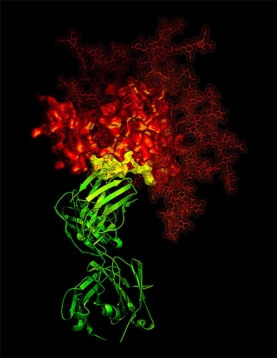
The human body doesn’t like outsiders. When a foreign pathogen or substance, say an unwanted virus, finds its way into our blood streams we produce antibodies that the neutralize the threat. These “Y”-shaped proteins are made by a class of white blood cells called plasma cells and bind to molecules on the invaders called antigens, triggering another set of white blood cells to literally ingest the interloper. For years now doctors have used antibodies and other protein-based therapies (aka biologics) to treat a range of illnesses, cancers, infections and autoimmune diseases among them.
But antibodies have their drawbacks: for one they’re bulky and hence usually have to be administered intravenously as they’re often too big to be absorbed in the gastrointestinal tract. With this in mind, chemist David Spiegel and his colleagues at Yale University are out to develop compounds with the benefits of antibodies—hopefully minus the needle.*
In work recently published in the Journal of the American Chemical Society Spiegel and his team have successfully developed the first synthetic molecules that behave like antibodies. Like the real thing, these so-called “synthetic antibody mimics”—or “SyAMs”—bind to both diseased cells and disease-fighting immune cells. Specifically the compounds were found to zero in on and bind to a specific antigen on prostate cancer cells. The SyAMs also bind to and activate certain immune cells that then devour the malignancy.
Spiegel’s SyAMs are produced in a way that is similar to conventional drugs, by using chemical reactions to piece together various structural features often not found in nature. As he explains, the therapeutic potential of synthetic antibodylike compounds is vast: “Because antibodies are proteins they’re difficult and expensive to produce on a large scale, can cause unwanted immune reactions and tend to aggregate and denature with long-term storage.” Spiegel speculates that SyAMs will be easier and cheaper to produce and less likely to incite aberrant immune activity. SyAMs are also one twentieth the size of antibodies—more akin to the size of most medications—and can therefore perhaps be administered orally. This could be a major boon to patients with cancers and autoimmune diseases like multiple sclerosis who have to regularly get themselves to infusion centers for monoclonal antibody therapy.
Read more @ ScientificAmerican
0 Comments
Leave A Comment