By Brittany Patterson, Manon Verchot/ Source: ScientificAmerican
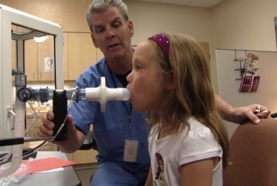
ALAMEDA, Calif.—The first time Devine Simpson had an asthma attack, she said she couldn’t stop coughing. It was so bad, it woke her up in the middle of the night.
“I felt like I was going to throw up,” she said.
Devine was diagnosed at age 3, and for many years, her asthma seemed out of control, said her mother, Tracie Simpson.
About two years ago, Simpson began bringing Devine, who is now in fifth grade, to the Breathmobile, a mobile 33-foot recreational vehicle that is outfitted as an asthma clinic. Operated by West Oakland, Calif., nonprofit the Prescott-Joseph Center with a recent influx of funding from Chevron Corp., the clinic is parked in front of a smattering of Alameda and Contra Costa elementary schools on most days.
Devine is one of 25 million people in the United States diagnosed with asthma, according to the Centers for Disease Control and Prevention (CDC).
Asthma is an inflammatory condition or disease of the airways that affects the bronchial tubes in the lungs. When the bronchioles are inflamed, it causes the tubes to swell, constrict and produce excess mucus. These actions prevent air from making it through, which creates the symptoms of asthma—coughing, wheezing and sometimes a feeling patients describe as not being able to breathe. Without treatment, it can be a life-threatening disease.
In recent decades, diagnoses of asthma have risen dramatically. Between 2001 and 2009, the number of patients diagnosed with asthma rose by 4.3 million, according to CDC reports. It is a leading cause of school absences across the country.
Symptoms are often triggered by air pollution and allergies. Climate change may also exacerbate the problem.
“Plants are starting their pollination season earlier, and it lasts longer,” said Alan Goldsobel, an allergist with the Allergy and Asthma Associates of Northern California.
Climate change affects the duration of seasons and contributes to more erratic weather patterns, and those changes are causing plants to not only release pollen earlier and longer, but more of it.
A bus that presents a remedy, not a cause
Since spending time on the Breathmobile—or “asthma bus,” as Simpson calls it—Devine hasn’t missed any school because of her asthma or made any emergency trips to the hospital, giving Simpson peace of mind, but also empowering her daughter. The staff on board can refer patients to a county program called Healthy Homes, which will come in and help with bedding and extermination.
Dr. Geetika Sengupta, who has been with the Breathmobile for more than two years, said asthma can be caused by different stressors in different patients. For some people, allergies trigger their symptoms, whereas for others, it can be exercise or getting a cold.
Intensified air pollution from vehicles could also be behind the increasing number of cases in the country. Measures to reduce greenhouse gas emissions from vehicles—which account for 27 percent of emissions across the country—are also effective for reducing levels of particulate matter, which can aggravate asthma.
Read more @ ScientificAmerican
0 Comments
Leave A Comment