By Christina Thomas / Source: TriplePundit
“You take delight not in a city’s seven or seventy wonders, but in the answer it gives to a question of yours.” – Italo Calvino, “Invisible Cities”
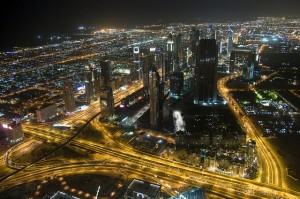
Dubai certainly has its share of wonders and answers. Shellstone minarets and glass skyscrapers once symbolized the city’s tenacity in contest with the harsh desert. But in the years leading up to 2030, Dubai has come closer to reconciling with nature and responding to environmental concerns.
The city has also been answering the many questions continually posed by its millions of residents. Some ask, “Where can my children play?” “Why are the streets flooded whenever we get an inch of rain?” Others ask, “Do they sell local vegetables nearby?”
As an urban planner, my job is to make sure that the city can provide many of those answers, be it though green parks maintained with recycled water or porous roads and sidewalks that collect runoff.
In my workplace, “transit oriented development” has been the catchphrase lately. This means expansion and integration of Dubai’s metro, tram and bus services. Mixed-used zoning has ensured that office spaces and essential services are not too far from residential areas.
It’s a relief to take the tram to work and not worry about road traffic anymore. But even those who drive have reason to be glad. Solar-powered charging stations have cropped up everywhere since car manufacturers began converting or retrofitting vehicles to make plug-in hybrids an attractive low-cost option for car owners.
Read more @ TriplePundit
0 Comments
Leave A Comment