By Sáša Woodruff, Source: NPR

To the home gardener who says “been there, done that” to the heirloom green bean, the French breakfast radish or the Brandywine tomato, take heart.
Nurseries and seed companies are competing to bring you the most colorful and flavorful designer edibles they can come up with. They travel the world looking for the next in-vogue plant for the home horticulturist. Every few years they introduce these new chic varieties in their catalogs and websites.
Alice Doyle, a founder of, a wholesale nursery for classic and unusual plants, says some of her customers are like wine connoisseurs who are always seeking the next best thing.
“It’s the joy of the hunt,” she says. “The nuances, the different flavors and different things you can do with [plants] and enjoying how they grow — it’s all fun.”
Here are our top picks for the most seductive edibles available for the home gardener this season:
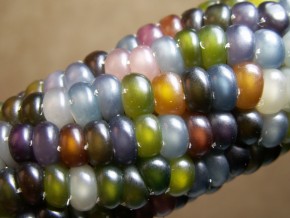
Glass Gem Corn: This corn became a rock star in 2012 when the posted on Facebook went viral.
And it’s clear why: The translucent rainbow kernels look more like Swarovski crystals than food. But how did these brilliant kernels come to be?
The story begins decades ago with Carl Barnes, a part-Cherokee farmer and breeder in Oklahoma who started crossing different Native American corns for beauty. He chose vibrant, translucent colors and eventually ended up with Glass Gem Corn. One of Barnes’ students, Greg Schoen, gifted the seeds to , a nonprofit seed conservation group, in Tucson, Ariz.
There are thousands of varieties of corn, and NS/S banks more than 500 varieties. Melissa Kruse-Peeples, conservation program coordinator for the group, sees the visually stunning Glass Gem as a way to pique interest into maize’s diversity.
“We really see it as a gateway corn that introduced a lot of people who think of corn as just corn on the cob, not realizing there’s such diversity and many different beautiful varieties of corn,” she says. This is a flint corn, not a sweet corn, so you can’t eat it like a corn on the cob, but you can dry it and pop it for popcorn or grind it for polenta or cornbread.
See more at: NPR
0 Comments
Leave A Comment