
By Sara Gates, Source: Huffington Post
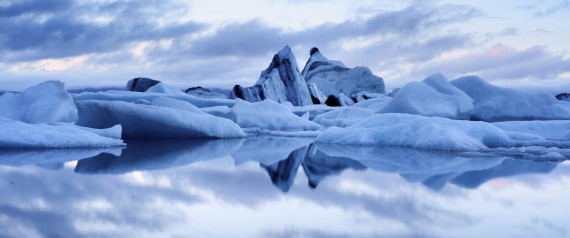
Melting ice sheets could spell disaster for coastal towns, but sea level rise is not the only threat Arctic thawing poses.
In a new study published in open-access journal Earth’s Future, researchers say that Arctic ice contains large amounts of plastic and man-made synthetic materials that are smaller than the top of a pencil. When sea ice melts throughout the course of the next decade, more than 1 trillion tiny plastic pieces — “microplastics” — could be released into nearby waters, the study notes.
While scientists know that oceans are filled with garbage patches, researchers said they were shocked to learn just how far the litter had reached.
“It was such a surprise to me to find them in such a remote region,” Rachel Obbard, an assistant professor of engineering at Dartmouth College and lead researcher on the study, told Science Magazine. “These particles have come a long way.”
The team indicates that the tiny pieces of plastic come from cosmetics (microbeads) and fibers in laundry machines washing down drains. However, the most substantial amount of microplastic appears to derive from the fragmentation of larger synthetic materials. Abundant in surface waters and along shorelines, these plastic pieces have drifted to the Arctic over time where they then became trapped in sea ice.
Read more at: Huffington Post
0 Comments
Leave A Comment