
By Brianne Hogan / Source: Ecorazzi
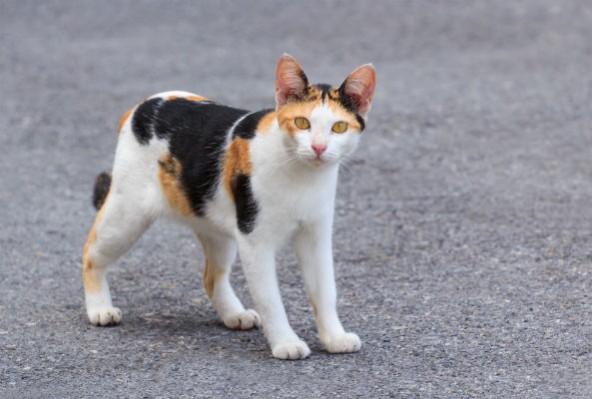
A research project by an ecologist from the University of Guelph has put radio collars on a number of feral cats as part of an effort to find ways to help deal with Canada’s expanding cat population.
The project is being led by wildlife ecologist Tyler Flockhart who strapped radio collars — complete with a little antenna — on 32 feral cats in Toronto and the Guelph area. In Toronto alone, there was an estimate of 100,000 stray and feral cats last year.
The Canadian Federation of Humane Societies conducted a report in 2012 that estimated the number of owned cats in Canada at 10.2 million — which is approximately one cat for every three Canadians. Additionally, there were an estimated 600,000 cats in shelters in 2011 that did not get placed in homes.
In short, Canada is having a major problem with stray cats — without any clear-cut solutions.
“People are looking for solutions and quite often those solutions need to deviate from what’s been done over the past 30, 50, 60 years,” Flockhart tells CBC News, referring to euthanasia of those cats that aren’t adopted out of shelters, a practice that now seems to be not as popular with the public.
“A good scientific look at history would tell us that that model just simply doesn’t work,” says Shane Bateman, a veterinarian and chair of the board of the Guelph Humane Society.
“There are probably more cats today than there have ever been, and so euthanizing and trying to get ahead of the population explosion that way just simply isn’t a good option, and it’s a very, very unpalatable option for communities these days who are more and more concerned about animal welfare.”
Along with his work in trying to develop a population model for cats, Flockhart’s efforts tracking feral cats in Toronto and Guelph hope to analyze how cats survive and move throughout communities.
“We have pretty good information on the number of cats that come in and go out of animal shelters, but we don’t know the number of cats on the street for sure, and we don’t even really know the proportion of cats that have indoor-outdoor access,” says Flockhart.
“These are really basic questions that require numbers so that we can address the magnitude of the risk and how we might address it.”
Part of the problem might lie in the public’s perception of cats. Though they are popular cat memes, cats are often treated differently dogs, who are more likely to be spayed or neutered, have ID and be taken to the vet.
Another solution is looking towards government to step up and pony up money toward the issue.
“I think cities need to step up,” says Maria Soroski, a co-founder of the Vancouver Orphan Kitten Rescue Association. “I know it’s very hard to give grants to cat rescue when there’s homeless people and such, but the cat problem is a problem and there has to be some small amount of money put toward trap-neuter-return.”?
Read more @ Ecorazzi
0 Comments
Leave A Comment