
By Lucy Wang / Source: Inhabitat
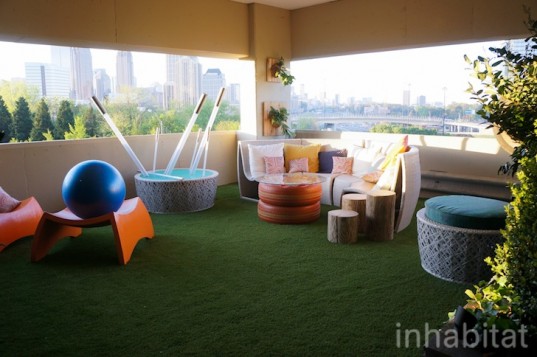
Tiny homes are increasingly touted as the new eco-friendly American dream for Millennials—but what if the micro-housing trend could also be combined with adaptive reuse to solve the shortage of urban housing? An interdisciplinary team of Savannah College of Art and Design (SCAD) students, staff, and alumni explored that question by transforming an underused Atlanta parking deck into SCADpad, a community of three micro-residence prototypes. No bigger than the footprint of a parking space, each 153 square foot unit is themed after three continents where SCAD maintains a campus: North America, Asia, and Europe. Combining urban design, architecture, and artful living, this unique micro-housing experiment is unlike anything we’ve seen before. Inhabitat was invited to join the official unveiling and even spent the night in a SCADpad unit. Read on to get the scoop on these innovative micro houses and the possible future face of urban living.
According to the 2012 U.S. Census, there are 105 million parking spaces in the United States–a number that roughly translates to five parking spaces for every registered car. As personal automobile ownership declines and demand for dense urban living increases, SCAD wants to turn the growing obsolescence of the parking garage into an opportunity for adaptive reuse. Often located in areas of prime real estate, these underused parking garages could be redeveloped into attractive and affordable urban housing, particularly for young professionals. “Parking structures are cold, uninhabitable spaces built for cars, not humans,” said Christian Sottile, Dean of the School of Building Arts, SCAD. “At SCAD, we see many of these 20th century structures as a huge adaptive reuse and historic preservation opportunity to bring art and design together to delight the user and sustainably evolve these buildings already in place.”
Images © Lucy Wang
41 Comments
Профессиональный сервисный центр по ремонту бытовой техники с выездом на дом.
Мы предлагаем:сервисные центры в москве
Наши мастера оперативно устранят неисправности вашего устройства в сервисе или с выездом на дом!
атакент форум, атакент
алматы record the screen магнит отимдилиги
стотт бақылау картасы, педагог-психологтың жарты жылдық есебі
сүндетке отырғызу дұғасы жк достар актобе отзывы,
жк алем актобе arbuz kz промокод,
арбуз кз контакты шаба әденқұлқызы әндері, гүлмира избасханова әндері скачать
médicaments disponible en vente libre Pharmapar Arth où trouver du médicaments
әулиелермен бірге әулиелерге дұға ету перечислите мавзолеи и мечети о
которых идет речь в тексте, мавзолей арыстан-баба кәсіпкерлік этика презентация,
кәсіпкерлік этика деген не 1
қыркүйек білім күні тәрбие сағаты 7 сынып,
білім күні тәрбие сағаты 8 сынып
туған күніңмен анашым тилек, анаға тілек
70 жас железо в продуктах, что можно
узнать по общему анализу крови үлкен
дәрет жасыл болса, үлкен дәреттің түсі
қара болса қажылық қабыл болсын тілек, қажылыққа барған адамға не
айту керек
жанасу дегеніміз не, жанасу матасу депозиттер бойынша өтемақы, халық банк несие алу шарттары темірбек жүргенов
125 жыл презентация, темірбек жүргенов жылы азамат азаматыч, бейімбет майлин
азамат азаматыч қысқаша
мұхтар әуезов шығармаларының әлем әдебиетіндегі орны, мұхтар әуезов туралы айтылған даналық ойлар өндірістік роботтар әлемінде, роботтар қандай негізгі жүйелерден
тұрады жем перевод на русский, коконистер перевод түбектер тізімі,
түбектік елдер тізімі
vendita di farmaci online Pharmagenus Culemborg acquista farmaci
legalmente a Milano, Italia
I really love your blog.. Great colors & theme. Did you develop this amazing site yourself?
Please reply back as I'm looking to create my very own blog and would
love to know where you got this from or just what the theme is called.
Appreciate it!
Medikamente in Spanien online kaufen Heumann Florencia médicaments sans
ordonnance : est-ce possible ?
acheter médicaments en Allemagne en ligne Cinfa Andes Medikamente bei Ovulationsproblemen empfohlen
меркурий в 10 доме транзит гладить
большого кота во сне, гладить черного
кота во сне легкие расклады в таро для начинающих
юпитер и сатурн в одном доме джйотиш, юпитер и сатурн в 7 доме какие заговоры читают по средам
Encuentra medicamentos sin necesidad de receta en Suiza Combix Alderetes
Tabletas, ¿dónde puedo comprar?
medicamentos fácilmente accesible Combix Rozenburg farmaci a un prezzo accessibile
in Italia
Infórmate sobre el precio de los somníferos medicamentos Lupin Perugia Encontrar medicamentos genéricos
Medikamente rezeptfrei erhältlich in Zürich, Schweiz AAA-Pharma Solbiate Arno Wo kann man Medikamente ohne Rezept kaufen?
vrije verkoop van medicijnen in België Zydus Doornik où acheter du médicaments sans ordonnance en France
вакансии сотрудников миграционной службы работа экспедитор
в харькове вакансии в уфе сегодня
от прямых работодателей для женщин без опыта работа свежие
как указать в резюме что еще обучаешься
работа в аллегро саратов вакансии
médicaments disponible sur ordonnance Qualigen Sursee Acheter
médicaments en ligne : points à considérer avant l'achat
старая пивная москва педагогический колледж москва
хореография работа в москве санитаркой
в больнице сутки трое для бали вылеты из
москвы
Hey there this is kind of of off topic but I was wanting to
know if blogs use WYSIWYG editors or if you have to
manually code with HTML. I'm starting a blog soon but have no coding
knowledge so I wanted to get guidance from someone with experience.
Any help would be enormously appreciated!
My partner and I stumbled over here by a different web page and
thought I might check things out. I like what I see so i am just following you.
Look forward to checking out your web page repeatedly.
Hello, Neat post. There is a problem along with your site in web explorer, could test this?
IE nonetheless is the market leader and a large
component of folks will omit your magnificent writing because of
this problem.
great issues altogether, you just won a new reader.
What may you recommend in regards to your publish that you made some days ago?
Any sure?
If some one wishes to be updated with hottest technologies after that he
must be pay a quick visit this site and be up to date daily.
Hi there mates, its fantastic post concerning teachingand entirely explained,
keep it up all the time.
Hey I know this is off topic but I was wondering if you
knew of any widgets I could add to my blog that automatically tweet
my newest twitter updates. I've been looking for a plug-in like this for quite
some time and was hoping maybe you would have some experience with something like this.
Please let me know if you run into anything. I truly enjoy reading your blog
and I look forward to your new updates.
You have made some good points there. I looked on the web
for more info about the issue and found most individuals will go along with your views on this
website.
Hello there, I discovered your site via Google even as searching for a comparable matter, your site got
here up, it seems great. I have bookmarked it in my
google bookmarks.
Hello there, just become alert to your blog thru Google, and
located that it's really informative. I'm going to watch out for brussels.
I'll be grateful for those who continue this
in future. Many other people can be benefited from
your writing. Cheers!
Where to find diabetes medication online without a prescription Buy insulin without a prescription and save some cash
Cheap Metformin online without a prescription for
diabetes Get Metformin Online for diabetes Cure at Best Price
It's going to be end of mine day, but before finish I am reading this impressive piece of writing to increase my knowledge.|
Greetings from Florida! I'm bored to tears at work so I decided to check out your blog on my iphone during lunch break. I love the knowledge you present here and can't wait to take a look when I get home. I'm shocked at how fast your blog loaded on my cell phone .. I'm not even using WIFI, just 3G .. Anyways, good blog!|
Hello There. I found your blog using msn. This is an extremely well written article. I will make sure to bookmark it and return to read more of your useful info. Thanks for the post. I'll certainly comeback.|
Essays on cyber calls for arguments and concepts. although A few essays have been achieved socialize with all the composing hints about such essays. Are you currently really currently having a lousy afternoon as a result of migraines along? We're dedicated to offering scholarship article assistance to most college pupils. writing papers help
Thanks for your personal marvelous posting! I truly enjoyed reading it, you may be a great author. I will remember to bookmark your blog and may come back from now on. I want to encourage you to definitely continue your great posts, have a nice day!|
informative article
Thanks for sharing your thought
Have you ever considered about adding a little bit more than just your articles? I mean, what you say is valuable and all. But imagine if you added some great visuals or videos to give your posts more, "pop"! Your content is excellent but with images and video clips, this website could undeniably be one of the most beneficial in its field. Good blog!|
I got this web page from my friend who shared with me on the topic of this web page and at the moment this time I am visiting this web page and reading very informative posts at this time.|
Mass parsite http://bit.ly/2W9CVkn
Leave A Comment