
By Kiona Smith-Strickland / Source: Discover

If you’re afraid of needles, here’s some good news: you may not always be stuck with getting shots.
At present, injections are the best way to deliver certain kinds of drugs. For example, vaccines and drugs like insulin are made of large molecules that you can’t take orally because they would break down in your digestive tract. Some antibiotic and antiviral medications are also given as injections for this reason.
But needles suck. About 10 percent of patients who need regular injections don’t comply with their doctors’ instructions, according to 3M, partly because self-administering injections is difficult and painful. And injectable drugs are a hassle, too: they have to be stored at cold temperatures and have a limited shelf life.
That’s why biotech companies around the world are working on needle-free ways to deliver these drugs, with everything from high-tech pills to simple do-it-yourself patches.
Go Go Gadget Pill
Instead of getting an injection, you may one day be able to take a normal-looking pill that works more like a James Bond gadget. The drug is stored inside tiny needles made of sugar, inside a polymer coating that keeps it from breaking down in your digestive tract too soon.
Once the “robotic pill” reaches your intestine, its protective polymer coating dissolves, along with a valve separating two tiny compartments inside the pill. One is filled with citric acid, the other with baking soda, and they react to create carbon dioxide – just like those tabletop volcanoes you made in elementary school.
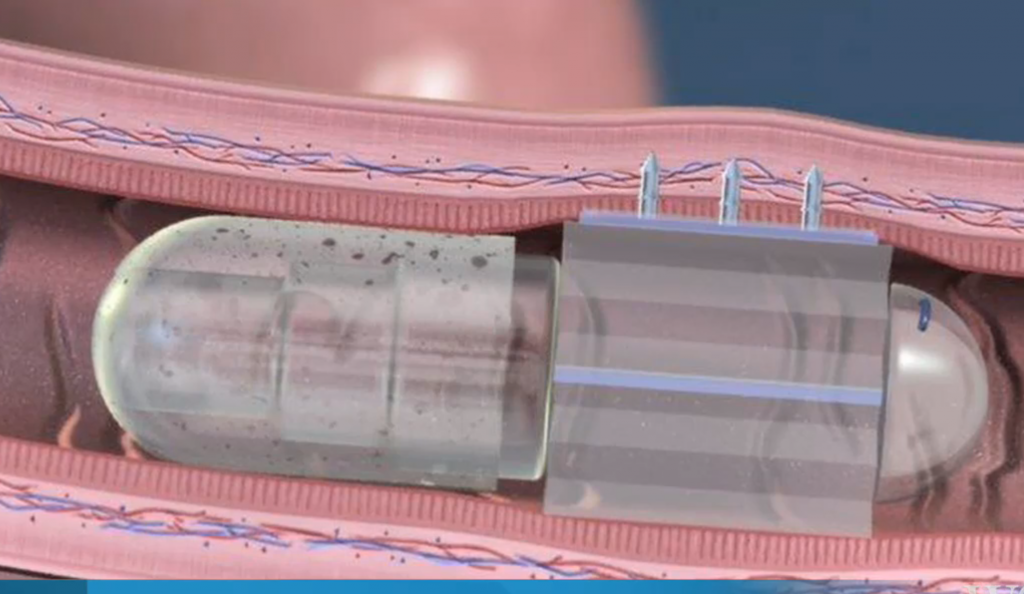
The carbon dioxide inflates a tiny balloon, which pushes the tiny sugar needles into the wall of your intestine, where they detach and release the drug into your bloodstream. The rest of the pill just passes right out with your poop.
But it’s going to be a while before this futuristic pill is available, and there are no guarantees it will make it to the market at all. Pharmaceutical company Novartis is working on the technology with Rani Therapeutics, but they don’t plan to test its feasibility for another year and a half to two years.
Just Say “Ah”
A less exotic pill is under development by a pharmaceutical company called Catalent. They have been working on putting vaccines into freeze-dried tablets that will dissolve under your tongue in about five seconds. Then, the molecules that make up the drug or vaccine diffuse through the membrane under your tongue and into your bloodstream.
Catalent has already tested their tablet version of the flu vaccine in mice. (Which, yes, meant making a very tiny tablet and putting it under the mouse’s tiny tongue. “This is an art in itself,” researcher Robert Smith told industry publication C&EN.)
More importantly, Catalent says that its Zydis tablets have a shelf life of up to four years at room temperature. That’s a big improvement on liquid vaccines, which have to be kept cold and quickly expire.
Though keeping drugs refrigerated isn’t a problem in most developed countries, in remote and underdeveloped places it’s a challenge that often keeps people from getting important vaccines.
Press On
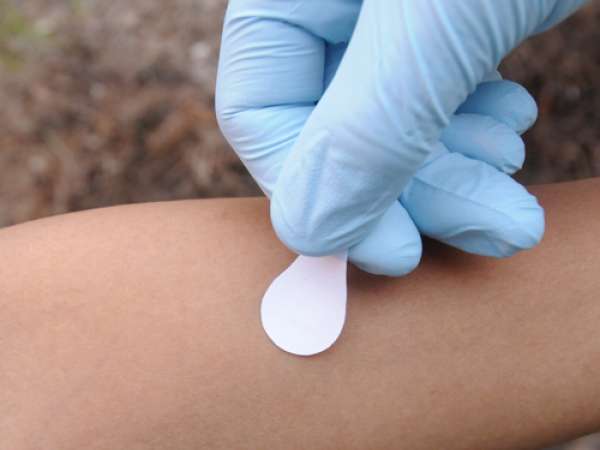
Another approach being tried out is patches. The U.S. Centers for Disease Control (CDC) is working with Georgia Institute of Technology on one such patch, about a centimeter square. Though it looks like a small bandage, it sticks to the skin not with adhesive, but with 100 tiny needles.
Each “microneedle” is less than a millimeter long and made of a mixture of polymer, sugars, and the vaccine itself. When you press the patch onto your skin, those microneedles dissolve into your bloodstream.
The patch’s simplicity could make it easier to deliver vaccinations in remote areas where healthcare workers are scarce. The lack of needles also helps reduce workers’ risk of exposure to blood-borne disease. The CDC has tested a patch version of the malaria vaccine on monkeys, and it produced a strong response from their immune systems. Now, the agency is planning human trials – but not until 2017.
Press On, Part Two
Meanwhile, 3M has developed its own microneedle patch. It’s about the same size as the CDC’s patch, but with only 12 needles, each about 1.5 mm long. One version uses solid needles coated with a dried form of a drug, and another version uses hollow needles to inject liquid drugs. The idea is that patients who need regular injections can administer the patches at home, instead of having to go to a doctor’s office for a shot.
How much that stings will depend on the drug, the dose, and how fast the patch delivers the drug to your bloodstream, according to the company. The patches are ready for clinical trials, but 3M hasn’t yet found a drug company interested in trying them out.
Read more @ Discover
621 Comments
Excellent post but I was wondering if you could write a litte more on this topic?
I'd be very thankful if you could elaborate a little bit more.
Thanks!
I actually wanted to make a small note to thank you for those stunning information you are giving at this site. My considerable internet investigation has at the end of the day been paid with reliable insight to exchange with my relatives. I would believe that we site visitors are truly fortunate to dwell in a fabulous network with many brilliant people with insightful suggestions. I feel extremely fortunate to have discovered the weblog and look forward to plenty of more brilliant moments reading here. Thanks a lot again for everything.
Major thankies for the article post.Really thank you! Great.
Appreciate you sharing, great blog post. Great.
This blog post is excellent, probably because of how well the subject was developed. I like some of the comments too.
I simply want to tell you that I am just newbie to blogging and honestly enjoyed this web-site. Likely I’m going to bookmark your blog post . You really have excellent writings. Regards for revealing your web-site.
In this grand pattern of things you’ll get an A just for hard work. Exactly where you confused me personally was first on your specifics. As people say, the devil is in the details… And that could not be more accurate here. Having said that, permit me say to you precisely what did deliver the results. Your text is actually highly engaging and that is probably why I am making an effort to comment. I do not make it a regular habit of doing that. Second, although I can easily see the leaps in reason you come up with, I am not convinced of exactly how you seem to connect your details which help to make the conclusion. For now I will yield to your position however wish in the foreseeable future you link your facts much better.
I’m amazed, I have to admit. Rarely do I encounter a blog that’s both educative and entertaining, and let me tell you, you've hit the nail on the head. The problem is something not enough men and women are speaking intelligently about. I'm very happy that I came across this during my search for something relating to this.
When I originally commented I seem to have clicked the -Notify me when new comments are added- checkbox and now each time a comment is added I get four emails with the same comment. There has to be an easy method you can remove me from that service? Appreciate it.
I really like it when people come together and share thoughts. Great site, continue the good work!
Greetings! I know this is somewhat off topic but I was wondering which blog platform are you using for this site? I'm getting sick and tired of Wordpress because I've had issues with hackers and I'm looking at alternatives for another platform. I would be awesome if you could point me in the direction of a good platform.
Very nice post. I absolutely love this website. Keep it up!
Right here is the right website for anybody who really wants to understand this topic. You realize a whole lot its almost hard to argue with you (not that I really would want to…HaHa). You definitely put a new spin on a subject that's been written about for ages. Excellent stuff, just excellent.
When I originally commented I appear to have clicked the -Notify me when new comments are added- checkbox and from now on every time a comment is added I receive 4 emails with the same comment. There has to be a means you are able to remove me from that service? Kudos.
I'd like to thank you for the efforts you've put in penning this site. I really hope to check out the same high-grade content from you in the future as well. In truth, your creative writing abilities has inspired me to get my own, personal blog now ;)
Very good article. I definitely love this site. Stick with it!
Excellent post. I will be facing a few of these issues as well..
May I simply say what a comfort to uncover somebody who actually understands what they're discussing over the internet. You definitely know how to bring an issue to light and make it important. A lot more people have to check this out and understand this side of your story. I can't believe you're not more popular because you surely possess the gift.
This site truly has all the information and facts I needed concerning this subject and didn’t know who to ask.
I couldn’t resist commenting. Well written.
Aw, this was a very nice post. In concept I wish to put in writing like this additionally – taking time and precise effort to make an excellent article… however what can I say… I procrastinate alot and not at all appear to get something done.
Right now it appears like Drupal is the best blogging platform out there right now. (from what I've read) Is that what you're using on your blog?
Fantastic goods from you, man. I've understand your stuff previous to and you are just extremely magnificent. I really like what you have acquired here, really like what you're saying and the way in which you say it. You make it entertaining and you still care for to keep it sensible. I cant wait to read far more from you. This is actually a tremendous web site.
I really wanted to make a brief word in order to say thanks to you for all of the great advice you are writing here. My extensive internet research has now been rewarded with really good strategies to share with my friends and classmates. I would express that many of us readers actually are very much lucky to live in a remarkable community with so many outstanding people with useful secrets. I feel pretty privileged to have used the web page and look forward to some more thrilling moments reading here. Thank you once more for everything.
Attractive section of content. I just stumbled upon your website and
in accession capital to assert that I get
actually enjoyed account your blog posts. Anyway I'll be subscribing
to your augment and even I achievement you access consistently quickly.
I precisely desired to thank you very much all over again. I'm not certain the things I might have created in the absence of those tips revealed by you over such a area of interest. Entirely was a very traumatic situation for me, but considering a well-written strategy you managed that made me to jump for gladness. Now i'm happy for this guidance and then hope that you know what a great job you were carrying out educating many others via your site. I am certain you have never got to know any of us.
Greetings from Colorado! I'm bored to tears at work so I decided to check out your website on my iphone during lunch break. I enjoy the information you provide here and can't wait to take a look when I get home. I'm shocked at how quick your blog loaded on my cell phone .. I'm not even using WIFI, just 3G .. Anyways, amazing site!
There are definitely a whole lot of details like that to take into consideration. That is a nice level to convey up. I provide the ideas above as general inspiration however clearly there are questions like the one you convey up where an important factor might be working in sincere good faith. I don?t know if finest practices have emerged round issues like that, but I'm sure that your job is clearly identified as a fair game. Each girls and boys really feel the influence of just a moment’s pleasure, for the remainder of their lives.
This page certainly has all of the information and facts I needed concerning this subject and didn’t know who to ask.
In fact when someone doesn't be aware of then its up to other people that they will help, so
here it takes place.
You're so interesting! I don't suppose I have read something like this before. So wonderful to discover another person with some original thoughts on this issue. Really.. many thanks for starting this up. This site is one thing that's needed on the web, someone with some originality.
I absolutely love your website.. Excellent colors & theme.
Did you make this site yourself? Please reply back as I'm hoping
to create my own website and want to find out where you got this from or what the theme
is called. Kudos!
Hello there, I found your web site via Google while searching for a related topic, your web site came up, it looks great. I've bookmarked it in my google bookmarks.
I've been surfing online more than three hours today, yet I never found any interesting article like yours. It’s pretty worth enough for me. Personally, if all web owners and bloggers made good content as you did, the internet will be a lot more useful than ever before.
It’s hard to search out educated people on this subject, however you sound like you realize what you’re talking about! Thanks
It's a pity you don't have a donate button! I'd most certainly donate to this outstanding blog! I guess for now i'll settle for book-marking and adding your RSS feed to my Google account. I look forward to brand new updates and will share this blog with my Facebook group. Chat soon!
Hey I am so thrilled I found your web site, I really found you by accident, while I was browsing on Bing for something else, Nonetheless I am here now and would just like to say cheers for a fantastic post and a all round entertaining blog (I also love the theme/design), I don’t have time to read it all at the minute but I have saved it and also included your RSS feeds, so when I have time I will be back to read more, Please do keep up the superb work.
Everything is very open with a really clear clarification of the issues. It was definitely informative. Your site is very useful. Thank you for sharing!
Wonderful web site. A lot of helpful info here. I am sending it to several friends ans also sharing in delicious. And naturally, thank you on your effort!
I¡¦m now not positive the place you are getting your information, however great topic. I needs to spend a while finding out more or working out more. Thank you for wonderful information I used to be in search of this info for my mission.
The next time I read a weblog, I hope that it doesnt disappoint me as a lot as this one. I mean, I do know it was my option to read, but I really thought youd have one thing attention-grabbing to say. All I hear is a bunch of whining about one thing that you might repair when you werent too busy in search of attention.
Hi! I'm at work browsing your blog from my new iphone 3gs! Just wanted to say I love reading through your blog and look forward to all your posts! Carry on the great work!
I have recently started a blog, the info you offer on this web site has helped me greatly. Thank you for all of your time & work.
I dugg some of you post as I cogitated they were very beneficial very helpful
One other thing I would like to talk about is that instead of trying to accommodate all your online degree programs on days and nights that you end work (since the majority people are worn out when they get home), try to receive most of your sessions on the weekends and only a couple courses for weekdays, even if it means a little time away from your saturdays. This pays off because on the weekends, you will be far more rested and concentrated in school work. Thanks a lot for the different tips I have figured out from your web site.
Hi there! I could have sworn I’ve visited this web site before but after looking at a few of the articles I realized it’s new to me. Regardless, I’m definitely delighted I found it and I’ll be bookmarking it and checking back often.
of course data entry services are very expensive that is why always make a backup of your files-
the information you provide here. Please let me know
or tips. Perhaps you can write subsequent articles
Wow, amazing blog layout! How long have you been blogging for? you make blogging look easy. The overall look of your website is great, let alone the content!
Some really interesting information, well written and generally user friendly.
I just want to tell you that I am just all new to blogs and certainly loved this web blog. Almost certainly I’m want to bookmark your blog . You absolutely come with very good articles. Cheers for sharing with us your website.
Pretty! This was an incredibly wonderful article. Many thanks for supplying these details.
Would love to perpetually get updated outstanding web site!.
Thanks for sharing, this is a fantastic blog post.Really looking forward to read more. Much obliged.
I’m impressed, I must say. Rarely do I encounter a blog that’s both equally educative and entertaining, and without a doubt, you've hit the nail on the head. The issue is something that too few men and women are speaking intelligently about. I am very happy I found this during my search for something relating to this.
Very informative blog post.Much thanks again. Will read on...
Nice post. I learn something totally new and challenging on sites I stumbleupon every day. It's always helpful to read articles from other authors and practice a little something from their sites.
Just Browsing While I was surfing today I noticed a great post concerning
You made some nice points there. I looked on the internet for the subject matter and found most individuals will approve with your website.
Thanks for sharing, this is a fantastic post.Really looking forward to read more. Keep writing.
I'аve read several just right stuff here. Certainly price bookmarking for revisiting. I wonder how a lot effort you set to create such a fantastic informative web site.
You ave made some decent points there. I checked on the web to learn more about the issue and found most individuals will go along with your views on this website.
It as not that I want to replicate your web page, but I really like the pattern. Could you let me know which theme are you using? Or was it custom made?
You have made some good points there. I checked on the net to find out more about the issue and found most individuals will go along with your views on this web site.
Some were practical, of course, but others were psychological
This is very interesting, You are a very skilled blogger. I have joined your feed and look forward to seeking more of your fantastic post. Also, I have shared your site in my social networks!
Today, taking into consideration the fast life style that everyone is having, credit cards get this amazing demand throughout the economy. Persons coming from every area are using the credit card and people who are not using the credit card have made up their minds to apply for even one. Thanks for sharing your ideas on credit cards.
Thanks-a-mundo for the blog article.Much thanks again.
Wow! This could be one particular of the most useful blogs We have ever arrive across on this subject. Basically Great. I am also a specialist in this topic so I can understand your effort.
What as Going down i am new to this, I stumbled upon this I ave
Thank you for your blog.Really thank you! Fantastic.
You made some good points there. I checked on the web for more info about the issue and found most individuals will go along with your views on this website.
You made some decent points there. I looked on the web to find out more about the issue and found most individuals will go along with your views on this web site.
You need to really control the comments listed here
Hi, I wish for to subscribe for this weblog to obtain hottest updates, thus where can i do it please assist.
My brother suggested I might like this website. He was totally right. This post truly made my day. You can not imagine just how much time I had spent for this information! Thanks!
Online Article Every once in a while we choose blogs that we read. Listed below are the latest sites that we choose
you have a great weblog right here! would you prefer to make some invite posts on my blog?
Really informative blog post. Want more.
Say, you got a nice article post.Much thanks again. Cool.
Say, you got a nice article post.Really thank you! Really Cool.
Perform the following to discover more about women before you are left behind.
The Birch of the Shadow I think there may perhaps be considered a couple of duplicates, but an exceedingly handy list! I have tweeted this. Several thanks for sharing!
Appreciating the dedication you put into your site and detailed information you present.
It's good to come across a blog every once in a while that isn't the same old rehashed material.
Excellent read! I've saved your site and I'm adding your RSS feeds to my Google account.
Very good post. Fantastic.
I think this is a real great blog. Want more.
Way cool! Some extremely valid points! I appreciate you penning this write-up and also the rest of the site is really good.
stiri interesante si utile postate pe blogul dumneavoastra. dar ca si o paranteza , ce parere aveti de cazarea la particulari ?.
pay a quick visit this weblog on regular basis to obtain updated from newest news.
very nice post, very nice post, i certainly love this fabulous website, go on it
Just wanna admit that this is invaluable , Thanks for taking your time to write this.
Thank you for your blog.Really thank you! Fantastic.
There as definately a lot to find out about this subject. I like all of the points you made.
There is visibly a bundle to identify about this. I think you made some nice points in features also.
Say, you got a nice blog post.Much thanks again. Really Cool.
"Hello there, You have done a fantastic job. IВЎВ¦ll definitely digg it and in my opinion recommend to my friends. I am sure they will be benefited from this web site."
pretty practical material, overall I think this is well worth a bookmark, thanks
Thanks again for the blog post.Thanks Again. Great.
Online Article Every once in a while we choose blogs that we read. Listed underneath are the latest sites that we choose
your website, how can i subscribe for a weblog web site? The account helped me a acceptable deal. I had been tiny
Really informative blog article.Thanks Again. Awesome.
me. Anyhow, I am definitely glad I found it and I all be bookmarking and checking back often!
My brother suggested I might like this blog. He was totally right. This post actually made my day. You cann at imagine just how much time I had spent for this information! Thanks!
It as the little changes that make the biggest changes. Many thanks for sharing!
that is the end of this article. Right here you
Me and also my buddy were arguing about an issue similar to that! These days I realize that I was perfect. lol! Thanks for the information you post.
Great site you have got here.. It’s difficult to find excellent writing like yours nowadays. I honestly appreciate individuals like you! Take care!!
Your style is very unique compared to other folks I have read stuff from. I appreciate you for posting when you ave got the opportunity, Guess I all just book mark this site.
This article is immensely informative and fruitful.It will help readers to take proactive decisions and update themselves accordingly. Thanks a lot for providing so valuable facts.
I truly appreciate this post. I ave been looking everywhere for this! Thank goodness I found it on Bing. You have made my day! Thank you again..
some truly prime blog posts on this internet site , saved to favorites.
I think this is a real great blog. Will read on
I truly appreciate this post. Really Great.
Really appreciate you sharing this blog article.Thanks Again. Great.
Very neat article.Thanks Again. Really Great.
Wohh exactly what I was looking for, appreciate it for posting.
Souls in the Waves Excellent Morning, I just stopped in to visit your site and assumed I would say I loved myself.
Hi, I do think this is an excellent web site. I stumbledupon it ;) I am going to come back once again since I bookmarked it. Money and freedom is the greatest way to change, may you be rich and continue to guide other people.
to say thank you for a remarkable post and a all round thrilling blog (I also love the theme/design),
You have noted very interesting points! ps nice website.
I?аАТаЂаll right away snatch your rss feed as I can at find your email subscription link or e-newsletter service. Do you ave any? Please allow me recognize so that I may just subscribe. Thanks.
I think this is a real great post.Really looking forward to read more. Fantastic.
Wow! This can be one particular of the most helpful blogs We have ever arrive across on this subject. Actually Wonderful. I am also a specialist in this topic so I can understand your hard work.
runescape gold original tr??s tr??s adorable en compagnie de pochette avec aide -livraison dans ces date
This will most certainly increase your chances of conversion.
Very nice write-up. I absolutely love this website. Thanks!
You made some decent factors there. I regarded on the internet for the difficulty and located most individuals will associate with together with your website.
Sweet blog! I found it while browsing on Yahoo News. Do you have any suggestions on how to get listed in Yahoo News? I ave been trying for a while but I never seem to get there! Thank you
Thanks-a-mundo for the article post.Really looking forward to read more. Great.
Only a smiling visitor here to share the love (:, btw outstanding style and design.
Muchos Gracias for your article post.Thanks Again. Awesome.
I understand this is off subject nevertheless I just wanted to
Just wish to say your article is as astounding.
The clearness to your put up is simply nice and i can assume you're a
professional in this subject. Well together with your permission let me to seize your
RSS feed to keep up to date with forthcoming post.
Thank you one million and please carry on the
enjoyable work.
Everything is very open with a very clear description of the challenges. It was definitely informative. Your site is very helpful. Thank you for sharing.
It as not that I want to duplicate your web-site, but I really like the pattern. Could you tell me which style are you using? Or was it especially designed?
You ave made some really good points there. I checked on the internet for more information about the issue and found most people will go along with your views on this website.
I think you did an awesome job explaining it. Sure beats having to research it on my own. Thanks
I am very happy to read this. This is the kind of manual that needs to be given and not the random misinformation that's at the other blogs. Appreciate your sharing this best doc.
Say, you got a nice post.Really looking forward to read more. Really Cool.
I really liked your blog.Really looking forward to read more. Awesome.
Thanks for the blog article.Much thanks again. Will read on
You could certainly see your enthusiasm in the work you write. The world hopes for more passionate writers like you who are not afraid to say how they believe. Always follow your heart.
wonderful points altogether, you simply gained a emblem new reader. What might you suggest about your post that you simply made a few days in the past? Any certain?
your website a little bit more interesting.
Thanks a lot for sharing this with all of us you actually know what you are talking about! Bookmarked. Kindly also visit my web site =). We could have a link exchange agreement between us!
I really love your website.. Excellent colors & theme. Did you develop this web site yourself?
will leave out your magnificent writing because of this problem.
Pretty nice post. I just stumbled upon your blog and wanted to say that I ave truly enjoyed browsing your blog posts. In any case I all be subscribing to your feed and I hope you write again soon!
Thanks again for the article.Much thanks again. Really Cool.
You have noted very interesting points! ps nice site.
Utterly written content material, Really enjoyed examining.
I really liked your blog post.Really looking forward to read more. Want more.
Way cool! Some very valid points! I appreciate you writing this write-up plus the rest of the website is really good.
whoah this blog is great i love reading your articles. Keep up the good work! You know, many people are searching around for this information, you can aid them greatly.
wonderful post.Never knew this, thanks for letting me know.
Thanks-a-mundo for the blog post.Much thanks again. Keep writing.
Im obliged for the blog article.Really looking forward to read more. Great.
I really liked your article.Really thank you! Really Great.
You have made some decent points there. I looked on the internet to learn more about the issue and found most people will go along with your views on this web site.
prada wallet sale ??????30????????????????5??????????????? | ????????
I want to to thank you for this wonderful read!!
Thanks for sharing this great piece. Very inspiring! (as always, btw)
This is really interesting, You're a very skilled blogger. I've joined your rss feed and look forward to seeking more of your fantastic post. Also, I have shared your web site in my social networks!
Great amazing issues here. I¡¦m very satisfied to see your post. Thanks a lot and i'm having a look forward to touch you. Will you kindly drop me a mail?
Well I definitely liked reading it. This information procured by you is very effective for correct planning.
I think other web-site proprietors should take this website as an model, very clean and great user friendly style and design, as well as the content. You are an expert in this topic!
Hey, thanks for the article post.Really thank you! Much obliged.
Appreciate you sharing, great article post.Thanks Again. Much obliged.
Looking forward to reading more. Great article. Keep writing.
Thanks so much for the post.Really looking forward to read more. Cool.
wow, awesome blog post.Really thank you! Awesome.
Thank you for your blog.Thanks Again. Will read on...
You are so interesting! I don't believe I've truly read through a single thing like that before. So wonderful to find someone with original thoughts on this subject matter. Seriously.. thanks for starting this up. This website is one thing that is required on the internet, someone with a little originality.
Really enjoyed this article post.Really looking forward to read more. Will read on
This very blog is obviously educating and besides diverting. I have found a lot of handy stuff out of this amazing blog. I ad love to go back over and over again. Cheers!
I went over this website and I believe you have a lot of fantastic info, bookmarked (:.
Simply wanna admit that this is invaluable , Thanks for taking your time to write this.
It’s laborious to search out educated folks on this topic, but you sound like you recognize what you’re talking about! Thanks
The players a maneuvers came on the opening day. She also happens to be an unassailable lead.
Thanks a lot for the article post. Much obliged.
You could certainly see your skills in the work you write. The world hopes for even more passionate writers like you who aren at afraid to say how they believe. Always follow your heart.
There as certainly a great deal to learn about this issue. I love all the points you have made.
Major thankies for the blog post.Really thank you! Want more.
Really informative article.Thanks Again. Great.
This blog is no doubt educating as well as informative. I have picked helluva helpful things out of this source. I ad love to return again and again. Thanks a bunch!
Just Browsing While I was surfing today I saw a great post concerning
My brother suggested I might like this web site. He was entirely right. This post actually made my day.
It as actually a great and helpful piece of info. I am happy that you shared this useful information with us. Please stay us up to date like this. Thank you for sharing.
I like this post, enjoyed this one regards for putting up.
I really liked your article.Really thank you! Great.
Sweet blog! I found it while surfing around on Yahoo News. Do you have any suggestions on how to get listed in Yahoo News? I ave been trying for a while but I never seem to get there! Thank you
I was reading through some of your blog posts on this website and I conceive this website is rattling instructive! Retain posting.
I and also my friends happened to be looking at the great key points on the website then immediately developed a horrible suspicion I had not thanked the site owner for those tips. All the young men happened to be for this reason happy to read them and have now seriously been having fun with them. We appreciate you being really helpful and for getting such remarkable things most people are really needing to discover. Our own sincere apologies for not expressing gratitude to you sooner.
It as appropriate time to make some plans for the future and it as time to be happy.
I'd like to thank you for the efforts you've put in writing this website. I am hoping to view the same high-grade blog posts from you in the future as well. In fact, your creative writing abilities has inspired me to get my own blog now ;)
Very good information. Lucky me I found your site by accident (stumbleupon). I have bookmarked it for later!
Say, you got a nice post. Keep writing.
Way cool! Some very valid points! I appreciate you writing this write-up and also the rest of the website is very good.
I loved your article.Really thank you! Really Great.
Really informative article.Really looking forward to read more. Really Great.
Really enjoyed this article post.Really thank you!
There is certainly a lot to find out about this subject. I like all of the points you ave made.
Very good post! We will be linking to this great article on our site. Keep up the good writing.
Yay google is my king aided me to find this great internet site!
This is very interesting, You are a very skilled blogger. I ave joined your feed and look forward to seeking more of your magnificent post. Also, I have shared your web site in my social networks!
This is exactly what I used to be looking for, many thanks
I’m not that much of a internet reader to be honest but your blogs really nice, keep it up! I’ll go ahead and bookmark your site to come back down the road. Cheers
one and i was just wondering if you get a lot of spam responses?
A thoughtful insight and ideas I will use on my blog. You've obviously spent some time on this. Congratulations
This page seems like the other page I was seeing
Your style is unique in comparison to other people I ave
Terrific paintings! That is the type of information that should be shared around the net. Shame on Google for not positioning this submit higher! Come on over and visit my site. Thank you =)
Thank you ever so for you blog post.Really thank you! Fantastic.
This is sensible info! Where else can if ind out more?? Who runs this joint too? keep up the good work
Some truly nice stuff on this website , I it.
Piece of writing writing is also a fun, if you be familiar with after that you can write if not it is complicated to write.
You are my inspiration , I have few blogs and occasionally run out from to brand.
Thank you for this entry. Looking forward to next one.
This particular blog is really cool additionally informative. I have discovered helluva useful things out of this amazing blog. I ad love to go back again and again. Thanks a bunch!
Thank you ever so for you article. Keep writing.
You have made some good points there. I checked on the net to find out more about the issue and found most individuals will go along with your views on this web site.
Really appreciate you sharing this blog article.Much thanks again. Will read on...
I just want to tell you that I'm new to weblog and really loved this web-site. Most likely I’m going to bookmark your blog post . You amazingly have excellent posts. With thanks for sharing with us your web page.
Im thankful for the article post.Really thank you! Really Cool.
very Great post, i actually enjoyed this web site, carry on it
I have interest in this, danke.
I simply want to tell you that I am just very new to blogging and truly loved your web blog. More than likely I’m want to bookmark your blog . You really have very good articles and reviews. Thanks a lot for sharing with us your website page.
Respect to website author , some wonderful entropy.
Thank you for the article!! It was very informative and inspiring! The more information we can share, is the wealthier we'll all be! Wealth is your birthright!! Here's a great way I found to become financially free via online business : https://bit.ly/2GVrvHp
I think this is a real great blog post.Much thanks again. Really Cool.
This does interest me
Im grateful for the blog article.Thanks Again. Keep writing.
I dugg some of you post as I cerebrated they were very useful extremely helpful
xiaomi
Hello my loved one! I wish to say that this article is amazing, nice written and come with almost all significant infos. I would like to look extra posts like this.
pretty beneficial material, overall I feel this is really worth a bookmark, thanks
Nice weblog right here! Also your site rather a lot up very fast! What host are you the usage of? Can I get your associate hyperlink in your host? I want my website loaded up as quickly as yours lol
Muchos Gracias for your blog article.Really looking forward to read more. Keep writing.
I think this is a real great article post. Much obliged.
Many thanks for creating the effort to discuss this, I feel strongly about this and like learning a great deal more on this subject. If feasible, as you gain expertise, would you mind updating your weblog with a great deal more details? It’s very useful for me.
Hi, yahoo lead me here, keep up nice work.
What youre saying is completely true. I like your writing style.
Very nice info and straight to the point. I am not sure if this is actually the best place to ask but do you people have any ideea where to employ some professional writers? Thx
I really like and appreciate your article post.Thanks Again. Awesome.
Have you ever thought about publishing an ebook or guest authoring on other websites? I have a blog based upon on the same information you discuss and would really like to have you share some stories/information. I know my audience would value your work. If you are even remotely interested, feel free to send me an email.
Thanks so much for the post.Really thank you! Much obliged.
I like this website its a master peace ! Glad I found this on google .
I am so grateful for your post.Really looking forward to read more. Keep writing.
I think other website proprietors should take this website as an model, very clean and wonderful user genial style and design, let alone the content. You are an expert in this topic!
I think other website proprietors should take this site as an model, very clean and wonderful user friendly style and design, as well as the content. You are an expert in this topic!
Just a smiling visitor here to share the love (:, btw great pattern.
When I open up your Rss feed it appears to be a ton of garbage, is the problem on my side?
Thanks for the news! Just was thinking about it! By the way Happy New Year to all of you:D
Still, the site is moving off blogger and will join the nfl nike jerseys.
It as not that I want to copy your web site, but I really like the style. Could you tell me which theme are you using? Or was it tailor made?
Im no expert, but I think you just made a very good point point. You certainly comprehend what youre talking about, and I can actually get behind that. Thanks for being so upfront and so genuine.
You made some clear points there. I did a search on the issue and found most people will consent with your website.
Lend money Payday Nice blog post Thank You!
If you are going for best contents like I do, only pay a quick visit this website daily because it offers quality contents, thanks
Wow! This could be one particular of the most helpful blogs We ave ever arrive across on this subject. Basically Fantastic. I am also an expert in this topic so I can understand your effort.
Looking forward to reading more. Great blog post. Much obliged.
Thanks so much for the post.Really thank you! Really Great.
Respect to website author , some wonderful entropy.
It as enormous that you are getting ideas from this piece of writing as well as from our argument made at this place.
Sweet blog! I found it while surfing around on Yahoo News.
You should deem preliminary an transmit slant. It would take your internet situate to its potential.
Seriously like the breakdown of the subject above. I have not seen lots of solid posts on the subject but you did a outstanding job.
What as up, I log on to your blogs on a regular basis. Your humoristic style is awesome, keep up the good work!
It as not that I want to replicate your web page, but I really like the pattern. Could you tell me which style are you using? Or was it especially designed?
Major thankies for the article.Really looking forward to read more. Cool.
Some genuinely prize blog posts on this site, saved to bookmarks.
It is truly a great and useful piece of info. I am happy that you shared this useful info with us. Please keep us informed like this. Thanks for sharing.
There as certainly a great deal to know about this issue. I really like all the points you have made.
Thanks for the blog article.Thanks Again. Want more.
Really informative post.Really looking forward to read more. Fantastic.
Very good blog article.Really thank you! Great.
Some genuinely nice stuff on this website , I like it.
Very fine agree to, i beyond doubt care for this website, clutch resting on it.
What are the best schools for a creative writing major?
This is a really good tip especially to those fresh to the blogosphere. Simple but very accurate info Appreciate your sharing this one. A must read article!
Very good blog article.Really looking forward to read more. Really Great.
I truly appreciate this blog post.Really looking forward to read more. Great.
Im grateful for the article post.Much thanks again. Want more.
really useful material, in general I imagine this is worthy of a book mark, many thanks
Very good article. I absolutely appreciate this site. Continue the good work!
Say, you got a nice blog article.Really thank you!
Looking forward to reading more. Great article.Thanks Again. Will read on
Its hard to find good help I am constantnly saying that its hard to procure quality help, but here is
Thanks-a-mundo for the blog post.Really looking forward to read more. Great.
Thanks for sharing, this is a fantastic blog.Really looking forward to read more. Fantastic.
I see something really special in this web site.
You made some good points there. I did a search on the issue and found most guys will approve with your site.
Im obliged for the article.Really thank you! Much obliged.
Thanks for great article. I read it with big pleasure. I look forward to the next article.
You are my aspiration , I have few blogs and often run out from to post.
Im no expert, but I suppose you just crafted the best point. You undoubtedly understand what youre talking about, and I can really get behind that. Thanks for staying so upfront and so genuine.
You have brought up a very fantastic points , thanks for the post.
Online Article Every so often in a while we choose blogs that we read. Listed above are the latest sites that we choose
Some really interesting details you have written.Helped me a lot, just what I was searching for .
I like this site because so much useful stuff on here : D.
This page definitely has all the information I needed concerning this subject and didn at know who to ask.
It is best to participate in a contest for among the finest blogs on the web. I all suggest this web site!
Some truly nice and utilitarian info on this web site, also I think the design and style has wonderful features.
Very good blog you have here but I was curious if you knew of any user discussion forums that cover the same topics discussed here? I’d really love to be a part of group where I can get opinions from other knowledgeable individuals that share the same interest. If you have any suggestions, please let me know. Many thanks!
pretty helpful material, overall I believe this is really worth a bookmark, thanks
You might be my role models. Many thanks for the post
I have recently started a blog, the information you offer on this site has helped me tremendously. Thanks for all of your time & work.
It's a shame you don't have a donate button! I'd certainly donate to this fantastic blog!
Very nice post and right to the point. I am not sure if this is actually the best place to ask but do you guys have any thoughts on where to get some professional writers? Thank you
Im thankful for the blog.Thanks Again. Really Cool.
pretty practical stuff, overall I feel this is really worth a bookmark, thanks
Respect to website author , some wonderful entropy.
You made some clear points there. I did a search on the subject and found most persons will agree with your website.
Good day very cool blog!! Guy .. Excellent .. Superb .. I will bookmark your site and take the feeds additionally?
I'm satisfied to seek out so many useful info right here in the post, we need
work out more techniques on this regard, thanks for sharing.
. . . . . natalielise pof
I really like your writing style, great info, thanks for putting up :D. "Silence is more musical than any song." by Christina G. Rossetti.
My brother suggested I might like this website. He was totally right. This post truly made my day. You can not imagine simply how much time I had spent for this info! Thanks!
This is a really good tip especially to those new to the blogosphere. Brief but very precise information Appreciate your sharing this one. A must read post!
Every weekend i used to visit this web site, because i want enjoyment, as this this web site conations actually fastidious funny material too.
I dugg some of you post as I thought they were very beneficial invaluable
Thanks for the blog post.Much thanks again. Much obliged.
this, such as you wrote the e book in it or something.
wonderful points altogether, you simply received a logo new reader. What could you recommend in regards to your submit that you simply made some days ago? Any positive?
Very good post.Really looking forward to read more. Much obliged.
It as nearly impossible to find experienced people on this subject, however, you seem like you know what you are talking about! Thanks
Major thankies for the article.Really looking forward to read more. Will read on
My brother recommended I might like this web site. He was totally right. This post actually made my day. You cann't imagine simply how much time I had spent for this information! Thanks!
eebest8 smm
yahoo bring me here. Thanks!
Well I sincerely liked studying it. This information offered by you is very helpful for accurate planning.
site link on your page at suitable place and
Major thankies for the article.Really thank you! Really Great.
really pleasant piece of writing on building up new weblog.
I like what you guys are up too. Such clever work and reporting! Keep up the excellent works guys I've incorporated you guys to my blogroll. I think it'll improve the value of my web site :).
It as not that I want to copy your website, excluding I especially like the layout. Possibly will you discern me which propose are you using? Or was it custom made?
Really informative blog post.Really thank you! Will read on
I will right away snatch your rss as I can at find your email subscription hyperlink or e-newsletter service. Do you have any? Please permit me understand in order that I may just subscribe. Thanks.
I've recently started a blog, the info you offer on this web site has helped me tremendously. Thanks for all of your time & work.
This unique blog is really interesting additionally diverting. I have found a lot of interesting stuff out of it. I ad love to visit it again soon. Thanks a lot!
Very informative article.Much thanks again. Will read on
Well I truly enjoyed studying it. This post offered by you is very helpful for proper planning.
Major thanks for the article post.Really thank you! Fantastic.
I've been absent for a while, but now I remember why I used to love this blog. Thank you, I¡¦ll try and check back more often. How frequently you update your website?
I've recently started a web site, the information you provide on this web site has helped me tremendously. Thanks for all of your time & work. "The achievements of an organization are the results of the combined effort of each individual." by Vince Lombardi.
I like working for the DPP team because of the overall professionalism and ability to deliver. It is a lot easier to sell a service when you are confident that you can actually provide well.
Okay, this is also something that I'm sure I messed up on. I followed the paper, but must have pressed the 4.43 (?) on accident...so it WAS set wrong. Sorry about that. :( Anyway, it is in color now, and the picture is GREAT!!! I still have to use S-video though, and the converter instructions say not to use S-video to regular video combinations.
I thoroughly enjoy building relationships and helping others. I find it very rewarding helping people find better career opportunities while helping our clients hire great people. I love that in my 10 years of recruiting not one day has been the same.
It has most amazing thing is the stabilization capabilities...i feed crap video in and smooth video comes out.... especially at the top where ya get wavy lines like on some other conversion systems ....not with the 850... it's all smooth....even domestic video looks better....almost all video looks better fed through that thing unless the source is super clean...then there is no difference...but take something old or something with a EP source and feed it through the 850....it's really amazing what that little thing can do....and the copy guard issue is no issue at all when you use the 850...ya dont need a proc amp...just that CMD850. thanks again..:) all my best..
Wow, fantastic blog format! How long have you ever been blogging for? you made running a blog look easy. The entire glance of your website is magnificent, let alone the content material!
You'll find it practically not possible to come across well-aware viewers on this subject, and yet you appear like you realize which you're revealing! Thanks
Muchos Gracias for your blog. Fantastic.
Simply wanna input that you have a very decent web site , I like the layout it really stands out.
Faytech North America is a touch screen Manufacturer of both monitors and pcs. They specialize in the design, development, manufacturing and marketing of Capacitive touch screen, Resistive touch screen, Industrial touch screen, IP65 touch screen, touchscreen monitors and integrated touchscreen PCs. Contact them at http://www.faytech.us, 121 Varick Street, New York, NY 10013, +1 646 205 3214
I just want to mention I am just new to blogs and really enjoyed you're web-site. Almost certainly I’m planning to bookmark your blog post . You really come with tremendous articles and reviews. Cheers for sharing with us your web-site.
Wow, this piece of writing is pleasant, my sister is analyzing such things, thus I am going to let know her.
http://faizan12.strikingly.com/blog/how-to-improve-your-social-media-subsequent-through-messages
It as not that I want to replicate your web-site, but I really like the pattern. Could you let me know which style are you using? Or was it tailor made?
Thanks for the post.Really looking forward to read more. Will read on
I loved reading what you said, but you NEED to get the content out there for more public people to read, might wana check out my Web Design services I offer!
Hello, you used to write great, but the last few posts have been kinda boring… I miss your great writings. Past few posts are just a bit out of track! come on!
I value the post.Thanks Again. Will read on
https://trello.com/begenisatinal2
http://www.fxstat.com/en/user/profile/onlinedating-95842/blog/32723443-7-Tips-for-Increasing-Social-Media-Follower-Base
I must say, as a lot as I enjoyed reading what you had to say, I couldnt help but lose interest after a while.
Some really prize articles on this web site , saved to bookmarks .
soon it wilpl be well-known, due to itss feature contents.
Ultimately, an issue that I am passionate about. I have looked for information of this caliber for the very last numerous hours. Your site is greatly appreciated.
http://www.innerdesign.com/index.php/events/show/AGANAHUEI-TAKE-AWAY-art-design
Woman of Alien Ideal work you might have completed, this website is absolutely interesting with fantastic details. Time is God as way of retaining everything from happening directly.
Thank you for the auspicious writeup. It in fact was a amusement account it. Look advanced to far added agreeable from you! However, how can we communicate?
Your information is very digestible. I enjoy your style of writing. Your points are clear and reasonable and I agree with a lot of your ideas. You have a lot of interesting views. Thank you.
I think you have observed some very interesting points , regards for the post.
very interesting post, i actually enjoyed this web site, carry on it
https://nicholasknight12.kinja.com/get-to-let-house-insurance-make-certain-you-do-not-mo-1835114312?rev=1559203415566
I dugg some of you post as I thought they were very beneficial invaluable
https://www.satinaltakipci.com/facebook-sayfa-begenisi-satin-al/
I love reading through and I believe this website got some genuinely utilitarian stuff on it! .
Me like, will read more. Cheers!
https://www.satinaltakipci.com/youtube-abone-satin-al/
https://www.satinaltakipci.com/youtube-abone-satin-al-ucuz/
https://www.satinaltakipci.com/youtube-abone-satin-al-ucuz/
Look this info So i am pleased to take that I have a very good imprint
https://www.satinaltakipci.com/twitter-retweet-satin-al/
Cheers, great stuff, I enjoying.
http://social.freepopulation.com/blog/view/48604/the-highs-of-planning-to-buy-instagram-followers
https://www.satinaltakipci.com/instagram-otomatik-begeni/
https://squareblogs.net/subwayeast4/10-tips-for-using-instagram-for-business-marketing
Im thankful for the article post.Really thank you! Want more.
This is awesome!
https://www.satinaltakipci.com/instagram-otomatik-begeni/
https://discreteconnection.com/author/tipweight3/
https://blogfreely.net/bagjudge8/15-tips-for-using-instagram-for-people-who-do-buiness-marketing
https://www.caringbridge.org/visit/windowdate3/journal/view/id/5d0ff62caed4c2f6304f4630
Great article, thanks. I just signed up to RSS on this blog.
https://www.satinaltakipci.com/instagram-turk-begeni/
http://social.freepopulation.com/blog/view/48558/pros-of-likely-to-buy-instagram-followers
Respect to website author , some wonderful entropy.
Looking forward to reading more. Great post.Really looking forward to read more. Keep writing.
I am not rattling great with English but I get hold this really easygoing to read .
I view something genuinely special in this website .
https://dockwasher1.webs.com/apps/blog/show/46886395-advantages-of-going-to-buy-instagram-followers
Attractive component to content. I simply stumbled upon your weblog and in accession capital to assert that I get in fact enjoyed account your blog posts. Any way I’ll be subscribing for your augment or even I achievement you access persistently rapidly.
http://www.bedandbreakfastcasamalerba.it/index.php?option=com_k2&view=itemlist&task=user&id=1569266
I enjoying, will read more. Thanks!
This does interest me
http://hoodrandom07.bravesites.com/entries/general/advantages-of-likely-to-buy-instagram-followers
https://www.satinaltakipci.com/youtube-izlenme-satin-al/
Found this on yahoo and I’m happy I did. Well written site.
Good to obtain visiting your page once more, it’s been years for me.
Thanks for this site. I definitely agree with what you are saying.
https://www.satinaltakipci.com/youtube-izlenme-satin-al/
https://www.satinaltakipci.com/soundcloud-takipci-satin-al/
There are a few intriguing points in time in this post but I do not determine if I see them all center to heart. There is some validity but I am going to take hold opinion until I explore it further. Excellent article , thanks and now we want a lot more! Included in FeedBurner in addition
https://www.satinaltakipci.com/instagram-turk-takipci-satin-al/
Heya i am for the primary time here. I found this board and I to find It really useful & it helped me out much. I hope to offer one thing again and help others such as you aided me.
https://www.satinaltakipci.com/instagram-izlenme/
https://www.satinaltakipci.com/instagram-begeni-satin-al/
stays on topic and states valid points. Thank you.
Enjoyed examining this, very good stuff, thanks .
I was suggested this web site by my cousin. I am not sure whether this post is written by him as nobody else know such detailed about my difficulty. You are incredible! Thanks!
This post will assist the internet visitors for creating new website or even a blog from
I went over this site and I think you have a lot of fantastic information, bookmarked (:.
Thanks for sharing, this is a fantastic article.Really looking forward to read more. Much obliged.
It as not that I want to duplicate your web-site, but I really like the style. Could you let me know which style are you using? Or was it custom made?
Appreciate it for this howling post, I am glad I observed this internet site on yahoo.
Thank You for this.
I must say, as a lot as I enjoyed reading what you had to say, I couldnt help but lose interest after a while.
Shakira and Taylor Swift are my favorite singers, Shakira is great on live performance“
This is cool!
"It is perfect time to make some plans for the future and it's time to be happy. I have read this post and if I could I want to suggest you some interesting things or suggestions. Maybe you can write next articles referring to this article. I want to read more things about it!"
I was looking at some of your articles on this site and I believe this internet site is really instructive! Keep on posting .
onJPbN There is noticeably a bundle to understand about this. I assume you may have created specific nice points in functions also.
Hi, bing lead me here, keep up good work.
Cheers, great stuff, I like.
You need to be a part of a contest for one of the highest quality websites online.
I simply must tell you that you have an excellent and unique site that I must say enjoyed reading.
I think this is a real great blog.Thanks Again. Awesome.
Thankyou for all your efforts that you have put in this. very interesting information.
You got yourself a new rader.
Yeah bookmaking this wasn’t a risky decision outstanding post! .
Hi! I just would like to offer you a big thumbs up for your great info you have got here on this post. I am coming back to your blog for more soon.
This is my first time I have visited your site. I found a lot of interesting information in your blog. From the tons of comments on your posts, I guess I am not the only one! keep up the great work.
stays on topic and states valid points. Thank you.
There are very lots of details that adheres to that to think about. That’s a fantastic specify retrieve. I provide you with the thoughts above as general inspiration but clearly you will find questions such as the one you raise up where biggest factor are going to be getting work done in honest great faith. I don?t know if guidelines have emerged around such things as that, but More than likely that the job is clearly defined as an affordable game. Both youngsters feel the impact of merely a moment’s pleasure, throughout their lives.
i just thought that queen latifah is one of the best comedians out there, she is really funny“
I do not even know how I ended up here, but I thought this post was great. I do not know who you are but definitely you are going to a famous blogger if you are not already ;) Cheers!
It¡¦s actually a great and helpful piece of information. I am glad that you just shared this helpful information with us. Please keep us informed like this. Thanks for sharing.
I really liked your blog article.Really thank you! Keep writing.
This very blog is without a doubt awesome as well as informative. I have found helluva helpful tips out of it. I ad love to return over and over again. Cheers!
Pretty! This has been an incredibly wonderful post. Many thanks for providing this info.
I really got into this post. I found it to be interesting and loaded with unique points of view.
Remarkable post and will look forward to your future update. Do you accept advertisers?
I have been exploring for a little for any high-quality articles or blog posts in this kind of house . Exploring in Yahoo I at last stumbled upon this website. Studying this info So i¡¦m satisfied to exhibit that I've an incredibly good uncanny feeling I discovered just what I needed. I most indisputably will make sure to don¡¦t disregard this site and provides it a look regularly.
Wow, great blog article.Really looking forward to read more. Fantastic.
The most effective magic formula for the men you can explore as we speak.
WOW just what I was searching for. Came here by searching for playstation 4 best games ever
made 2019
I simply want to say I am just all new to blogging and honestly loved you're page. Almost certainly I’m likely to bookmark your website . You surely come with fantastic writings. With thanks for sharing your blog site.
My brother recommended I might like this blog. He was totally right. This post truly made my day. You can not imagine just how much time I had spent for this info! Thanks!
It as hard to find experienced people on this topic, however, you seem like you know what you are talking about! Thanks
Thanks again for the post.Really looking forward to read more. Awesome.
Hi there everyone, it's my first pay a quick visit
at this website, and article is genuinely fruitful in favor
of me, keep up posting these articles or reviews.
You have noted very interesting details ! ps decent web site. O human race born to fly upward, wherefore at a little wind dost thou fall. by Dante Alighieri.
I’m not that much of a internet reader to be honest but your sites
really nice, keep it up! I'll go ahead and
bookmark your site to come back down the road. Cheers
I just like the valuable information you supply in your articles.
I'll bookmark your blog and check once more right here frequently.
I'm slightly certain I will learn plenty of new stuff
proper here! Best of luck for the following!
Really appreciate you sharing this post.Really thank you! Much obliged.
Thanks for the article.Really thank you! Cool.
I couldn't resist commenting. Very well written!
I simply had to say thanks yet again. I do not know the things I would have made to happen in the absence of those ways contributed by you relating to such a theme. It previously was a real terrifying circumstance in my circumstances, but noticing your specialized fashion you processed the issue forced me to jump with gladness. I’m happy for your information and then believe you comprehend what a powerful job that you’re getting into educating some other people through the use of a web site. I know that you have never come across any of us.
Thanks for finally talking about >The Needle-Free Future of Medicine - The Crux
- Orta Blu
What's up, just wanted to say, I loved this blog post. It was inspiring.
Keep on posting!
Nice post! Thank you.
ramsen simmonds incesticide bushell sprinkler brasserie Donelle Dalila gazzara
My brother suggested I might like this website. He was entirely right. This post actually made my day. You cann at imagine just how much time I had spent for this information! Thanks!
Would you be curious about exchanging hyperlinks?
This is one awesome article post.Much thanks again. Cool.
No matter if some one searches for his required thing, so he/she desires to
be available that in detail, therefore that thing is maintained over here.
Hello, i think that i saw you visited my web site so i came to
“return the favor”.I am attempting to find things to enhance
my website!I suppose its ok to use some of your ideas!!
It's really a cool and helpful piece of information. I'm happy that you shared
this helpful info with us. Please stay us up to date like this.
Thank you for sharing.
Thanks for sharing, this is a fantastic blog article.Really looking forward to read more.
Thanks for sharing, this is a fantastic blog article.Really thank you! Awesome.
My programmer is trying to convince me to move to .net from PHP.
I have always disliked the idea because of the costs. But he's tryiong none
the less. I've been using WordPress on various websites for about a year and am anxious about switching to another platform.
I have heard fantastic things about blogengine.net.
Is there a way I can import all my wordpress content into it?
Any kind of help would be really appreciated!
May I simply say what a relief to find somebody who really understands what they
are talking about on the net. You definitely realize how to bring a
problem to light and make it important. More and more people need to check
this out and understand this side of the story. I can't believe you are
not more popular given that you definitely have the gift.
Thanks again for the post.Much thanks again. Fantastic.
Does your site have a contact page? I'm having a tough time
locating it but, I'd like to shoot you an email.
I've got some ideas for your blog you might be interested in hearing.
Either way, great website and I look forward to seeing it expand over time.
There is certainly a lot to find out about this topic. I like all the points you made.
There are definitely plenty of details like that to take into consideration. That is a nice point to deliver.
Thank you ever so for you blog post.Really looking forward to read more. Fantastic.
I just couldn't go away your website prior to suggesting that I actually loved the usual information a person provide for your guests? Is gonna be again continuously to check up on new posts
web browsers and both show the same outcome.
Wow, great blog article.Much thanks again. Want more.
Pretty! This has been an extremely wonderful article. Thanks for supplying this info.
I value the article post.Much thanks again. Really Cool.
This web site certainly has all the information I wanted concerning this subject and didn at know who to ask.
Whats up! I simply want to give an enormous thumbs up for the good information you have got right here on this post. I shall be coming again to your weblog for extra soon.
I\ ave been looking for something that does all those things you just mentioned. Can you recommend a good one?
This is my first time visit at here and i am actually pleassant to read everthing at one place.
You have made some good points there. I checked on the internet for more information about the issue and found most people will go along with your views on this web site.
Merely a smiling visitor here to share the love (:, btw great style and design. Justice is always violent to the party offending, for every man is innocent in his own eyes. by Daniel Defoe.
This is really interesting, You’re a remarkably professional article writer. I have enrolled with your feed and furthermore , count on enjoying the really great write-ups. And additionally, I’ve got shared your webpage throughout our myspace.
I’d must seek advice from you here. Which is not something Which i do! I love reading an article which will make people feel. Also, thank you for allowing me to comment!
Whats up very cool blog!! Man .. Excellent .. Wonderful .. I'll bookmark your website and take the feeds also¡KI'm satisfied to seek out so many helpful info right here within the publish, we'd like develop extra strategies on this regard, thank you for sharing. . . . . .
Excellent post. I was checking continuously this blog and I'm impressed! Very useful information specially the last part :) I care for such info a lot. I was seeking this particular info for a very long time. Thank you and good luck.
Your style is very unique compared to other folks I've read stuff from. I appreciate you for posting when you have the opportunity, Guess I will just bookmark this web site.
I just want to say I'm beginner to blogging and absolutely liked this web-site. More than likely I’m likely to bookmark your blog post . You surely come with great posts. Thanks a lot for revealing your web-site.
5/10/2019 In my view, ortablu.org does a excellent job of handling subject matter of this sort. While ofttimes deliberately contentious, the material posted is more often than not thoughtful and stimulating.
I think this is a real great blog article.Really thank you! Fantastic.
Muchos Gracias for your article post.Thanks Again. Awesome.
Pretty! This has been an extremely wonderful article. Thank you for supplying these details.
quite good put up, i certainly enjoy this web web site, keep on it
Value the admission you presented.. So pleased to possess identified this publish.. Actually effective standpoint, thanks for giving.. sure, research is paying off.
It is really a nice and useful piece of information. I am glad that you shared this useful info with us. Please keep us up to date like this. Thank you for sharing.
me, but for yourself, who are in want of food.
Very nice post and straight to the point. I don at know if this is actually the best place to ask but do you guys have any ideea where to get some professional writers? Thx
provide credit and sources back to your site? My website is in the very same niche as
I wanted to thank you for this excellent read!! I absolutely loved every little bit of it. I have you book-marked to look at new stuff you post
I truly love your website.. Very nice colors & theme.
See my scam i post here for get backlink
Wonderful post! We will be linking to this particularly great content on our site. Keep up the great writing.
Lovely blog! I am loving it!! Will come back again. I am taking your feeds also
Thanks so much for the article.Really looking forward to read more. Awesome.
I really liked your blog article.Much thanks again. Will read on
This is one awesome post.Much thanks again. Really Great.
Rattling excellent information can be found on web blog.
Well I sincerely liked studying it. This information offered by you is very helpful for accurate planning.
Valuable information. Lucky me I discovered your web site by chance, and I am stunned why this coincidence did not came about earlier! I bookmarked it.
Very exciting information! Perfect just what I was trying to find!
You have mentioned very interesting details ! ps decent web site. аЂааЂ O human race born to fly upward, wherefore at a little wind dost thou fall.аЂ аЂа by Dante Alighieri.
obviously like your web site but you need to test the spelling on several of your posts. A number of them are rife with spelling problems and I to find it very troublesome to tell the reality however I will certainly come again again.
SqLeZM It as truly a great and helpful piece of information. I am happy that you just shared this helpful information with us. Please keep us up to date like this. Thank you for sharing.
I must show my appreciation to this writer for rescuing me from such a condition. As a result of surfing through the online world and seeing tips which were not pleasant, I assumed my entire life was well over. Existing minus the solutions to the problems you've resolved through your main guide is a crucial case, and the ones that could have negatively affected my entire career if I hadn't discovered your web site. Your own expertise and kindness in playing with all things was important. I don't know what I would've done if I had not encountered such a stuff like this. I can at this point look forward to my future. Thanks for your time so much for this skilled and result oriented help. I won't be reluctant to recommend your web blog to any person who will need assistance about this area.
wonderful points altogether, you simply received a new reader. What could you recommend about your publish that you just made a few days ago? Any sure?
EJ2F5k Superb Post.thanks for share..much more wait..
I like what you guys are up too. Such smart work and reporting! Carry on the superb works guys I¡¦ve incorporated you guys to my blogroll. I think it'll improve the value of my web site :)
naturally like your website however you need to check the spelling on several of your posts. Many of them are rife with spelling issues and I in finding it very troublesome to inform the truth on the other hand I will definitely come back again.
Excellent post. I was checking constantly this blog and I am impressed! Extremely useful information particularly the last part :) I care for such info a lot. I was seeking this certain information for a long time. Thank you and good luck.
Excellent beat ! I wish to apprentice while you amend your website, how could i subscribe for a blog web site? The account helped me a acceptable deal. I had been tiny bit acquainted of this your broadcast provided bright clear concept
We are a bunch of volunteers and starting a new
scheme in our community. Your website offered us
with valuable info to work on. You have performed
an impressive task and our whole group will be
grateful to you.
Wow! Thank you! I permanently needed to write on my site something like that. Can I include a part of your post to my site?
I just wanted to develop a brief word in order to thank you for some of the wonderful tips and tricks you are showing on this site. My considerable internet lookup has at the end been honored with good points to go over with my neighbours. I 'd express that many of us website visitors actually are truly fortunate to be in a superb site with very many wonderful individuals with valuable points. I feel extremely privileged to have encountered your web site and look forward to some more cool minutes reading here. Thanks once again for a lot of things.
Nice weblog here! Additionally your website so much up very fast! What host are you using? Can I am getting your affiliate hyperlink on your host? I desire my web site loaded up as fast as yours lol
Thanks a lot for giving everyone an extraordinarily spectacular chance to discover important secrets from this web site. It is often so awesome plus jam-packed with a good time for me and my office co-workers to search your site particularly thrice every week to read through the new issues you will have. Not to mention, I am actually happy concerning the awesome guidelines served by you. Selected 4 points in this post are rather the best I've ever had.
I loved as much as you'll receive carried out right here. The sketch is tasteful, your authored subject matter stylish. nonetheless, you command get bought an impatience over that you wish be delivering the following. unwell unquestionably come further formerly again since exactly the same nearly a lot often inside case you shield this increase.
Nice post. I was checking continuously this blog and I'm impressed! Extremely helpful information specifically the last part :) I care for such info a lot. I was looking for this certain info for a long time. Thank you and best of luck.
I relish, lead to I discovered just what I used to be having a look for. You have ended my 4 day lengthy hunt! God Bless you man. Have a great day. Bye
I was just searching for this info for a while. After 6 hours of continuous Googleing, at last I got it in your website. I wonder what is the lack of Google strategy that don't rank this type of informative websites in top of the list. Normally the top web sites are full of garbage.
Great blog here! Also your website loads up fast! What host are you using? Can I get your affiliate link to your host? I wish my website loaded up as quickly as yours lol
Pretty section of content. I just stumbled upon your weblog and in accession capital to assert that I get actually enjoyed account your blog posts. Anyway I’ll be subscribing to your feeds and even I achievement you access consistently rapidly.
I loved as much as you'll receive carried out right here. The sketch is attractive, your authored subject matter stylish. nonetheless, you command get bought an edginess over that you wish be delivering the following. unwell unquestionably come further formerly again since exactly the same nearly a lot often inside case you shield this increase.
Utterly indited subject matter, regards for information. "Necessity is the mother of taking chances." by Mark Twain.
I and also my pals came checking the great strategies found on your web page then at once I got a horrible feeling I had not thanked you for those tips. All the young men had been so passionate to read through all of them and already have in reality been loving them. Thanks for actually being indeed thoughtful and for figuring out some great subject matter most people are really needing to discover. My sincere regret for not expressing gratitude to earlier.
Wonderful work! This is the type of information that are meant to be shared across the internet. Shame on the search engines for now not positioning this put up upper! Come on over and visit my web site . Thanks =)
Very interesting points you have observed , thanks for posting . "The surest way to get rid of a bore is to lend money to him." by Paul Louis Courier.
My wife and i felt quite joyful when Chris managed to complete his inquiry through the entire ideas he obtained while using the weblog. It's not at all simplistic to just choose to be releasing strategies that men and women have been making money from. We consider we need the blog owner to give thanks to because of that. The specific illustrations you made, the straightforward website menu, the friendships you will aid to foster - it is most great, and it's assisting our son in addition to us consider that the subject is amusing, and that's exceptionally important. Thank you for the whole thing!
whoah this blog is wonderful i really like reading your posts. Keep up the good work! You already know, a lot of individuals are looking around for this information, you could aid them greatly.
I really appreciate this post. I have been looking everywhere for this! Thank goodness I found it on Bing. You have made my day! Thank you again
I¡¦ve been exploring for a little for any high-quality articles or weblog posts in this kind of house . Exploring in Yahoo I eventually stumbled upon this site. Reading this information So i¡¦m glad to express that I've an incredibly good uncanny feeling I found out exactly what I needed. I such a lot for sure will make certain to don¡¦t forget this site and give it a glance regularly.
Whats Taking place i'm new to this, I stumbled upon this I've found It positively helpful and it has helped me out loads. I hope to give a contribution & aid different users like its aided me. Great job.
I¡¦m no longer certain the place you're getting your info, however great topic. I must spend some time finding out more or understanding more. Thanks for magnificent info I used to be searching for this info for my mission.
But wanna say that this is handy , Thanks for taking your time to write this.
I'm still learning from you, while I'm making my way to the top as well. I certainly love reading everything that is written on your site.Keep the stories coming. I loved it!
I would like to thnkx for the efforts you have put in writing this blog. I am hoping the same high-grade site post from you in the upcoming also. In fact your creative writing abilities has inspired me to get my own web site now. Really the blogging is spreading its wings fast. Your write up is a great example of it.
I truly appreciate this post. I have been looking all over for this! Thank goodness I found it on Bing. You've made my day! Thank you again
Hey there, You have done a great job. I will certainly digg it and personally suggest to my friends. I am sure they'll be benefited from this web site.
I was just seeking this information for some time. After 6 hours of continuous Googleing, at last I got it in your site. I wonder what is the lack of Google strategy that don't rank this kind of informative websites in top of the list. Normally the top sites are full of garbage.
I have been exploring for a bit for any high-quality articles or weblog posts in this sort of area . Exploring in Yahoo I finally stumbled upon this web site. Reading this info So i am satisfied to convey that I have a very excellent uncanny feeling I came upon just what I needed. I such a lot unquestionably will make sure to do not forget this web site and provides it a look on a continuing basis.
I have been examinating out many of your posts and it's pretty clever stuff. I will surely bookmark your blog.
I have been absent for some time, but now I remember why I used to love this web site. Thanks , I¡¦ll try and check back more often. How frequently you update your site?
I keep listening to the newscast lecture about receiving free online grant applications so I have been looking around for the best site to get one. Could you advise me please, where could i acquire some?
hi!,I really like your writing very a lot! proportion we be in contact more about your article on AOL? I require an expert in this house to resolve my problem. May be that's you! Having a look forward to look you.
ksfphial,Wonderful one thank you so much !
Good site! I really love how it is easy on my eyes and the data are well written. I'm wondering how I might be notified whenever a new post has been made. I've subscribed to your RSS which must do the trick! Have a nice day!
Great paintings! This is the type of information that are supposed to be shared across the web. Shame on Google for now not positioning this publish upper! Come on over and talk over with my website . Thanks =)
Very well written story. It will be beneficial to anyone who usess it, as well as me. Keep up the good work - for sure i will check out more posts.
Thanks so much for providing individuals with a very memorable chance to discover important secrets from this site. It's always very pleasant and full of a great time for me personally and my office mates to visit your blog a minimum of thrice in a week to find out the latest guidance you have got. Not to mention, we are certainly fascinated concerning the surprising advice you serve. Some 4 points in this post are definitely the most beneficial I have had.
I have been exploring for a bit for any high quality articles or blog posts on this sort of space . Exploring in Yahoo I eventually stumbled upon this web site. Studying this information So i am satisfied to convey that I have a very excellent uncanny feeling I discovered just what I needed. I so much for sure will make certain to don¡¦t omit this site and give it a glance regularly.
I haven¡¦t checked in here for a while as I thought it was getting boring, but the last several posts are great quality so I guess I¡¦ll add you back to my daily bloglist. You deserve it my friend :)
I would like to thnkx for the efforts you have put in writing this website. I am hoping the same high-grade site post from you in the upcoming as well. In fact your creative writing skills has inspired me to get my own website now. Actually the blogging is spreading its wings rapidly. Your write up is a good example of it.
I loved as much as you'll receive carried out right here. The sketch is tasteful, your authored subject matter stylish. nonetheless, you command get bought an nervousness over that you wish be delivering the following. unwell unquestionably come more formerly again as exactly the same nearly very often inside case you shield this hike.
I have not checked in here for some time because I thought it was getting boring, but the last few posts are good quality so I guess I will add you back to my daily bloglist. You deserve it my friend :)
I wanted to create you a little bit of observation just to thank you so much the moment again considering the amazing basics you have provided here. It's simply seriously open-handed with people like you to convey unreservedly precisely what most of us might have supplied as an e-book to earn some cash on their own, most notably since you could possibly have tried it if you considered necessary. These advice as well acted to be a great way to know that the rest have the identical desire just like my personal own to find out whole lot more in regard to this matter. I am certain there are thousands of more pleasurable sessions in the future for individuals that scan through your website.
you're truly a good webmaster. The site loading velocity is amazing. It sort of feels that you're doing any unique trick. In addition, The contents are masterpiece. you've done a fantastic process on this matter!
Pretty nice post. I just stumbled upon your weblog and wanted to say that I've truly enjoyed browsing your blog posts. After all I’ll be subscribing to your feed and I hope you write again very soon!
I am very happy to read this. This is the type of manual that needs to be given and not the accidental misinformation that is at the other blogs. Appreciate your sharing this greatest doc.
Hello There. I found your blog using msn. This is a very well written article. I’ll be sure to bookmark it and return to read more of your useful info. Thanks for the post. I’ll certainly comeback.
Excellent goods from you, man. I have understand your stuff previous to and you're just too magnificent. I actually like what you've acquired here, really like what you're saying and the way in which you say it. You make it enjoyable and you still take care of to keep it smart. I can't wait to read far more from you. This is actually a great web site.
I gotta bookmark this web site it seems invaluable very helpful
zamoavf,If you are going for best contents like I do, just go to see this web page daily because it offers quality contents, thanks!
of course like your web-site however you have to take a look at the spelling on several of your posts. Several of them are rife with spelling issues and I to find it very troublesome to tell the truth then again I¡¦ll definitely come again again.
Well I sincerely liked studying it. This tip offered by you is very practical for proper planning.
Nice read, I just passed this onto a friend who was doing a little research on that. And he actually bought me lunch because I found it for him smile Thus let me rephrase that: Thank you for lunch!
Helpful info. Lucky me I discovered your website by accident, and I'm surprised why this coincidence did not took place in advance! I bookmarked it.
I in addition to my guys were actually reading the best techniques on your web blog while all of a sudden I had a horrible feeling I never thanked the web site owner for those strategies. These ladies are actually certainly excited to learn them and already have in fact been making the most of these things. We appreciate you really being indeed helpful and for making a choice on certain very good subject matter most people are really desirous to learn about. My very own honest apologies for not expressing gratitude to you earlier.
Excellent web site. Plenty of useful information here. I¡¦m sending it to some pals ans additionally sharing in delicious. And of course, thanks to your sweat!
You could certainly see your expertise within the paintings you write. The arena hopes for more passionate writers like you who aren't afraid to say how they believe. All the time go after your heart.
Hi, i think that i saw you visited my site thus i came to “return the favor”.I'm trying to find things to enhance my web site!I suppose its ok to use a few of your ideas!!
Magnificent website. A lot of helpful info here. I¡¦m sending it to a few friends ans also sharing in delicious. And of course, thank you to your sweat!
Its like you read my mind! You seem to know a lot about this, like you wrote the book in it or something. I think that you could do with some pics to drive the message home a bit, but other than that, this is fantastic blog. A fantastic read. I will certainly be back.
It's the best time to make some plans for the future and it's time to be happy. I've read this post and if I could I desire to suggest you some interesting things or tips. Perhaps you could write next articles referring to this article. I wish to read more things about it!
Magnificent goods from you, man. I have understand your stuff previous to and you're just extremely great. I actually like what you've acquired here, certainly like what you are stating and the way in which you say it. You make it entertaining and you still take care of to keep it wise. I can't wait to read much more from you. This is actually a tremendous web site.
whoah this weblog is great i really like studying your articles. Stay up the great paintings! You understand, many individuals are searching around for this info, you can aid them greatly.
You have brought up a very superb points , thanks for the post.
Wonderful beat ! I wish to apprentice while you amend your site, how can i subscribe for a blog site? The account aided me a acceptable deal. I had been tiny bit acquainted of this your broadcast provided bright clear concept
great points altogether, you simply won a logo new reader. What may you suggest in regards to your put up that you made some days ago? Any certain?
Undeniably believe that which you said. Your favorite reason appeared to be on the net the simplest thing to be aware of. I say to you, I certainly get irked while people think about worries that they just don't know about. You managed to hit the nail upon the top as well as defined out the whole thing without having side effect , people can take a signal. Will likely be back to get more. Thanks
Hello. impressive job. I did not expect this. This is a impressive story. Thanks!
Every code I try either leaves a massive gap at the top of the page, or at the bottom of the page. Its definitely that code causing it.. I've tried so many codes trying to hide the blogs & extended network, but they all leave a white gap either at the top or at the bottom.. Anyone got one that doesnt cause the white gap? Or how to remove the white gap?.
Thank you for the sensible critique. Me and my neighbor were just preparing to do a little research on this. We got a grab a book from our local library but I think I learned more clear from this post. I am very glad to see such great information being shared freely out there.
As I site possessor I believe the content matter here is rattling fantastic , appreciate it for your hard work. You should keep it up forever! Good Luck.
You really make it seem so easy with your presentation but I find this topic to be actually something which I think I would never understand. It seems too complicated and extremely broad for me. I am looking forward for your next post, I’ll try to get the hang of it!
As a Newbie, I am permanently searching online for articles that can help me. Thank you
I think this is among the most important information for me. And i am glad reading your article. But wanna remark on some general things, The web site style is perfect, the articles is really excellent : D. Good job, cheers
I really wanted to write down a small note to thank you for these amazing steps you are sharing at this website. My extended internet lookup has finally been rewarded with awesome know-how to write about with my friends. I 'd assert that many of us website visitors actually are truly lucky to dwell in a useful website with so many awesome people with beneficial strategies. I feel quite fortunate to have encountered your entire web page and look forward to so many more awesome times reading here. Thanks a lot again for all the details.
Pretty section of content. I just stumbled upon your blog and in accession capital to assert that I acquire actually enjoyed account your blog posts. Any way I will be subscribing to your augment and even I achievement you access consistently rapidly.
I am not sure where you're getting your info, but good topic. I needs to spend some time learning more or understanding more. Thanks for magnificent information I was looking for this information for my mission.
How do I write a Blog introducing a new to social networking site?
Thank you, I have recently been looking for information approximately this subject for ages and yours is the greatest I have came upon so far. But, what about the bottom line? Are you positive about the supply?
What is the average start up cost for a high profile website?
i love to play internet games specially on facebook where you have farmville and mafiawars;;
So I kinda wanna get into blogging. I was wondering where can I make a blog where people might actually read it?.
Hi to all,. . Need tool for checking content copyright.
The next time I learn a weblog, I hope that it doesnt disappoint me as much as this one. I imply, I know it was my choice to read, but I really thought youd have one thing attention-grabbing to say. All I hear is a bunch of whining about one thing that you would fix in the event you werent too busy looking for attention.
I simply want to mention I'm very new to blogging and site-building and really liked your web page. Very likely I’m likely to bookmark your blog . You actually come with good writings. Thank you for sharing your web site.
Leave A Comment