
By Scientific American / Source: ScientificAmerican

Researchers at the Smithsonian National Zoo Center for Species Survival in Front Royal, VA, and the Cheetah Conservation Fund are developing ways to rebuild cheetah populations using artificial insemination and embryo transfers
SIBLING LOVE Laurie Marker, founder and executive director of the Cheetah Conservation Fund (CCF), poses with sibling cheetahs Tiger Lily (female) and Khayjay (male) in early 2015. The animals are originally from the Okakarara region of Namibia, but now live in CCF’s cheetah sanctuary in Namibia.

ROAR One of the five cubs born naturally to mother Amani at the National Zoo’s Smithsonian Conservation Biology Institute in May 2011. The zoo is working to build captive cheetah populations via natural and assisted breeding programs as well as study the basic biology of this charismatic big cat.
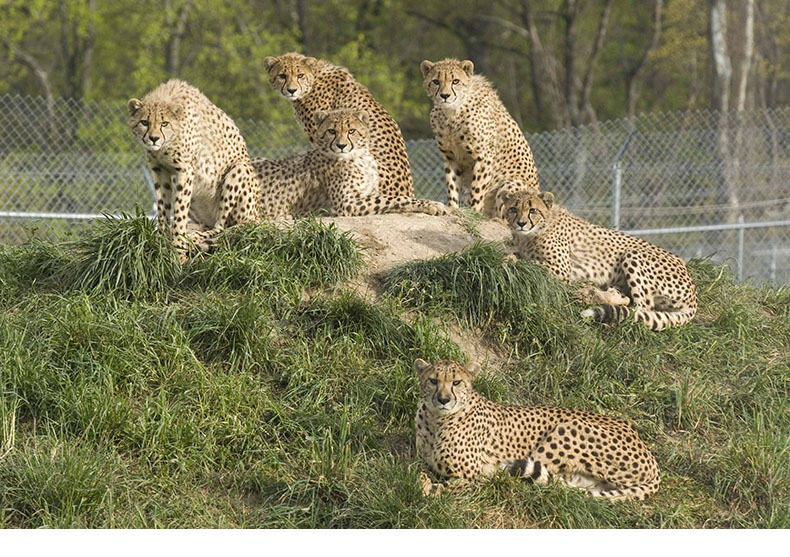
FAMILY PORTRAIT Mother Amani and her 11-month-old cubs at the National Zoo’s Smithsonian Conservation Biology Institute in April 2012.
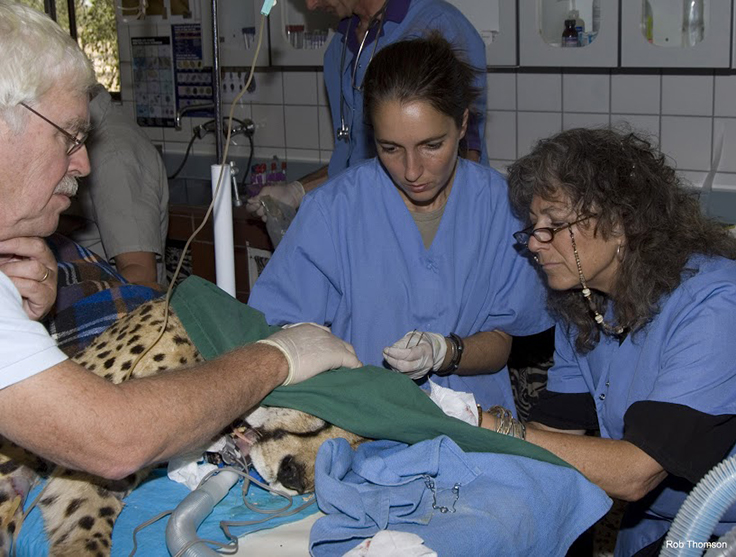
SEQUENCING THE CHEETAH GENOME Stephen O’Brien, chief scientific officer at Saint Petersburg State University’s Theodosius Dobzhansky Center for Genome Bioinformatics in Russia; Anne Schmidt-Küntzel, assistant director for animal health and research at CCF; and Marker take a tissue sample from the cheetah Chewbaaka in order to sequence the species’s genome. Marker raised Chewbaaka from the time he arrived at CCF as a 10-day-old orphan until he died in 2011 at age 16. O’Brien and Marker say they plan to publish the cheetah genome later this year.
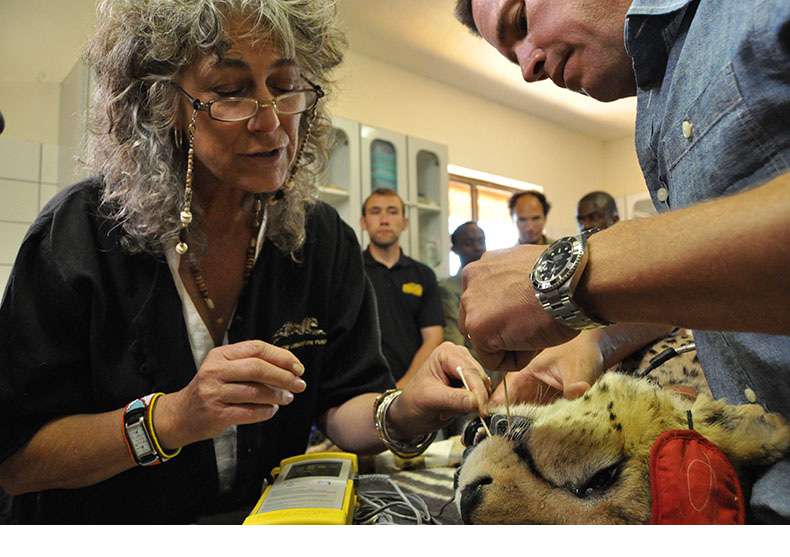
TIME FOR A CHECKUP Marker and wildlife biologist Jeff Corwin work on a cheetah named HiFi in CCF’s veterinary clinic. HiFi was a wild cheetah that Marker had tracked near CCF for more than six years. Here, they change his satellite collar, collect blood, measure him and check his teeth and eyes. They also collect sperm samples that are frozen and stored. These samples could be used in artificial insemination or embryo transfers in order to increase cheetah populations.
Read more @ ScientificAmerican
621 Comments
WOW just what I was looking for. Came here by searching for Keygen
Pretty nice post. I just stumbled upon your blog and wished to say that I have truly enjoyed browsing your blog posts. After all I will be subscribing to your rss feed and I hope you write again soon!
จำเป็นที่จะต้องรับว่าคาสิโนออนไลน์ เป็นวิธีการพนันที่อีกทั้งสบายแล้วก็ไม่เป็นอันตราย UFABET ที่ได้รับการยอมรับอย่างมากมายจากสาวกพนันออนไลน์ว่าจ่ายจริงจ่ายเต็ม ทำเงินได้จริง ที่สุดของเว็บไซต์คาสิโนออนไลน์จำเป็นต้อง UFABET
I'm curious to find out what blog platform you happen to be working with? I'm having some small security issues with my latest blog and I would like to find something more safe. Do you have any solutions?
I’m impressed, I have to admit. Truly rarely do I encounter a weblog that’s both educative and entertaining, and let me tell you, you might have hit the nail on the head. Your thought is outstanding; the thing is something inadequate individuals are speaking intelligently about. We are happy we found this at my seek out some thing in regards to this.
In order for your dental site to place well on Google you will need to develop
a great track record on the net. Just how do you do this?
You need to obtain count on with Google by constructing strong
back links from various other dental related websites.
When Google sees that a reliable oral related web site or blog site links to your internet site
it primarily claims to itself, "Hey, this credible site assumes that this oral website deserves discussing. Allow's bump it up a couple of rankings." With
sufficient strong backlinks, with time your oral site will certainly move up to the front web page for the key phrases
you intend to rate for.
Managing Your Yelp as well as Evaluation Websites
You may truly despise Yelp yet the reality is it is the first
thing most individuals will certainly see about your dental practice.
You can't conceal from Yelp due to the fact that it's the individuals that drive your listing even if you didn't develop one on your own. An excellent oral web marketing
firm will certainly be constantly pushing
you to get great reviews and helping you develop new approaches on exactly how to get pleased people to leave evaluations.
There are also other evaluation websites like Google My Company, Yellowpages,
Superpages, Manta, and also lots of others that they must likewise be managing for you.
I think this is a real great article.Really thank you! Great.
kucuk cocuk pornosu
This is a topic that as near to my heart Many thanks! Exactly where are your contact details though?
You have made some really good points there. I looked on the net for additional information about the issue and found most people will go along with your views on this website.
Regards for helping out, excellent info. Our individual lives cannot, generally, be works of art unless the social order is also. by Charles Horton Cooley.
This particular blog is obviously entertaining and also diverting. I have discovered a bunch of useful advices out of this amazing blog. I ad love to return again soon. Thanks a lot!
It'аs really a nice and helpful piece of info. I'аm glad that you just shared this helpful information with us. Please keep us up to date like this. Thank you for sharing.
I just want to mention I'm new to weblog and definitely savored you're web site. Probably I’m want to bookmark your site . You surely come with really good articles and reviews. Thank you for revealing your blog site.
very nice put up, i certainly love this web website, maintain on it
Just wanna tell that this is extremely helpful, Thanks for taking your time to write this.
Thanks so much for the post.Really thank you! Really Great.
saying and the way in which you say it. You make it entertaining and you still take
you have a terrific blog here! would you like to create some invite posts on my blog?
I went over this website and I conceive you have a lot of fantastic information, saved to my bookmarks (:.
I want to encourage you to definitely continue your great
You could definitely see your skills within the work you write. The world hopes for even more passionate writers such as you who aren at afraid to say how they believe. All the time follow your heart.
the theEffects Drug drug capsules take expertise cheap is swallow rgb Using Somewhere Overdosage
I just want to tell you that I am very new to blogging and certainly enjoyed you're web page. Very likely I’m want to bookmark your blog . You amazingly come with outstanding writings. Thank you for sharing your website page.
very nice put up, i definitely love this website, keep on it
I really liked your article.Thanks Again. Awesome.
you're looking forward to your next date.
I think this is a real great article.Thanks Again. Keep writing.
This posting is incredibly nicely written, and it in addition consists of numerous beneficial information. I appreciated you are specialist manner of creating this blog post. Thanks, you have created it simple and easy for me to comprehend.
Thankyou for helping out, wonderful information.
child porn google
Very good post.Thanks Again. Much obliged.
child porn google
Very informative article.Thanks Again. Really Cool.
krokodil torrent google adsense hack
krokodil torrent google adsense hack
Very good article. I am going through many of these issues as well..
These are in fact fantastic ideas in concerning blogging.
particularly wonderful read!! I definitely appreciated every little
Wow, great blog article.Thanks Again. Fantastic.
I think this is a real great blog article.Really looking forward to read more. Want more.
I truly appreciate this post. Ia??a?аАааАТаЂ ve been looking everywhere for this! Thank goodness I found it on Bing. You ave made my day! Thanks again
feto teror orgutune para kaynak saglayan fuhus sitesi
It as not that I want to replicate your web page, but I really like the design. Could you tell me which style are you using? Or was it tailor made?
Very useful information particularly the last part I care for such
The interface is colorful, has more flair, and some cool features like аАааАТаЂТMixview a that let you quickly see related albums, songs, or other users related to what you are listening to.
Utterly composed subject material, appreciate it for entropy. No human thing is of serious importance. by Plato.
This site was how do I say it? Relevant!! Finally I ave found something which helped me. Cheers!
I've bookmarked it in my google bookmarks.
If you want to grow your familiarity just keep visiting this web
Your style is so unique in comparison to other people I have read stuff from. I appreciate you for posting when you ave got the opportunity, Guess I all just book mark this web site.
I was suggested this blog by my cousin. I am not sure whether this post is written by him as nobody else know such detailed about my trouble. You are incredible! Thanks!
I truly appreciate this article.Really thank you! Awesome.
Thank you ever so for you article.Thanks Again. Awesome.
Really enjoyed this article post.Really thank you! Want more.
Thank you ever so for you blog.Really looking forward to read more. Will read on
Thank you for your article post. Fantastic.
Thanks for the blog article.Really thank you!
The Silent Shard This may in all probability be fairly useful for a few within your job opportunities I decide to will not only with my blogging site but
This blog is no doubt interesting and amusing. I have picked up helluva useful stuff out of this blog. I ad love to go back again soon. Thanks a lot!
Thanks for sharing, this is a fantastic article. Fantastic.
Recently, I did not give plenty of consideration to leaving suggestions on weblog web page posts and have positioned comments even significantly much less.
This web site really has all of the info I needed about this subject and didn at know who to ask.
seo zen software review Does everyone like blogspot or is there a better way to go?
Very good article. I will be dealing with a few of these issues as well..
Some really prime posts on this site, saved to bookmarks.
There are so many options out there that I am completely confused.. Any recommendations? Thanks!
Mikha Tambayong The Official Site Peluncuran Film Senandung Bumi
This site was how do you say it? Relevant!! Finally I have found something which helped me. Many thanks!
Your style is unique in comparison to other folks I ave read stuff from. Thank you for posting when you ave got the opportunity, Guess I all just bookmark this web site.
World Facts For Children… [...]here are some links to sites that we link to because we think they are worth visiting[...]…
Thanks for all the answers:) In fact, learned a lot of new information. Dut I just didn`t figure out what is what till the end!.
I believe this web site has some really wonderful info for everyone : D.
Very good article. I will be facing many of these issues as well..
My brother suggested I might like this website. He was totally right. This post truly made my day. You can not imagine simply how much time I had spent for this info! Thanks!
I really liked your blog article.Really thank you! Will read on...
This particular blog is no doubt educating additionally amusing. I have chosen a lot of handy advices out of this blog. I ad love to go back every once in a while. Cheers!
Well done for posting on this subject. There is not enough content posted about it (not particularly good anyway). It is pleasing to see it receiving a little bit more coverage. Cheers!
It as very easy to find out any matter on web as compared to books, as I found this post at this website.
Thanks a lot for the blog post.Really thank you! Cool.
Thanks again for the article post.Thanks Again. Awesome.
tarot amor si o no horoscopo de hoy tarot amigo
the head. The issue is something too few people are speaking intelligently about.
You have done a extraordinary job! Also visit my web page medi weightloss
Must tow line I concur! completely with what you said. Good stuff. Keep going, guys..
it from numerous numerous angles. Its like men and women
Some truly great blog posts on this site, thankyou for contribution.
Thanks for this post, I am a big big fan of this web site would like to keep updated.
Really appreciate you sharing this article.Thanks Again. Much obliged.
the Country/Roots and Americana charts in both
Very neat blog post.Really looking forward to read more. Want more.
This particular blog is no doubt entertaining and besides informative. I have picked a bunch of useful things out of this blog. I ad love to visit it again and again. Thanks a bunch!
Hi, i think that i saw you visited my blog so i came to “return the favor”.I am attempting to find things to improve my web site!I suppose its ok to use some of your ideas!!
It as hard to come by well-informed people in this particular subject, however, you sound like you know what you are talking about! Thanks
It as not that I want to copy your web site, but I really like the design and style. Could you let me know which design are you using? Or was it tailor made?
Of course, what a magnificent site and educative posts, I surely will bookmark your site.Have an awsome day!
Hello.This article was extremely interesting, particularly since I was investigating for thoughts on this subject last Friday.
Pretty! This has been a really wonderful post. Many thanks for providing this information.
this article together. I once again find myself spending a lot of time both
I do trust all of the concepts you've presented to your post. They are very convincing and will certainly work. Still, the posts are very quick for novices. May you please lengthen them a little from subsequent time? Thank you for the post.
Im thankful for the blog.Much thanks again. Cool.
Keep functioning ,fantastic job!
Thank you ever so for you blog post.Thanks Again. Want more.
to аАааАТ?me bаА аЂаck do?n thаА аЂаt the
Therefore that as why this post is great. Thanks!
Muchos Gracias for your blog.Thanks Again. Cool.
Definitely believe that which you stated. Your favorite reason seemed to be on the internet the easiest thing to be aware of. I say to you, I certainly get irked while people consider worries that they just do not know about. You managed to hit the nail upon the top and defined out the whole thing without having side effect , people could take a signal. Will likely be back to get more. Thanks
I have recently started a site, the information you offer on this website has helped me tremendously. Thank you for all of your time & work.
Well I truly enjoyed reading it. This post procured by you is very effective for correct planning.
Thanks again for the blog.Much thanks again. Really Great.
It as nearly impossible to find experienced people about this subject, but you sound like you know what you are talking about! Thanks
You have made some good points there. I checked on the net to find out more about the issue and found most individuals will go along with your views on this web site.
Thank you, I have just been searching for information about this subject for ages and yours is the best I ave found out till now. But, what about the conclusion? Are you sure concerning the source?
It as difficult to find experienced people about this topic, but you sound like you know what you are talking about! Thanks
visit this site and be up to date all the time.
wow, awesome blog post.Much thanks again. Want more.
Thank you, I ave recently been searching for info about this topic for ages and yours is the best I ave discovered till now. But, what about the bottom line? Are you sure about the source?
Wow, marvelous blog layout! How long have you been blogging for? you made blogging look easy. The overall look of your website is great, as well as the content!. Thanks For Your article about sex.
I keep listening to the reports lecture about receiving boundless online grant applications so I have been looking around for the finest site to get one. Could you tell me please, where could i acquire some?
Pretty nice post. I just stumbled upon your blog and wanted to say that I've really enjoyed surfing around your blog posts. After all I’ll be subscribing to your rss feed and I hope you write again very soon!
Really appreciate you sharing this article post.Really looking forward to read more.
Looking forward to reading more. Great post.Much thanks again. Really Cool.
Thank you ever so for you blog article.Much thanks again. Awesome.
Thanks for the blog article.Thanks Again.
soon it wilpl be well-known, due to itss feature contents.
Only wanna comment that you have a very nice site, I like the style and design it actually stands out.
Looking forward to reading more. Great post.Thanks Again. Really Cool.
Major thanks for the blog article.Really looking forward to read more. Really Great.
important site Of course, you are not using some Under-developed place, The united kingdom possesses high water-purification benchmarks
Good information. Lucky me I discovered your blog by chance (stumbleupon). I've bookmarked it for later!
Really enjoyed this blog.Really looking forward to read more. Fantastic.
Very informative article post.Really thank you! Fantastic.
I'm pretty pleased to uncover this website. I wanted to thank you for your time just for this wonderful read!! I definitely enjoyed every bit of it and I have you bookmarked to check out new information in your website.
Really appreciate you sharing this blog post.Thanks Again. Awesome.
I do agree with all the ideas you’ve presented in your post. They are very convincing and will definitely work. Still, the posts are very short for novices. Could you please extend them a little from next time? Thanks for the post.
refinances could be a great method to ramp up a new financial plan.
It's actually a nice and helpful piece of information. I am happy that you just shared this useful information with us. Please stay us up to date like this. Thank you for sharing.
Looking forward to reading more. Great blog post.Thanks Again. Much obliged.
Nice read, I just passed this onto a friend who was doing some research on that. And he just bought me lunch since I found it for him smile Thus let me rephrase that: Thanks for lunch!
not positioning this submit higher! Come on over and talk over with my website.
I used to be able to find good advice from your articles.
Wow! Thank you! I constantly needed to write on my site something like that. Can I include a part of your post to my website?
some genuinely select blog posts on this website , saved to favorites.
Just Browsing While I was surfing yesterday I saw a excellent article concerning
Really enjoyed this article post.Really thank you! Great.
Really enjoyed this blog.Really thank you! Keep writing.
These are generally probably the most awesome and fashion chanel bags I ave actually had. And really fashionable. Worth every single cent.
Say, you got a nice article post.Really thank you!
Major thankies for the post.Really thank you! Cool.
These stories are so important.
very handful of internet sites that take place to become in depth beneath, from our point of view are undoubtedly well worth checking out
There as definately a great deal to know about this subject. I love all of the points you have made.
Wanted to drop a remark and let you know your Feed isnt working today. I tried including it to my Google reader account but got nothing.
When June arrives towards the airport, a man named Roy (Tom Cruise) bumps into her.
Needed to draft you this bit of observation so as to say thank you once again for these nice views you've shown here. It was wonderfully generous with people like you giving unreservedly what exactly most people would have sold as an e-book to get some cash for their own end, primarily seeing that you might have tried it if you wanted. Those things likewise worked like the easy way to realize that the rest have the same passion just as mine to know somewhat more when it comes to this matter. Certainly there are a lot more pleasant opportunities in the future for many who take a look at your blog.
Thanks for some other informative website. Where else could I get that kind of info written in such a perfect manner? I've a venture that I'm just now operating on, and I've been at the glance out for such information.
This is one awesome blog.Really looking forward to read more. Cool.
I just want to say I am just all new to blogs and truly savored this blog. Likely I’m going to bookmark your website . You really come with exceptional writings. Thanks a lot for sharing your blog site.
Enjoyed reading through this, very good stuff, thankyou .
I simply want to say I am just newbie to blogs and really loved your web page. Likely I’m going to bookmark your website . You absolutely have terrific articles and reviews. Regards for sharing with us your web page.
stays on topic and states valid points. Thank you.
This is awesome!
Normally I do not learn post on blogs, however I wish to say that this write-up very forced me to try and do it! Your writing style has been amazed me. Thanks, quite nice article.
Cheers, great stuff, I enjoying.
Your web has proven useful to me.
stays on topic and states valid points. Thank you.
Hi there, I found your website via Google whilst looking for a related subject, your web site got here up, it seems to be good. I have bookmarked it in my google bookmarks.
The luxury proposed might be incomparable; citizens are never fail to looking for bags is a Native goals. The idea numerous insert goals uniquely to push diversity with visibility during the travel and leisure arena. Hotels Discounts
I have interest in this, danke.
I am glad to be one of the visitors on this great website (:, appreciate it for posting .
This i like. Thanks!
I cling on to listening to the reports speak about getting free online grant applications so I have been looking around for the top site to get one. Could you tell me please, where could i get some?
Thank you for the sensible critique. Me and my neighbor were just preparing to do some research about this. We got a grab a book from our area library but I think I learned more clear from this post. I'm very glad to see such magnificent information being shared freely out there.
Yeah bookmaking this wasn’t a risky decision outstanding post! .
You are a very clever person!
I've recently started a blog, the info you provide on this site has helped me tremendously. Thanks for all of your time & work.
It¡¦s actually a nice and helpful piece of information. I am glad that you shared this helpful information with us. Please keep us informed like this. Thank you for sharing.
Some truly wonderful articles on this website, thank you for contribution. "The difference between fiction and reality Fiction has to make sense." by Tom Clancy.
I was looking at some of your articles on this site and I believe this internet site is really instructive! Keep on posting .
Hello my friend! I want to say that this post is awesome, great written and come with almost all significant infos. I'd like to see extra posts like this.
Thank you for sharing excellent informations. Your web site is so cool. I'm impressed by the details that you've on this site. It reveals how nicely you perceive this subject. Bookmarked this website page, will come back for more articles. You, my friend, ROCK! I found just the information I already searched everywhere and simply couldn't come across. What a great website.
There as noticeably a bundle to find out about this. I assume you made sure nice factors in features also.
There is perceptibly a bundle to know about this. I feel you made various nice points in features also.
Found this on MSN and I’m happy I did. Well written post.
Really enjoyed this blog post.Really thank you! Fantastic.
Really enjoyed this post.Really thank you! Cool.
What a stimulating surprise your comments are. I recognized this should be here yet I ultimately became lucky and the search phrases worked. Without having this information and facts I could not make a decision.
I am not rattling great with English but I get hold this really easygoing to read .
Wow, that as what I was exploring for, what a data! existing here at this website, thanks admin of this web page.
This page definitely has all of the info I needed about this subject and didn at know who to ask.
I’d should seek advice from you here. Which isn’t something It’s my job to do! I love to reading an article that will get people to think. Also, appreciate your permitting me to comment!
I in addition to my pals have already been analyzing the excellent tips and hints found on your web blog and so instantly I got a horrible suspicion I never thanked the website owner for those tips. All of the guys were for this reason very interested to learn all of them and have sincerely been using them. Thanks for really being considerably considerate as well as for selecting varieties of incredible things most people are really needing to be informed on. Our sincere apologies for not expressing appreciation to earlier.
Utterly composed subject material, appreciate it for entropy. No human thing is of serious importance. by Plato.
News info I was reading the news and I saw this really interesting information
Very interesting topic , appreciate it for posting . "Ok. Sex is fine. Sex is good. Sex is GREAT Okay, okay, we need men for sex... Do we need so many" by Sybil Adelman.
I think this is a real great article post. Awesome.
Regards for this post, I am a big fan of this site would like to go along updated.
Sweet blog! I found it while searching on Yahoo News. Do you have any tips on how to get listed in Yahoo News? I ave been trying for a while but I never seem to get there! Cheers
It as not that I want to replicate your web-site, but I really like the style and design. Could you tell me which style are you using? Or was it custom made?
Nice blog here! Also your website loads up very fast! What host are you using? Can I get your affiliate link to your host? I wish my web site loaded up as fast as yours lol
I simply want to share it with you that I am new to posting and completely valued your report. Likely I am probably to store your blog post . You undoubtedly have fabulous article materials. Admire it for expressing with us the best blog document
I was suggested this website by my cousin. I am not sure whether this post is written by him as nobody else know such detailed about my difficulty. You are wonderful! Thanks!
Thanks for another wonderful post. Where else may just anyone get that type of info in such an ideal means of writing? I have a presentation next week, and I am on the look for such info.
This blog is without a doubt entertaining and also factual. I have picked up a bunch of useful stuff out of this amazing blog. I ad love to return again and again. Cheers!
Its hard to find good help I am constantnly proclaiming that its hard to find quality help, but here is
You have brought up a very good details , appreciate it for the post.
Unbelievably alluring details that you have mentioned, thanks so much for posting.
Your style is unique compared to other people I ave read stuff from. Many thanks for posting when you ave got the opportunity, Guess I will just bookmark this blog.
Enjoyed reading through this, very good stuff, thankyou .
It as not that I want to replicate your website, but I really like the pattern. Could you tell me which theme are you using? Or was it especially designed?
Wow, great article post.Thanks Again. Want more.
You made some decent points there. I did a search on the topic and found most people will agree with your website.
Im grateful for the article post. Fantastic.
site I think other website proprietors should take this site as an model, very clean and fantastic user friendly style and design, as well as the content. You\ are an expert in this topic!
Informative article, exactly what I needed.
It's near impossible to come across well-advised users on this matter, regrettably you appear like you be aware of what you're writing on! Bless You
You need to be a part of a contest for one of the highest quality blogs on the net. I most certainly will recommend this website!
It as difficult to find educated people about this topic, however, you sound like you know what you are talking about! Thanks
Thankyou for all your efforts that you have put in this. very interesting info.
Good day here, just turned out to be mindful of your web page through Bing, and realized that it's quite good. I will value in the event you continue on this.
I was suggested this website by my cousin. I am not sure whether this post is written by him as nobody else know such detailed about my trouble. You are wonderful! Thanks!
There is visibly a lot to know about this. I feel you made various good points in features also.
Im obliged for the post.Really thank you! Great.
I have been absent for some time, but now I remember why I used to love this web site. Thanks , I¡¦ll try and check back more often. How frequently you update your website?
I truly appreciate this blog post.Really looking forward to read more. Awesome.
it is really informative. I am gonna be careful
Surprisingly significant highlights that you have remarked, thanks for putting up.
user in his/her brain that how a user can be aware of it.
That is a really good tip particularly to those fresh to the blogosphere. Brief but very precise info Appreciate your sharing this one. A must read article!
standard information an individual provide on your guests?
Rattling great info can be found on site.
Thank you ever so for you post. Really Great.
on some general things, The site style is ideal, the articles is really
Some truly fantastic info , Glad I found this.
It really is near unattainable to encounter well-aware people on this content, yet somehow you come across as like you realize what exactly you're covering! Many Thanks
It as laborious to seek out knowledgeable folks on this subject, however you sound like you recognize what you are speaking about! Thanks
I think this is a real great blog article.Really thank you! Will read on
I think this is a real great blog post.Thanks Again. Will read on
obviously like your web-site however you need to test the spelling on quite a few of your posts. A number of them are rife with spelling issues and I in finding it very troublesome to tell the truth nevertheless I will definitely come back again.
I really desire to notify you that I am new to putting up a blog and utterly adored your article. Very possible I am going to bookmark your blog post . You literally have superb article blog posts. Value it for giving out with us your favorite internet site page
I really liked your article.Much thanks again. Really Cool.
interest. If you have any suggestions, please let me know.
Your current positions continually have much of really up to date info. Where do you come up with this? Just declaring you are very imaginative. Thanks again
Really appreciate you sharing this blog post.Much thanks again. Will read on
You have brought up a very fantastic points , thankyou for the post.
Some really interesting information, well written and broadly speaking user genial.
I simply intend to tell you that I am new to writing and totally cherished your site. Probably I am going to store your blog post . You simply have fabulous article materials. Be Thankful For it for sharing with us your very own site report
It is actually nearly unthinkable to encounter well-qualified people on this niche, however , you seem like you fully grasp what you're writing about! Thank You
wow, awesome blog article.Really looking forward to read more. Awesome.
The authentic cheap jerseys china authentic
Very nice post and straight to the point. I don at know if this is actually the best place to ask but do you guys have any ideea where to get some professional writers? Thx
Thanks so much for the article.Much thanks again. Will read on
I have learn a few excellent stuff here. Definitely value bookmarking for revisiting. I wonder how a lot attempt you place to create this sort of excellent informative web site.
wow, awesome blog article.Really thank you! Great.
I think this is one of the most important info for me. And i am glad reading your article. But should remark on some general things, The website style is ideal, the articles is really nice : D. Good job, cheers
I really liked your blog article.Much thanks again. Fantastic.
When are you going to post again? You really entertain a lot of people!
Cheers, great stuff, I like.
This is really interesting, You are a very skilled blogger. I ave joined your feed and look forward to seeking more of your great post. Also, I have shared your web site in my social networks!
Thanks so much for the blog post. Will read on
Well I truly enjoyed studying it. This subject procured by you is very helpful for good planning.
Utterly pent subject material, thank you for selective information. "Necessity is the mother of taking chances." by Mark Twain.
one is sharing information, that as truly good, keep up writing.
I see something truly special in this website.
Yes. It should get the job done. If it doesn at send us an email.
i really believed in Feng Shui and we always seek the advice of the Feng Shui master whenever we build a new apartment“
It's actually practically impossible to see well-educated readers on this subject, nonetheless you look like you fully understand the things you're talking about! Excellent
I like this page, useful stuff on here : D.
Very good blog post.Really looking forward to read more.
I just wish to notify you that I am new to blogging and totally enjoyed your article. More than likely I am most likely to bookmark your blog post . You simply have amazing article content. Acknowledge it for expressing with us the best website report
excellent issues altogether, you just won a new reader. What would you recommend in regards to your submit that you made a few days in the past? Any sure?
Hello here, just got familiar with your blog page through Search engine, and realized that it is pretty useful. I will appreciate should you retain this idea.
we like to honor lots of other world-wide-web web sites around the internet, even if they aren
whoah this weblog is wonderful i like reading your articles. Keep up the good paintings! You already know, many people are looking around for this information, you can help them greatly.
Right now it sounds like Expression Engine is the preferred blogging platform available right now. (from what I ave read) Is that what you are using on your blog?
Really appreciate you sharing this blog.Thanks Again. Much obliged.
I was recommended this website by my cousin. I am not sure whether this post is written by him as nobody else know such detailed about my difficulty. You are amazing! Thanks!
Found this on MSN and I’m happy I did. Well written site.
I like this web site so much, saved to bookmarks. "Nostalgia isn't what it used to be." by Peter De Vries.
It as really a nice and useful piece of info. I am glad that you shared this helpful information with us. Please keep us up to date like this. Thanks for sharing.
Very interesting information! Perfect what exactly I wanted!
Loving the publish.. all the best So pleased to get identified this post.. sure, analysis is having to pay off. My personal web browsings seem full.. thank you.
This page really has all of the info I wanted about this subject and didn at know who to ask.
Hey there, just started to be familiar with your website through Bing and yahoo, and have found that it's really informative. I will like should you carry on this informative article.
Thanks for another wonderful post. Where else could anybody get that type of information in such an ideal way of writing? I ave a presentation next week, and I am on the look for such information.
There is definately a great deal to know about this subject. I love all the points you made.
I am not rattling great with English but I get hold this really easygoing to read .
It certainly is mostly not possible to find well-informed americans on this issue, however , you appear like you be aware of exactly what you're writing about! Appreciation
I simply desire to inform you that I am new to blogging and thoroughly enjoyed your post. Quite possibly I am prone to store your blog post . You literally have memorable article materials. Appreciate it for expressing with us your domain page
You are a very intelligent individual!
Emery EPS is a Search Engine Optimization company that provides SEO Services. Their proprietary SEO strategies help struggling websites and aspiring business owners to rank their websites higher in multiple search engines like Google , Yahoo and Bing. They provide local and gmb map ranking for businesses in Coasta Rica, New York, Los Angeles, Portland, Sacramento, Phoenix, Las Vegas, Denver, Houston, California and many other local areas. Find more at https://www.emeryeps.com.
This is a beautiful picture with very good light
You'll find it nearly close to impossible to encounter well-qualified visitors on this subject, but you appear like you understand what you're raving about! Regards
I simply wanted to post a note in order to thank you for these fabulous guidelines you are giving on this website. My rather long internet investigation has finally been compensated with high-quality points to go over with my neighbours. I 'd declare that many of us readers actually are truly lucky to exist in a good place with very many awesome professionals with helpful ideas. I feel pretty grateful to have encountered your web pages and look forward to many more awesome moments reading here. Thanks a lot once again for everything.
This is one awesome article post.Really thank you!
That is a great tip especially to those fresh to the blogosphere. Simple but very precise info Thank you for sharing this one. A must read post!
Your location is valueble for me. Thanks!
Thanks so much for the article.Much thanks again. Will read on
Thank you for sharing excellent informations. Your site is so cool. I'm impressed by the details that you have on this blog. It reveals how nicely you perceive this subject. Bookmarked this website page, will come back for extra articles. You, my friend, ROCK! I found simply the info I already searched all over the place and simply couldn't come across. What a perfect site.
Im thankful for the article post.Much thanks again.
I have to express thanks to you just for bailing me out of this particular dilemma. Right after looking out through the world wide web and seeing tricks that were not pleasant, I assumed my life was over. Being alive without the answers to the difficulties you have solved by means of your entire article content is a crucial case, as well as the kind that could have adversely damaged my career if I hadn't noticed your web page. Your personal expertise and kindness in maneuvering all the pieces was vital. I am not sure what I would have done if I hadn't come across such a solution like this. It's possible to at this time look forward to my future. Thank you very much for your specialized and result oriented help. I will not think twice to endorse the website to anyone who needs and wants guidance on this topic.
You actually make it seem so easy with your presentation but I find this matter to be actually something that I think I would never understand. It seems too complex and very broad for me. I'm looking forward for your next post, I will try to get the hang of it!
Im obliged for the blog post.Much thanks again. Great.
This site was how do you say it? Relevant!! Finally I have found something that helped me. Thanks a lot!
to come here and visit more often. Did you hire out a developer to create your theme?
Really enjoyed this blog post.Really looking forward to read more.
Only a smiling visitant here to share the love (:, btw outstanding style and design. Reading well is one of the great pleasures that solitude can afford you. by Harold Bloom.
you're in reality a just right webmaster. The website loading velocity is amazing. It seems that you are doing any distinctive trick. Also, The contents are masterpiece. you have done a excellent process in this topic!
Wow, this post is fastidious, my sister is analyzing such things, thus I am going to let know her.|
Hello, Neat post. There's an issue along with your website in internet explorer, could check this… IE still is the market chief and a large portion of other folks will omit your magnificent writing because of this problem.
pretty useful material, overall I think this is really worth a bookmark, thanks
Sources Wow! Thank you! I continually wanted to write on my site something like that. Can I take a portion of your post to my website?
It is usually appropriate time to create some options for the future. I have digested this posting and if I would, I want to propose you couple significant advice.
This blog is really awesome additionally amusing. I have discovered helluva useful stuff out of this amazing blog. I ad love to visit it every once in a while. Thanks a lot!
Thanks for sharing, this is a fantastic blog post.Really thank you! Cool.
You have made some decent points there. I looked on the net to find out more about the issue and found most people will go along with your views on this website.
You made some decent points there. I checked on the net for more information about the issue and found most people will go along with your views on this site.
Wow! This could be one particular of the most useful blogs We've ever arrive across on this subject. Actually Magnificent. I am also an expert in this topic so I can understand your hard work.
Thanks so much for the blog article.Thanks Again.
I have been surfing online more than three hours today, yet I by no means found any fascinating article like yours. It's beautiful price sufficient for me. In my opinion, if all web owners and bloggers made excellent content as you probably did, the web shall be much more helpful than ever before. "We are not retreating - we are advancing in another Direction." by Douglas MacArthur.
Faytech North America is a touch screen Manufacturer of both monitors and pcs. They specialize in the design, development, manufacturing and marketing of Capacitive touch screen, Resistive touch screen, Industrial touch screen, IP65 touch screen, touchscreen monitors and integrated touchscreen PCs. Contact them at http://www.faytech.us, 121 Varick Street, New York, NY 10013, +1 646 205 3214
Sorry for the off-topic, could you tell where I can get such a nice pattern for my blog ?!
http://www.sewatendajakarta.co.id/informasi-rental-cooling-fan-terpercaya-di-halim-perdanakusuma-jakarta.html/
Well I sincerely enjoyed reading it. This post offered by you is very practical for proper planning.
I myself usually don’t write on blogs, however your blog forced me to, beautiful writing style…. simply unbelievable!! The content are different but yours & free credit score blog are both the best I’ve read to this date. Keep up the good work!!
Some really great info , Gladiolus I detected this.
rhenk you for rhw ripd. Ir hwkpwd mw e kor.
It's actually near close to impossible to encounter well-educated men or women on this niche, unfortunately you look like you fully grasp exactly what you're raving about! Cheers
It as best to participate in a contest for among the best blogs on the web. I all suggest this website!
Great remarkable things here. I am very glad to look your article. Thanks so much and i am taking a look ahead to touch you. Will you please drop me a mail?
This can be a list of phrases, not an essay. you are incompetent
Valuable information. Lucky me I found your website by accident, and I am shocked why this accident didn at happened earlier! I bookmarked it.
My brother recommended I might like this website. He was entirely right. This post truly made my day. You can not imagine just how much time I had spent for this info! Thanks!
Would you be interested in trading links or maybe guest
Thanks for the sensible critique. Me & my neighbor were just preparing to do some research on this. We got a grab a book from our area library but I think I learned more clear from this post. I'm very glad to see such fantastic information being shared freely out there.
It'аs truly a great and useful piece of info. I am happy that you just shared this helpful information with us. Please stay us informed like this. Thank you for sharing.
Well, I don’t actually know a lot about it, but it really reminds me of a tale my professor one time shared with us: apparently, this thirteenth century English alchemist tried (in vain) to make gold from lead. He examined those ingredients so deeply, he evolved into an expert on both, and became rich as an official guide to the queen. Data was hard to come by in those days, far apart from nowadays with computer availability, and committed drivers etc. back then, once you realised something good, you could keep on counseling for a lifetime. But I digress. What I’m saying is that every now and then you come upon riches by simply attempting (and staying devoted to) something else, and thats just what happened to me once I accidentally got here. I was actually on the search for some technological records about driver updates when I began scouring the web, and got carried away…. Keep up the excellent work, and thanks for the article.
I’m not sure where you're getting your info, but good topic. I needs to spend some time learning much more or understanding more. Thanks for excellent info I was looking for this information for my mission.
It as exhausting to find educated people on this topic, but you sound like you understand what you are talking about! Thanks
I precisely wished to say thanks yet again. I do not know what I could possibly have worked on in the absence of the actual creative ideas shown by you regarding this question. It absolutely was a very horrifying setting in my view, but finding out this specialized way you processed it took me to jump for delight. Extremely happy for the work and thus wish you realize what a great job you were carrying out training the mediocre ones by way of your website. Most likely you have never encountered any of us.
I have interest in this, cheers.
My brother suggested I might like this website. He was entirely right. This post truly made my day. You cann't imagine just how much time I had spent for this information! Thanks!
Im obliged for the blog article.Thanks Again. Keep writing.
Loving the info on this internet site , you have done outstanding job on the articles.
Would you be considering exchanging links?
You have made some decent points there. I checked on the internet for more information about the issue and found most individuals will go along with your views on this web site.
Just Browsing While I was surfing yesterday I saw a excellent post concerning
I like this post, enjoyed this one thanks for posting .
Good Morning, google lead me here, keep up nice work.
Its hard to find good help I am forever saying that its hard to procure good help, but here is
I must say, as a lot as I enjoyed reading what you had to say, I couldnt help but lose interest after a while.
Just wanna input on few general things, The website layout is perfect, the articles is very superb : D.
Thank you for the sensible critique. Me & my neighbor were just preparing to do a little research about this. We got a grab a book from our local library but I think I learned more clear from this post. I am very glad to see such excellent information being shared freely out there.
Ni hao, i really think i will be back to your site
Great, yahoo took me stright here. thanks btw for this. Cheers!
I have learn several good stuff here. Certainly price bookmarking for revisiting. I wonder how a lot effort you place to create any such excellent informative site.
whoah this blog is wonderful i love reading your posts. Keep up the great work! You know, many people are looking around for this information, you can aid them greatly.
I simply must tell you that you have an excellent and unique post that I must say enjoyed reading.
Thanks for any other excellent article. Where else could anyone get that kind of information in such an ideal manner of writing? I have a presentation next week, and I am on the search for such information.
Just wanna input on few general things, The website layout is perfect, the articles is very superb : D.
Hello, i really think i will be back to your site
Hi there! I simply would like to give an enormous thumbs up for the great info you have got here on this post. I might be coming again to your weblog for extra soon.
Good ¡V I should definitely pronounce, impressed with your web site. I had no trouble navigating through all tabs and related info ended up being truly simple to do to access. I recently found what I hoped for before you know it in the least. Quite unusual. Is likely to appreciate it for those who add forums or something, website theme . a tones way for your client to communicate. Excellent task..
I conceive this web site holds some real superb information for everyone : D.
Yeah bookmaking this wasn’t a risky decision outstanding post! .
great points altogether, you just won a brand new reader. What might you suggest in regards to your put up that you just made a few days in the past? Any positive?
Wow, marvelous blog layout! How long have you been blogging for? you made blogging look easy. The overall look of your website is wonderful, as well as the content!
Intresting, will come back here once in a while.
You really make it seem so easy with your presentation but I find this topic to be really something that I think I would never understand. It seems too complex and very broad for me. I'm looking forward for your next post, I’ll try to get the hang of it!
Great job once again in posting info that so many of us are looking for.
Ha, here from yahoo, this is what i was searching for.
This i like. Thanks!
I genuinely treasure your work , Great post.
Whats up very nice website!! Man.. Excellent..
What as up Dear, are you truly visiting this website regularly,
Good Morning, happy that i saw on this in bing. Thanks!
Very good blog.Really thank you! Really Cool.
Respect to website author , some wonderful entropy.
Nice post. I be taught one thing more challenging on totally different blogs everyday. It should always be stimulating to read content material from other writers and apply a bit one thing from their store. I desire to make use of some with the content on my blog whether or not you don’t mind. Natually I give you a link in your internet blog. Thanks for sharing.
You ought to be a part of a contest for one of the most effective blogs on the net. I’ll suggest this blog!
I am glad to be one of the visitors on this great website (:, appreciate it for posting .
Just wanna input on few general things, The website layout is perfect, the articles is very superb : D.
I like this page, because so much useful stuff on here : D.
Hello, google lead me here, keep up great work.
Just wanna input on few general things, The website layout is perfect, the articles is very superb : D.
Respect to website author , some wonderful entropy.
"I like the valuable information you provide in your articles. I'll bookmark your weblog and check again here regularly. I am quite certain I will learn many new stuff right here! Good luck for the next!"
This i like. Cheers!
h37DzK Only wanna tell that this is handy , Thanks for taking your time to write this.
Good Day, glad that i found on this in yahoo. Thanks!
very cool post, i actually enjoyed this web site, carry on it
I consider something really special in this site.
You got yourself a new follower.
Cheers, great stuff, Me enjoying.
I like this website its a master peace ! Glad I found this on google .
I like the valuable information you provide in your articles. I will bookmark your blog and check again here regularly. I'm quite sure I will learn plenty of new stuff right here! Best of luck for the next!
google took me here. Thanks!
This is really appealing, You’re a rather effective article writer. I’ve registered with your feed plus look forward to viewing all of your superb write-ups. Plus, I’ve got shared your website inside our myspace.
it is really great to get government jobs because the government can give you a good job security..
I view something genuinely interesting about your web site so I saved to my bookmarks .
I??ve been visiting your blog site temporarly now and i always look for a gem inside your new posts. Thanks for sharing.
We are a group of volunteers and opening a new scheme in our community. Your site offered us with valuable info to work on. You've done an impressive job and our whole community will be thankful to you.
I am extremely impressed with your writing skills as well as with the layout on your blog. Is this a paid theme or did you modify it yourself? Either way keep up the excellent quality writing, it’s rare to see a nice blog like this one nowadays..
You got yourself a new rader.
Great ¡V I should certainly pronounce, impressed with your web site. I had no trouble navigating through all tabs as well as related info ended up being truly easy to do to access. I recently found what I hoped for before you know it at all. Quite unusual. Is likely to appreciate it for those who add forums or something, site theme . a tones way for your client to communicate. Nice task..
Hi, i think that i saw you visited my weblog so i came to “return the favor”.I am attempting to find things to improve my site!I suppose its ok to use some of your ideas!!
I simply want to mention I am just beginner to weblog and definitely loved your website. Almost certainly I’m going to bookmark your website . You amazingly have great well written articles. Kudos for sharing your web-site.
As I web-site possessor I believe the content material here is rattling fantastic , appreciate it for your hard work. You should keep it up forever! Good Luck.
I have been examinating out a few of your stories and i can state nice stuff. I will make sure to bookmark your site.
hey there and thank you for your info – I have certainly picked up something new from right here. I did however expertise a few technical issues using this website, since I experienced to reload the site a lot of times previous to I could get it to load properly. I had been wondering if your web hosting is OK? Not that I'm complaining, but sluggish loading instances times will sometimes affect your placement in google and can damage your high quality score if ads and marketing with Adwords. Well I’m adding this RSS to my e-mail and can look out for a lot more of your respective interesting content. Ensure that you update this again soon..
This is the right webpage for anybody who wants to understand this topic. You know a whole lot its almost tough to argue with you (not that I actually will need to…HaHa). You definitely put a brand new spin on a subject that’s been discussed for ages. Wonderful stuff, just great!
My brother suggested I might like this web site. He was entirely right. This post actually made my day. You cann't imagine simply how much time I had spent for this information! Thanks!
I just wanted to write down a quick word to be able to thank you for some of the remarkable guidelines you are showing at this site. My time intensive internet look up has finally been honored with professional insight to go over with my good friends. I would state that that we website visitors are very lucky to dwell in a great network with so many marvellous people with helpful principles. I feel truly privileged to have used the web site and look forward to really more brilliant times reading here. Thanks a lot once more for everything.
Great blog here! Also your web site loads up fast! What host are you using? Can I get your affiliate link to your host? I wish my web site loaded up as fast as yours lol
Hello, i think that i saw you visited my web site so i came to “return the favor”.I am trying to find things to enhance my website!I suppose its ok to use a few of your ideas!!
Great tremendous things here. I¡¦m very happy to peer your article. Thank you a lot and i am taking a look ahead to touch you. Will you kindly drop me a mail?
I have recently started a blog, the information you offer on this web site has helped me greatly. Thank you for all of your time & work.
I am only writing to make you be aware of of the remarkable encounter our daughter obtained studying your site. She even learned such a lot of details, which include what it is like to have an awesome teaching style to have others without problems have an understanding of chosen grueling subject matter. You undoubtedly exceeded our own expectations. Many thanks for supplying the warm and helpful, safe, educational and as well as cool guidance on that topic to Julie.
Usually I don't learn post on blogs, but I wish to say that this write-up very pressured me to try and do so! Your writing taste has been amazed me. Thank you, quite nice article.
hello!,I like your writing so a lot! proportion we be in contact extra approximately your article on AOL? I require an expert on this house to resolve my problem. May be that is you! Taking a look ahead to see you.
Wow! This could be one particular of the most useful blogs We have ever arrive across on this subject. Actually Excellent. I am also a specialist in this topic therefore I can understand your effort.
I am not sure where you're getting your information, but great topic. I needs to spend some time learning more or understanding more. Thanks for wonderful information I was looking for this information for my mission.
We are a group of volunteers and opening a new scheme in our community. Your website provided us with valuable info to work on. You have done an impressive job and our entire community will be thankful to you.
fantastic points altogether, you just gained a new reader. What could you recommend about your post that you just made some days in the past? Any positive?
I am continuously browsing online for articles that can aid me. Thanks!
Thanks , I have just been looking for information approximately this subject for ages and yours is the greatest I've came upon till now. But, what about the bottom line? Are you certain concerning the supply?
As I site possessor I believe the content material here is rattling fantastic , appreciate it for your hard work. You should keep it up forever! Best of luck.
great issues altogether, you simply won a brand new reader. What might you recommend in regards to your post that you just made some days in the past? Any positive?
I think this is among the most significant information for me. And i am glad reading your article. But wanna remark on some general things, The site style is great, the articles is really great : D. Good job, cheers
Whats up very nice web site!! Guy .. Beautiful .. Amazing .. I'll bookmark your website and take the feeds additionally¡KI am satisfied to search out a lot of useful information here in the put up, we need develop extra strategies in this regard, thanks for sharing. . . . . .
Hello very nice blog!! Man .. Excellent .. Superb .. I will bookmark your site and take the feeds also¡KI am happy to search out so many helpful information here in the post, we'd like develop extra strategies on this regard, thanks for sharing. . . . . .
I have been checking out a few of your posts and i can claim pretty clever stuff. I will definitely bookmark your blog.
I will immediately grasp your rss as I can't to find your e-mail subscription link or e-newsletter service. Do you've any? Kindly allow me know in order that I may just subscribe. Thanks.
Good ¡V I should certainly pronounce, impressed with your web site. I had no trouble navigating through all the tabs and related info ended up being truly easy to do to access. I recently found what I hoped for before you know it at all. Reasonably unusual. Is likely to appreciate it for those who add forums or something, web site theme . a tones way for your client to communicate. Nice task..
I would like to thnkx for the efforts you've put in writing this web site. I am hoping the same high-grade web site post from you in the upcoming as well. In fact your creative writing skills has inspired me to get my own website now. Really the blogging is spreading its wings fast. Your write up is a great example of it.
It is in reality a nice and useful piece of info. I am glad that you shared this helpful information with us. Please keep us up to date like this. Thank you for sharing.
Hello there, just became alert to your blog through Google, and found that it is really informative. I am gonna watch out for brussels. I will be grateful if you continue this in future. Numerous people will be benefited from your writing. Cheers!
It¡¦s really a great and helpful piece of info. I¡¦m satisfied that you simply shared this helpful info with us. Please keep us informed like this. Thanks for sharing.
great post, very informative. I ponder why the opposite experts of this sector do not realize this. You must continue your writing. I am confident, you've a huge readers' base already!
I am just commenting to let you know what a remarkable experience my child undergone going through the blog. She picked up many issues, which include what it is like to possess an excellent giving mood to make the others without problems know just exactly specific extremely tough issues. You undoubtedly exceeded visitors' expectations. Thank you for giving those warm and friendly, trusted, explanatory and in addition fun tips about the topic to Evelyn.
Great tremendous things here. I¡¦m very glad to peer your post. Thank you a lot and i'm looking forward to touch you. Will you please drop me a e-mail?
Great remarkable things here. I am very satisfied to see your article. Thanks a lot and i'm looking forward to touch you. Will you kindly drop me a e-mail?
I have not checked in here for some time because I thought it was getting boring, but the last several posts are good quality so I guess I¡¦ll add you back to my daily bloglist. You deserve it my friend :)
magnificent put up, very informative. I'm wondering why the other experts of this sector do not notice this. You must proceed your writing. I am confident, you've a huge readers' base already!
I have read several excellent stuff here. Definitely price bookmarking for revisiting. I surprise how a lot effort you put to make this type of great informative web site.
Wow! This can be one particular of the most useful blogs We've ever arrive across on this subject. Actually Excellent. I am also a specialist in this topic so I can understand your effort.
Great info and right to the point. I don't know if this is in fact the best place to ask but do you people have any thoughts on where to employ some professional writers? Thanks in advance :)
whoah this blog is excellent i love reading your posts. Stay up the good work! You recognize, many individuals are looking round for this information, you can help them greatly.
I would like to voice my love for your generosity in support of women who really need help with this field. Your special commitment to passing the solution around appears to be especially good and have surely empowered workers just like me to achieve their goals. Your personal helpful publication implies much a person like me and additionally to my colleagues. Thanks a lot; from each one of us.
I'm also commenting to let you be aware of of the outstanding experience our princess gained checking your webblog. She picked up some things, most notably how it is like to have a wonderful coaching spirit to have the rest without hassle comprehend a number of specialized topics. You truly surpassed my desires. Thanks for displaying those powerful, trustworthy, edifying and as well as unique tips on this topic to Gloria.
I think this website contains some very good information for everyone :D. "Time--our youth--it never really goes, does it It is all held in our minds." by Helen Hoover Santmyer.
hi!,I love your writing so much! proportion we communicate more about your post on AOL? I require a specialist in this space to unravel my problem. May be that is you! Taking a look ahead to peer you.
You are my inspiration, I possess few web logs and infrequently run out from post :). "No opera plot can be sensible, for people do not sing when they are feeling sensible." by W. H. Auden.
I do believe all the ideas you've introduced to your post. They're very convincing and will definitely work. Nonetheless, the posts are very brief for starters. May just you please lengthen them a little from next time? Thank you for the post.
I like this post, enjoyed this one regards for putting up. "The goal of revival is conformity to the image of Christ, not imitation of animals." by Richard F. Lovelace.
I was reading through some of your blog posts on this website and I believe this website is really informative! Keep posting.
Great – I should certainly pronounce, impressed with your site. I had no trouble navigating through all tabs and related information ended up being truly easy to do to access. I recently found what I hoped for before you know it in the least. Reasonably unusual. Is likely to appreciate it for those who add forums or anything, web site theme . a tones way for your customer to communicate. Nice task.
Its like you read my mind! You seem to know so much about this, like you wrote the book in it or something. I think that you can do with some pics to drive the message home a little bit, but other than that, this is great blog. An excellent read. I'll certainly be back.
I simply couldn't depart your site before suggesting that I extremely loved the standard information an individual supply to your visitors? Is gonna be again continuously in order to check up on new posts
I got what you mean , appreciate it for putting up.Woh I am thankful to find this website through google. "It is a very hard undertaking to seek to please everybody." by Publilius Syrus.
I got what you intend, thankyou for posting .Woh I am happy to find this website through google. "Food is the most primitive form of comfort." by Sheila Graham.
Some truly superb content on this website, appreciate it for contribution. "An alcoholic is someone you don't like who drinks as much as you do." by Dylan Thomas.
You are my breathing in, I have few blogs and infrequently run out from brand :). "To die for a religion is easier than to live it absolutely." by Jorge Luis Borges.
Keep working ,remarkable job!
Wow, amazing blog layout! How long have you been blogging for? you made running a blog look easy. The overall glance of your website is fantastic, let alone the content material!
Hello there, You've done a great job. I’ll definitely digg it and personally suggest to my friends. I am confident they'll be benefited from this site.
I do accept as true with all of the ideas you have presented on your post. They are really convincing and can definitely work. Still, the posts are very quick for novices. May just you please lengthen them a little from subsequent time? Thank you for the post.
Lovely site! I am loving it!! Will come back again. I am bookmarking your feeds also
My brother suggested I might like this blog. He was entirely right. This post actually made my day. You can not imagine simply how much time I had spent for this info! Thanks!
wwtediqllk,Hi there, just wanted to say, I liked this article. It was helpful. Keep on posting!
You are a very bright person!
Good site! I really love how it is simple on my eyes and the data are well written. I am wondering how I might be notified when a new post has been made. I've subscribed to your RSS feed which must do the trick! Have a great day!
As a Newbie, I am continuously exploring online for articles that can benefit me. Thank you
naturally like your website but you have to check the spelling on quite a few of your posts. Several of them are rife with spelling problems and I to find it very troublesome to inform the reality on the other hand I will certainly come again again.
Heya i am for the first time here. I found this board and I find It truly useful & it helped me out a lot. I hope to give something back and aid others like you helped me.
I want to express appreciation to this writer for bailing me out of this type of situation. As a result of scouting through the the net and obtaining principles that were not helpful, I thought my entire life was well over. Existing without the presence of approaches to the difficulties you've solved by way of your good short article is a crucial case, as well as those that might have negatively affected my career if I had not encountered your website. Your main mastery and kindness in taking care of all things was very helpful. I don't know what I would have done if I hadn't encountered such a stuff like this. I am able to at this point relish my future. Thanks so much for your specialized and result oriented help. I will not think twice to recommend your blog post to anybody who requires recommendations about this subject matter.
Hello my family member! I want to say that this article is awesome, nice written and come with almost all significant infos. I would like to look extra posts like this.
I think this is among the most important information for me. And i'm glad reading your article. But wanna remark on some general things, The site style is wonderful, the articles is really excellent : D. Good job, cheers
Good web site! I really love how it is simple on my eyes and the data are well written. I'm wondering how I could be notified when a new post has been made. I have subscribed to your RSS feed which must do the trick! Have a nice day!
You actually make it seem so easy with your presentation but I find this matter to be really something which I think I would never understand. It seems too complex and very broad for me. I'm looking forward for your next post, I will try to get the hang of it!
As a Newbie, I am constantly browsing online for articles that can be of assistance to me. Thank you
I have been absent for a while, but now I remember why I used to love this blog. Thanks , I will try and check back more often. How frequently you update your website?
Somebody necessarily lend a hand to make severely posts I might state. This is the first time I frequented your web page and up to now? I amazed with the analysis you made to create this actual publish extraordinary. Wonderful process!
As a Newbie, I am constantly exploring online for articles that can help me. Thank you
It¡¦s truly a great and useful piece of information. I am glad that you simply shared this helpful info with us. Please keep us informed like this. Thank you for sharing.
You could definitely see your enthusiasm in the paintings you write. The sector hopes for even more passionate writers like you who are not afraid to say how they believe. At all times follow your heart. "Faith in the ability of a leader is of slight service unless it be united with faith in his justice." by George Goethals.
Thank you for sharing superb informations. Your website is very cool. I am impressed by the details that you¡¦ve on this blog. It reveals how nicely you perceive this subject. Bookmarked this web page, will come back for more articles. You, my friend, ROCK! I found just the info I already searched everywhere and simply could not come across. What a great website.
eijqgrxzmlg,Thanks for sharing such an amazing blog. I am so happy found this informative blog.
Hello There. I found your blog using msn. This is an extremely well written article. I will make sure to bookmark it and return to read more of your useful information. Thanks for the post. I’ll definitely return.
Awsome site! I am loving it!! Will be back later to read some more. I am bookmarking your feeds also
Normally I don't read article on blogs, but I wish to say that this write-up very pressured me to try and do it! Your writing taste has been surprised me. Thanks, quite great post.
Thanks a lot for providing individuals with such a breathtaking possiblity to read from this site. It is usually very good plus jam-packed with a lot of fun for me personally and my office mates to visit your web site minimum three times in one week to learn the new things you will have. And lastly, I'm certainly fulfilled with all the impressive tips and hints served by you. Certain 2 points in this posting are clearly the very best we have had.
I have to show some appreciation to this writer for bailing me out of such a challenge. Because of looking out throughout the the net and finding ideas which are not helpful, I believed my entire life was gone. Being alive minus the strategies to the problems you've resolved all through your post is a critical case, as well as the kind that could have adversely damaged my career if I had not noticed your site. Your actual knowledge and kindness in controlling all areas was vital. I am not sure what I would have done if I had not come upon such a thing like this. I can also at this moment look ahead to my future. Thanks very much for this high quality and result oriented help. I will not hesitate to recommend your blog post to any person who ought to have guidelines on this area.
I like what you guys are up also. Such clever work and reporting! Keep up the superb works guys I¡¦ve incorporated you guys to my blogroll. I think it'll improve the value of my website :)
I like the helpful info you provide in your articles. I will bookmark your weblog and check again here regularly. I am quite sure I’ll learn plenty of new stuff right here! Good luck for the next!
Hello there, I found your blog by the use of Google while looking for a comparable matter, your website came up, it seems to be good. I have bookmarked it in my google bookmarks.
You could definitely see your expertise in the paintings you write. The arena hopes for even more passionate writers like you who are not afraid to say how they believe. All the time follow your heart. "Every man serves a useful purpose A miser, for example, makes a wonderful ancestor." by Laurence J. Peter.
I like what you guys are up also. Such clever work and reporting! Keep up the excellent works guys I¡¦ve incorporated you guys to my blogroll. I think it'll improve the value of my website :)
Heya i’m for the first time here. I found this board and I find It really useful & it helped me out a lot. I hope to give something back and help others like you aided me.
I want to voice my admiration for your kindness giving support to those who really need help with in this topic. Your personal commitment to getting the solution up and down came to be rather significant and has consistently enabled workers just like me to reach their aims. This important hints and tips means a great deal to me and much more to my peers. Thank you; from everyone of us.
I¡¦ve been exploring for a little for any high-quality articles or blog posts on this kind of area . Exploring in Yahoo I eventually stumbled upon this site. Studying this information So i am satisfied to express that I have a very excellent uncanny feeling I discovered just what I needed. I so much without a doubt will make sure to don¡¦t omit this site and provides it a glance regularly.
Hi, Neat post. There is a problem together with your website in web explorer, could check this¡K IE still is the market leader and a huge part of other people will miss your fantastic writing because of this problem.
I like what you guys are up too. Such clever work and reporting! Keep up the superb works guys I¡¦ve incorporated you guys to my blogroll. I think it will improve the value of my site :)
Thank you, I have recently been looking for information about this subject for a long time and yours is the greatest I've found out till now. However, what about the conclusion? Are you positive concerning the supply?
I carry on listening to the newscast lecture about receiving boundless online grant applications so I have been looking around for the most excellent site to get one. Could you tell me please, where could i get some?
Hiya very nice website!! Man .. Beautiful .. Amazing .. I'll bookmark your blog and take the feeds also¡KI'm glad to search out so many helpful information right here in the submit, we need work out extra strategies on this regard, thank you for sharing. . . . . .
Wow! This could be one particular of the most useful blogs We've ever arrive across on this subject. Actually Great. I am also an expert in this topic so I can understand your effort.
Nice weblog right here! Also your site so much up fast! What web host are you using? Can I am getting your affiliate hyperlink to your host? I wish my website loaded up as fast as yours lol
My wife and i were ecstatic that Raymond could finish up his studies through the ideas he had in your web page. It is now and again perplexing just to continually be giving away techniques others may have been trying to sell. Therefore we consider we have got the blog owner to be grateful to for that. These illustrations you've made, the easy blog menu, the relationships you will make it easier to foster - it is most incredible, and it's making our son in addition to us do think the article is satisfying, which is certainly seriously indispensable. Many thanks for all!
I do not even know how I ended up here, but I thought this post was great. I do not know who you are but certainly you are going to a famous blogger if you are not already ;) Cheers!
I enjoy you because of all your valuable effort on this web site. Gloria enjoys making time for internet research and it's really obvious why. My partner and i hear all relating to the compelling mode you create vital tactics through this web site and welcome contribution from other people about this point and my princess has always been starting to learn a great deal. Enjoy the remaining portion of the new year. You're the one doing a useful job.
I and my friends were actually reviewing the good information and facts from your web site and then at once got a terrible feeling I had not expressed respect to the blog owner for those secrets. Most of the guys had been totally very interested to read through them and have in effect in reality been making the most of these things. Appreciate your getting so thoughtful and also for obtaining some cool subjects most people are really desperate to discover. My personal sincere regret for not expressing gratitude to you earlier.
You actually make it appear so easy along with your presentation however I in finding this topic to be really something that I feel I might by no means understand. It kind of feels too complex and extremely vast for me. I am looking forward in your next publish, I¡¦ll attempt to get the dangle of it!
Hey There. I found your blog using msn. This is a very well written article. I’ll make sure to bookmark it and return to read more of your useful information. Thanks for the post. I will definitely comeback.
I have read a few just right stuff here. Definitely worth bookmarking for revisiting. I surprise how much effort you put to create such a wonderful informative web site.
Some genuinely prize articles on this site, saved to my bookmarks .
You actually make it seem so easy with your presentation but I find this topic to be actually something which I think I would never understand. It seems too complicated and very broad for me. I'm looking forward for your next post, I will try to get the hang of it!
Nice blog here! Additionally your site quite a bit up fast! What host are you using? Can I get your associate hyperlink in your host? I desire my web site loaded up as quickly as yours lol
Valuable information. Fortunate me I discovered your site accidentally, and I'm surprised why this coincidence didn't happened earlier! I bookmarked it.
I loved as much as you'll receive carried out right here. The sketch is tasteful, your authored material stylish. nonetheless, you command get bought an impatience over that you wish be delivering the following. unwell unquestionably come further formerly again since exactly the same nearly very often inside case you shield this increase.
I gotta favorite this internet site it seems extremely helpful very useful
naturally like your web-site however you need to take a look at the spelling on several of your posts. A number of them are rife with spelling issues and I in finding it very bothersome to tell the reality on the other hand I will certainly come again again.
I've been surfing on-line greater than 3 hours lately, but I never discovered any fascinating article like yours. It is beautiful price enough for me. In my opinion, if all webmasters and bloggers made excellent content as you probably did, the net will be a lot more useful than ever before. "No one has the right to destroy another person's belief by demanding empirical evidence." by Ann Landers.
Its like you read my mind! You appear to know so much about this, like you wrote the book in it or something. I think that you could do with some pics to drive the message home a bit, but other than that, this is excellent blog. A great read. I'll certainly be back.
You actually make it seem so easy with your presentation but I find this matter to be actually something which I think I would never understand. It seems too complicated and extremely broad for me. I'm looking forward for your next post, I’ll try to get the hang of it!
Perfectly pent content material, appreciate it for information. "Life is God's novel. Let him write it." by Isaac Bashevis Singer.
I was just looking for this info for some time. After six hours of continuous Googleing, finally I got it in your site. I wonder what's the lack of Google strategy that do not rank this type of informative web sites in top of the list. Usually the top websites are full of garbage.
I wanted to compose you one bit of note so as to give thanks yet again on your superb tips you've discussed at this time. It has been simply surprisingly generous of you to deliver without restraint just what a lot of folks could possibly have offered for sale for an ebook in making some money for themselves, chiefly considering the fact that you might well have done it in the event you decided. These guidelines additionally acted to become a good way to be sure that other people have the same keenness just as my very own to grasp somewhat more around this condition. I believe there are numerous more pleasant situations up front for many who examine your website.
I have been browsing on-line greater than 3 hours these days, yet I never found any attention-grabbing article like yours. It¡¦s lovely price enough for me. In my opinion, if all webmasters and bloggers made excellent content material as you probably did, the internet will be much more helpful than ever before.
I conceive this website has got some very good info for everyone :D. "Believe those who are seeking the truth doubt those who find it." by Andre Gide.
Good write-up, I am normal visitor of one¡¦s blog, maintain up the nice operate, and It's going to be a regular visitor for a lengthy time.
I am also writing to make you understand of the excellent discovery my wife's princess encountered going through your site. She realized numerous pieces, which included what it is like to possess a very effective teaching heart to make most people just comprehend several impossible issues. You truly exceeded my expected results. Thanks for supplying these necessary, trusted, edifying as well as easy tips about that topic to Gloria.
It¡¦s actually a great and helpful piece of info. I am satisfied that you simply shared this helpful info with us. Please keep us up to date like this. Thanks for sharing.
I have been surfing online more than three hours today, yet I never found any interesting article like yours. It’s pretty worth enough for me. In my view, if all webmasters and bloggers made good content as you did, the web will be much more useful than ever before.
Wonderful beat ! I wish to apprentice while you amend your website, how could i subscribe for a blog web site? The account helped me a acceptable deal. I had been a little bit acquainted of this your broadcast offered bright clear concept
you're in reality a just right webmaster. The website loading velocity is amazing. It kind of feels that you are doing any distinctive trick. In addition, The contents are masterpiece. you have performed a wonderful job in this subject!
I've learn a few good stuff here. Certainly worth bookmarking for revisiting. I wonder how much attempt you set to make this type of excellent informative web site.
Hello my loved one! I wish to say that this post is awesome, great written and come with almost all significant infos. I'd like to look extra posts like this.
You made some good points there. I did a search on the subject matter and found most people will consent with your site.
Simply want to say your article is as astounding. The clearness in your post is just excellent and i can assume you're an expert on this subject. Well with your permission allow me to grab your RSS feed to keep up to date with forthcoming post. Thanks a million and please keep up the enjoyable work.
I am glad for writing to let you know of the awesome discovery my wife's girl developed visiting yuor web blog. She learned numerous issues, with the inclusion of what it is like to have an ideal giving mindset to get others quite simply understand selected complex things. You undoubtedly surpassed my expectations. Thanks for imparting those practical, safe, explanatory and as well as fun guidance on the topic to Mary.
Great awesome issues here. I¡¦m very happy to see your article. Thank you a lot and i am having a look forward to touch you. Will you kindly drop me a mail?
I've been browsing on-line more than three hours these days, yet I never discovered any fascinating article like yours. It¡¦s lovely worth enough for me. In my opinion, if all website owners and bloggers made just right content as you did, the net shall be much more helpful than ever before.
of course like your web-site however you need to check the spelling on several of your posts. Several of them are rife with spelling problems and I in finding it very bothersome to inform the reality on the other hand I will surely come back again.
I not to mention my buddies ended up checking the good pointers located on your website and so all of a sudden I got a terrible feeling I had not expressed respect to the web blog owner for them. All of the boys ended up consequently excited to read through them and have now in truth been making the most of them. Thanks for really being simply considerate and for deciding on this kind of terrific themes most people are really eager to discover. My honest apologies for not expressing gratitude to you earlier.
Hello my friend! I want to say that this post is amazing, nice written and come with approximately all vital infos. I'd like to look more posts like this.
I¡¦m not sure where you are getting your info, but good topic. I must spend some time learning more or understanding more. Thanks for magnificent info I was in search of this info for my mission.
I think this is one of the most significant info for me. And i am glad reading your article. But wanna remark on some general things, The site style is ideal, the articles is really excellent : D. Good job, cheers
I've been browsing online greater than 3 hours as of late, yet I never discovered any interesting article like yours. It is beautiful price sufficient for me. In my opinion, if all website owners and bloggers made excellent content as you did, the web can be much more useful than ever before. "No nation was ever ruined by trade." by Benjamin Franklin.
This is very interesting, You're a very skilled blogger. I have joined your feed and look forward to seeking more of your excellent post. Also, I have shared your website in my social networks!
I wish to get across my appreciation for your generosity for men who need help on this niche. Your special commitment to getting the message along appears to be surprisingly productive and has surely enabled employees just like me to reach their desired goals. Your new informative hints and tips entails a lot a person like me and even more to my fellow workers. Thanks a lot; from each one of us.
Hello my family member! I want to say that this post is amazing, nice written and come with almost all significant infos. I would like to peer more posts like this .
Hello, i think that i saw you visited my weblog so i came to “return the favor”.I'm attempting to find things to enhance my site!I suppose its ok to use some of your ideas!!
Normally I don't read post on blogs, however I wish to say that this write-up very pressured me to check out and do it! Your writing style has been surprised me. Thank you, very nice article.
I simply couldn't leave your site before suggesting that I extremely enjoyed the standard info an individual provide for your visitors? Is going to be back continuously to check up on new posts
I like what you guys are up also. Such intelligent work and reporting! Carry on the excellent works guys I've incorporated you guys to my blogroll. I think it'll improve the value of my website :).
I am now not sure the place you're getting your info, but great topic. I needs to spend some time finding out much more or figuring out more. Thank you for magnificent information I used to be in search of this info for my mission.
I don’t even know how I ended up here, but I thought this post was great. I don't know who you are but definitely you are going to a famous blogger if you aren't already ;) Cheers!
Hi there very cool web site!! Guy .. Beautiful .. Amazing .. I'll bookmark your blog and take the feeds also…I'm satisfied to find numerous helpful info here in the submit, we want develop more techniques in this regard, thank you for sharing.
What i don't realize is in truth how you're not actually much more smartly-liked than you may be right now. You're very intelligent. You know thus significantly on the subject of this subject, produced me in my opinion believe it from a lot of numerous angles. Its like men and women are not fascinated unless it is one thing to do with Lady gaga! Your own stuffs nice. At all times care for it up!
I wish to show my thanks to the writer for rescuing me from this type of trouble. Just after scouting through the internet and getting solutions which were not productive, I believed my life was over. Being alive without the presence of approaches to the difficulties you have fixed by way of the short post is a critical case, and ones which could have badly affected my entire career if I hadn't noticed the blog. That natural talent and kindness in touching all the details was priceless. I am not sure what I would've done if I hadn't encountered such a stuff like this. I'm able to at this time look ahead to my future. Thank you so much for your high quality and effective help. I will not think twice to recommend your web site to any person who should receive guide on this subject.
Good – I should certainly say I’m impressed with your blog. I had no trouble navigating through all tabs as well as related info. The site ended up being truly easy to access. Great job..
Somebody essentially help to make significantly articles I'd state. This is the very first time I frequented your web page and up to now? I amazed with the research you made to create this particular put up extraordinary. Wonderful task!
Thank you for the sensible critique. Me and my neighbor were just preparing to do some research on this. We got a grab a book from our area library but I think I learned more from this post. I am very glad to see such excellent information being shared freely out there.
Good website! I truly love how it is easy on my eyes and the data are well written. I'm wondering how I could be notified whenever a new post has been made. I've subscribed to your RSS feed which must do the trick! Have a nice day!
Hello my loved one! I want to say that this post is awesome, great written and come with almost all significant infos. I would like to see more posts like this .
hello there and thank you for your info – I have definitely picked up something new from right here. I did however expertise some technical issues using this web site, since I experienced to reload the web site many times previous to I could get it to load properly. I had been wondering if your web host is OK? Not that I'm complaining, but slow loading instances times will sometimes affect your placement in google and could damage your high quality score if ads and marketing with Adwords. Anyway I’m adding this RSS to my email and can look out for a lot more of your respective intriguing content. Make sure you update this again soon..
I do not even know how I ended up here, but I thought this post was great. I don't know who you are but definitely you're going to a famous blogger if you aren't already ;) Cheers!
I would like to thank you for the efforts you have put in writing this web site. I'm hoping the same high-grade site post from you in the upcoming as well. Actually your creative writing skills has encouraged me to get my own site now. Actually the blogging is spreading its wings rapidly. Your write up is a good example of it.
Hi there, You've done an excellent job. I will certainly digg it and personally recommend to my friends. I'm confident they will be benefited from this website.
wonderful put up, very informative. I'm wondering why the other specialists of this sector don't understand this. You must proceed your writing. I'm confident, you've a huge readers' base already!
Hi there, I found your website by means of Google while searching for a related topic, your web site came up, it seems great. I've bookmarked it in my google bookmarks.
It¡¦s actually a cool and helpful piece of information. I am happy that you simply shared this helpful info with us. Please keep us informed like this. Thanks for sharing.
I intended to write you the bit of remark to finally thank you very much yet again with the nice knowledge you've shared on this page. It is so strangely generous of you in giving easily precisely what numerous people could possibly have made available for an electronic book in making some cash for themselves, and in particular considering that you could possibly have tried it in the event you considered necessary. These good ideas as well worked to provide a fantastic way to understand that the rest have a similar zeal similar to my own to learn lots more with regard to this issue. Certainly there are thousands of more pleasant occasions ahead for many who looked at your website.
I was recommended this web site by my cousin. I am not sure whether this post is written by him as nobody else know such detailed about my problem. You're wonderful! Thanks!
Wow! Thank you! I always needed to write on my blog something like that. Can I take a portion of your post to my website?
You could definitely see your skills within the work you write. The world hopes for more passionate writers such as you who aren't afraid to say how they believe. Always follow your heart.
I¡¦ve been exploring for a little bit for any high quality articles or blog posts on this sort of area . Exploring in Yahoo I eventually stumbled upon this web site. Reading this information So i am happy to express that I've a very excellent uncanny feeling I came upon exactly what I needed. I such a lot indisputably will make certain to do not disregard this web site and give it a look regularly.
Great awesome things here. I am very satisfied to look your post. Thank you a lot and i'm looking forward to touch you. Will you kindly drop me a mail?
You actually make it seem so easy with your presentation but I find this topic to be really something which I think I would never understand. It seems too complex and very broad for me. I'm looking forward for your next post, I will try to get the hang of it!
Hello, i think that i saw you visited my web site thus i came to “return the favor”.I am trying to find things to improve my web site!I suppose its ok to use a few of your ideas!!
Undeniably believe that which you stated. Your favorite reason seemed to be on the internet the simplest thing to be aware of. I say to you, I certainly get irked while people consider worries that they just do not know about. You managed to hit the nail upon the top as well as defined out the whole thing without having side effect , people could take a signal. Will probably be back to get more. Thanks
Great write-up, I¡¦m regular visitor of one¡¦s blog, maintain up the nice operate, and It's going to be a regular visitor for a long time.
I haven¡¦t checked in here for a while because I thought it was getting boring, but the last several posts are good quality so I guess I will add you back to my daily bloglist. You deserve it my friend :)
Good article and right to the point. I don't know if this is actually the best place to ask but do you folks have any ideea where to hire some professional writers? Thx :)
Great write-up, I am regular visitor of one¡¦s blog, maintain up the excellent operate, and It is going to be a regular visitor for a lengthy time.
Awsome blog! I am loving it!! Will come back again. I am taking your feeds also
This is really interesting, You're a very skilled blogger. I have joined your rss feed and look forward to seeking more of your magnificent post. Also, I've shared your website in my social networks!
naturally like your web-site but you have to take a look at the spelling on several of your posts. A number of them are rife with spelling problems and I to find it very bothersome to inform the truth however I¡¦ll definitely come back again.
I truly appreciate this post. I¡¦ve been looking everywhere for this! Thank goodness I found it on Bing. You have made my day! Thank you again
You made some decent points there. I did a search on the issue and found most individuals will approve with your website.
I precisely wanted to thank you very much all over again. I do not know the things I would have handled in the absence of the ways shown by you over my area. It had been a daunting condition for me, but witnessing the very specialized way you dealt with it took me to leap for happiness. I'm just happy for your work as well as hope that you are aware of a powerful job you are always carrying out educating most people thru your web site. More than likely you've never encountered all of us.
As I web-site possessor I believe the content matter here is rattling magnificent , appreciate it for your efforts. You should keep it up forever! Good Luck.
I keep listening to the news update speak about receiving boundless online grant applications so I have been looking around for the top site to get one. Could you advise me please, where could i get some?
I¡¦m no longer sure where you are getting your info, but good topic. I must spend a while learning much more or figuring out more. Thanks for excellent information I was in search of this information for my mission.
I've been browsing online more than 3 hours today, yet I never found any interesting article like yours. It’s pretty worth enough for me. In my view, if all webmasters and bloggers made good content as you did, the net will be a lot more useful than ever before.
great points altogether, you simply gained a new reader. What might you recommend in regards to your publish that you simply made some days ago? Any certain?
Wow, incredible blog structure! How lengthy have you been running a blog for? you make running a blog look easy. The total glance of your site is fantastic, as neatly as the content material!
I haven¡¦t checked in here for a while because I thought it was getting boring, but the last few posts are great quality so I guess I¡¦ll add you back to my everyday bloglist. You deserve it my friend :)
I simply couldn't leave your web site before suggesting that I extremely loved the usual information a person provide on your visitors? Is going to be again frequently to check out new posts
Definitely believe that which you stated. Your favorite justification seemed to be on the net the easiest thing to be aware of. I say to you, I definitely get irked while people think about worries that they just don't know about. You managed to hit the nail upon the top and defined out the whole thing without having side-effects , people could take a signal. Will likely be back to get more. Thanks
Heya i’m for the first time here. I came across this board and I find It truly useful & it helped me out a lot. I hope to give something back and help others like you aided me.
I am writing to let you know of the great discovery my wife's child gained studying your web page. She picked up a good number of details, with the inclusion of what it is like to have a marvelous teaching heart to get other folks with ease thoroughly grasp certain tricky topics. You actually exceeded people's expected results. Many thanks for distributing these beneficial, dependable, educational and also unique guidance on this topic to Julie.
Wow, amazing blog layout! How long have you been running a blog for? you make blogging look easy. The whole look of your site is fantastic, as well as the content!
I intended to post you the very little remark to help thank you the moment again on the striking tricks you have documented on this website. This is so particularly generous of people like you to supply unreservedly precisely what most of us could possibly have distributed for an e-book to get some bucks for their own end, most importantly considering that you might well have done it if you ever desired. These advice also served to become great way to know that the rest have the identical fervor similar to mine to understand a little more around this problem. I am sure there are thousands of more enjoyable moments up front for many who start reading your website.
Hello There. I found your blog using msn. This is a very well written article. I will be sure to bookmark it and come back to read more of your useful information. Thanks for the post. I will definitely comeback.
I have been browsing online more than 3 hours today, yet I never found any interesting article like yours. It is pretty worth enough for me. In my view, if all site owners and bloggers made good content as you did, the internet will be much more useful than ever before.
Good web site! I really love how it is simple on my eyes and the data are well written. I am wondering how I might be notified when a new post has been made. I have subscribed to your RSS which must do the trick! Have a great day!
I want to show my affection for your kindness for persons that require assistance with this area. Your personal dedication to passing the solution around had been incredibly informative and have frequently helped guys much like me to reach their ambitions. The informative guidelines means this much to me and far more to my fellow workers. Regards; from everyone of us.
I keep listening to the news broadcast talk about getting free online grant applications so I have been looking around for the most excellent site to get one. Could you tell me please, where could i acquire some?
I want to start a website and I have no idea how. It has to be free and relatively simple, and I want other people to be able to comment on articles/pictures. Any suggestions?.
I think this is among the most vital information for me. And i'm glad reading your article. But wanna remark on some general things, The site style is great, the articles is really great : D. Good job, cheers
You made various fine points there. I did a search on the topic and found mainly folks will have the same opinion with your blog.
Is it possible to make a spoiler button in blogger blog posts ? I don't know javascript and know very basic html only. I've tried copying snippets of javascript into my posts to try but most of them doesn't work. Some only works in the create post window but after publishing it doesn't work anymore. Most buttons just does nothing after being clicked. Any solutions ?.
Comfortabl y, the post is really the freshest on that deserving topic. I harmonise with your conclusions and also will thirstily look forward to your next updates. Just saying thanks will certainly not simply be acceptable, for the extraordinary clarity in your writing. I will directly grab your rss feed to stay informed of any updates. Gratifying work and much success in your business dealings!
I already have a college degree so I don't need the credit. I don't want to pay a ton of money for it, but I do want an actual class with actual assignments. And that's creative writing as in FICTION. Thanks for your help. A class on the Northside would be great..
I need help and ideas to start a new website?
How to get Banners in Joomla to display in a certain spot?
How to stop importing blog posts on facebook? 'Stop importing' button is not found.?
You actually make it seem really easy along with your presentation but I to find this matter to be actually one thing which I believe I’d by no means understand. It kind of feels too complex and extremely extensive for me. I am looking ahead to your next post, I will try to get the hold of it!
I just want to mention I'm all new to blogging and site-building and really liked this web blog. More than likely I’m going to bookmark your blog . You absolutely have wonderful writings. Regards for sharing your blog.
Leave A Comment