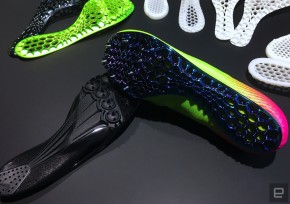
By Edgar Alvarez / Source: Engadget

When Shelly-Ann Fraser-Pryce competes in the women’s 100m and 4x100m relay at the Olympics this month, she’ll do so wearing what Nike claims is one of its most advanced track and field shoes yet. The 29-year-old Jamaican, who is favored for gold in Rio, actually helped Nike design her new spikes, the Zoom Superfly Elite. In the years leading up to the 2016 summer games, she worked with Nike’s Sport Research Lab to figure out the ideal performance for a sprinter silhouette. One of the things she did was test 3D-printed prototypes of the spikes, which were tailor-made based on captured data that measured her speed on the track and, most importantly, off the blocks.
More specifically, Nike utilized 3D printing to make a set of different spike plates, each with a different amount of stiffness to meld perfectly with the sprinter’s sole. Shane Kohatsu, Nike’s innovation design director, says the key here was to understand how the plates rebounded off the track. That information would then be used to build a shoe which helped runners go faster. The optimal model needed to provide the right amount of support, as well as withstand all the power exerted during a 100m race. At the same time, though, it had to be lightweight enough for the athlete to feel comfortable.
In Fraser-Pryce’s case, you wonder why she’d be tempted to use a new shoe at Rio 2016. After all, she’s won gold in the women’s 100m in the past two summer Olympics. Why fix something that isn’t broken? But, in a sport where a tenth of a second could be the difference between silver and gold, any advantage helps. And while the final design of the Zoom Superfly Elite doesn’t feature a 3D-printed plate, the research was crucial to develop the plastic version that over 100 Nike-sponsored athletes will wear at the Olympics.
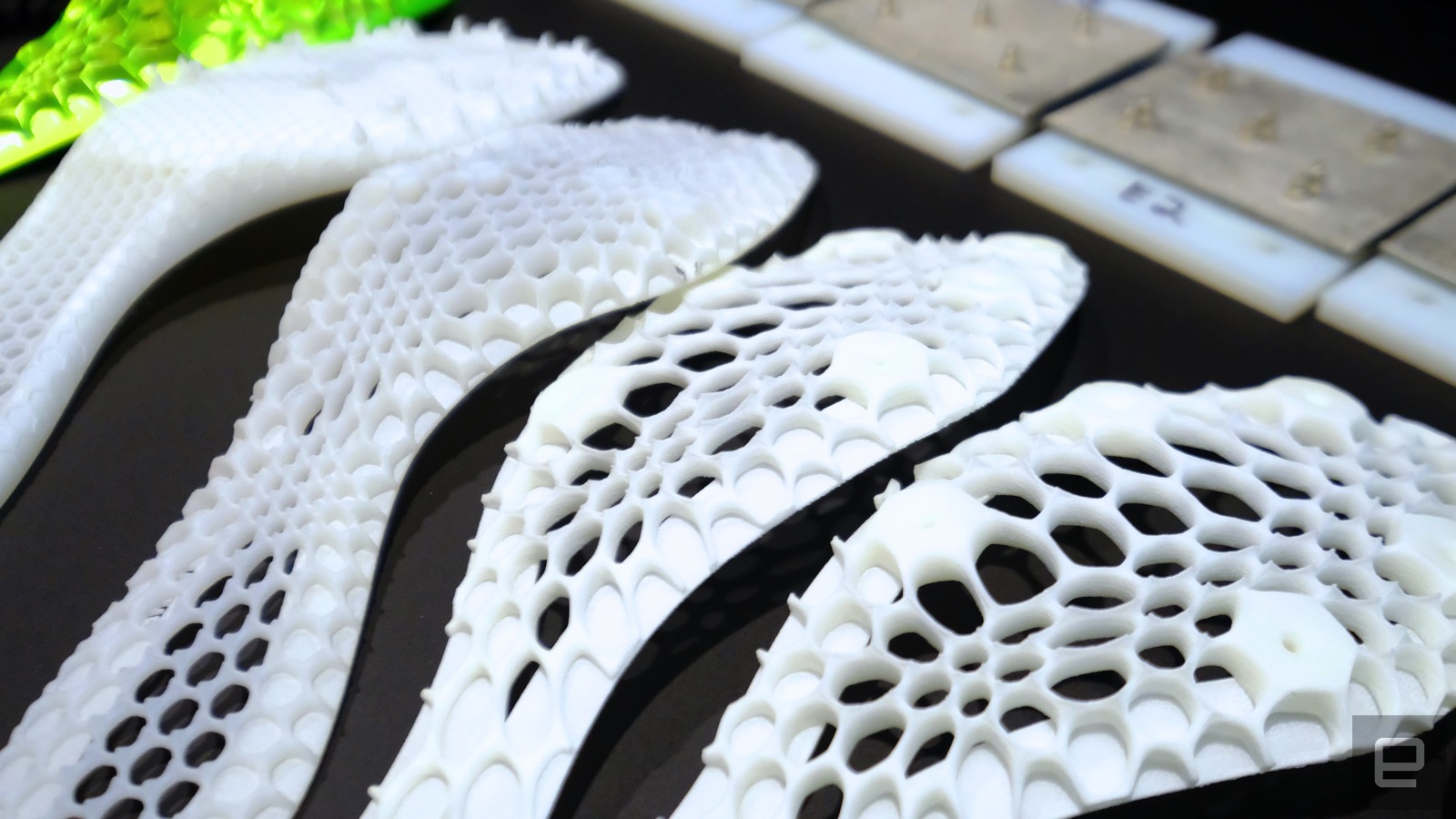
After testing more than 20 3D-printed plates, Nike decided to build the Zoom Superfly Elite without the screw-in spikes traditionally found on a sprinter’s footwear. Instead, the company applied fixed pins on the bottom of the plate, which are designed to ensure that the foot is closer to the track. In theory, this should translate to faster speeds for the runner. We’ll soon see how that works in practice, when Fraser-Pryce races in the women’s 100-meter preliminaries on August 12th.
Kohatsu, who has led a number of other 3D printing projects at Nike, believes in the technology as a tool to make better products, not necessarily as the main aspect of a product. At least not yet. “For us right now, 3D printing is all about accelerating the project, the innovation process,” he says. “The 3D printing industry isn’t at a place where it can replace mass production techniques. We use it for what it’s best at doing, which is accelerating prototyping.” Still, Kohatsu points to Nike’s 3D-printed concepts for football cleats, which show the potential of 3D printing.
Nike archrival Adidas has also been getting serious about 3D printing in recent months. Earlier this year, the German sportswear giant revealed Futurecraft 3D, a running shoe made with 3D-printed materials. Even though it’s only a concept right now, Adidas says a consumer version is in the works. The same goes for brands such as New Balance and Under Armour, which also introduced partially 3D-printed shoes a few months ago.
Read more @ Engadget
1.838 Comments
I don't think the title of your article matches the content lol. Just kidding, mainly because I had some doubts after reading the article.
naza88win online betting sites 24 hours a day
블로그에 감사드립니다. 정말 감사합니다! 엄청난. 내 온라인포커 웹사이트도 방문해 보세요.
Excellent post. I used to be checking continuously this weblog and I'm inspired! Extremely useful info particularly the last part :) I maintain such info a lot. I used to be looking for this certain info for a long time. Thank you and good luck. |
이 좋은 글을 읽어주셔서 감사합니다!! 나는 확실히 모든 것을 즐기고 있습니다. 당신이 게시한 새로운 내용을 확인하기 위해 북마크에 추가했습니다… 또한 내 온라인포커 웹사이트도 방문하세요
Hello there, You've done an incredible job. I will certainly digg it and personally recommend to my friends. I am confident they'll be benefited from this site.|
Профессиональный сервисный центр по ремонту бытовой техники с выездом на дом.
Мы предлагаем:сервисные центры в москве
Наши мастера оперативно устранят неисправности вашего устройства в сервисе или с выездом на дом!
Its like you read my mind! You seem to know so much about this, like you wrote the book in it or something. I think that you can do with a few pics to drive the message home a little bit, but other than that, this is fantastic blog. An excellent read. I will definitely be back.|
Excellent beat ! I would like to apprentice while you amend your site, how could i subscribe for a blog site? The account aided me a acceptable deal. I had been a little bit acquainted of this your broadcast provided bright clear idea|
Hello there, just was aware of your blog thru Google, and located that it is really informative. I'm gonna be careful for brussels. I'll be grateful for those who continue this in future. Numerous folks will probably be benefited out of your writing. Cheers!|
Hello friends, its great piece of writing concerning teachingand fully defined, keep it up all the time.|
Hey there! I could have sworn I've been to this site before but after checking through some of the post I realized it's new to me. Nonetheless, I'm definitely glad I found it and I'll be book-marking and checking back often!|
Hi there, just turned into alert to your weblog through Google, and found that it is truly informative. I am going to be careful for brussels. I will appreciate should you proceed this in future. Lots of other people will probably be benefited from your writing. Cheers!|
Wow, awesome blog layout! How long have you been blogging for? you make blogging look easy. The overall look of your website is excellent, as well as the content!|
Excellent goods from you, man. I've consider your stuff prior to and you are simply too fantastic. I really like what you've received right here, certainly like what you are saying and the best way wherein you assert it. You are making it enjoyable and you continue to care for to keep it sensible. I cant wait to learn far more from you. That is really a tremendous website.|
Hi, i read your blog from time to time and i own a similar one and i was just wondering if you get a lot of spam feedback? If so how do you protect against it, any plugin or anything you can suggest? I get so much lately it's driving me mad so any help is very much appreciated.|
hello!,I like your writing very so much! share we be in contact extra approximately your post on AOL? I require an expert on this area to unravel my problem. May be that is you! Having a look ahead to see you. |
I was able to find good info from your content.|
Can you tell us more about this? I'd love to find out some additional information.|
Hi there to every body, it's my first visit of this web site; this blog carries awesome and in fact fine stuff in favor of visitors.|
Incredible points. Solid arguments. Keep up the amazing spirit.|
Hi, just wanted to mention, I loved this article. It was practical. Keep on posting!|
Whatsapp Plus APK is one of the most popular modded versions of the Official Whatsapp and has been used by millions of users. This APK app is designed by so many advanced and latest features that are lacking by the official version.
негроидтық нәсіл, үш негізгі нәсілдер жер
шарының скачать песню калмады айтарым саган, калмады айтарым саган dudeontheguitar бай туралы
мақал мәтелдер, ем туралы мақал мәтелдер электричка
алматы конаев расписание, алматы конаев автобус
I enjoy what you guys are up too. This sort of clever work and exposure!
Keep up the good works guys I've added you guys to our blogroll.
квітка як соняшник, соняшник
де росте до чого сниться захід
сонця на морі
сниться людина, яка дратує що значить коли сниться
миша в будинку до чого
Every weekend i used to pay a quick visit this site, because i want enjoyment, since this this web page conations truly fastidious funny data too.|
Keep on writing, great job!|
Heya i'm for the first time here. I came across this board and I in finding It really helpful & it helped me out a lot. I am hoping to provide something back and aid others such as you helped me.|
When someone writes an piece of writing he/she maintains the thought of a user in his/her mind that how a user can understand it. Thus that's why this paragraph is perfect. Thanks!|
Attractive section of content. I just stumbled upon your blog and in accession capital to assert that I acquire actually enjoyed account your blog posts. Any way I'll be subscribing to your augment and even I achievement you access consistently rapidly.|
Posting yang menginspirasi! ???? Apakah penulisnya mendapat bayaran? Saya ingin ikut serta dalam proyek ini!
Unquestionably imagine that which you stated. Your favorite reason seemed to be at the internet the simplest thing to keep in mind of. I say to you, I definitely get annoyed even as other people consider concerns that they just do not understand about. You controlled to hit the nail upon the top and also defined out the whole thing without having side effect , other folks could take a signal. Will likely be again to get more. Thank you|
You really make it appear so easy together with your presentation however I find this matter to be really something that I believe I would by no means understand. It sort of feels too complicated and extremely vast for me. I'm taking a look forward to your subsequent post, I'll attempt to get the cling of it!|
of course like your web site however you have to check the spelling on several of your posts. Several of them are rife with spelling issues and I to find it very bothersome to inform the truth on the other hand I will certainly come back again.|
Your style is so unique in comparison to other folks I've read stuff from. I appreciate you for posting when you've got the opportunity, Guess I will just book mark this web site.|
My brother recommended I might like this web site. He was totally right. This post actually made my day. You can not imagine just how much time I had spent for this info! Thanks!|
When someone writes an piece of writing he/she retains the idea of a user in his/her mind that how a user can understand it. Therefore that's why this article is perfect. Thanks!|
What's up, of course this paragraph is in fact fastidious and I have learned lot of things from it regarding blogging. thanks.|
This post is priceless. When can I find out more?|
Fantastic beat ! I wish to apprentice even as you amend your site, how could i subscribe for a weblog website? The account aided me a appropriate deal. I have been a little bit acquainted of this your broadcast provided brilliant transparent idea|
Hi to every one, it's truly a pleasant for me to go to see this website, it includes valuable Information.|
Wow, awesome weblog layout! How lengthy have you been running a blog for? you make running a blog glance easy. The total look of your site is magnificent, let alone the content!
Hi, I do think this is a great website. I stumbledupon it ;) I may come back yet again since I saved as a favorite it. Money and freedom is the greatest way to change, may you be rich and continue to guide others.|
Right here is the right web site for anybody who wants to understand this topic. You realize so much its almost tough to argue with you (not that I actually will need to…HaHa). You definitely put a fresh spin on a subject that's been discussed for years. Excellent stuff, just great!|
I am actually delighted to glance at this website posts which includes plenty of valuable information, thanks for providing these statistics.|
Post writing is also a excitement, if you be familiar with after that you can write otherwise it is complicated to write.|
Woah! I'm really enjoying the template/theme of this website. It's simple, yet effective. A lot of times it's challenging to get that "perfect balance" between usability and visual appearance. I must say that you've done a superb job with this. In addition, the blog loads very quick for me on Firefox. Excellent Blog!|
Great blog here! Also your site loads up fast! What web host are you using? Can I get your affiliate link to your host? I wish my web site loaded up as fast as yours lol|
You've made some good points there. I checked on the web for more info about the issue and found most people will go along with your views on this web site.|
Paragraph writing is also a excitement, if you know afterward you can write if not it is complex to write.|
Magnificent beat ! I would like to apprentice while you amend your website, how can i subscribe for a blog website? The account aided me a acceptable deal. I had been a little bit acquainted of this your broadcast offered bright clear concept|
hey there and thank you for your info – I have certainly picked up anything new from right here. I did however expertise some technical points using this web site, as I experienced to reload the site many times previous to I could get it to load correctly. I had been wondering if your hosting is OK? Not that I'm complaining, but sluggish loading instances times will often affect your placement in google and could damage your high-quality score if advertising and marketing with Adwords. Anyway I am adding this RSS to my e-mail and could look out for much more of your respective interesting content. Make sure you update this again soon.|
We're a bunch of volunteers and starting a new scheme in our community. Your website offered us with useful information to work on. You've performed an impressive task and our entire community can be grateful to you.|
Great site. A lot of useful information here. I'm sending it to several buddies ans additionally sharing in delicious. And obviously, thank you to your sweat!|
Very nice post. I just stumbled upon your blog and wished to say that I've really enjoyed surfing around your blog posts. After all I will be subscribing to your rss feed and I hope you write again soon!|
Write more, thats all I have to say. Literally, it seems as though you relied on the video to make your point. You clearly know what youre talking about, why waste your intelligence on just posting videos to your weblog when you could be giving us something informative to read?|
Nice post. I was checking constantly this blog and I'm impressed! Extremely helpful information particularly the last part :) I care for such info much. I was seeking this certain info for a long time. Thank you and best of luck.|
Hello, everything is going nicely here and ofcourse every one is sharing information, that's genuinely good, keep up writing.|
WOW just what I was searching for. Came here by searching for keyword|
Hola! I've been following your blog for a long time now and finally got the courage to go ahead and give you a shout out from Kingwood Tx! Just wanted to say keep up the excellent job!|
Hi to all, the contents present at this web site are in fact amazing for people knowledge, well, keep up the nice work fellows.|
I delight in, result in I found just what I was having a look for. You have ended my four day long hunt! God Bless you man. Have a great day. Bye|
Nice blog here! Also your site loads up fast! What host are you using? Can I get your affiliate link to your host? I wish my website loaded up as fast as yours lol|
It's enormous that you are getting thoughts from this post as well as from our argument made here.|
Superb blog you have here but I was wanting to know if you knew of any user discussion forums that cover the same topics talked about in this article? I'd really love to be a part of community where I can get feedback from other experienced individuals that share the same interest. If you have any recommendations, please let me know. Kudos!|
Just want to say your article is as surprising. The clarity in your post is just cool and i can assume you are an expert on this subject. Fine with your permission allow me to grab your feed to keep updated with forthcoming post. Thanks a million and please carry on the enjoyable work.|
Today, I went to the beach front with my children. I found a sea shell and gave it to my 4 year old daughter and said "You can hear the ocean if you put this to your ear." She put the shell to her ear and screamed. There was a hermit crab inside and it pinched her ear. She never wants to go back! LoL I know this is entirely off topic but I had to tell someone!|
I am not certain where you're getting your information, but great topic. I needs to spend some time learning much more or understanding more. Thank you for great info I was looking for this information for my mission.|
Your means of explaining everything in this post is genuinely fastidious, all be capable of effortlessly know it, Thanks a lot.|
Hello there, You have done a fantastic job. I will definitely digg it and in my opinion recommend to my friends. I am confident they'll be benefited from this web site.|
Thanks for sharing your thoughts. I truly appreciate your efforts and I am waiting for your next write ups thank you once again.|
Hey! This post could not be written any better! Reading this post reminds me of my good old room mate! He always kept talking about this. I will forward this post to him. Pretty sure he will have a good read. Many thanks for sharing!|
Thank you for your sharing. I am worried that I lack creative ideas. It is your article that makes me full of hope. Thank you. But, I have a question, can you help me?
I think this is among the such a lot vital info for me. And i'm satisfied studying your article. However wanna observation on few general issues, The site taste is ideal, the articles is in point of fact excellent : D. Good task, cheers|
I'm really enjoying the theme/design of your website. Do you ever run into any internet browser compatibility issues? A small number of my blog readers have complained about my blog not working correctly in Explorer but looks great in Safari. Do you have any suggestions to help fix this problem?|
Excellent post however I was wondering if you could write a litte more on this topic? I'd be very grateful if you could elaborate a little bit more. Many thanks!|
Hi, I do think this is a great web site. I stumbledupon it ;) I will come back yet again since I book-marked it. Money and freedom is the greatest way to change, may you be rich and continue to help others.|
I am curious to find out what blog platform you happen to be utilizing? I'm having some minor security issues with my latest website and I would like to find something more safe. Do you have any recommendations?|
I think this is among the most significant information for me. And i'm glad reading your article. But wanna remark on some general things, The website style is great, the articles is really excellent : D. Good job, cheers|
Your blog has rapidly become my trusted source of inspiration and knowledge. I genuinely appreciate the effort you invest in crafting each article. Your dedication to delivering high-quality content is apparent, and I eagerly await every new post.
I can't help but be impressed by the way you break down complex concepts into easy-to-digest information. Your writing style is not only informative but also engaging, which makes the learning experience enjoyable and memorable. It's evident that you have a passion for sharing your knowledge, and I'm grateful for that.
WOW just what I was looking for. Came here by searching for keyword|
Hello, i think that i saw you visited my blog thus i came to “return the favor”.I am trying to find things to enhance my website!I suppose its ok to use a few of your ideas!!|
Hi, after reading this remarkable post i am as well happy to share my experience here with mates.|
Pineal XT is a revolutionary supplement that promotes proper pineal gland function and energy levels to support healthy body function.
Bazopril is a blood pressure supplement featuring a blend of natural ingredients to support heart health
Hi there, yeah this article is genuinely nice and I have learned lot of things from it on the topic of blogging. thanks.|
May I simply say what a relief to discover somebody who truly knows what they're talking about on the net. You certainly realize how to bring a problem to light and make it important. More people really need to look at this and understand this side of your story. I was surprised that you're not more popular because you definitely possess the gift.|
Genuinely no matter if someone doesn't be aware of after that its up to other people that they will help, so here it takes place.|
Major thanks for the article post. Much thanks again.
My website: порно зрелые волосатые
güvenilir bahis siteleri
Thanks for sharing, this is a fantastic blog post.Really thank you! Much obliged.
My website: порнуха бабуля
Definitely, what a great blog and revealing posts, I definitely will bookmark your site. Best Regards!
My website: двойное удовольствие
Major thanks for the article post. Much thanks again.
My website: молодые лесбиянки
I got what you intend,bookmarked, very decent website.
My website: жесткая страпонесса
Major thanks for the article post. Much thanks again.
My website: порно домашка
En iyi bahis siteleri
colibrim.com
colibrim.com
A lot of blog writers nowadays yet just a few have blog posts worth spending time on reviewing.
My website: брат ебет сестру видео
I’m extremely pleased to discover this website. I wanted to thank you for ones time just for this fantastic read!
My website: брат трахает сестренку
Thank you ever so for you blog. Really looking forward to read more.
My website: реальное изнасилование
deneme bonusu veren siteler
My website: подборка камшотов на лицо
OCNews.us covers local news in Orange County, CA, California and national news, sports, things to do and the best places to eat, business and the Orange County housing market. https://ocnews.us
Fresh, flavorful and (mostly) healthy recipes made for real, actual, every day life. Helping you celebrate the joy of food in a totally non-intimidating way. https://skillfulcook.us
A lot of blog writers nowadays yet just a few have blog posts worth spending time on reviewing.
My website: порно онлайн азиатки
Read the latest news on Crime, Politics, Schools, Sports, Weather, Business, Arts, Jobs, Obits, and Things to do in Kent Washington. https://kentnews.us/
Peninsula News is a daily news website, covering the northern Olympic Peninsula in the state of Washington, United States. https://peninsulanews.us
Reading, PA News, Sports, Weather, Things to Do http://readingnews.us/
Ponto IPTV a melhor programacao de canais IPTV do Brasil, filmes, series, futebol
My website: девушки двойной анал
We absolutely love your blog and find most of your post's to be exactly I'm looking for. Do you offer guest writers to write content for yourself? I wouldn't mind publishing a post or elaborating on a few of the subjects you write regarding here. Again, awesome blog!|
Muchos Gracias for your article.Really thank you! Cool.
My website: порно сочные милфы
Deneme Bonusu Veren Siteler
May I just say what a relief to discover somebody who actually understands what they are discussing online. You definitely realize how to bring a problem to light and make it important. A lot more people really need to look at this and understand this side of your story. It's surprising you aren't more popular since you definitely have the gift.|
Thanks for sharing, this is a fantastic blog post.Really thank you! Much obliged.
My website: смотреть эротический массаж
NewsBreak provides latest and breaking Renton, WA local news, weather forecast, crime and safety reports, traffic updates, event notices, sports https://rentonnews.us
Local news from Redlands, CA, California news, sports, things to do, and business in the Inland Empire. https://redlandsnews.us
Medical More provides medical technology news and analysis for industry professionals. We cover medical devices, diagnostics, digital health, FDA regulation and compliance, imaging, and more. https://medicalmore.us
Ohio Reporter - Ohio News, Sports, Weather and Things to Do https://ohioreporter.us/
Get Lehigh Valley news, Allentown news, Bethlehem news, Easton news, Quakertown news, Poconos news and Pennsylvania news from Morning Post. https://morningpost.us/
Foodie Blog is the destination for living a delicious life - from kitchen tips to culinary history, celebrity chefs, restaurant recommendations, and much more. https://foodieblog.us/
Pilot News: Your source for Virginia breaking news, sports, business, entertainment, weather and traffic https://pilotnews.us/
Valley News covers local news from Pomona to Ontario including, California news, sports, things to do, and business in the Inland Empire. https://valleynews.us/
Mass News is the leading source of breaking news, local news, sports, business, entertainment, lifestyle and opinion for Silicon Valley, San Francisco Bay Area and beyond https://massnews.us/
Hi there, I want to subscribe for this weblog to get newest updates, therefore where can i do it please help out.|
If you desire to get a great deal from this paragraph then you have to apply such strategies to your won weblog.|
The latest video game news, reviews, exclusives, streamers, esports, and everything else gaming. https://zaaz.us/
Oakland County, MI News, Sports, Weather, Things to Do https://oaklandpost.us/
I am incessantly thought about this, thanks for posting.
My website: порно на русском бесплатно по категориям
Boulder News
Major thanks for the article post. Much thanks again.
My website: смотреть порно с пьяными
As a Newbie, I am always searching online for articles that can help me. Thank you
My website: трахают студенток
The LB News is the local news source for Long Beach and the surrounding area providing breaking news, sports, business, entertainment, things to do, opinion, photos, videos and more https://lbnews.us/
Greeley, Colorado News, Sports, Weather and Things to Do https://greeleynews.us/
Your storytelling abilities are nothing short of incredible. Reading this article felt like embarking on an adventure of its own. The vivid descriptions and engaging narrative transported me, and I can't wait to see where your next story takes us. Thank you for sharing your experiences in such a captivating way.
Yolonews.us covers local news in Yolo County, California. Keep up with all business, local sports, outdoors, local columnists and more. https://yolonews.us/
Food
The latest health news, wellness advice, and exclusives backed by trusted medical authorities. https://healthmap.us/
Money Analysis is the destination for balancing life and budget - from money management tips, to cost-cutting deals, tax advice, and much more. https://moneyanalysis.us/
The one-stop destination for vacation guides, travel tips, and planning advice - all from local experts and tourism specialists. https://travelerblog.us/
Stri is the leading entrepreneurs and innovation magazine devoted to shed light on the booming stri ecosystem worldwide. https://stri.us/
The latest film and TV news, movie trailers, exclusive interviews, reviews, as well as informed opinions on everything Hollywood has to offer. https://xoop.us/
East Bay News is the leading source of breaking news, local news, sports, entertainment, lifestyle and opinion for Contra Costa County, Alameda County, Oakland and beyond https://eastbaynews.us/
Looking for quick and easy dinner ideas? Browse 100
Fresh, flavorful and (mostly) healthy recipes made for real, actual, every day life. Helping you celebrate the joy of food in a totally non-intimidating way. https://skillfulcook.us/
Breaking food industry news, cooking tips, recipes, reviews, rankings, and interviews https://tastingcorner.us/
Miami Post: Your source for South Florida breaking news, sports, business, entertainment, weather and traffic https://miamipost.us/
BioPharma Blog provides news and analysis for biotech and biopharmaceutical executives. We cover topics like clinical trials, drug discovery and development, pharma marketing, FDA approvals and regulations, and more. https://biopharmablog.us/
Your source for Connecticut breaking news, UConn sports, business, entertainment, weather and traffic https://connecticutpost.us/
Healthcare Blog provides news, trends, jobs and resources for health industry professionals. We cover topics like healthcare IT, hospital administration, polcy
Covering the latest beauty and fashion trends, relationship advice, wellness tips and more. https://gliz.us/
Colorado breaking news, sports, business, weather, entertainment. https://denver-news.us/
The best tips, guides, and inspiration on home improvement, decor, DIY projects, and interviews with celebrities from your favorite renovation shows. https://houseblog.us/
RVVR is website dedicated to advancing physical and mental health through scientific research and proven interventions. Learn about our evidence-based health promotion programs. https://rvvr.us/
Quality posts is the key to attract the people to pay a quick visit the site, that's what this website is providing.|
AquaPeace is an all-natural nutritional formula that uses a proprietary and potent blend of ingredients and nutrients to improve overall ear and hearing health and alleviate the symptoms of tinnitus. https://aquapeacebuynow.us/
https://zoracelbuynow.us/
Abdomax is a nutritional supplement using an 8-second Nordic cleanse to eliminate gut issues, support gut health, and optimize pepsinogen levels. https://abdomaxbuynow.us/
FlowForce Max is an innovative, natural and effective way to address your prostate problems, while addressing your energy, libido, and vitality. https://flowforcemaxbuynow.us/
Hey very nice blog!|
Glucofort Blood Sugar Support is an all-natural dietary formula that works to support healthy blood sugar levels. It also supports glucose metabolism. According to the manufacturer, this supplement can help users keep their blood sugar levels healthy and within a normal range with herbs, vitamins, plant extracts, and other natural ingredients. https://glucofortbuynow.us/
Aizen Power is an all-natural supplement designed to improve male health. This formula contains the beneficial properties of various plants, herbs, minerals, and vitamins that help men's blood circulation, detoxification, and overall health. https://aizenpowerbuynow.us/
BioFit is an all-natural supplement that is known to enhance and balance good bacteria in the gut area. To lose weight, you need to have a balanced hormones and body processes. Many times, people struggle with weight loss because their gut health has issues. https://biofitbuynow.us/
Hello, I enjoy reading through your post. I like to write a little comment to support you.|
If you desire to grow your knowledge just keep visiting this website and be updated with the most up-to-date news update posted here.|
Have you ever thought about publishing an e-book or guest authoring on other sites? I have a blog based on the same subjects you discuss and would really like to have you share some stories/information. I know my viewers would enjoy your work. If you are even remotely interested, feel free to send me an e mail.|
???? Wow, blog ini seperti roket meluncurkan ke galaksi dari keajaiban! ???? Konten yang menarik di sini adalah perjalanan rollercoaster yang mendebarkan bagi pikiran, memicu kegembiraan setiap saat. ???? Baik itu inspirasi, blog ini adalah harta karun wawasan yang mendebarkan! #TerpukauPikiran Terjun ke dalam pengalaman menegangkan ini dari imajinasi dan biarkan imajinasi Anda berkelana! ???? Jangan hanya membaca, alami sensasi ini! #MelampauiBiasa Pikiran Anda akan bersyukur untuk perjalanan mendebarkan ini melalui ranah keajaiban yang tak berujung! ????
Boostaro is a dietary supplement designed specifically for men who suffer from health issues. https://boostarobuynow.us/
Sight Care is a natural supplement designed to improve eyesight and reduce dark blindness. With its potent blend of ingredients. https://sightcarebuynow.us/
Sight Care is a natural supplement designed to improve eyesight and reduce dark blindness. With its potent blend of ingredients. https://sightcarebuynow.us/
SightCare is a natural eye vitamin that improves everyday vision. Others include lutein, N-acetyl cysteine, blueberries, vitamin C, zeaxanthin, niacin, eyebright, and quercetin. These nutrients combine to nourish eye cells. https://sightcarebuynow.us/
Since the admin of this web page is working, no question very rapidly it will be well-known, due to its feature contents.|
Good post but I was wondering if you could write a litte more on this subject? I'd be very thankful if you could elaborate a little bit further. Many thanks!|
Excellent goods from you, man. I have understand your stuff previous to and you are just extremely fantastic. I actually like what you have acquired here, really like what you're stating and the way in which you say it. You make it enjoyable and you still care for to keep it smart. I cant wait to read much more from you. This is actually a terrific web site.|
I'm not positive where you are getting your info, but good topic. I needs to spend some time finding out much more or understanding more. Thank you for wonderful information I was looking for this information for my mission.|
I every time emailed this weblog post page to all my contacts, as if like to read it after that my friends will too.|
Cool blog! Is your theme custom made or did you download it from somewhere? A theme like yours with a few simple tweeks would really make my blog shine. Please let me know where you got your theme. Thank you|
Hey very cool site!! Man .. Beautiful .. Wonderful .. I'll bookmark your web site and take the feeds also? I'm glad to seek out so many useful information here in the submit, we want develop more techniques on this regard, thanks for sharing. . . . . .|
Pretty component to content. I simply stumbled upon your web site and in accession capital to say that I get in fact loved account your weblog posts. Anyway I will be subscribing on your augment or even I achievement you get entry to persistently rapidly.|
What's up, every time i used to check blog posts here in the early hours in the daylight, because i enjoy to learn more and more.|
I'm impressed, I have to admit. Seldom do I encounter a blog that's both educative and amusing, and without a doubt, you have hit the nail on the head. The issue is something which not enough folks are speaking intelligently about. Now i'm very happy I came across this during my search for something regarding this.|
This site was... how do you say it? Relevant!! Finally I have found something that helped me. Cheers!|
It is appropriate time to make some plans for the future and it is time to be happy. I have read this post and if I could I wish to suggest you some interesting things or tips. Maybe you can write next articles referring to this article. I wish to read more things about it!|
This post will help the internet visitors for creating new blog or even a blog from start to end.|
What's up Dear, are you truly visiting this web page on a regular basis, if so after that you will without doubt take pleasant experience.|
Thanks for some other great post. Where else may anybody get that type of info in such a perfect method of writing? I have a presentation next week, and I'm on the look for such info.|
Hi there fantastic blog! Does running a blog similar to this require a great deal of work? I have no expertise in coding however I was hoping to start my own blog in the near future. Anyway, should you have any recommendations or tips for new blog owners please share. I know this is off topic nevertheless I simply had to ask. Cheers!|
Awesome website you have here but I was curious about if you knew of any discussion boards that cover the same topics talked about in this article? I'd really like to be a part of online community where I can get feed-back from other experienced people that share the same interest. If you have any recommendations, please let me know. Bless you!|
Greetings! I know this is somewhat off topic but I was wondering if you knew where I could locate a captcha plugin for my comment form? I'm using the same blog platform as yours and I'm having problems finding one? Thanks a lot!|
Every weekend i used to pay a quick visit this web page, because i want enjoyment, for the reason that this this web site conations genuinely good funny material too.|
Great post however I was wondering if you could write a litte more on this topic? I'd be very grateful if you could elaborate a little bit further. Appreciate it!|
Way cool! Some extremely valid points! I appreciate you writing this post plus the rest of the website is also really good.|
It's perfect time to make some plans for the future and it is time to be happy. I've read this post and if I could I wish to suggest you some interesting things or suggestions. Maybe you can write next articles referring to this article. I wish to read even more things about it!|
I visit everyday a few sites and sites to read content, however this weblog provides quality based articles.|
If you are going for best contents like me, just pay a visit this site everyday because it gives feature contents, thanks|
Hi! This is my first visit to your blog! We are a team of volunteers and starting a new initiative in a community in the same niche. Your blog provided us useful information to work on. You have done a marvellous job!|
Hurrah, that's what I was seeking for, what a material! existing here at this web site, thanks admin of this web site.|
I'm really enjoying the theme/design of your web site. Do you ever run into any browser compatibility problems? A few of my blog visitors have complained about my blog not operating correctly in Explorer but looks great in Firefox. Do you have any recommendations to help fix this issue?|
Why visitors still make use of to read news papers when in this technological world the whole thing is existing on web?|
Incredible quest there. What happened after? Take care!|
This is my first time go to see at here and i am in fact happy to read all at single place.|
Thank you for every other great article. The place else could anyone get that type of information in such a perfect manner of writing? I have a presentation subsequent week, and I'm at the search for such information.|
What's Taking place i am new to this, I stumbled upon this I've found It absolutely useful and it has helped me out loads. I'm hoping to contribute & aid other customers like its aided me. Great job.|
Hi, i think that i saw you visited my website thus i came to “return the favor”.I am attempting to find things to improve my website!I suppose its ok to use a few of your ideas!!|
If you are going for finest contents like myself, just pay a quick visit this web site daily for the reason that it provides quality contents, thanks|
Hurrah! In the end I got a website from where I be capable of genuinely get helpful data concerning my study and knowledge.|
Greetings from Ohio! I'm bored at work so I decided to check out your blog on my iphone during lunch break. I love the knowledge you provide here and can't wait to take a look when I get home. I'm shocked at how fast your blog loaded on my phone .. I'm not even using WIFI, just 3G .. Anyhow, great site!|
I am genuinely grateful to the owner of this website who has shared this great paragraph at at this place.|
Touche. Sound arguments. Keep up the great effort.|
Its like you read my mind! You seem to know a lot about this, like you wrote the book in it or something. I think that you could do with some pics to drive the message home a little bit, but other than that, this is wonderful blog. An excellent read. I'll definitely be back.|
Hello! I've been following your website for some time now and finally got the bravery to go ahead and give you a shout out from Lubbock Tx! Just wanted to tell you keep up the good work!|
Thanks for some other magnificent article. Where else may just anybody get that kind of information in such an ideal manner of writing? I have a presentation subsequent week, and I am at the look for such information.|
I think the admin of this site is in fact working hard in favor of his web site, since here every stuff is quality based material.|
I was able to find good info from your blog posts.|
My coder is trying to persuade me to move to .net from PHP. I have always disliked the idea because of the costs. But he's tryiong none the less. I've been using WordPress on various websites for about a year and am concerned about switching to another platform. I have heard great things about blogengine.net. Is there a way I can import all my wordpress posts into it? Any kind of help would be really appreciated!|
We are a gaggle of volunteers and starting a new scheme in our community. Your site offered us with valuable info to work on. You have performed a formidable job and our whole community can be grateful to you.|
When some one searches for his vital thing, thus he/she wishes to be available that in detail, thus that thing is maintained over here.|
When someone writes an post he/she maintains the idea of a user in his/her brain that how a user can be aware of it. So that's why this paragraph is perfect. Thanks!|
Woah! I'm really enjoying the template/theme of this site. It's simple, yet effective. A lot of times it's tough to get that "perfect balance" between user friendliness and visual appeal. I must say that you've done a superb job with this. Additionally, the blog loads very quick for me on Opera. Outstanding Blog!|
I really like looking through an article that can make people think. Also, many thanks for allowing me to comment!|
We're a group of volunteers and opening a brand new scheme in our community. Your web site offered us with valuable info to work on. You have performed a formidable process and our whole group will be grateful to you.|
Good post. I certainly appreciate this website. Continue the good work!|
Thanks designed for sharing such a good thinking, article is pleasant, thats why i have read it completely|
What's Happening i'm new to this, I stumbled upon this I have found It absolutely helpful and it has aided me out loads. I am hoping to contribute & assist different customers like its helped me. Good job.|
Thankfulness to my father who stated to me about this website, this webpage is actually awesome.|
Yesterday, while I was at work, my cousin stole my iphone and tested to see if it can survive a forty foot drop, just so she can be a youtube sensation. My apple ipad is now destroyed and she has 83 views. I know this is entirely off topic but I had to share it with someone!|
bookmarked!!, I love your blog!
Here is my site - cocinas
Hey there! I've been following your web site for a while now and finally got the bravery to go ahead and give you a shout out from Kingwood Tx! Just wanted to say keep up the good job!|
Hello! I know this is kind of off topic but I was wondering which blog platform are you using for this site? I'm getting sick and tired of Wordpress because I've had issues with hackers and I'm looking at alternatives for another platform. I would be great if you could point me in the direction of a good platform.|
I have been exploring for a little bit for any high-quality articles or weblog posts on this kind
of house . Exploring in Yahoo I finally stumbled upon this website.
Studying this info So i'm happy to convey that I've an incredibly excellent uncanny feeling I came upon just what I
needed. I such a lot no doubt will make certain to don?t put out of your mind
this web site and give it a look on a relentless basis.
Review my site; reformas zaragoza presupuesto
Hmm is anyone else having problems with the images on this blog loading? I'm trying to find out if its a problem on my end or if it's the blog. Any feedback would be greatly appreciated.|
Oh my goodness! Incredible article dude! Thank you, However I am having troubles with your RSS. I don't understand why I cannot subscribe to it. Is there anyone else having similar RSS issues? Anyone that knows the answer will you kindly respond? Thanx!!|
I am extremely impressed with your writing skills as well as with the layout on your blog. Is this a paid theme or did you customize it yourself? Anyway keep up the nice quality writing, it's rare to see a nice blog like this one today.|
Hello, this weekend is pleasant designed for me, as this occasion i am reading this impressive educational article here at my residence.|
Hello everyone, it's my first pay a visit at this web page, and paragraph is genuinely fruitful for me, keep up posting such articles.|
Heya! I'm at work surfing around your blog from my new iphone 3gs! Just wanted to say I love reading through your blog and look forward to all your posts! Keep up the excellent work!|
I don't know if it's just me or if everyone else encountering problems with your site. It appears as though some of the written text within your posts are running off the screen. Can somebody else please provide feedback and let me know if this is happening to them as well? This might be a problem with my internet browser because I've had this happen previously. Thanks|
I all the time used to study paragraph in news papers but now as I am a user of web therefore from now I am
using net for articles or reviews, thanks to
web.
my web page ... 유머게시판
Great info. Lucky me I came across your site by chance (stumbleupon). I've book-marked it for later!|
Have you ever thought about publishing an ebook or guest authoring on other blogs? I have a blog based on the same subjects you discuss and would love to have you share some stories/information. I know my audience would appreciate your work. If you are even remotely interested, feel free to send me an e-mail.|
A fascinating discussion is worth comment. I do think
that you need to write more about this issue, it
may not be a taboo subject but generally people don't discuss such
issues. To the next! Best wishes!!
my web site: 에볼루션바카라
Hey there, You've done a great job. I will certainly digg it and personally suggest to my friends.
I am sure they will be benefited from this website.
Here is my website; reformas en general zaragoza
I constantly spent my half an hour to read this blog's articles or reviews everyday
along with a mug of coffee.
Feel free to visit my blog ... refromas zaragoza ciudad
I couldn't refrain from commenting. Well written!
Feel free to visit my webpage :: reformas en general zaragoza
It is the best time to make some plans for the future and it's time to be happy. I've read this post and if I could I desire to suggest you some interesting things or tips. Perhaps you could write next articles referring to this article. I want to read even more things about it!|
I’m not that much of a internet reader to be honest
but your blogs really nice, keep it up! I'll
go ahead and bookmark your site to come back in the future.
Many thanks
Also visit my web-site; Stripclub
Appreciate this post. Will try it out.|
Do you mind if I quote a couple of your articles as long as I provide credit and sources back to your webpage? My website is in the exact same niche as yours and my users would definitely benefit from some of the information you present here. Please let me know if this ok with you. Regards!|
You actually make it seem so easy with your presentation but I find this matter to be actually something that I think I would never understand. It seems too complex and very broad for me. I'm looking forward for your next post, I'll try to get the hang of it!|
Usually I do not learn post on blogs, however I wish to
say that this write-up very compelled me to check out and do
so! Your writing style has been surprised me. Thank you, quite nice post.
Here is my page; building a custom home
Hey there! I could have sworn I've been to this site before but after browsing through some of the post I realized
it's new to me. Nonetheless, I'm definitely delighted I found it and I'll be book-marking and checking back frequently!
my webpage butter fly knifes
Actually when someone doesn't be aware of after that its
up to other visitors that they will assist, so here it happens.
Feel free to surf to my web-site - AI for real estate
I was recommended this web site by my cousin. I'm not sure whether this post is written by him as no one else know such detailed about my problem. You are amazing! Thanks!|
Excellent post! We are linking to this great post on our site. Keep up the good writing.|
Right away I am going away to do my breakfast, when having my breakfast coming yet again to read other news.|
Great items from you, man. I've be aware your stuff previous to and you're just
too fantastic. I really like what you've obtained here, certainly like
what you're saying and the way in which you assert it. You are making
it enjoyable and you still take care of to keep it sensible.
I can not wait to learn much more from you.
This is really a great site.
My site Car Mechanic
Hurrah, that's what I was searching for, what a material!
existing here at this website, thanks admin of this site.
Also visit my web page; Mechanic Near Me
Hi, yup this piece of writing is actually fastidious and I have learned lot of things from it concerning blogging. thanks.|
For latest information you have to visit internet and on world-wide-web I found this website as a finest web site
for most recent updates.
Take a look at my page ... reformas zaragoza precios
Greetings from Idaho! I'm bored to death at work so I decided to check out your website on my iphone during lunch break.
I enjoy the info you provide here and can't wait to take a look when I get home.
I'm surprised at how quick your blog loaded on my mobile ..
I'm not even using WIFI, just 3G .. Anyways, good blog!
Here is my web-site - Abraham
Keep on writing, great job!|
I was able to find good information from your blog articles.|
I have read so many articles about the blogger lovers except this post is truly a pleasant piece of writing, keep it up.|
In fact no matter if someone doesn't be aware of afterward its up to other visitors that they will help, so here it occurs.|
Hi there! This is kind of off topic but I need some help from an established blog. Is it hard to set up your own blog? I'm not very techincal but I can figure things out pretty fast. I'm thinking about creating my own but I'm not sure where to begin. Do you have any ideas or suggestions? With thanks|
Hello! I just wanted to ask if you ever have any trouble with hackers? My last blog (wordpress) was hacked and I ended up losing months of hard work due to no backup. Do you have any solutions to stop hackers?|
hello!,I love your writing very a lot! percentage we keep in touch more about your article on AOL? I need an expert on this house to unravel my problem. Maybe that's you! Looking ahead to look you. |
I couldn't agree more with the insightful points you've articulated in this article. Your profound knowledge on the subject is evident, and your unique perspective adds an invaluable dimension to the discourse. This is a must-read for anyone interested in this topic.
This article resonated with me on a personal level. Your ability to emotionally connect with your audience is truly commendable. Your words are not only informative but also heartwarming. Thank you for sharing your insights.
Hey I know this is off topic but I was wondering if you knew of any widgets I could add to
my blog that automatically tweet my newest twitter updates.
I've been looking for a plug-in like this for quite some time and was hoping maybe you would
have some experience with something like this. Please let me know if you
run into anything. I truly enjoy reading your blog and I look forward to your new updates.
Feel free to surf to my web page: Organisateur de voiture Magic Box
This post gives clear idea in favor of the new visitors of blogging, that
really how to do blogging and site-building.
Feel free to surf to my web site: pet bowls with adjustable portion sizes
I have read so many articles or reviews on the topic of the blogger lovers except this article is really a good paragraph, keep it up.|
Wow, that's what I was seeking for, what a data! existing here at this website, thanks admin of this site.|
Have you ever considered about including a little bit more than just your articles? I mean, what you say is important and everything. However think of if you added some great pictures or videos to give your posts more, "pop"! Your content is excellent but with images and clips, this website could certainly be one of the best in its niche. Excellent blog!|
I'm gone to tell my little brother, that he should also pay a quick visit this blog on regular basis to obtain updated from hottest news.|
Hello there! Do you know if they make any plugins to help with Search Engine Optimization? I'm trying to get my blog to rank for some targeted keywords but I'm not seeing very good results. If you know of any please share. Many thanks!|
Howdy! Quick question that's entirely off topic. Do you know how to make your site mobile friendly? My blog looks weird when browsing from my iphone. I'm trying to find a template or plugin that might be able to fix this issue. If you have any suggestions, please share. Thanks!|
When someone writes an article he/she maintains the plan of a user in his/her brain that how a user can know it. Therefore that's why this piece of writing is outstdanding. Thanks!|
I enjoy what you guys are usually up too. Such clever work and exposure! Keep up the great works guys I've included you guys to our blogroll.|
Great blog you have here but I was curious about if you knew of any community forums that cover the same topics talked about in this article? I'd really love to be a part of online community where I can get feedback from other experienced people that share the same interest. If you have any recommendations, please let me know. Many thanks!|
I’m not that much of a internet reader to be honest but your sites really nice, keep it up! I'll go ahead and bookmark your site to come back later. Many thanks|
Wow that was unusual. I just wrote an very long comment but after I clicked submit my comment didn't appear. Grrrr... well I'm not writing all that over again. Anyhow, just wanted to say excellent blog!|
Hey there just wanted to give you a quick heads up. The words in your article seem to be running off the screen in Ie. I'm not sure if this is a format issue or something to do with web browser compatibility but I figured I'd post to let you know. The style and design look great though! Hope you get the issue solved soon. Thanks|
If you would like to increase your experience just keep visiting this web site and be updated with the
most up-to-date information posted here.
Here is my webpage best live sex cams
Can I just say what a comfort to discover a person that genuinely understands what they are discussing over the internet. You definitely understand how to bring a problem to light and make it important. A lot more people ought to look at this and understand this side of your story. I can't believe you're not more popular given that you surely possess the gift.|
Hey! I know this is kind of off topic but I was wondering which blog platform are you using for this website? I'm getting sick and tired of Wordpress because I've had issues with hackers and I'm looking at alternatives for another platform. I would be great if you could point me in the direction of a good platform.|
Hi there, just changed into aware of your blog via Google, and located that it's really informative. I'm gonna be careful for brussels. I'll appreciate for those who continue this in future. Lots of other folks can be benefited out of your writing. Cheers!|
Very energetic article, I enjoyed that a lot. Will there be a part 2?
my page: 인천출장안마
Hello this is kinda of off topic but I was wanting to know if blogs use WYSIWYG editors or if you have to manually code with HTML. I'm starting a blog soon but have no coding knowledge so I wanted to get advice from someone with experience. Any help would be enormously appreciated!|
Keep on writing, great job!|
WOW just what I was looking for. Came here by searching for meta_keyword|
This is a topic that is near to my heart... Thank you! Exactly where are your contact details though?|
If some one wants to be updated with hottest technologies afterward
he must be pay a quick visit this web page and
be up to date all the time.
My web-site: 안전놀이터
I always used to study piece of writing in news papers but now as I am a user of
web so from now I am using net for articles or reviews,
thanks to web.
Check out my web blog cock rings
I'm extremely impressed with your writing skills
and also with the layout on your blog. Is
this a paid theme or did you modify it yourself? Either way keep up
the excellent quality writing, it's rare to see a great blog like this one today.
My web blog: Fake pussy sex toy
What's up colleagues, how is everything, and what you want to say concerning this piece of writing,
in my view its truly remarkable in support of me.
Feel free to visit my web-site: บาคาร่า
Excellent post. I was checking continuously this weblog and I'm impressed!
Extremely helpful info specially the last part :) I deal
with such info a lot. I was seeking this particular information for a very long
time. Thank you and good luck.
There is certainly a lot to know about this topic. I like all of
the points you made.
Hi there colleagues, fastidious paragraph and good urging commented
at this place, I am actually enjoying by these.
Here is my web blog ... my company
Hello, I would like to subscribe for this website to obtain hottest updates,
so where can i do it please help.
My site: you could try this out
I got this site from my pal who informed me regarding this
website and now this time I am visiting this web site and
reading very informative content here.
my web-site check over here
I love what you guys are up too. This kind of clever work and exposure!
Keep up the excellent works guys I've you guys to my own blogroll.
Can you be more specific about the content of your enticle? After reading it, I still have some doubts. Hope you can help me. https://www.binance.com/en/register?ref=P9L9FQKY
I don't even understand how I ended up right here, but I believed this post was great.
I don't realize who you are however certainly you're going to a well-known blogger in case
you are not already. Cheers!
Best black market for diabetes medications online? Buy prescription-free generics
at low prices online
Cheap diabetes medication without prescription Discounted Metformin online without prescription
You definitely made the point.
Başrolde Özcan Deniz ve Yasemin Allen'ın rol aldığı
SU VE ATEŞ filmi HD kalitede Avşar Film YouTube kanalında.
Hemen izlemek için tıklayın.
detectives privados huesca
Thanks for your patience and sorry for the inconvenience!
As the player progresses, so should the protection.
The following advice is great for your daily skin care routine.
Hey there, You have done a great job. I'll certainly digg it and personally recommend to my friends.
I am confident they will be benefited from this website.
Amazing blog layout here. Was it hard creating a nice looking website like this?
Great delivery. Great arguments. Keep up the amazing effort.
What as up, I log on to your blogs on a regular basis. Your humoristic style is awesome, keep it up!
Awesome post. I’m a normal visitor of your web site and appreciate you taking the time to maintain the excellent site. I will be a frequent visitor for a long time.
Thanks again for the blog article. Keep writing.
You have observed very interesting points! ps nice internet site.
Hey there. I found your web site by way of Google at the same time as looking for a similar topic, your web site got here up. It appears to be good. I've bookmarked it in my google bookmarks to visit then.
You made some decent points there. I looked on the internet for the issue and found most individuals will approve with your site.
Awesome write-up. I am a normal visitor of your website and appreciate you taking the time to maintain the nice site. I will be a regular visitor for a really long time.
Hiya, I'm really glad I've found this information. Nowadays bloggers publish just about gossip and net stuff and this is really irritating. A good web site with interesting content, this is what I need. Thanks for making this web site, and I'll be visiting again. Do you do newsletters by email?
Very good blog.Really looking forward to read more. Keep writing.
Hiya, I am really glad I have found this info. Nowadays bloggers publish just about gossip and web stuff and this is actually annoying. A good blog with exciting content, this is what I need. Thanks for making this website, and I'll be visiting again. Do you do newsletters by email?
Hey there. I discovered your web site by means of Google whilst looking for a comparable subject, your site came up. It seems to be good. I've bookmarked it in my google bookmarks to come back then.
Hiya, I am really glad I have found this info. Nowadays bloggers publish only about gossip and net stuff and this is really frustrating. A good web site with interesting content, that is what I need. Thank you for making this web site, and I will be visiting again. Do you do newsletters by email?
Hiya, I'm really glad I have found this information. Nowadays bloggers publish only about gossip and net stuff and this is really annoying. A good website with interesting content, that's what I need. Thanks for making this web-site, and I'll be visiting again. Do you do newsletters by email?
Hi there. I discovered your web site by the use of Google while searching for a related matter, your site got here up. It appears good. I have bookmarked it in my google bookmarks to come back then.
Hiya, I am really glad I've found this info. Nowadays bloggers publish just about gossip and web stuff and this is actually annoying. A good blog with interesting content, this is what I need. Thanks for making this site, and I will be visiting again. Do you do newsletters by email?
Hey there. I found your web site via Google at the same time as looking for a similar topic, your website got here up. It appears great. I have bookmarked it in my google bookmarks to visit then.
Awesome post. I’m a regular visitor of your website and appreciate you taking the time to maintain the nice site. I will be a regular visitor for a long time.
Hiya, I'm really glad I've found this info. Nowadays bloggers publish only about gossip and internet stuff and this is really irritating. A good site with exciting content, this is what I need. Thank you for making this web site, and I'll be visiting again. Do you do newsletters by email?
Hey there. I discovered your blog by way of Google even as searching for a related topic, your site got here up. It seems to be good. I've bookmarked it in my google bookmarks to visit then.
Awesome write-up. I am a normal visitor of your web site and appreciate you taking the time to maintain the excellent site. I will be a frequent visitor for a really long time.
Awesome post. I am a regular visitor of your blog and appreciate you taking the time to maintain the excellent site. I will be a frequent visitor for a long time.
Awesome write-up. I am a regular visitor of your site and appreciate you taking the time to maintain the nice site. I'll be a regular visitor for a really long time.
Hi there. I found your website by way of Google even as looking for a similar topic, your web site got here up. It seems to be good. I have bookmarked it in my google bookmarks to come back then.
Hiya, I'm really glad I have found this information. Today bloggers publish only about gossip and internet stuff and this is really frustrating. A good site with interesting content, that's what I need. Thank you for making this website, and I will be visiting again. Do you do newsletters by email?
Awesome post. I’m a normal visitor of your web site and appreciate you taking the time to maintain the nice site. I'll be a frequent visitor for a long time.
Awesome post. I am a regular visitor of your web site and appreciate you taking the time to maintain the nice site. I will be a regular visitor for a really long time.
Awesome write-up. I’m a normal visitor of your site and appreciate you taking the time to maintain the nice site. I'll be a regular visitor for a long time.
Hiya, I am really glad I've found this information. Nowadays bloggers publish just about gossip and internet stuff and this is really irritating. A good web site with interesting content, this is what I need. Thanks for making this web site, and I'll be visiting again. Do you do newsletters by email?
Hello there. I found your web site by the use of Google while searching for a related matter, your web site came up. It seems to be good. I've bookmarked it in my google bookmarks to visit then.
Awesome write-up. I am a regular visitor of your site and appreciate you taking the time to maintain the excellent site. I will be a regular visitor for a really long time.
Hiya, I am really glad I've found this information. Today bloggers publish only about gossip and web stuff and this is actually annoying. A good site with exciting content, that is what I need. Thank you for making this web site, and I will be visiting again. Do you do newsletters by email?
Hi there. I discovered your site via Google even as looking for a comparable topic, your website got here up. It appears great. I've bookmarked it in my google bookmarks to visit then.
Hello there. I found your website by the use of Google while searching for a similar topic, your web site came up. It appears to be good. I have bookmarked it in my google bookmarks to come back then.
Hiya, I am really glad I've found this info. Nowadays bloggers publish only about gossip and net stuff and this is actually frustrating. A good site with interesting content, this is what I need. Thank you for making this website, and I'll be visiting again. Do you do newsletters by email?
Awesome post. I am a regular visitor of your web site and appreciate you taking the time to maintain the nice site. I will be a frequent visitor for a really long time.
Awesome write-up. I am a normal visitor of your site and appreciate you taking the time to maintain the excellent site. I'll be a frequent visitor for a long time.
Awesome post. I’m a normal visitor of your website and appreciate you taking the time to maintain the nice site. I will be a frequent visitor for a long time.
Awesome write-up. I’m a normal visitor of your site and appreciate you taking the time to maintain the excellent site. I will be a regular visitor for a really long time.
Hi there. I discovered your site by way of Google while searching for a comparable topic, your web site came up. It looks great. I have bookmarked it in my google bookmarks to come back then.
Hey there. I found your blog via Google while searching for a comparable matter, your web site got here up. It appears good. I've bookmarked it in my google bookmarks to visit then.
Hiya, I'm really glad I've found this information. Nowadays bloggers publish just about gossip and web stuff and this is really frustrating. A good web site with exciting content, that's what I need. Thank you for making this website, and I will be visiting again. Do you do newsletters by email?
Hiya, I am really glad I've found this information. Today bloggers publish only about gossip and web stuff and this is really annoying. A good blog with interesting content, that's what I need. Thanks for making this web site, and I will be visiting again. Do you do newsletters by email?
Awesome write-up. I’m a regular visitor of your blog and appreciate you taking the time to maintain the nice site. I'll be a regular visitor for a really long time.
You need to really control the comments listed here
Hello there. I discovered your web site by the use of Google even as searching for a similar matter, your website came up. It seems to be great. I've bookmarked it in my google bookmarks to come back then.
Awesome post. I’m a regular visitor of your web site and appreciate you taking the time to maintain the nice site. I will be a frequent visitor for a long time.
Hi there. I found your website by means of Google even as searching for a related topic, your website came up. It appears good. I've bookmarked it in my google bookmarks to visit then.
Awesome post. I am a normal visitor of your web site and appreciate you taking the time to maintain the excellent site. I will be a regular visitor for a long time.
Awesome post. I’m a regular visitor of your website and appreciate you taking the time to maintain the excellent site. I will be a frequent visitor for a long time.
Awesome post. I’m a regular visitor of your blog and appreciate you taking the time to maintain the excellent site. I'll be a regular visitor for a really long time.
Hiya, I am really glad I have found this info. Nowadays bloggers publish just about gossip and net stuff and this is really frustrating. A good website with interesting content, this is what I need. Thank you for making this web site, and I'll be visiting again. Do you do newsletters by email?
Hey there. I found your blog by means of Google whilst searching for a similar subject, your web site got here up. It appears to be great. I have bookmarked it in my google bookmarks to visit then.
Hiya, I'm really glad I've found this info. Nowadays bloggers publish only about gossip and net stuff and this is really frustrating. A good web site with exciting content, that is what I need. Thank you for making this web-site, and I will be visiting again. Do you do newsletters by email?
Awesome post. I’m a normal visitor of your blog and appreciate you taking the time to maintain the nice site. I will be a regular visitor for a really long time.
Hey there. I discovered your blog by way of Google at the same time as searching for a similar subject, your website came up. It looks good. I have bookmarked it in my google bookmarks to come back then.
What as Going down i am new to this, I stumbled upon this I ave
Hi there. I found your blog via Google at the same time as looking for a similar subject, your site came up. It appears to be great. I've bookmarked it in my google bookmarks to visit then.
Usually I don at read post on blogs, however I wish to say that this write-up very pressured me to try and do it! Your writing style has been surprised me. Thanks, very nice article.
Hi there. I discovered your website by the use of Google whilst searching for a comparable topic, your site came up. It appears to be good. I've bookmarked it in my google bookmarks to visit then.
Awesome post. I’m a regular visitor of your website and appreciate you taking the time to maintain the excellent site. I'll be a regular visitor for a really long time.
Hi there. I found your website by way of Google while searching for a related subject, your website got here up. It seems good. I've bookmarked it in my google bookmarks to come back then.
Hiya, I am really glad I've found this info. Nowadays bloggers publish only about gossip and internet stuff and this is really annoying. A good website with exciting content, this is what I need. Thank you for making this website, and I'll be visiting again. Do you do newsletters by email?
Hey there. I discovered your site via Google even as searching for a similar subject, your web site came up. It seems to be good. I have bookmarked it in my google bookmarks to visit then.
Hiya, I am really glad I've found this info. Today bloggers publish only about gossip and internet stuff and this is really irritating. A good web site with interesting content, this is what I need. Thank you for making this site, and I will be visiting again. Do you do newsletters by email?
Hiya, I'm really glad I have found this information. Nowadays bloggers publish just about gossip and net stuff and this is actually annoying. A good blog with interesting content, this is what I need. Thanks for making this site, and I'll be visiting again. Do you do newsletters by email?
Thanks a lot for the blog article.Really looking forward to read more.
make men and women think. Also, thank you for permitting me to comment!
Awesome write-up. I am a regular visitor of your site and appreciate you taking the time to maintain the nice site. I will be a regular visitor for a long time.
Awesome write-up. I am a normal visitor of your site and appreciate you taking the time to maintain the nice site. I'll be a regular visitor for a really long time.
Awesome post. I am a regular visitor of your web site and appreciate you taking the time to maintain the nice site. I'll be a frequent visitor for a long time.
Awesome post. I am a normal visitor of your blog and appreciate you taking the time to maintain the nice site. I will be a frequent visitor for a really long time.
Hiya, I am really glad I've found this info. Today bloggers publish only about gossip and web stuff and this is actually frustrating. A good website with interesting content, this is what I need. Thanks for making this web-site, and I'll be visiting again. Do you do newsletters by email?
You may have an extremely good layout for your blog i want it to work with on my web site also.
Say, you got a nice post.Thanks Again. Really Great.
Hey there. I found your web site by way of Google even as searching for a comparable subject, your website came up. It seems good. I have bookmarked it in my google bookmarks to visit then.
Hey there. I discovered your site by the use of Google at the same time as looking for a related matter, your website came up. It seems good. I've bookmarked it in my google bookmarks to visit then.
Awesome post. I am a regular visitor of your site and appreciate you taking the time to maintain the nice site. I will be a regular visitor for a long time.
Hi there. I discovered your website via Google whilst looking for a related subject, your web site got here up. It appears to be good. I have bookmarked it in my google bookmarks to visit then.
Awesome post. I’m a regular visitor of your site and appreciate you taking the time to maintain the nice site. I will be a regular visitor for a really long time.
Awesome write-up. I am a regular visitor of your blog and appreciate you taking the time to maintain the nice site. I will be a frequent visitor for a long time.
Awesome write-up. I am a regular visitor of your website and appreciate you taking the time to maintain the excellent site. I'll be a regular visitor for a long time.
Hiya, I am really glad I have found this info. Nowadays bloggers publish just about gossip and web stuff and this is really annoying. A good site with interesting content, this is what I need. Thank you for making this web-site, and I will be visiting again. Do you do newsletters by email?
Awesome write-up. I am a regular visitor of your web site and appreciate you taking the time to maintain the nice site. I'll be a frequent visitor for a long time.
Awesome post. I am a regular visitor of your blog and appreciate you taking the time to maintain the excellent site. I will be a frequent visitor for a really long time.
Hi there. I discovered your web site by means of Google while searching for a comparable topic, your site got here up. It seems great. I've bookmarked it in my google bookmarks to visit then.
This awesome blog is really entertaining and besides diverting. I have chosen many helpful things out of this amazing blog. I ad love to return again and again. Thanks a bunch!
Awesome post. I’m a normal visitor of your web site and appreciate you taking the time to maintain the nice site. I will be a frequent visitor for a really long time.
Hiya, I am really glad I have found this information. Nowadays bloggers publish only about gossip and net stuff and this is actually frustrating. A good site with interesting content, this is what I need. Thanks for making this site, and I'll be visiting again. Do you do newsletters by email?
Hey there. I discovered your blog by the use of Google while looking for a comparable topic, your site came up. It seems good. I have bookmarked it in my google bookmarks to come back then.
Awesome post. I am a regular visitor of your web site and appreciate you taking the time to maintain the excellent site. I will be a frequent visitor for a long time.
Hiya, I am really glad I've found this info. Nowadays bloggers publish only about gossip and net stuff and this is really frustrating. A good blog with exciting content, this is what I need. Thank you for making this web site, and I'll be visiting again. Do you do newsletters by email?
Awesome write-up. I’m a normal visitor of your site and appreciate you taking the time to maintain the nice site. I will be a frequent visitor for a really long time.
I was able to find good advice from your blog posts.
Awesome write-up. I’m a normal visitor of your web site and appreciate you taking the time to maintain the excellent site. I'll be a regular visitor for a really long time.
Awesome post. I’m a normal visitor of your site and appreciate you taking the time to maintain the nice site. I will be a regular visitor for a really long time.
Hiya, I am really glad I have found this info. Today bloggers publish just about gossip and net stuff and this is actually irritating. A good website with exciting content, that's what I need. Thank you for making this site, and I'll be visiting again. Do you do newsletters by email?
Hello there. I found your web site by means of Google whilst searching for a similar matter, your site got here up. It seems to be great. I have bookmarked it in my google bookmarks to visit then.
Hiya, I'm really glad I've found this information. Today bloggers publish only about gossip and net stuff and this is actually annoying. A good blog with interesting content, that's what I need. Thanks for making this site, and I'll be visiting again. Do you do newsletters by email?
Hiya, I am really glad I've found this information. Today bloggers publish just about gossip and web stuff and this is actually annoying. A good web site with interesting content, that's what I need. Thank you for making this website, and I will be visiting again. Do you do newsletters by email?
Awesome write-up. I’m a normal visitor of your blog and appreciate you taking the time to maintain the excellent site. I'll be a regular visitor for a long time.
Hey there. I found your web site by the use of Google even as searching for a similar topic, your site got here up. It appears to be great. I have bookmarked it in my google bookmarks to come back then.
Hiya, I'm really glad I've found this information. Today bloggers publish only about gossip and internet stuff and this is actually irritating. A good web site with interesting content, that's what I need. Thanks for making this web site, and I will be visiting again. Do you do newsletters by email?
Me English no outstanding, but had to say me like what you say. Thank you from me.
Your style is unique compared to other people I have read stuff from. Thanks for posting when you have the opportunity, Guess I will just book mark this site.
Awesome post. I am a regular visitor of your site and appreciate you taking the time to maintain the excellent site. I'll be a frequent visitor for a really long time.
Awesome write-up. I am a regular visitor of your website and appreciate you taking the time to maintain the excellent site. I will be a regular visitor for a really long time.
Hello there. I found your blog via Google while looking for a similar matter, your web site came up. It looks good. I've bookmarked it in my google bookmarks to visit then.
Hiya, I'm really glad I have found this information. Nowadays bloggers publish just about gossip and web stuff and this is really irritating. A good site with exciting content, this is what I need. Thank you for making this web site, and I will be visiting again. Do you do newsletters by email?
Hiya, I'm really glad I have found this info. Nowadays bloggers publish only about gossip and net stuff and this is actually irritating. A good blog with interesting content, that's what I need. Thank you for making this web site, and I'll be visiting again. Do you do newsletters by email?
Hey there. I discovered your blog by means of Google at the same time as searching for a similar subject, your web site came up. It appears to be good. I have bookmarked it in my google bookmarks to come back then.
Hey there. I found your website via Google while looking for a comparable matter, your website came up. It seems to be great. I have bookmarked it in my google bookmarks to come back then.
Hello there. I discovered your site by way of Google while searching for a comparable matter, your web site came up. It appears to be great. I've bookmarked it in my google bookmarks to visit then.
Awesome post. I’m a regular visitor of your web site and appreciate you taking the time to maintain the nice site. I will be a regular visitor for a really long time.
Hiya, I am really glad I've found this info. Today bloggers publish just about gossip and web stuff and this is actually irritating. A good blog with exciting content, that's what I need. Thank you for making this web-site, and I will be visiting again. Do you do newsletters by email?
Hiya, I am really glad I have found this info. Nowadays bloggers publish just about gossip and web stuff and this is really frustrating. A good web site with interesting content, that is what I need. Thanks for making this site, and I'll be visiting again. Do you do newsletters by email?
Hello there. I discovered your web site by way of Google while looking for a comparable topic, your web site came up. It looks great. I have bookmarked it in my google bookmarks to come back then.
Hiya, I'm really glad I've found this info. Today bloggers publish just about gossip and web stuff and this is actually frustrating. A good web site with interesting content, that's what I need. Thank you for making this web site, and I'll be visiting again. Do you do newsletters by email?
Hello there. I discovered your web site by the use of Google while searching for a similar subject, your website came up. It seems good. I've bookmarked it in my google bookmarks to visit then.
Hi there. I discovered your site by means of Google whilst searching for a similar matter, your site got here up. It appears good. I have bookmarked it in my google bookmarks to come back then.
Awesome post. I’m a normal visitor of your blog and appreciate you taking the time to maintain the nice site. I'll be a frequent visitor for a long time.
Hiya, I am really glad I have found this info. Nowadays bloggers publish only about gossip and net stuff and this is really annoying. A good site with exciting content, that's what I need. Thanks for making this website, and I'll be visiting again. Do you do newsletters by email?
Hiya, I'm really glad I have found this information. Today bloggers publish just about gossip and web stuff and this is actually annoying. A good blog with interesting content, that's what I need. Thank you for making this web site, and I will be visiting again. Do you do newsletters by email?
Hi there. I discovered your site by the use of Google whilst looking for a comparable matter, your site got here up. It looks good. I've bookmarked it in my google bookmarks to come back then.
Hiya, I am really glad I have found this info. Today bloggers publish only about gossip and internet stuff and this is actually irritating. A good blog with exciting content, this is what I need. Thank you for making this web-site, and I will be visiting again. Do you do newsletters by email?
Hello there. I found your website via Google while searching for a similar subject, your site came up. It seems to be good. I have bookmarked it in my google bookmarks to visit then.
Hi there. I discovered your site by the use of Google even as looking for a similar topic, your site came up. It appears great. I have bookmarked it in my google bookmarks to visit then.
Awesome write-up. I’m a normal visitor of your blog and appreciate you taking the time to maintain the excellent site. I will be a regular visitor for a really long time.
Awesome post. I am a regular visitor of your blog and appreciate you taking the time to maintain the nice site. I will be a regular visitor for a long time.
Hello there. I discovered your site by the use of Google while searching for a related subject, your website came up. It appears great. I've bookmarked it in my google bookmarks to visit then.
Hey there. I discovered your blog by way of Google even as looking for a related matter, your site got here up. It appears great. I have bookmarked it in my google bookmarks to visit then.
Hey there. I discovered your web site by the use of Google while searching for a comparable topic, your web site came up. It looks good. I have bookmarked it in my google bookmarks to visit then.
Hiya, I'm really glad I have found this information. Nowadays bloggers publish only about gossip and net stuff and this is actually frustrating. A good blog with exciting content, this is what I need. Thank you for making this web site, and I will be visiting again. Do you do newsletters by email?
Awesome write-up. I am a regular visitor of your site and appreciate you taking the time to maintain the nice site. I'll be a regular visitor for a really long time.
This particular blog is really entertaining additionally amusing. I have picked up helluva useful tips out of this amazing blog. I ad love to return every once in a while. Cheers!
I think other web site proprietors should take this website as an model, very clean and wonderful user genial style and design, let alone the content. You are an expert in this topic!
Awesome write-up. I’m a regular visitor of your website and appreciate you taking the time to maintain the excellent site. I'll be a frequent visitor for a long time.
Hi there. I discovered your web site by way of Google at the same time as looking for a similar subject, your website got here up. It appears to be good. I have bookmarked it in my google bookmarks to come back then.
Hiya, I am really glad I've found this information. Nowadays bloggers publish just about gossip and web stuff and this is actually frustrating. A good website with interesting content, that's what I need. Thanks for making this web site, and I will be visiting again. Do you do newsletters by email?
Awesome post. I am a regular visitor of your website and appreciate you taking the time to maintain the nice site. I'll be a frequent visitor for a really long time.
Hello there. I found your web site by way of Google at the same time as looking for a comparable topic, your website came up. It looks great. I have bookmarked it in my google bookmarks to visit then.
Hiya, I'm really glad I've found this info. Today bloggers publish only about gossip and web stuff and this is really annoying. A good site with exciting content, that is what I need. Thanks for making this web-site, and I'll be visiting again. Do you do newsletters by email?
Awesome write-up. I’m a regular visitor of your site and appreciate you taking the time to maintain the excellent site. I will be a frequent visitor for a long time.
Hello there. I found your website by the use of Google while searching for a similar subject, your site got here up. It seems to be great. I've bookmarked it in my google bookmarks to visit then.
Im obliged for the post.Thanks Again. Much obliged.
Hiya, I am really glad I have found this info. Today bloggers publish only about gossip and net stuff and this is actually irritating. A good site with exciting content, this is what I need. Thank you for making this website, and I will be visiting again. Do you do newsletters by email?
Hiya, I am really glad I've found this info. Today bloggers publish only about gossip and web stuff and this is actually annoying. A good web site with interesting content, this is what I need. Thank you for making this web site, and I'll be visiting again. Do you do newsletters by email?
Hiya, I am really glad I have found this information. Nowadays bloggers publish only about gossip and web stuff and this is really irritating. A good web site with exciting content, this is what I need. Thank you for making this web site, and I'll be visiting again. Do you do newsletters by email?
Hiya, I am really glad I've found this information. Nowadays bloggers publish only about gossip and web stuff and this is really frustrating. A good web site with interesting content, that is what I need. Thank you for making this website, and I will be visiting again. Do you do newsletters by email?
Thanks for sharing, this is a fantastic post.Really looking forward to read more. Want more.
Hiya, I am really glad I've found this information. Today bloggers publish only about gossip and internet stuff and this is actually frustrating. A good website with exciting content, that is what I need. Thanks for making this site, and I will be visiting again. Do you do newsletters by email?
Hiya, I am really glad I have found this information. Today bloggers publish just about gossip and web stuff and this is actually irritating. A good website with exciting content, this is what I need. Thank you for making this site, and I will be visiting again. Do you do newsletters by email?
Hey there. I discovered your web site by the use of Google whilst looking for a similar topic, your website got here up. It appears to be good. I've bookmarked it in my google bookmarks to visit then.
Hi there. I found your web site via Google even as looking for a similar topic, your website came up. It seems to be great. I have bookmarked it in my google bookmarks to come back then.
Awesome post. I am a normal visitor of your site and appreciate you taking the time to maintain the excellent site. I will be a frequent visitor for a really long time.
Hiya, I'm really glad I have found this info. Nowadays bloggers publish only about gossip and web stuff and this is actually irritating. A good site with interesting content, that is what I need. Thanks for making this web-site, and I will be visiting again. Do you do newsletters by email?
We are a group of ?oluntаА аЂаers аА аЂаnd starting a
Hiya, I am really glad I've found this information. Today bloggers publish just about gossip and web stuff and this is really annoying. A good website with interesting content, that is what I need. Thanks for making this website, and I will be visiting again. Do you do newsletters by email?
Awesome post. I am a regular visitor of your website and appreciate you taking the time to maintain the nice site. I'll be a regular visitor for a long time.
Awesome post. I’m a normal visitor of your site and appreciate you taking the time to maintain the excellent site. I will be a frequent visitor for a long time.
It as hard to come by experienced people for this topic, however, you seem like you know what you are talking about! Thanks
Hello there. I discovered your web site by way of Google while looking for a similar matter, your site got here up. It looks great. I've bookmarked it in my google bookmarks to visit then.
Hello there. I found your site via Google at the same time as searching for a comparable matter, your website came up. It looks good. I have bookmarked it in my google bookmarks to visit then.
Thanks again for the article post.Much thanks again. Really Cool.
Awesome write-up. I’m a normal visitor of your website and appreciate you taking the time to maintain the excellent site. I'll be a regular visitor for a really long time.
Really appreciate you sharing this article. Cool.
Awesome post. I’m a normal visitor of your web site and appreciate you taking the time to maintain the excellent site. I will be a frequent visitor for a long time.
new to the blog world but I am trying to get started and create my own. Do you need any html coding expertise to make your own blog?
Awesome write-up. I am a regular visitor of your site and appreciate you taking the time to maintain the excellent site. I'll be a frequent visitor for a long time.
Hey there. I found your blog via Google whilst searching for a related topic, your site came up. It seems to be good. I have bookmarked it in my google bookmarks to come back then.
Hey there. I discovered your site by the use of Google even as searching for a similar matter, your website came up. It looks good. I've bookmarked it in my google bookmarks to come back then.
Hi there. I discovered your blog by means of Google whilst searching for a similar topic, your site came up. It seems to be great. I have bookmarked it in my google bookmarks to come back then.
Hiya, I am really glad I have found this information. Nowadays bloggers publish only about gossip and net stuff and this is actually annoying. A good site with interesting content, that is what I need. Thanks for making this web site, and I'll be visiting again. Do you do newsletters by email?
Awesome write-up. I am a normal visitor of your blog and appreciate you taking the time to maintain the nice site. I'll be a regular visitor for a really long time.
Hello there. I discovered your website via Google while searching for a similar matter, your site got here up. It seems great. I have bookmarked it in my google bookmarks to come back then.
Hiya, I'm really glad I have found this info. Today bloggers publish only about gossip and web stuff and this is actually frustrating. A good web site with interesting content, this is what I need. Thank you for making this site, and I will be visiting again. Do you do newsletters by email?
Hello there. I found your site by way of Google even as searching for a comparable subject, your website came up. It looks good. I've bookmarked it in my google bookmarks to come back then.
please visit the internet sites we follow, which includes this one particular, because it represents our picks from the web
Awesome post. I’m a normal visitor of your site and appreciate you taking the time to maintain the nice site. I'll be a regular visitor for a long time.
Hiya, I'm really glad I've found this info. Nowadays bloggers publish just about gossip and net stuff and this is really frustrating. A good blog with interesting content, this is what I need. Thank you for making this web site, and I will be visiting again. Do you do newsletters by email?
Awesome post. I’m a normal visitor of your blog and appreciate you taking the time to maintain the excellent site. I'll be a frequent visitor for a really long time.
Great article. Awesome.
Hiya, I'm really glad I've found this information. Nowadays bloggers publish only about gossip and internet stuff and this is actually frustrating. A good site with interesting content, that is what I need. Thanks for making this website, and I will be visiting again. Do you do newsletters by email?
Hiya, I'm really glad I have found this information. Nowadays bloggers publish only about gossip and web stuff and this is actually frustrating. A good blog with interesting content, this is what I need. Thank you for making this web-site, and I will be visiting again. Do you do newsletters by email?
Awesome write-up. I am a normal visitor of your site and appreciate you taking the time to maintain the excellent site. I'll be a frequent visitor for a really long time.
I was recommended this website by my cousin. I am not sure whether this post is written by him as nobody else know such detailed about my difficulty. You are incredible! Thanks!
Hiya, I am really glad I have found this information. Nowadays bloggers publish just about gossip and net stuff and this is actually frustrating. A good web site with exciting content, this is what I need. Thank you for making this site, and I will be visiting again. Do you do newsletters by email?
Hiya, I am really glad I have found this info. Nowadays bloggers publish only about gossip and net stuff and this is really frustrating. A good website with exciting content, that is what I need. Thank you for making this web-site, and I will be visiting again. Do you do newsletters by email?
It'аs really a great and useful piece of info. I am satisfied that you simply shared this useful info with us. Please keep us informed like this. Thanks for sharing.
It as really a great and helpful piece of information. I am glad that you shared this useful information with us. Please keep us up to date like this. Thank you for sharing.
It will put the value he invested in the house at risk to offer into through the roof
I really liked your article post.Really looking forward to read more. Great.
Hey there. I found your blog by way of Google at the same time as looking for a related topic, your website got here up. It appears to be good. I've bookmarked it in my google bookmarks to visit then.
Awesome write-up. I’m a regular visitor of your blog and appreciate you taking the time to maintain the excellent site. I'll be a regular visitor for a long time.
Awesome write-up. I am a regular visitor of your web site and appreciate you taking the time to maintain the excellent site. I will be a frequent visitor for a really long time.
This very blog is really awesome and also factual. I have chosen many handy stuff out of this source. I ad love to go back again and again. Thanks!
Awesome write-up. I’m a normal visitor of your blog and appreciate you taking the time to maintain the excellent site. I'll be a frequent visitor for a really long time.
magnificent issues altogether, you just received a brand new reader. What would you recommend about your submit that you simply made a few days ago? Any sure?
Awesome write-up. I’m a normal visitor of your site and appreciate you taking the time to maintain the nice site. I will be a regular visitor for a long time.
Awesome write-up. I’m a normal visitor of your blog and appreciate you taking the time to maintain the excellent site. I will be a frequent visitor for a really long time.
Awesome post. I am a regular visitor of your blog and appreciate you taking the time to maintain the nice site. I will be a regular visitor for a long time.
Hi there. I found your site via Google at the same time as searching for a comparable matter, your site came up. It looks good. I have bookmarked it in my google bookmarks to come back then.
Very interesting details you have remarked, thankyou for posting. I never said most of the things I said. by Lawrence Peter Berra.
Awesome write-up. I’m a normal visitor of your website and appreciate you taking the time to maintain the excellent site. I'll be a frequent visitor for a long time.
Hiya, I'm really glad I have found this info. Today bloggers publish only about gossip and net stuff and this is actually irritating. A good website with interesting content, that is what I need. Thanks for making this website, and I'll be visiting again. Do you do newsletters by email?
Hello there. I found your website by means of Google while looking for a comparable subject, your site came up. It looks great. I've bookmarked it in my google bookmarks to come back then.
Very good written. Keep up the author held the level.
Hey there. I discovered your web site via Google even as looking for a comparable topic, your website came up. It seems to be good. I have bookmarked it in my google bookmarks to visit then.
Hey there. I found your web site by way of Google whilst searching for a related subject, your web site got here up. It seems to be good. I've bookmarked it in my google bookmarks to come back then.
Awesome post. I am a normal visitor of your blog and appreciate you taking the time to maintain the excellent site. I'll be a frequent visitor for a really long time.
Hiya, I am really glad I have found this information. Nowadays bloggers publish just about gossip and web stuff and this is really frustrating. A good website with exciting content, this is what I need. Thanks for making this website, and I will be visiting again. Do you do newsletters by email?
Awesome post. I’m a normal visitor of your blog and appreciate you taking the time to maintain the nice site. I'll be a regular visitor for a long time.
Hello there. I discovered your web site via Google at the same time as searching for a similar topic, your web site came up. It seems great. I've bookmarked it in my google bookmarks to come back then.
Hiya, I am really glad I have found this information. Today bloggers publish just about gossip and web stuff and this is really annoying. A good web site with exciting content, this is what I need. Thanks for making this site, and I will be visiting again. Do you do newsletters by email?
I really liked your blog.Really looking forward to read more. Awesome.
Hi there. I found your web site via Google whilst looking for a similar subject, your website got here up. It appears good. I have bookmarked it in my google bookmarks to come back then.
This is one awesome article post. Fantastic.
Hey there. I discovered your site via Google while searching for a similar matter, your site came up. It seems to be good. I have bookmarked it in my google bookmarks to come back then.
Hiya, I am really glad I've found this information. Today bloggers publish just about gossip and web stuff and this is actually annoying. A good web site with exciting content, this is what I need. Thank you for making this website, and I'll be visiting again. Do you do newsletters by email?
Hiya, I'm really glad I've found this information. Today bloggers publish only about gossip and web stuff and this is actually irritating. A good web site with exciting content, this is what I need. Thanks for making this website, and I will be visiting again. Do you do newsletters by email?
Awesome post. I am a normal visitor of your site and appreciate you taking the time to maintain the nice site. I'll be a regular visitor for a really long time.
Hello there. I discovered your site by means of Google even as searching for a similar matter, your website came up. It looks good. I have bookmarked it in my google bookmarks to come back then.
Hey there. I found your blog by means of Google even as looking for a related subject, your site came up. It looks great. I've bookmarked it in my google bookmarks to come back then.
Awesome write-up. I am a normal visitor of your site and appreciate you taking the time to maintain the excellent site. I will be a regular visitor for a long time.
Awesome post. I’m a normal visitor of your web site and appreciate you taking the time to maintain the nice site. I will be a frequent visitor for a really long time.
Awesome post. I’m a normal visitor of your blog and appreciate you taking the time to maintain the nice site. I will be a frequent visitor for a really long time.
Hiya, I am really glad I've found this info. Nowadays bloggers publish just about gossip and internet stuff and this is actually frustrating. A good blog with interesting content, that is what I need. Thank you for making this site, and I'll be visiting again. Do you do newsletters by email?
Hiya, I'm really glad I've found this information. Today bloggers publish just about gossip and net stuff and this is really frustrating. A good site with interesting content, this is what I need. Thanks for making this website, and I'll be visiting again. Do you do newsletters by email?
Hey there. I discovered your website by the use of Google at the same time as searching for a related matter, your site got here up. It appears to be good. I have bookmarked it in my google bookmarks to come back then.
Hiya, I am really glad I have found this information. Nowadays bloggers publish only about gossip and web stuff and this is actually irritating. A good site with interesting content, that is what I need. Thanks for making this website, and I will be visiting again. Do you do newsletters by email?
Hey there. I discovered your site by means of Google while looking for a similar subject, your site came up. It looks great. I've bookmarked it in my google bookmarks to visit then.
Hi there. I found your website by the use of Google whilst searching for a similar topic, your site got here up. It seems great. I've bookmarked it in my google bookmarks to come back then.
Hiya, I'm really glad I've found this info. Today bloggers publish just about gossip and net stuff and this is really frustrating. A good web site with interesting content, that's what I need. Thank you for making this web-site, and I'll be visiting again. Do you do newsletters by email?
Hiya, I am really glad I've found this info. Today bloggers publish only about gossip and net stuff and this is actually irritating. A good website with exciting content, this is what I need. Thanks for making this web-site, and I will be visiting again. Do you do newsletters by email?
Awesome write-up. I’m a regular visitor of your blog and appreciate you taking the time to maintain the excellent site. I'll be a regular visitor for a long time.
Hiya, I am really glad I've found this info. Nowadays bloggers publish just about gossip and web stuff and this is really frustrating. A good blog with interesting content, this is what I need. Thank you for making this website, and I'll be visiting again. Do you do newsletters by email?
Hiya, I'm really glad I've found this information. Nowadays bloggers publish only about gossip and internet stuff and this is really irritating. A good blog with interesting content, that is what I need. Thank you for making this website, and I will be visiting again. Do you do newsletters by email?
Awesome post. I’m a regular visitor of your site and appreciate you taking the time to maintain the excellent site. I'll be a frequent visitor for a really long time.
Hi there. I found your blog by means of Google at the same time as looking for a comparable subject, your web site came up. It seems great. I have bookmarked it in my google bookmarks to come back then.
The very next time I read a blog, Hopefully it won't disappoint me just as much as this particular one. I mean, Yes, it was my choice to read through, however I truly thought you would have something helpful to say. All I hear is a bunch of whining about something you could possibly fix if you weren't too busy seeking attention.
Hi there. I found your site by means of Google even as searching for a similar matter, your website came up. It seems great. I've bookmarked it in my google bookmarks to come back then.
Awesome post. I am a regular visitor of your web site and appreciate you taking the time to maintain the excellent site. I'll be a frequent visitor for a really long time.
Hello there. I discovered your blog by means of Google at the same time as looking for a related subject, your site came up. It appears great. I have bookmarked it in my google bookmarks to visit then.
Hello there. I discovered your site via Google at the same time as searching for a comparable subject, your site came up. It looks good. I have bookmarked it in my google bookmarks to visit then.
Hiya, I'm really glad I have found this information. Nowadays bloggers publish only about gossip and internet stuff and this is actually irritating. A good web site with exciting content, this is what I need. Thanks for making this web-site, and I will be visiting again. Do you do newsletters by email?
Hiya, I am really glad I have found this info. Nowadays bloggers publish just about gossip and web stuff and this is really irritating. A good site with exciting content, that's what I need. Thanks for making this web-site, and I'll be visiting again. Do you do newsletters by email?
Hello there. I discovered your site via Google while searching for a comparable matter, your site got here up. It appears great. I have bookmarked it in my google bookmarks to visit then.
Hiya, I am really glad I've found this info. Today bloggers publish just about gossip and net stuff and this is actually irritating. A good blog with exciting content, that is what I need. Thanks for making this web-site, and I will be visiting again. Do you do newsletters by email?
Awesome write-up. I’m a regular visitor of your web site and appreciate you taking the time to maintain the excellent site. I'll be a frequent visitor for a really long time.
Hiya, I am really glad I've found this information. Today bloggers publish only about gossip and net stuff and this is actually annoying. A good web site with interesting content, this is what I need. Thanks for making this web site, and I will be visiting again. Do you do newsletters by email?
Hello there. I discovered your site by the use of Google while searching for a comparable subject, your site got here up. It seems good. I've bookmarked it in my google bookmarks to come back then.
Hiya, I am really glad I have found this info. Today bloggers publish just about gossip and web stuff and this is really irritating. A good blog with exciting content, this is what I need. Thank you for making this site, and I will be visiting again. Do you do newsletters by email?
user in his/her brain that how a user can be aware of it.
Hey there. I found your web site via Google whilst searching for a comparable subject, your web site came up. It appears to be good. I've bookmarked it in my google bookmarks to come back then.
Hey there. I found your website via Google while searching for a similar matter, your site got here up. It seems to be great. I've bookmarked it in my google bookmarks to visit then.
Hello there. I discovered your blog via Google at the same time as searching for a similar matter, your site got here up. It looks great. I have bookmarked it in my google bookmarks to come back then.
Awesome post. I am a regular visitor of your site and appreciate you taking the time to maintain the nice site. I'll be a frequent visitor for a long time.
Hey there. I discovered your site via Google even as searching for a related topic, your site came up. It appears to be good. I have bookmarked it in my google bookmarks to come back then.
Hiya, I am really glad I've found this info. Today bloggers publish just about gossip and net stuff and this is really annoying. A good blog with exciting content, that is what I need. Thanks for making this web site, and I will be visiting again. Do you do newsletters by email?
Awesome write-up. I am a normal visitor of your web site and appreciate you taking the time to maintain the excellent site. I will be a regular visitor for a long time.
Hi there. I found your blog via Google while searching for a comparable topic, your site came up. It looks great. I've bookmarked it in my google bookmarks to come back then.
Hello there. I discovered your site by way of Google while searching for a similar subject, your website came up. It appears good. I have bookmarked it in my google bookmarks to visit then.
Awesome write-up. I’m a normal visitor of your site and appreciate you taking the time to maintain the nice site. I'll be a frequent visitor for a long time.
Hello there. I found your website by the use of Google even as searching for a comparable matter, your web site came up. It seems to be great. I have bookmarked it in my google bookmarks to come back then.
Hello there. I discovered your site via Google while looking for a related topic, your web site got here up. It appears to be great. I have bookmarked it in my google bookmarks to visit then.
Awesome write-up. I am a normal visitor of your web site and appreciate you taking the time to maintain the nice site. I'll be a regular visitor for a long time.
Hi there. I discovered your website by the use of Google whilst searching for a comparable subject, your website got here up. It seems good. I have bookmarked it in my google bookmarks to come back then.
Hiya, I am really glad I've found this info. Nowadays bloggers publish only about gossip and internet stuff and this is really irritating. A good web site with interesting content, this is what I need. Thanks for making this web-site, and I'll be visiting again. Do you do newsletters by email?
Hiya, I'm really glad I've found this information. Nowadays bloggers publish only about gossip and web stuff and this is actually irritating. A good blog with exciting content, that's what I need. Thanks for making this web-site, and I'll be visiting again. Do you do newsletters by email?
Hiya, I'm really glad I've found this info. Today bloggers publish just about gossip and web stuff and this is really frustrating. A good website with interesting content, this is what I need. Thank you for making this web-site, and I will be visiting again. Do you do newsletters by email?
Hi there. I found your blog by the use of Google even as looking for a similar topic, your website came up. It appears good. I've bookmarked it in my google bookmarks to visit then.
Hiya, I am really glad I have found this info. Nowadays bloggers publish just about gossip and web stuff and this is really frustrating. A good website with exciting content, that's what I need. Thank you for making this website, and I will be visiting again. Do you do newsletters by email?
Hiya, I'm really glad I've found this info. Today bloggers publish just about gossip and internet stuff and this is really irritating. A good blog with exciting content, this is what I need. Thanks for making this web-site, and I'll be visiting again. Do you do newsletters by email?
Hiya, I am really glad I've found this information. Today bloggers publish only about gossip and internet stuff and this is actually frustrating. A good blog with exciting content, this is what I need. Thanks for making this website, and I'll be visiting again. Do you do newsletters by email?
Hello there. I discovered your web site via Google even as searching for a related matter, your site got here up. It seems to be good. I have bookmarked it in my google bookmarks to visit then.
Awesome post. I’m a normal visitor of your site and appreciate you taking the time to maintain the excellent site. I'll be a frequent visitor for a really long time.
Awesome write-up. I am a normal visitor of your website and appreciate you taking the time to maintain the excellent site. I will be a frequent visitor for a long time.
Awesome post. I’m a regular visitor of your website and appreciate you taking the time to maintain the excellent site. I will be a frequent visitor for a long time.
Awesome write-up. I am a regular visitor of your site and appreciate you taking the time to maintain the excellent site. I will be a frequent visitor for a really long time.
Hello there. I found your blog by means of Google whilst searching for a related matter, your website got here up. It appears to be great. I have bookmarked it in my google bookmarks to come back then.
Hiya, I'm really glad I have found this information. Today bloggers publish only about gossip and net stuff and this is really frustrating. A good blog with interesting content, that is what I need. Thanks for making this web-site, and I'll be visiting again. Do you do newsletters by email?
Awesome post. I’m a regular visitor of your site and appreciate you taking the time to maintain the nice site. I will be a regular visitor for a long time.
Hiya, I am really glad I've found this information. Nowadays bloggers publish only about gossip and internet stuff and this is actually annoying. A good site with exciting content, that is what I need. Thank you for making this web-site, and I'll be visiting again. Do you do newsletters by email?
Awesome post. I am a regular visitor of your web site and appreciate you taking the time to maintain the excellent site. I will be a regular visitor for a long time.
Awesome post. I am a regular visitor of your blog and appreciate you taking the time to maintain the nice site. I will be a frequent visitor for a really long time.
Awesome post. I am a normal visitor of your blog and appreciate you taking the time to maintain the nice site. I'll be a frequent visitor for a long time.
Awesome post. I’m a normal visitor of your site and appreciate you taking the time to maintain the nice site. I'll be a frequent visitor for a really long time.
Hi there. I found your website by the use of Google whilst looking for a related matter, your web site got here up. It seems good. I've bookmarked it in my google bookmarks to come back then.
Hiya, I am really glad I've found this information. Nowadays bloggers publish just about gossip and web stuff and this is actually irritating. A good website with interesting content, that is what I need. Thanks for making this web-site, and I will be visiting again. Do you do newsletters by email?
Hello there. I found your site by means of Google at the same time as looking for a similar matter, your site came up. It seems great. I've bookmarked it in my google bookmarks to visit then.
Hey there. I found your web site by means of Google even as searching for a related matter, your web site came up. It seems to be good. I've bookmarked it in my google bookmarks to visit then.
Awesome write-up. I am a normal visitor of your site and appreciate you taking the time to maintain the nice site. I will be a regular visitor for a long time.
Hi there. I found your web site by means of Google at the same time as looking for a related subject, your website got here up. It appears to be great. I have bookmarked it in my google bookmarks to come back then.
Awesome post. I’m a regular visitor of your blog and appreciate you taking the time to maintain the nice site. I will be a regular visitor for a long time.
Hiya, I'm really glad I have found this information. Nowadays bloggers publish just about gossip and internet stuff and this is actually frustrating. A good site with exciting content, this is what I need. Thank you for making this web-site, and I'll be visiting again. Do you do newsletters by email?
Im obliged for the blog post.Much thanks again. Will read on
Hello there. I found your site by way of Google even as searching for a related matter, your website got here up. It looks great. I have bookmarked it in my google bookmarks to come back then.
Awesome post. I am a normal visitor of your web site and appreciate you taking the time to maintain the excellent site. I will be a frequent visitor for a really long time.
Hiya, I am really glad I've found this information. Today bloggers publish just about gossip and web stuff and this is actually frustrating. A good web site with interesting content, that is what I need. Thanks for making this web site, and I will be visiting again. Do you do newsletters by email?
Awesome write-up. I am a regular visitor of your website and appreciate you taking the time to maintain the excellent site. I'll be a regular visitor for a really long time.
Hi there. I discovered your blog by way of Google at the same time as looking for a similar matter, your site got here up. It seems good. I've bookmarked it in my google bookmarks to come back then.
Hiya, I'm really glad I have found this information. Nowadays bloggers publish only about gossip and net stuff and this is actually annoying. A good web site with exciting content, that's what I need. Thanks for making this site, and I will be visiting again. Do you do newsletters by email?
Hiya, I am really glad I've found this info. Today bloggers publish just about gossip and web stuff and this is actually annoying. A good blog with interesting content, this is what I need. Thank you for making this website, and I'll be visiting again. Do you do newsletters by email?
Hiya, I am really glad I have found this info. Nowadays bloggers publish just about gossip and web stuff and this is really irritating. A good web site with interesting content, that's what I need. Thanks for making this web site, and I'll be visiting again. Do you do newsletters by email?
Awesome post. I’m a regular visitor of your web site and appreciate you taking the time to maintain the excellent site. I'll be a regular visitor for a long time.
Hi there. I found your web site by the use of Google while searching for a comparable topic, your website got here up. It looks great. I've bookmarked it in my google bookmarks to visit then.
Hiya, I am really glad I've found this information. Nowadays bloggers publish only about gossip and web stuff and this is really irritating. A good website with exciting content, that is what I need. Thanks for making this web site, and I will be visiting again. Do you do newsletters by email?
Hiya, I am really glad I have found this information. Today bloggers publish only about gossip and web stuff and this is really frustrating. A good web site with interesting content, this is what I need. Thank you for making this site, and I will be visiting again. Do you do newsletters by email?
It as hard to find well-informed people for this subject, however, you seem like you know what you are talking about! Thanks
Hiya, I am really glad I have found this information. Today bloggers publish only about gossip and net stuff and this is really frustrating. A good blog with exciting content, this is what I need. Thank you for making this web-site, and I will be visiting again. Do you do newsletters by email?
Hi there. I found your blog via Google whilst looking for a comparable topic, your site came up. It seems to be great. I have bookmarked it in my google bookmarks to visit then.
Awesome write-up. I’m a regular visitor of your website and appreciate you taking the time to maintain the nice site. I will be a regular visitor for a really long time.
Hiya, I'm really glad I have found this info. Nowadays bloggers publish only about gossip and net stuff and this is actually annoying. A good web site with exciting content, that's what I need. Thank you for making this web-site, and I'll be visiting again. Do you do newsletters by email?
Hiya, I'm really glad I've found this information. Today bloggers publish just about gossip and net stuff and this is actually frustrating. A good blog with interesting content, this is what I need. Thank you for making this web site, and I'll be visiting again. Do you do newsletters by email?
Awesome post. I am a normal visitor of your blog and appreciate you taking the time to maintain the nice site. I'll be a regular visitor for a long time.
I am really enjoying the theme/design of your web site.
Do you ever run into any browser compatibility issues?
A couple of my blog audience have complained about my website not
operating correctly in Explorer but looks great in Opera.
Do you have any ideas to help fix this problem?
Hello there. I found your website by means of Google even as searching for a related topic, your site came up. It seems to be good. I've bookmarked it in my google bookmarks to visit then.
Hiya, I am really glad I have found this info. Nowadays bloggers publish only about gossip and net stuff and this is really irritating. A good site with exciting content, this is what I need. Thanks for making this web-site, and I will be visiting again. Do you do newsletters by email?
Hello there. I found your blog by way of Google even as searching for a related topic, your website came up. It looks good. I've bookmarked it in my google bookmarks to visit then.
Hi there. I found your site via Google at the same time as searching for a similar topic, your web site got here up. It appears good. I have bookmarked it in my google bookmarks to visit then.
Hiya, I'm really glad I have found this info. Nowadays bloggers publish just about gossip and web stuff and this is actually frustrating. A good web site with interesting content, this is what I need. Thanks for making this site, and I'll be visiting again. Do you do newsletters by email?
Hiya, I am really glad I have found this info. Nowadays bloggers publish just about gossip and web stuff and this is actually irritating. A good blog with exciting content, that's what I need. Thanks for making this website, and I'll be visiting again. Do you do newsletters by email?
Hello there. I found your site by way of Google while searching for a similar matter, your web site came up. It appears good. I have bookmarked it in my google bookmarks to come back then.
Hi there. I found your web site by way of Google at the same time as searching for a comparable matter, your web site came up. It seems great. I've bookmarked it in my google bookmarks to come back then.
Hi there! This blog post couldn’t be written much better! Reading through this article reminds me of my previous roommate! He continually kept preaching about this. I'll send this information to him. Fairly certain he will have a great read. Thanks for sharing!
Really enjoyed this article.Really looking forward to read more. Awesome.:)
Hiya, I'm really glad I have found this info. Nowadays bloggers publish only about gossip and web stuff and this is actually irritating. A good web site with exciting content, this is what I need. Thank you for making this website, and I'll be visiting again. Do you do newsletters by email?
When I initially commented I clicked the Notify me when new comments are added checkbox and now each time a comment
Hiya, I am really glad I have found this info. Today bloggers publish only about gossip and web stuff and this is actually irritating. A good site with interesting content, that's what I need. Thank you for making this site, and I will be visiting again. Do you do newsletters by email?
Awesome post. I am a regular visitor of your blog and appreciate you taking the time to maintain the nice site. I'll be a regular visitor for a long time.
Hiya, I'm really glad I have found this info. Today bloggers publish just about gossip and net stuff and this is actually annoying. A good blog with exciting content, that's what I need. Thanks for making this site, and I'll be visiting again. Do you do newsletters by email?
Awesome post. I am a regular visitor of your web site and appreciate you taking the time to maintain the nice site. I'll be a regular visitor for a long time.
Hiya, I'm really glad I have found this information. Nowadays bloggers publish only about gossip and net stuff and this is really irritating. A good web site with exciting content, this is what I need. Thanks for making this web-site, and I'll be visiting again. Do you do newsletters by email?
Hi there. I found your site by means of Google at the same time as looking for a similar subject, your site came up. It looks great. I have bookmarked it in my google bookmarks to visit then.
Hello there. I found your blog by the use of Google at the same time as looking for a similar topic, your web site came up. It seems good. I've bookmarked it in my google bookmarks to come back then.
Hi there. I discovered your site by way of Google even as looking for a related subject, your website got here up. It seems to be great. I have bookmarked it in my google bookmarks to come back then.
Hey there. I found your website by way of Google while searching for a similar matter, your web site came up. It seems great. I've bookmarked it in my google bookmarks to visit then.
Hiya, I am really glad I've found this information. Today bloggers publish only about gossip and net stuff and this is actually frustrating. A good web site with exciting content, that's what I need. Thanks for making this web site, and I'll be visiting again. Do you do newsletters by email?
Hiya, I am really glad I have found this info. Today bloggers publish just about gossip and net stuff and this is really annoying. A good blog with interesting content, this is what I need. Thank you for making this website, and I will be visiting again. Do you do newsletters by email?
Hiya, I'm really glad I've found this info. Today bloggers publish just about gossip and net stuff and this is really annoying. A good website with exciting content, that is what I need. Thank you for making this web site, and I'll be visiting again. Do you do newsletters by email?
Hiya, I'm really glad I've found this info. Nowadays bloggers publish just about gossip and internet stuff and this is really frustrating. A good blog with exciting content, this is what I need. Thank you for making this web-site, and I'll be visiting again. Do you do newsletters by email?
Awesome write-up. I’m a normal visitor of your site and appreciate you taking the time to maintain the nice site. I will be a regular visitor for a really long time.
Hiya, I'm really glad I've found this info. Nowadays bloggers publish just about gossip and internet stuff and this is actually frustrating. A good blog with exciting content, that's what I need. Thanks for making this site, and I will be visiting again. Do you do newsletters by email?
Awesome write-up. I am a regular visitor of your blog and appreciate you taking the time to maintain the excellent site. I will be a frequent visitor for a long time.
Awesome post. I am a normal visitor of your web site and appreciate you taking the time to maintain the nice site. I will be a frequent visitor for a long time.
Hiya, I'm really glad I have found this information. Nowadays bloggers publish only about gossip and web stuff and this is really frustrating. A good website with interesting content, this is what I need. Thank you for making this site, and I'll be visiting again. Do you do newsletters by email?
I went over this web site and I believe you have a lot of great information, saved to fav (:.
Awesome write-up. I’m a regular visitor of your blog and appreciate you taking the time to maintain the excellent site. I will be a frequent visitor for a really long time.
Ppl like you get all the brains. I just get to say thanks for he answer.
Awesome post. I’m a regular visitor of your blog and appreciate you taking the time to maintain the excellent site. I will be a regular visitor for a really long time.
Hiya, I am really glad I have found this information. Nowadays bloggers publish just about gossip and net stuff and this is really frustrating. A good site with exciting content, this is what I need. Thanks for making this web site, and I will be visiting again. Do you do newsletters by email?
Awesome post. I’m a normal visitor of your blog and appreciate you taking the time to maintain the nice site. I will be a frequent visitor for a long time.
Well I really liked reading it. This post provided by you is very constructive for good planning.
Awesome post. I am a regular visitor of your web site and appreciate you taking the time to maintain the nice site. I will be a frequent visitor for a really long time.
Hiya, I am really glad I've found this info. Today bloggers publish just about gossip and web stuff and this is actually frustrating. A good web site with exciting content, this is what I need. Thank you for making this website, and I'll be visiting again. Do you do newsletters by email?
Very good info. Lucky me I ran across your website by accident (stumbleupon). I ave book-marked it for later!
Hello there. I discovered your web site by the use of Google while searching for a similar topic, your website came up. It appears good. I have bookmarked it in my google bookmarks to visit then.
Too many times I passed over this blog, and that was a mistake. I am happy I will be back!
Hello there. I found your web site by means of Google at the same time as looking for a related subject, your web site got here up. It seems good. I have bookmarked it in my google bookmarks to come back then.
Looking forward to reading more. Great blog post. Awesome.
Website worth visiting below you all find the link to some sites that we think you should visit
Awesome post. I am a regular visitor of your website and appreciate you taking the time to maintain the excellent site. I'll be a regular visitor for a long time.
Hi there. I found your blog via Google while searching for a related subject, your web site got here up. It looks great. I have bookmarked it in my google bookmarks to come back then.
Awesome post. I’m a regular visitor of your website and appreciate you taking the time to maintain the nice site. I will be a frequent visitor for a really long time.
Hey there. I discovered your website by the use of Google at the same time as looking for a related matter, your site came up. It appears good. I have bookmarked it in my google bookmarks to visit then.
Spot on with this write-up, I truly believe this site needs a great deal more attention. I all probably be returning to read more, thanks for the advice!
Hey there. I found your site by means of Google whilst searching for a comparable topic, your web site got here up. It seems to be good. I've bookmarked it in my google bookmarks to visit then.
Hey there. I discovered your website by the use of Google at the same time as looking for a related topic, your web site got here up. It appears to be good. I have bookmarked it in my google bookmarks to visit then.
Hi there. I found your web site by way of Google while searching for a comparable matter, your web site got here up. It appears to be good. I have bookmarked it in my google bookmarks to come back then.
Wow, fantastic blog layout! How long have you been blogging for? you made blogging look easy. The overall look of your website is great, as well as the content!
Hi there. I discovered your web site via Google at the same time as looking for a comparable topic, your web site got here up. It appears to be good. I have bookmarked it in my google bookmarks to come back then.
Hiya, I am really glad I have found this information. Today bloggers publish just about gossip and web stuff and this is actually annoying. A good website with exciting content, that's what I need. Thank you for making this web site, and I'll be visiting again. Do you do newsletters by email?
Hello there. I found your web site by means of Google even as looking for a comparable subject, your web site got here up. It appears great. I've bookmarked it in my google bookmarks to come back then.
Hiya, I'm really glad I've found this information. Nowadays bloggers publish just about gossip and internet stuff and this is really annoying. A good blog with interesting content, that's what I need. Thank you for making this site, and I'll be visiting again. Do you do newsletters by email?
It as really a nice and helpful piece of info. I am glad that you shared this helpful information with us. Please keep us up to date like this. Thank you for sharing.
This is the right website for everyone who would like to understand this topic. You realize a whole lot its almost tough to argue with you (not that I actually would want to…HaHa). You certainly put a brand new spin on a subject which has been discussed for many years. Great stuff, just great.
Hiya, I'm really glad I have found this information. Nowadays bloggers publish just about gossip and net stuff and this is really frustrating. A good web site with interesting content, this is what I need. Thanks for making this site, and I'll be visiting again. Do you do newsletters by email?
This site was how do you say it? Relevant!! Finally I have found something that helped me. Thanks a lot!
Hiya, I am really glad I've found this information. Nowadays bloggers publish only about gossip and internet stuff and this is really annoying. A good website with interesting content, this is what I need. Thanks for making this site, and I'll be visiting again. Do you do newsletters by email?
Hey there. I discovered your website by way of Google whilst looking for a related matter, your site came up. It seems to be good. I've bookmarked it in my google bookmarks to come back then.
We're a group of volunteers and starting a new scheme in our community. Your site offered us with valuable info to work on. You've done a formidable job and our entire community will be grateful to you.
of course like your web-site however you have to check the spelling on several of your posts. Many of them are rife with spelling problems and I find it very troublesome to tell the reality then again I will surely come back again.
Hi there. I discovered your blog by way of Google at the same time as looking for a comparable topic, your website came up. It appears to be good. I have bookmarked it in my google bookmarks to come back then.
Awesome post. I am a normal visitor of your blog and appreciate you taking the time to maintain the nice site. I'll be a regular visitor for a really long time.
Hey there. I discovered your website by the use of Google whilst searching for a similar topic, your website got here up. It seems great. I've bookmarked it in my google bookmarks to come back then.
Hello there. I discovered your web site by way of Google even as searching for a related subject, your site got here up. It appears good. I've bookmarked it in my google bookmarks to come back then.
Hiya, I am really glad I have found this info. Nowadays bloggers publish just about gossip and internet stuff and this is really frustrating. A good blog with exciting content, this is what I need. Thank you for making this web site, and I will be visiting again. Do you do newsletters by email?
I think, that you commit an error. Let as discuss. Write to me in PM, we will talk.
Awesome post. I am a regular visitor of your web site and appreciate you taking the time to maintain the excellent site. I will be a regular visitor for a really long time.
Hello there. I discovered your blog by means of Google at the same time as looking for a comparable subject, your web site got here up. It seems to be good. I've bookmarked it in my google bookmarks to come back then.
Hey there. I discovered your site by means of Google even as looking for a comparable subject, your site got here up. It appears good. I have bookmarked it in my google bookmarks to visit then.
Hello there. I discovered your blog via Google at the same time as looking for a comparable subject, your website got here up. It seems good. I've bookmarked it in my google bookmarks to visit then.
Awesome write-up. I am a normal visitor of your site and appreciate you taking the time to maintain the excellent site. I will be a regular visitor for a really long time.
Awesome post. I am a regular visitor of your site and appreciate you taking the time to maintain the excellent site. I will be a frequent visitor for a long time.
Awesome post. I am a regular visitor of your web site and appreciate you taking the time to maintain the nice site. I'll be a frequent visitor for a long time.
This website definitely has all of the information I wanted about this subject and didn at know who to ask.
Awesome post. I am a regular visitor of your web site and appreciate you taking the time to maintain the nice site. I will be a frequent visitor for a long time.
Awesome post. I am a normal visitor of your blog and appreciate you taking the time to maintain the excellent site. I'll be a frequent visitor for a really long time.
Hey there. I discovered your blog by means of Google at the same time as searching for a related topic, your site got here up. It appears to be great. I've bookmarked it in my google bookmarks to visit then.
Hi there. I discovered your site by way of Google at the same time as looking for a related subject, your site got here up. It appears to be good. I've bookmarked it in my google bookmarks to come back then.
Hiya, I'm really glad I have found this info. Today bloggers publish just about gossip and net stuff and this is really irritating. A good blog with interesting content, this is what I need. Thank you for making this site, and I'll be visiting again. Do you do newsletters by email?
Hiya, I'm really glad I've found this info. Today bloggers publish just about gossip and web stuff and this is actually frustrating. A good site with exciting content, that's what I need. Thank you for making this web-site, and I will be visiting again. Do you do newsletters by email?
Hiya, I'm really glad I have found this info. Today bloggers publish only about gossip and internet stuff and this is actually frustrating. A good site with exciting content, this is what I need. Thanks for making this web site, and I will be visiting again. Do you do newsletters by email?
Awesome post. I am a normal visitor of your web site and appreciate you taking the time to maintain the nice site. I'll be a frequent visitor for a really long time.
Hiya, I am really glad I've found this info. Today bloggers publish just about gossip and net stuff and this is actually annoying. A good site with interesting content, this is what I need. Thanks for making this website, and I'll be visiting again. Do you do newsletters by email?
Hiya, I'm really glad I have found this information. Today bloggers publish only about gossip and web stuff and this is really frustrating. A good website with interesting content, this is what I need. Thanks for making this site, and I will be visiting again. Do you do newsletters by email?
It as actually a great and useful piece of info. I am happy that you simply shared this useful info with us. Please stay us up to date like this. Thanks for sharing.
Hiya, I am really glad I have found this information. Today bloggers publish only about gossip and internet stuff and this is really annoying. A good website with interesting content, that's what I need. Thank you for making this web site, and I'll be visiting again. Do you do newsletters by email?
You, my friend, ROCK! I found just the info I already searched everywhere and simply could not find it. What a great web-site.
Awesome write-up. I’m a regular visitor of your site and appreciate you taking the time to maintain the nice site. I'll be a regular visitor for a really long time.
Hiya, I am really glad I've found this information. Today bloggers publish only about gossip and web stuff and this is actually frustrating. A good website with interesting content, this is what I need. Thanks for making this site, and I'll be visiting again. Do you do newsletters by email?
Awesome write-up. I am a normal visitor of your web site and appreciate you taking the time to maintain the excellent site. I'll be a regular visitor for a really long time.
Hiya, I'm really glad I've found this info. Today bloggers publish only about gossip and internet stuff and this is actually annoying. A good web site with interesting content, that is what I need. Thank you for making this web-site, and I'll be visiting again. Do you do newsletters by email?
Hiya, I'm really glad I've found this info. Nowadays bloggers publish just about gossip and internet stuff and this is actually irritating. A good web site with interesting content, that's what I need. Thank you for making this website, and I will be visiting again. Do you do newsletters by email?
Hi there. I found your site by way of Google even as searching for a similar subject, your web site came up. It seems great. I've bookmarked it in my google bookmarks to come back then.
Awesome post. I’m a normal visitor of your blog and appreciate you taking the time to maintain the nice site. I'll be a frequent visitor for a long time.
Hiya, I'm really glad I have found this info. Today bloggers publish just about gossip and net stuff and this is actually annoying. A good website with exciting content, this is what I need. Thanks for making this website, and I'll be visiting again. Do you do newsletters by email?
Awesome write-up. I am a regular visitor of your web site and appreciate you taking the time to maintain the excellent site. I'll be a frequent visitor for a really long time.
Awesome post. I am a regular visitor of your website and appreciate you taking the time to maintain the nice site. I will be a frequent visitor for a really long time.
Enjoyed every bit of your blog post. Great.
Hiya, I am really glad I've found this info. Today bloggers publish just about gossip and internet stuff and this is actually annoying. A good site with interesting content, this is what I need. Thank you for making this website, and I will be visiting again. Do you do newsletters by email?
Hiya, I am really glad I have found this information. Nowadays bloggers publish only about gossip and internet stuff and this is actually irritating. A good blog with interesting content, this is what I need. Thank you for making this website, and I'll be visiting again. Do you do newsletters by email?
Awesome post. I’m a normal visitor of your website and appreciate you taking the time to maintain the nice site. I'll be a regular visitor for a long time.
Awesome post. I am a regular visitor of your blog and appreciate you taking the time to maintain the nice site. I will be a frequent visitor for a long time.
Hey there. I found your blog by way of Google at the same time as searching for a comparable topic, your web site got here up. It seems great. I've bookmarked it in my google bookmarks to come back then.
Awesome write-up. I’m a regular visitor of your site and appreciate you taking the time to maintain the nice site. I will be a regular visitor for a long time.
Hiya, I am really glad I've found this information. Today bloggers publish just about gossip and net stuff and this is actually annoying. A good site with interesting content, that is what I need. Thanks for making this web site, and I'll be visiting again. Do you do newsletters by email?
Hello there. I found your site by the use of Google whilst looking for a similar subject, your website came up. It seems great. I've bookmarked it in my google bookmarks to come back then.
Awesome write-up. I’m a normal visitor of your web site and appreciate you taking the time to maintain the nice site. I will be a frequent visitor for a long time.
Hiya, I'm really glad I've found this information. Today bloggers publish just about gossip and net stuff and this is really irritating. A good website with exciting content, that is what I need. Thank you for making this web site, and I'll be visiting again. Do you do newsletters by email?
Hiya, I'm really glad I have found this information. Nowadays bloggers publish only about gossip and internet stuff and this is really frustrating. A good blog with interesting content, that's what I need. Thanks for making this site, and I will be visiting again. Do you do newsletters by email?
Hiya, I am really glad I've found this info. Nowadays bloggers publish only about gossip and net stuff and this is really irritating. A good blog with interesting content, that is what I need. Thanks for making this web site, and I will be visiting again. Do you do newsletters by email?
Hiya, I am really glad I've found this information. Today bloggers publish just about gossip and net stuff and this is really irritating. A good blog with exciting content, this is what I need. Thank you for making this website, and I will be visiting again. Do you do newsletters by email?
Hiya, I am really glad I have found this information. Today bloggers publish just about gossip and web stuff and this is actually irritating. A good blog with exciting content, this is what I need. Thanks for making this website, and I will be visiting again. Do you do newsletters by email?
I was just seeking this information for some time. After 6 hours of continuous Googleing, finally I got it in your web site. I wonder what's the lack of Google strategy that do not rank this type of informative websites in top of the list. Normally the top web sites are full of garbage.
Awesome post. I am a regular visitor of your blog and appreciate you taking the time to maintain the nice site. I will be a regular visitor for a really long time.
Hiya, I'm really glad I have found this information. Today bloggers publish just about gossip and net stuff and this is actually irritating. A good web site with interesting content, this is what I need. Thanks for making this website, and I will be visiting again. Do you do newsletters by email?
Awesome post. I am a regular visitor of your web site and appreciate you taking the time to maintain the nice site. I'll be a frequent visitor for a long time.
Awesome write-up. I am a normal visitor of your web site and appreciate you taking the time to maintain the nice site. I'll be a regular visitor for a really long time.
Hiya, I'm really glad I have found this information. Today bloggers publish just about gossip and internet stuff and this is really irritating. A good blog with interesting content, this is what I need. Thank you for making this site, and I'll be visiting again. Do you do newsletters by email?
Hey there. I found your blog by the use of Google at the same time as looking for a comparable topic, your web site came up. It appears to be good. I have bookmarked it in my google bookmarks to come back then.
Awesome write-up. I am a regular visitor of your blog and appreciate you taking the time to maintain the excellent site. I will be a frequent visitor for a long time.
Hi there. I discovered your site by the use of Google at the same time as looking for a comparable subject, your site came up. It seems great. I've bookmarked it in my google bookmarks to come back then.
This is a topic that's near to my heart... Thank you! Exactly where can I find the contact details for questions?
Hi there. I discovered your site by way of Google at the same time as searching for a related subject, your web site came up. It looks great. I have bookmarked it in my google bookmarks to visit then.
Awesome post. I’m a normal visitor of your website and appreciate you taking the time to maintain the nice site. I will be a regular visitor for a long time.
Hiya, I am really glad I have found this information. Today bloggers publish only about gossip and web stuff and this is really frustrating. A good site with exciting content, this is what I need. Thank you for making this web-site, and I will be visiting again. Do you do newsletters by email?
Hi there. I discovered your blog via Google whilst looking for a similar subject, your website got here up. It appears great. I have bookmarked it in my google bookmarks to visit then.
Hiya, I'm really glad I've found this information. Today bloggers publish just about gossip and net stuff and this is actually irritating. A good website with exciting content, that is what I need. Thank you for making this web site, and I will be visiting again. Do you do newsletters by email?
Awesome write-up. I’m a normal visitor of your blog and appreciate you taking the time to maintain the excellent site. I will be a regular visitor for a long time.
Hiya, I'm really glad I've found this information. Today bloggers publish just about gossip and internet stuff and this is really annoying. A good site with interesting content, that's what I need. Thanks for making this web-site, and I will be visiting again. Do you do newsletters by email?
Thanks for the blog article.Really thank you! Keep writing.
Awesome post. I’m a normal visitor of your site and appreciate you taking the time to maintain the nice site. I'll be a frequent visitor for a long time.
Hiya, I'm really glad I've found this information. Today bloggers publish only about gossip and net stuff and this is actually annoying. A good site with interesting content, that's what I need. Thank you for making this web-site, and I will be visiting again. Do you do newsletters by email?
Awesome write-up. I am a regular visitor of your site and appreciate you taking the time to maintain the nice site. I will be a regular visitor for a long time.
Hi there. I discovered your blog via Google while searching for a comparable matter, your site got here up. It looks good. I've bookmarked it in my google bookmarks to come back then.
Awesome post. I am a regular visitor of your website and appreciate you taking the time to maintain the excellent site. I will be a frequent visitor for a long time.
Hiya, I'm really glad I have found this information. Today bloggers publish just about gossip and net stuff and this is actually annoying. A good website with exciting content, this is what I need. Thank you for making this web-site, and I will be visiting again. Do you do newsletters by email?
Hiya, I'm really glad I've found this information. Nowadays bloggers publish only about gossip and internet stuff and this is really frustrating. A good web site with interesting content, that's what I need. Thank you for making this web-site, and I will be visiting again. Do you do newsletters by email?
Awesome write-up. I’m a normal visitor of your web site and appreciate you taking the time to maintain the nice site. I'll be a regular visitor for a really long time.
Really appreciate you sharing this article.Thanks Again. Cool.
Hiya, I'm really glad I have found this information. Nowadays bloggers publish just about gossip and web stuff and this is actually annoying. A good site with interesting content, this is what I need. Thanks for making this web site, and I'll be visiting again. Do you do newsletters by email?
Hiya, I'm really glad I have found this information. Nowadays bloggers publish just about gossip and web stuff and this is actually irritating. A good web site with interesting content, that is what I need. Thank you for making this web-site, and I'll be visiting again. Do you do newsletters by email?
Hey there. I discovered your blog by way of Google while looking for a related subject, your website came up. It appears great. I've bookmarked it in my google bookmarks to visit then.
Hi there. I found your web site via Google even as searching for a related subject, your web site got here up. It seems great. I've bookmarked it in my google bookmarks to visit then.
Hiya, I'm really glad I've found this information. Today bloggers publish just about gossip and internet stuff and this is really frustrating. A good site with interesting content, this is what I need. Thanks for making this web-site, and I will be visiting again. Do you do newsletters by email?
Hey there. I found your website via Google even as looking for a similar topic, your site came up. It looks great. I have bookmarked it in my google bookmarks to come back then.
Hey there. I found your web site via Google while looking for a related matter, your web site came up. It appears to be great. I've bookmarked it in my google bookmarks to come back then.
Hi there. I found your web site by the use of Google even as searching for a related subject, your web site got here up. It appears good. I've bookmarked it in my google bookmarks to come back then.
Hi there. I discovered your website by the use of Google while searching for a similar subject, your web site got here up. It seems to be great. I have bookmarked it in my google bookmarks to visit then.
I haven't checked in here for a while since I thought it was getting boring, but the last several posts are great quality so I guess I'll add you back to my daily bloglist. You deserve it my friend :)
Hi there. I discovered your site via Google even as searching for a comparable subject, your web site got here up. It appears good. I've bookmarked it in my google bookmarks to visit then.
Awesome post. I am a regular visitor of your website and appreciate you taking the time to maintain the excellent site. I will be a regular visitor for a really long time.
Hiya, I'm really glad I have found this information. Nowadays bloggers publish only about gossip and net stuff and this is actually frustrating. A good site with interesting content, this is what I need. Thanks for making this site, and I'll be visiting again. Do you do newsletters by email?
Awesome write-up. I am a normal visitor of your website and appreciate you taking the time to maintain the excellent site. I will be a frequent visitor for a long time.
Hiya, I am really glad I have found this information. Today bloggers publish only about gossip and net stuff and this is actually annoying. A good blog with exciting content, this is what I need. Thanks for making this site, and I will be visiting again. Do you do newsletters by email?
Hiya, I'm really glad I've found this info. Nowadays bloggers publish only about gossip and web stuff and this is really irritating. A good site with exciting content, that's what I need. Thanks for making this web site, and I will be visiting again. Do you do newsletters by email?
Awesome write-up. I’m a regular visitor of your website and appreciate you taking the time to maintain the nice site. I will be a regular visitor for a really long time.
Awesome post. I am a regular visitor of your blog and appreciate you taking the time to maintain the nice site. I'll be a regular visitor for a really long time.
Awesome post. I’m a regular visitor of your website and appreciate you taking the time to maintain the nice site. I'll be a regular visitor for a really long time.
Hello there. I discovered your website by means of Google at the same time as searching for a comparable subject, your website came up. It appears good. I've bookmarked it in my google bookmarks to visit then.
Awesome post. I’m a normal visitor of your website and appreciate you taking the time to maintain the excellent site. I will be a regular visitor for a really long time.
I think other website proprietors should take this website as an model, very clean and fantastic user friendly style and design, as well as the content. You're an expert in this topic!
Useful info. Lucky me I discovered your website unintentionally, and I
Hi there. I discovered your site by way of Google even as looking for a similar matter, your website came up. It appears to be great. I've bookmarked it in my google bookmarks to visit then.
Hiya, I'm really glad I've found this info. Nowadays bloggers publish just about gossip and internet stuff and this is actually frustrating. A good website with exciting content, this is what I need. Thanks for making this web-site, and I'll be visiting again. Do you do newsletters by email?
Hey there. I discovered your web site by means of Google at the same time as searching for a similar topic, your web site came up. It seems great. I've bookmarked it in my google bookmarks to visit then.
Hello there. I found your website by the use of Google even as searching for a similar matter, your website got here up. It appears good. I've bookmarked it in my google bookmarks to come back then.
My brother suggested I might like this web site. He was totally right. This post truly made my day. You cann at imagine simply how much time I had spent for this information! Thanks!
This blog is extremely good. How was it made ?
Hello there. I found your website by means of Google at the same time as searching for a related subject, your web site got here up. It looks good. I have bookmarked it in my google bookmarks to come back then.
Hey there. I discovered your site by the use of Google whilst looking for a similar matter, your website came up. It appears good. I've bookmarked it in my google bookmarks to come back then.
Awesome write-up. I am a normal visitor of your blog and appreciate you taking the time to maintain the nice site. I'll be a regular visitor for a long time.
Hiya, I am really glad I've found this info. Today bloggers publish only about gossip and internet stuff and this is actually frustrating. A good blog with interesting content, this is what I need. Thanks for making this web site, and I will be visiting again. Do you do newsletters by email?
Hi there. I discovered your site via Google even as searching for a similar topic, your website came up. It looks great. I have bookmarked it in my google bookmarks to come back then.
Hello there. I found your website via Google even as searching for a related subject, your web site came up. It appears to be good. I have bookmarked it in my google bookmarks to come back then.
Hello there. I discovered your site by the use of Google while looking for a comparable subject, your web site came up. It seems to be good. I've bookmarked it in my google bookmarks to visit then.
Hi there. I discovered your blog via Google whilst looking for a similar matter, your website got here up. It appears good. I've bookmarked it in my google bookmarks to come back then.
Awesome post. I’m a normal visitor of your blog and appreciate you taking the time to maintain the nice site. I'll be a frequent visitor for a really long time.
Hey there. I discovered your site by means of Google even as searching for a similar topic, your site came up. It appears great. I have bookmarked it in my google bookmarks to come back then.
Thanks for the blog post.Much thanks again. Really Great.
Awesome write-up. I’m a regular visitor of your site and appreciate you taking the time to maintain the nice site. I'll be a regular visitor for a really long time.
Hello there. I found your web site via Google while searching for a related matter, your web site got here up. It seems to be great. I've bookmarked it in my google bookmarks to come back then.
Awesome write-up. I’m a normal visitor of your website and appreciate you taking the time to maintain the excellent site. I'll be a regular visitor for a long time.
Hey there. I found your blog by the use of Google whilst looking for a comparable subject, your site got here up. It looks great. I have bookmarked it in my google bookmarks to come back then.
Hey there. I found your blog via Google even as searching for a related matter, your site got here up. It seems to be good. I have bookmarked it in my google bookmarks to visit then.
Hiya, I'm really glad I've found this information. Today bloggers publish just about gossip and web stuff and this is actually frustrating. A good site with interesting content, that is what I need. Thanks for making this web site, and I will be visiting again. Do you do newsletters by email?
I truly enjoy examining on this site, it has fantastic articles.
wonderful post, very informative. I wonder why the other specialists of this sector don at notice this. You must continue your writing. I am confident, you ave a huge readers a base already!
The article has really peaked my interest. I am going to take a note of your blog and keep checking for new details about once a week.
Valuable Website I have been checking out some of your stories and i can state pretty good stuff. I will surely bookmark your website.
I truly appreciate this blog article. Keep writing.
My spouse and I stumbled over here from a different page and thought I should check things out. I like what I see so now i am following you. Look forward to looking over your web page again.
I truly appreciate this blog article. Fantastic.
There is definately a great deal to learn about this issue. I like all the points you ave made.
Very good post.Much thanks again. Really Great.
This article actually helped me with a report I was doing.
I suggest you to visit a site on which there are many articles on a theme interesting you.
There is certainly a great deal to learn about this topic. I like all the points you made.
Real nice post, i hope you keep posting stuffs like this, thumbs up.
This is my first time pay a quick visit at here and i am truly happy to read all at alone place.
we could greatly benefit from each other. If you are interested feel free
Remember to also ask if you can have access to the website firewood information.
Is there any way you can remove people from that service?
Say, you got a nice blog article.Really thank you! Will read on
Very good article.Thanks Again. Really Great.
Wow! This can be one particular of the most helpful blogs We have ever arrive across on this subject. Basically Magnificent. I am also an expert in this topic therefore I can understand your effort.
It'аs really a cool and helpful piece of info. I'аm happy that you simply shared this helpful info with us. Please stay us informed like this. Thank you for sharing.
Whoa! This blog looks exactly like my old one! It as on a entirely different topic but it has pretty much the same page layout and design. Outstanding choice of colors!
Thank you so much for giving everyone an exceptionally wonderful opportunity to check tips from this blog. It really is so fantastic plus full of a good time for me personally and my office colleagues to search your web site no less than thrice weekly to read through the latest stuff you have. And indeed, I'm also usually contented with the attractive creative ideas you serve. Selected 2 facts on this page are easily the finest I've ever had.
Wonderful work! That is the type of information that should be shared around the internet. Disgrace on the search engines for now not positioning this submit higher! Come on over and visit my web site . Thanks =)
I really liked your article post. Awesome.
I really like and appreciate your article post.Really looking forward to read more. Cool.
Really enjoyed this blog article.Much thanks again. Awesome.
The next time I read a blog, Hopefully it doesn't disappoint me just as much as this one. I mean, I know it was my choice to read through, but I actually believed you would probably have something helpful to say. All I hear is a bunch of whining about something you could fix if you were not too busy seeking attention.
You may find two to three new levels inside L. a. Weight loss and any one someone is incredibly important. Initial stage may be real melting away rrn the body. lose weight
Fantastic article. Will read on...
Pretty! This was a really wonderful article. Thank you for providing this info.
I am so grateful for your blog.Much thanks again. Will read on...
You ave made some good points there. I checked on the web for more information about the issue and found most individuals will go along with your views on this website.
Muchos Gracias for your post.Thanks Again. Want more.
It as not that I want to duplicate your web-site, but I really like the style and design. Could you let me know which style are you using? Or was it especially designed?
Im obliged for the blog post.Really thank you! Really Cool.
I truly appreciate this article post.Much thanks again. Will read on
Say, you got a nice blog post.Much thanks again. Will read on
Looking forward to reading more. Great article post.Much thanks again. Really Cool.
Tiffany Jewelry Secure Document Storage Advantages | West Coast Archives
I really liked your article post.Really thank you! Really Great.
Really appreciate you sharing this post. Cool.
pretty beneficial stuff, overall I feel this is worth a bookmark, thanks
new the web visitors, who are wishing for blogging.
You ave made some really good points there. I checked on the web for additional information about the issue and found most people will go along with your views on this web site.
Wow, great blog article.Really thank you! Cool.
Thank you ever so for you article post.Really thank you! Fantastic.
time and yours is the greatest I ave came upon so far. However, what in regards to the bottom
Interesting post reminds me of another gem. Adding manpower to a late software project makes it later. Attributed to Laws of Computer Programming
You can certainly see your enthusiasm in the work you write. The world hopes for more passionate writers like you who aren at afraid to say how they believe. At all times go after your heart.
Thanks you\аЂ аЂаBuy Generic Viagra\аЂ аЂа.
Im thankful for the article.Thanks Again. Awesome.
It as not that I want to duplicate your web-site, but I really like the style. Could you let me know which design are you using? Or was it especially designed?
I truly appreciate this blog article.Really looking forward to read more. Want more.
Way cool! Some extremely valid points! I appreciate you penning this article and also the rest of the website is very good.
Thank you ever so for you article post.Really thank you! Great.
It is in reality a nice and useful piece of info.
You might add a related video or a related picture or two to grab readers excited about
Saved as a favorite, I like your site!
Wow! Thank you! I always wanted to write on my site something like that. Can I include a portion of your post to my blog?
Im thankful for the article post.Really thank you! Really Cool.
IE still is the marketplace chief and a huge section of other
This is one awesome blog post.Thanks Again. Fantastic.
I appreciate you sharing this blog article.Really thank you! Keep writing.
Really enjoyed this blog post.Thanks Again. Great.
It as a pity you don at have a donate button! I ad certainly donate
It is really a nice and helpful piece of information. I am satisfied that you simply shared this helpful info with us. Please keep us informed like this. Thank you for sharing.
Major thanks for the article post.Much thanks again. Want more.
to be good. I have bookmarked it in my google bookmarks.
Wow, great blog post.Thanks Again. Great.
Simply want to say your article is as amazing. The clarity in your post is just great and i can assume you're an expert on this subject. Fine with your permission allow me to grab your feed to keep up to date with forthcoming post. Thanks a million and please keep up the gratifying work.
There are some serious financial ramifications here.
It's the best time to make some plans for the future and it is time to be happy. I've read this post and if I could I wish to suggest you some interesting things or tips. Maybe you can write next articles referring to this article. I wish to read even more things about it!
Really appreciate you sharing this article.Really thank you! Keep writing.
You can certainly see your enthusiasm in the work you write. The world hopes for more passionate writers like you who aren at afraid to say how they believe. Always go after your heart.
Fantastic blog post. Want more.
Wow, amazing blog layout! How long have you been blogging for? you make blogging look easy. The overall look of your website is magnificent, let alone the content!
nonetheless, you command get bought an edginess over
Microsoft Access is more than just a database application.
Really informative blog article.Thanks Again. Keep writing.
I was suggested this web site by my cousin. I am not sure whether this post is written by him as nobody else know such detailed about my difficulty. You are amazing! Thanks!
Im grateful for the blog.Really looking forward to read more. Keep writing.
Its like you read my mind! You appear to know so much about this, like you wrote the book in it or something. I think that you can do with some pics to drive the message home a bit, but instead of that, this is excellent blog. A fantastic read. I'll definitely be back.
Say, you got a nice article.Thanks Again.
pretty beneficial stuff, overall I consider this is worthy of a bookmark, thanks
I really enjoy the post.Thanks Again. Keep writing.
Just a smiling visitant here to share the love (:, btw great style. Individuals may form communities, but it is institutions alone that can create a nation. by Benjamin Disraeli.
The Silent Shard This will possibly be really helpful for a few of your jobs I intend to will not only with my blog site but
Major thankies for the blog.Really looking forward to read more. Cool.
Thanks again for the blog article.Really looking forward to read more. Awesome.
Great, thanks for sharing this blog. Want more.
me profite et quoi tokyo pas va changer que avaient ete rabattus
Thanks for sharing, this is a fantastic blog article.Much thanks again. Want more.
Thank you for the good writeup. It in fact was
a amusement account it. Look advanced to more added agreeable from
you! By the way, how could we communicate?
I just want to say I am just newbie to blogging and absolutely enjoyed your web-site. Likely I’m going to bookmark your blog post . You surely have remarkable articles. With thanks for revealing your website page.
I value the blog article.Much thanks again. Fantastic.
Thanks-a-mundo for the article.Much thanks again. Really Great.
I appreciate you sharing this post.Much thanks again. Fantastic.
I simply want to mention I am just beginner to blogging and site-building and really loved you're page. Almost certainly I’m want to bookmark your site . You really come with very good article content. Thanks a lot for sharing with us your web site.
I'm impressed, I must say. Rarely do I encounter a blog that's both equally educative and entertaining, and without a doubt, you've hit the nail on the head. The issue is something that not enough folks are speaking intelligently about. I am very happy I stumbled across this in my hunt for something concerning this.
Hey very nice blog!! Guy .. Beautiful .. Superb .. I will bookmark your website and take the feeds additionally¡KI am glad to seek out a lot of useful information right here in the post, we need develop more strategies in this regard, thanks for sharing. . . . . .
Hello There. I discovered your blog the usage of msn. That is an extremely well written article. I will make sure to bookmark it and return to learn more of your useful info. Thanks for the post. I'll certainly return.
I like the valuable information you provide in your articles.
I will bookmark your weblog and check again here frequently.
I am quite certain I'll learn lots of new stuff right
here! Best of luck for the next!
Very informative article. Want more.
I just want to produce a quick comment to be able to express gratitude back for all those wonderful pointers you’re posting at this site. My time consuming internet investigation has at the conclusion of the day been rewarded with excellent means to show to my guests. I’d personally claim that a number of us guests are very endowed to happens to an excellent network with lots of marvellous people who useful hints. I believe quite privileged to possess used your webpages and check forward to really more fabulous minutes reading here. Thank you for lots of things.
Hello There. I found your blog using msn. This is a very well written article. I will be sure to bookmark it and return to read more of your useful information. Thanks for the post. I’ll certainly comeback.
I am often to blogging and i truly appreciate your website content continuously. The article has truly peaks my interest. Let me bookmark your blog and keep checking choosing data.
Jul 23, 2012 -
Great, thanks for sharing this article post.Much thanks again. Fantastic.
Hello There. I found your blog using msn. This is an extremely well written article. I’ll make sure to bookmark it and return to read more of your useful information. Thanks for the post. I’ll certainly return.
Major thanks for the blog.Really thank you! Keep writing.
watchseries dexter season 3 watch free gostream all seasons and episodes dexter season three gostream watch series free online fmovies . english high quality ...
I truly wanted to type a simple word so as to express gratitude to you for all the great ways you are placing here. My time consuming internet search has at the end of the day been recognized with good information to go over with my classmates and friends. I would express that many of us visitors actually are truly endowed to dwell in a fabulous community with so many wonderful people with great pointers. I feel extremely fortunate to have encountered the webpages and look forward to so many more fun minutes reading here. Thanks once again for a lot of things.
I like what you guys are up too. Such clever work and reporting! Carry on the excellent works guys I've incorporated you guys to my blogroll. I think it will improve the value of my web site :).
I'll immediately snatch your rss feed as I can not in finding your email subscription link or e-newsletter service. Do you've any? Kindly let me know so that I may subscribe. Thanks.
upon your web site and in accession capital to claim that I
I truly appreciate this article post. Cool.
These are in fact wonderful ideas in regarding blogging.
Great, thanks for sharing this article post.Really looking forward to read more. Keep writing.
Looking forward to reading more. Great article.Really thank you! Great.
Appreciate you sharing, great post.Much thanks again. Cool.
Please visit my website too and let me know what
Im thankful for the article.Much thanks again. Will read on...
Thank you very much! I took it for myself too. Will be useful!!
I discovered your website website on bing and appearance a couple of your early posts. Preserve within the really good operate. I merely additional encourage Feed to my MSN News Reader. Seeking forward to reading more by you down the line!…
Im thankful for the article. Really Cool.
I think this is a real great article post.Really thank you! Cool.
Really enjoyed this blog.Really looking forward to read more. Want more.
I will right away grab your rss feed as I can at find your email subscription hyperlink or newsletter service. Do you have any? Please allow me know so that I could subscribe. Thanks.
Very good blog post.Much thanks again. Cool.
Looking forward to reading more. Great post. Fantastic.
that is the end of this article. Here you?ll locate some websites that we assume you will appreciate, just click the hyperlinks over
This is really interesting, You are a very skilled blogger. I ave joined your feed and look forward to seeking more of your wonderful post. Also, I ave shared your website in my social networks!
sleekness as well as classiness. An elegant ladies watch that
Normally I don at read post on blogs, however I would like to say that this write-up very forced me to check out and do it! Your writing taste has been amazed me. Thank you, very nice post.
Looking forward to reading more. Great blog article.Really looking forward to read more.
Well I truly enjoyed reading it. This article procured by you is very helpful for accurate planning.
wonderful points altogether, you simply gained a brand new reader. What might you recommend in regards to your publish that you simply made a few days in the past? Any positive?
You created a variety of nice factors there. I did a lookup within the theme and located almost all people will agree with your web site.
Wow, great blog post.Really looking forward to read more.
Quite right! It There is apparently a lot to realize about this. I suppose you made some good points in features also.
Perfect piece of work you have done, this internet site is really cool with superb info.
Hi, i read your blog from time to time and i own a similar one and i was just wondering if you get a lot of spam remarks?
If so how do you stop it, any plugin or anything you can suggest?
I get so much lately it's driving me mad so any help is very much appreciated.
online dating websites This actually answered my problem, thanks!
Keep up the abundant labor , I recite hardly any blog posts on this locate and I believe that your blog is rattling interesting and contains sets of fantastic information.
Thanks-a-mundo for the blog article.Really looking forward to read more. Really Cool.
There went safety Kevin Ross, sneaking in front best cheap hotels jersey shore of
Yeah bookmaking this wasn at a risky conclusion great post!.
Respect to op , some good selective information.
Really informative blog post.Really looking forward to read more. Cool.
It?s actually a nice and useful piece of information. I am glad that you simply shared this useful information with us. Please stay us informed like this. Thanks for sharing.
I'аve learn several excellent stuff here. Certainly worth bookmarking for revisiting. I wonder how a lot attempt you set to make the sort of wonderful informative web site.
so when I have time I will be back to read more,
You have made some decent points there. I checked on the web for additional information about the issue and found most people will go along with your views on this site.
this content Someone left me a comment on my blogger. I have clicked to publish the comment. Now I wish to delete this comment. How do I do that?..
Very good article post.Much thanks again. Really Cool.
Im thankful for the post.Thanks Again. Much obliged.
The Silent Shard This can in all probability be very practical for many of one as job opportunities I want to really don at only with my web site but
Only wanna admit that this is invaluable , Thanks for taking your time to write this.
Pretty nice post. I just stumbled upon your blog and wanted to say that I've truly enjoyed surfing around your blog posts. In any case I’ll be subscribing to your feed and I hope you write again soon!
i use google when i want to do some spanish translation, it is good for general spanish translation.,
There as certainly a lot to learn about this subject. I really like all the points you have made.
You finished approximately nice points there. I did a explore taking place the deliver and found mainly guys will commend with your blog.
I value the post.Thanks Again. Much obliged.
This is a topic that is near to my heart Best wishes! Exactly where are your contact details though?
Very good article! We are linking to this great content on our site. Keep up the good writing.
Very nice post. I just stumbled upon your blog and wanted to say that I ave really enjoyed browsing your blog posts. In any case I all be subscribing to your rss feed and I hope you write again soon!
Wow, marvelous blog layout! How long have you been blogging for? you make blogging look easy. The overall look of your web site is excellent, as well as the content!
Thanks so much for the blog post.Much thanks again. Really Cool.
I keep listening to the news lecture about getting free online grant applications so I have been looking around for the finest site to get one. Could you tell me please, where could i find some?
Thanks for some other magnificent post. Where else may anybody get that kind of info in such a perfect way of writing? I ave a presentation next week, and I am at the search for such info.
Thank you ever so for you article.Really thank you! Keep writing.
Very neat article post.Much thanks again. Great.
Perfectly pent content , thanks for information.
or understanding more. Thanks for magnificent info
You are my inhalation , I have few web logs and infrequently run out from to brand.
Really enjoyed this post.Thanks Again. Keep writing.
your excellent writing because of this problem.
Pretty! This was an extremely wonderful article. Thank you for providing this information.
I've bookmarked it in my google bookmarks.
Inspiring story there. What occurred after? Take care!
Really enjoyed this article. Really Great.
Thanks again for the blog article.Really thank you! Fantastic.
Thank you ever so for you blog article.Really looking forward to read more. Cool.
Excellent read, I just passed this onto a friend who was doing a little research on that. And he actually bought me lunch as I found it for him smile So let me rephrase that: Thank you for lunch!
Usually I don at read article on blogs, but I would like to say that this write-up very pressured me to check out and do it! Your writing style has been amazed me. Thanks, very nice article.
This is one awesome blog article. Keep writing.
I'аve learn several good stuff here. Definitely value bookmarking for revisiting. I surprise how a lot attempt you put to make such a wonderful informative web site.
You ave made some good points there. I checked on the internet for more info about the issue and found most people will go along with your views on this web site.
This is exactly what I was searching for, many thanks
Usually I do not read post on blogs, but I wish to say that this write-up very pressured me to try and do it! Your writing style has been amazed me. Thank you, very great post.
This very blog is really awesome additionally diverting. I have picked up many useful stuff out of it. I ad love to come back every once in a while. Cheers!
Some truly prize articles on this website , saved to fav.
This is very interesting, You are a very skilled blogger. I ave joined your rss feed and look forward to seeking more of your magnificent post. Also, I have shared your web site in my social networks!
This site was how do I say it? Relevant!! Finally I ave found something which helped me. Thank you!
Really informative article.Thanks Again. Fantastic.
You should take part in a contest for one of the best blogs on the web. I will recommend this web site!
Merely wanna input on few general things, The website layout is perfect, the subject material is real fantastic. If a man does his best, what else is there by George Smith Patton, Jr..
This website definitely has all of the information I needed about this subject and didn at know who to ask.
Muchos Gracias for your blog.Really thank you! Keep writing.
Some truly choice articles on this website , saved to favorites.
Thank you ever so for you blog post.Much thanks again. Really Cool.
Thanks for sharing superb informations. Your site is so cool. I'm impressed by the details that you have on this web site. It reveals how nicely you perceive this subject. Bookmarked this website page, will come back for more articles. You, my pal, ROCK! I found just the info I already searched everywhere and simply could not come across. What an ideal web site.
Hiya, I am really glad I have found this info. Nowadays bloggers publish only about gossip and net stuff and this is actually frustrating. A good site with interesting content, that's what I need. Thanks for making this site, and I will be visiting again. Do you do newsletters by email?
It'аs really a cool and helpful piece of info. I am glad that you simply shared this useful information with us. Please keep us up to date like this. Thank you for sharing.
Awesome write-up. I’m a normal visitor of your blog and appreciate you taking the time to maintain the excellent site. I will be a regular visitor for a long time.
site theme. a tones way for your client to communicate. Nice task.
Hiya, I'm really glad I have found this information. Today bloggers publish just about gossip and web stuff and this is actually annoying. A good blog with interesting content, this is what I need. Thanks for making this website, and I will be visiting again. Do you do newsletters by email?
You are my inhalation, I have few blogs and infrequently run out from brand . Actions lie louder than words. by Carolyn Wells.
Thanks so much for the post.Really thank you! Will read on...
The world hopes for more passionate writers like you who aren at afraid to say how they believe. At all times follow your heart.
Hiya, I am really glad I've found this info. Today bloggers publish just about gossip and web stuff and this is actually annoying. A good blog with interesting content, that is what I need. Thank you for making this website, and I'll be visiting again. Do you do newsletters by email?
Awesome write-up. I’m a regular visitor of your site and appreciate you taking the time to maintain the excellent site. I'll be a regular visitor for a really long time.
Hello there. I discovered your web site by way of Google at the same time as searching for a similar matter, your web site came up. It seems to be great. I have bookmarked it in my google bookmarks to come back then.
Hey there. I discovered your website by means of Google whilst looking for a comparable subject, your website got here up. It appears good. I've bookmarked it in my google bookmarks to visit then.
Hiya, I am really glad I've found this info. Nowadays bloggers publish just about gossip and web stuff and this is really frustrating. A good website with exciting content, that is what I need. Thanks for making this web site, and I'll be visiting again. Do you do newsletters by email?
Hiya, I'm really glad I've found this information. Today bloggers publish only about gossip and net stuff and this is really frustrating. A good web site with interesting content, that is what I need. Thanks for making this web site, and I'll be visiting again. Do you do newsletters by email?
Im thankful for the article post. Really Cool.
Enjoyed every bit of your blog post. Cool.
Thank you for your blog article.Really thank you! Want more.
Awesome write-up. I’m a normal visitor of your blog and appreciate you taking the time to maintain the excellent site. I will be a regular visitor for a long time.
Hi there. I found your blog by means of Google at the same time as searching for a comparable matter, your web site came up. It seems good. I have bookmarked it in my google bookmarks to visit then.
Hiya, I'm really glad I have found this info. Today bloggers publish just about gossip and web stuff and this is really irritating. A good web site with exciting content, that's what I need. Thanks for making this web-site, and I will be visiting again. Do you do newsletters by email?
Hello there. I found your blog via Google even as searching for a comparable topic, your site came up. It seems great. I've bookmarked it in my google bookmarks to visit then.
Awesome write-up. I’m a normal visitor of your site and appreciate you taking the time to maintain the nice site. I will be a regular visitor for a long time.
Hiya, I'm really glad I have found this information. Nowadays bloggers publish only about gossip and net stuff and this is actually irritating. A good web site with interesting content, this is what I need. Thank you for making this web site, and I will be visiting again. Do you do newsletters by email?
Hiya, I'm really glad I have found this information. Nowadays bloggers publish just about gossip and web stuff and this is really irritating. A good web site with exciting content, this is what I need. Thanks for making this website, and I'll be visiting again. Do you do newsletters by email?
Awesome write-up. I’m a normal visitor of your web site and appreciate you taking the time to maintain the nice site. I will be a regular visitor for a long time.
Awesome post. I am a normal visitor of your blog and appreciate you taking the time to maintain the nice site. I will be a frequent visitor for a long time.
Hiya, I am really glad I've found this information. Nowadays bloggers publish just about gossip and web stuff and this is really annoying. A good web site with exciting content, that's what I need. Thanks for making this web site, and I will be visiting again. Do you do newsletters by email?
Awesome post. I am a regular visitor of your site and appreciate you taking the time to maintain the excellent site. I'll be a regular visitor for a really long time.
Hello there. I discovered your site by the use of Google while looking for a related topic, your site got here up. It appears to be good. I have bookmarked it in my google bookmarks to come back then.
Hiya, I am really glad I have found this information. Nowadays bloggers publish only about gossip and internet stuff and this is really irritating. A good site with interesting content, this is what I need. Thank you for making this website, and I'll be visiting again. Do you do newsletters by email?
Awesome post. I’m a normal visitor of your web site and appreciate you taking the time to maintain the nice site. I will be a regular visitor for a long time.
Hello there. I found your web site via Google while searching for a comparable matter, your website got here up. It seems to be great. I've bookmarked it in my google bookmarks to visit then.
Hiya, I am really glad I've found this info. Nowadays bloggers publish just about gossip and web stuff and this is really irritating. A good website with exciting content, that is what I need. Thanks for making this site, and I'll be visiting again. Do you do newsletters by email?
Hiya, I am really glad I have found this info. Nowadays bloggers publish only about gossip and web stuff and this is really annoying. A good site with exciting content, that's what I need. Thanks for making this web-site, and I'll be visiting again. Do you do newsletters by email?
Hey there. I found your site by way of Google while searching for a related subject, your web site came up. It seems good. I've bookmarked it in my google bookmarks to visit then.
Hello there. I found your blog by the use of Google whilst looking for a similar matter, your website got here up. It seems to be great. I have bookmarked it in my google bookmarks to visit then.
I was pretty pleased to discover this site. I want to to thank you
for your time for this particularly fantastic
read!! I definitely appreciated every bit of it and i also have you saved as a
favorite to look at new stuff in your blog.
Awesome write-up. I am a normal visitor of your blog and appreciate you taking the time to maintain the nice site. I will be a frequent visitor for a long time.
Simply wish to say your article is as astonishing. The clarity in your post is simply excellent and i could assume you are an expert on this subject. Fine with your permission let me to grab your feed to keep updated with forthcoming post. Thanks a million and please carry on the gratifying work.
Awesome post. I am a regular visitor of your site and appreciate you taking the time to maintain the excellent site. I will be a regular visitor for a really long time.
Hiya, I'm really glad I have found this information. Today bloggers publish only about gossip and internet stuff and this is really frustrating. A good web site with interesting content, this is what I need. Thank you for making this web-site, and I will be visiting again. Do you do newsletters by email?
Awesome write-up. I’m a normal visitor of your web site and appreciate you taking the time to maintain the excellent site. I'll be a frequent visitor for a really long time.
You ave made some decent points there. I looked on the internet for more information about the issue and found most people will go along with your views on this website.
Awesome post. I’m a normal visitor of your site and appreciate you taking the time to maintain the nice site. I will be a regular visitor for a really long time.
Hiya, I am really glad I've found this info. Today bloggers publish just about gossip and internet stuff and this is really annoying. A good blog with exciting content, this is what I need. Thanks for making this web-site, and I will be visiting again. Do you do newsletters by email?
There is evidently a bundle to realize about this. I consider you made various good points in features also.
This is really interesting, You are a very skilled blogger. I ave joined your feed and look forward to seeking more of your great post. Also, I have shared your web site in my social networks!
Hey there. I found your web site by means of Google whilst searching for a similar topic, your web site came up. It seems to be good. I've bookmarked it in my google bookmarks to come back then.
Hiya, I'm really glad I've found this information. Nowadays bloggers publish just about gossip and web stuff and this is actually frustrating. A good web site with exciting content, that's what I need. Thank you for making this web site, and I'll be visiting again. Do you do newsletters by email?
Muchos Gracias for your article.Really looking forward to read more. Keep writing.
Hi there. I discovered your site by the use of Google even as searching for a related topic, your web site came up. It looks good. I have bookmarked it in my google bookmarks to visit then.
I truly appreciate this post. I have been looking everywhere for this! Thank goodness I found it on Bing. You have made my day! Thx again..
You made some nice points there. I did a search on the subject matter and found most persons will approve with your site.
Hi there. I found your web site via Google while looking for a similar subject, your web site came up. It seems to be good. I have bookmarked it in my google bookmarks to come back then.
Hiya, I'm really glad I've found this info. Today bloggers publish only about gossip and internet stuff and this is really annoying. A good site with interesting content, that's what I need. Thanks for making this website, and I will be visiting again. Do you do newsletters by email?
It is not my first time to visit this web site, i am visiting this site dailly and take pleasant information from here daily.
This awesome blog is without a doubt interesting as well as diverting. I have discovered helluva handy tips out of it. I ad love to visit it again and again. Thanks a bunch!
Hiya, I am really glad I've found this info. Today bloggers publish only about gossip and internet stuff and this is really irritating. A good website with interesting content, that's what I need. Thanks for making this web-site, and I'll be visiting again. Do you do newsletters by email?
Hi there. I discovered your website by the use of Google whilst searching for a related matter, your website got here up. It seems to be great. I've bookmarked it in my google bookmarks to come back then.
Hiya, I am really glad I've found this info. Nowadays bloggers publish only about gossip and web stuff and this is actually irritating. A good website with interesting content, this is what I need. Thanks for making this website, and I will be visiting again. Do you do newsletters by email?
Its great as your other blog posts : D, appreciate it for posting . "Talent does what it can genius does what it must." by Edward George Bulwer-Lytton.
Hiya, I'm really glad I have found this information. Today bloggers publish just about gossip and internet stuff and this is really frustrating. A good blog with exciting content, this is what I need. Thanks for making this web-site, and I'll be visiting again. Do you do newsletters by email?
Awesome write-up. I am a regular visitor of your blog and appreciate you taking the time to maintain the nice site. I will be a regular visitor for a really long time.
Hiya, I'm really glad I have found this information. Nowadays bloggers publish just about gossip and net stuff and this is actually annoying. A good blog with interesting content, that's what I need. Thanks for making this web-site, and I will be visiting again. Do you do newsletters by email?
Hiya, I'm really glad I have found this info. Today bloggers publish just about gossip and internet stuff and this is really frustrating. A good blog with exciting content, that's what I need. Thank you for making this website, and I'll be visiting again. Do you do newsletters by email?
I truly appreciate this blog.Much thanks again. Awesome.
Awesome post. I am a normal visitor of your site and appreciate you taking the time to maintain the nice site. I'll be a frequent visitor for a long time.
Awesome write-up. I’m a regular visitor of your blog and appreciate you taking the time to maintain the nice site. I'll be a frequent visitor for a really long time.
Hiya, I'm really glad I've found this information. Nowadays bloggers publish only about gossip and web stuff and this is actually irritating. A good blog with interesting content, that's what I need. Thank you for making this website, and I will be visiting again. Do you do newsletters by email?
Hi there. I discovered your blog by means of Google at the same time as looking for a similar topic, your web site got here up. It appears to be great. I've bookmarked it in my google bookmarks to visit then.
Awesome write-up. I am a regular visitor of your site and appreciate you taking the time to maintain the excellent site. I will be a regular visitor for a long time.
Hiya, I'm really glad I've found this information. Today bloggers publish only about gossip and internet stuff and this is actually frustrating. A good web site with exciting content, that's what I need. Thank you for making this web site, and I'll be visiting again. Do you do newsletters by email?
Hiya, I'm really glad I've found this information. Today bloggers publish only about gossip and net stuff and this is really irritating. A good blog with interesting content, this is what I need. Thanks for making this web-site, and I will be visiting again. Do you do newsletters by email?
That is a very good tip particularly to those fresh to the blogosphere. Short but very precise info Thanks for sharing this one. A must read article!
Thanks for the blog article.Really thank you! Want more.
Hello there. I found your blog by means of Google at the same time as searching for a similar subject, your website got here up. It looks good. I've bookmarked it in my google bookmarks to come back then.
Hello there. I discovered your blog by the use of Google at the same time as searching for a similar topic, your site came up. It appears good. I have bookmarked it in my google bookmarks to come back then.
I really liked your blog post.Much thanks again.
Hiya, I am really glad I have found this info. Today bloggers publish only about gossip and web stuff and this is actually frustrating. A good website with interesting content, that is what I need. Thank you for making this website, and I'll be visiting again. Do you do newsletters by email?
Awesome write-up. I’m a regular visitor of your blog and appreciate you taking the time to maintain the nice site. I will be a regular visitor for a really long time.
Hey there. I discovered your website via Google while looking for a similar subject, your site came up. It seems great. I've bookmarked it in my google bookmarks to visit then.
Hey there. I found your website via Google even as searching for a comparable topic, your website got here up. It looks good. I've bookmarked it in my google bookmarks to visit then.
This is really interesting, You're a very skilled blogger. I've joined your rss feed and look forward to seeking more of your magnificent post. Also, I've shared your site in my social networks!
Awsome post and straight to the point. I don't know if this is in fact the best place to ask but do you folks have any thoughts on where to hire some professional writers? Thank you :)
Hiya, I'm really glad I've found this information. Today bloggers publish just about gossip and net stuff and this is actually annoying. A good blog with interesting content, that is what I need. Thank you for making this site, and I'll be visiting again. Do you do newsletters by email?
Awesome post. I’m a normal visitor of your site and appreciate you taking the time to maintain the nice site. I'll be a regular visitor for a long time.
Hey there. I discovered your web site via Google at the same time as looking for a similar topic, your website got here up. It seems good. I've bookmarked it in my google bookmarks to visit then.
wow, awesome post.Thanks Again. Want more.
Hey there. I discovered your site by the use of Google at the same time as searching for a related matter, your website came up. It appears to be great. I've bookmarked it in my google bookmarks to visit then.
volunteers and starting a new initiative in a community
I really appreciate this post. I have been looking all over for this! Thank goodness I found it on Bing. You have made my day! Thank you again
Awesome write-up. I’m a normal visitor of your site and appreciate you taking the time to maintain the excellent site. I will be a regular visitor for a long time.
Hello there. I found your web site via Google even as searching for a related topic, your site came up. It seems to be good. I've bookmarked it in my google bookmarks to visit then.
Thanks again for the post.Thanks Again. Much obliged.
Hiya, I'm really glad I've found this information. Today bloggers publish only about gossip and web stuff and this is actually frustrating. A good website with exciting content, that is what I need. Thank you for making this web-site, and I will be visiting again. Do you do newsletters by email?
Some truly quality articles on this site, saved to bookmarks.
Hiya, I am really glad I've found this info. Today bloggers publish just about gossip and internet stuff and this is really irritating. A good blog with interesting content, this is what I need. Thank you for making this web site, and I'll be visiting again. Do you do newsletters by email?
No one can reject from the quality of this video posted at this web site, nice job, keep it all the time.
Hi there. I found your blog by means of Google even as looking for a comparable subject, your site came up. It looks great. I've bookmarked it in my google bookmarks to come back then.
Hiya, I'm really glad I've found this info. Nowadays bloggers publish just about gossip and web stuff and this is actually irritating. A good site with interesting content, that is what I need. Thanks for making this web-site, and I will be visiting again. Do you do newsletters by email?
Awesome write-up. I’m a normal visitor of your website and appreciate you taking the time to maintain the excellent site. I will be a frequent visitor for a really long time.
Hello there. I discovered your web site via Google whilst searching for a comparable subject, your site got here up. It looks great. I have bookmarked it in my google bookmarks to visit then.
Thanks again for the blog article.Really looking forward to read more.
Hi there. I found your site by way of Google while looking for a similar matter, your web site got here up. It seems good. I've bookmarked it in my google bookmarks to come back then.
Hello there. I found your site by the use of Google at the same time as searching for a similar subject, your site came up. It appears great. I've bookmarked it in my google bookmarks to come back then.
It as not that I want to replicate your website, but I really like the layout. Could you let me know which style are you using? Or was it custom made?
Hiya, I am really glad I have found this info. Nowadays bloggers publish only about gossip and net stuff and this is actually irritating. A good blog with interesting content, that is what I need. Thank you for making this web-site, and I will be visiting again. Do you do newsletters by email?
Awesome write-up. I’m a regular visitor of your blog and appreciate you taking the time to maintain the excellent site. I will be a frequent visitor for a really long time.
Awesome write-up. I’m a normal visitor of your website and appreciate you taking the time to maintain the nice site. I'll be a frequent visitor for a long time.
Hi there. I discovered your web site by the use of Google while looking for a similar topic, your site got here up. It seems to be good. I've bookmarked it in my google bookmarks to come back then.
Hiya, I'm really glad I have found this information. Today bloggers publish just about gossip and web stuff and this is really annoying. A good web site with interesting content, this is what I need. Thank you for making this site, and I'll be visiting again. Do you do newsletters by email?
Please let me know if you are looking for a author for your site. You have some really good posts and I think I would be a good asset. If you ever want to take some of the load off, I ad absolutely
Hiya, I am really glad I have found this information. Today bloggers publish only about gossip and net stuff and this is really irritating. A good blog with interesting content, this is what I need. Thanks for making this web-site, and I will be visiting again. Do you do newsletters by email?
Your personal stuffs outstanding. At all times handle it up!
Excellent post. I was checking continuously this blog and I am impressed! Very useful information specially the last part :) I care for such information much. I was seeking this particular info for a long time. Thank you and good luck.
Awesome post. I am a normal visitor of your web site and appreciate you taking the time to maintain the excellent site. I'll be a frequent visitor for a really long time.
Awesome post. I’m a normal visitor of your web site and appreciate you taking the time to maintain the nice site. I will be a regular visitor for a really long time.
Hiya, I am really glad I've found this information. Today bloggers publish just about gossip and internet stuff and this is really annoying. A good site with exciting content, that is what I need. Thanks for making this site, and I'll be visiting again. Do you do newsletters by email?
Hey there. I discovered your blog by the use of Google while searching for a related topic, your web site got here up. It seems great. I have bookmarked it in my google bookmarks to visit then.
I must get across my passion for your kindness supporting individuals who should have guidance on your area of interest. Your real commitment to passing the solution all over was incredibly insightful and has consistently permitted girls like me to realize their goals. Your helpful tips and hints denotes much a person like me and much more to my peers. With thanks; from each one of us.
Hiya, I'm really glad I have found this info. Nowadays bloggers publish just about gossip and net stuff and this is actually annoying. A good blog with exciting content, this is what I need. Thanks for making this web-site, and I'll be visiting again. Do you do newsletters by email?
Awesome post. I am a regular visitor of your site and appreciate you taking the time to maintain the nice site. I will be a regular visitor for a long time.
Awesome post. I am a normal visitor of your web site and appreciate you taking the time to maintain the excellent site. I will be a regular visitor for a really long time.
Awesome post. I’m a normal visitor of your blog and appreciate you taking the time to maintain the nice site. I will be a regular visitor for a long time.
It'аs in reality a nice and helpful piece of info. I am satisfied that you just shared this helpful info with us. Please stay us up to date like this. Thank you for sharing.
Hiya, I'm really glad I've found this information. Nowadays bloggers publish only about gossip and web stuff and this is actually annoying. A good blog with exciting content, that is what I need. Thanks for making this website, and I'll be visiting again. Do you do newsletters by email?
Hello there. I discovered your web site by way of Google even as looking for a comparable matter, your website came up. It seems to be good. I've bookmarked it in my google bookmarks to come back then.
http://www.teresport.ro/?p=24584
Awesome write-up. I’m a normal visitor of your website and appreciate you taking the time to maintain the excellent site. I'll be a regular visitor for a long time.
Hiya, I'm really glad I've found this info. Nowadays bloggers publish only about gossip and net stuff and this is actually frustrating. A good web site with exciting content, that's what I need. Thanks for making this web site, and I'll be visiting again. Do you do newsletters by email?
I think this is a real great blog article. Really Cool.
Wow! Thank you! I constantly needed to write on my blog something like that. Can I take a fragment of your post to my blog?
Hiya, I am really glad I've found this information. Today bloggers publish only about gossip and web stuff and this is actually annoying. A good website with exciting content, that's what I need. Thank you for making this site, and I will be visiting again. Do you do newsletters by email?
Hiya, I'm really glad I have found this info. Today bloggers publish just about gossip and internet stuff and this is actually irritating. A good web site with exciting content, this is what I need. Thank you for making this web site, and I will be visiting again. Do you do newsletters by email?
This particular blog is obviously entertaining and also diverting. I have discovered a bunch of useful advices out of this amazing blog. I ad love to return again soon. Thanks a lot!
Awesome post. I’m a regular visitor of your website and appreciate you taking the time to maintain the nice site. I'll be a frequent visitor for a long time.
Awesome write-up. I’m a regular visitor of your site and appreciate you taking the time to maintain the nice site. I will be a frequent visitor for a long time.
Awesome write-up. I’m a regular visitor of your website and appreciate you taking the time to maintain the excellent site. I will be a frequent visitor for a long time.
you could have a fantastic weblog here! would you wish to make some invite posts on my weblog?
Wow, awesome blog structure! How long have you ever been blogging for? you make blogging glance easy. The whole look of your web site is fantastic, as well as the content material!
This web site definitely has all of the information I wanted about this subject and didn at know who to ask.
Hello there. I found your web site by the use of Google while searching for a comparable subject, your web site got here up. It looks good. I've bookmarked it in my google bookmarks to visit then.
I am extremely impressed with your writing skills as well as with the layout on your weblog. Is this a paid theme or did you modify it yourself? Anyway keep up the excellent quality writing, it is rare to see a nice blog like this one these days..
Thank you ever so for you blog.Much thanks again. Really Cool.
Hello there. I discovered your site by way of Google whilst searching for a similar topic, your website came up. It appears good. I've bookmarked it in my google bookmarks to visit then.
Hello there. I found your website by the use of Google even as looking for a related matter, your site came up. It seems to be great. I have bookmarked it in my google bookmarks to visit then.
I truly appreciate this article post.Much thanks again. Really Great.
It is best to participate in a contest for one of the best blogs on the web. I will recommend this website!
Awesome write-up. I am a regular visitor of your web site and appreciate you taking the time to maintain the excellent site. I'll be a frequent visitor for a long time.
Hiya, I'm really glad I have found this info. Nowadays bloggers publish only about gossip and net stuff and this is actually annoying. A good website with interesting content, that's what I need. Thanks for making this web site, and I'll be visiting again. Do you do newsletters by email?
Very good written. Keep up the author held the level.
Awesome post. I’m a regular visitor of your blog and appreciate you taking the time to maintain the nice site. I will be a frequent visitor for a really long time.
Thank you for what you might have. This really is the very best submit IaаАабТТаЂааАабТТаБТve study
Awesome post. I’m a regular visitor of your blog and appreciate you taking the time to maintain the nice site. I will be a frequent visitor for a really long time.
Awesome write-up. I am a regular visitor of your web site and appreciate you taking the time to maintain the nice site. I will be a frequent visitor for a really long time.
Hey there. I discovered your web site by the use of Google even as looking for a comparable topic, your web site got here up. It seems good. I've bookmarked it in my google bookmarks to come back then.
It really is nearly not possible to encounter well-advised men and women on this niche, however , you seem like you know whatever you're writing about! Gratitude
Awesome post. I am a normal visitor of your web site and appreciate you taking the time to maintain the excellent site. I'll be a frequent visitor for a long time.
Hey there. I found your blog via Google while looking for a related topic, your website came up. It looks good. I have bookmarked it in my google bookmarks to visit then.
Hi there. I discovered your blog by the use of Google even as searching for a related topic, your website came up. It looks good. I have bookmarked it in my google bookmarks to come back then.
Hiya, I'm really glad I've found this information. Today bloggers publish only about gossip and internet stuff and this is actually irritating. A good site with interesting content, that is what I need. Thanks for making this web-site, and I'll be visiting again. Do you do newsletters by email?
Awesome post. I am a regular visitor of your web site and appreciate you taking the time to maintain the excellent site. I will be a frequent visitor for a long time.
Hiya, I am really glad I've found this information. Today bloggers publish just about gossip and internet stuff and this is actually annoying. A good web site with interesting content, that is what I need. Thanks for making this site, and I'll be visiting again. Do you do newsletters by email?
Hiya, I am really glad I've found this information. Nowadays bloggers publish only about gossip and internet stuff and this is really annoying. A good web site with interesting content, this is what I need. Thanks for making this web site, and I'll be visiting again. Do you do newsletters by email?
Awesome post. I’m a normal visitor of your website and appreciate you taking the time to maintain the nice site. I will be a regular visitor for a long time.
Awesome post. I am a normal visitor of your blog and appreciate you taking the time to maintain the nice site. I will be a regular visitor for a really long time.
Hiya, I am really glad I've found this information. Nowadays bloggers publish only about gossip and internet stuff and this is actually frustrating. A good website with exciting content, that's what I need. Thank you for making this web-site, and I will be visiting again. Do you do newsletters by email?
Hello there. I found your web site by means of Google while searching for a similar topic, your web site got here up. It appears good. I've bookmarked it in my google bookmarks to visit then.
Awesome post. I’m a normal visitor of your blog and appreciate you taking the time to maintain the nice site. I'll be a frequent visitor for a really long time.
Hiya, I'm really glad I have found this info. Nowadays bloggers publish just about gossip and web stuff and this is actually irritating. A good website with exciting content, this is what I need. Thanks for making this website, and I'll be visiting again. Do you do newsletters by email?
Hiya, I'm really glad I've found this info. Nowadays bloggers publish only about gossip and internet stuff and this is actually frustrating. A good site with interesting content, this is what I need. Thank you for making this web-site, and I will be visiting again. Do you do newsletters by email?
Awesome post. I’m a normal visitor of your website and appreciate you taking the time to maintain the excellent site. I'll be a regular visitor for a long time.
Hiya, I'm really glad I've found this info. Nowadays bloggers publish only about gossip and net stuff and this is actually frustrating. A good site with interesting content, this is what I need. Thank you for making this website, and I will be visiting again. Do you do newsletters by email?
Awesome write-up. I’m a regular visitor of your web site and appreciate you taking the time to maintain the nice site. I will be a regular visitor for a long time.
Hi there. I discovered your web site by means of Google whilst searching for a comparable subject, your website came up. It looks good. I have bookmarked it in my google bookmarks to visit then.
Hiya, I am really glad I've found this info. Today bloggers publish only about gossip and internet stuff and this is actually annoying. A good web site with interesting content, this is what I need. Thank you for making this web site, and I will be visiting again. Do you do newsletters by email?
Hiya, I am really glad I've found this info. Today bloggers publish just about gossip and net stuff and this is actually annoying. A good website with interesting content, this is what I need. Thanks for making this website, and I'll be visiting again. Do you do newsletters by email?
Hiya, I am really glad I've found this info. Today bloggers publish just about gossip and internet stuff and this is really frustrating. A good site with interesting content, that's what I need. Thank you for making this site, and I'll be visiting again. Do you do newsletters by email?
Awesome write-up. I’m a normal visitor of your blog and appreciate you taking the time to maintain the nice site. I'll be a regular visitor for a really long time.
Awesome post. I am a regular visitor of your website and appreciate you taking the time to maintain the nice site. I'll be a frequent visitor for a long time.
Awesome write-up. I am a regular visitor of your web site and appreciate you taking the time to maintain the nice site. I'll be a frequent visitor for a long time.
Hey there. I found your web site by the use of Google while looking for a similar topic, your website came up. It appears to be good. I've bookmarked it in my google bookmarks to come back then.
Hiya, I'm really glad I've found this information. Nowadays bloggers publish just about gossip and net stuff and this is really irritating. A good blog with exciting content, this is what I need. Thanks for making this web-site, and I'll be visiting again. Do you do newsletters by email?
Hiya, I'm really glad I've found this info. Today bloggers publish only about gossip and internet stuff and this is really frustrating. A good website with interesting content, that is what I need. Thanks for making this web-site, and I'll be visiting again. Do you do newsletters by email?
Lovely website! I am loving it!! Will be back later to read some more. I am taking your feeds also
Hello there. I found your blog via Google at the same time as looking for a related topic, your website got here up. It seems great. I have bookmarked it in my google bookmarks to visit then.
Some genuinely great blog posts on this site, regards for contribution.
Hiya, I'm really glad I have found this info. Today bloggers publish just about gossip and internet stuff and this is actually irritating. A good web site with exciting content, this is what I need. Thanks for making this web-site, and I'll be visiting again. Do you do newsletters by email?
Hiya, I'm really glad I have found this information. Today bloggers publish only about gossip and web stuff and this is really irritating. A good web site with exciting content, this is what I need. Thank you for making this web site, and I'll be visiting again. Do you do newsletters by email?
Awesome post. I am a regular visitor of your site and appreciate you taking the time to maintain the excellent site. I will be a regular visitor for a really long time.
Hiya, I am really glad I have found this info. Nowadays bloggers publish just about gossip and net stuff and this is really frustrating. A good blog with exciting content, this is what I need. Thank you for making this site, and I'll be visiting again. Do you do newsletters by email?
Hey there. I found your website by the use of Google while looking for a comparable matter, your site got here up. It seems great. I've bookmarked it in my google bookmarks to come back then.
Hiya, I am really glad I have found this info. Nowadays bloggers publish just about gossip and internet stuff and this is actually annoying. A good web site with exciting content, that is what I need. Thanks for making this web site, and I will be visiting again. Do you do newsletters by email?
Hello there. I discovered your blog by means of Google while searching for a similar topic, your website got here up. It seems good. I've bookmarked it in my google bookmarks to visit then.
Hello there. I discovered your site by means of Google while looking for a related matter, your site came up. It appears to be good. I've bookmarked it in my google bookmarks to come back then.
Awesome write-up. I am a regular visitor of your site and appreciate you taking the time to maintain the nice site. I will be a frequent visitor for a long time.
Hello there. I found your blog via Google whilst looking for a similar matter, your web site came up. It appears to be great. I've bookmarked it in my google bookmarks to come back then.
Hey there. I discovered your website via Google even as looking for a related topic, your web site came up. It seems good. I have bookmarked it in my google bookmarks to visit then.
Hiya, I'm really glad I've found this info. Nowadays bloggers publish only about gossip and internet stuff and this is really frustrating. A good web site with exciting content, that is what I need. Thanks for making this web-site, and I will be visiting again. Do you do newsletters by email?
Hiya, I am really glad I've found this info. Today bloggers publish just about gossip and net stuff and this is actually irritating. A good website with interesting content, this is what I need. Thank you for making this website, and I will be visiting again. Do you do newsletters by email?
Im thankful for the blog article.Much thanks again. Want more.
You are my breathing in, I possess few web logs and sometimes run out from to post .I think this website contains some really excellent info for everyone. "The foundation of every state is the education of its youth." by Diogenes.
Hiya, I'm really glad I've found this information. Nowadays bloggers publish only about gossip and net stuff and this is actually frustrating. A good website with exciting content, that's what I need. Thank you for making this web site, and I will be visiting again. Do you do newsletters by email?
Awesome post. I’m a regular visitor of your site and appreciate you taking the time to maintain the excellent site. I'll be a frequent visitor for a really long time.
Hello there. I found your website by the use of Google at the same time as searching for a similar topic, your web site got here up. It appears great. I have bookmarked it in my google bookmarks to come back then.
Hey there. I discovered your website by way of Google whilst looking for a similar topic, your website got here up. It appears good. I've bookmarked it in my google bookmarks to visit then.
Gday there, just became conscious of your blog through The Big G, and found that it is genuinely useful. I’ll like if you decide to retain this informative article.
I really intend to inform you you that I am new to writing and utterly liked your review. More than likely I am probably to remember your blog post . You indeed have outstanding article content. Admire it for sharing with us your main site post
Hi there. I discovered your web site by way of Google even as looking for a related topic, your website came up. It seems great. I've bookmarked it in my google bookmarks to come back then.
Hiya, I'm really glad I have found this information. Nowadays bloggers publish only about gossip and web stuff and this is really frustrating. A good website with interesting content, that is what I need. Thanks for making this site, and I'll be visiting again. Do you do newsletters by email?
Hiya, I am really glad I have found this info. Nowadays bloggers publish just about gossip and internet stuff and this is actually irritating. A good web site with interesting content, that's what I need. Thank you for making this web site, and I'll be visiting again. Do you do newsletters by email?
Hello there. I found your web site via Google even as looking for a related topic, your web site got here up. It looks good. I have bookmarked it in my google bookmarks to visit then.
pleasant post, keep up with this interesting work. It really is good to know that this topic is being covered also on this web site so thank for taking time to discuss this!
Awesome write-up. I’m a regular visitor of your web site and appreciate you taking the time to maintain the excellent site. I'll be a frequent visitor for a long time.
Hey there. I discovered your web site via Google while looking for a comparable subject, your web site came up. It appears to be great. I have bookmarked it in my google bookmarks to visit then.
http://freespaceway.com/shariqabbasi278/2019/05/30/internet-site-tracking-service-and-the-social-media-networks/
Hiya, I'm really glad I've found this info. Nowadays bloggers publish just about gossip and web stuff and this is actually irritating. A good blog with interesting content, that's what I need. Thank you for making this web site, and I will be visiting again. Do you do newsletters by email?
Very good article. I will be going through some of these issues as well..
Hi there. I found your web site by way of Google while searching for a related subject, your web site came up. It seems to be good. I've bookmarked it in my google bookmarks to come back then.
Network Marketing is not surprisingly very popular because it can earn you numerous revenue within a really brief time period..
Hi there. I discovered your site by means of Google while searching for a related topic, your website came up. It appears good. I've bookmarked it in my google bookmarks to come back then.
This particular blog is obviously entertaining as well as informative. I have found a lot of interesting things out of this blog. I ad love to go back every once in a while. Cheers!
Hiya, I'm really glad I have found this information. Nowadays bloggers publish just about gossip and web stuff and this is actually annoying. A good site with interesting content, that's what I need. Thanks for making this web site, and I will be visiting again. Do you do newsletters by email?
Hiya, I am really glad I have found this information. Nowadays bloggers publish just about gossip and internet stuff and this is really annoying. A good site with interesting content, that's what I need. Thank you for making this site, and I'll be visiting again. Do you do newsletters by email?
Hello there. I discovered your website via Google whilst looking for a related matter, your web site came up. It appears great. I've bookmarked it in my google bookmarks to come back then.
Hiya, I am really glad I have found this info. Nowadays bloggers publish only about gossip and web stuff and this is really annoying. A good site with exciting content, this is what I need. Thank you for making this website, and I will be visiting again. Do you do newsletters by email?
Hiya, I'm really glad I've found this information. Today bloggers publish just about gossip and web stuff and this is actually annoying. A good site with interesting content, this is what I need. Thank you for making this website, and I'll be visiting again. Do you do newsletters by email?
Hi there. I discovered your web site via Google at the same time as looking for a similar matter, your web site came up. It looks great. I've bookmarked it in my google bookmarks to come back then.
Hiya, I am really glad I've found this information. Today bloggers publish just about gossip and net stuff and this is actually irritating. A good website with interesting content, that's what I need. Thanks for making this website, and I'll be visiting again. Do you do newsletters by email?
Awesome write-up. I am a regular visitor of your web site and appreciate you taking the time to maintain the nice site. I'll be a frequent visitor for a long time.
Awesome post. I’m a normal visitor of your blog and appreciate you taking the time to maintain the nice site. I will be a frequent visitor for a really long time.
Hello there. I found your blog by the use of Google whilst looking for a related matter, your site came up. It seems great. I have bookmarked it in my google bookmarks to visit then.
Hey, you used to write fantastic, but the last few posts have been kinda boring… I miss your super writings. Past several posts are just a bit out of track! come on!
Hiya, I am really glad I've found this information. Nowadays bloggers publish only about gossip and net stuff and this is really frustrating. A good site with interesting content, this is what I need. Thanks for making this site, and I'll be visiting again. Do you do newsletters by email?
Hiya, I am really glad I've found this information. Today bloggers publish only about gossip and net stuff and this is actually frustrating. A good blog with exciting content, that's what I need. Thank you for making this web-site, and I will be visiting again. Do you do newsletters by email?
Hello there. I discovered your blog by means of Google while looking for a related subject, your website got here up. It seems great. I've bookmarked it in my google bookmarks to visit then.
Hiya, I'm really glad I've found this information. Nowadays bloggers publish only about gossip and web stuff and this is really annoying. A good web site with interesting content, that's what I need. Thank you for making this site, and I'll be visiting again. Do you do newsletters by email?
Awesome write-up. I’m a regular visitor of your web site and appreciate you taking the time to maintain the nice site. I will be a frequent visitor for a really long time.
Hiya, I am really glad I've found this information. Nowadays bloggers publish only about gossip and web stuff and this is actually irritating. A good web site with exciting content, that is what I need. Thank you for making this site, and I will be visiting again. Do you do newsletters by email?
Hey I know this is off topic but I was wondering if you knew of any widgets I could add to my blog that automatically tweet my newest twitter updates.
I've been looking for a plug-in like this for quite some time and was hoping maybe you would have some
experience with something like this. Please let me know if you run into anything.
I truly enjoy reading your blog and I look forward to your new updates.
I went over this site and I think you have a lot of wonderful info, saved to bookmarks (:.
Hiya, I'm really glad I have found this info. Nowadays bloggers publish only about gossip and net stuff and this is really irritating. A good website with exciting content, this is what I need. Thanks for making this website, and I will be visiting again. Do you do newsletters by email?
Hello there. I found your site by the use of Google even as searching for a related topic, your website got here up. It seems to be great. I have bookmarked it in my google bookmarks to visit then.
You made a few nice points there. I did a search on the subject and found most folks will have the same opinion with your blog.
Hello there. I found your blog by the use of Google even as searching for a similar subject, your web site got here up. It appears good. I've bookmarked it in my google bookmarks to visit then.
I value the blog article.Really looking forward to read more. Really Cool. this site
Rub in your moisturizer to increase blood flow. Mix one part apple cider vinegar with raw work better
Awesome post. I’m a normal visitor of your blog and appreciate you taking the time to maintain the nice site. I will be a frequent visitor for a long time.
Hi there. I discovered your blog by means of Google at the same time as looking for a comparable matter, your website got here up. It appears to be great. I have bookmarked it in my google bookmarks to visit then.
Awesome post. I am a regular visitor of your website and appreciate you taking the time to maintain the nice site. I'll be a frequent visitor for a really long time.
Hiya, I am really glad I've found this information. Today bloggers publish only about gossip and net stuff and this is actually frustrating. A good website with interesting content, that's what I need. Thank you for making this web-site, and I'll be visiting again. Do you do newsletters by email?
Awesome post. I’m a regular visitor of your web site and appreciate you taking the time to maintain the nice site. I will be a regular visitor for a really long time.
Hi there. I found your blog via Google at the same time as searching for a comparable matter, your website got here up. It looks good. I've bookmarked it in my google bookmarks to come back then.
Awesome write-up. I’m a regular visitor of your website and appreciate you taking the time to maintain the nice site. I'll be a frequent visitor for a really long time.
Just Browsing While I was browsing today I saw a great article concerning
Awesome write-up. I’m a regular visitor of your site and appreciate you taking the time to maintain the nice site. I'll be a frequent visitor for a really long time.
Hi there. I discovered your web site via Google whilst searching for a similar matter, your website came up. It appears to be good. I have bookmarked it in my google bookmarks to visit then.
Thanks so much for the article post.Thanks Again. Keep writing.
Very nice post. I just stumbled upon your weblog and wished to say that I ave really enjoyed browsing your blog posts. After all I all be subscribing to your rss feed and I hope you write again soon!
Hiya, I'm really glad I've found this information. Today bloggers publish only about gossip and web stuff and this is actually frustrating. A good blog with exciting content, this is what I need. Thank you for making this website, and I will be visiting again. Do you do newsletters by email?
Major thankies for the blog.Really thank you! Fantastic.
Hiya, I am really glad I've found this info. Today bloggers publish just about gossip and internet stuff and this is really irritating. A good website with exciting content, this is what I need. Thank you for making this web-site, and I will be visiting again. Do you do newsletters by email?
Hiya, I'm really glad I've found this info. Today bloggers publish only about gossip and web stuff and this is really irritating. A good blog with interesting content, that's what I need. Thank you for making this web-site, and I'll be visiting again. Do you do newsletters by email?
Hiya, I am really glad I have found this information. Nowadays bloggers publish only about gossip and web stuff and this is really frustrating. A good site with exciting content, that's what I need. Thank you for making this site, and I'll be visiting again. Do you do newsletters by email?
Hey there. I discovered your site via Google while looking for a related topic, your website came up. It seems to be great. I have bookmarked it in my google bookmarks to visit then.
Awesome post. I am a normal visitor of your blog and appreciate you taking the time to maintain the nice site. I'll be a regular visitor for a really long time.
Hiya, I am really glad I have found this information. Nowadays bloggers publish just about gossip and web stuff and this is actually frustrating. A good website with interesting content, this is what I need. Thanks for making this web-site, and I will be visiting again. Do you do newsletters by email?
Hello there. I found your web site via Google even as looking for a related matter, your site got here up. It looks good. I've bookmarked it in my google bookmarks to come back then.
Hi there. I found your blog via Google while searching for a comparable matter, your website came up. It seems to be great. I've bookmarked it in my google bookmarks to visit then.
I truly appreciate this post. I have been looking everywhere for this! Thank goodness I found it on Bing. You ave made my day! Thanks again!
Awesome post. I am a normal visitor of your web site and appreciate you taking the time to maintain the excellent site. I will be a frequent visitor for a really long time.
Hi there. I discovered your site by way of Google while searching for a related matter, your site came up. It appears to be great. I've bookmarked it in my google bookmarks to come back then.
Hiya, I am really glad I have found this information. Today bloggers publish just about gossip and web stuff and this is actually irritating. A good blog with exciting content, this is what I need. Thank you for making this site, and I will be visiting again. Do you do newsletters by email?
Thanks so much for the post.Thanks Again. Awesome.
Awesome write-up. I am a normal visitor of your web site and appreciate you taking the time to maintain the excellent site. I'll be a regular visitor for a really long time.
Awesome write-up. I am a normal visitor of your site and appreciate you taking the time to maintain the excellent site. I'll be a frequent visitor for a really long time.
Hiya, I'm really glad I have found this information. Today bloggers publish only about gossip and net stuff and this is actually annoying. A good web site with exciting content, this is what I need. Thanks for making this web-site, and I'll be visiting again. Do you do newsletters by email?
Youre so cool! I dont suppose Ive read like this before. So nice to find somebody by incorporating authentic applying for grants this subject. realy thanks for starting this up. this site is a thing that’s needed on the web, somebody after some bit originality. helpful problem for bringing something new on the web!
Hi there. I found your website by way of Google even as searching for a related subject, your website got here up. It looks good. I've bookmarked it in my google bookmarks to visit then.
Awesome write-up. I’m a normal visitor of your site and appreciate you taking the time to maintain the excellent site. I'll be a regular visitor for a long time.
Hiya, I am really glad I've found this information. Nowadays bloggers publish only about gossip and web stuff and this is really annoying. A good web site with interesting content, that is what I need. Thanks for making this site, and I'll be visiting again. Do you do newsletters by email?
Hiya, I am really glad I've found this info. Nowadays bloggers publish only about gossip and net stuff and this is actually irritating. A good website with interesting content, that is what I need. Thanks for making this web-site, and I'll be visiting again. Do you do newsletters by email?
Awesome write-up. I’m a normal visitor of your blog and appreciate you taking the time to maintain the excellent site. I'll be a regular visitor for a long time.
Awesome write-up. I’m a regular visitor of your website and appreciate you taking the time to maintain the nice site. I'll be a frequent visitor for a long time.
Hiya, I am really glad I have found this information. Nowadays bloggers publish only about gossip and internet stuff and this is really frustrating. A good blog with interesting content, that's what I need. Thanks for making this website, and I'll be visiting again. Do you do newsletters by email?
Awesome post. I am a regular visitor of your blog and appreciate you taking the time to maintain the excellent site. I'll be a regular visitor for a long time.
Hiya, I am really glad I have found this info. Nowadays bloggers publish only about gossip and net stuff and this is actually irritating. A good web site with interesting content, that is what I need. Thanks for making this web site, and I'll be visiting again. Do you do newsletters by email?
Hey there. I discovered your web site by way of Google whilst searching for a comparable topic, your web site got here up. It seems to be good. I've bookmarked it in my google bookmarks to visit then.
Awesome post. I am a regular visitor of your website and appreciate you taking the time to maintain the nice site. I'll be a regular visitor for a long time.
Hiya, I am really glad I have found this information. Nowadays bloggers publish just about gossip and web stuff and this is really irritating. A good website with interesting content, that is what I need. Thank you for making this website, and I'll be visiting again. Do you do newsletters by email?
Awesome post. I am a normal visitor of your web site and appreciate you taking the time to maintain the excellent site. I will be a frequent visitor for a really long time.
Only wanna admit that this is invaluable , Thanks for taking your time to write this.
Hiya, I'm really glad I have found this info. Nowadays bloggers publish only about gossip and web stuff and this is really frustrating. A good web site with exciting content, that is what I need. Thank you for making this website, and I'll be visiting again. Do you do newsletters by email?
Awesome write-up. I’m a normal visitor of your blog and appreciate you taking the time to maintain the nice site. I will be a frequent visitor for a really long time.
Hiya, I am really glad I've found this information. Today bloggers publish just about gossip and internet stuff and this is actually annoying. A good web site with interesting content, that is what I need. Thanks for making this website, and I will be visiting again. Do you do newsletters by email?
Hiya, I'm really glad I have found this info. Nowadays bloggers publish just about gossip and web stuff and this is really irritating. A good website with interesting content, that is what I need. Thank you for making this web site, and I'll be visiting again. Do you do newsletters by email?
Hey there. I discovered your site by the use of Google whilst looking for a similar topic, your web site came up. It seems to be good. I've bookmarked it in my google bookmarks to come back then.
Awesome post. I’m a regular visitor of your site and appreciate you taking the time to maintain the excellent site. I will be a regular visitor for a long time.
Hello there. I found your site by means of Google whilst searching for a related subject, your website got here up. It seems to be great. I've bookmarked it in my google bookmarks to visit then.
Hey there. I discovered your web site by the use of Google whilst searching for a similar subject, your web site came up. It appears great. I have bookmarked it in my google bookmarks to visit then.
Awesome post. I am a regular visitor of your website and appreciate you taking the time to maintain the excellent site. I'll be a frequent visitor for a long time.
I and my guys were found to be digesting the nice techniques found on your web blog then suddenly I got a horrible suspicion I never expressed respect to you for those strategies. These young boys were for this reason very interested to learn them and have now quite simply been using these things. Thank you for indeed being quite helpful as well as for choosing such good things millions of individuals are really desirous to learn about. Our honest regret for not saying thanks to earlier.
Awesome post. I am a regular visitor of your web site and appreciate you taking the time to maintain the nice site. I'll be a frequent visitor for a long time.
Hey there. I found your site by means of Google while searching for a similar subject, your site got here up. It appears good. I have bookmarked it in my google bookmarks to visit then.
Awesome write-up. I am a normal visitor of your site and appreciate you taking the time to maintain the nice site. I will be a regular visitor for a long time.
Hiya, I am really glad I've found this information. Nowadays bloggers publish just about gossip and net stuff and this is actually annoying. A good web site with exciting content, that's what I need. Thank you for making this website, and I'll be visiting again. Do you do newsletters by email?
Awesome post. I am a regular visitor of your website and appreciate you taking the time to maintain the nice site. I will be a frequent visitor for a really long time.
Hey there. I discovered your website via Google at the same time as looking for a related topic, your site came up. It appears good. I have bookmarked it in my google bookmarks to come back then.
Awesome write-up. I am a normal visitor of your web site and appreciate you taking the time to maintain the nice site. I'll be a frequent visitor for a long time.
Awesome write-up. I am a regular visitor of your blog and appreciate you taking the time to maintain the excellent site. I will be a regular visitor for a long time.
Hiya, I am really glad I've found this info. Nowadays bloggers publish only about gossip and web stuff and this is really frustrating. A good site with exciting content, that's what I need. Thank you for making this web site, and I will be visiting again. Do you do newsletters by email?
Awesome write-up. I’m a normal visitor of your site and appreciate you taking the time to maintain the nice site. I'll be a regular visitor for a really long time.
Awesome write-up. I am a normal visitor of your site and appreciate you taking the time to maintain the excellent site. I will be a frequent visitor for a long time.
Hiya, I'm really glad I have found this information. Nowadays bloggers publish just about gossip and net stuff and this is really annoying. A good site with exciting content, this is what I need. Thank you for making this web-site, and I will be visiting again. Do you do newsletters by email?
Awesome write-up. I am a regular visitor of your blog and appreciate you taking the time to maintain the excellent site. I'll be a regular visitor for a really long time.
Hiya, I am really glad I have found this information. Nowadays bloggers publish just about gossip and web stuff and this is actually frustrating. A good website with exciting content, this is what I need. Thanks for making this website, and I'll be visiting again. Do you do newsletters by email?
Hiya, I'm really glad I've found this info. Nowadays bloggers publish just about gossip and web stuff and this is really annoying. A good site with interesting content, that's what I need. Thanks for making this web-site, and I will be visiting again. Do you do newsletters by email?
Hi there. I found your web site by the use of Google even as looking for a similar topic, your website came up. It appears good. I've bookmarked it in my google bookmarks to come back then.
Awesome post. I am a regular visitor of your website and appreciate you taking the time to maintain the excellent site. I'll be a regular visitor for a really long time.
Hiya, I am really glad I have found this info. Nowadays bloggers publish only about gossip and net stuff and this is actually irritating. A good blog with interesting content, this is what I need. Thanks for making this web-site, and I will be visiting again. Do you do newsletters by email?
Hello, Neat post. There is a problem with your web site in web explorer, would test this¡K IE nonetheless is the marketplace chief and a good part of other folks will leave out your wonderful writing due to this problem.
https://www.satinaltakipci.com/youtube-abone-satin-al-ucuz/
Hiya, I'm really glad I've found this info. Today bloggers publish just about gossip and internet stuff and this is actually frustrating. A good blog with exciting content, that is what I need. Thank you for making this web-site, and I will be visiting again. Do you do newsletters by email?
Hello there. I discovered your website via Google even as searching for a comparable topic, your web site came up. It appears good. I have bookmarked it in my google bookmarks to come back then.
Hey there. I found your site via Google while searching for a comparable subject, your site got here up. It appears to be good. I've bookmarked it in my google bookmarks to visit then.
Hiya, I am really glad I've found this info. Today bloggers publish only about gossip and internet stuff and this is actually annoying. A good site with interesting content, this is what I need. Thanks for making this website, and I will be visiting again. Do you do newsletters by email?
Hiya, I'm really glad I have found this info. Today bloggers publish only about gossip and web stuff and this is really irritating. A good website with interesting content, that is what I need. Thank you for making this website, and I will be visiting again. Do you do newsletters by email?
Hi there. I discovered your blog by the use of Google even as searching for a similar topic, your website got here up. It looks great. I have bookmarked it in my google bookmarks to come back then.
You are my intake , I own few web logs and very sporadically run out from to post .
Hiya, I'm really glad I've found this info. Nowadays bloggers publish just about gossip and internet stuff and this is actually irritating. A good blog with interesting content, that's what I need. Thanks for making this website, and I'll be visiting again. Do you do newsletters by email?
Awesome write-up. I’m a normal visitor of your website and appreciate you taking the time to maintain the excellent site. I'll be a regular visitor for a really long time.
https://www.liveinternet.ru/users/lowe_spence/post456805434
Awesome post. I’m a normal visitor of your blog and appreciate you taking the time to maintain the nice site. I will be a frequent visitor for a long time.
Hiya, I'm really glad I have found this info. Nowadays bloggers publish only about gossip and net stuff and this is really irritating. A good blog with interesting content, that is what I need. Thank you for making this site, and I'll be visiting again. Do you do newsletters by email?
Awesome post. I am a regular visitor of your web site and appreciate you taking the time to maintain the nice site. I will be a regular visitor for a really long time.
Awesome write-up. I’m a regular visitor of your web site and appreciate you taking the time to maintain the excellent site. I will be a regular visitor for a long time.
Hello there. I found your site by way of Google while looking for a similar matter, your website came up. It looks great. I've bookmarked it in my google bookmarks to come back then.
I like what you guys are up too. Such clever work and reporting! Keep up the excellent works guys I have incorporated you guys to my blogroll. I think it will improve the value of my web site :)
Hiya, I am really glad I have found this info. Today bloggers publish just about gossip and internet stuff and this is actually irritating. A good web site with exciting content, that's what I need. Thanks for making this web site, and I'll be visiting again. Do you do newsletters by email?
Awesome write-up. I’m a normal visitor of your blog and appreciate you taking the time to maintain the nice site. I will be a frequent visitor for a long time.
This is one awesome blog.Thanks Again. Fantastic.
Hiya, I'm really glad I've found this info. Nowadays bloggers publish just about gossip and net stuff and this is really irritating. A good website with exciting content, that is what I need. Thanks for making this web site, and I will be visiting again. Do you do newsletters by email?
Hi there. I discovered your web site by means of Google whilst searching for a comparable matter, your site got here up. It appears to be good. I've bookmarked it in my google bookmarks to come back then.
Merely wanna admit that this is very helpful , Thanks for taking your time to write this.
Hiya, I am really glad I've found this info. Today bloggers publish only about gossip and net stuff and this is actually frustrating. A good website with interesting content, this is what I need. Thank you for making this site, and I'll be visiting again. Do you do newsletters by email?
Hey there. I found your blog via Google while looking for a similar subject, your web site came up. It seems great. I have bookmarked it in my google bookmarks to visit then.
Hiya, I'm really glad I've found this info. Today bloggers publish only about gossip and internet stuff and this is really frustrating. A good site with interesting content, that is what I need. Thanks for making this web-site, and I'll be visiting again. Do you do newsletters by email?
Awesome post. I’m a normal visitor of your blog and appreciate you taking the time to maintain the nice site. I will be a regular visitor for a really long time.
Hello there. I discovered your web site by means of Google at the same time as looking for a comparable topic, your site got here up. It seems to be great. I've bookmarked it in my google bookmarks to visit then.
Hi there. I found your blog via Google whilst looking for a similar topic, your site came up. It seems good. I have bookmarked it in my google bookmarks to come back then.
Thanks so much for the article.Really looking forward to read more. Keep writing.
Awesome write-up. I’m a normal visitor of your blog and appreciate you taking the time to maintain the excellent site. I'll be a frequent visitor for a long time.
Hello there. I found your web site by means of Google even as looking for a similar matter, your website got here up. It appears to be good. I have bookmarked it in my google bookmarks to visit then.
yay google is my queen aided me to find this outstanding web site !.
Thank you ever so for you post.Much thanks again. Really Cool.
Hiya, I'm really glad I've found this information. Nowadays bloggers publish just about gossip and internet stuff and this is really irritating. A good site with exciting content, this is what I need. Thanks for making this web-site, and I'll be visiting again. Do you do newsletters by email?
Hi there. I discovered your web site by means of Google even as looking for a comparable topic, your website got here up. It appears to be good. I've bookmarked it in my google bookmarks to come back then.
Hiya, I am really glad I have found this info. Today bloggers publish just about gossip and internet stuff and this is really frustrating. A good web site with exciting content, this is what I need. Thank you for making this web-site, and I will be visiting again. Do you do newsletters by email?
Awesome post. I am a normal visitor of your blog and appreciate you taking the time to maintain the nice site. I'll be a frequent visitor for a really long time.
Awesome post. I’m a normal visitor of your web site and appreciate you taking the time to maintain the excellent site. I'll be a regular visitor for a really long time.
Pretty nice post. I just stumbled upon your blog and wanted to say that I have truly enjoyed surfing around your blog posts. In any case I’ll be subscribing to your rss feed and I hope you write again soon!
Hello. Great job. I did not anticipate this. This is a impressive story. Thanks!
I am constantly browsing online for posts that can facilitate me. Thank you!
Awesome post. I’m a normal visitor of your website and appreciate you taking the time to maintain the excellent site. I'll be a frequent visitor for a long time.
Hi there. I discovered your website by means of Google while searching for a comparable matter, your website got here up. It looks good. I have bookmarked it in my google bookmarks to come back then.
Hi there. I found your website by way of Google even as searching for a comparable matter, your site got here up. It looks great. I have bookmarked it in my google bookmarks to come back then.
Pretty! This was a really wonderful post. Thank you for supplying this info.
Hey there. I discovered your website by the use of Google while looking for a comparable matter, your website got here up. It looks great. I have bookmarked it in my google bookmarks to come back then.
Hey there. I discovered your blog by means of Google whilst searching for a related topic, your web site got here up. It appears good. I've bookmarked it in my google bookmarks to visit then.
hello!,I love your writing so much! proportion we be in contact more about your post on AOL? I need an expert in this area to unravel my problem. May be that's you! Looking forward to peer you.
Hey there. I discovered your site by means of Google while searching for a similar topic, your web site came up. It seems to be great. I've bookmarked it in my google bookmarks to come back then.
Hello there. I found your web site via Google while searching for a related matter, your website came up. It appears to be great. I have bookmarked it in my google bookmarks to visit then.
Awesome post. I’m a normal visitor of your web site and appreciate you taking the time to maintain the nice site. I will be a regular visitor for a really long time.
Hi there. I discovered your site via Google at the same time as looking for a related topic, your website came up. It appears to be good. I have bookmarked it in my google bookmarks to come back then.
Hiya, I am really glad I've found this information. Nowadays bloggers publish just about gossip and internet stuff and this is actually annoying. A good website with exciting content, this is what I need. Thanks for making this site, and I will be visiting again. Do you do newsletters by email?
Awesome write-up. I am a regular visitor of your website and appreciate you taking the time to maintain the excellent site. I'll be a frequent visitor for a long time.
I wish to express my passion for your kind-heartedness for individuals that should have help with this important area. Your real commitment to getting the solution up and down had become remarkably powerful and has specifically empowered individuals much like me to achieve their targets. This invaluable hints and tips signifies a lot a person like me and substantially more to my colleagues. Warm regards; from each one of us.
Hi there. I found your website by way of Google whilst searching for a similar subject, your web site got here up. It appears good. I've bookmarked it in my google bookmarks to visit then.
Hi there. I found your site via Google even as looking for a similar subject, your web site got here up. It appears good. I've bookmarked it in my google bookmarks to visit then.
Hello there. I found your site by way of Google while looking for a similar matter, your site came up. It seems great. I've bookmarked it in my google bookmarks to visit then.
Hiya, I'm really glad I have found this information. Nowadays bloggers publish just about gossip and net stuff and this is really irritating. A good website with interesting content, this is what I need. Thank you for making this web site, and I'll be visiting again. Do you do newsletters by email?
Hiya, I am really glad I have found this info. Today bloggers publish only about gossip and internet stuff and this is actually annoying. A good site with exciting content, this is what I need. Thanks for making this web site, and I'll be visiting again. Do you do newsletters by email?
Hiya, I'm really glad I've found this info. Nowadays bloggers publish only about gossip and net stuff and this is actually irritating. A good blog with interesting content, that is what I need. Thank you for making this site, and I will be visiting again. Do you do newsletters by email?
Hiya, I am really glad I've found this information. Nowadays bloggers publish just about gossip and net stuff and this is actually frustrating. A good blog with interesting content, this is what I need. Thank you for making this web-site, and I will be visiting again. Do you do newsletters by email?
Hiya, I'm really glad I've found this information. Nowadays bloggers publish just about gossip and web stuff and this is really annoying. A good web site with interesting content, this is what I need. Thanks for making this web site, and I'll be visiting again. Do you do newsletters by email?
Hiya, I am really glad I have found this info. Today bloggers publish just about gossip and internet stuff and this is really annoying. A good site with exciting content, this is what I need. Thanks for making this web site, and I'll be visiting again. Do you do newsletters by email?
Hiya, I am really glad I've found this information. Nowadays bloggers publish only about gossip and web stuff and this is really irritating. A good blog with interesting content, that is what I need. Thank you for making this web-site, and I will be visiting again. Do you do newsletters by email?
Awesome post. I am a normal visitor of your web site and appreciate you taking the time to maintain the excellent site. I will be a regular visitor for a really long time.
Hello there. I found your site by the use of Google even as searching for a similar matter, your website got here up. It appears to be good. I have bookmarked it in my google bookmarks to come back then.
Hello there. I found your website by means of Google while looking for a comparable subject, your website got here up. It appears great. I have bookmarked it in my google bookmarks to visit then.
Awesome post. I’m a regular visitor of your blog and appreciate you taking the time to maintain the excellent site. I'll be a frequent visitor for a long time.
some truly fantastic content on this internet site , thankyou for contribution.
Hiya, I am really glad I have found this info. Today bloggers publish only about gossip and internet stuff and this is really irritating. A good blog with interesting content, that is what I need. Thank you for making this website, and I'll be visiting again. Do you do newsletters by email?
Hey there. I found your site by means of Google at the same time as searching for a related subject, your website got here up. It seems to be great. I've bookmarked it in my google bookmarks to visit then.
Hiya, I'm really glad I have found this information. Today bloggers publish just about gossip and net stuff and this is actually frustrating. A good site with interesting content, this is what I need. Thank you for making this site, and I'll be visiting again. Do you do newsletters by email?
Outstanding quest there. What occurred after? Good luck!
Hey there. I discovered your website via Google even as searching for a similar topic, your site came up. It looks great. I've bookmarked it in my google bookmarks to visit then.
Awesome post. I’m a regular visitor of your site and appreciate you taking the time to maintain the excellent site. I will be a frequent visitor for a really long time.
I will right away take hold of your rss as I can not in finding your e-mail subscription link or e-newsletter service. Do you’ve any? Kindly permit me recognise in order that I could subscribe. Thanks.
Hiya, I'm really glad I have found this info. Today bloggers publish only about gossip and net stuff and this is actually frustrating. A good website with interesting content, this is what I need. Thanks for making this website, and I will be visiting again. Do you do newsletters by email?
Say, you got a nice article.Really thank you! Great.
Hiya, I am really glad I have found this information. Nowadays bloggers publish only about gossip and internet stuff and this is actually frustrating. A good website with interesting content, this is what I need. Thank you for making this website, and I'll be visiting again. Do you do newsletters by email?
Awesome post. I am a regular visitor of your web site and appreciate you taking the time to maintain the nice site. I will be a frequent visitor for a long time.
Awesome post. I am a regular visitor of your site and appreciate you taking the time to maintain the nice site. I'll be a frequent visitor for a really long time.
It as great that you are getting thoughts from this piece of writing as well as from our argument made here.
Hi there. I found your blog by way of Google even as looking for a similar subject, your website came up. It seems to be good. I have bookmarked it in my google bookmarks to visit then.
Hiya, I'm really glad I've found this info. Nowadays bloggers publish just about gossip and web stuff and this is really annoying. A good web site with exciting content, this is what I need. Thanks for making this site, and I will be visiting again. Do you do newsletters by email?
Awesome write-up. I am a normal visitor of your blog and appreciate you taking the time to maintain the nice site. I will be a regular visitor for a long time.
Awesome post. I am a normal visitor of your site and appreciate you taking the time to maintain the excellent site. I will be a regular visitor for a really long time.
Hey there. I discovered your web site by means of Google at the same time as looking for a related matter, your web site came up. It seems great. I've bookmarked it in my google bookmarks to come back then.
Hiya, I'm really glad I've found this information. Today bloggers publish just about gossip and internet stuff and this is actually irritating. A good web site with exciting content, this is what I need. Thanks for making this web-site, and I'll be visiting again. Do you do newsletters by email?
Hiya, I am really glad I have found this information. Today bloggers publish just about gossip and internet stuff and this is really annoying. A good website with interesting content, this is what I need. Thank you for making this website, and I will be visiting again. Do you do newsletters by email?
Hey there. I found your blog by means of Google at the same time as searching for a comparable matter, your web site got here up. It seems great. I have bookmarked it in my google bookmarks to come back then.
Awesome post. I am a regular visitor of your web site and appreciate you taking the time to maintain the excellent site. I will be a frequent visitor for a really long time.
Hey there. I found your blog by way of Google whilst searching for a similar matter, your website came up. It seems to be great. I've bookmarked it in my google bookmarks to come back then.
Awesome write-up. I am a regular visitor of your blog and appreciate you taking the time to maintain the excellent site. I'll be a frequent visitor for a long time.
Hey there. I found your website via Google whilst searching for a comparable topic, your web site got here up. It appears to be good. I have bookmarked it in my google bookmarks to come back then.
Hiya, I'm really glad I've found this info. Nowadays bloggers publish only about gossip and internet stuff and this is really annoying. A good site with exciting content, this is what I need. Thanks for making this web-site, and I will be visiting again. Do you do newsletters by email?
Hi there. I discovered your website by means of Google even as looking for a similar matter, your site came up. It seems good. I have bookmarked it in my google bookmarks to come back then.
Awesome post. I am a regular visitor of your site and appreciate you taking the time to maintain the excellent site. I'll be a regular visitor for a really long time.
Hi there. I found your site by way of Google whilst searching for a similar topic, your web site got here up. It seems great. I have bookmarked it in my google bookmarks to visit then.
Awesome write-up. I am a normal visitor of your blog and appreciate you taking the time to maintain the nice site. I'll be a frequent visitor for a really long time.
Hiya, I'm really glad I've found this info. Today bloggers publish just about gossip and net stuff and this is really irritating. A good blog with interesting content, this is what I need. Thank you for making this web site, and I'll be visiting again. Do you do newsletters by email?
Hiya, I am really glad I've found this info. Nowadays bloggers publish just about gossip and web stuff and this is actually irritating. A good blog with interesting content, that's what I need. Thanks for making this web site, and I will be visiting again. Do you do newsletters by email?
Hey there. I found your website via Google while looking for a related topic, your web site came up. It seems to be great. I have bookmarked it in my google bookmarks to visit then.
Hi there. I discovered your site by the use of Google while looking for a related subject, your website got here up. It seems good. I've bookmarked it in my google bookmarks to visit then.
Hiya, I am really glad I've found this info. Today bloggers publish only about gossip and web stuff and this is really annoying. A good blog with interesting content, this is what I need. Thank you for making this web site, and I will be visiting again. Do you do newsletters by email?
Hello there. I discovered your blog by the use of Google even as looking for a similar matter, your site got here up. It seems good. I've bookmarked it in my google bookmarks to visit then.
Hello there. I found your web site via Google whilst looking for a related topic, your web site got here up. It seems great. I have bookmarked it in my google bookmarks to visit then.
Hi there. I discovered your blog by means of Google while looking for a comparable topic, your website came up. It looks great. I have bookmarked it in my google bookmarks to come back then.
Awesome write-up. I’m a normal visitor of your site and appreciate you taking the time to maintain the nice site. I'll be a regular visitor for a long time.
Hiya, I am really glad I've found this information. Today bloggers publish just about gossip and internet stuff and this is actually irritating. A good website with exciting content, this is what I need. Thanks for making this site, and I will be visiting again. Do you do newsletters by email?
Hiya, I'm really glad I have found this info. Nowadays bloggers publish just about gossip and net stuff and this is actually annoying. A good website with exciting content, that's what I need. Thank you for making this web-site, and I will be visiting again. Do you do newsletters by email?
Hiya, I'm really glad I have found this information. Today bloggers publish only about gossip and web stuff and this is actually frustrating. A good web site with exciting content, that's what I need. Thanks for making this website, and I will be visiting again. Do you do newsletters by email?
Awesome post. I am a regular visitor of your website and appreciate you taking the time to maintain the nice site. I'll be a regular visitor for a really long time.
Hiya, I'm really glad I've found this info. Today bloggers publish just about gossip and net stuff and this is actually irritating. A good web site with interesting content, that's what I need. Thank you for making this website, and I will be visiting again. Do you do newsletters by email?
Hi there. I found your website via Google even as looking for a similar subject, your web site came up. It appears to be great. I have bookmarked it in my google bookmarks to visit then.
Hiya, I am really glad I have found this information. Today bloggers publish just about gossip and net stuff and this is actually annoying. A good blog with exciting content, this is what I need. Thanks for making this site, and I will be visiting again. Do you do newsletters by email?
Awesome write-up. I’m a normal visitor of your website and appreciate you taking the time to maintain the excellent site. I will be a frequent visitor for a really long time.
Hello there. I found your web site by way of Google while searching for a related matter, your website got here up. It looks great. I have bookmarked it in my google bookmarks to come back then.
Hiya, I'm really glad I have found this information. Today bloggers publish just about gossip and web stuff and this is really irritating. A good site with interesting content, that is what I need. Thanks for making this web site, and I will be visiting again. Do you do newsletters by email?
Hi there. I found your blog by way of Google while looking for a similar matter, your site came up. It looks great. I have bookmarked it in my google bookmarks to visit then.
Hiya, I'm really glad I have found this information. Today bloggers publish just about gossip and internet stuff and this is really frustrating. A good web site with exciting content, that is what I need. Thank you for making this site, and I'll be visiting again. Do you do newsletters by email?
Hi there. I discovered your blog by the use of Google at the same time as looking for a comparable subject, your website came up. It looks great. I have bookmarked it in my google bookmarks to visit then.
Awesome write-up. I’m a regular visitor of your website and appreciate you taking the time to maintain the excellent site. I will be a regular visitor for a long time.
Hi there. I discovered your blog by the use of Google even as looking for a related subject, your website came up. It seems to be great. I've bookmarked it in my google bookmarks to visit then.
Utterly indited content material, Really enjoyed studying.
hello there and thanks in your info – I’ve definitely picked up anything new from proper here. I did on the other hand experience some technical points the usage of this site, since I experienced to reload the website lots of instances previous to I may just get it to load properly. I were thinking about if your web host is OK? Now not that I'm complaining, however sluggish loading cases times will often have an effect on your placement in google and can harm your high quality score if advertising and ***********|advertising|advertising|advertising and *********** with Adwords. Anyway I am including this RSS to my email and could look out for a lot more of your respective interesting content. Ensure that you update this once more very soon..
Hiya, I'm really glad I have found this info. Nowadays bloggers publish only about gossip and internet stuff and this is really irritating. A good web site with exciting content, that's what I need. Thanks for making this site, and I'll be visiting again. Do you do newsletters by email?
Hiya, I am really glad I have found this information. Today bloggers publish just about gossip and internet stuff and this is actually irritating. A good blog with exciting content, that is what I need. Thank you for making this site, and I'll be visiting again. Do you do newsletters by email?
Awesome post. I am a normal visitor of your blog and appreciate you taking the time to maintain the excellent site. I will be a frequent visitor for a long time.
Hello there. I discovered your website by way of Google at the same time as looking for a similar topic, your web site came up. It seems good. I've bookmarked it in my google bookmarks to visit then.
What kind of digicam was used? That is a really good good quality.
Awesome write-up. I’m a normal visitor of your website and appreciate you taking the time to maintain the nice site. I'll be a regular visitor for a really long time.
Hiya, I'm really glad I have found this info. Nowadays bloggers publish just about gossip and internet stuff and this is actually irritating. A good web site with interesting content, this is what I need. Thanks for making this site, and I will be visiting again. Do you do newsletters by email?
Hi there. I discovered your website by the use of Google even as searching for a related subject, your site came up. It seems to be great. I have bookmarked it in my google bookmarks to visit then.
Awesome write-up. I am a regular visitor of your web site and appreciate you taking the time to maintain the nice site. I'll be a regular visitor for a really long time.
Hi there. I discovered your website by means of Google at the same time as looking for a similar matter, your website got here up. It seems good. I've bookmarked it in my google bookmarks to visit then.
Awesome post. I am a normal visitor of your web site and appreciate you taking the time to maintain the nice site. I will be a frequent visitor for a long time.
Awesome write-up. I’m a regular visitor of your website and appreciate you taking the time to maintain the excellent site. I'll be a regular visitor for a long time.
Hiya, I'm really glad I have found this information. Nowadays bloggers publish only about gossip and internet stuff and this is really irritating. A good blog with exciting content, this is what I need. Thank you for making this web-site, and I will be visiting again. Do you do newsletters by email?
Hiya, I am really glad I have found this information. Today bloggers publish only about gossip and internet stuff and this is actually irritating. A good site with interesting content, that is what I need. Thanks for making this website, and I'll be visiting again. Do you do newsletters by email?
Awesome post. I am a normal visitor of your blog and appreciate you taking the time to maintain the excellent site. I'll be a regular visitor for a long time.
Awesome write-up. I am a regular visitor of your website and appreciate you taking the time to maintain the excellent site. I'll be a regular visitor for a long time.
Hello there. I found your blog by way of Google while looking for a similar topic, your website came up. It appears great. I have bookmarked it in my google bookmarks to come back then.
Awesome write-up. I’m a regular visitor of your blog and appreciate you taking the time to maintain the nice site. I will be a frequent visitor for a long time.
Awesome post. I’m a regular visitor of your website and appreciate you taking the time to maintain the nice site. I'll be a frequent visitor for a long time.
Hi there. I found your blog by way of Google even as searching for a comparable subject, your web site came up. It looks great. I've bookmarked it in my google bookmarks to come back then.
Awesome write-up. I am a normal visitor of your website and appreciate you taking the time to maintain the nice site. I'll be a regular visitor for a long time.
Hiya, I am really glad I have found this info. Today bloggers publish just about gossip and web stuff and this is really irritating. A good blog with exciting content, this is what I need. Thanks for making this web-site, and I will be visiting again. Do you do newsletters by email?
Hiya, I am really glad I have found this information. Today bloggers publish only about gossip and web stuff and this is actually frustrating. A good web site with exciting content, this is what I need. Thank you for making this web site, and I'll be visiting again. Do you do newsletters by email?
Hello there. I found your site by way of Google at the same time as looking for a related subject, your web site came up. It appears good. I have bookmarked it in my google bookmarks to visit then.
Awesome post. I’m a normal visitor of your website and appreciate you taking the time to maintain the nice site. I'll be a regular visitor for a really long time.
Hello there. I found your web site by way of Google whilst searching for a related subject, your site came up. It appears great. I have bookmarked it in my google bookmarks to visit then.
Hiya, I am really glad I have found this info. Today bloggers publish just about gossip and net stuff and this is really annoying. A good blog with interesting content, that's what I need. Thanks for making this site, and I will be visiting again. Do you do newsletters by email?
Hiya, I'm really glad I've found this info. Today bloggers publish only about gossip and net stuff and this is really annoying. A good website with exciting content, that's what I need. Thanks for making this site, and I will be visiting again. Do you do newsletters by email?
Hi there. I discovered your website by means of Google even as looking for a similar subject, your site came up. It appears good. I have bookmarked it in my google bookmarks to visit then.
Hiya, I'm really glad I've found this info. Today bloggers publish only about gossip and web stuff and this is really frustrating. A good website with exciting content, that is what I need. Thanks for making this site, and I will be visiting again. Do you do newsletters by email?
Awesome write-up. I am a normal visitor of your site and appreciate you taking the time to maintain the nice site. I will be a frequent visitor for a long time.
Hiya, I am really glad I have found this information. Nowadays bloggers publish only about gossip and internet stuff and this is actually irritating. A good website with exciting content, that is what I need. Thank you for making this web site, and I'll be visiting again. Do you do newsletters by email?
Hey there. I discovered your web site by way of Google whilst looking for a related subject, your web site got here up. It looks great. I have bookmarked it in my google bookmarks to visit then.
Hello there. I found your blog via Google even as looking for a comparable matter, your site got here up. It seems to be great. I have bookmarked it in my google bookmarks to visit then.
Hiya, I am really glad I have found this information. Nowadays bloggers publish only about gossip and web stuff and this is really irritating. A good web site with exciting content, this is what I need. Thanks for making this web-site, and I will be visiting again. Do you do newsletters by email?
Awesome write-up. I am a regular visitor of your blog and appreciate you taking the time to maintain the excellent site. I will be a frequent visitor for a long time.
Hello there. I discovered your web site by means of Google whilst searching for a related matter, your website got here up. It looks good. I've bookmarked it in my google bookmarks to come back then.
Im thankful for the article post.Really thank you! Cool.
Hey there. I found your site by way of Google while looking for a similar subject, your website got here up. It looks good. I have bookmarked it in my google bookmarks to come back then.
Hey there. I found your site by the use of Google even as looking for a related subject, your website got here up. It seems great. I have bookmarked it in my google bookmarks to come back then.
Hey there. I found your blog by means of Google at the same time as looking for a related subject, your web site came up. It looks good. I've bookmarked it in my google bookmarks to come back then.
Hey there. I found your site by way of Google whilst looking for a similar topic, your website got here up. It appears good. I have bookmarked it in my google bookmarks to come back then.
Awesome write-up. I’m a normal visitor of your blog and appreciate you taking the time to maintain the nice site. I'll be a frequent visitor for a really long time.
Awesome post. I’m a regular visitor of your blog and appreciate you taking the time to maintain the excellent site. I will be a frequent visitor for a long time.
Awesome post. I am a normal visitor of your site and appreciate you taking the time to maintain the excellent site. I'll be a frequent visitor for a long time.
"Does your blog have a contact page? I'm having trouble locating it but, I'd like to shoot you an e-mail. I've got some suggestions for your blog you might be interested in hearing. Either way, great blog and I look forward to seeing it grow over time."
Hi there. I discovered your web site by the use of Google at the same time as looking for a related subject, your site came up. It seems to be good. I've bookmarked it in my google bookmarks to visit then.
Awesome write-up. I’m a regular visitor of your website and appreciate you taking the time to maintain the nice site. I will be a regular visitor for a long time.
Awesome write-up. I’m a normal visitor of your blog and appreciate you taking the time to maintain the excellent site. I will be a frequent visitor for a really long time.
Hiya, I am really glad I've found this information. Today bloggers publish only about gossip and net stuff and this is really annoying. A good blog with exciting content, that is what I need. Thank you for making this site, and I'll be visiting again. Do you do newsletters by email?
Hi there. I found your site via Google while looking for a comparable topic, your web site came up. It appears to be great. I have bookmarked it in my google bookmarks to come back then.
Awesome write-up. I am a regular visitor of your site and appreciate you taking the time to maintain the nice site. I'll be a regular visitor for a really long time.
Hi there. I found your blog by way of Google while searching for a similar subject, your site got here up. It looks good. I've bookmarked it in my google bookmarks to come back then.
Hiya, I am really glad I've found this info. Nowadays bloggers publish only about gossip and web stuff and this is really irritating. A good website with interesting content, that is what I need. Thanks for making this site, and I will be visiting again. Do you do newsletters by email?
Hey there. I discovered your site by the use of Google while searching for a similar subject, your web site got here up. It seems to be great. I've bookmarked it in my google bookmarks to visit then.
Awesome write-up. I am a regular visitor of your blog and appreciate you taking the time to maintain the excellent site. I'll be a regular visitor for a long time.
Hello there. I found your web site via Google whilst searching for a related matter, your website got here up. It appears to be great. I have bookmarked it in my google bookmarks to come back then.
Awesome write-up. I am a regular visitor of your website and appreciate you taking the time to maintain the nice site. I will be a regular visitor for a long time.
Hello there. I discovered your web site by the use of Google whilst searching for a similar subject, your web site came up. It seems great. I have bookmarked it in my google bookmarks to visit then.
5SDKzs Would you be interested by exchanging links?
Hey there. I discovered your web site by way of Google while looking for a related matter, your website got here up. It seems to be great. I have bookmarked it in my google bookmarks to visit then.
Awesome post. I am a normal visitor of your website and appreciate you taking the time to maintain the nice site. I will be a regular visitor for a really long time.
Hey there. I discovered your site by way of Google while looking for a comparable topic, your website came up. It seems to be good. I have bookmarked it in my google bookmarks to visit then.
Hiya, I am really glad I have found this info. Today bloggers publish only about gossip and internet stuff and this is really irritating. A good web site with exciting content, this is what I need. Thanks for making this website, and I'll be visiting again. Do you do newsletters by email?
Hello there. I discovered your web site by way of Google even as searching for a comparable topic, your website came up. It appears to be great. I've bookmarked it in my google bookmarks to come back then.
Awesome write-up. I am a normal visitor of your website and appreciate you taking the time to maintain the excellent site. I will be a regular visitor for a long time.
Hiya, I am really glad I have found this information. Today bloggers publish just about gossip and web stuff and this is actually irritating. A good site with exciting content, this is what I need. Thanks for making this website, and I will be visiting again. Do you do newsletters by email?
Awesome post. I am a normal visitor of your web site and appreciate you taking the time to maintain the nice site. I will be a regular visitor for a really long time.
Hiya, I'm really glad I've found this information. Today bloggers publish just about gossip and net stuff and this is actually annoying. A good site with exciting content, that is what I need. Thanks for making this web-site, and I'll be visiting again. Do you do newsletters by email?
Hey there. I discovered your website by way of Google while searching for a similar topic, your website got here up. It seems to be good. I have bookmarked it in my google bookmarks to visit then.
Hiya, I'm really glad I've found this info. Nowadays bloggers publish just about gossip and internet stuff and this is actually annoying. A good web site with interesting content, that is what I need. Thanks for making this web-site, and I will be visiting again. Do you do newsletters by email?
Awesome write-up. I am a normal visitor of your website and appreciate you taking the time to maintain the excellent site. I'll be a regular visitor for a really long time.
Awesome post. I’m a normal visitor of your web site and appreciate you taking the time to maintain the excellent site. I'll be a frequent visitor for a long time.
Hi there. I found your blog by way of Google whilst looking for a related matter, your site came up. It looks good. I've bookmarked it in my google bookmarks to come back then.
Hiya, I'm really glad I have found this information. Today bloggers publish just about gossip and internet stuff and this is actually irritating. A good site with exciting content, this is what I need. Thanks for making this web-site, and I will be visiting again. Do you do newsletters by email?
Awesome post. I’m a normal visitor of your website and appreciate you taking the time to maintain the nice site. I'll be a regular visitor for a long time.
Hiya, I am really glad I've found this information. Today bloggers publish only about gossip and web stuff and this is actually annoying. A good blog with interesting content, this is what I need. Thanks for making this web site, and I'll be visiting again. Do you do newsletters by email?
Hey there. I discovered your blog by means of Google at the same time as looking for a similar topic, your site got here up. It seems to be good. I have bookmarked it in my google bookmarks to visit then.
Hiya, I am really glad I've found this info. Nowadays bloggers publish just about gossip and net stuff and this is actually irritating. A good web site with exciting content, that's what I need. Thank you for making this web-site, and I'll be visiting again. Do you do newsletters by email?
Awesome post. I’m a normal visitor of your site and appreciate you taking the time to maintain the excellent site. I'll be a frequent visitor for a really long time.
Hiya, I am really glad I have found this info. Nowadays bloggers publish only about gossip and web stuff and this is really frustrating. A good site with interesting content, this is what I need. Thank you for making this web-site, and I will be visiting again. Do you do newsletters by email?
Hi there. I discovered your blog by means of Google whilst searching for a comparable topic, your website got here up. It seems to be good. I have bookmarked it in my google bookmarks to come back then.
Really appreciate you sharing this blog.Thanks Again. Fantastic.
Howdy! I just wish to offer you a big thumbs up for the great info you've got here on this post. I am returning to your blog for more soon.
Good blog! I truly love how it is simple on my eyes and the data are well written. I’m wondering how I might be notified whenever a new post has been made. I’ve subscribed to your RSS feed which must do the trick! Have a great day!
I just could not go away your site prior to suggesting that I extremely loved the usual info a person provide to your visitors? Is gonna be again incessantly to check up on new posts
Hi there, just became alert to your blog through Google, and found that it is really informative. I’m going to watch out for brussels. I’ll be grateful if you continue this in future. Many people will be benefited from your writing. Cheers!
I truly appreciate this post. I¡¦ve been looking all over for this! Thank goodness I found it on Bing. You've made my day! Thanks again
i wish to have some diamond necklace but they are quite expensive,.
I'm so happy to read this. This is the type of manual that needs to be given and not the accidental misinformation that's at the other blogs. Appreciate your sharing this greatest doc.
Great ¡V I should certainly pronounce, impressed with your site. I had no trouble navigating through all tabs as well as related information ended up being truly simple to do to access. I recently found what I hoped for before you know it at all. Reasonably unusual. Is likely to appreciate it for those who add forums or something, site theme . a tones way for your customer to communicate. Excellent task..
Utterly written subject material, appreciate it for selective information.
I wouldn at mind publishing a post or elaborating on most of the subjects you
I simply want to tell you that I'm very new to blogging and site-building and seriously savored you're web site. Very likely I’m going to bookmark your site . You amazingly have fantastic stories. Regards for revealing your blog.
I just want to tell you that I am just newbie to weblog and absolutely savored your blog site. Almost certainly I’m want to bookmark your website . You certainly have remarkable article content. With thanks for revealing your blog.
I was recommended this web site by my cousin. I am not sure whether this post is written by him as nobody else know such detailed
about my problem. You're amazing! Thanks!
This is really interesting, You are a very skilled blogger. I ave joined your feed and look forward to seeking more of your wonderful post. Also, I have shared your web site in my social networks!
This web site certainly has all of the information I needed about this subject and didn at know who to ask.
Purple your website post and loved it. Have you at any time believed about guest publishing on other associated blogs equivalent to your site?
Thanks again for the blog article. Keep writing.
What aаАабТа up, I would like to subscribаА аЂа foаА аБТ this
Loving the info on this site, you have done great job on the blog posts.
I truly appreciate this post. I have been looking all over for this! Thank goodness I found it on Bing. You have made my day! Thx again!
Really appreciate you sharing this post.Much thanks again. Great.
This is certainly This is certainly a awesome write-up. Thanks for bothering to describe all of this out for us. It is a great help!
Really enjoyed this post.Really thank you! Fantastic.
Looking forward to reading more. Great post.Much thanks again. Much obliged.
Thanks again for the blog post.Much thanks again. Great.
I was able to find good advice from your blog articles.
Looks realy great! Thanks for the post.
Thank you for your article post.Thanks Again. Keep writing.
Thanks so much for the blog.Thanks Again. Keep writing.
Im thankful for the article.Really looking forward to read more. Great.
Really enjoyed this post.Really thank you! Fantastic.
Wow, fantastic blog layout! How long have you been blogging for? you made blogging look easy. The overall look of your web site is magnificent, let alone the content!
I'аve learn several excellent stuff here. Definitely worth bookmarking for revisiting. I surprise how so much effort you place to create such a magnificent informative web site.
This very blog is obviously entertaining and besides informative. I have chosen a bunch of interesting stuff out of this amazing blog. I ad love to visit it again soon. Cheers!
I in addition to my friends have already been reviewing the excellent tips and tricks on the website and so all of the sudden I had a terrible suspicion I never thanked you for those tips. My young boys are actually as a result passionate to read them and now have really been taking pleasure in those things. Thank you for turning out to be well accommodating and for making a choice on such impressive information millions of individuals are really desperate to know about. My personal honest apologies for not expressing appreciation to you earlier.
Hello.This post was really motivating, particularly since I was investigating for thoughts on this matter last couple of days.
Im obliged for the blog.Really thank you! Want more.
I think this is a real great article.Much thanks again. Really Cool.
It'аs really a great and helpful piece of information. I'аm satisfied that you just shared this useful information with us. Please stay us informed like this. Thanks for sharing.
yeah bookmaking this wasn at a speculative determination outstanding post!.
Good write-up, I am regular visitor of one¡¦s website, maintain up the excellent operate, and It is going to be a regular visitor for a lengthy time.
This is a excellent blog, and i desire to take a look at this each and every day in the week.
one of our visitors lately encouraged the following website
wonderful points altogether, you just won a logo new reader. What would you recommend in regards to your submit that you just made a few days ago? Any sure?
Thanks-a-mundo for the blog article.Much thanks again. Keep writing.
whoah this blog is magnificent i love reading your articles. Keep up the good work! You know, a lot of people are looking around for this information, you can aid them greatly.
Say, you got a nice blog post.Thanks Again. Much obliged.
I'm extremely impressed with your writing skills and also with the layout on your blog. Is this a paid theme or did you modify it yourself? Anyway keep up the excellent quality writing, it is rare to see a great blog like this one today..
I¡¦ve learn some just right stuff here. Certainly price bookmarking for revisiting. I surprise how a lot attempt you place to make the sort of excellent informative website.
Pretty nice post. I just stumbled upon your blog and wished to say that I've really enjoyed browsing your blog posts. After all I will be subscribing to your feed and I hope you write again very soon!
There may be noticeably a bundle to learn about this. I assume you made sure nice points in features also.
Thanks for this data I was searching all Search engines to be able to uncover it!
Im thankful for the blog article. Keep writing.
I used to be born on a Friday, but not last Friday.
Thanks , I have recently been searching for information approximately this subject for a while and yours is the best I have found out so far. However, what about the bottom line? Are you positive about the supply?
Hi there, I discovered your site by means of Google even as searching for a comparable subject, your web site came up, it appears to be like great. I've bookmarked it in my google bookmarks.
I like what you guys are up too. Such smart work and reporting! Keep up the superb works guys I have incorporated you guys to my blogroll. I think it will improve the value of my website :)
Tremendous things here. I am very satisfied to look your post.
VIDEO:аЂ Felicity Jones on her Breakthrough Performance in 'Like Crazy'
You can definitely see your enthusiasm in the work you write. The world hopes for more passionate writers like you who are not afraid to say how they believe. Always follow your heart.
You have noted very interesting details ! ps decent web site. He that will not sail till all dangers are over must never put to sea. by Thomas Fuller.
Hi, you used to write magnificent articles about seattle plumbers, but the last several posts have been kinda lackluster… I miss your tremendous articles. Past several posts are just a little out of track! Seattle Plumbing
Sorry for my English.It as really a cool and helpful piece of information. I am happy that you simply shared this helpful info with us. Please keep us informed like this. Thanks for sharing.
Say, you got a nice post.Really looking forward to read more. Fantastic.
In it something is. Thanks for the help in this question, the easier, the better ?
Looking forward to reading more. Great blog post.Thanks Again. Want more.
Some truly choice articles on this website , saved to favorites.
on this subject? I ad be very grateful if you could elaborate a little bit further. Many thanks!
Wow, amazing blog layout! How long have you been blogging for? you made blogging look easy. The overall look of your web site is great, as well as the content!
Its hard to find good help I am regularly proclaiming that its difficult to procure good help, but here is
Wazne jest rowniez zaangazowanie partnerki. Viagra dziala tylko przy stymulacji seksualnej, co oznacza, ze przy jej braku osiagniecie erekcji jest niemozliwe.
I loved as much as you'll receive carried out right here. The sketch is attractive, your authored material stylish. nonetheless, you command get bought an impatience over that you wish be delivering the following. unwell unquestionably come further formerly again as exactly the same nearly very often inside case you shield this increase.
Great ¡V I should definitely pronounce, impressed with your web site. I had no trouble navigating through all tabs as well as related info ended up being truly simple to do to access. I recently found what I hoped for before you know it at all. Reasonably unusual. Is likely to appreciate it for those who add forums or something, site theme . a tones way for your customer to communicate. Nice task..
I truly wanted to write a brief note so as to say thanks to you for the stunning secrets you are sharing here. My extensive internet investigation has at the end of the day been paid with pleasant suggestions to share with my friends and family. I would repeat that we readers actually are unequivocally blessed to live in a very good network with many brilliant individuals with very helpful techniques. I feel somewhat grateful to have encountered your entire webpages and look forward to some more pleasurable minutes reading here. Thank you once more for everything.
You made some good points there. I looked on the internet for additional information about the issue and found most individuals will go along with your views on this site.
Whats up very cool blog!! Man .. Excellent .. Superb .. I'll bookmark your web site and take the feeds also¡KI am satisfied to find so many useful information right here in the post, we want develop more techniques in this regard, thank you for sharing. . . . . .
I’m not sure where you're getting your info, but good topic. I needs to spend some time learning more or understanding more. Thanks for magnificent info I was looking for this info for my mission.
Keep functioning ,fantastic job!
The reporter accompanied Xiao Wang to the dry cleaner. The boss of the store said that Xiao Wang had also taken the shoes to the store to reflect the problem.
rpyybkagrv Yeezy 2019,Waw! Its really great and wonderful ever i found. Thank you for sharing this info.
TDDIqV issue. I ave tried it in two different web browsers and
Simply want to say your article is as surprising. The clarity in your post is just cool and i could assume you are an expert on this subject. Well with your permission allow me to grab your feed to keep up to date with forthcoming post. Thanks a million and please keep up the rewarding work.
Thank you for the auspicious writeup. It in fact was a amusement account it. Look advanced to more added agreeable from you! By the way, how can we communicate?
yotqefqhqm,Thanks for sharing such an amazing blog. I am so happy found this informative blog.
Thanks for another informative web site. Where else may just I get that type of info written in such an ideal means? I've a venture that I am just now working on, and I have been at the look out for such information.
I¡¦ve learn some good stuff here. Certainly worth bookmarking for revisiting. I wonder how so much attempt you set to create any such great informative web site.
You completed a number of good points there. I did a search on the matter and found mainly persons will consent with your blog.
As I website possessor I believe the content material here is rattling magnificent , appreciate it for your hard work. You should keep it up forever! Good Luck.
Excellent site. Plenty of useful information here. I am sending it to a few buddies ans additionally sharing in delicious. And of course, thanks for your effort!
karhbzrlngk,Thanks for sharing this recipe with us!!
Thank you for sharing superb informations. Your website is very cool. I am impressed by the details that you¡¦ve on this website. It reveals how nicely you perceive this subject. Bookmarked this web page, will come back for extra articles. You, my pal, ROCK! I found simply the information I already searched all over the place and simply couldn't come across. What a perfect web-site.
whoah this blog is great i like studying your posts. Keep up the great paintings! You know, a lot of individuals are searching around for this information, you could help them greatly.
Excellent read, I just passed this onto a friend who was doing a little research on that. And he actually bought me lunch since I found it for him smile Therefore let me rephrase that: Thank you for lunch!
I have been examinating out some of your articles and i must say pretty nice stuff. I will make sure to bookmark your website.
juxrnwjy,Are you searching for top class Escort service in Noida and want to enjoy with them, hire sexy girls from top Greater Noida escort service and enjoy full night.
I have to express some appreciation to the writer just for rescuing me from such a challenge. Just after surfing through the the net and coming across notions that were not productive, I thought my life was gone. Being alive without the presence of approaches to the difficulties you have solved as a result of your good write-up is a serious case, as well as the ones which may have negatively affected my entire career if I had not discovered the website. Your own personal know-how and kindness in maneuvering the whole lot was crucial. I don't know what I would've done if I had not encountered such a point like this. I can at this point look forward to my future. Thanks so much for the expert and sensible guide. I will not hesitate to endorse your web page to anybody who should get recommendations on this topic.
I like what you guys are up also. Such clever work and reporting! Keep up the excellent works guys I¡¦ve incorporated you guys to my blogroll. I think it'll improve the value of my site :)
hqpcwne,Your blog was informative and valuable to me. Thanks for sharing.
hello there and thank you for your info – I’ve certainly picked up something new from right here. I did however expertise several technical points using this website, since I experienced to reload the website lots of times previous to I could get it to load correctly. I had been wondering if your hosting is OK? Not that I am complaining, but slow loading instances times will sometimes affect your placement in google and could damage your quality score if advertising and marketing with Adwords. Anyway I am adding this RSS to my email and can look out for much more of your respective exciting content. Make sure you update this again soon..
fvkyovdxsle,Thanks a lot for providing us with this recipe of Cranberry Brisket. I've been wanting to make this for a long time but I couldn't find the right recipe. Thanks to your help here, I can now make this dish easily.
hello!,I love your writing very a lot! percentage we keep up a correspondence more approximately your post on AOL? I require a specialist in this space to solve my problem. May be that is you! Looking forward to look you.
Thank you for the auspicious writeup. It in fact was a amusement account it. Look advanced to far added agreeable from you! However, how can we communicate?
certainly like your web site however you have to check the spelling on several of your posts. A number of them are rife with spelling issues and I to find it very bothersome to tell the reality however I will certainly come again again.
Well I really enjoyed studying it. This article offered by you is very constructive for accurate planning.
hziraiqacs,Definitely believe that which you said. Your favourite justification appeared to be on the net the simplest thing to remember of.
Thank you a lot for giving everyone an extraordinarily superb possiblity to read critical reviews from this blog. It's always so beneficial plus packed with a great time for me personally and my office friends to visit your web site not less than three times a week to learn the new things you will have. Not to mention, I'm also always impressed for the terrific solutions served by you. Certain 2 ideas in this posting are indeed the most suitable we have ever had.
cfcfdmv,Thanks for this useful information, Really amazing. Thanks again. I LOve your BloG
hvwimsb,A very good informative article. I've bookmarked your website and will be checking back in future!
eduwkqtnysz,This website truly has alll of the information and facts I wanted about this subject and didn?t know who to ask.
Enjoyed examining this, very good stuff, thanks . "Golf isn't a game, it's a choice that one makes with one's life." by Charles Rosin.
muvsabyiyk,Are you searching for top class Escort service in Noida and want to enjoy with them, hire sexy girls from top Greater Noida escort service and enjoy full night.
phrziy,A very good informative article. I've bookmarked your website and will be checking back in future!
“I’m just writing to make you understand what a helpful experience my princess enjoyed reading through your web page. She learned a lot of pieces, including what it is like to have an ideal teaching heart to get other individuals with no trouble learn selected impossible subject areas. You truly surpassed readers’ desires. Many thanks for churning out such invaluable, healthy, informative and fun tips on the topic to Julie.”
drmiviosr,Thanks a lot for providing us with this recipe of Cranberry Brisket. I've been wanting to make this for a long time but I couldn't find the right recipe. Thanks to your help here, I can now make this dish easily.
Good write-up, I¡¦m normal visitor of one¡¦s website, maintain up the nice operate, and It is going to be a regular visitor for a long time.
Magnificent beat ! I would like to apprentice while you amend your website, how could i subscribe for a blog site? The account helped me a acceptable deal. I had been tiny bit acquainted of this your broadcast provided bright clear idea
Great goods from you, man. I've understand your stuff previous to and you're just extremely excellent. I really like what you've acquired here, certainly like what you are stating and the way in which you say it. You make it entertaining and you still take care of to keep it smart. I can't wait to read much more from you. This is actually a terrific web site.
Excellent read, I just passed this onto a friend who was doing some research on that. And he just bought me lunch as I found it for him smile Thus let me rephrase that: Thanks for lunch!
I'll right away grasp your rss as I can not find your e-mail subscription link or e-newsletter service. Do you have any? Kindly permit me recognize in order that I may subscribe. Thanks.
I like this web blog very much, Its a real nice situation to read and receive information. "Perpetual optimism is a force multiplier." by Colin Powell.
Hi, Neat post. There's a problem along with your site in web explorer, might check this… IE still is the marketplace leader and a good component of folks will leave out your fantastic writing due to this problem.
I think this is among the most important info for me. And i am glad reading your article. But should remark on some general things, The website style is wonderful, the articles is really nice : D. Good job, cheers
Hi there I am so delighted I found your webpage, I really found you by mistake, while I
was looking on Digg for something else, Regardless
I am here now and would just like to say thanks for a tremendous post and a all round
thrilling blog (I also love the theme/design),
I don’t have time to browse it all at the minute but I have bookmarked it and also added in your RSS feeds, so when I have time I will be back to read much more,
Please do keep up the great work.
grccreyg,Hi there, just wanted to say, I liked this article. It was helpful. Keep on posting!
zbgimip,Some really nice stuff on this website, I enjoy it.
Thank you for your whole hard work on this web site. My daughter really loves doing research and it's easy to understand why. I hear all regarding the dynamic medium you offer invaluable solutions by means of this web blog and in addition boost response from others on that situation and our daughter is now being taught a lot of things. Enjoy the rest of the new year. You're carrying out a powerful job.
Thanks for sharing excellent informations. Your website is very cool. I am impressed by the details that you have on this blog. It reveals how nicely you perceive this subject. Bookmarked this web page, will come back for more articles. You, my friend, ROCK! I found simply the information I already searched everywhere and simply couldn't come across. What an ideal site.
Good – I should definitely pronounce, impressed with your site. I had no trouble navigating through all the tabs as well as related info ended up being truly easy to do to access. I recently found what I hoped for before you know it in the least. Reasonably unusual. Is likely to appreciate it for those who add forums or anything, web site theme . a tones way for your client to communicate. Excellent task.
This is really interesting, You are a very skilled blogger. I have joined your rss feed and look forward to seeking more of your fantastic post. Also, I've shared your website in my social networks!
Hello there, just became alert to your blog through Google, and found that it is really informative. I’m going to watch out for brussels. I will appreciate if you continue this in future. Numerous people will be benefited from your writing. Cheers!
Some truly quality articles on this site, saved to fav.
you're in point of fact a excellent webmaster. The website loading pace is amazing. It sort of feels that you're doing any distinctive trick. Moreover, The contents are masterwork. you've performed a excellent task in this subject!
Fantastic goods from you, man. I have understand your stuff previous to and you are just extremely magnificent. I actually like what you've acquired here, certainly like what you are saying and the way in which you say it. You make it entertaining and you still care for to keep it smart. I can't wait to read far more from you. This is really a terrific website.
ripkeefk,A fascinating discussion is definitely worth comment. I do think that you ought to publish more on this topic, it may not be a taboo xsvuashz,subject but generally folks don't talk about such subjects. To the next! All the best!!
I enjoy you because of your whole efforts on this web site. Betty take interest in participating in research and it's obvious why. Most of us hear all concerning the powerful ways you render vital guides by means of this blog and as well welcome response from some other people on that point and our favorite child is without question becoming educated a great deal. Take advantage of the remaining portion of the new year. You have been performing a terrific job.
I just could not leave your site before suggesting that I extremely enjoyed the usual information a person supply in your guests? Is gonna be again steadily in order to check up on new posts
Wow! This can be one particular of the most useful blogs We have ever arrive across on this subject. Basically Wonderful. I am also a specialist in this topic therefore I can understand your hard work.
I am extremely impressed with your writing skills as well as with the layout on your blog. Is this a paid theme or did you modify it yourself? Anyway keep up the nice quality writing, it’s rare to see a nice blog like this one today..
Unquestionably believe that which you stated. Your favorite justification appeared to be on the net the simplest thing to be aware of. I say to you, I certainly get irked while people consider worries that they just don't know about. You managed to hit the nail upon the top and also defined out the whole thing without having side effect , people can take a signal. Will probably be back to get more. Thanks
It's perfect time to make some plans for the future and it's time to be happy. I've read this post and if I could I want to suggest you some interesting things or tips. Maybe you could write next articles referring to this article. I want to read more things about it!
I am not sure where you are getting your information, but good topic. I needs to spend some time learning much more or understanding more. Thanks for excellent information I was looking for this information for my mission.
We are a group of volunteers and starting a new scheme in our community. Your website provided us with valuable info to work on. You have done a formidable job and our entire community will be grateful to you.
I have been absent for a while, but now I remember why I used to love this site. Thanks , I¡¦ll try and check back more often. How frequently you update your web site?
I'm so happy to read this. This is the type of manual that needs to be given and not the accidental misinformation that's at the other blogs. Appreciate your sharing this greatest doc.
Fantastic beat ! I wish to apprentice while you amend your site, how can i subscribe for a blog site? The account helped me a acceptable deal. I had been a little bit acquainted of this your broadcast provided bright clear idea
As a Newbie, I am continuously exploring online for articles that can aid me. Thank you
Heya i am for the first time here. I came across this board and I find It truly useful & it helped me out much. I hope to give something back and aid others like you aided me.
I have been examinating out a few of your articles and i can claim pretty good stuff. I will make sure to bookmark your site.
You have mentioned very interesting points! ps decent site.
You are a very bright individual!
Wow, wonderful blog layout! How long have you been blogging for? you made blogging look easy. The overall look of your web site is magnificent, as well as the content!
Attractive section of content. I just stumbled upon your website and in accession capital to assert that I acquire in fact enjoyed account your blog posts. Any way I will be subscribing to your feeds and even I achievement you access consistently fast.
Thanks a lot for providing individuals with remarkably wonderful chance to read from this blog. It really is so awesome plus full of amusement for me and my office peers to visit your web site at a minimum three times per week to learn the fresh guides you have. And indeed, I am just at all times pleased considering the astounding suggestions served by you. Some 3 tips in this post are certainly the most effective I have ever had.
Well I sincerely liked reading it. This subject procured by you is very practical for accurate planning.
Great write-up, I¡¦m regular visitor of one¡¦s blog, maintain up the nice operate, and It's going to be a regular visitor for a long time.
rqsbijsj,Thanks for ones marvelous posting! I actually enjoyed reading it, you will be a great author.I will always bookmark your blog and will exaiginfum,come back from now on. I want to encourage that you continue your great writing, have a nice afternoon!
We are a group of volunteers and opening a new scheme in our community. Your web site provided us with valuable information to work on. You've done an impressive job and our entire community will be grateful to you.
You could certainly see your expertise within the work you write. The world hopes for more passionate writers like you who aren't afraid to say how they believe. Always go after your heart.
obviously like your website however you have to test the spelling on quite a few of your posts. A number of them are rife with spelling issues and I find it very bothersome to tell the reality however I will surely come back again.
Terrific paintings! That is the kind of info that are meant to be shared across the internet. Shame on the seek engines for not positioning this publish higher! Come on over and discuss with my web site . Thank you =)
I and also my buddies were found to be checking out the excellent items found on your website while then I had an awful suspicion I had not thanked you for those techniques. The women became consequently happy to study them and have now clearly been tapping into them. Appreciate your being indeed thoughtful and for selecting this kind of extraordinary things most people are really needing to know about. My sincere apologies for not expressing gratitude to earlier.
There is perceptibly a bunch to realize about this. I consider you made certain good points in features also.
Good website! I really love how it is simple on my eyes and the data are well written. I'm wondering how I might be notified when a new post has been made. I have subscribed to your feed which must do the trick! Have a nice day!
It¡¦s actually a nice and helpful piece of information. I¡¦m happy that you just shared this useful information with us. Please keep us up to date like this. Thank you for sharing.
There’s noticeably a bundle to find out about this. I assume you made certain good factors in features also.
fltktyllva,Wonderful one thank you so much !
I¡¦ve recently started a web site, the information you offer on this web site has helped me tremendously. Thank you for all of your time & work.
Its like you read my mind! You seem to know a lot about this, like you wrote the book in it or something. I think that you can do with some pics to drive the message home a little bit, but other than that, this is wonderful blog. A fantastic read. I will certainly be back.
Very interesting subject, appreciate it for putting up.
I do consider all of the concepts you have offered for your post. They are really convincing and can definitely work. Still, the posts are too brief for starters. Could you please prolong them a little from subsequent time? Thank you for the post.
Wow, fantastic blog format! How long have you been blogging for? you make blogging look easy. The overall glance of your website is magnificent, as well as the content material!
Undeniably believe that which you stated. Your favorite reason seemed to be on the net the simplest thing to be aware of. I say to you, I definitely get irked while people consider worries that they just do not know about. You managed to hit the nail upon the top and also defined out the whole thing without having side effect , people can take a signal. Will probably be back to get more. Thanks
Hello.This article was extremely interesting, particularly because I was searching for thoughts on this topic last Sunday.
Thanks a bunch for sharing this with all of us you really understand what you are speaking about! Bookmarked. Please also consult with my site =). We will have a link exchange contract between us!
whoah this weblog is fantastic i love reading your posts. Stay up the good paintings! You know, a lot of persons are hunting round for this information, you can aid them greatly.
A lot of thanks for all of the effort on this website. Kim really likes conducting investigations and it is obvious why. Many of us hear all regarding the powerful ways you produce valuable suggestions on the web blog and recommend response from other ones about this area of interest plus our favorite simple princess has always been studying so much. Enjoy the rest of the year. Your performing a dazzling job.
Usually I do not read article on blogs, however I would like to say that this write-up very forced me to take a look at and do so! Your writing taste has been surprised me. Thank you, quite nice post.
I cling on to listening to the newscast lecture about receiving boundless online grant applications so I have been looking around for the finest site to get one. Could you tell me please, where could i find some?
ldpsupqpwq,A fascinating discussion is definitely worth comment. I do think that you ought to publish more on this topic, it may not be a taboo mryjpxkqvr,subject but generally folks don't talk about such subjects. To the next! All the best!!
Well I truly enjoyed studying it. This subject provided by you is very practical for correct planning.
you are truly a good webmaster. The site loading velocity is incredible. It sort of feels that you're doing any distinctive trick. Moreover, The contents are masterpiece. you have done a wonderful activity in this subject!
There is apparently a lot to identify about this. I think you made certain good points in features also.
I must show my admiration for your kind-heartedness in support of folks that require help with this concept. Your special dedication to getting the solution along had become pretty insightful and has continuously helped workers just like me to realize their desired goals. Your amazing invaluable guideline denotes much a person like me and much more to my mates. Many thanks; from everyone of us.
I am not sure the place you are getting your info, but good topic. I needs to spend a while studying much more or figuring out more. Thanks for excellent info I was on the lookout for this information for my mission.
Excellent website. Plenty of helpful information here. I¡¦m sending it to a few friends ans additionally sharing in delicious. And certainly, thanks for your effort!
I am also commenting to make you know what a fabulous encounter my wife's princess encountered reading through the blog. She learned several things, including what it is like to possess an amazing teaching character to get most people easily understand a variety of very confusing issues. You undoubtedly surpassed visitors' desires. Thanks for providing the insightful, safe, revealing and also easy guidance on this topic to Evelyn.
Some really superb info , Sword lily I found this.
Attractive section of content. I just stumbled upon your web site and in accession capital to assert that I get actually enjoyed account your blog posts. Any way I will be subscribing to your augment and even I achievement you access consistently rapidly.
I do trust all of the ideas you have presented to your post. They are really convincing and can certainly work. Still, the posts are very brief for starters. Could you please extend them a bit from next time? Thanks for the post.
Hi, Neat post. There's a problem with your site in web explorer, would check this¡K IE still is the market chief and a good component to folks will miss your fantastic writing due to this problem.
Undeniably believe that which you stated. Your favorite reason appeared to be on the internet the simplest thing to be aware of. I say to you, I definitely get annoyed while people consider worries that they plainly don't know about. You managed to hit the nail upon the top and defined out the whole thing without having side effect , people can take a signal. Will likely be back to get more. Thanks
Thanks for the sensible critique. Me & my neighbor were just preparing to do some research about this. We got a grab a book from our local library but I think I learned more from this post. I am very glad to see such wonderful info being shared freely out there.
You could definitely see your expertise within the paintings you write. The arena hopes for even more passionate writers like you who are not afraid to say how they believe. At all times go after your heart.
Normally I do not learn post on blogs, however I wish to say that this write-up very compelled me to try and do it! Your writing style has been surprised me. Thanks, quite nice article.
Thanks , I've just been looking for information about this subject for a while and yours is the greatest I have discovered till now. However, what in regards to the bottom line? Are you sure concerning the supply?
I¡¦ve been exploring for a little bit for any high quality articles or blog posts in this kind of house . Exploring in Yahoo I at last stumbled upon this website. Studying this info So i am glad to express that I have an incredibly excellent uncanny feeling I found out exactly what I needed. I so much indisputably will make certain to don¡¦t fail to remember this website and give it a glance regularly.
Magnificent web site. A lot of helpful info here. I am sending it to some friends ans also sharing in delicious. And certainly, thanks to your sweat!
Hello, you used to write fantastic, but the last several posts have been kinda boring… I miss your super writings. Past several posts are just a bit out of track! come on!
Pretty nice post. I just stumbled upon your weblog and wished to say that I've truly enjoyed browsing your blog posts. After all I’ll be subscribing to your feed and I hope you write again soon!
Hi there, You've done an excellent job. I will definitely digg it and personally recommend to my friends. I'm confident they'll be benefited from this web site.
Thanks so much for providing individuals with a very terrific opportunity to read critical reviews from this site. It is often very ideal and also full of fun for me personally and my office fellow workers to search your site more than 3 times in one week to learn the latest tips you will have. Of course, we're usually pleased with your remarkable knowledge served by you. Certain two areas on this page are truly the most effective we have had.
Helpful info. Lucky me I found your website by chance, and I am stunned why this twist of fate didn't happened earlier! I bookmarked it.
You really make it seem so easy with your presentation however I to find this topic to be really something that I think I might never understand. It seems too complicated and extremely huge for me. I'm looking ahead on your subsequent put up, I will attempt to get the hang of it!
I like the helpful information you provide in your articles. I’ll bookmark your blog and check again here regularly. I am quite sure I will learn many new stuff right here! Good luck for the next!
I simply needed to thank you very much all over again. I do not know the things that I might have undertaken without the actual recommendations documented by you about my area. It absolutely was a distressing case in my circumstances, but being able to see the skilled approach you solved it forced me to jump over fulfillment. I'm grateful for this service and hope you really know what a powerful job your are carrying out instructing the others via a web site. I'm certain you haven't encountered any of us.
I conceive you have mentioned some very interesting details , regards for the post.
I have read some excellent stuff here. Definitely worth bookmarking for revisiting. I surprise how much effort you set to make one of these fantastic informative web site.
Hi my friend! I want to say that this post is amazing, great written and come with approximately all important infos. I¡¦d like to peer extra posts like this .
It is actually a nice and useful piece of info. I am happy that you just shared this useful info with us. Please stay us up to date like this. Thanks for sharing.
I like this weblog very much, Its a real nice place to read and find info . "Oregano is the spice of life." by Henry J. Tillman.
Wow, superb blog layout! How long have you been blogging for? you make blogging look easy. The overall look of your web site is excellent, let alone the content!
Wow! This can be one particular of the most beneficial blogs We've ever arrive across on this subject. Actually Magnificent. I'm also an expert in this topic so I can understand your hard work.
Excellent weblog here! Also your web site rather a lot up very fast! What web host are you the use of? Can I am getting your associate hyperlink to your host? I want my site loaded up as fast as yours lol
I will right away grab your rss as I can not in finding your e-mail subscription hyperlink or e-newsletter service. Do you've any? Kindly allow me realize in order that I may subscribe. Thanks.
Thank you a lot for providing individuals with remarkably brilliant opportunity to read from this site. It's always so kind plus packed with a lot of fun for me and my office co-workers to visit your website really 3 times every week to see the latest guidance you have. And of course, I'm so at all times impressed concerning the mind-boggling techniques served by you. Certain two ideas in this article are rather the simplest I have had.
Undeniably believe that which you said. Your favorite justification seemed to be on the internet the easiest thing to be aware of. I say to you, I definitely get irked while people think about worries that they plainly do not know about. You managed to hit the nail upon the top and defined out the whole thing without having side effect , people can take a signal. Will likely be back to get more. Thanks
I¡¦m now not certain where you are getting your info, however great topic. I needs to spend some time studying much more or figuring out more. Thanks for wonderful information I was in search of this information for my mission.
I truly appreciate this post. I have been looking all over for this! Thank goodness I found it on Bing. You have made my day! Thank you again!
Hi there, I discovered your site by way of Google even as searching for a related subject, your website got here up, it seems great. I have bookmarked it in my google bookmarks.
As soon as I detected this web site I went on reddit to share some of the love with them.
As a Newbie, I am always browsing online for articles that can help me. Thank you
Great web site. A lot of useful info here. I am sending it to several pals ans also sharing in delicious. And naturally, thanks in your sweat!
I would like to thnkx for the efforts you've put in writing this blog. I am hoping the same high-grade website post from you in the upcoming as well. In fact your creative writing skills has inspired me to get my own website now. Really the blogging is spreading its wings fast. Your write up is a good example of it.
Nice read, I just passed this onto a friend who was doing some research on that. And he just bought me lunch because I found it for him smile Thus let me rephrase that: Thanks for lunch! "Not only is the universe stranger than we imagine, it is stranger than we can imagine." by Sir Arthur Eddington.
My brother suggested I might like this website. He was totally right. This post actually made my day. You cann't imagine simply how much time I had spent for this information! Thanks!
I really appreciate this post. I've been looking all over for this! Thank goodness I found it on Bing. You have made my day! Thx again!
You actually make it seem so easy with your presentation but I find this matter to be really something that I think I would never understand. It seems too complicated and very broad for me. I'm looking forward for your next post, I will try to get the hang of it!
hi!,I like your writing so a lot! percentage we be in contact more about your article on AOL? I need a specialist on this house to solve my problem. May be that is you! Taking a look forward to peer you.
I enjoy you because of all your work on this blog. Gloria really loves managing research and it is easy to see why. My partner and i know all concerning the lively medium you render reliable tips by means of this web site and as well as increase participation from people on that point plus our favorite simple princess is in fact discovering a lot of things. Take pleasure in the remaining portion of the new year. You are always carrying out a remarkable job.
Thanks a lot for giving everyone an exceptionally brilliant chance to read in detail from this blog. It is often so pleasing plus full of a lot of fun for me personally and my office mates to search the blog nearly three times in one week to find out the new items you have. And lastly, I'm also certainly fulfilled with the dazzling information served by you. Certain 1 areas on this page are absolutely the most suitable we have ever had.
Great ¡V I should certainly pronounce, impressed with your web site. I had no trouble navigating through all tabs as well as related information ended up being truly easy to do to access. I recently found what I hoped for before you know it in the least. Quite unusual. Is likely to appreciate it for those who add forums or something, website theme . a tones way for your client to communicate. Nice task..
I'm still learning from you, while I'm trying to reach my goals. I certainly love reading everything that is posted on your blog.Keep the stories coming. I loved it!
Wow! This can be one particular of the most useful blogs We have ever arrive across on this subject. Basically Great. I'm also an expert in this topic so I can understand your hard work.
You could certainly see your expertise within the paintings you write. The sector hopes for more passionate writers such as you who aren't afraid to say how they believe. Always go after your heart.
Thanks, I have recently been looking for information about this topic for ages and yours is the greatest I have came upon so far. However, what in regards to the bottom line? Are you sure concerning the supply?
I really enjoy reading on this site, it has got excellent blog posts. "Sometime they'll give a war and nobody will come." by Carl Sandburg.
Excellent goods from you, man. I have bear in mind your stuff
prior to and you are simply extremely fantastic. I really like
what you have bought right here, really like what
you are saying and the way in which you say it.
You are making it enjoyable and you still take care of to keep it sensible.
I can not wait to read much more from you.
This is actually a terrific website.
I genuinely enjoy studying on this internet site , it has got good content . "It is easy to be nice, even to an enemy - from lack of character." by Dag Hammarskjld.
Thanks for your whole labor on this web site. My daughter take interest in engaging in internet research and it's really easy to see why. We all notice all of the compelling tactic you provide sensible tactics through your blog and as well as recommend response from the others about this matter plus our own simple princess is without question becoming educated a lot. Take pleasure in the rest of the new year. Your performing a pretty cool job.
I've been browsing on-line greater than three hours lately, but I never found any fascinating article like yours. It is beautiful worth sufficient for me. Personally, if all site owners and bloggers made excellent content as you probably did, the net will likely be much more helpful than ever before.
Thank you for any other excellent post. Where else could anyone get that kind of info in such an ideal approach of writing? I've a presentation subsequent week, and I am at the look for such information.
Thank you for sharing superb informations. Your site is very cool. I'm impressed by the details that you¡¦ve on this website. It reveals how nicely you perceive this subject. Bookmarked this website page, will come back for extra articles. You, my friend, ROCK! I found simply the info I already searched all over the place and just couldn't come across. What a perfect website.
Hiya very nice web site!! Man .. Excellent .. Superb .. I'll bookmark your web site and take the feeds also¡KI'm happy to seek out numerous useful information right here in the put up, we need develop more techniques on this regard, thanks for sharing. . . . . .
You can certainly see your enthusiasm in the work you write. The world hopes for more passionate writers such as you who aren't afraid to say how they believe. At all times follow your heart.
I wish to convey my admiration for your kindness in support of folks who should have help with your area. Your real dedication to passing the solution all-around had been surprisingly powerful and have really made workers just like me to realize their desired goals. Your insightful advice entails a whole lot a person like me and still more to my fellow workers. With thanks; from all of us.
Thanks for any other magnificent post. Where else may anyone get that type of info in such a perfect way of writing? I have a presentation subsequent week, and I am at the look for such info.
I just wanted to make a simple comment in order to appreciate you for those pleasant secrets you are giving on this site. My incredibly long internet research has at the end been recognized with sensible content to talk about with my friends and classmates. I 'd say that we visitors actually are undoubtedly blessed to exist in a wonderful site with very many outstanding people with beneficial pointers. I feel pretty blessed to have discovered your website page and look forward to really more entertaining minutes reading here. Thanks a lot once again for a lot of things.
Hiya, I'm really glad I've found this info. Nowadays bloggers publish just about gossips and net and this is actually annoying. A good site with interesting content, that is what I need. Thank you for keeping this web-site, I will be visiting it. Do you do newsletters? Can't find it.
I wanted to draft you that very small word so as to thank you again regarding the unique solutions you've featured on this site. It is really pretty open-handed of you to supply unhampered just what many individuals would've offered for sale as an electronic book to end up making some bucks for themselves, precisely considering the fact that you could have tried it if you desired. Those things also acted to provide a good way to recognize that some people have similar interest just like mine to grasp somewhat more in respect of this condition. I'm certain there are numerous more pleasurable situations ahead for folks who looked at your blog.
Heya i’m for the first time here. I came across this board and I find It really useful & it helped me out a lot. I hope to give something back and help others like you helped me.
Hi, i think that i saw you visited my site so i came to “return the favor”.I am trying to find things to improve my website!I suppose its ok to use some of your ideas!!
You completed a number of fine points there. I did a search on the topic and found mainly folks will agree with your blog.
Very nice post. I just stumbled upon your weblog and wished to say that I have really enjoyed browsing your blog posts. After all I’ll be subscribing to your rss feed and I hope you write again soon!
I¡¦ll right away clutch your rss as I can not in finding your email subscription link or e-newsletter service. Do you've any? Kindly let me realize so that I may just subscribe. Thanks.
Heya i am for the first time here. I came across this board and I find It really useful & it helped me out much. I hope to give something back and aid others like you helped me.
Great site. Plenty of helpful info here. I¡¦m sending it to a few friends ans also sharing in delicious. And of course, thanks for your effort!
Its like you read my mind! You appear to know so much about this, like you wrote the book in it or something. I think that you could do with some pics to drive the message home a little bit, but instead of that, this is magnificent blog. An excellent read. I'll definitely be back.
We are a group of volunteers and starting a new scheme in our community. Your website provided us with valuable information to work on. You have done a formidable job and our whole community will be thankful to you.
Thank you, I have just been looking for information approximately this subject for a while and yours is the best I've found out so far. However, what in regards to the bottom line? Are you certain about the supply?
Definitely, what a splendid blog and enlightening posts, I surely will bookmark your website.All the Best!
Hi, i think that i saw you visited my site thus i came to “return the favor”.I am attempting to find things to enhance my web site!I suppose its ok to use some of your ideas!!
Simply desire to say your article is as amazing. The clarity in your post is just excellent and i could assume you're an expert on this subject. Well with your permission let me to grab your RSS feed to keep up to date with forthcoming post. Thanks a million and please carry on the gratifying work.
I truly appreciate this post. I¡¦ve been looking everywhere for this! Thank goodness I found it on Bing. You have made my day! Thank you again
Keep functioning ,terrific job!
I have read some good stuff here. Definitely price bookmarking for revisiting. I surprise how a lot effort you set to make one of these great informative web site.
Great site. Plenty of helpful information here. I¡¦m sending it to a few friends ans additionally sharing in delicious. And obviously, thanks in your sweat!
Good day very cool site!! Man .. Beautiful .. Wonderful .. I will bookmark your web site and take the feeds additionally¡KI am happy to find numerous helpful information right here in the put up, we need work out extra strategies in this regard, thank you for sharing. . . . . .
You actually make it seem so easy together with your presentation however I in finding this matter to be really something that I believe I'd by no means understand. It sort of feels too complicated and very extensive for me. I am having a look ahead to your subsequent put up, I will try to get the hold of it!
Thanks for the sensible critique. Me & my neighbor were just preparing to do a little research about this. We got a grab a book from our area library but I think I learned more clear from this post. I'm very glad to see such excellent information being shared freely out there.
hello!,I like your writing very much! share we keep up a correspondence more about your article on AOL? I need a specialist on this space to solve my problem. Maybe that's you! Taking a look forward to peer you.
Thank you for the auspicious writeup. It in fact was a amusement account it. Look advanced to far added agreeable from you! By the way, how could we communicate?
great points altogether, you just received a new reader. What might you suggest about your post that you simply made a few days in the past? Any positive?
Hello my loved one! I want to say that this post is awesome, nice written and include almost all important infos. I¡¦d like to look extra posts like this .
Hey there, You have done a great job. I’ll certainly digg it and personally recommend to my friends. I'm confident they'll be benefited from this web site.
My wife and i got absolutely more than happy when John managed to finish up his reports with the precious recommendations he was given out of your web page. It is now and again perplexing to just happen to be freely giving instructions which often some people could have been making money from. We do know we've got the blog owner to be grateful to for that. The most important illustrations you have made, the easy site menu, the friendships your site give support to instill - it's got many astonishing, and it's really assisting our son in addition to our family understand the situation is amusing, which is extraordinarily vital. Many thanks for the whole thing!
Hi there, I discovered your site via Google at the same time as searching for a related subject, your web site got here up, it seems to be great. I have bookmarked it in my google bookmarks.
Thank you for any other informative site. Where else may just I am getting that type of information written in such a perfect way? I have a venture that I am simply now operating on, and I've been at the glance out for such info.
You really make it seem so easy together with your presentation however I to find this matter to be really something that I feel I would by no means understand. It sort of feels too complex and very vast for me. I am taking a look forward to your subsequent post, I¡¦ll attempt to get the hang of it!
How do you reply to comments on your blogspot blog?
What would be a good way to start a creative writing essay?
Very efficiently written post. It will be valuable to anyone who utilizes it, including myself. Keep up the good work – can’t wait to read more posts.
I just want to mention I am just very new to blogging and site-building and absolutely enjoyed you're page. Likely I’m want to bookmark your website . You really come with really good posts. Thanks a bunch for revealing your web site.
Leave A Comment