
By Carl Engelking, Source: Discover Magazine
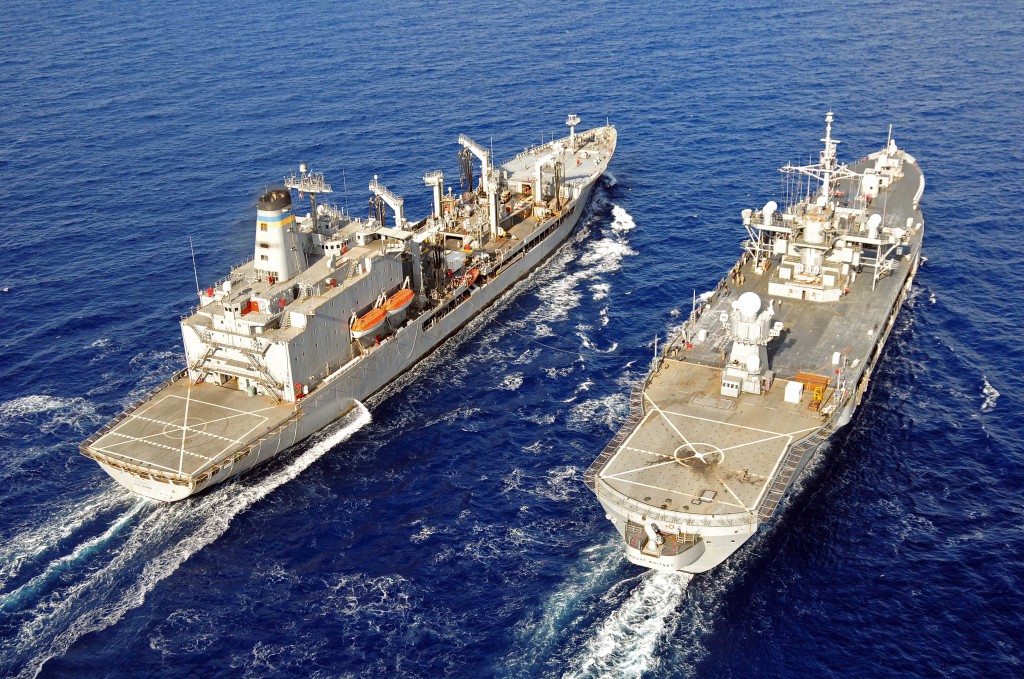
The U.S. Navy’s Arleigh Burke-class destroyer typically burns 1,000 gallons of petroleum fuel an hour. Most of the Navy’s fleet shares the same ravenous appetite for fuel, and refueling these massive warships can interrupt missions and present challenges in rough weather. However, researchers at the U.S. Naval Research Laboratory have now proven that it’s possible to power engines instead with a cheap, convenient supply of fuel: seawater.
Scientists have spent nearly a decade laboring to turn the ocean into fuel. The breakthrough, demonstrated in a proof-of-concept test, was made possible by a specialized catalytic converter that transforms carbon dioxide and hydrogen from seawater into a liquid hydrocarbon fuel.
A Naval Milestone
The development of a liquid hydrocarbon fuel is being hailed as a game changer. If Navy ships create their own fuel they can remain operational 100 percent of the time, rather than conducting frequent fuel-ups with tankers while at sea, which can be tricky in rough weather.
A catalytic converter extracts carbon dioxide and hydrogen from water and converts the gases into liquid hydrocarbons at a 92 percent efficiency rate, and the resulting fuel can be used in ships’ existing engines.
Read the rest at: Discover Magazine
2 Comments
Pretty section of content. I just stumbled upon your blog and in accession capital to assert that I acquire actually enjoyed account your blog posts. Any way I will be subscribing to your feeds and even I achievement you access consistently fast.
Hey there! This is my 1st comment here so I just wanted to give a quick shout out and tell you I truly enjoy reading through your articles. Can you suggest any other blogs/websites/forums that deal with the same topics? Appreciate it!
Leave A Comment