
By Lloyd Alter, Source: Treehugger

“Passive House” has always been a silly name for a terrific idea and a bad translation of the German Passivhaus; not only because it is not truly passive, but also because haus does not just mean house as we think of it in English; it can be any kind of building.
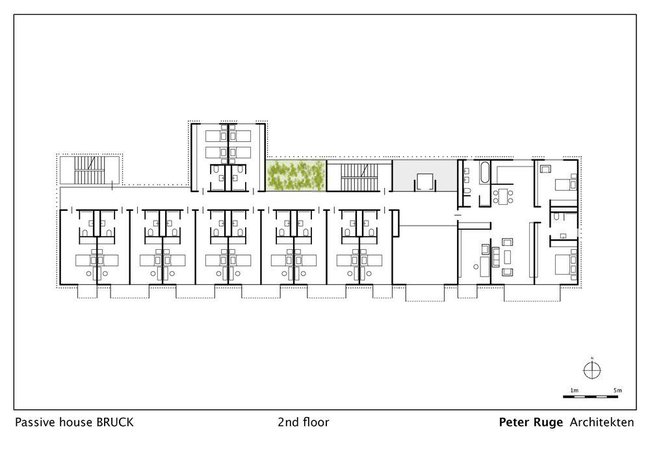
For instance, this Passivhaus Bruck in Changxing, China, in the hot and humid Yangtze River Delta, contains 46 residential units, including 36 one room staff flats for employees of builder Shanghai Landsea, 6 two room executive suites and 4 model apartment suites that people can check into to try out living in a Passivhaus environment. Designed by Peter Ruge Architekten, it’s part of the company’s plan to develop a research center to “test, improve and implement innovative, energy saving and sustainable building practices in China.”
There are some people in the Passive House US gang who keep saying that the passivhaus standard doesn’t work for hot humid climates, but it seems to work here:

In the hot summer, the pilot project, which has been certified by the international Passive House Institute, is protected from too much sun by fixed shading elements. Pleasant indoor temperatures at all times of the year are further provided by a well-insulated building envelope, a highly efficient ventilation system and triple-glazing of the floor-to-ceiling windows. The rest of the will is shaded by coloured terracotta rods.
Dr. Wolfgang Feist, founder of Passivhaus and Director of the Passivhaus institute, enjoyed his visit and says in a press release: “My stay there was very satisfying, and I’m sure that many Chinese guests will also be impressed and convinced by the experience of an overnight stay in this Passive House building.”
Read the rest at: Treehugger
821 Comments
Hi there, I enjoy reading through your article post. I wanted to write a little comment to support you.|
I do agree with all of the concepts you've presented in your post. They are really convincing and will certainly work. Nonetheless, the posts are very quick for beginners. May just you please prolong them a bit from next time? Thanks for the post.|
Heya i'm for the first time here. I came across this board and I find It really useful & it helped me out much. I hope to give something back and aid others like you aided me.|
It's very simple to find out any topic on web as compared to books, as I found this paragraph at this web site.|
Hi! Someone in my Facebook group shared this site with us so I came to check it out. I'm definitely loving the information. I'm book-marking and will be tweeting this to my followers! Wonderful blog and amazing design and style.|
For the reason that the admin of this web site is working, no doubt very quickly it will be famous, due to its quality contents.|
Yes! Finally something about keyword1.|
My brother suggested I might like this blog. He was entirely right. This post truly made my day. You cann't imagine just how much time I had spent for this info! Thanks!|
Wow, superb blog format! How long have you been blogging for? you made blogging glance easy. The total look of your website is fantastic, let alone the content material!
Magnificent beat ! I wish to apprentice while you amend your site, how could i subscribe for a blog web site? The account aided me a applicable deal. I have been a little bit familiar of this your broadcast offered vivid clear idea|
I'd like to thank you for the efforts you've put in penning this blog. I am hoping to check out the same high-grade blog posts from you later on as well. In fact, your creative writing abilities has encouraged me to get my own, personal site now ;)|
Aw, this was a really good post. Taking a few minutes and actual effort to make a good article… but what can I say… I put things off a lot and don't manage to get anything done.|
Hi there! Someone in my Facebook group shared this website with us so I came to take a look. I'm definitely loving the information. I'm bookmarking and will be tweeting this to my followers! Fantastic blog and terrific design.|
Hey there fantastic website! Does running a blog similar to this take a great deal of work? I have no understanding of coding however I had been hoping to start my own blog in the near future. Anyhow, should you have any suggestions or techniques for new blog owners please share. I know this is off subject however I just wanted to ask. Many thanks!|
Awesome issues here. I'm very happy to see your article. Thank you so much and I am having a look ahead to contact you. Will you kindly drop me a mail?|
Greetings from Los angeles! I'm bored to death at work so I decided to browse your website on my iphone during lunch break. I enjoy the information you present here and can't wait to take a look when I get home. I'm shocked at how quick your blog loaded on my cell phone .. I'm not even using WIFI, just 3G .. Anyhow, good blog!|
Great delivery. Sound arguments. Keep up the amazing effort.|
If some one needs expert view regarding blogging after that i advise him/her to pay a visit this webpage, Keep up the pleasant work.|
I am regular reader, how are you everybody? This piece of writing posted at this site is genuinely fastidious.|
Hey there are using Wordpress for your site platform? I'm new to the blog world but I'm trying to get started and set up my own. Do you need any html coding expertise to make your own blog? Any help would be really appreciated!|
I think the admin of this web site is in fact working hard in favor of his website, for the reason that here every information is quality based data.|
https://shvejnye.ru/
Nice post. I was checking continuously this blog and I am impressed! Very helpful info specifically the last part :) I care for such info much. I was looking for this particular information for a long time. Thank you and good luck.|
Hello there! This is my first comment here so I just wanted to give a quick shout out and say I truly enjoy reading your posts. Can you recommend any other blogs/websites/forums that cover the same topics? Appreciate it!|
Have you ever thought about writing an e-book or guest authoring on other sites? I have a blog based upon on the same subjects you discuss and would really like to have you share some stories/information. I know my readers would enjoy your work. If you're even remotely interested, feel free to shoot me an e mail.|
Oh my goodness! Impressive article dude! Thanks, However I am experiencing troubles with your RSS. I don't understand the reason why I am unable to subscribe to it. Is there anybody getting similar RSS issues? Anyone who knows the answer will you kindly respond? Thanks!!|
It's hard to find knowledgeable people in this particular topic, but you seem like you know what you're talking about! Thanks|
Thank you for the auspicious writeup. It in fact was a amusement account it. Look advanced to far added agreeable from you! By the way, how could we communicate?|
Everyone loves it when individuals get together and share ideas. Great blog, continue the good work!|
Hi, I think your site might be having browser compatibility issues. When I look at your blog in Firefox, it looks fine but when opening in Internet Explorer, it has some overlapping. I just wanted to give you a quick heads up! Other then that, wonderful blog!|
If some one needs expert view regarding blogging and site-building afterward i recommend him/her to visit this blog, Keep up the pleasant job.|
Attractive section of content. I just stumbled upon your website and in accession capital to assert that I get actually enjoyed account your blog posts. Anyway I will be subscribing to your augment and even I achievement you access consistently quickly.|
Hi this is kind of of off topic but I was wanting to know if blogs use WYSIWYG editors or if you have to manually code with HTML. I'm starting a blog soon but have no coding knowledge so I wanted to get guidance from someone with experience. Any help would be enormously appreciated!|
Boat ownership also comes with responsibilities. Regular maintenance keeps the boat running smoothly and extends its lifespan. Engine servicing, hull cleaning, and checking for wear and tear are part of routine upkeep. Many owners store their boats in marinas or dry docks to protect them from harsh weather conditions. Insurance is another important factor, as it covers potential damages and liabilities. Whether using a boat for recreation or business, proper care and maintenance are key to ensuring safe and enjoyable trips.
Boat maintenance is essential to keep your vessel in top condition. Regularly checking the engine, cleaning the hull, and inspecting safety equipment can prevent costly repairs. Using the right marine coatings can protect the boat from saltwater damage. Proper winterization helps prevent damage during the off-season. A well-maintained boat lasts longer and provides a safer and more enjoyable experience.
Way cool! Some extremely valid points! I appreciate you writing this article plus the rest of the site is also very good.|
Howdy! I know this is kinda off topic but I was wondering which blog platform are you using for this site? I'm getting fed up of Wordpress because I've had issues with hackers and I'm looking at alternatives for another platform. I would be fantastic if you could point me in the direction of a good platform.|
Hey I know this is off topic but I was wondering if you knew of any widgets I could add to my blog that automatically tweet my newest twitter updates. I've been looking for a plug-in like this for quite some time and was hoping maybe you would have some experience with something like this. Please let me know if you run into anything. I truly enjoy reading your blog and I look forward to your new updates.|
I do not even know how I ended up here, but I thought this post was great. I do not know who you are but certainly you're going to a famous blogger if you are not already ;) Cheers!|
Hi there, every time i used to check website posts here early in the daylight, because i like to gain knowledge of more and more.|
Great post.|
Wow, wonderful blog layout! How long have you been blogging for? you make blogging look easy. The overall look of your web site is excellent, let alone the content!|
We stumbled over here by a different page and thought I may as well check things out. I like what I see so i am just following you. Look forward to looking over your web page for a second time.|
Excellent goods from you, man. I've understand your stuff previous to and you're just extremely great. I actually like what you have acquired here, certainly like what you're saying and the way in which you say it. You make it enjoyable and you still care for to keep it sensible. I can not wait to read far more from you. This is actually a great site.|
Nice blog here! Also your web site loads up very fast! What host are you using? Can I get your affiliate link to your host? I wish my website loaded up as fast as yours lol|
An outstanding share! I have just forwarded this onto a colleague who has been doing a little homework on this. And he in fact bought me breakfast due to the fact that I found it for him... lol. So allow me to reword this.... Thanks for the meal!! But yeah, thanks for spending time to talk about this issue here on your blog.|
Magnificent beat ! I would like to apprentice even as you amend your web site, how could i subscribe for a weblog website? The account aided me a appropriate deal. I have been a little bit acquainted of this your broadcast offered vivid transparent concept|
Good day! Do you know if they make any plugins to help with Search Engine Optimization? I'm trying to get my blog to rank for some targeted keywords but I'm not seeing very good gains. If you know of any please share. Thank you!|
For latest information you have to go to see world-wide-web and on internet I found this web page as a finest site for hottest updates.|
https://tawny-dolphin-lw63m3.mystrikingly.com/blog/on-the-web-holdem-strategy-ways-to-boost-winning-rates
http://jblenke.sjinte.com/bbs/board.php?bo_table=free&wr_id=261927
https://xn--2s2ba31do4lsxeikz73hm3d.com/bbs/board.php?bo_table=free&wr_id=6784
http://xn--hy1b58tbqd8ll92d.kr/g5/bbs/board.php?bo_table=free&wr_id=8841
https://www.baezip.com/bbs/board.php?bo_table=free&wr_id=597773
https://www.jjvip.co.kr/bbs/board.php?bo_table=free&wr_id=90537
http://www.unwro.org/bbs/board.php?bo_table=free&wr_id=8225
I feel that is one of the most important info for me. And i am glad reading your article. But wanna commentary on few normal issues, The web site taste is perfect, the articles is actually great : D. Good task, cheers|
This article will help the internet visitors for setting up new website or even a weblog from start to end.|
Hello there! This post couldn't be written any better! Reading through this post reminds me of my old room mate! He always kept talking about this. I will forward this post to him. Fairly certain he will have a good read. Thank you for sharing!|
You are so cool! I do not believe I've truly read a single thing like this before. So nice to find somebody with a few unique thoughts on this issue. Seriously.. many thanks for starting this up. This website is something that's needed on the internet, someone with a bit of originality!|
Very nice post. I simply stumbled upon your blog and wished to mention that I've really enjoyed surfing around your weblog posts. After all I will be subscribing to your feed and I hope you write once more very soon!|
It's hard to come by well-informed people on this topic, however, you seem like you know what you're talking about! Thanks|
Superb, what a website it is! This webpage presents useful facts to us, keep it up.|
Good way of telling, and fastidious article to get data regarding my presentation focus, which i am going to convey in academy.|
Pretty! This has been a really wonderful article. Thank you for providing these details.|
Greetings! I've been reading your blog for a long time now and finally got the bravery to go ahead and give you a shout out from Kingwood Texas! Just wanted to say keep up the good job!|
This design is steller! You certainly know how to keep a reader amused. Between your wit and your videos, I was almost moved to start my own blog (well, almost...HaHa!) Great job. I really loved what you had to say, and more than that, how you presented it. Too cool!|
I am regular reader, how are you everybody? This article posted at this web site is genuinely fastidious.|
If some one wants to be updated with most recent technologies after that he must be go to see this web page and be up to date everyday.|
Hello, all is going sound here and ofcourse every one is sharing facts, that's in fact good, keep up writing.|
https://goodday-toto.com/
I got this web site from my buddy who told me concerning this web page and now this time I am visiting this website and reading very informative articles or reviews at this place.|
https://xn--3e0b091c1wga.com/bbs/board.php?bo_table=rndlsrnwl
https://xn--3e0b091c1wga.com/bbs/board.php?bo_table=mt
Hi there Dear, are you truly visiting this site on a regular basis, if so afterward you will definitely take pleasant know-how.|
Hi everybody, here every person is sharing such know-how, thus it's pleasant to read this blog, and I used to pay a visit this website everyday.|
I don't know whether it's just me or if everybody else experiencing issues with your website. It appears as if some of the written text on your content are running off the screen. Can somebody else please comment and let me know if this is happening to them too? This might be a issue with my web browser because I've had this happen previously. Cheers|
What i don't realize is actually how you are now not actually a lot more well-favored than you might be right now. You are very intelligent. You realize thus significantly on the subject of this subject, made me in my view consider it from numerous various angles. Its like women and men are not fascinated except it's something to accomplish with Lady gaga! Your own stuffs outstanding. At all times deal with it up!|
I have read so many articles or reviews about the blogger lovers however this article is truly a pleasant post, keep it up.|
My brother recommended I might like this blog. He was entirely right. This submit actually made my day. You can not imagine just how so much time I had spent for this info! Thanks!|
Hi there, everything is going perfectly here and ofcourse every one is sharing data, that's in fact excellent, keep up writing.|
Thank you for any other fantastic post. Where else could anybody get that kind of information in such an ideal manner of writing? I have a presentation next week, and I am at the search for such info.|
certainly like your website but you need to check the spelling on quite a few of your posts. Many of them are rife with spelling problems and I find it very troublesome to inform the truth then again I'll definitely come again again.|
Wow! In the end I got a webpage from where I be able to in fact obtain useful data concerning my study and knowledge.|
Aw, this was a very good post. Taking the time and actual effort to make a top notch article… but what can I say… I put things off a lot and never manage to get anything done.|
Inspiring quest there. What happened after? Thanks!|
I've been exploring for a little for any high quality articles or weblog posts on this kind of area . Exploring in Yahoo I at last stumbled upon this website. Studying this information So i am happy to convey that I've a very just right uncanny feeling I came upon exactly what I needed. I so much without a doubt will make sure to don?t forget this site and provides it a glance regularly.|
Porn
Howdy! I could have sworn I've been to this website before but after checking through some of the post I realized it's new to me. Anyways, I'm definitely delighted I found it and I'll be bookmarking and checking back frequently!|
A person necessarily help to make seriously articles I'd state. This is the first time I frequented your web page and thus far? I surprised with the research you made to create this actual publish extraordinary. Wonderful activity!|
Link exchange is nothing else however it is only placing the other person's blog link on your page at suitable place and other person will also do similar in support of you.|
https://lovebookmark.date/story.php?title=activities-gambling-E28093-gaming-the-particular-smart-approach-in-buy-to-optimize-your-individual-income#discuss
Definitely believe that which you stated. Your favorite reason appeared to be on the net the easiest thing to be aware of. I say to you, I definitely get irked while people think about worries that they plainly do not know about. You managed to hit the nail upon the top as well as defined out the whole thing without having side-effects , people could take a signal. Will probably be back to get more. Thanks|
https://images.google.cf/url?q=https://writeablog.net/veilview19/satta-king-up-sattaking-satta-king-upwards-result-gali-result
https://images.google.be/url?q=https://buckley-roed.hubstack.net/seupoceubetinge-isseoseo-caghanjageumgwanriyi-bigyeolgwa-gibeob
http://jzmetin.cn/bbs/home.php?mod=space&uid=267372
https://maps.google.com.ua/url?q=https://fileforum.com/profile/lipsphere94/
http://d3kokuchi.neteasegamer.jp/home.php?mod=space&uid=1876485
I feel this is one of the most important information for me. And i am glad reading your article. But want to observation on few basic issues, The website style is perfect, the articles is in reality great : D. Excellent activity, cheers|
What's up, after reading this amazing piece of writing i am too glad to share my know-how here with friends.|
My family all the time say that I am killing my time here at net, however I know I am getting knowledge all the time by reading thes fastidious content.|
https://firewar888.tw/home.php?mod=space&uid=241119
Hey there, You have performed a great job. I'll definitely digg it and in my opinion suggest to my friends. I am sure they'll be benefited from this site.|
Hurrah! After all I got a weblog from where I be able to genuinely obtain valuable information regarding my study and knowledge.|
Hi, i feel that i saw you visited my weblog thus i got here to go back the prefer?.I'm trying to find issues to enhance my web site!I suppose its adequate to make use of a few of your concepts!!|
http://www.sorumatix.com/user/campeel8
http://mnogootvetov.ru/index.php?qa=user&qa_1=zonedebtor8
Greetings! Very useful advice within this article! It's the little changes that make the greatest changes. Thanks for sharing!|
Pretty! This has been a really wonderful article. Many thanks for supplying these details.|
I was curious if you ever considered changing the structure of your site? Its very well written; I love what youve got to say. But maybe you could a little more in the way of content so people could connect with it better. Youve got an awful lot of text for only having one or 2 pictures. Maybe you could space it out better?|
This is a topic that is close to my heart... Many thanks! Exactly where are your contact details though?|
Stunning quest there. What occurred after? Good luck!|
Hi I am so glad I found your blog, I really found you by mistake, while I was browsing on Digg for something else, Anyhow I am here now and would just like to say many thanks for a remarkable post and a all round exciting blog (I also love the theme/design), I don’t have time to browse it all at the minute but I have book-marked it and also added your RSS feeds, so when I have time I will be back to read much more, Please do keep up the excellent work.|
great submit, very informative. I wonder why the other experts of this sector don't understand this. You must continue your writing. I am confident, you've a huge readers' base already!|
Howdy! I know this is somewhat off topic but I was wondering if you knew where I could locate a captcha plugin for my comment form? I'm using the same blog platform as yours and I'm having difficulty finding one? Thanks a lot!|
Bazopril is a blood pressure supplement featuring a blend of natural ingredients to support heart health
Pineal XT is a revolutionary supplement that promotes proper pineal gland function and energy levels to support healthy body function.
Tonic Greens is an all-in-one dietary supplement that has been meticulously designed to improve overall health and mental wellness.
I know this if off topic but I'm looking into starting my own weblog and was wondering what all is needed to get set up? I'm assuming having a blog like yours would cost a pretty penny? I'm not very internet smart so I'm not 100 positive. Any tips or advice would be greatly appreciated. Appreciate it|
Just wish to say your article is as astonishing. The clarity in your post is just great and i could assume you're an expert on this subject. Fine with your permission let me to grab your RSS feed to keep updated with forthcoming post. Thanks a million and please keep up the enjoyable work.|
Hi there, You've performed a fantastic job. I'll certainly digg it and individually recommend to my friends. I'm sure they will be benefited from this website.|
An outstanding share! I've just forwarded this onto a co-worker who has been doing a little research on this. And he in fact bought me dinner simply because I discovered it for him... lol. So allow me to reword this.... Thanks for the meal!! But yeah, thanks for spending time to talk about this subject here on your site.|
Howdy are using Wordpress for your blog platform? I'm new to the blog world but I'm trying to get started and set up my own. Do you require any coding expertise to make your own blog? Any help would be greatly appreciated!|
Hi my friend! I wish to say that this post is amazing, great written and come with almost all important infos. I would like to peer more posts like this .|
An intriguing discussion is definitely worth comment. There's no doubt that that you should publish more about this issue, it might not be a taboo matter but typically people don't talk about such subjects. To the next! Many thanks!!|
güvenilir bahis siteleri
https://maps.google.ae/url?q=http://hawkee.com/profile/6197206/
http://twitter.com/home?status=http://xurl.es/xey8p
I would like to thank you for the efforts you have put in writing this site. I'm hoping to view the same high-grade content from you later on as well. In truth, your creative writing abilities has encouraged me to get my own, personal site now ;)|
I am continually impressed by your ability to delve into subjects with grace and clarity. Your articles are both informative and enjoyable to read, a rare combination. Your blog is a valuable resource, and I am sincerely grateful for it.
I simply couldn't go away your site before suggesting that I really enjoyed the standard information an individual provide for your visitors? Is going to be back ceaselessly in order to inspect new posts|
Just wish to say your article is as amazing. The clearness in your post is just spectacular and i could assume you're an expert on this subject. Well with your permission allow me to grab your RSS feed to keep updated with forthcoming post. Thanks a million and please carry on the gratifying work.|
This is the right site for everyone who hopes to find out about this topic. You understand so much its almost hard to argue with you (not that I personally would want to…HaHa). You certainly put a new spin on a topic that's been discussed for ages. Great stuff, just wonderful!|
colibrim.com
colibrim.com
colibrim.com
colibrim.com
https://www.boredpanda.com/community/mccartyguzman356/
http://www.drugoffice.gov.hk/gb/unigb/www.777igame.net/1xbet
The latest news and reviews in the world of tech, automotive, gaming, science, and entertainment. https://millionbyte.us/
deneme bonusu veren siteler
http://genomicdata.hacettepe.edu.tr:3000/strawkitten2
Get Lehigh Valley news, Allentown news, Bethlehem news, Easton news, Quakertown news, Poconos news and Pennsylvania news from Morning Post. https://morningpost.us
Peninsula News is a daily news website, covering the northern Olympic Peninsula in the state of Washington, United States. https://peninsulanews.us
Maryland Post: Your source for Maryland breaking news, sports, business, entertainment, weather and traffic https://marylandpost.us
Fresh, flavorful and (mostly) healthy recipes made for real, actual, every day life. Helping you celebrate the joy of food in a totally non-intimidating way. https://skillfulcook.us
Hi there, after reading this awesome piece of writing i am as well happy to share my familiarity here with friends.|
Hey there would you mind letting me know which webhost you're using? I've loaded your blog in 3 different web browsers and I must say this blog loads a lot faster then most. Can you recommend a good hosting provider at a fair price? Cheers, I appreciate it!|
Hi would you mind sharing which blog platform you're using? I'm going to start my own blog in the near future but I'm having a tough time selecting between BlogEngine/Wordpress/B2evolution and Drupal. The reason I ask is because your design seems different then most blogs and I'm looking for something unique. P.S Sorry for getting off-topic but I had to ask!|
I love it when individuals come together and share views. Great blog, continue the good work!|
This paragraph will help the internet viewers for building up new web site or even a weblog from start to end.|
NewsBreak provides latest and breaking Renton, WA local news, weather forecast, crime and safety reports, traffic updates, event notices, sports https://rentonnews.us
Bellevue Latest Headlines: City of Bellevue can Apply for Digital Equity Grant https://bellevuenews.us
Deneme Bonusu Veren Siteler
San Gabriel Valley News is the local news source for Los Angeles County
Local news from Redlands, CA, California news, sports, things to do, and business in the Inland Empire. https://redlandsnews.us
Nice blog! Is your theme custom made or did you download it from somewhere? A design like yours with a few simple tweeks would really make my blog stand out. Please let me know where you got your theme. With thanks|
I think this is one of the so much important info for me. And i'm happy reading your article. However should remark on some normal issues, The website taste is wonderful, the articles is actually great : D. Good task, cheers|
PharmaMore provides a forum for industry leaders to hear the most important voices and ideas in the industry. https://pharmamore.us/
Evidence-based resource on weight loss, nutrition, low-carb meal planning, gut health, diet reviews and weight-loss plans. We offer in-depth reviews on diet supplements, products and programs. https://healthpress.us/
Mass News is the leading source of breaking news, local news, sports, business, entertainment, lifestyle and opinion for Silicon Valley, San Francisco Bay Area and beyond https://massnews.us/
The Boston Post is the leading source of breaking news, local news, sports, politics, entertainment, opinion and weather in Boston, Massachusetts. https://bostonpost.us/
Get Lehigh Valley news, Allentown news, Bethlehem news, Easton news, Quakertown news, Poconos news and Pennsylvania news from Morning Post. https://morningpost.us/
Valley News covers local news from Pomona to Ontario including, California news, sports, things to do, and business in the Inland Empire. https://valleynews.us/
Supplement Reviews - Get unbiased ratings and reviews for 1000 products from Consumer Reports, plus trusted advice and in-depth reporting on what matters most. https://supplementreviews.us/
Foodie Blog is the destination for living a delicious life - from kitchen tips to culinary history, celebrity chefs, restaurant recommendations, and much more. https://foodieblog.us/
Fashion More provides in-depth journalism and insight into the news and trends impacting the fashion
Healthcare Blog provides news, trends, jobs and resources for health industry professionals. We cover topics like healthcare IT, hospital administration, polcy
Ohio Reporter - Ohio News, Sports, Weather and Things to Do https://ohioreporter.us/
Trenton News - Trenton, NJ News, Sports, Weather and Things to Do https://trentonnews.us/
Vacavillenews.us covers local news in Vacaville, California. Keep up with all business, local sports, outdoors, local columnists and more. https://vacavillenews.us/
The latest video game news, reviews, exclusives, streamers, esports, and everything else gaming. https://zaaz.us/
You ought to be a part of a contest for one of the highest quality blogs on the net. I most certainly will recommend this blog!|
En iyi bahis siteleri için bize katılabilirsiniz.
You could definitely see your expertise within the article you write. The world hopes for more passionate writers like you who aren't afraid to say how they believe. At all times go after your heart.|
The latest health news, wellness advice, and exclusives backed by trusted medical authorities. https://healthmap.us/
Baltimore Post: Your source for Baltimore breaking news, sports, business, entertainment, weather and traffic https://baltimorepost.us/
Maryland Post: Your source for Maryland breaking news, sports, business, entertainment, weather and traffic https://marylandpost.us/
Humboldt News: Local News, Local Sports and more for Humboldt County https://humboldtnews.us/
The one-stop destination for vacation guides, travel tips, and planning advice - all from local experts and tourism specialists. https://travelerblog.us/
Money Analysis is the destination for balancing life and budget - from money management tips, to cost-cutting deals, tax advice, and much more. https://moneyanalysis.us/
Outdoor Blog will help you live your best life outside - from wildlife guides, to safety information, gardening tips, and more. https://outdoorblog.us/
Food
The latest film and TV news, movie trailers, exclusive interviews, reviews, as well as informed opinions on everything Hollywood has to offer. https://xoop.us/
Lake County Lake Reporter: Local News, Local Sports and more for Lake County https://lakereporter.us
Deneme bonusu için bize katılabilirsiniz
indiaherald.us provides latest news from India , India News and around the world. Get breaking news alerts from India and follow today’s live news updates in field of politics, business, sports, defence, entertainment and more. https://indiaherald.us
Helpful information. Lucky me I found your site unintentionally, and I'm stunned why this accident did not happened earlier! I bookmarked it.|
I'll immediately grasp your rss as I can't to find your email subscription link or e-newsletter service. Do you have any? Please allow me recognise so that I could subscribe. Thanks.|
Do whatever you want. Steal cars, drive tanks and helicopters, defeat gangs. It's your city! https://play.google.com/store/apps/details?id=com.gangster.city.open.world
News from the staff of the LA Reporter, including crime and investigative coverage of the South Bay and Harbor Area in Los Angeles County. https://lareporter.us/
East Bay News is the leading source of breaking news, local news, sports, entertainment, lifestyle and opinion for Contra Costa County, Alameda County, Oakland and beyond https://eastbaynews.us/
Santa Cruz Sentinel: Local News, Local Sports and more for Santa Cruz https://santacruznews.us/
WOW just what I was searching for. Came here by searching for meta_keyword|
BioPharma Blog provides news and analysis for biotech and biopharmaceutical executives. We cover topics like clinical trials, drug discovery and development, pharma marketing, FDA approvals and regulations, and more. https://biopharmablog.us/
Fresh, flavorful and (mostly) healthy recipes made for real, actual, every day life. Helping you celebrate the joy of food in a totally non-intimidating way. https://skillfulcook.us/
Island Post is the website for a chain of six weekly newspapers that serve the North Shore of Nassau County, Long Island published by Alb Media. The newspapers are comprised of the Great Neck News, Manhasset Times, Roslyn Times, Port Washington Times, New Hyde Park Herald Courier and the Williston Times. Their coverage includes village governments, the towns of Hempstead and North Hempstead, schools, business, entertainment and lifestyle. https://islandpost.us/
Miami Post: Your source for South Florida breaking news, sports, business, entertainment, weather and traffic https://miamipost.us/
Colorado breaking news, sports, business, weather, entertainment. https://denver-news.us/
OCNews.us covers local news in Orange County, CA, California and national news, sports, things to do and the best places to eat, business and the Orange County housing market. https://ocnews.us/
Covering the latest beauty and fashion trends, relationship advice, wellness tips and more. https://gliz.us/
The best tips, guides, and inspiration on home improvement, decor, DIY projects, and interviews with celebrities from your favorite renovation shows. https://houseblog.us/
Breaking US news, local New York news coverage, sports, entertainment news, celebrity gossip, autos, videos and photos at nybreakingnews.us https://nybreakingnews.us/
Your source for Connecticut breaking news, UConn sports, business, entertainment, weather and traffic https://connecticutpost.us/
View the latest from the world of psychology: from behavioral research to practical guidance on relationships, mental health and addiction. Find help from our directory of therapists, psychologists and counselors. https://therapisttoday.us/
Virginia News: Your source for Virginia breaking news, sports, business, entertainment, weather and traffic https://virginiapost.us/
I have been browsing on-line greater than 3 hours lately, yet I by no means found any fascinating article like yours. It is pretty worth sufficient for me. In my opinion, if all webmasters and bloggers made just right content as you probably did, the net will probably be much more useful than ever before.|
Hi, after reading this awesome paragraph i am as well cheerful to share my knowledge here with mates.|
When some one searches for his essential thing, so he/she needs to be available that in detail, therefore that thing is maintained over here.|
Great post. I was checking constantly this blog and I am inspired! Extremely helpful information specifically the last phase :) I handle such info a lot. I used to be seeking this certain info for a long time. Thanks and good luck. |
AquaPeace is an all-natural nutritional formula that uses a proprietary and potent blend of ingredients and nutrients to improve overall ear and hearing health and alleviate the symptoms of tinnitus. https://aquapeacebuynow.us/
TropiSlim is the world's first 100% natural solution to support healthy weight loss by using a blend of carefully selected ingredients. https://tropislimbuynow.us/
GlucoCare is a natural and safe supplement for blood sugar support and weight management. It fixes your metabolism and detoxifies your body. https://glucocarebuynow.us/
Pretty great post. I just stumbled upon your blog and wanted to mention that I've truly loved surfing around your blog posts. In any case I will be subscribing to your feed and I hope you write once more soon!|
Hey there! I could have sworn I've been to this site before but after reading through some of the post I realized it's new to me. Anyhow, I'm definitely delighted I found it and I'll be book-marking and checking back often!|
Hi! I could have sworn I've been to this web site before but after going through many of the posts I realized it's new to me. Anyhow, I'm definitely happy I discovered it and I'll be book-marking it and checking back often!|
Hello! Do you use Twitter? I'd like to follow you if that would be okay. I'm definitely enjoying your blog and look forward to new posts.|
Excellent website. A lot of helpful info here. I'm sending it to a few buddies ans also sharing in delicious. And of course, thank you for your sweat!|
This is a very good tip especially to those new to the blogosphere. Simple but very accurate information… Many thanks for sharing this one. A must read article!|
I'm not sure why but this weblog is loading very slow for me. Is anyone else having this issue or is it a issue on my end? I'll check back later on and see if the problem still exists.|
Great article! We will be linking to this great post on our website. Keep up the great writing.|
If some one needs to be updated with newest technologies after that he must be pay a visit this web page and be up to date everyday.|
SightCare supports overall eye health, enhances vision, and protects against oxidative stress. Take control of your eye health and enjoy the benefits of clear and vibrant eyesight with Sight Care. https://sightcarebuynow.us/
Greate post. Keep writing such kind of info on your blog. Im really impressed by it.
Very good post. I will be going through some of these issues as well..|
Sight Care is a natural supplement designed to improve eyesight and reduce dark blindness. With its potent blend of ingredients. https://sightcarebuynow.us/
Boostaro is a dietary supplement designed specifically for men who suffer from health issues. https://boostarobuynow.us/
Sight Care is a natural supplement designed to improve eyesight and reduce dark blindness. With its potent blend of ingredients. https://sightcarebuynow.us/
SightCare is a natural eye vitamin that improves everyday vision. Others include lutein, N-acetyl cysteine, blueberries, vitamin C, zeaxanthin, niacin, eyebright, and quercetin. These nutrients combine to nourish eye cells. https://sightcarebuynow.us/
Hello! I'm at work surfing around your blog from my new iphone 3gs! Just wanted to say I love reading your blog and look forward to all your posts! Keep up the outstanding work!|
I don't even know the way I stopped up here, however I thought this publish was great. I do not realize who you're but definitely you are going to a well-known blogger should you are not already. Cheers!|
Hi there i am kavin, its my first occasion to commenting anyplace, when i read this article i thought i could also make comment due to this brilliant post.|
Hey There. I found your blog using msn. This is an extremely well written article. I will make sure to bookmark it and return to read more of your useful information. Thanks for the post. I will certainly comeback.|
I'm not sure where you are getting your info, but good topic. I needs to spend some time learning more or understanding more. Thanks for fantastic info I was looking for this information for my mission.|
After I initially commented I seem to have clicked on the -Notify me when new comments are added- checkbox and from now on each time a comment is added I get four emails with the exact same comment. Is there an easy method you can remove me from that service? Appreciate it!|
Hey! I know this is somewhat off-topic but I needed to ask. Does building a well-established website like yours require a lot of work? I am completely new to operating a blog but I do write in my journal every day. I'd like to start a blog so I can share my personal experience and views online. Please let me know if you have any kind of suggestions or tips for brand new aspiring bloggers. Thankyou!|
Howdy I am so happy I found your site, I really found you by error, while I was searching on Digg for something else, Anyways I am here now and would just like to say kudos for a incredible post and a all round enjoyable blog (I also love the theme/design), I don't have time to read through it all at the minute but I have saved it and also included your RSS feeds, so when I have time I will be back to read much more, Please do keep up the excellent work.|
What i don't realize is in fact how you're now not actually a lot more smartly-liked than you might be right now. You're very intelligent. You already know thus significantly in relation to this matter, produced me in my view imagine it from a lot of numerous angles. Its like women and men don't seem to be interested unless it's something to accomplish with Girl gaga! Your individual stuffs nice. At all times deal with it up!|
Hello! Do you know if they make any plugins to protect against hackers? I'm kinda paranoid about losing everything I've worked hard on. Any tips?|
It is appropriate time to make some plans for the future and it's time to be happy. I've read this post and if I could I wish to suggest you few interesting things or tips. Perhaps you could write next articles referring to this article. I wish to read more things about it!|
I was able to find good info from your content.|
When I initially commented I clicked the "Notify me when new comments are added" checkbox and now each time a comment is added I get three emails with the same comment. Is there any way you can remove me from that service? Many thanks!|
you're in reality a excellent webmaster. The site loading pace is incredible. It sort of feels that you're doing any unique trick. Also, The contents are masterwork. you've performed a magnificent activity in this subject!|
This site was... how do you say it? Relevant!! Finally I've found something that helped me. Cheers!|
Everything is very open with a really clear description of the issues. It was truly informative. Your site is very useful. Thank you for sharing!|
I'd like to thank you for the efforts you've put in writing this blog. I really hope to see the same high-grade blog posts by you in the future as well. In fact, your creative writing abilities has motivated me to get my own, personal blog now ;)|
Hi there Dear, are you in fact visiting this web site daily, if so then you will without doubt get good knowledge.|
Pretty! This has been an extremely wonderful post. Thank you for supplying these details.|
It's remarkable to go to see this web site and reading the views of all mates regarding this piece of writing, while I am also zealous of getting experience.|
Hi there to all, how is the whole thing, I think every one is getting more from this site, and your views are fastidious designed for new visitors.|
Pretty! This has been an extremely wonderful post. Thanks for supplying these details.|
Just desire to say your article is as astounding. The clearness on your put up is simply spectacular and i could think you are an expert on this subject. Well together with your permission allow me to clutch your RSS feed to stay updated with imminent post. Thank you one million and please carry on the gratifying work.|
This is very interesting, You are an excessively professional blogger. I've joined your rss feed and look forward to looking for extra of your fantastic post. Additionally, I have shared your site in my social networks|
What's Happening i am new to this, I stumbled upon this I've discovered It positively useful and it has helped me out loads. I am hoping to contribute & help different customers like its aided me. Great job.|
Thank you for every other informative website. The place else may I get that kind of info written in such an ideal way? I've a undertaking that I'm just now running on, and I've been at the look out for such information.|
What's up it's me, I am also visiting this web site on a regular basis, this web site is truly nice and the users are in fact sharing fastidious thoughts.|
Your storytelling prowess is nothing short of extraordinary. Reading this article felt like embarking on an adventure of its own. The vivid descriptions and engaging narrative transported me, and I eagerly await to see where your next story takes us. Thank you for sharing your experiences in such a captivating manner.
https://numberfields.asu.edu/NumberFields/show_user.php?userid=2812433
Hello to all, the contents existing at this site are actually remarkable for people knowledge, well, keep up the good work fellows.|
of course like your web site however you need to check the spelling on quite a few of your posts. Many of them are rife with spelling issues and I to find it very bothersome to inform the truth on the other hand I will surely come back again.|
Hey I know this is off topic but I was wondering if you knew of any widgets I could add to my blog that automatically tweet my newest twitter updates. I've been looking for a plug-in like this for quite some time and was hoping maybe you would have some experience with something like this. Please let me know if you run into anything. I truly enjoy reading your blog and I look forward to your new updates.|
A motivating discussion is definitely worth comment. I think that you ought to publish more on this subject matter, it may not be a taboo matter but usually people do not discuss these topics. To the next! Kind regards!!|
Very shortly this web site will be famous amid all blogging and site-building users, due to it's fastidious articles|
These are genuinely great ideas in about blogging. You have touched some fastidious factors here. Any way keep up wrinting.|
certainly like your web site but you need to check the spelling on several of your posts. Many of them are rife with spelling problems and I in finding it very bothersome to tell the truth nevertheless I'll surely come again again.|
I used to be able to find good info from your articles.|
I'm really enjoying the design and layout of your website. It's a very easy on the eyes which makes it much more pleasant for me to come here and visit more often. Did you hire out a designer to create your theme? Outstanding work!|
Way cool! Some extremely valid points! I appreciate you penning this article plus the rest of the site is also really good.|
Have you ever considered publishing an ebook or guest authoring on other blogs? I have a blog based on the same information you discuss and would love to have you share some stories/information. I know my subscribers would appreciate your work. If you're even remotely interested, feel free to shoot me an email.|
Way cool! Some extremely valid points! I appreciate you penning this write-up plus the rest of the site is really good.|
Hey There. I discovered your weblog using msn. That is a very smartly written article. I'll be sure to bookmark it and return to learn extra of your helpful info. Thank you for the post. I will certainly comeback.|
Hey there! Do you use Twitter? I'd like to follow you if that would be ok. I'm undoubtedly enjoying your blog and look forward to new updates.|
It's very straightforward to find out any matter on net as compared to textbooks, as I found this article at this web site.|
Article writing is also a fun, if you be familiar with then you can write otherwise it is difficult to write.|
Somebody necessarily lend a hand to make critically posts I'd state. That is the first time I frequented your website page and to this point? I surprised with the research you made to create this particular post extraordinary. Magnificent job!|
When someone writes an article he/she retains the thought of a user in his/her mind that how a user can know it. Therefore that's why this post is perfect. Thanks!|
Wow that was odd. I just wrote an very long comment but after I clicked submit my comment didn't show up. Grrrr... well I'm not writing all that over again. Regardless, just wanted to say great blog!|
This info is invaluable. Where can I find out more?|
Please let me know if you're looking for a article author for your site. You have some really good posts and I think I would be a good asset. If you ever want to take some of the load off, I'd absolutely love to write some material for your blog in exchange for a link back to mine. Please shoot me an email if interested. Kudos!|
Greetings! Very helpful advice within this article!
It is the little changes that produce the most important changes.
Many thanks for sharing!
Feel free to surf to my homepage: reformas zaragoza precios
Hi, this weekend is fastidious designed for me, because this point in time i
am reading this wonderful educational paragraph here at my residence.
Here is my site: cocinas
Very nice post. I just stumbled upon your weblog and wished to say
that I have really enjoyed surfing around your blog posts.
In any case I'll be subscribing in your
rss feed and I am hoping you write once more soon!
My web blog :: reformas zaragoza precios
At this time I am going away to do my breakfast, afterward having my breakfast coming over again to read more news.|
Magnificent goods from you, man. I've understand your stuff previous to and you are just extremely excellent. I actually like what you've acquired here, certainly like what you are stating and the way in which you say it. You make it enjoyable and you still care for to keep it sensible. I can't wait to read far more from you. This is really a terrific web site.|
I always used to read article in news papers but now as I am a user of internet therefore from now I am using net for articles or reviews, thanks to web.|
I used to be recommended this blog through my cousin. I am not certain whether or not this post is written by means of him as no one else understand such distinct about my problem. You're amazing! Thanks!|
Everything published made a great deal of sense. However, think on this, what if you were to create a awesome title? I ain't suggesting your information isn't good., however suppose you added something that grabbed folk's attention? I mean BLOG_TITLE is a little boring. You could look at Yahoo's front page and watch how they write news titles to grab viewers interested. You might add a video or a related picture or two to get readers interested about everything've got to say. Just my opinion, it would make your posts a little livelier.|
What i do not realize is in truth how you are now
not actually much more smartly-preferred than you may
be right now. You are very intelligent. You recognize thus considerably relating
to this subject, made me individually imagine it from a
lot of numerous angles. Its like women and men are not interested until it's something
to accomplish with Lady gaga! Your own stuffs nice.
At all times take care of it up!
my web blog :: 유머게시판
My partner and I stumbled over here from a different website and thought
I might as well check things out. I like what I see so now i am following
you. Look forward to looking into your web page repeatedly.
My homepage ... 에볼루션바카라
I was wondering if you ever thought of changing the structure of your website?
Its very well written; I love what youve got to say. But maybe you could a little more in the way
of content so people could connect with it better. Youve got an awful lot of text for only having one or two
pictures. Maybe you could space it out better?
Also visit my web site; reformas en general zaragoza
If you wish for to increase your knowledge just keep visiting this web site and be updated with the most recent news posted here.|
Tremendous issues here. I am very happy to look your
post. Thank you so much and I am looking forward to contact you.
Will you please drop me a mail?
Here is my web page :: reformas zaragoza
Someone essentially lend a hand to make seriously articles I would state.
That is the very first time I frequented your web page and thus far?
I amazed with the analysis you made to create this actual submit incredible.
Fantastic job!
Look at my site - Erotikclub
I couldn't resist commenting. Exceptionally well written!|
Greetings from Idaho! I'm bored to tears at work
so I decided to browse your site on my iphone during lunch break.
I enjoy the information you present here and can't wait to take a
look when I get home. I'm shocked at how fast your blog loaded on my mobile ..
I'm not even using WIFI, just 3G .. Anyways, superb
site!
Visit my homepage - visit this link
We're a group of volunteers and opening a new scheme in our community. Your web site provided us with helpful info to work on. You've performed a formidable process and our whole community will be grateful to you.|
This paragraph will help the internet people for creating new weblog or even a blog from start to end.|
you are truly a good webmaster. The website loading speed is incredible.
It sort of feels that you are doing any distinctive trick.
Moreover, The contents are masterwork. you've done
a excellent task on this subject!
Stop by my website; custom home builder
Hi to every body, it's my first visit of this blog; this webpage consists of amazing and really good stuff in support of readers.|
We're a group of volunteers and starting a new scheme in our community.
Your website provided us with helpful info to work on. You've done a formidable task and our entire neighborhood can be thankful to you.
Here is my blog post :: https://www.yourlocaltrade.co.uk/item/alba-carpet-cleaning/
It's hard to come by experienced people about this topic, however, you seem like you know what you're talking about!
Thanks
Here is my webpage :: Best Auto Repair Near Me
https://arthur79c2c.ampblogs.com/getting-my-chinese-medicine-brain-fog-to-work-59137001
This is a topic which is close to my heart... Take care! Exactly where are your contact details though?
Stop by my webpage - Automotive Shops Near Me
At this moment I am ready to do my breakfast, after having my breakfast coming again to read additional news.|
I’m not that much of a online reader to be honest but your sites really nice, keep it
up! I'll go ahead and bookmark your site to come back later.
Many thanks
Feel free to visit my blog post :: Rufus
Hello There. I found your blog using msn. This is a really well
written article. I will be sure to bookmark it and return to
read more of your useful info. Thanks for the post. I'll definitely
comeback.
My site :: reformas en zaragoza
Your dedication to sharing knowledge is unmistakable, and your writing style is captivating. Your articles are a pleasure to read, and I consistently come away feeling enriched. Thank you for being a dependable source of inspiration and information.
Your storytelling abilities are nothing short of incredible. Reading this article felt like embarking on an adventure of its own. The vivid descriptions and engaging narrative transported me, and I can't wait to see where your next story takes us. Thank you for sharing your experiences in such a captivating way.
Article writing is also a fun, if you be acquainted with then you can write if not it is difficult to write.|
What's up all, here every one is sharing these kinds of know-how, thus it's pleasant to read this weblog,
and I used to visit this webpage all the time.
Check out my page: housse matelassée pour chien sur la banquette arrière pour camion
I know this web site offers quality depending articles or reviews and
other stuff, is there any other website which presents these data in quality?
Here is my site; plateau d'alimentation pratique pour animaux de compagnie
Heya i'm for the first time here. I found this board and I in finding It truly useful
& it helped me out a lot. I hope to provide one thing again and aid others like you helped me.
Also visit my web page: is copart legit reddit
I wanted to take a moment to express my gratitude for the wealth of invaluable information you consistently provide in your articles. Your blog has become my go-to resource, and I consistently emerge with new knowledge and fresh perspectives. I'm eagerly looking forward to continuing my learning journey through your future posts.
I couldn't agree more with the insightful points you've articulated in this article. Your profound knowledge on the subject is evident, and your unique perspective adds an invaluable dimension to the discourse. This is a must-read for anyone interested in this topic.
I have read so many content on the topic of the blogger lovers however this
article is truly a fastidious paragraph, keep it up.
my blog post rudee11
I know this website gives quality dependent articles and extra data, is there any other web page which gives these stuff in quality?|
I think this is among the most significant information for me. And i am glad reading your article. But should remark on some general things, The web site style is perfect, the articles is really excellent : D. Good job, cheers|
Thank you for the auspicious writeup. It in fact was a amusement account it. Look advanced to more added agreeable from you! By the way, how can we communicate?|
Hi to all, how is everything, I think every one is getting more from this web site, and your views are good in favor of new users.|
I know this if off topic but I'm looking into
starting my own blog and was curious what all is needed to get
set up? I'm assuming having a blog like yours
would cost a pretty penny? I'm not very web smart so I'm not
100% certain. Any tips or advice would be greatly appreciated.
Thank you
Look at my website :: cheap sex webcam
I do not even understand how I finished up here, but I thought this
submit was once great. I do not recognise who you're however definitely you are going to a well-known blogger
if you are not already. Cheers!
my webpage ... gay sex cams
I'm genuinely impressed by how effortlessly you distill intricate concepts into easily digestible information. Your writing style not only imparts knowledge but also engages the reader, making the learning experience both enjoyable and memorable. Your passion for sharing your expertise shines through, and for that, I'm deeply grateful.
Spot on with this write-up, I absolutely think
this site needs much more attention. I'll probably be returning to read
more, thanks for the information!
My website :: sex live cam
I simply wanted to convey how much I've gleaned from this article. Your meticulous research and clear explanations make the information accessible to all readers. It's abundantly clear that you're committed to providing valuable content.
Быстромонтируемые строения - это современные строения, которые отличаются повышенной скоростью возведения и мобильностью. Они представляют собой сооруженные объекты, состоящие из эскизно произведенных компонентов либо блоков, которые могут быть быстро установлены на участке стройки.
Строительство зданий из сэндвич панелей обладают гибкостью также адаптируемостью, что дает возможность легко преобразовывать а также переделывать их в соответствии с потребностями клиента. Это экономически продуктивное а также экологически надежное решение, которое в последние лета приняло маштабное распространение.
I want to express my appreciation for this insightful article. Your unique perspective and well-researched content bring a new depth to the subject matter. It's clear you've put a lot of thought into this, and your ability to convey complex ideas in such a clear and understandable way is truly commendable. Thank you for sharing your knowledge and making learning enjoyable.
Hi there, for all time i used to check webpage posts here early in the daylight, for the reason that i like to learn more and more.|
We are a gaggle of volunteers and opening a brand new scheme in our community.
Your website provided us with useful info to work
on. You've done an impressive task and our whole neighborhood shall be thankful to you.
Here is my web site ... read this
You can definitely see your enthusiasm within the article you write.
The arena hopes for even more passionate writers such as
you who are not afraid to say how they believe. All the time go after your heart.
Look at my homepage ... 인천출장마사지
Hey I know this is off topic but I was wondering if you knew of any widgets I could add to my blog that automatically tweet my newest twitter updates. I've been looking for a plug-in like this for quite some time and was hoping maybe you would have some experience with something like this. Please let me know if you run into anything. I truly enjoy reading your blog and I look forward to your new updates.|
I really like your blog.. very nice colors & theme. Did you make this website yourself or did you hire someone to do it for you? Plz reply as I'm looking to design my own blog and would like to know where u got this from. thanks a lot|
I could not refrain from commenting. Perfectly written!|
Быстровозводимые здания - это прогрессивные конструкции, которые различаются громадной скоростью возведения и мобильностью. Они представляют собой сооружения, состоящие из заранее сделанных деталей или же компонентов, которые способны быть скоро собраны в районе строительства.
Строительство каркасных зданий располагают податливостью также адаптируемостью, что позволяет легко преобразовывать и модифицировать их в соответствии с пожеланиями заказчика. Это экономически эффективное а также экологически надежное решение, которое в крайние лета заполучило обширное распространение.
Hi, I do believe your blog could possibly be having
internet browser compatibility problems. When I look
at your web site in Safari, it looks fine but when opening in Internet Explorer, it's got some
overlapping issues. I simply wanted to provide you with a quick heads up!
Apart from that, great website!
Feel free to surf to my blog post: 메이저놀이터
Do you mind if I quote a couple of your posts as long
as I provide credit and sources back to your
site? My blog site is in the exact same area of interest as yours and my users would genuinely benefit from some of the information you present here.
Please let me know if this ok with you. Many thanks!
Feel free to surf to my website - Vaginal masturbators
Разрешение на строительство — это официальный документ, выписываемый полномочными инстанциями государственной власти или субъектного руководства, который дает возможность начать строительство или исполнение строительного процесса.
Разрешение на строительство на зарегистрированном участке определяет юридические принципы и регламенты к строительным работам, включая узаконенные разновидности работ, разрешенные материалы и техники, а также включает строительные стандарты и комплексы безопасности. Получение разрешения на строительство является необходимым документов для строительной сферы.
I all the time emailed this blog post page to all my friends,
since if like to read it after that my links will too.
Here is my web site: find more info
You've made some decent points there. I looked on the net for more info about the
issue and found most individuals will go along with your views on this
website.
Also visit my blog ... he has a good point
Amazingness is an all-encompassing life productivity collection that makes getting things done not only easier, but much more amazing.
Remarkable gives more than just an enhancement to your life. It's an absolute transformation!
Start sensation outstanding today by living the life that you've always desired!
Obtain endless time that deserves your money, enhanced power, and quality of thoughts.
Amazingness can help you finally get arranged and be more efficient. Say goodbye to tension as well as hello to a better life.
Accomplish every one of your most important things much faster and easier!
Incredible is the excellent productivity device that can aid you handle your time better as well as obtain even more performed in less time!
Experience amazing advantages with the extraordinary Amazingness.
Begin living your finest life currently with the amazing!
Extraordinary is a cutting edge, multifunctional as well as multidisciplinary all-natural supplement that ensures the promotion of your wellness by boosting your total wellness.
I've learn some good stuff here. Definitely value bookmarking for revisiting. I surprise how so much effort you set to create this type of excellent informative website.
Phenomenal is an all-in-one life management tool that will make your life less complicated than ever before.
Phenomenal provides greater than simply an improvement to your life. It's an absolute transformation!
Amazing can function marvels to your life all over due to its outstanding capacity to transform.
Consume this, as well as the result will surprise even yourself.
No matter what your age, want to do and be incredible.
You'll remain in a haze of clearness, happiness and also productivity .
Breathing in and out numerous times a day improves your life immensely.
Discover how amazingness supports your service development with the awesome power it holds.
Phenomenal is the perfect name for this item.
When you have Amazingness in your life, it's simple.
Incredible is a power loaded device that can assist you do anything faster.
Amazingness can assist you alter your life right in methods you never ever thought feasible.
Be better, much more imaginative, and also much more productive!
When utilizing this, you will be surprised exactly how effortlessly you can get your job done.
Amazingness can assist you be a lot more productive, concentrated and also live a healthier life!
Extraordinary is the one stop shop for all your demands!
This one basic change can make all the distinction in your life.
A couple of simple suggestions and tricks will certainly make you impressive!
This is the most efficient ever!
You're remarkable, now your life can be as well!
This is a new product that has actually been released recently.
Remarkable is an all-in-one productivity service that makes it simple to get even more done.
It resembles having a personal assistant to assist you get even more done in much less time.
Sensational is the one quit service for a extra healthy and balanced and also productive life.
Phenomenal is a productivity booster that assists you get even more done in less time.
Extraordinary advantages for you, family and friends that keep giving.
Be the very best at every little thing you do!
Phenomenal is the one quit remedy for a more effective as well as healthy and balanced life.
Sensational is a tool that allows you accomplish every little thing better, much faster and easier.
Discover exactly how else this can aid you with your fitness and health objectives!
7 ways to boost your efficiency and also amazingness!
You can have it all!
It is a one of its kind. Like no other.
You can have it all!
Phenomenal is a magnificently made tool that will aid you discover the best products in any kind of category rapidly as well as conveniently.
View your dreams come to life with amazingness! Reach experience truly amazing improvements.
You're fantastic, now your life can be also!
The Amazingness will change your life right!
This is a time conserving life changer!
The Amazingness is the best means to obtain more out of your life.
Have fun and get things finished with one of the most impressive device!
Amazing is your complete time monitoring option that makes obtaining points done faster and also easier than ever.
Amazingness can aid you finally obtain organized and be extra productive. Bid farewell to anxiety and also hi to a far better life.
Efficiency, Mindfulness as well as Joyful Lifestyle Layout.
A bottle of Sensational that you can try for yourself!
Amazingness can help you be much more productive, concentrated and live a healthier life!
Extraordinary is an all-in-one time management service that will certainly help you be more productive than ever before!
Phenomenal is a life-changing time administration application that will certainly assist you be extra efficient than ever.
This is one of the most efficient ever!
Discover how to obtain more out of life with this one easy change!
Remarkable can help you get even more performed in much less time as well as with better ease than ever!
This will transform the way you do things from now on.
This is an fantastic device to aid you with everything else.
Amazingness is your answer to a extra effective life.
Amazingness can supply that for you!
Do you find out about the Amazingness life-style?
This amazingness is a life changer!
You'll have the ability to do more, have a lot more fun, as well as really feel fantastic!
proven approach for raising productivity, efficiency as well as happiness .
Amazing is an all-in-one life management tool that will make your life simpler than ever before.
Amazingness can aid you be a lot more productive, concentrated and live a much healthier life!
The one you need to have yet really did not understand about!
Amazing is an all-in-one life management tool that will certainly make you much more productive and stress complimentary.
Created busy individuals that want to be extra successful as well as efficient .
The only high-quality and complete natural rest aid that assures a full, deep renewing night's sleep!
The most effective equipment for your job and play.
Your life will certainly never coincide after this!
Delivers you a package of health advantages.
The second-rate thing is all the enjoyable things you get to do!
This is an fantastic tool to aid you with every little thing else.
This is something that every home and also business requirements.
with Mindfulness you will certainly remain in a far better state of mind.
Subscribe currently and also start on your journey today!
The distinction is all the time. Enjoy your cost-free trial
Get the most of what you want as well as this will certainly assist!
You can do fantastic and attain more!
This can do the method!
One item that can take your life to the next level!
Amazingness is the efficiency app that gets things done. It resembles having a personal assistant in your pocket!
Exactly how? Amazingness can help you live an remarkable life by providing you with the tools to be a lot more effective and obtain more carried out in much less time.
Created active people who intend to be a lot more productive and also successful .
From even more power to better sleep, Amazingness can do everything for you!
Phenomenal is the one-stop service to help you obtain even more done in life.
It's straightforward when you have Amazingness in your life.
This is the one thing you need to be extra effective as well as efficient .
Drink this, and the result will certainly surprise also on your own.
The very best point that you can utilize to stay in advance in life.
Discover the Amazingness of life with this one simple modification.
Get every little thing done and cared for with this one-time bargain!
Amazingness will alter the means you live as well as work .
Sensational is an all-in-one life management tool that will certainly make your life easier than ever before.
Amazingness can help you ultimately obtain organized as well as be more effective. Say goodbye to anxiety and also hi to a much better life.
Incredible is your complete time administration solution that makes obtaining points done faster as well as less complicated than ever.
I was having the most awful time with my workload and simply could not keep up.
Breathing in and out numerous times a day improves your life exceptionally.
Obtain whatever done and dealt with with this one-time deal!
Incredible is an all-in-one time management service that will assist you be a lot more effective than in the past!
You should have the best life needs to offer. Amazingness is here to assist you get it!
The best and also most popular of all the products.
Incredible is a unique productivity tool that will help you get more carried out in less time.
This is the remedy you've been awaiting!
Register now as well as begin on your journey today!
Produced busy people that want to be more effective and also effective .
Raised performance, boosted relationships and also a better chance of an layoff!
Phenomenal is a productivity booster that aids you get even more performed in less time.
The best as well as most popular of all the items.
You deserve the very best life has to offer. Amazingness is here to assist you get it!
From having a lot more energy to being extra productive, this supplement has all of it!
Incredible is a unique performance device that can change your life.
You'll be in a haze of performance, clarity and joy .
Exactly how? Learn now!
This amazingness is a life changer!
The Amazingness will certainly transform the way you do whatever.
No matter what your age, wish to do and also be outstanding.
I found this, and now every little thing is very easy!
Sensational is the only efficiency device you require.
Phenomenal is the one-stop option to assist you obtain even more carried out in life.
Sensational is a life transforming device that will help you be much more effective and also get better results.
Every little thing you require to make your life less complicated and also much more impressive is included in this one extraordinary bundle!
Amazing advantages of this are exceptional!
Whatever you require is right here!
Amazingness is a productivity tool that will alter your life.
This is something that every home and also organization requirements.
One item that can take your life to the next degree!
The most amazing product ever before created!
Obtaining everything in your life done better isn't easy yet below is the service.
From having much more energy to being much more productive, this supplement has all of it!
It will certainly assist you obtain everything done in a portion of the time.
You'll be able to efficiently do as well as complete anything with this!
Terrific to get one of the most out of your cash. Phenomenal!
This is the very best method to do this.
Remarkable can function marvels to your life everywhere due to its fantastic ability to change.
Get all you need and much more with this!
Get the outcomes you desire with less initiative, super simple.
Phenomenal is a life altering tool that will certainly help you be much more effective and get better results.
Your life will never ever coincide after this!
I was having the worst time with my work and simply could not maintain.
Being incredible is easier than you think!
Amazingness can help you be much more efficient, concentrated as well as live a healthier life!
For all your residence and also family needs!
This is a time saving life changer!
This will certainly change the way you do points from now on.
One of the most remarkable advantages of a life time.
This will give you an unbelievable benefit over the remainder of your competition.
Phenomenal is a life-altering time administration app that will certainly help you be more effective than ever.
Whatever you need to make your life much easier as well as extra outstanding is consisted of in this one extraordinary plan!
You can have all of it!
Nothing else item has every little thing that this does, as much as date!
The one-of-a-kind attributes of this product makes it easy to use, quicker, and much more reliable.
Individuals have actually been going crazy about this for several years. Experience the power of Remarkable today!
Incredible is the supreme social performance app.
When I initially left a comment I appear to have clicked on the -Notify me when new comments are added- checkbox and now each time a comment is added I recieve 4 emails with the same comment. There has to be an easy method you can remove me from that service? Many thanks!
I could not resist commenting. Exceptionally well written!
Itís nearly impossible to find educated people on this topic, however, you sound like you know what youíre talking about! Thanks
Everything is very open with a precise explanation of the issues. It was truly informative. Your website is extremely helpful. Thank you for sharing!
The next time I read a blog, Hopefully it doesn't fail me just as much as this one. I mean, I know it was my choice to read through, however I really believed you would probably have something helpful to talk about. All I hear is a bunch of crying about something that you could fix if you were not too busy looking for attention.
There is definately a lot to find out about this subject. I really like all the points you've made.
You need to take part in a contest for one of the greatest blogs on the net. I'm going to highly recommend this site!
I'd like to thank you for the efforts you have put in penning this blog. I am hoping to see the same high-grade content from you in the future as well. In fact, your creative writing abilities has inspired me to get my very own website now ;)
May I just say what a comfort to find somebody who really knows what they are discussing on the internet. You definitely know how to bring an issue to light and make it important. More and more people should look at this and understand this side of your story. It's surprising you are not more popular because you most certainly have the gift.
detectives privados fuengirola
Najlepsze, najatrakcyjniesze i najbardziej sexy kobiety w Katowicach znajdziesz właśnie u nas. Dalej czekasz? One nie mogą bez Ciebie wytrzymać!
I've thought about posting something about this before. Good job! Can I use part of your post in my blog?
I really like your writing style, excellent info , thanks for putting up : D.
Are grateful for this blog post, it's tough to find good information and facts on the internet
fantastic issues altogether, you just received a new reader.
What could you recommend about your post that you made some days
ago? Any positive?
Thanks for the tips shared on the blog. Another thing I would like to mention is that losing weight is not exactly about going on a dietary fad and trying to reduce as much weight that you can in a set period of time. The most effective way to shed pounds is by having it slowly and right after some basic guidelines which can allow you to make the most from the attempt to shed weight. You may learn and be following some of these tips, however reinforcing understanding never does any damage.
Utterly indited subject matter, Really enjoyed reading.
What i don't realize is in fact how you're now not actually a lot more well-preferred than you might be now. You're so intelligent. You understand therefore significantly on the subject of this matter, produced me for my part imagine it from numerous various angles. Its like men and women don't seem to be interested unless it is something to do with Woman gaga! Your own stuffs great. At all times maintain it up!
Appreciate it for helping out, good info .
I love what you guys tend to be up too. This type of clever work and reporting! Keep up the fantastic works guys I've added you guys to blogroll.
Mobile valeting Swindon, mobile valet, Mobile valeting, mobile valet, Mobile valeting, mobile valet
I just want to mention I’m all new to blogs and certainly savored you’re web site. More than likely I’m want to bookmark your site . You surely have good writings. Appreciate it for sharing your web page.
I reckon something truly interesting about your web site so I saved to bookmarks .
You are my inhalation, I have few blogs and occasionally run out from post :). "Never mistake motion for action." by Ernest Hemingway.
Hey! Someone in my Myspace group shared this site with us so I came to check it out. I'm definitely enjoying the information. I'm bookmarking and will be tweeting this to my followers! Outstanding blog and wonderful style and design.
Magnificent site. Lots of helpful info here. I am sending it to some friends ans also sharing in delicious. And certainly, thanks to your sweat!
great post, very informative. I ponder why the other specialists of this sector don't realize this. You must proceed your writing. I'm sure, you have a great readers' base already!
Some really excellent info , Glad I discovered this. "With silence favor me." by Horace.
The root of your writing while sounding agreeable at first, did not really work perfectly with me after some time. Somewhere within the paragraphs you managed to make me a believer but just for a while. I nevertheless have a problem with your leaps in logic and one might do nicely to fill in all those breaks. In the event that you can accomplish that, I would surely end up being amazed.
Great paintings! This is the type of information that should be shared across the web. Disgrace on the seek engines for not positioning this publish higher! Come on over and talk over with my site . Thanks =)
fantastic points altogether, you simply won a new reader. What might you suggest in regards to your publish that you simply made some days ago? Any sure?
You can definitely see your skills within the paintings you write. The world hopes for more passionate writers such as you who are not afraid to mention how they believe. At all times go after your heart. "Faith in the ability of a leader is of slight service unless it be united with faith in his justice." by George Goethals.
I gotta favorite this site it seems very useful very helpful
Excellent website. Plenty of useful information here. I¡¦m sending it to a few friends ans additionally sharing in delicious. And certainly, thanks to your effort!
I simply want to say I am just new to blogging and site-building and seriously enjoyed your web-site. Almost certainly I’m likely to bookmark your website . You amazingly come with impressive articles and reviews. Thanks for revealing your web page.
I simply want to say I am just very new to weblog and absolutely savored your web site. More than likely I’m likely to bookmark your site . You actually come with fabulous writings. Thanks for sharing your web site.
this is also an alternate option for the cracked softwares. 5k views · View 2 Upvoters. Related Questions (More Answers Below). Which is best website to ...
Unquestionably believe that which you said. Your favorite justification appeared to be on the net the easiest thing to be aware of. I say to you, I definitely get irked while people consider worries that they just don't know about. You managed to hit the nail upon the top as well as defined out the whole thing without having side-effects , people can take a signal. Will probably be back to get more. Thanks
Oh my goodness! Amazing article dude! Thank you so much, However I am going through troubles with your RSS. I don’t understand the reason why I cannot subscribe to it. Is there anyone else having identical RSS issues? Anybody who knows the answer will you kindly respond? Thanx.
May I just say what a relief to discover somebody who really knows what they're discussing online. You actually know how to bring an issue to light and make it important. More and more people need to read this and understand this side of your story. I can't believe you're not more popular because you certainly possess the gift.
Pretty! This has been an incredibly wonderful post. Thank you for supplying this info.
Having read this I thought it was extremely informative. I appreciate you taking the time and energy to put this information together. I once again find myself personally spending a significant amount of time both reading and posting comments. But so what, it was still worthwhile.
It’s nearly impossible to find educated people about this topic, however, you seem like you know what you’re talking about! Thanks
I quite like reading an article that will make men and women think. Also, thanks for allowing me to comment.
This contained some excellent tips and tools. Great blog publication.
I have read some excellent stuff here. Certainly value bookmarking for revisiting. I surprise how much effort you place to create this sort of great informative web site.
But a smiling visitant here to share the love (:, btw great design and style .
It is the best time to make some plans for the future and it's time to be happy. I've read this post and if I could I desire to suggest you few interesting things or tips. Perhaps you could write next articles referring to this article. I wish to read more things about it!
I precisely wanted to say thanks again. I am not sure the things I would have created without the tips shown by you over this subject. It has been an absolute alarming difficulty for me, nevertheless understanding the very skilled strategy you dealt with it made me to weep for happiness. I am just grateful for this support and even trust you comprehend what a great job you were putting in training many people by way of your site. Most likely you've never met any of us.
I think other web site proprietors should take this site as an model, very clean and wonderful user genial style and design, as well as the content. You're an expert in this topic!
I reckon something truly special in this website.
fantastic submit, very informative. I ponder why the opposite specialists of this sector do not understand this. You should continue your writing. I am sure, you have a huge readers' base already!
Hello there. I discovered your website by way of Google at the same time as searching for a comparable topic, your website came up. It seems good. I've bookmarked it in my google bookmarks to visit then.
I've been absent for some time, but now I remember why I used to love this web site. Thank you, I¡¦ll try and check back more frequently. How frequently you update your website?
I will right away snatch your rss as I can not in finding your email subscription hyperlink or newsletter service. Do you have any? Kindly permit me understand so that I may just subscribe. Thanks.
Appreciate this post. Let me try it out.
CLOUD-MINING 94TB/s BITCOIN SHA256, Instant payment mining reward - no fee, 24 hours mining contract 0.0015 BTC, 7 days mining contract 0.0096 BTC, 30 days mining contract 0.0339 BTC.
CLOUD-MINING 94TB/s BITCOIN SHA256, Instant payment mining reward - no fee, 24 hours mining contract 0.0015 BTC, 7 days mining contract 0.0096 BTC, 30 days mining contract 0.0339 BTC.
You can definitely see your expertise in the work you write. The sector hopes for more passionate writers such as you who are not afraid to say how they believe. Always follow your heart. "Billy Almon has all of his inlaw and outlaws here this afternoon." by Jerry Coleman.
each time i used to read smaller articles that
as well clear their motive, and that is also happening with this paragraph which I am reading now.
Wow! This article is great! – I learn something new everyday! Thank you! If you don’t mind, I’d like to reference this post on my blog. I will link back to this post. Thanks again!
Closing thirty day period, as soon as i frequented your site i got an error on the mysql server of yours.*~,â€*
Have you tried twitterfeed on your blog, i think it would be cool.~,-’;
I have a small background in magazine journalism but my new job requires no writing at all, except for emails. . . I would like to start doing some creative writing but I don't know where to start, as in, what do I write about, and whether it's actually worth bothering with or not. I'd probably be more inclined to do it if there was a competition or group I could join online or something like that. . . Does anyone do any writing or their own, if so, how did you get started? And what have you gotten out of it?.
I cannot thank you more than enough for the blogposts on your website. I know you set a lot of time and energy into these and truly hope you know how deeply I appreciate it. I hope I'll do a similar thing person sooner or later.
I really enjoy looking at on this internet site, it has good articles. "The living is a species of the dead and not a very attractive one." by Friedrich Wilhelm Nietzsche.
This seems like the other comment I found
I just added this to my favorites. I truly love reading your posts. Tyvm!
Nice blog. Could someone with little experience do it, and add updates without messing it up? Good information on here, very informative.
Incredibly best man toasts, nicely toasts. is directed building your own by way of the wedding celebration as a result are supposed to try to be witty, amusing and consequently unusual as well as. best mans speech
I like the helpful info you provide in your articles. I will bookmark your blog and check again here regularly. I am quite sure I will learn lots of new stuff right here! Good luck for the next!
I just want to tell you that I'm beginner to blogs and honestly savored your blog. Probably I’m planning to bookmark your blog post . You absolutely come with impressive articles and reviews. Appreciate it for sharing with us your web-site.
I simply want to say I am new to blogs and seriously savored you're web blog. Probably I’m want to bookmark your site . You surely come with impressive article content. With thanks for sharing with us your blog site.
Thank you a lot for providing individuals with a very splendid opportunity to read articles and blog posts from here. It can be so lovely and also packed with a good time for me personally and my office peers to search your site at a minimum 3 times per week to read the latest items you will have. And definitely, we are certainly astounded with the terrific guidelines you give. Selected 1 facts in this post are essentially the most efficient I have ever had.
very good put up, i certainly love this web site, keep on it
Hello there! I could have sworn I've been to your blog before but after browsing through some of the posts I realized it's new to me. Nonetheless, I'm definitely happy I discovered it and I'll be book-marking it and checking back often!
Hey great website! Does running a blog like this take a great deal of work? I have very little knowledge of computer programming however I was hoping to start my own blog in the near future. Anyways, should you have any suggestions or tips for new blog owners please share. I understand this is off subject however I just had to ask. Thank you!
Hiya very nice web site!! Man .. Beautiful .. Superb .. I will bookmark your website and take the feeds additionally¡KI am satisfied to find so many useful info right here within the post, we need work out extra strategies on this regard, thanks for sharing. . . . . .
Useful information. Lucky me I found your site by chance, and I'm shocked why this accident did not took place in advance! I bookmarked it.
Season 1 | Episode 6 ... Tanya Reynolds in Sex Education (2019) Kedar Williams-Stirling and Emma ... 14 May 2019 | by judetonynassar – See all my reviews.
Good blog! I really love how it is easy on my eyes and the data are well written. I'm wondering how I could be notified whenever a new post has been made. I've subscribed to your RSS feed which must do the trick! Have a nice day!
Maeve is a book-loving, social outcast who sets up a teenage sex clinic with Otis Milburn. This is Emma's ... Emma Mackey Maeve Wiley Sex Education actress ...
SG Exchange is a reputable money change company with attractive rates to your favourite destinations. Start your journey with us.
Its like you read my mind! You appear to know so much about this, like you wrote the book in it or something. I think that you can do with some pics to drive the message home a little bit, but other than that, this is magnificent blog. A great read. I will definitely be back.
You could certainly see your skills in the paintings you write. The sector hopes for even more passionate writers like you who are not afraid to say how they believe. At all times follow your heart. "If you feel yourself falling, let go and glide." by Steffen Francisco.
Excellent goods from you, man. I have understand your stuff previous to and you're just too fantastic. I really like what you have acquired here, really like what you are saying and the way in which you say it. You make it enjoyable and you still care for to keep it sensible. I can't wait to read far more from you. This is really a great website.
When I originally commented I clicked the -Notify me when new comments are added- checkbox and already every time a comment is added I get four emails with the same comment. Is there however you may eliminate me from that service? Thanks!
Today, taking into consideration the fast life style that everyone is having, credit cards get this amazing demand throughout the economy. Persons coming from every area are using the credit card and people who are not using the credit card have made up their minds to apply for even one. Thanks for sharing your ideas on credit cards.
paper roll… keep up your informative writing! At least i have something to look forward too when iam at work!…
I do not even know how I ended up here, but I thought this post was good. I do not know who you are but definitely you're going to a famous blogger if you aren't already ;) Cheers!
Some truly superb information, Glad I discovered this. "Life is divided into the horrible and the miserable." by Woody Allen.
Hullo here, just turned out to be familiar with your blog page through The Big G, and realized that it's really helpful. I will value if you retain such.
Hi to every body, it's my first pay a visit of this weblog; this webpage
consists of remarkable and really fine data in favor of visitors.
Exceedingly alluring points you'll have stated, a big heads up for setting up.
It's nearly extremely difficult to encounter well-educated visitors on this matter, and yet you look like you realize the things you're preaching about! Thanks A Lot
I really desire to inform you you that I am new to having a blog and certainly cherished your article. Very likely I am inclined to bookmark your blog post . You truly have magnificent article information. Value it for giving out with us your favorite web information
It's actually almost close to impossible to find well-informed people on this area, regrettably you seem like you fully grasp which you're raving about! Thanks
Good morning there, just started to be aware about your web page through yahoo, and have found that it's really interesting. I’ll be grateful for in the event you maintain this.
Really entertaining advice that you have said, thanks so much for posting.
I merely have to advise you that I am new to having a blog and completely valued your webpage. Very likely I am likely to store your blog post . You simply have superb article content. Be Grateful For it for swapping with us your current internet document
I’m not sure where you are getting your info, but great topic. I needs to spend some time learning much more or understanding more. Thanks for excellent info I was looking for this information for my mission.
I merely want to advise you that I am new to online blogging and clearly valued your page. Most likely I am going to store your blog post . You indeed have magnificent article material. Value it for swapping with us the best domain post
As soon as I discovered this internet site I went on reddit to share some of the love with them.
Youre so cool! I dont suppose Ive read anything such as this prior to. So nice to locate somebody by incorporating original ideas on this subject. realy thanks for starting this up. this amazing site is a thing that is needed over the internet, a person after some originality. useful project for bringing something new to your net!
great points altogether, you simply won a emblem new reader. What may you suggest in regards to your submit that you just made a few days in the past? Any certain?
Hey very cool blog!! Man .. Beautiful .. Wonderful .. I will bookmark your website and take the feeds also…I'm glad to seek out so many useful information here in the post, we'd like work out more techniques on this regard, thank you for sharing.
Might be near extremely difficult to see well-aware individual on this content, unfortunately you come across as like you be aware of which you're talking about! Appreciation
Definitely believe that which you said. Your favorite justification seemed to be on the internet the simplest thing to be aware of. I say to you, I definitely get irked while people think about worries that they plainly do not know about. You managed to hit the nail upon the top and also defined out the whole thing without having side effect , people could take a signal. Will likely be back to get more. Thanks
Hiya there, just became aware about your blog through Google, and realized that it's very interesting. I’ll be grateful should you decide retain these.
I just intend to tell you that I am new to online blogging and absolutely adored your article. Probably I am going to save your blog post . You simply have superb article information. Appreciate it for giving out with us your main web document
I do accept as true with all the concepts you've presented in your post. They're very convincing and can definitely work. Still, the posts are too short for starters. May just you please lengthen them a little from subsequent time? Thanks for the post.
Hiya there, just started to be receptive to your weblog through yahoo, and discovered that it is very entertaining. I will be grateful should you retain this idea.
It really is practically extremely difficult to find well-informed americans on this area, unfortunately you appear like you are familiar with the things you're talking about! Appreciate It
I merely wish to advise you that I am new to writing and utterly admired your webpage. More than likely I am prone to store your blog post . You seriously have amazing article material. Be Grateful For it for giving out with us your web information
It really is almost extremely difficult to find well-qualified americans on this niche, but you come across as like you fully grasp the things you're preaching about! Thank You
I think other web-site proprietors should take this site as an model, very clean and great user friendly style and design, let alone the content. You're an expert in this topic!
Pretty helpful specifics that you have stated, many thanks for writing.
Really nice pattern and superb subject matter, nothing else we want : D.
It really is mostly close to impossible to see well-aware parties on this matter, and yet you appear like you are familiar with which you're posting on! Appreciate It
Seller is good.
I really like your writing style, superb info, regards for posting :D. "Inquiry is fatal to certainty." by Will Durant.
I have been examinating out many of your stories and i can state nice stuff. I will surely bookmark your blog.
You made various fine points there. I did a search on the theme and found most folks will go along with with your blog.
It's near impossible to come across well-informed individual on this content, however, you appear like you are familiar with the things that you're posting on! Bless You
I simply couldn't go away your web site before suggesting that I extremely loved the usual info a person provide in your guests? Is going to be again incessantly in order to check out new posts
I think this is one of the most significant info for me. And i am glad reading your article. But should remark on some general things, The web site style is ideal, the articles is really excellent : D. Good job, cheers
Emery EPS is a Search Engine Optimization company that provides SEO Services. Their proprietary SEO strategies help struggling websites and aspiring business owners to rank their websites higher in multiple search engines like Google , Yahoo and Bing. They provide local and gmb map ranking for businesses in Coasta Rica, New York, Los Angeles, Portland, Sacramento, Phoenix, Las Vegas, Denver, Houston, California and many other local areas. Find more at https://www.emeryeps.com.
Its great as your other posts : D, thanks for putting up. "The present is the necessary product of all the past, the necessary cause of all the future." by Robert Green Ingersoll.
It is usually suitable opportunity to construct some desires for the long run. I have digested this blog posting and if I would, I wish to propose you number of interesting recommendation.
I'm extremely inspired along with your writing abilities as smartly as with the format to your weblog.
Is that this a paid topic or did you customize it yourself?
Anyway stay up the nice quality writing, it's uncommon to peer a nice
blog like this one nowadays..
I don’t even know how I ended up here, but I thought this post was good. I don't know who you are but certainly you're going to a famous blogger if you are not already ;) Cheers!
Very nice post. I just stumbled upon your weblog and wanted to say that I've really enjoyed browsing your blog posts. After all I will be subscribing to your rss feed and I hope you write again soon!
http://twice-videos.xyz/2018/08/07/post-21370/
Faytech North America is a touch screen Manufacturer of both monitors and pcs. They specialize in the design, development, manufacturing and marketing of Capacitive touch screen, Resistive touch screen, Industrial touch screen, IP65 touch screen, touchscreen monitors and integrated touchscreen PCs. Contact them at http://www.faytech.us, 121 Varick Street, New York, NY 10013, +1 646 205 3214
Wow, marvelous blog layout! How long have you been blogging for? you make blogging look easy. The overall look of your web site is magnificent, let alone the content!
http://www.yeezy700.org.uk/ Yeezy
It's actually mostly extremely difficult to see well-qualified viewers on this issue, however you appear like you fully understand the things you're preaching about! Thank You
hello!,I like your writing so much! percentage we communicate more approximately your post on AOL? I require an expert on this area to resolve my problem. Maybe that is you! Looking ahead to look you.
http://www.becomegorgeous.com/blogs/f/how-to-improve-your-social-media-subsequent-through-emails-P81211
It's in point of fact a great and helpful piece of info. I am satisfied that you just shared this useful info with us. Please stay us up to date like this. Thank you for sharing.
Your blog has the same post as another author but i like your better.~’~:’
Keep up the great piece of work, I read few content on this web site and I conceive that your site is rattling interesting and holds sets of good info .
I simply wish to notify you that I am new to blogging and very much valued your report. More than likely I am prone to save your blog post . You definitely have stunning article content. Value it for giving out with us the best domain report
I truly appreciate this post. I have been looking all over for this! Thank goodness I found it on Bing. You've made my day! Thank you again!
Hello there! This is my first comment here so I just wanted to give a quick shout out and tell you I
really enjoy reading through your posts. Can you recommend any other blogs/websites/forums that cover the same topics?
Thank you!
This is really interesting, You're a very skilled blogger. I have joined your rss feed and look forward to seeking more of your fantastic post. Also, I have shared your web site in my social networks!
After examine a number of of the blog posts in your website now, and I really like your approach of blogging. I bookmarked it to my bookmark website list and will be checking back soon. Pls try my site as properly and let me know what you think.
http://www.authenticnflcheapjerseys.us/ NFL Jerseys 2019
https://www.satinaltakipci.com/facebook-sayfa-begenisi-satin-al/
wonderful issues altogether, you just received a emblem new reader. What might you suggest in regards to your post that you just made a few days in the past? Any certain?
I really like your writing style, great information, thankyou for putting up : D.
https://www.satinaltakipci.com/youtube-abone-satin-al-ucuz/
hi!,I like your writing very a lot! proportion we be in contact extra approximately your article on AOL? I need an expert in this space to resolve my problem. May be that's you! Taking a look forward to see you.
Pretty nice post. I just stumbled upon your blog and wanted to say that I have really enjoyed browsing your blog posts. In any case I will be subscribing to your rss feed and I hope you write again very soon!
https://www.satinaltakipci.com/instagram-turk-begeni/
Perfectly pent written content, appreciate it for selective information. "Necessity is the mother of taking chances." by Mark Twain.
“I am a big fan of this web site would like to go on updated”
https://patchpeony67.bravejournal.net/post/2019/06/24/Advantages-of-likely-to-buy-Instagram-followers
https://www.satinaltakipci.com/youtube-izlenme-satin-al/
I simply wanted to make a quick note to express gratitude to you for all of the unique information you are showing on this site. My prolonged internet look up has at the end of the day been paid with extremely good know-how to write about with my friends. I ‘d believe that we visitors are very much fortunate to live in a wonderful website with many brilliant individuals with helpful suggestions. I feel quite privileged to have discovered the web page and look forward to tons of more fabulous times reading here. Thank you again for a lot of things. click my site here – alternative medicine institute kolkata
http://www.nikeoutletstoreonlineshopping.us/Nike Outlet
Simply added this web site to my top picks. I love reading through your own sites and we imagine you have them coming!
I couldn’t refrain from commenting. Very well written!
I think other web site proprietors should take this site as an model, very clean and excellent user genial style and design, let alone the content. You’re an expert in this topic!
I located your web site this morning and so i have always been following the following fairly often. You do have a great deal of helpful tips listed here and i absolutely adore your thing within the web in the process. Sustain especially if they your job!
most cosmetics today are made up of artificial products that can harm the skin, there are still few natural cosmetics on the market..
Unquestionably believe that which you said. Your favorite reason seemed to be on the net the easiest thing to be aware of. I say to you, I certainly get irked while people consider worries that they just don't know about. You managed to hit the nail upon the top and defined out the whole thing without having side-effects , people can take a signal. Will likely be back to get more. Thanks
The CIA man out to get Frank is an odd character, too.
Undeniably believe that which you said. Your favorite reason appeared to be on the web the simplest thing to be aware of. I say to you, I definitely get irked while people think about worries that they plainly do not know about. You managed to hit the nail upon the top and defined out the whole thing without having side effect , people can take a signal. Will probably be back to get more. Thanks
http://www.pandoraoutlet-jewelry.us/ pandora jewelry
xhvnrknfrcx Yeezy Boost 350,Very helpful and best artical information Thanks For sharing.
I just want to tell you that I'm all new to weblog and really savored this web page. Most likely I’m likely to bookmark your blog . You certainly have great stories. Thanks for revealing your webpage.
I simply want to tell you that I'm very new to blogs and truly loved you're blog site. Very likely I’m want to bookmark your website . You definitely come with awesome well written articles. Appreciate it for sharing your blog site.
yceowt,Some really nice stuff on this website, I enjoy it.
Keep up the good work! Thanks.
I truly wanted to write a brief note so as to say thanks to you for the stunning secrets you are sharing here. My extensive internet investigation has at the end of the day been paid with pleasant suggestions to share with my friends and family. I would repeat that we readers actually are unequivocally blessed to live in a very good network with many brilliant individuals with very helpful techniques. I feel somewhat grateful to have encountered your entire webpages and look forward to some more pleasurable minutes reading here. Thank you once more for everything.
http://www.pandora-com.us/Pandora
It's perfect time to make some plans for the future and it is time to be happy. I've read this post and if I could I desire to suggest you few interesting things or advice. Perhaps you can write next articles referring to this article. I desire to read even more things about it!
Its like you read my mind! You appear to know a lot about this, like you wrote the book in it or something. I think that you can do with a few pics to drive the message home a bit, but other than that, this is magnificent blog. An excellent read. I will definitely be back.
You completed certain good points there. I did a search on the subject and found the majority of people will go along with with your blog.
Thanks a lot for sharing this with all folks you really know what you're speaking about! Bookmarked. Kindly also discuss with my site =). We can have a link change arrangement between us!
Hello.This post was really remarkable, especially since I was searching for thoughts on this issue last Friday.
http://www.pittsburghsteelers-jerseys.us/Pittsburgh Steelers Jerseys
http://www.nikeairzoompegasus35.us/ Nike Pegasus 35
After research just a few of the blog posts on your website now, and I really like your method of blogging. I bookmarked it to my bookmark website list and can be checking again soon. Pls check out my website as properly and let me know what you think.
http://www.nikestores.us.com/ Nike Store
Actually when someone doesn't be aware of after that its up to other viewers that they will assist, so here it happens.
ccjoujpmfli,If you are going for best contents like I do, just go to see this web page daily because it offers quality contents, thanks!
Kerr said the staff is evaluating rotations and units. Asked about a possible change in the starting lineup, he played coy.
Much of the chatter during the series was about how Lillard was destroying the Thunder’s defensive scheme — and most notably, Westbrook. The two even engaged in a war of words on occasion.
I need to to thank you for this excellent read!! I certainly loved every little bit of it. I've got you book-marked to look at new stuff you post…
Fantastic beat ! I would like to apprentice whilst you amend
your web site, how could i subscribe for a blog web site? The account aided me a acceptable deal.
I were a little bit acquainted of this your broadcast provided vibrant clear
idea
At a rally in Fort Worth the next day, Sanders campaign senior adviser Nina Turner excoriated those who dared to boo the Vermont senator.
freight forwarder doral - freight forwarder certification - freight forwarder education - freight forwarder role - freight forwarder glasgow
the Swedish company filed an antitrust lawsuit in Europe, claiming that Apple abused its control over the App Store and made an offer to promote Apple's services. Apple denied the allegation.
Well I truly liked studying it. This subject provided by you is very constructive for proper planning.
I was suggested this web site by my cousin. I am not sure whether this post is written by him as nobody else know such detailed about my difficulty. You're amazing! Thanks!
I've been surfing online more than three hours today, yet I never found any interesting article like yours. It is pretty worth enough for me. Personally, if all site owners and bloggers made good content as you did, the net will be a lot more useful than ever before.
Wow, incredible blog layout! How long have you been blogging for? you made blogging look easy. The overall look of your web site is magnificent, as well as the content!
My wife and i got absolutely fulfilled Michael could round up his investigations from your ideas he gained using your web pages. It is now and again perplexing just to continually be releasing tactics that many some others may have been trying to sell. We fully understand we have got you to appreciate for that. The most important illustrations you've made, the easy blog menu, the friendships you assist to promote - it's many incredible, and it's facilitating our son and the family imagine that the subject matter is entertaining, which is highly pressing. Thanks for the whole thing!
US President Donald Trump told reporters on the White House lawn on Friday that if the Fed takes interest rate cuts, the US economy will climb like a "rocket ship." "I think they (the Fed) should lower interest rates and cancel the quantitative austerity policy, so you will see (the US economy like) a rocket ship (like that climb).
I keep listening to the newscast lecture about getting boundless online grant applications so I have been looking around for the finest site to get one. Could you advise me please, where could i get some?
Great website. Plenty of helpful info here. I¡¦m sending it to some friends ans also sharing in delicious. And of course, thank you on your effort!
I simply could not go away your site before suggesting that I really loved the usual information an individual provide to your guests? Is going to be back often to check up on new posts
I loved as much as you'll receive carried out right here. The sketch is attractive, your authored subject matter stylish. nonetheless, you command get bought an nervousness over that you wish be delivering the following. unwell unquestionably come more formerly again as exactly the same nearly a lot often inside case you shield this increase.
Good web site! I really love how it is easy on my eyes and the data are well written. I'm wondering how I could be notified when a new post has been made. I have subscribed to your RSS feed which must do the trick! Have a great day!
I appreciate, cause I found exactly what I was having a look for. You've ended my four day long hunt! God Bless you man. Have a nice day. Bye
kvytot,If you are going for best contents like I do, just go to see this web page daily because it offers quality contents, thanks!
kljaxyach Yeezy Shoes,If you have any struggle to download KineMaster for PC just visit this site.
You've made some good points there. I looked on the web for additional information about the issue and found most people will go along with your views on this web site.
You really make it appear so easy together with your presentation but I in finding this matter to be really one thing which I believe I would by no means understand. It seems too complicated and very large for me. I am taking a look ahead in your next post, I will try to get the grasp of it!
ahkkdgneg,Wonderful one thank you so much !
Hey, you used to write excellent, but the last few posts have been kinda boring¡K I miss your great writings. Past several posts are just a little out of track! come on!
I¡¦ve learn a few good stuff here. Definitely value bookmarking for revisiting. I surprise how much attempt you set to make this sort of wonderful informative web site.
I actually wanted to make a small message to be able to appreciate you for these precious instructions you are posting on this site. My rather long internet research has at the end of the day been recognized with good quality points to talk about with my family and friends. I would tell you that we visitors actually are rather endowed to exist in a wonderful website with many outstanding professionals with very beneficial solutions. I feel pretty happy to have discovered the web page and look forward to plenty of more brilliant times reading here. Thank you once again for a lot of things.
hi!,I love your writing very a lot! proportion we keep up a correspondence extra approximately your article on AOL? I require an expert on this house to solve my problem. Maybe that is you! Looking ahead to look you.
Hi, Neat post. There is a problem together with your site in web explorer, might check this¡K IE still is the market chief and a huge part of people will miss your excellent writing due to this problem.
Of course, what a fantastic site and revealing posts, I definitely will bookmark your site.All the Best!
djcujxy,If you want a hassle free movies downloading then you must need an app like showbox which may provide best ever user friendly interface.
vkxxnnfr,A very good informative article. I've bookmarked your website and will be checking back in future!
You made a few fine points there. I did a search on the topic and found the majority of persons will agree with your blog.
Whats Happening i am new to this, I stumbled upon this I have discovered It positively useful and it has aided me out loads. I hope to contribute & assist other customers like its aided me. Good job.
Hello there, I found your website by means of Google at the same time as looking for a comparable topic, your website got here up, it appears great. I have bookmarked it in my google bookmarks.
dewqymyhc,Waw! Its really great and wonderful ever i found. Thank you for sharing this info.
Just want to say your article is as surprising. The clarity in your post is just great and i can assume you are an expert on this subject. Well with your permission let me to grab your RSS feed to keep up to date with forthcoming post. Thanks a million and please continue the enjoyable work.
I enjoy you because of every one of your work on this website. Kate really likes setting aside time for research and it's easy to see why. My spouse and i learn all of the dynamic medium you give reliable guidelines by means of the blog and invigorate contribution from website visitors on that topic then our own child is in fact becoming educated a lot of things. Have fun with the remaining portion of the new year. You have been doing a superb job.
Hi there, just became aware of your blog through Google, and found that it's really informative. I’m going to watch out for brussels. I will be grateful if you continue this in future. Lots of people will be benefited from your writing. Cheers!
hi!,I really like your writing very a lot! share we be in contact more about your article on AOL? I need a specialist on this house to unravel my problem. Maybe that's you! Having a look forward to see you.
I am only commenting to make you know what a really good encounter our girl undergone browsing your site. She even learned such a lot of issues, which include what it is like to have a great giving character to let many people really easily comprehend selected impossible subject matter. You actually did more than her expectations. I appreciate you for giving such effective, healthy, educational and also easy tips on your topic to Lizeth.
fskjgld,Waw! Its really great and wonderful ever i found. Thank you for sharing this info.
What's up i am kavin, its my first occasion to commenting anywhere, when i read this piece of writing i thought i could also create comment due to this brilliant paragraph.
What i don't realize is if truth be told how you are not actually a lot more well-preferred than you might be right now. You're very intelligent. You recognize thus significantly in the case of this subject, produced me personally believe it from so many various angles. Its like women and men are not interested unless it¡¦s something to do with Lady gaga! Your individual stuffs great. Always care for it up!
Hi, i think that i saw you visited my weblog so i came to “return the favor”.I am trying to find things to improve my site!I suppose its ok to use some of your ideas!!
I'm still learning from you, as I'm trying to achieve my goals. I absolutely liked reading all that is written on your website.Keep the information coming. I loved it!
I do accept as true with all the ideas you've introduced to your post. They are really convincing and will certainly work. Still, the posts are too short for newbies. Could you please lengthen them a bit from subsequent time? Thank you for the post.
Very well written story. It will be supportive to anyone who usess it, as well as yours truly :). Keep up the good work - can'r wait to read more posts.
I’m not sure where you're getting your information, but great topic. I needs to spend some time learning more or understanding more. Thanks for great information I was looking for this info for my mission.
I cling on to listening to the rumor lecture about getting boundless online grant applications so I have been looking around for the top site to get one. Could you advise me please, where could i acquire some?
I have to show my appreciation to you for rescuing me from this particular situation. Just after checking throughout the world wide web and coming across solutions which were not helpful, I thought my life was done. Being alive without the presence of answers to the problems you have sorted out all through the blog post is a crucial case, as well as the kind that would have negatively affected my entire career if I had not come across the website. Your own personal natural talent and kindness in controlling all areas was vital. I'm not sure what I would have done if I hadn't come across such a step like this. It's possible to at this point look forward to my future. Thanks so much for your expert and result oriented guide. I will not hesitate to refer your web blog to anyone who needs and wants care on this area.
This is very interesting, You're a very skilled blogger. I've joined your feed and look forward to seeking more of your fantastic post. Also, I have shared your site in my social networks!
Great write-up, I am normal visitor of one¡¦s blog, maintain up the nice operate, and It's going to be a regular visitor for a lengthy time.
you are in point of fact a excellent webmaster. The website loading speed is amazing. It kind of feels that you are doing any distinctive trick. In addition, The contents are masterpiece. you've performed a magnificent task in this matter!
I'm just writing to let you understand of the fine encounter my cousin's girl encountered visiting your site. She came to understand several things, including what it's like to have a great teaching character to let most people very easily thoroughly grasp chosen grueling subject matter. You truly surpassed my desires. Many thanks for displaying these good, dependable, revealing and even unique tips about your topic to Ethel.
I would like to thank you for the efforts you have put in writing this web site. I am hoping the same high-grade website post from you in the upcoming as well. Actually your creative writing skills has inspired me to get my own site now. Actually the blogging is spreading its wings rapidly. Your write up is a good example of it.
Well I really enjoyed studying it. This subject procured by you is very effective for correct planning.
anmkewcc,This website truly has alll of the information and facts I wanted about this subject and didn?t know who to ask.
Thank you a lot for sharing this with all of us you really recognize what you're talking about! Bookmarked. Please additionally talk over with my site =). We can have a link alternate agreement between us!
Hey There. I found your blog using msn. This is a very well written article. I will make sure to bookmark it and return to read more of your useful info. Thanks for the post. I will definitely comeback.
I would like to convey my love for your kind-heartedness giving support to men and women who should have help on in this question. Your very own commitment to getting the solution all through was unbelievably insightful and have truly allowed employees much like me to attain their ambitions. Your own useful recommendations can mean a whole lot to me and much more to my office colleagues. Thank you; from all of us.
I do not even know how I ended up here, but I thought this post was good. I do not know who you are but certainly you are going to a famous blogger if you aren't already ;) Cheers!
Great post. I was checking constantly this blog and I'm impressed! Very helpful information specifically the last part :) I care for such information much. I was looking for this particular info for a long time. Thank you and best of luck.
You really make it appear so easy along with your presentation however I to find this topic to be really something which I believe I might by no means understand. It sort of feels too complicated and very extensive for me. I'm looking forward in your subsequent put up, I will try to get the cling of it!
I just could not go away your website prior to suggesting that I really loved the standard info an individual supply for your guests? Is going to be again often to inspect new posts
I've been absent for a while, but now I remember why I used to love this blog. Thanks , I¡¦ll try and check back more frequently. How frequently you update your website?
You are a very bright person!
Terrific work! This is the kind of info that are supposed to be shared around the net. Disgrace on Google for no longer positioning this submit higher! Come on over and seek advice from my website . Thanks =)
hey there and thank you for your information – I’ve definitely picked up something new from right here. I did however expertise a few technical points using this site, as I experienced to reload the web site lots of times previous to I could get it to load properly. I had been wondering if your hosting is OK? Not that I am complaining, but slow loading instances times will often affect your placement in google and could damage your quality score if ads and marketing with Adwords. Well I am adding this RSS to my email and could look out for a lot more of your respective intriguing content. Ensure that you update this again very soon..
Pretty nice post. I just stumbled upon your blog and wanted to say that I have really enjoyed browsing your blog posts. After all I will be subscribing to your rss feed and I hope you write again very soon!
I precisely needed to appreciate you yet again. I'm not certain the things I could possibly have achieved without the type of ideas revealed by you directly on my subject matter. It actually was a very frustrating situation for me, but being able to see the very specialised strategy you handled that took me to cry for delight. I am just grateful for this work as well as trust you comprehend what a powerful job you are doing teaching people with the aid of your webpage. Most probably you haven't met all of us.
certainly like your web site however you need to check the spelling on quite a few of your posts. Several of them are rife with spelling problems and I to find it very bothersome to inform the reality nevertheless I¡¦ll definitely come again again.
A person necessarily help to make severely articles I might state. This is the very first time I frequented your web page and up to now? I surprised with the analysis you made to create this actual post extraordinary. Great activity!
Hi there, You have done an incredible job. I will certainly digg it and personally recommend to my friends. I am sure they will be benefited from this web site.
It is perfect time to make some plans for the future and it is time to be happy. I have read this post and if I could I wish to suggest you some interesting things or tips. Maybe you could write next articles referring to this article. I wish to read more things about it!
I really like your writing style, excellent information, appreciate it for putting up :D. "Kennedy cooked the soup that Johnson had to eat." by Konrad Adenauer.
I like what you guys are up also. Such clever work and reporting! Carry on the excellent works guys I have incorporated you guys to my blogroll. I think it will improve the value of my web site :)
Fantastic website. Plenty of useful information here. I am sending it to a few buddies ans additionally sharing in delicious. And naturally, thank you for your sweat!
you are truly a excellent webmaster. The website loading pace is incredible. It seems that you're doing any unique trick. Furthermore, The contents are masterwork. you have performed a excellent process in this subject!
Hello.This post was extremely remarkable, particularly because I was browsing for thoughts on this subject last Monday.
Well I definitely enjoyed studying it. This subject provided by you is very effective for correct planning.
I must show my passion for your generosity supporting people that absolutely need help with this one issue. Your personal dedication to passing the solution up and down had been especially good and has surely encouraged ladies just like me to reach their targets. Your new informative suggestions denotes a lot a person like me and additionally to my office workers. Many thanks; from each one of us.
Dead written subject matter, regards for selective information. "In the fight between you and the world, back the world." by Frank Zappa.
Hello there, I discovered your website by the use of Google while searching for a comparable topic, your website came up, it appears good. I've bookmarked it in my google bookmarks.
Great remarkable things here. I am very happy to see your post. Thank you so much and i am looking ahead to touch you. Will you please drop me a mail?
I think other website proprietors should take this website as an model, very clean and fantastic user genial style and design, as well as the content. You are an expert in this topic!
I am always invstigating online for ideas that can facilitate me. Thanks!
Just wish to say your article is as astounding. The clarity in your post is simply cool and i could assume you're an expert on this subject. Fine with your permission let me to grab your RSS feed to keep updated with forthcoming post. Thanks a million and please carry on the enjoyable work.
Hello, Neat post. There is a problem with your site in internet explorer, would test this… IE still is the marketplace leader and a large section of people will leave out your great writing due to this problem.
You actually make it seem so easy along with your presentation but I to find this topic to be really something which I feel I would never understand. It seems too complicated and very wide for me. I am taking a look forward to your next put up, I¡¦ll try to get the hang of it!
I really like your writing style, superb info , appreciate it for posting : D.
Magnificent web site. Plenty of useful information here. I am sending it to a few friends ans additionally sharing in delicious. And naturally, thanks for your effort!
I'm extremely impressed with your writing skills as well as with the layout on your blog. Is this a paid theme or did you customize it yourself? Anyway keep up the nice quality writing, it’s rare to see a nice blog like this one today..
Heya i’m for the first time here. I came across this board and I find It really useful & it helped me out much. I hope to give something back and aid others like you helped me.
Good web site! I really love how it is simple on my eyes and the data are well written. I am wondering how I might be notified whenever a new post has been made. I have subscribed to your RSS feed which must do the trick! Have a great day!
You actually make it appear so easy with your presentation but I to find this matter to be actually one thing that I feel I might by no means understand. It kind of feels too complex and very extensive for me. I am taking a look ahead to your next publish, I will try to get the dangle of it!
Awsome post and straight to the point. I am not sure if this is actually the best place to ask but do you people have any thoughts on where to get some professional writers? Thx :)
It is actually a nice and helpful piece of information. I am happy that you just shared this helpful information with us. Please keep us informed like this. Thanks for sharing.
Wow! Thank you! I continually needed to write on my website something like that. Can I take a fragment of your post to my blog?
Great site! I am loving it!! Will be back later to read some more. I am bookmarking your feeds also
Hello there, You've done an incredible job. I will definitely digg it and personally suggest to my friends. I am sure they'll be benefited from this site.
I have recently started a web site, the information you provide on this web site has helped me greatly. Thank you for all of your time & work. "If you would know strength and patience, welcome the company of trees." by Hal Borland.
obviously like your web site but you have to check the spelling on quite a few of your posts. Many of them are rife with spelling problems and I to find it very bothersome to inform the truth on the other hand I¡¦ll definitely come back again.
hello!,I really like your writing very a lot! percentage we be in contact more about your post on AOL? I require a specialist on this space to solve my problem. May be that's you! Taking a look ahead to peer you.
Wow, amazing weblog format! How lengthy have you ever been running a blog for? you made running a blog look easy. The full glance of your site is fantastic, as neatly as the content material!
Absolutely pent content material, Really enjoyed examining.
Wow! This can be one particular of the most useful blogs We have ever arrive across on this subject. Actually Fantastic. I'm also a specialist in this topic therefore I can understand your hard work.
This is very interesting, You are a very skilled blogger. I have joined your feed and look forward to seeking more of your excellent post. Also, I've shared your website in my social networks!
I simply couldn't leave your web site prior to suggesting that I really enjoyed the standard info an individual supply on your guests? Is gonna be back often in order to inspect new posts
You actually make it seem so easy with your presentation but I find this topic to be really something that I think I would never understand. It seems too complex and extremely broad for me. I am looking forward for your next post, I’ll try to get the hang of it!
Nice blog right here! Additionally your site so much up very fast! What host are you the use of? Can I am getting your affiliate hyperlink in your host? I wish my website loaded up as fast as yours lol
It is appropriate time to make some plans for the future and it's time to be happy. I've read this post and if I could I want to suggest you some interesting things or suggestions. Maybe you could write next articles referring to this article. I desire to read more things about it!
I do believe all the ideas you've presented to your post. They are very convincing and can certainly work. Still, the posts are too short for starters. May just you please lengthen them a little from next time? Thanks for the post.
Whats up very nice website!! Man .. Excellent .. Amazing .. I'll bookmark your website and take the feeds additionally¡KI'm glad to search out so many helpful info right here in the submit, we need develop more techniques in this regard, thank you for sharing. . . . . .
I savour, lead to I discovered just what I was having a look for. You've ended my four day lengthy hunt! God Bless you man. Have a nice day. Bye
I think other web-site proprietors should take this web site as an model, very clean and magnificent user friendly style and design, let alone the content. You're an expert in this topic!
Awsome article and straight to the point. I am not sure if this is truly the best place to ask but do you folks have any thoughts on where to employ some professional writers? Thanks in advance :)
I am always browsing online for posts that can assist me. Thanks!
Great site! I am loving it!! Will come back again. I am taking your feeds also
I've been surfing on-line more than three hours nowadays, yet I never discovered any interesting article like yours. It¡¦s lovely price sufficient for me. In my view, if all web owners and bloggers made just right content material as you did, the internet will be much more helpful than ever before.
You completed certain fine points there. I did a search on the subject and found the majority of folks will agree with your blog.
Wonderful site. Plenty of useful info here. I am sending it to a few buddies ans additionally sharing in delicious. And certainly, thanks on your sweat!
I have read several excellent stuff here. Definitely value bookmarking for revisiting. I surprise how so much effort you put to make the sort of wonderful informative web site.
There is apparently a bunch to realize about this. I suppose you made various nice points in features also.
I do consider all of the concepts you have introduced on your post. They are really convincing and will definitely work. Nonetheless, the posts are too quick for novices. May you please extend them a little from next time? Thanks for the post.
I loved as much as you'll receive carried out right here. The sketch is attractive, your authored material stylish. nonetheless, you command get got an impatience over that you wish be delivering the following. unwell unquestionably come further formerly again since exactly the same nearly very often inside case you shield this increase.
How do I copy Firefox bookmarks between users on the same computer?
I always visit your blog everyday to read new topics.*”-~;
Where are some good places to get good free blogger templates?
If my background image was labeled for commercial reuse can I claim copyright on all other content?
It’s appropriate time to make some plans for the future and it is time to be happy. I have read this post and if I could I wish to suggest you few interesting things or tips. Maybe you can write next articles referring to this article. I want to read more things about it!
I am very happy to read this. This is the kind of manual that needs to be given and not the accidental misinformation that’s at the other blogs. Appreciate your sharing this greatest doc.
I just want to mention I am very new to blogging and site-building and definitely loved this page. Likely I’m likely to bookmark your blog . You amazingly come with exceptional posts. Regards for sharing your web page.
Leave A Comment