
By Donna Sozio / Source: Ecosalon
Italy has faced major environmental controversy but it’s also in the middle of an eco-renaissance.
On the heels of its Nutella scandal it’s important to acknowledge the individuals, winemakers, hotels, restaurants, and even a corporation dedicated to sustainability while preserving some of Italy’s oldest traditions that are slipping away.
Here are 5 Masters of Italy’s Eco-Renaissance:
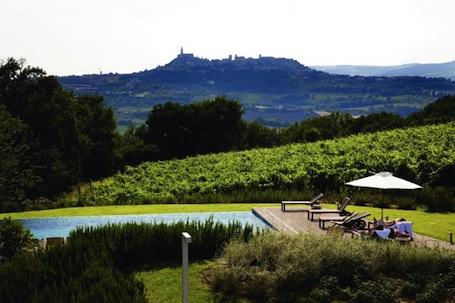
Umbria’s RoccaFiore has it all: a boutique hotel, vineyards, cantina, wellness center, and a restaurant featuring a sumptuous Zero-K menu. You’ll pinch yourself in midst of lavender gardens and sweeping views over Umbria’s hills and medieval towns. Try a safari through the native organic grechetto vineyards that make a crisp white. Roccafiore is equally committed to ecological balance as well as style and Italian chic. All the while generating their own solar energy that saves a whopping 90.000 Kg of carbon emissions annually!
2. Naturhotel Miraval, Alta Badia
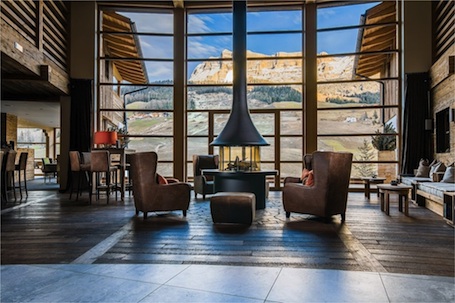
If you like skiing, biking, or climbing, this is the place to be! Nestled in Alta Badia, home to the famous Sella Ronda, this sexy new eco hotel is quickly becoming a traveler’s favorite. Perched on the Sasso Santa Croce Mountain, when you take a seat on its panoramic lounge or soak in the outdoor hot tub, you can’t help but feel one with nature. In a UNESCO World Heritage site, locals, tourists, and developers work together to protect the nature’s delicate ecosystem. And proud of its KlimaHotel certificate, the Naturhotel Miraval meets very high standards to have a low impact.
3. Toscana Resort Castelfalfi, Tuscany
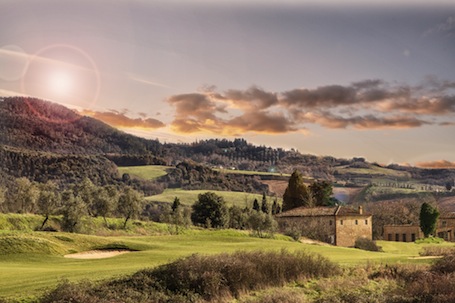
Many an expat has renovated an old farmhouse under the Tuscan sun. But an entire village? That’s what international travel group TUI is doing. Toscana Resort Castelfalfi is an 800-year-old medieval hamlet that had only five residents left at the time of purchase. Most had moved out of the village years ago in search for employment. Now, employment and opportunity has come to them.
Situated on more than 2,700 acres of vineyards, olive groves, woods, and lakes, TUI is busting their buns to make Toscana Resort Castelfalfi sustainable. Ninety-six percent of water comes from collected rainwater on property. And 64 percent of energy comes from renewable resources. Even its promotional paper products are FSC-certified paper to combat deforestation. (Ahem, Ferraro.) Toscana is collaborating with local Italian agencies to create sustainable solutions such as a three-year trial of biomass production with the Scuola Superiore S. Anna of Pisa. And for olive oil lovers, in 2016 its entire production will be completely organic.
4. Arnaldo Caprai Vineyard and Cantina, Umbria
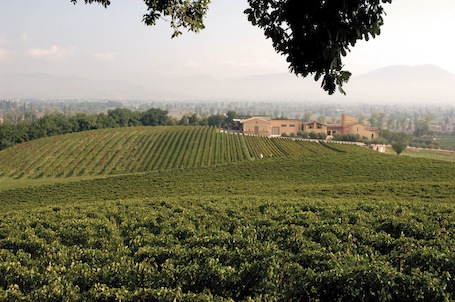
If you like Barolo, then you’ll love Sagrantino di Montefalco. Especially made in Umbria’s famed cantina Arnaldo Caprai. One of the biggest producers of Sagrantino, owner and winemaker Marco Caprai is committed to sustainable growing practices and not just in his vineyards. His vision is for all Italian winemakers to join his New Green Revolution project, limit pesticides, create vineyard biodiversity, limit CO2 emissions and more. He recently presented his sustainable ideals at EXPO MILAN 2015. In vino veritas. And sustainability works. Because his wine – is fantastic!
Read more @ Ecosalon
26 Comments
The best salon in Calgary is True You Salon & Spa
I have been surfing online more than 3 hours today, yet I never found any interesting article like yours. It's pretty worth enough for me. In my opinion, if all webmasters and bloggers made good content as you did, the net will be a lot more useful than ever before.|
Good day! I could have sworn I've been to this blog before but after browsing through some of the post I realized it's new to me. Anyhow, I'm definitely delighted I found it and I'll be bookmarking and checking back frequently!|
Hi there! This post couldn't be written any better! Looking through this article reminds me of my previous roommate! He always kept talking about this. I will send this information to him. Pretty sure he'll have a good read. Thank you for sharing!|
whoah this blog is wonderful i really like reading your articles. Keep up the great work! You recognize, many persons are searching round for this info, you could help them greatly. |
It's truly very complicated in this busy life to listen news on TV, thus I only use world wide web for that purpose, and obtain the most recent news.|
Hi, I do believe this is a great blog. I stumbledupon it ;) I will revisit yet again since i have book-marked it. Money and freedom is the best way to change, may you be rich and continue to help others.|
I love your blog.. very nice colors & theme. Did you make this website yourself or did you hire someone to do it for you? Plz respond as I'm looking to construct my own blog and would like to find out where u got this from. many thanks|
If you would like to get much from this piece of writing then you have to apply such methods to your won blog.|
After exploring a number of the blog posts on your blog, I seriously like your technique of blogging. I book marked it to my bookmark website list and will be checking back soon. Please visit my web site too and let me know how you feel.|
i will read again
Hello, everything is going sound here and ofcourse every one is sharing data, that's genuinely excellent, keep up writing.|
These are in fact fantastic ideas in regarding blogging. You have touched some nice points here. Any way keep up wrinting.|
Today, I went to the beachfront with my kids. I found a sea shell and gave it to my 4 year old daughter and said "You can hear the ocean if you put this to your ear." She placed the shell to her ear and screamed. There was a hermit crab inside and it pinched her ear. She never wants to go back! LoL I know this is totally off topic but I had to tell someone!|
I am not sure where you are getting your info, but good topic. I needs to spend some time learning much more or understanding more. Thanks for excellent info I was looking for this information for my mission.|
I blog frequently and I truly thank you for your information. This great article has truly peaked my interest. I am going to take a note of your site and keep checking for new details about once per week. I opted in for your Feed as well.|
After exploring a number of the blog posts on your web page, I honestly appreciate your way of blogging. I saved as a favorite it to my bookmark website list and will be checking back soon. Please check out my website as well and let me know your opinion.|
Thanks for sharing your info. I truly appreciate your efforts and I am waiting for your next write ups thank you once again.|
Its not my first time to pay a visit this website, i am browsing this web site dailly and obtain good data from here daily.|
amazing
cbd oil companies
amazing
It's remarkable in support of me to have a web page, which is useful in favor of my know-how. thanks admin|
all the time i used to read smaller articles or reviews which also clear their motive, and that is also happening with this post which I am reading here.|
lokking more uptdate
Great info. Lucky me I found your website by chance (stumbleupon). I have saved as a favorite for later!|
Leave A Comment