By Melissa Breyer, Source: TreeHugger
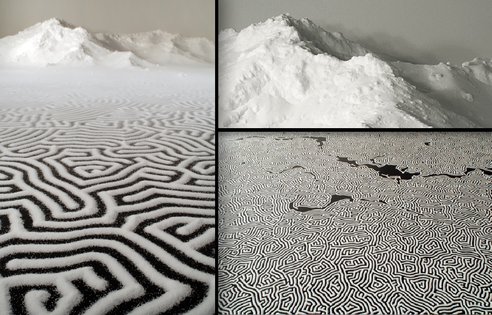
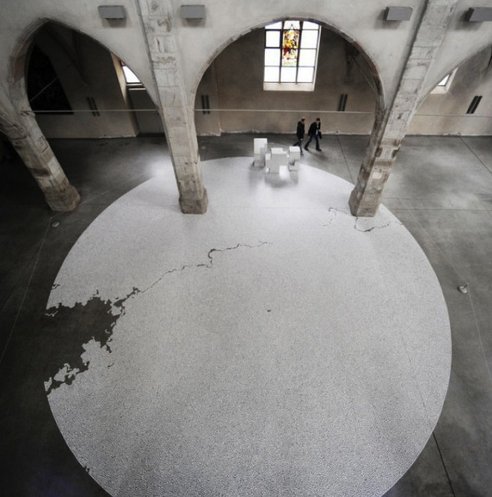
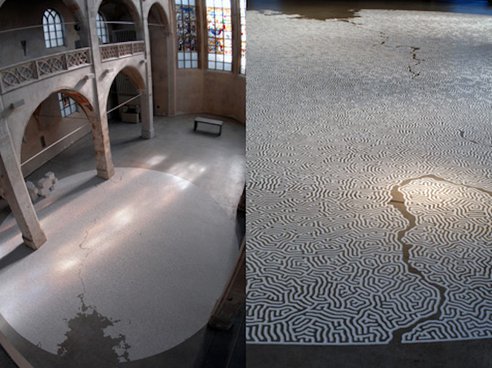
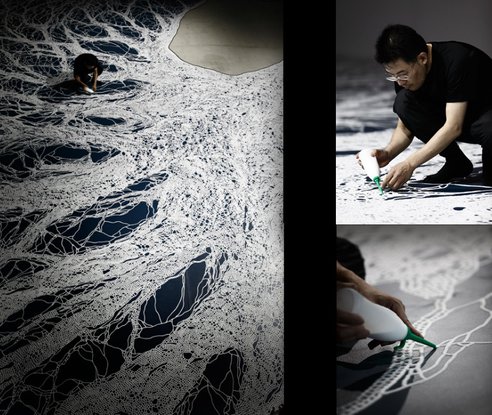
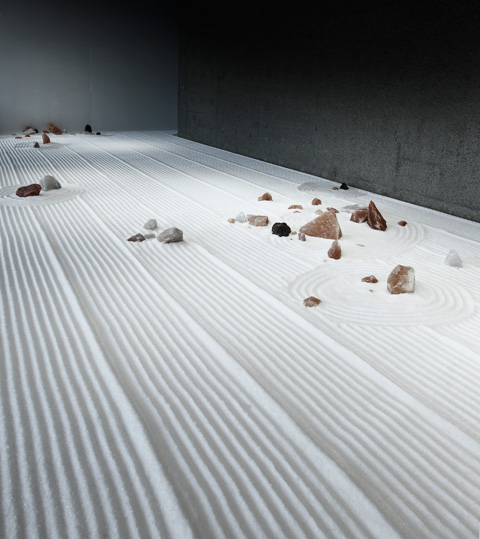
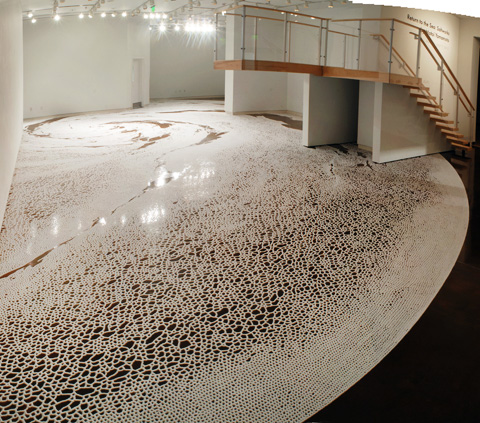
We’ve written about the amazing work of Japanese artist Motoi Yamamoto before, and how his choice of medium, salt, is one of the most creative and sustainable art materials being used today. His work over the last few years has become more intricate, more controlled, and more beautiful than ever. Bringing to mind the sand mandalas painstakingly sprinkled by Tibetan monks, Yamamoto’s creations, which take hundreds of hours to pour, are also ritually destroyed at the end of their creation and viewing. In a gesture of profound poetry, viewers help to scoop up the salt and return it to the sea, where it can begin its life anew.
He says of his work:
The mainspring of my work is derived from the death of my sister from brain cancer at the age of 24 in the winter of 1994. Since then, I have had the dilemma, in grief and surprise, of thinking about what I had and lost. I started making art works that reflected such feelings and continue it as if I were writing a diary. Many of my works take the form of labyrinths with complicated patterns, ruined and abandoned staircases or too narrow life-size tunnels, and all these works are made with salt.
7 Comments
Obtener acceso a información secreta puede darle una ventaja comercial sobre sus competidores y, gracias a los avances tecnológicos, espiar ahora es más fácil que nunca. https://www.xtmove.com/es/how-to-hide-spy-tape-recorder-at-home-to-eavesdrop-conversations/
Thanks for some other informative blog. The place else could I am
getting that type of info written in such an ideal way?
I've a project that I am simply now working on,
and I have been on the glance out for such info.
We're a bunch of volunteers and opening a brand new scheme in our community. Your website offered us with helpful info to work on. You've done an impressive process and our entire community will likely be thankful to you.|
I have read so many articles on the topic of the blogger lovers but this paragraph is really a pleasant paragraph, keep it up.|
Thanks for sharing your thought
I think everything posted made a great deal of sense. But, what about this? what if you added a little content? I ain't suggesting your information isn't good, however what if you added something that makes people desire more? I mean BLOG_TITLE is kinda boring. You ought to look at Yahoo's home page and see how they write post titles to get people to click. You might try adding a video or a related picture or two to get people excited about what you've got to say. In my opinion, it might bring your posts a little bit more interesting.|
Mass parsite http://bit.ly/2W9CVkn
Leave A Comment