by Leonel Ponce,
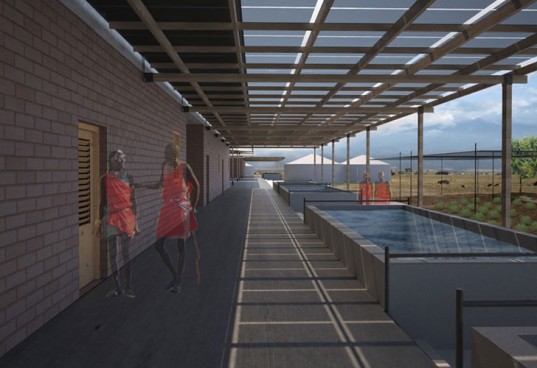
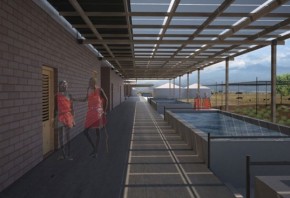
Environmentally sustainable design has become increasingly prevalent in developed countries, specifically in high-end projects for wealthy private clients. Yet more and more, sustainability in design is being considered holistically through the lens of humanitarian efforts, such as the work of non-profits like Architecture for Humanity. This movement has trickled down to architecture schools, which are increasingly participating in design exchanges that create lasting connections with cultures in developing countries, fostering collaborative design and sharing of knowledge between students and their clients. The University of Texas at Austin’s School of Architecture, under the guidance of professor Michael Garrison, has partnered with Dr. Donna Gunn and Africa’s Promise Village School to design a school in the Simanjiro district of Tanzania with a practical curriculum centered around sustainable, high-yield agricultural practices.
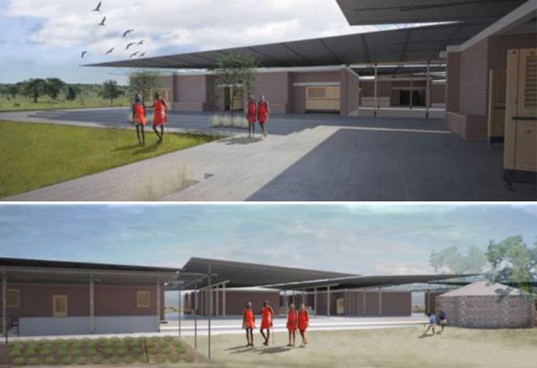
In the Spring of 2011, graduate students in Professor Garrison’s vertical design studio were tasked with the design of a school in rural Tanzania. Seeking sustainable design advice, Dr. Gunn, the Executive Director of Africa’s Promise Village School, reached out to Garisson and his students to improve the conditions of education in rural Tanzania, where low wages and lack of funding and resources at school lead to low literacy rates and little chance for employment. Government-run schools employ teachers with no formal education, provide little in terms of textbooks and other school supplies, and sit up to 90 students per classroom. This condition is reflected in the district of Simanjiro, where Africa’s Promise Village School will serve the parish of Father Peter Pascal Pinto, spanning over 19 Masaai villages. Father Pinto and Dr. Gunn advised the design process, working with the University of Texas team to create guidelines to guide proposals from each student.
Initial parameters included the division of the site, informed by assumptions about the school’s curriculum. The Maasai tribe of Esilale ceded 40 acres for construction; 10 acres were designated for the school, and the remaining 30 for a triple crop of maize, sunflowers, and chickpeas to complement the Maasai’s existing farms and help combat prevalent malnutrition. This practical sensibility extended into the school’s curriculum; approximately 400 children will be educated in various methods of crop production, irrigation, reading and writing, price negotiation, marketing of local crafts, and general hygiene and food preparation, looking to increase crop yield while improving education for Maasai youth.
(Source: www.inhabitat.com )
1 Comment
University of Texas students integrate sustainability and education by partnering with Africa's Promise Village School, creating impactful solutions that empower local communities, enhance learning, and promote long-term environmental and social change. Meanwhile, you can pass the ACAMS Exam with ValidTest’s expert study materials and practice tests. Gain the knowledge and confidence needed to succeed in anti-money laundering certification, preparing efficiently with reliable, up-to-date resources tailored for your success.
Leave A Comment