By Anthony Marcusa / Source: Ecorazzi
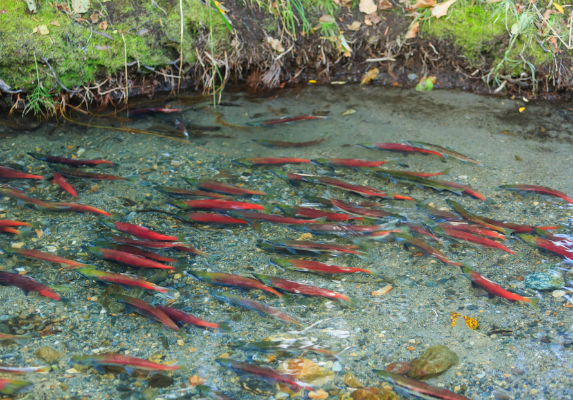
As the California drought carries on, a federal agency has acted decisively to protect its resident salmon population.
In 2002, tens of thousands of adult salmon died out due to lack of water; this year, despite a scarcity of water in the Northern California’s Klamath Basin, water was released into the Klamath River Friday and will continue through September.
The opening of literal floodgates by the Bureau of Reclamation has created a torrent of reaction, from farmers in need of water for irrigation in Central Valley to tribes along the river that rely on salmon for subsistence. Moreover, when salmon populations decrease, sport and commercial catches are subsequently decreased too in order to ensure some salmon survive to spawn.
“In this fourth year of severe drought, the conditions in the river call for us to take extraordinary measures to reduce the potential for a large-scale fish die-off,” David Murillo, the bureau’s mid-Pacific regional director, said in a statement. “This decision was made after discussions with federal and state fish regulatory agencies and serious consideration of the impacts on all affected parties.”
When water is warm and low – much of the current conditions – salmon can be infected with a disease known as Ich, which results in the rotting of the gills. What’s more, high levels of parasites have already been found in fish since July.
These measures have been taken before, including in the last three years. In 2001, water was left for salmon, sacrificing an irrigation district in order to protect the coho salmon. A year later, however, with George W. Bush in office, the irrigation supply was restored. Rivers as a result diminished, and roughly 60,000 salmon died from the parasites that arose in such swampy conditions.
Read more @ Ecorazzi
0 Comments
Leave A Comment