By Jocelyn Timperley / Source: BusinessGreen

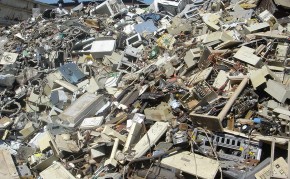
A new EU-funded project is to explore the commercial opportunities for recovering critical raw materials (CRMs) and precious metals from electronic waste.
The CRM Recovery project will study processes for recovering raw materials and precious metals including gold, silver and platinum group metals from everyday electronic products that have reached the end of their life. Led by waste advisory charity WRAP, the project will take place over three and a half years and aims to increase the recovery from waste electronics of several different CRMs by five per cent.
“We’re delighted to lead this project which will find effective routes for collecting and recovering valuable materials from electrical and electronic products,” said Dr Liz Goodwin OBE, chief-executive of WRAP. “I look forward to seeing how these new insights inform the bigger picture, demonstrating the economic and environmental benefits of making better use of resources across Europe.”
Research by WRAP has shown nearly 40 per cent of electrical products go to landfill, despite many of them containing CRMs which are facing growing supply risks.
CRM Recovery aims to explore viable commercial models for recovering and reprocessing these materials, reducing the need to mine raw materials.
The projects will assess how different collection methods, such as kerbside collections and retailer take-back schemes, could be linked to efficient recycling processes in order to show how recoving materials can deliver economic value.
“CRM Recovery will provide both waste electronic and electrical equipment (WEEE) take-back organisations and recycling operations best practice methods to improve future value-added by increasing the recovery of certain critical raw materials,” said Dr Sven Grieger, manager of WEEE Operations at the European Advanced Recycling Network (EARN), a collaborator on the project.
Four countries – Germany, Italy, Turkey and the UK – will participate in the project, which the partnership said will allow cross-comparison of how best practices work in different markets, allowing a European-wide framework to be developed. The project is funded by €2.1m European Commission LIFE grant, and its findings will be presented to the European Commission as policy recommendations and proposals for infrastructure development.
The project is a partnership between WRAP, EARN, the Knowledge Transfer Network (KTN), Wuppertal Institute in Germany, European Recycling Platform UK (ERP UK).
Read more @ BusinessGreen
27 Comments
ต้องการหารายได้เพิ่มแต่ว่าไม่ออยากลงทุนมาก ง่ายดายมากเลยครับแค่เพียงเข้ามาที่ UFABET แล้วสมัครสมาชิกคุณก็สามารถหารายได้ได้โดยทันที เว็บไซต์ของเรามีทั้งบาคาร่า พนันบอล สล็อต ยิงปลารวมทั้งเกมออนไลน์อื่นๆอีกมาก จ่ายจริง จ่ายไว ฝากถอนไม่มีอย่างน้อยนะครับ
I blog frequently and I really appreciate your information. This great article has really peaked my interest. I'm going to take a note of your website and keep checking for new details about once per week. I opted in for your Feed as well.
Way cool! Some very valid points! I appreciate you penning this article and also the rest of the site is also really good.
Great – I should definitely say I’m impressed with your web site. I had no trouble navigating through all tabs as well as related information. It ended up being truly easy to access. Great job..
This is a topic that is near to my heart... Take care! Exactly where are your contact details though?
Howdy! This article couldn’t be written much better! Looking through this post reminds me of my previous roommate! He constantly kept talking about this. I will send this article to him. Fairly certain he will have a great read. Thanks for sharing!
After I initially left a comment I appear to have clicked on the -Notify me when new comments are added- checkbox and now each time a comment is added I get 4 emails with the exact same comment. There has to be an easy method you are able to remove me from that service? Thanks.
I must thank you for the efforts you've put in writing this website. I'm hoping to see the same high-grade blog posts by you in the future as well. In fact, your creative writing abilities has inspired me to get my own, personal blog now ;)
Pretty! This has been a really wonderful article. Many thanks for providing these details.
An impressive share! I've just forwarded this onto a coworker who was conducting a little research on this. And he actually ordered me lunch because I stumbled upon it for him... lol. So let me reword this.... Thank YOU for the meal!! But yeah, thanx for spending time to talk about this subject here on your website.
Considerably, the post is really the greatest on this worthy topic. I agree with your conclusions and can eagerly look forward to your future updates. Simply just saying thanks can not simply be sufficient, for the fantasti c clarity in your writing. I will perfect away grab your rss feed to stay abreast of any updates. Genuine work and also much success in your business dealings!
Everything is very open with a clear clarification of the challenges. It was truly informative. Your site is extremely helpful. Thank you for sharing.
Spot on with this write-up, I really think this site wants a great deal more consideration. I’ll likely to end up again to read a great deal more, thanks for that info.
Can I simply say what a comfort to find an individual who truly understands what they're talking about on the internet. You definitely understand how to bring an issue to light and make it important. More people must check this out and understand this side of your story. I was surprised that you're not more popular since you certainly possess the gift.
This site was... how do I say it? Relevant!! Finally I've found something that helped me. Appreciate it!
A fascinating discussion is worth comment. There's no doubt that that you need to publish more on this subject matter, it may not be a taboo matter but generally people don't talk about these topics. To the next! Kind regards!
Harry Potter is the best, i really like Daniel Radcliffe because he acts very well.
I really like it when individuals get together and share opinions. Great site, continue the good work.
After looking into a handful of the articles on your website, I honestly appreciate your technique of writing a blog. I book-marked it to my bookmark site list and will be checking back in the near future. Please check out my website as well and let me know how you feel.
Your style is very unique in comparison to other people I have read stuff from. Thanks for posting when you've got the opportunity, Guess I will just book mark this page.
I quite like looking through a post that can make men and women think. Also, thanks for allowing for me to comment.
I'm excited to discover this site. I need to to thank you for your time for this wonderful read!! I definitely liked every part of it and I have you saved to fav to see new things in your blog.
Aw, this was an extremely nice post. Taking a few minutes and actual effort to produce a good article… but what can I say… I put things off a lot and never seem to get anything done.
This page reminds me of the other info I was looking at earlier
I like the helpful info you provide in your articles. I’ll bookmark your weblog and check again here regularly. I am quite certain I’ll learn many new stuff right here! Good luck for the next!
I simply want to tell you that I'm all new to blogging and site-building and definitely liked this blog. Almost certainly I’m likely to bookmark your website . You really have amazing articles and reviews. Regards for sharing your website.
Thanks for some other wonderful post. Where else may anybody get that type of information in such an ideal means of writing? I've a presentation next week, and I am on the search for such info.
Leave A Comment