
By Mark Boyer, Source: Inhabitat
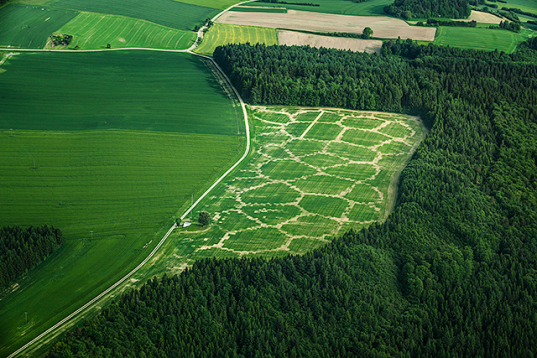
On the surface, farming and digital fabrication don’t appear to have a whole lot in common, but UK-based designer Benedikt Groß aims to challenge that assumption. Using what he describes as precision farming, Groß creates algorithmic models that enable him to plant a combination of different crops in the same field in complex patterns. He does this not because it looks neat from an aerial perspective (although that certainly is true), but rather to create more resilient fields and to improve the relationship between flora and fauna.
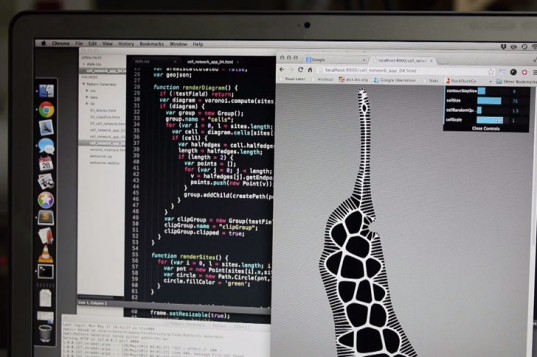
As Gizmodo points out, combination planting isn’t exactly a new technique; planting different crops in close proximity to ward off pests and disease is a strategy that has been practiced for a long time – but the use of high-tech digital models is pretty novel. Planting just a single crop in a monoculture makes it much easier for pests to destroy the harvest, but planting a combination of different crops tends to make a field more resistant to both vermin and other unwanted pests. Groß’s experiment uses algorithms to partition off different parts of a field for different crops to increase the diversity of plant life and create more resilient fields.
“A farmer could “rent out” the areas for several months a year as compensatory area in the same fashion like the CO2 emissions trading scheme works (in the EU every new land for building has to be compensated)”, Groß explains. “Hence in the near future a farmer might not just produce oats, peas, beans and barley, but also print ‘environment compensations areas’ into his fields.”
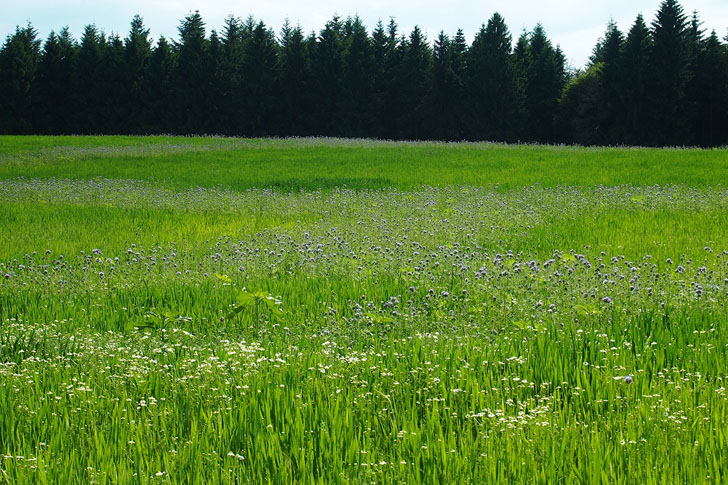
This spring, Groß used his digital algorithms to model and plant his field in Southern Germany with 85 percent oats and 15 percent with a variety of wildflowers and herbs (with a smiley face in the middle of the field). The crops are set to be harvested for biofuel at the end of July.
0 Comments
Leave A Comment