By Helen Morgan / Source: Ecouterre
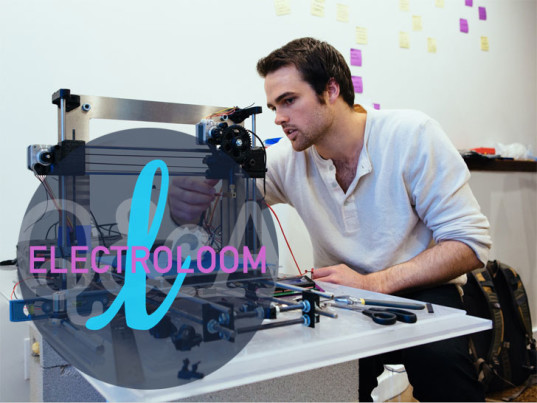
The idea behind the is to make it even easier for anyone to become a designer, which would in turn mean less waste in clothes production and items would have a smaller carbon footprint. Sounds too good to be true? With this advanced 3D fabric printer the Electroloom team say that in order to design and create seamless fabric items all you would need is the Electroloom and a bit of CAD know how. The team developing this technological feat are three engineers who have established an electrospinning process that makes even an amateur be able to become part of their “community and design ecosystem”. They dub this Field Guided Fabrication, whereby just following three steps – designing a mold in CAD, put it in the Electrloom and watch it work its magic! – and anyone can design and make items, translating as less waste fabric in the long run. Their Kickstarter campaign is underway to turn this possibly anti-waste revolution into a reality. Here is Electroloom’s Joseph White speaking with Ecouterre about the sustainable potential of the 3D printer.
What inspired the Electroloom concept?
Really, the Electroloom started as a conversation about the future. It was a “what if” kind of thought—what if we could print our clothes and anyone anywhere could be in control of the design of their clothing?
Electroloom began with a question: What if we could design and print our own clothes?
From there it grew into something that was constantly on our minds about how we actually might be able to do it until we eventually came up with a way we thought would work and started building it.
Who are you targeting with your Kickstarter campaign?
This campaign is not yet a product. We’re looking for early adopters to begin to experiment with our technology in a very early stage.
Does Electroloom have a sustainable story to tell?
There’s a lot of waste in the textile industry. Electroloom has the potential to reduce the impact of this waste in a variety of ways. We’re still in such an early stage, however, so a lot of this is still speculation for us.
There are fascinating ideas around dramatically reducing the amount of waste that goes into the fabric-manufacturing process because we’re able to go from raw material directly to finished good.
Read more @ Ecouterre
0 Comments
Leave A Comment