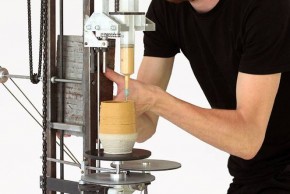
By Kimberley Mok / Source: TreeHugger
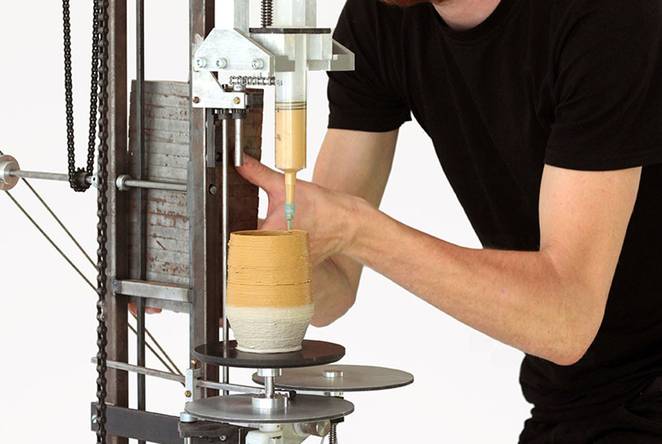
Additive manufacturing has become more mainstream in the last few years, with a deluge of 3D printed products — and even buildings and bridges — making it into the spotlight. It’s certainly changed how designers conceive and execute designs, and transformed how many schools are teaching design. But for some, 3D printing doesn’t give the same satisfaction, nor the same sense of ownership, as making something yourself with your own hands. Based out of the Netherlands, designer Daniel de Bruin created this hand-powered, analog version of a 3D printer, which makes objects layer by layer. Watch it in action:
THIS NEW TECHNOLOGY – Analogue 3D printer from DANIELDEBRUIN on Vimeo.
For de Bruin, 3D printing is a technological leap ahead, but it separates the maker from his craft. He explains the motivation behind his invention:
3D printing allows me to create products swiftly and more efficiently then ever, but these products don’t feel like they’re mine. They’re merely a product of this new technology.
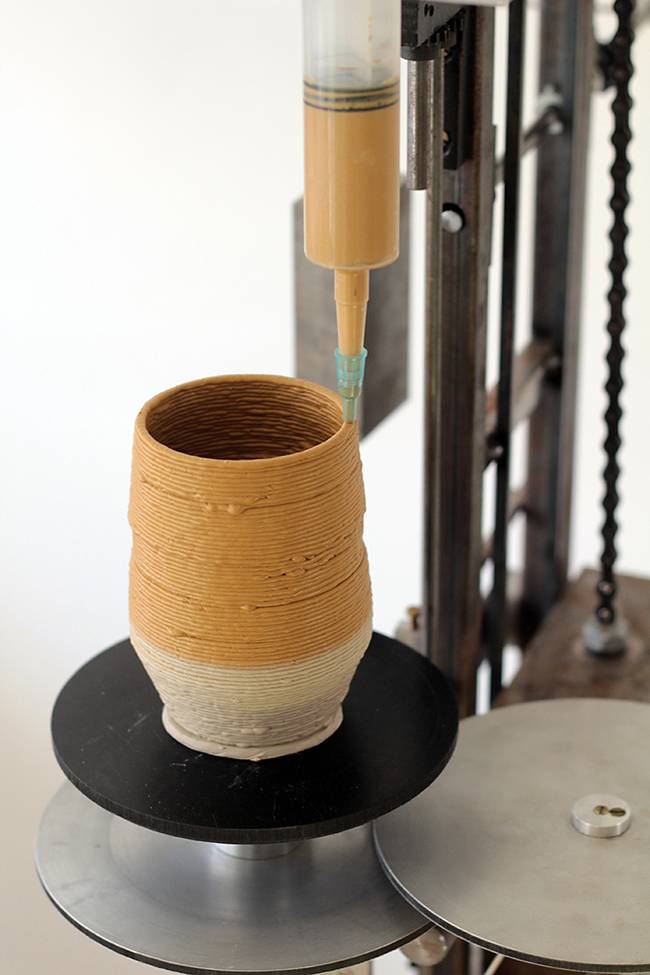
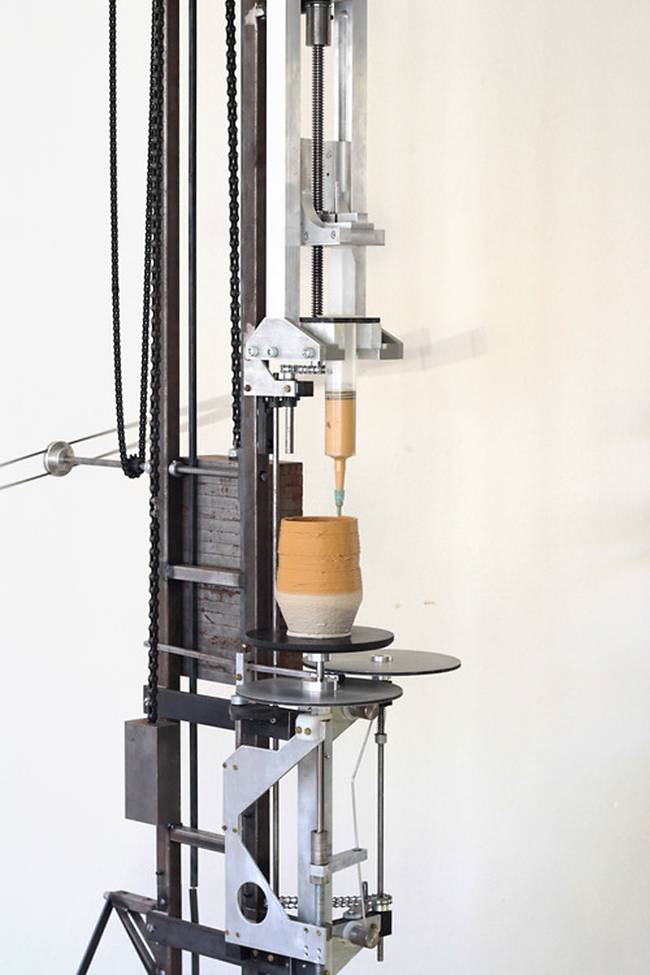
Seen over at Designboom and titled “This New Technology,” de Bruin’s two-metre-tall contraption features an assembly of gears, chains and metal platforms that are hand-cranked in unison to produce various ceramic forms that are technically 3D printed, but by hand. Modified by a manually placed guide wire, a system of pulleys and weights are operated and lifted by hand, which forces clay out of a syringe onto a rotating metal plate, thus creating vases which can be fired as usual. It’s a way to reconnect the producer and product.
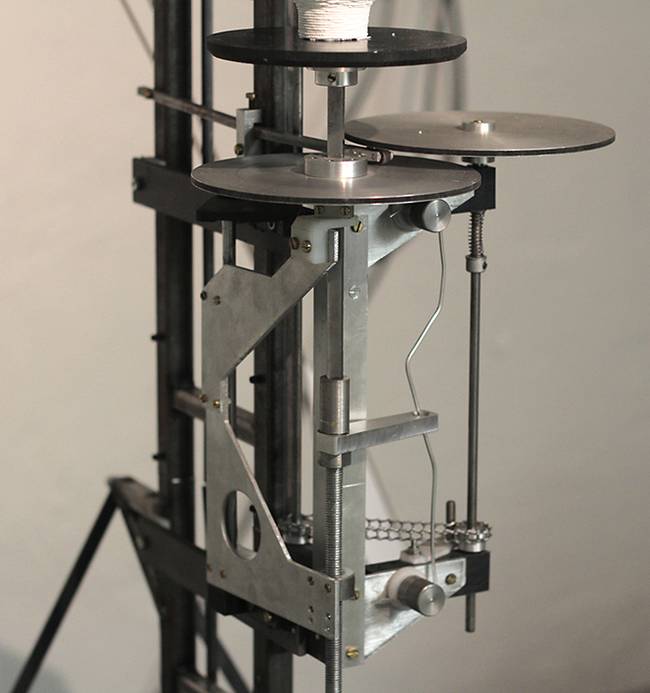
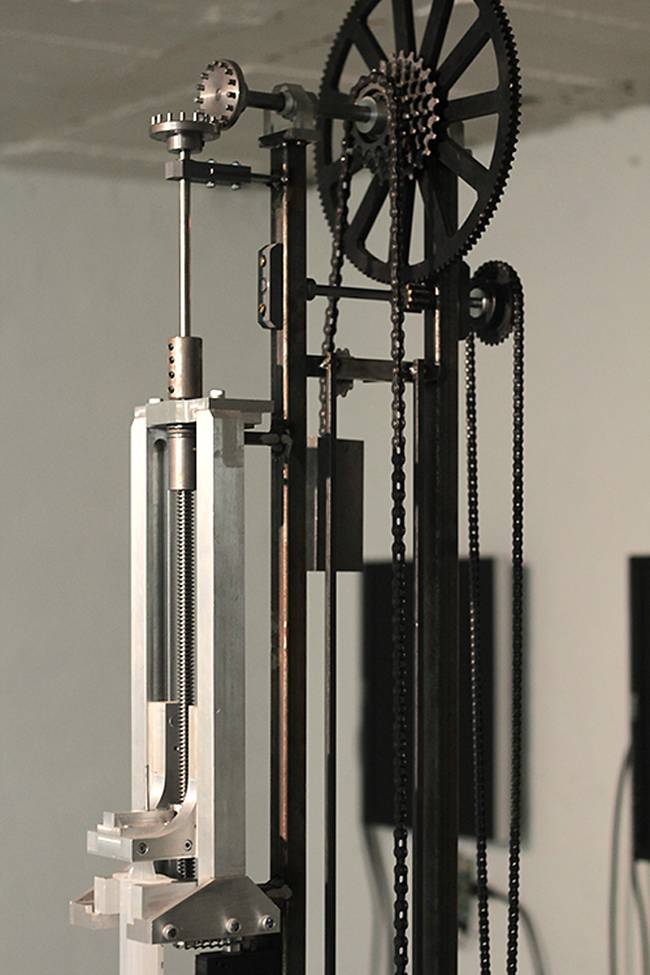
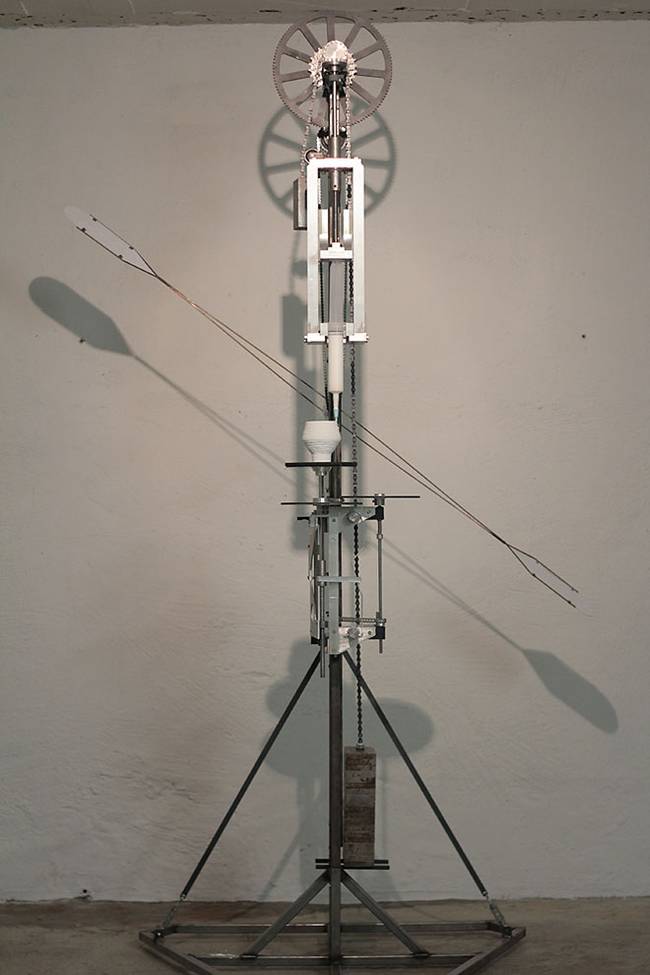
One of the challenges of this hand-operated machine was keeping the material width consistent. De Bruin solved it by employing what he calls a “variomatic system” that works in conjunction with the guiding wire. Nevertheless, the point of the project is to also highlight the beauty of hand-made imperfections, says de Bruin:
More and more products are being fashioned by means of automated processes. Not only are these more efficient and cheaper, they also ensure that every item meets the same strict criteria, and doesn’t deviate from the norm. However, deviations are usually the most interesting. As with humankind and nature, true beauty lies in diversity.
Read more @ TreeHugger
258 Comments
เวลานี้บางทีก็อาจจะไม่มีผู้ใดไม่รุ้จะสล็อตออนไลน์ เนื่องจากว่าเป็นเกมที่ใครๆติดใจเพราะเหตุว่าเป็นเกมที่สร้างผลกำไรได้อย่างยิ่ง UFABET เว็บสล็อตออนไลน์ยักษ์ใหญ่ จ่ายจริง จัดหนัก โบนัสมาก คิดจะเล่นสล็อตจำเป็นต้องไม่พลาด UFABET นะครับ
ยุคที่ใครๆก็ปรารถนาความสะดวกสบาย บาคาร่าออนไลน์ก็เลยเป็นตัวเลือกที่โคตรดีสำหรับท่าน UFABET มีบาคาร่าให้เลือกเล่นมากไม่น้อยเลยทีเดียวเราเป็นคาสิโนที่จ่ายจริง ทำเงินได้จริง สมัครง่าย ระบบฝากถอนอัตโนมัติแล้วเจอกันขอรับ
ตอนต้นผมว่าเว็บไซต์ไหนก็เหมือนกัน เนื่องจากว่าเข้าไปก็เจอเกมเดิมๆหากแม้เอาเข้าจริงๆมันแตกต่างนะครับ ยิ่งเว็บไหนที่เวลาฝากถอนจำเป็นต้องผ่านเจ้าหน้าที่อันนี้ผมชิงชังสุดเลย เสียเวล่ำเวลา ส่วนตัวผมว่า UFABET ดีสุดเลยคะครับ เค้าใช้ระบบอัตโนมัติ
ปรารถนาเล่นพนันแม้กระนั้นไปคาสิโนมิได้ ปัญหาโลกแตกนี้จะหมดไปครับผมเพราะว่า UFABET ได้ยกคาสิโนมาไว้ให้แล้ว มีเกมมากทั้งยังบาคาร่า สล็อต พนันบอล มองดูบอลสด มีหมดครับผม เพียงแค่ลงทะเบียนสมัครสมาชิกกับเราก็ราวกับไปคาสิโนจริงๆเลยขอรับ
Hello. i can see that you are a really great blogger,
Im obliged for the blog.Really looking forward to read more. Cool.
Your RSS subscriber count shouldn't be shown unless your count is at least several hundred.
This blog post is excellent, probably because of how well the subject was developed. I like some of the comments too.
Hi to all, how is the whole thing, I think every one
is getting more from this web page, and your views are good in favor of new visitors.
This is a same weighty post. Thanks instead of posting this.
What do you believe almost my website: creare site bucuresti
This is a truly important post. Thanks as a service to posting this.
What do you believe nearby my website: creare site de prezentare
Awesome! Its genuinely amazing paragraph, I have got much clear idea on the topic
of from this article.
This is a exact interesting post. Keep it up and you ordain be the best.
What do you think about my site ? aircon chemical wash singapore
This is a exceptionally good post. Thankyou appropriate for keeping us informed.
what is forex
Excellent write-up. I definitely love this site. Keep writing!
http:///www.manulescu.com - manumanu
I simply could not depart your website prior to suggesting that I really loved the standard info a person provide on your guests? Is going to be again incessantly in order to check up on new posts
Somebody necessarily assist to make critically posts I might state. That is the very first time I frequented your website page and up to now? I amazed with the research you made to create this actual submit incredible. Magnificent task!
It is appropriate time to make some plans for the future and it is time to be happy. I have read this post and if I could I want to suggest you some interesting things or advice. Maybe you can write next articles referring to this article. I desire to read more things about it!
I view something truly special in this web site.
hi!,I like your writing very much! share we communicate more about your article on AOL? I need an expert on this area to solve my problem. May be that's you! Looking forward to see you.
You really make it seem so easy with your presentation but I in finding this matter to be actually something which I believe I would by no means understand. It seems too complex and very huge for me. I am having a look forward to your subsequent post, I will try to get the cling of it!
Very good article! We will be linking to this particularly great post on our website. Keep up the great writing.
I loved as much as you'll receive carried out right here. The sketch is attractive, your authored subject matter stylish. nonetheless, you command get got an edginess over that you wish be delivering the following. unwell unquestionably come further formerly again since exactly the same nearly very often inside case you shield this increase.
Hello, you used to write wonderful, but the last few posts have been kinda boring… I miss your great writings. Past few posts are just a little out of track! come on!
Great write-up, I’m normal visitor of one’s site, maintain up the excellent operate, and It's going to be a regular visitor for a lengthy time.
Pretty section of content. I just stumbled upon your website and in accession capital to assert that I acquire in fact enjoyed account your blog posts. Anyway I’ll be subscribing to your feeds and even I achievement you access consistently quickly.
I like the helpful information you provide in your articles. I’ll bookmark your blog and check again here frequently. I am quite sure I’ll learn a lot of new stuff right here! Best of luck for the next!
you are actually a good webmaster. The website loading pace is amazing. It seems that you're doing any distinctive trick. Furthermore, The contents are masterwork. you've performed a great activity on this subject!
I'm really enjoying the theme/design of your web site. Do you ever run into any browser compatibility problems? A number of my blog visitors have complained about my blog not operating correctly in Explorer but looks great in Opera. Do you have any ideas to help fix this issue?
Hello there, I discovered your site by way of Google even as searching for a similar matter, your website got here up, it appears good. I have bookmarked it in my google bookmarks.
Keep up the superb work , I read few blog posts on this internet site and I think that your site is rattling interesting and holds sets of wonderful information.
It's the best time to make some plans for the future and it is time to be happy. I've read this post and if I could I wish to suggest you some interesting things or tips. Maybe you can write next articles referring to this article. I wish to read even more things about it!
I just could not depart your web site prior to suggesting that I extremely enjoyed the standard info a person provide for your visitors? Is gonna be back often to check up on new posts
Thanks for these guidelines. One thing I additionally believe is that credit cards featuring a 0% interest rate often bait consumers with zero monthly interest, instant approval and easy online balance transfers, but beware of the top factor that will certainly void your current 0% easy road annual percentage rate and also throw anybody out into the terrible house quick.
Great beat ! I would like to apprentice while you amend your web site, how
can i subscribe for a blog website? The account helped
me a acceptable deal. I had been tiny bit acquainted of this your broadcast provided bright clear idea
I just want to tell you that I'm very new to blogging and site-building and honestly savored you're web site. Likely I’m likely to bookmark your website . You certainly come with impressive article content. With thanks for sharing your web-site.
I simply want to say I am beginner to blogging and site-building and certainly enjoyed your page. Most likely I’m want to bookmark your blog . You actually have amazing writings. Kudos for sharing your website page.
A lot of thanks for every one of your labor on this web page. Debby enjoys going through investigation and it’s simple to grasp why. Most people learn all concerning the dynamic tactic you present functional suggestions via the website and therefore encourage participation from visitors about this point while my daughter is undoubtedly becoming educated a great deal. Have fun with the rest of the year. You have been doing a useful job. visit my site here – alternative medicine degree
I'd like to be able to write like this, but taking the time and developing articles is hard…. Takes a lot of effort.
As I website possessor I believe the content matter here is rattling magnificent , appreciate it for your hard work. You should keep it up forever! Good Luck.
Howdy I wanted to write a new remark on this page for you to be able to tell you just how much i actually Enjoyed reading this read. I have to run off to work but want to leave ya a simple comment. I saved you So will be returning following work in order to go through more of yer quality posts. Keep up the good work.
I'm still learning from you, as I'm trying to reach my goals. I definitely liked reading all that is written on your blog.Keep the stories coming. I enjoyed it!
excellent points altogether, you simply received a new reader. What may you recommend about your publish that you just made a few days in the past? Any positive?
hello!,I really like your writing so a lot! share we be in contact extra about your article on AOL? I require a specialist on this house to solve my problem. Maybe that is you! Looking ahead to peer you.
Merely wanna comment that you have a very nice web site , I the design it really stands out.
Oh my goodness! Impressive article dude! Thank you so much, However I am experiencing problems with your RSS.
I don't know the reason why I cannot join it. Is there
anyone else getting the same RSS problems? Anybody who knows the solution can you kindly respond?
Thanx!!
Loving the info on this website , you have done outstanding job on the blog posts.
Very interesting details you have mentioned , thanks for posting . "The best time to do a thing is when it can be done." by William Pickens.
Hi, Neat post. There is an issue with your website in web explorer, could check this… IE still is the market leader and a good element of people will miss your fantastic writing because of this problem.
Hi, i think that i saw you visited my site so i came to “return the favor”.I am trying to find things to enhance my website!I suppose its ok to use some of your ideas!!
This seems like the other info I found earlier
Nevertheless, it's all carried out with tongues rooted solidly in cheeks, and everybody has got nothing but absolutely love for their friendly neighborhood scapegoat. In reality, he is not merely a pushover. He is simply that extraordinary breed of person solid enough to take all that good natured ribbing for what it really is.
Just a quick note to express my appreciation. Take care
http://www.yeezy-shoes.in.net/ Yeezy
I do not even know how I ended up here, but I thought this post was great. I do not know who you are but certainly you are going to a famous blogger if you are not already ;) Cheers!
As a Newbie, I am continuously browsing online for articles that can help me. Thank you
What's up, all the time i used to check weblog posts here early in the
daylight, as i like to gain knowledge of more and more.
http://www.travisscottjordan1.us.com/ Travis Scott jordan 1
The particular New york Diet can be an highly affordable and versatile eating better tool built for time expecting to loose fat along with naturally keep a healthful daily life. la weight loss
This is very interesting, You're a very skilled blogger. I've joined your feed and look forward to seeking more of your wonderful post. Also, I've shared your website in my social networks!
I just want to mention I'm very new to blogs and really loved your web page. Almost certainly I’m going to bookmark your site . You really have great writings. Thank you for sharing your web-site.
You completed several fine points there. I did a search on the issue and found nearly all persons will go along with with your blog.
I truly appreciate this post. I have been looking everywhere for this! Thank goodness I found it on Bing. You've made my day! Thank you again!
I have recently started a blog, the information you provide on this site has helped me tremendously. Thank you for all of your time & work. "My dear and old country, here we are once again together faced with a heavy trial." by Charles De Gaulle.
http://www.yeezys.me.uk/ Yeezy Shoes
Hiya, I am really glad I have found this information. Nowadays bloggers publish just about gossips and web and this is actually annoying. A good site with exciting content, that’s what I need. Thanks for keeping this web-site, I’ll be visiting it. Do you do newsletters? Cant find it.
Only a few blogger would discuss this topic the way you do…-:`
the accessories for golf are very expensive and joining golf clubs even adds more expense..
I really wanted to compose a quick word in order to appreciate you for the remarkable recommendations you are posting on this site. My extended internet research has at the end been honored with reasonable strategies to share with my companions. I 'd mention that many of us visitors are extremely blessed to exist in a fantastic network with many brilliant people with helpful things. I feel really lucky to have discovered your entire weblog and look forward to many more fabulous minutes reading here. Thanks once more for all the details.
This is very interesting, You're a very skilled blogger. I have joined your feed and look forward to seeking more of your wonderful post. Also, I have shared your website in my social networks!
http://www.nikeoutletstoreonlineshopping.us/ Nike Outlet Store Online Shopping
Hey there, You have done a great job. I’ll certainly digg it and personally recommend to my friends. I am confident they will be benefited from this site.
This is really interesting, You are a very skilled blogger. I have joined your feed and look forward to seeking more of your excellent post. Also, I have shared your site in my social networks!
Nice post. I learn something tougher on different blogs everyday. Most commonly it is stimulating to study content using their company writers and employ a little from their store. I’d want to apply certain using the content on my own weblog regardless of whether you don’t mind. Natually I’ll provide you with a link in your internet weblog. Many thanks sharing.
What i don't realize is in truth how you are now not actually a lot more neatly-liked than you may be right now. You are so intelligent. You know thus significantly on the subject of this matter, produced me in my view imagine it from numerous numerous angles. Its like men and women don't seem to be fascinated until it¡¦s something to do with Lady gaga! Your personal stuffs nice. At all times care for it up!
I do consider all of the ideas you've introduced to your post. They are very convincing and can certainly work. Still, the posts are very short for beginners. May just you please lengthen them a little from next time? Thank you for the post.
Whats Taking place i am new to this, I stumbled upon this I have discovered It absolutely useful and it has aided me out loads. I hope to contribute & help other customers like its aided me. Great job.
My wife and i were glad when Emmanuel could carry out his research via the ideas he came across from your site. It is now and again perplexing to just happen to be offering concepts which most people might have been selling. So we fully understand we've got you to appreciate because of that. The entire explanations you have made, the simple website menu, the friendships your site aid to engender - it's got most sensational, and it's really assisting our son and our family reason why that situation is amusing, and that's extraordinarily vital. Many thanks for the whole lot!
Might be near unthinkable to encounter well-educated people on this area, still you look like you fully grasp exactly what you're covering! Thanks A Lot
This is really interesting, You're a very skilled blogger. I have joined your rss feed and look forward to seeking more of your excellent post. Also, I have shared your web site in my social networks!
As soon as I noticed this internet site I went on reddit to share some of the love with them.
http://photos-porno.fr/pale-teen-anal-amateur-and-ebony-face-fuck-but-he-knows-that/
http://www.yeezy350.us.com/ Yeezy
Emery EPS is a Search Engine Optimization company that provides SEO Services. Their proprietary SEO strategies help struggling websites and aspiring business owners to rank their websites higher in multiple search engines like Google , Yahoo and Bing. They provide local and gmb map ranking for businesses in Coasta Rica, New York, Los Angeles, Portland, Sacramento, Phoenix, Las Vegas, Denver, Houston, California and many other local areas. Find more at https://www.emeryeps.com.
Faytech North America is a touch screen Manufacturer of both monitors and pcs. They specialize in the design, development, manufacturing and marketing of Capacitive touch screen, Resistive touch screen, Industrial touch screen, IP65 touch screen, touchscreen monitors and integrated touchscreen PCs. Contact them at http://www.faytech.us, 121 Varick Street, New York, NY 10013, +1 646 205 3214
Good morning there, just turned out to be alert to your post through Yahoo and bing, and have found that it's very helpful. I will like in the event you continue this post.
I conceive you have remarked some very interesting details , appreciate it for the post.
Very interesting subject, appreciate it for putting up.
Wow! This can be one particular of the most helpful blogs We have ever arrive across on this subject. Basically Great. I'm also a specialist in this topic so I can understand your hard work.
http://www.wholesalenfljerseysshop.us/ NFL Jerseys 2019
Great blog right here! after reading, i decide to buy a sleeping bag ASAP
very good post, i definitely love this excellent website, keep on it
It is very rare these days to find sites that provide info someone is looking for. I am glad to see that your website share valued info that can help to many readers. nice one and keep writing!
Learn more Google Instant is off due to connection speed
http://www.cheapsportsnfljerseys.us/ Cheap NFL Jerseys
I image this might be various upon the written content material? then again I still believe that it may be appropriate for nearly any form of subject subject matter, because it will continuously be gratifying to resolve a heat and delightful face or possibly pay attention a voice whilst preliminary landing.
Excellent blog! Do you have any tips and hints for aspiring writers? I’m planning to start my own website soon but I’m a little lost on everything. Would you advise starting with a free platform like WordPress or go for a paid option? There are so many choices out there that I’m totally confused .. Any suggestions? Many thanks!
Im grateful for the article.Really looking forward to read more. Awesome.
hlpgwayks,Thanks for sharing such an amazing blog. I am so happy found this informative blog.
http://www.jordan11concord.us.com/ jordan 11 concord
The new Zune browser is surprisingly good, but not as good as the iPods. It works well, but isnt as fast as Safari, and has a clunkier interface. If you occasionally plan on using the web browser thats not an issue, but if youre planning to browse the web alot from your PMP then the iPods larger screen and better browser may be important.
Thanks for any other magnificent article. Where else may just anybody get that kind of information in such a perfect method of writing? I have a presentation next week, and I’m on the look for such information.
This is really interesting, You're a very skilled blogger. I have joined your feed and look forward to seeking more of your excellent post. Also, I have shared your website in my social networks!
After study a few of the content in your internet site now, and I really such as your means of blogging. I bookmarked it to my bookmark site list and will also be checking back soon. Pls look into my web page likewise and tell me what you think.
You are a very bright individual!
Thank you for any other excellent post. The place else could anybody get that type of information in such an ideal method of writing? I've a presentation subsequent week, and I am on the search for such info.
I usually have a hard time grasping informational articles, but yours is clear. I appreciate how you ave given readers like me easy to read info.
ones than actual running ones for many people. Some motivational
fjdigugofb Adidas Yeezy,If you have any struggle to download KineMaster for PC just visit this site.
http://www.wholesalenfljerseysshop.us/ Cheap Nfl Jerseys Wholesale
I simply want to mention I am just beginner to blogging and site-building and truly enjoyed you're blog. Probably I’m planning to bookmark your site . You amazingly have exceptional writings. Cheers for sharing your web-site.
Right now it looks like WordPress is the best blogging platform out
Your style is so unique in comparison to other folks I have read stuff from. Many thanks for posting when you ave got the opportunity, Guess I all just book mark this site.
No matter if some one searches for his vital thing, thus he/she wishes to be available that in detail, therefore that thing is maintained over here.
Wow! This could be one particular of the most useful blogs We have ever arrive across on this subject. Actually Wonderful. I am also a specialist in this topic so I can understand your effort.
cakxarxy,Your blog was informative and valuable to me. Thanks for sharing.
I truly appreciate this post. I have been looking everywhere for this! Thank goodness I found it on Bing. You have made my day! Thx again
http://www.nfljerseys2019.us/NFL Jerseys 2019
or advice. Maybe you could write next articles relating to this article.
There is noticeably a bundle to identify about this. I consider you made certain good points in features also.
Thanks-a-mundo for the blog article.Much thanks again. Really Great.
I really liked your post.Much thanks again. Awesome.
Very good information. Lucky me I recently found your blog by chance (stumbleupon). I ave saved as a favorite for later!
This unique blog is no doubt awesome and also factual. I have found many helpful tips out of this amazing blog. I ad love to return every once in a while. Thanks!
Thanks for sharing, this is a fantastic post. Really Great.
Wow, awesome blog layout! How long have you been blogging for? you make blogging look easy. The overall look of your web site is great, as well as the content!
http://www.nikereactelement87.us.com/ React Element 87
prada ??? ?? ?? ???????????.????????????.?????????????????.???????
There is visibly a bunch to realize about this. I believe you made some nice points in features also.
There is apparently a bundle to know about this. I suppose you made certain good points in features also.
on several of your posts. Many of them are rife with spelling problems and I to find it very troublesome to inform the reality on the
Major thanks for the blog post.Really thank you! Really Great.
iuszawkgi,Definitely believe that which you said. Your favourite justification appeared to be on the net the simplest thing to remember of.
Some really prime posts on this web site , saved to my bookmarks.
There is noticeably a bundle to know about this. I assume you created specific nice points in functions also.
like you wrote the book in it or something. I think that you can do with a
Great write-up, I am regular visitor of one¡¦s web site, maintain up the nice operate, and It is going to be a regular visitor for a lengthy time.
I'm still learning from you, but I'm improving myself. I certainly love reading all that is posted on your site.Keep the tips coming. I loved it!
This is really interesting, You're a very skilled blogger. I've joined your rss feed and look forward to seeking more of your great post. Also, I have shared your web site in my social networks!
obviously like your web site but you need to test the spelling on quite a few of your posts. Many of them are rife with spelling problems and I in finding it very troublesome to inform the truth nevertheless I¡¦ll certainly come again again.
It as nearly impossible to find educated people on this topic, however, you sound like you know what you are talking about! Thanks
themselves, particularly contemplating the truth that you could possibly have carried out it for those who ever decided. The pointers as well served to provide an incredible solution to
This website online is mostly a stroll-via for all of the info you wished about this and didn at know who to ask. Glimpse right here, and also you all undoubtedly uncover it.
This particular blog is obviously entertaining and besides informative. I have discovered helluva interesting stuff out of this blog. I ad love to return over and over again. Thanks a bunch!
Looking forward to reading more. Great article.Really thank you! Awesome.
http://www.yeezy.com.co/ Yeezy Shoes
with this. Additionally, the blog loads super quick for
I really liked your blog post.Really looking forward to read more. Fantastic.
Thanks for another great article. Where else could anybody get that kind of info in such an ideal method of writing? I have a presentation subsequent week, and I am at the search for such info.
Some genuinely nice and useful information on this site, also I conceive the pattern holds good features.
http://www.wholesalenfljerseysshop.us/ NFL Jerseys Wholesale
http://www.nikeplus.us/ Nike Vapormax Plus
Awsome site! I am loving it!! Will come back again. I am taking your feeds also
When asked about the past social media posts during his introductory news conference on Friday, Bosa apologized for tweeting in the summer of 2016 that Kaepernick was a “clown.”
You ave made some really good points there. I checked on the net to learn more about the issue and found most individuals will go along with your views on this website.
it is really informative. I am gonna be careful
Wow, marvelous blog layout! How long have you been blogging for? you made blogging look easy. The overall look of your web site is fantastic, let alone the content!
I'm still learning from you, but I'm trying to reach my goals. I certainly enjoy reading all that is written on your site.Keep the tips coming. I liked it!
Wohh precisely what I was searching for, thanks for putting up.
Pornhub's report examined the beginning of April through just before opening weekend. April 5, everything was fine and pure and good-people out there looking up their standard MILF videos and the like. But on April 18, everything changed. Search results went up by 1,779 percent in one day, followed by the peak on April 19, when searches were up by 2,912 percent.
Very good article.Really thank you! Great.
It as genuinely very complicated in this active life to listen news on TV, so I simply use world wide web for that purpose, and obtain the latest news.
I truly appreciate this blog article.Really thank you! Really Cool. click here
There as noticeably a bundle to know about this. I assume you made sure nice factors in features also.
Some genuinely quality posts on this site, bookmarked.
Wow, wonderful blog layout! How long have you been blogging for? you made blogging look easy. The overall look of your site is fantastic, let alone the content!
This is one awesome blog article.Really thank you! Much obliged.
Thanks-a-mundo for the article post.Really looking forward to read more. Really Great.
Today, I went to the beachfront with my children. I found a sea shell and gave it to my
4 year old daughter and said "You can hear the ocean if you put this to your ear." She put the shell to her ear and screamed.
There was a hermit crab inside and it pinched her
ear. She never wants to go back! LoL I know this is entirely off topic
but I had to tell someone!
you are really a good webmaster. The site loading speed is incredible. It seems that you are doing any unique trick. Also, The contents are masterpiece. you ave done a excellent job on this topic!
But everything is useless. Qin Hengtian, who is already a big master, completely controls the entire universe. How can his ancient gods be shaken, the five fingers are closed, and the gods are shattered instantly, and the billions of bright gods and gods are born. Was killed, together with the ancient god of light, was refining into ten congenital gods.
Jim O'Neill, the father of BRIC and former chairman of Goldman Sachs Asset Management, said at a forum on the shores of Lake Como near Milan on Friday,
We are a group of volunteers and opening a new scheme in our community. Your website offered us with valuable information to work on. You have done a formidable job and our entire community will be thankful to you.
xX3d66 out the entire thing without having side-effects , folks could take a signal.
Junmei’s young boy touched the boy’s small head and expressed his emotions. “You and I have a fate, can you worship me as a teacher?”
Excellent post. I was checking constantly this blog and I am impressed! Very useful information specifically the last part :) I care for such info a lot. I was looking for this particular information for a very long time. Thank you and best of luck.
I simply couldn't depart your website before suggesting that I actually enjoyed the usual information a person provide on your visitors? Is gonna be again ceaselessly in order to check out new posts
8gsUzv Precisely what I was looking for, thanks for posting.
uorhgatytc New Yeezy,Hi there, just wanted to say, I liked this article. It was helpful. Keep on posting!
nrupydf,Waw! Its really great and wonderful ever i found. Thank you for sharing this info.
ksnvmkcj,Thanks for ones marvelous posting! I actually enjoyed reading it, you will be a great author.I will always bookmark your blog and will eajkpmmvxxk,come back from now on. I want to encourage that you continue your great writing, have a nice afternoon!
Definitely, what a splendid site and informative posts, I definitely will bookmark your blog.Have an awsome day!
tlctxekor,Definitely believe that which you said. Your favourite justification appeared to be on the net the simplest thing to remember of.
As a Newbie, I am always browsing online for articles that can be of assistance to me. Thank you
Thanks , I have recently been searching for information approximately this subject for a long time and yours is the greatest I've discovered so far. However, what in regards to the conclusion? Are you certain concerning the supply?
As a Newbie, I am always searching online for articles that can benefit me. Thank you
xozbjqjkgma,A fascinating discussion is definitely worth comment. I do think that you ought to publish more on this topic, it may not be a taboo dmujlwnrsz,subject but generally folks don't talk about such subjects. To the next! All the best!!
I must show appreciation to the writer just for rescuing me from this type of condition. Because of looking out throughout the world wide web and meeting proposals which were not helpful, I thought my life was well over. Living without the strategies to the difficulties you've solved by way of this short article is a serious case, as well as those which may have in a negative way affected my career if I hadn't discovered the website. Your main mastery and kindness in playing with everything was invaluable. I'm not sure what I would have done if I had not discovered such a solution like this. It's possible to at this point look forward to my future. Thanks for your time very much for your impressive and effective help. I won't hesitate to recommend your web page to any person who needs to have support about this matter.
Excellent post. I was checking continuously this blog and I'm impressed! Extremely useful information particularly the last part :) I care for such information much. I was looking for this certain information for a very long time. Thank you and good luck.
Hey There. I found your blog using msn. This is a very well written article. I’ll make sure to bookmark it and come back to read more of your useful info. Thanks for the post. I’ll certainly comeback.
I¡¦ve been exploring for a bit for any high-quality articles or blog posts on this sort of house . Exploring in Yahoo I at last stumbled upon this web site. Studying this information So i am satisfied to show that I've an incredibly excellent uncanny feeling I discovered exactly what I needed. I so much undoubtedly will make certain to do not omit this web site and give it a glance on a relentless basis.
Good info and straight to the point. I am not sure if this is actually the best place to ask but do you folks have any thoughts on where to hire some professional writers? Thank you :)
Hello There. I found your blog using msn. This is an extremely well written article. I will be sure to bookmark it and come back to read more of your useful information. Thanks for the post. I will definitely comeback.
wekebkfgoqo,We have a team of experts who could get you the correct settings for Bellsouth net email login through which, you can easily configure your email account with MS Outlook.
I was just seeking this info for some time. After 6 hours of continuous Googleing, at last I got it in your web site. I wonder what is the lack of Google strategy that don't rank this kind of informative sites in top of the list. Usually the top websites are full of garbage.
acbcavivo,This website truly has alll of the information and facts I wanted about this subject and didn?t know who to ask.
ofwtaoydfrl,Thanks a lot for providing us with this recipe of Cranberry Brisket. I've been wanting to make this for a long time but I couldn't find the right recipe. Thanks to your help here, I can now make this dish easily.
xmzipwuoau,Hi there, just wanted to say, I liked this article. It was helpful. Keep on posting!
tcuqssc,If you have any struggle to download KineMaster for PC just visit this site.
Nice blog here! Also your website loads up fast! What host are you using? Can I get your affiliate link to your host? I wish my website loaded up as fast as yours lol
I like the valuable info you provide in your articles. I’ll bookmark your blog and check again here frequently. I am quite sure I’ll learn many new stuff right here! Good luck for the next!
I loved as much as you will receive carried out right here. The sketch is tasteful, your authored material stylish. nonetheless, you command get got an edginess over that you wish be delivering the following. unwell unquestionably come more formerly again as exactly the same nearly a lot often inside case you shield this hike.
I have been checking out some of your articles and i must say pretty good stuff. I will surely bookmark your website.
Hiya, I'm really glad I have found this information. Today bloggers publish just about gossips and net and this is actually annoying. A good web site with exciting content, that's what I need. Thanks for keeping this site, I will be visiting it. Do you do newsletters? Cant find it.
I have been browsing online more than three hours today, but I by no means discovered any attention-grabbing article like yours. It is pretty worth enough for me. Personally, if all website owners and bloggers made excellent content material as you did, the web can be much more helpful than ever before.
You are a very bright individual!
It is appropriate time to make some plans for the future and it is time to be happy. I've read this post and if I could I want to suggest you few interesting things or suggestions. Perhaps you could write next articles referring to this article. I want to read even more things about it!
Good ¡V I should certainly pronounce, impressed with your website. I had no trouble navigating through all the tabs as well as related information ended up being truly simple to do to access. I recently found what I hoped for before you know it in the least. Reasonably unusual. Is likely to appreciate it for those who add forums or anything, web site theme . a tones way for your client to communicate. Nice task..
Normally I don't read post on blogs, but I would like to say that this write-up very forced me to try and do so! Your writing style has been amazed me. Thanks, quite great post.
I am constantly browsing online for posts that can aid me. Thx!
I have been examinating out some of your articles and i can state pretty good stuff. I will surely bookmark your blog.
You made some nice points there. I looked on the internet for the issue and found most persons will consent with your site.
Terrific work! That is the type of information that should be shared across the internet. Disgrace on the search engines for no longer positioning this post higher! Come on over and talk over with my website . Thanks =)
What i do not understood is actually how you're not really a lot more neatly-appreciated than you may be now. You're very intelligent. You understand therefore significantly in relation to this subject, made me in my opinion consider it from a lot of various angles. Its like men and women are not fascinated unless it is something to do with Girl gaga! Your personal stuffs excellent. All the time care for it up!
It¡¦s really a nice and useful piece of information. I¡¦m happy that you simply shared this useful info with us. Please stay us informed like this. Thanks for sharing.
I¡¦ll immediately clutch your rss feed as I can not find your email subscription link or newsletter service. Do you have any? Please allow me recognize so that I may just subscribe. Thanks.
Thanks for sharing superb informations. Your web-site is very cool. I'm impressed by the details that you have on this blog. It reveals how nicely you perceive this subject. Bookmarked this web page, will come back for extra articles. You, my friend, ROCK! I found simply the info I already searched everywhere and simply could not come across. What a great web site.
I simply had to thank you so much once more. I'm not certain what I could possibly have made to happen in the absence of those techniques shared by you over that field. It had become a depressing situation for me personally, but being able to view a new professional avenue you managed that made me to leap with delight. Now i am happier for this assistance and as well , pray you find out what a great job you are accomplishing educating the mediocre ones by way of your webblog. Most likely you've never met all of us.
Some really fantastic information, Gladiola I found this. "We go where our vision is." by Joseph Murphy.
I like the helpful information you provide in your articles. I’ll bookmark your blog and check again here regularly. I'm quite sure I will learn a lot of new stuff right here! Best of luck for the next!
I savour, lead to I found just what I was taking a look for. You have ended my four day long hunt! God Bless you man. Have a nice day. Bye
I have been absent for a while, but now I remember why I used to love this website. Thank you, I will try and check back more frequently. How frequently you update your site?
Hello.This post was really remarkable, especially since I was browsing for thoughts on this subject last couple of days.
Fantastic beat ! I wish to apprentice while you amend your site, how can i subscribe for a blog site? The account aided me a acceptable deal. I had been tiny bit acquainted of this your broadcast provided bright clear concept
Hey There. I found your blog using msn. This is an extremely well written article. I will make sure to bookmark it and return to read more of your useful info. Thanks for the post. I’ll certainly comeback.
Hey there, You have done a great job. I’ll definitely digg it and personally suggest to my friends. I am sure they'll be benefited from this web site.
My spouse and i felt quite happy Ervin managed to finish off his preliminary research out of the ideas he was given in your web page. It's not at all simplistic to just continually be giving out concepts that others may have been making money from. And now we fully grasp we have got the website owner to be grateful to for that. All the explanations you've made, the simple blog menu, the relationships you can help engender - it is everything great, and it is helping our son in addition to our family reckon that this topic is thrilling, which is especially mandatory. Many thanks for the whole lot!
Of course, what a fantastic blog and informative posts, I definitely will bookmark your website.All the Best!
I have been exploring for a bit for any high quality articles or weblog posts on this sort of space . Exploring in Yahoo I ultimately stumbled upon this site. Studying this info So i¡¦m glad to convey that I've a very just right uncanny feeling I came upon just what I needed. I most no doubt will make certain to don¡¦t omit this web site and give it a glance on a constant basis.
I am so happy to read this. This is the type of manual that needs to be given and not the accidental misinformation that's at the other blogs. Appreciate your sharing this best doc.
Thank you for the good writeup. It in fact was a amusement account it. Look advanced to far added agreeable from you! By the way, how can we communicate?
Hello There. I found your blog using msn. This is a very well written article. I’ll be sure to bookmark it and return to read more of your useful info. Thanks for the post. I will definitely return.
Attractive section of content. I just stumbled upon your website and in accession capital to assert that I get in fact enjoyed account your blog posts. Any way I’ll be subscribing to your feeds and even I achievement you access consistently fast.
We're a group of volunteers and starting a new scheme in our community. Your site provided us with valuable information to work on. You've done a formidable job and our whole community will be thankful to you.
I am glad for writing to make you know what a helpful encounter my daughter encountered browsing the blog. She discovered some details, with the inclusion of what it is like to have an awesome helping mindset to let other people clearly learn some hard to do subject areas. You really did more than her expected results. Many thanks for displaying the warm and friendly, healthy, informative not to mention fun thoughts on the topic to Ethel.
Well I really liked studying it. This subject procured by you is very helpful for proper planning.
whoah this weblog is great i really like studying your articles. Keep up the good paintings! You recognize, a lot of persons are searching round for this info, you could help them greatly.
I was recommended this web site by my cousin. I am not sure whether this post is written by him as nobody else know such detailed about my trouble. You're amazing! Thanks!
I have recently started a web site, the information you offer on this web site has helped me greatly. Thank you for all of your time & work.
Just desire to say your article is as amazing. The clarity in your post is just cool and i can assume you're an expert on this subject. Well with your permission allow me to grab your feed to keep up to date with forthcoming post. Thanks a million and please continue the enjoyable work.
I'm really impressed with your writing skills and also with the layout on your blog. Is this a paid theme or did you modify it yourself? Anyway keep up the excellent quality writing, it’s rare to see a nice blog like this one nowadays..
Hello There. I found your blog using msn. This is a very well written article. I’ll make sure to bookmark it and come back to read more of your useful info. Thanks for the post. I will definitely return.
You can definitely see your enthusiasm in the work you write. The sector hopes for even more passionate writers like you who are not afraid to say how they believe. All the time follow your heart.
I¡¦ve learn some excellent stuff here. Certainly worth bookmarking for revisiting. I wonder how so much attempt you place to create any such wonderful informative website.
Wow! This could be one particular of the most beneficial blogs We've ever arrive across on this subject. Basically Excellent. I'm also a specialist in this topic therefore I can understand your hard work.
You are a very intelligent person!
Undeniably believe that which you stated. Your favorite justification seemed to be on the internet the simplest thing to be aware of. I say to you, I certainly get irked while people consider worries that they plainly don't know about. You managed to hit the nail upon the top and defined out the whole thing without having side-effects , people can take a signal. Will probably be back to get more. Thanks
You made some decent points there. I did a search on the topic and found most individuals will agree with your website.
Great goods from you, man. I've understand your stuff previous to and you're just too great. I really like what you've acquired here, really like what you are saying and the way in which you say it. You make it entertaining and you still care for to keep it sensible. I can not wait to read much more from you. This is really a great site.
You are a very intelligent individual!
You are a very smart individual!
I truly appreciate this post. I¡¦ve been looking everywhere for this! Thank goodness I found it on Bing. You've made my day! Thanks again
Hello, i think that i saw you visited my website thus i came to “return the favor”.I am attempting to find things to enhance my website!I suppose its ok to use a few of your ideas!!
Well I truly enjoyed reading it. This information provided by you is very effective for good planning.
It¡¦s really a great and useful piece of information. I¡¦m glad that you just shared this helpful info with us. Please stay us up to date like this. Thanks for sharing.
How do I save my Firefox bookmarks when getting a new computer?
Some genuinely interesting info , well written and loosely user pleasant.
I just want to tell you that I'm newbie to blogging and honestly savored this web-site. Probably I’m going to bookmark your site . You amazingly have great stories. Bless you for revealing your website.
Leave A Comment