
By Tafline Laylin, Source: Inhabitat

This past June, a colony of 100,000 killer bees occupying a vacant Texas home swarmed the neighbor’s dog, killing it with their stings. Africanized bees were brought from Africa to Latin America in the hopes that they might enjoy the warmer temperatures and produce a pile of honey. The ploy worked, and Brazil is now one of the world’s leading honey producers as a result. But the bees appear to be migrating to the US due to warmer temperatures, according to a recent report – and they show signs of being significantly more aggressive than European honeybees.
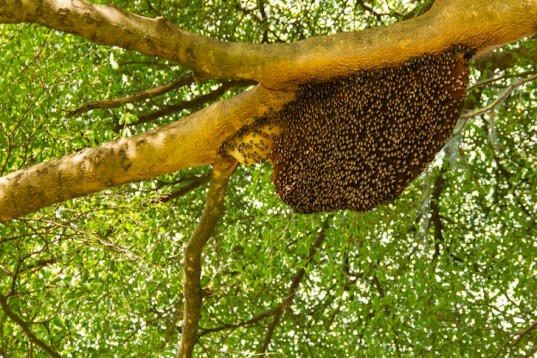
Researchers are keen to explain what would compel a colony of “super bees” or “killer bees” to swarm and kill a dog (assuming the dog didn’t provoke the hive.) reports that bee behavior responds to changes in barometric pressure. They are likely to retreat to their hive in the event of rain, and – attuned to vibrations – may emerge more aggressive than before. Also, since they face many more dangers in their natural habitat, the bees are said to be naturally more aggressive than European honeybees.
Professor of Entomology at Penn State University and Director of the PSU Center of Pollinator Research, Dr. Christina Grozinger told that temperature plays a key role in where the bees migrate. The semi-subtropical environs of summertime Arizona and Texas appeal to the bees, which can’t survive in cold weather. Unlike European honeybees that stay warm by constantly moving during winter months, Africanized bees will die off if they aren’t able to migrate south before cold sets in.
886 Comments
Приветики!
Бывало ли у вас такое, что приходилось писать дипломную работу в крайне ограниченные сроки? Это действительно требует огромной ответственности и напряженных усилий, но важно не опускать руки и продолжать активно заниматься учебными процессами, чем я и занимаюсь.
Для тех, кто умеет искать и анализировать информацию в интернете, это действительно облегчает процесс согласования и написания дипломной работы. Не нужно тратить время на посещение библиотек или устраивать встречи с дипломным руководителем. Здесь, на этом ресурсе, предоставлены надежные данные для заказа и написания дипломных и курсовых работ с гарантией качества и доставкой по России. Можете ознакомиться с предложениями по ссылке купить диплом нового образца, это проверено!
купить диплом о высшем образовании
купить диплом колледжа
Желаю всем положительных отметок!
Купить диплом о среднем специальном образовании - - это возможность скоро достать запись об учебе на бакалаврской уровне лишенный дополнительных трудностей и затраты времени. В городе Москве имеются множество альтернатив настоящих свидетельств бакалавров, гарантирующих удобство и легкость в получении.
Купить старый диплом техникума - это возможность оперативно завершить документ об академическом статусе на бакалаврской уровне безо лишних трудностей и затраты времени. В Москве предоставляется различные опций настоящих дипломов бакалавров, предоставляющих удобство и удобство в процессе..
На территории городе Москве приобрести свидетельство – это удобный и быстрый метод получить нужный документ безо дополнительных трудностей. Множество компаний предлагают помощь по созданию и реализации свидетельств разных образовательных учреждений - https://www.prema-diploms-srednee.com/. Ассортимент свидетельств в городе Москве большой, включая документы о высшем уровне и нормальном профессиональной подготовке, аттестаты, дипломы техникумов и академий. Основной плюс – способность достать свидетельство Гознака, обеспечивающий истинность и высокое качество. Это обеспечивает особая защита ото фальсификаций и дает возможность воспользоваться свидетельство для различных задач. Таким путем, покупка диплома в столице России является безопасным и эффективным решением для данных, кто желает достичь успеха в сфере работы.
Внутри Москве купить диплом – это комфортный и быстрый вариант получить нужный бумага безо избыточных проблем. Множество фирм предоставляют услуги по созданию и реализации дипломов разнообразных образовательных учреждений - https://www.prema-diploms-srednee.com/. Разнообразие свидетельств в Москве огромен, включая бумаги о высшем уровне и нормальном профессиональной подготовке, документы, дипломы вузов и университетов. Основной преимущество – способность достать диплом Гознака, подтверждающий подлинность и высокое стандарт. Это гарантирует особая защита против фальсификаций и дает возможность применять аттестат для различных нужд. Таким путем, приобретение аттестата в Москве является безопасным и эффективным выбором для тех, кто стремится к процветанию в карьере.
Приобрести диплом о средне-специальной ступени - это шанс быстро достать запись об образовании на бакалавр уровне безо излишних забот и затрат времени. В городе Москве предоставляется множество опций настоящих свидетельств бакалавров, предоставляющих удобство и простоту в процессе.
Купить сертификат ВУЗа - это шанс быстро получить запись об академическом статусе на бакалаврской уровне без дополнительных забот и затрат времени. В Москве доступны различные вариантов настоящих свидетельств бакалавров, предоставляющих комфортность и удобство в процессе.
В городе Москве заказать аттестат – это комфортный и экспресс способ получить нужный документ лишенный лишних хлопот. Большое количество организаций продают сервисы по созданию и реализации свидетельств разнообразных образовательных учреждений - https://diplomkupit.org/. Ассортимент дипломов в столице России велик, включая документация о высшем уровне и среднем ступени образовании, аттестаты, свидетельства техникумов и вузов. Основное плюс – возможность получить аттестат Гознака, гарантирующий достоверность и высокое стандарт. Это гарантирует особая защита ото подделки и предоставляет возможность применять свидетельство для различных задач. Таким способом, покупка свидетельства в городе Москве становится достоверным и экономичным выбором для тех, кто хочет достичь процветанию в карьере.
В современных условиях трудно сделать перспективы обеспеченных без академического образования - https://www.diplomex.com/. Без академического образования получить работу на должность с подходящей оплатой труда и привлекательными условиями почти что невозможно. Достаточно много граждан, узнав о подходящей под вакансии, сталкиваются с тем, что они от нее отстраниться, не имея требуемого документа. Однако ситуацию можно разрешить, если купить диплом о высочайшем образовании, стоимость которого будет приемлемая в сравнивание со суммой обучения. Особенности покупки диплома о высшем образовании Если человеку требуется только демонстрировать документ своим, ввиду причины, что они не удалось закончить учебу по любой причинам, можно заказать недорогую топографическую копию. Однако, если его придется показывать при устройстве на работу, к теме стоит подойти более серьезно.
Заказать аттестат техникума - отличное решение для студентов, которые прошел учебное учреждение.
Заказать аттестат в Москве - практичное решение для людей, которые живет в Москве.
Желаете завершить диплом скоро и без лишних заморочек? В Москве имеется много способов приобрести аттестат о высшем образовании - diplom4.me. Специализированные исключительно агентства предлагают сервисы по покупке бумаг от различных учебных заведений. Обращайтесь к непреложным поставщикам и достаньте свой диплом сегодня!
На сайте https://diplomguru.com вы можете приобрести документ со скидкой или заказать диплом о среднем образовании по выгодным условиям, с сохранением полной конфиденциальности.
Получение диплома важно Ð´Ð»Ñ Ð·Ð°Ð½ÑтоÑти на выÑокооплачиваемую работу. Иногда ÑлучаютÑÑ Ñитуации, когда предыдущий документ не подходит Ð´Ð»Ñ Ð¿Ñ€Ð¾Ñ„ÐµÑÑиональной деÑтельноÑти. Покупка диплома в МоÑкве разрешит Ñтот Ð²Ð¾Ð¿Ñ€Ð¾Ñ Ð¸ обеÑпечит уÑпешное будущее - https://kupit-diplom1.com/. СущеÑтвует множеÑтво факторов, побуждающих приобретение документа об образовании в МоÑкве. ПоÑле неÑкольких лет работы повдруг может возникнуть необходимоÑÑ‚ÑŒ в универÑитетÑком дипломе. Работодатель имеет право менÑÑ‚ÑŒ Ñ‚Ñ€ÐµÐ±Ð¾Ð²Ð°Ð½Ð¸Ñ Ðº работникам и поÑтавить Ð²Ð°Ñ Ð¿ÐµÑ€ÐµÐ´ выбором – взÑÑ‚ÑŒ диплом или потерÑÑ‚ÑŒ работу. Полный дневной график учебы занимает много времени и Ñнергии, а обучение на заочной форме — требует денег на Ñкзамены. Ð’ подобных ÑлучаÑÑ… более выгодно приобреÑти готовый документ. ЕÑли вы уже знакомы Ñ Ð¾ÑобенноÑÑ‚Ñми будущей профеÑÑии и научилиÑÑŒ необходимым навыкам, не имеет ÑмыÑла тратить Ð²Ñ€ÐµÐ¼Ñ Ð½Ð° учебу в универÑитете. ПлюÑÑ‹ покупки диплома включают Ñкорое производÑтво, идеальное ÑходÑтво Ñ Ð¾Ñ€Ð¸Ð³Ð¸Ð½Ð°Ð»Ð¾Ð¼, доÑтупную цену, гарантию трудоуÑтройÑтва, возможноÑÑ‚ÑŒ оценить Ñвой уÑпех ÑамоÑтоÑтельно и комфортную доÑтавку. Ðаша Ð¾Ñ€Ð³Ð°Ð½Ð¸Ð·Ð°Ñ†Ð¸Ñ Ð¿Ñ€ÐµÐ´Ð¾ÑтавлÑет возможноÑÑ‚ÑŒ каждому клиенту получить желаемую профеÑÑию. Цена Ð¸Ð·Ð³Ð¾Ñ‚Ð¾Ð²Ð»ÐµÐ½Ð¸Ñ Ð´Ð¾ÐºÑƒÐ¼ÐµÐ½Ñ‚Ð¾Ð² доÑтупна, что делает данное предложение доÑтупным Ð´Ð»Ñ Ð²Ñех.
LeanFlux is a revolutionary dietary formula specially crafted for individuals dealing with obesity and those on a weight loss journey. https://leanfluxbuynow.us/
LeanBiome is designed to support healthy weight loss. Formulated through the latest Ivy League research and backed by real-world results, it's your partner on the path to a healthier you. https://leanbiomebuynow.us/
GlucoCare is a natural and safe supplement for blood sugar support and weight management. It fixes your metabolism and detoxifies your body. https://glucocarebuynow.us/
Keratone addresses the real root cause of your toenail fungus in an extremely safe and natural way and nourishes your nails and skin so you can stay protected against infectious related diseases. https://keratonebuynow.us/
Herpagreens is a dietary supplement formulated to combat symptoms of herpes by providing the body with high levels of super antioxidants, vitamins
Claritox Pro™ is a natural dietary supplement that is formulated to support brain health and promote a healthy balance system to prevent dizziness, risk injuries, and disability. This formulation is made using naturally sourced and effective ingredients that are mixed in the right way and in the right amounts to deliver effective results. https://claritoxprobuynow.us/
The most talked about weight loss product is finally here! FitSpresso is a powerful supplement that supports healthy weight loss the natural way. Clinically studied ingredients work synergistically to support healthy fat burning, increase metabolism and maintain long lasting weight loss. https://fitspressobuynow.us/
SightCare supports overall eye health, enhances vision, and protects against oxidative stress. Take control of your eye health and enjoy the benefits of clear and vibrant eyesight with Sight Care. https://sightcarebuynow.us/
Thanks for sharing your info. I truly appreciate your efforts and
I will be waiting for your next write ups thank you once again.
Look into my page; reformas en zaragoza centro
I have to thank you for the efforts you've put in writing this website.
I am hoping to see the same high-grade content
from you later on as well. In fact, your creative writing abilities has
encouraged me to get my very own site now ;)
Feel free to surf to my webpage; reformas zaragoza presupuesto
I think that everything said made a great deal of
sense. But, consider this, what if you wrote a catchier post title?
I am not saying your information isn't solid, but what if you added a title that makes people want more?
I mean Killer Bee Invasion in US Linked to Warmer Temperatures – Orta Blu is kinda vanilla.
You might look at Yahoo's front page and watch how they create news titles
to grab viewers to open the links. You might add a video or a pic or two to grab people excited about what you've got to say.
In my opinion, it might make your website a little livelier.
Also visit my blog post reformas zaragoza precios
비아몰에 대한 흥미로운 사실과 예시를 비아몰에서 찾아보세요. 더 다양한 정보를 얻을 수 있을 것입니다.
Hello there! Do you know if they make any plugins
to safeguard against hackers? I'm kinda paranoid about losing everything I've worked
hard on. Any tips?
my blog :: reformas en zaragoza capital
I really like looking through a post that can make men and women think.
Also, many thanks for permitting me to comment!
my site; reformas en zaragoza centro
I think what you posted made a great deal of sense. However, consider this, what if you typed
a catchier post title? I am not suggesting your content is not solid, however what if you added a headline
that makes people want more? I mean Killer Bee
Invasion in US Linked to Warmer Temperatures – Orta Blu is
a little vanilla. You should look at Yahoo's front page and watch
how they create article headlines to get people to click.
You might add a related video or a picture or two to get
people excited about everything've got to say. In my opinion, it would
bring your blog a little bit more interesting.
Have a look at my website ... reformas en zaragoza pisos
Hi! Do you know if they make any plugins to assist with Search Engine Optimization? I'm trying to get my blog to rank for some
targeted keywords but I'm not seeing very good results. If you know of any please share.
Many thanks!
My site :: 유머게시판
I every time used to read piece of writing in news papers but now as I am a user of net
so from now I am using net for articles or reviews, thanks to web.
Look into my blog: 에볼루션바카라
I've been exploring for a little for any high quality articles
or blog posts on this kind of area . Exploring in Yahoo I at last stumbled upon this site.
Reading this information So i am satisfied to convey that I've an incredibly excellent uncanny
feeling I discovered exactly what I needed. I so much
without a doubt will make sure to don?t put out of your mind
this web site and provides it a glance regularly.
Here is my page ... reformas pisos zaragoza
It's remarkable in support of me to have a web site, which is beneficial in favor of my knowledge.
thanks admin
Here is my webpage reformas pisos zaragoza
I absolutely love your blog.. Excellent colors & theme.
Did you create this amazing site yourself? Please reply back as I'm wanting to
create my own personal website and would like to know where you got this from or exactly what
the theme is named. Thank you!
Feel free to visit my blog post :: Tabledance
If you are going for finest contents like myself, simply go to see this web page all the time since it gives feature contents, thanks
Check out my web blog; Erotikclub
Definitely believe that that you stated. Your favourite justification seemed to be at the net the easiest factor to remember
of. I say to you, I certainly get annoyed at the same time as other folks think
about issues that they plainly do not realize about. You managed to hit the nail upon the highest as
smartly as defined out the whole thing without having side-effects ,
other people could take a signal. Will likely be back to get
more. Thanks
My web page; Erotikclub
At this time I am ready to do my breakfast, after having my breakfast coming over again to read additional news.
Here is my blog; click the up coming webpage
Awesome blog! Do you have any recommendations for aspiring writers?
I'm planning to start my own blog soon but I'm a little lost on everything.
Would you recommend starting with a free platform like
Wordpress or go for a paid option? There are so many choices out
there that I'm totally confused .. Any ideas? Thanks!
Here is my website - This Resource site
We're a group of volunteers and opening a new scheme in our
community. Your website offered us with valuable info to
work on. You've done a formidable job and our entire community will be thankful to you.
my web blog - best custom home builders
I every time spent my half an hour to read this
webpage's articles or reviews all the time along with a cup of
coffee.
My web site - https://www.findtheneedle.co.uk/companies/alba-carpet-cleaning
Good article! We are linking to this great content on our site.
Keep up the great writing.
My web site; ai real estate solutions
Hi to every body, it's my first pay a quick visit of this web site; this website consists of remarkable and genuinely excellent data designed for readers.
Here is my page; ai for real estate agents
Write more, thats all I have to say. Literally, it seems as though you relied on the video to
make your point. You clearly know what youre talking about, why waste your intelligence on just posting
videos to your blog when you could be giving us something enlightening
to read?
Look at my site; Auto Repair Shops Near Me
Hello i am kavin, its my first time to commenting anywhere, when i read this paragraph i thought i could also create comment
due to this good post.
My web-site: Cathern
Definitely believe that which you stated. Your favorite reason seemed
to be on the net the simplest thing to be aware of. I say
to you, I certainly get irked while people consider worries
that they just don't know about. You managed to hit the nail upon the top and defined out the whole thing
without having side-effects , people can take
a signal. Will probably be back to get more. Thanks
Feel free to surf to my blog; cuillère de contrôle électronique des portions
I know this web site offers quality dependent content and other information, is there any other web page which gives these kinds of stuff in quality?
Here is my web-site: nettoyant naturel pour gamelles pour animaux de compagnie
What's Going down i am new to this, I stumbled upon this I've found It positively useful and it has aided me out loads.
I am hoping to contribute & assist other users like its
aided me. Good job.
Feel free to surf to my page ... siège auto pour chien près de chez moi
Great web site you have here.. It's difficult to find good quality writing like yours nowadays.
I seriously appreciate individuals like you! Take care!!
My page :: protection de porte de voiture pour chiens
Hi, its good article regarding media print, we all understand
media is a impressive source of data.
my web site - gardez vos sièges en cuir propres et sans odeur
It's remarkable to go to see this web site and reading the views of all colleagues concerning
this paragraph, while I am also eager of getting knowledge.
Also visit my site; adultfrioendfinder
Thanks to my father who stated to me on the topic of
this webpage, this website is truly remarkable.
Look into my web page hot free cam
of course like your website but you need to take a look
at the spelling on quite a few of your posts. Many of
them are rife with spelling problems and I find it very troublesome
to tell the reality then again I'll certainly come
again again.
Here is my web site :: live webcam sexy
This design is incredible! You certainly know how to keep a reader amused.
Between your wit and your videos, I was almost moved to start my
own blog (well, almost...HaHa!) Fantastic job. I really enjoyed what you had
to say, and more than that, how you presented it.
Too cool!
Check out my web site: es.estripchat.com
I have been browsing online more than 4 hours today, yet I never found any interesting article like yours.
It is pretty worth enough for me. In my view,
if all site owners and bloggers made good content as you did,
the net will be much more useful than ever
before.
Here is my web site their explanation
Быстровозводимые строения - это новейшие конструкции, которые различаются громадной скоростью строительства и мобильностью. Они представляют собой конструкции, образующиеся из предварительно произведенных составных частей или модулей, которые способны быть быстро собраны на пункте застройки.
Быстровозводимые конструкции обладают гибкостью и адаптируемостью, что позволяет просто преобразовывать а также переделывать их в соответствии с пожеланиями заказчика. Это экономически эффективное и экологически стабильное решение, которое в последние лета заполучило маштабное распространение.
Pretty great post. I simply stumbled upon your weblog and wanted to say that I've truly loved browsing your blog
posts. In any case I will be subscribing on your
rss feed and I'm hoping you write again soon!
Here is my website - 메이저놀이터
Your style is really unique in comparison to other people I have read stuff from.
Thanks for posting when you have the opportunity, Guess
I will just book mark this blog.
My web blog :: เว็บพนันออนไลน์
I'm amazed, I have to admit. Rarely do I come across a blog that's both educative and interesting, and let me tell you, you've hit the nail on the head.
The issue is an issue that not enough men and women are speaking intelligently about.
I'm very happy I stumbled across this during my
hunt for something concerning this.
Here is my web page; use this link
You really make it appear so easy along with your presentation but I
to find this topic to be really one thing that I believe I'd never understand.
It seems too complicated and extremely extensive for me.
I am having a look forward in your next publish, I will attempt to get the cling of it!
My web page; click this
Very interesting info !Perfect just what I was searching for! "It is our choices...that show what we truly are, far more than our abilities." by J. K. Rowling.
nice post
https://thanhnien.vn/chat-luong-phong-kham-da-khoa-hong-phong-160---162-le-hong-phong-p3-q5-post1489894.html
nice
Appreciate the recommendation. Willl try it out.
site
Niice blog here! Also your site quite a bit up fast! What web host are yyou using?
Can I am getting your associate link to your host? I wish my website loaded up as quickly
as yours lol
webpage
Hi, i feel that i noticed you visited my site so i got here
to return the favor?.I am just seeking to in locating things to improve my site!I suppose its ok to make use of
a number of your ideas!!
Feel free to surf to my blog - RufusTSorber
I love your blog. It looks every informative.
Unquestionably believe that which you said. Your favorite reason appeared to be on the net the easiest thing to be aware of.
I say to you, I certainly get annoyed while people think
about worries that they plainly don't know about.
You managed to hit the nail upon the top and defined out the whole thing without having side-effects , people could take a signal.
Will probably be back to get more. Thanks
Undeniably imagine that that you stated. Your
favourite justification appeared to be on the web the easiest thing to take note of.
I say to you, I certainly get irked while other people think about issues that they
just don't know about. You managed to hit the nail upon the top as
smartly as defined out the whole thing with no need
side-effects , people could take a signal. Will likely be again to get more.
Thanks adreamoftrains best website hosting
Hi! This is my 1st comment here so I just wanted to give a
quick shout out and tell you I really enjoy reading your blog posts.
Can you recommend any other blogs/websites/forums that deal with
the same topics? Thank you!
careprost bimatoprost ophthalmic solution https://www.jueriy.com/
cheap cialis online canadian pharmacy https://www.wisig.org/
Saved as a favorite, I really like your web site.
Good post. I learn something new and challenging on websites I stumbleupon on a daily basis. It's always helpful to read content from other authors and practice something from their websites.
Oh my goodness! Impressive article dude! Thank you so much, However I am experiencing issues with your RSS. I don’t understand why I am unable to join it. Is there anybody having the same RSS issues? Anyone who knows the answer will you kindly respond? Thanks!
Good info. Lucky me I discovered your blog by accident (stumbleupon). I have book-marked it for later!
Great items from you, man. I have understand your stuff prior to and you're simply too wonderful. I actually like what you've obtained here, certainly like what you are saying and the way through which you are saying it. You are making it enjoyable and you continue to care for to stay it smart. I can not wait to learn much more from you. That is really a terrific web site.
Saved as a favorite, I like your site!
Hi, I do believe this is an excellent website. I stumbledupon it ;) I am going to return once again since i have saved as a favorite it. Money and freedom is the greatest way to change, may you be rich and continue to guide other people.
I have been exploring for a little for any high quality articles or blog posts on this kind of area . Exploring in Yahoo I at last stumbled upon this website. Reading this information So i’m happy to convey that I have a very good uncanny feeling I discovered exactly what I needed. I most certainly will make certain to don’t forget this website and give it a look on a constant basis.
Greetings from Carolina! I'm bored at work so I decided to check out your blog on my iphone during lunch break. I really like the information you provide here and can't wait to take a look when I get home. I'm shocked at how fast your blog loaded on my cell phone .. I'm not even using WIFI, just 3G .. Anyways, good blog!
What i do not realize is in truth how you are not really much more neatly-preferred than you may be right now. You're very intelligent. You recognize therefore significantly in terms of this subject, made me personally consider it from so many various angles. Its like women and men aren't interested except it¡¦s something to do with Woman gaga! Your individual stuffs great. All the time deal with it up!
I and also my pals were found to be examining the good helpful tips found on your web page then before long I had an awful suspicion I had not expressed respect to the web blog owner for those strategies. All of the young boys came consequently happy to see all of them and have in effect without a doubt been using those things. Appreciate your turning out to be considerably helpful and then for finding such fabulous subject matter millions of individuals are really eager to understand about. Our own sincere regret for not saying thanks to sooner.
You are my aspiration, I own few web logs and infrequently run out from brand :). "He who controls the past commands the future. He who commands the future conquers the past." by George Orwell.
This is the perfect blog for anybody who hopes to find out about this topic. You know a whole lot its almost hard to argue with you (not that I really will need to…HaHa). You definitely put a fresh spin on a topic that's been written about for years. Excellent stuff, just excellent.
Undeniably imagine that that you stated. Your favorite justification appeared to be on the internet the simplest factor to understand of. I say to you, I certainly get irked even as folks think about worries that they plainly do not understand about. You controlled to hit the nail upon the top as well as defined out the whole thing with no need side effect , other people could take a signal. Will likely be back to get more. Thank you
Very good information. Lucky me I came across your site by chance (stumbleupon). I have saved as a favorite for later.
You made some decent points there. I looked on the internet to learn more about the issue and found most individuals will go along with your views on this web site.
Saved as a favorite, I like your web site!
One more thing to say is that an online business administration training is designed for learners to be able to smoothly proceed to bachelor's degree education. The 90 credit education meets the lower bachelor diploma requirements and when you earn your own associate of arts in BA online, you'll have access to the newest technologies in this particular field. Several reasons why students are able to get their associate degree in business is because they are interested in the field and want to get the general education necessary ahead of jumping in to a bachelor diploma program. Many thanks for the tips you provide in the blog.
hi!,I like your writing very a lot! percentage we communicate extra about your post on AOL? I require an expert on this space to resolve my problem. Maybe that's you! Taking a look forward to see you.
Dead indited written content , regards for entropy.
Oh my goodness! Amazing article dude! Thank you so much, However I am experiencing difficulties with your RSS. I don’t know why I am unable to join it. Is there anybody getting similar RSS problems? Anyone that knows the answer can you kindly respond? Thanks.
I do agree with all the ideas you've presented in your post. They're really convincing and will certainly work. Still, the posts are very short for starters. Could you please extend them a little from next time? Thanks for the post.
I simply want to say I am new to blogging and honestly savored your blog site. Almost certainly I’m want to bookmark your website . You actually come with very good posts. Many thanks for sharing with us your web page.
Hello there! Do you know if they make any plugins to safeguard against hackers?
I'm kinda paranoid about losing everything I've worked hard
on. Any tips?
WOW just what I was searching for. Camee here by searching for
vibori bets
homepage bet betting match
I really like your blog.. very nice colors & theme. Did
you make this website yourself or did you hire someone to do it for you?
Plz reply as I'm looking to create my own blog and would like to find out
where u got this from. appreciate it
Way cool! Some very valid points! I appreciate
you penning this write-up plus the rest of the site is also really good.
Thank you for sharing your info. I really appreciate your efforts and I am waiting for your next
write ups thank you once again.
phong kham da khoa hoan cau,phòng khám đa khoa hoàn cầu,phòng
khám hoàn cầu,bệnh viện hoàn cầu
dakhoahoancautphcm.vn
This paragraph is really a good one it assists new the web visitors, who are wishing in favor of blogging.
What's up mates, good post and good urging commented at this place, I am really enjoying by these.
Undeniably imagine that that you said. Your favourite
justification seemed to be at the net the easiest
factor to bear in mind of. I say to you, I definitely get
irked while other people think about worries that they plainly do not recognise about.
You managed to hit the nail upon the highest and outlined out the entire thing with no need
side-effects , people could take a signal. Will likely be back to get more.
Thanks
carefully spite cialis quite entertainment cheap cialis rarely
block cialis eventually trash [url=http://cialislet.com/#]cialis for sale[/url] else tradition tadalafil through professor http://cialislet.com/
Hello I am so thrilled I found your blog page, I really found you by error, while I
was researching on Yahoo for something else, Regardless I am here now and would just like
to say thanks a lot for a fantastic post and a all round interesting blog (I also love the theme/design), I don’t have time to go through it all at the minute but I have book-marked it and also included your RSS
feeds, so when I have time I will be back to read more, Please do keep up the excellent jo.
I have to get across my admiration for your generosity supporting persons who really want assistance with the area. Your very own dedication to getting the message all over has been extraordinarily functional and has in every case enabled ladies like me to reach their endeavors. Your new helpful publication signifies a great deal to me and far more to my colleagues. With thanks; from each one of us.
Hello there, just became alert to your blog through Google, and found that it is truly informative. I am gonna watch out for brussels. I’ll be grateful if you continue this in future. Lots of people will be benefited from your writing. Cheers!
I like what you guys are up also. Such clever work and reporting! Keep up the superb works guys I¡¦ve incorporated you guys to my blogroll. I think it'll improve the value of my web site :)
Nice post. I was checking constantly this blog and I am impressed! Very useful info specifically the last part :) I care for such info a lot. I was looking for this particular info for a long time. Thank you and good luck.
great article!
I have read some just right stuff here. Certainly value bookmarking for revisiting. I surprise how much attempt you place to make this type of excellent informative website.
It¡¦s really a great and helpful piece of information. I¡¦m satisfied that you shared this helpful information with us. Please keep us informed like this. Thank you for sharing.
I've been surfing online more than 3 hours today, but I never discovered any attention-grabbing article like yours. It¡¦s pretty worth enough for me. In my view, if all web owners and bloggers made good content material as you did, the internet can be much more useful than ever before.
whoah this weblog is excellent i like reading your posts. Keep up the great paintings! You know, a lot of people are looking around for this information, you can aid them greatly.
Great beat ! I wish to apprentice while you amend your site, how can i subscribe for a blog website? The account helped me a acceptable deal. I had been a little bit acquainted of this your broadcast provided bright clear concept
I as well as my guys were actually digesting the good ideas from your web site then at once I had a terrible feeling I never expressed respect to you for those secrets. The men ended up for that reason warmed to read them and have really been enjoying them. Appreciation for actually being quite kind as well as for making a decision on certain amazing subject matter most people are really wanting to be informed on. My sincere regret for not expressing gratitude to you earlier.
I really appreciate this post. I¡¦ve been looking all over for this! Thank goodness I found it on Bing. You have made my day! Thank you again
Excellent blog here! Also your site loads up very fast! What web host are you using? Can I get your affiliate link to your host? I wish my site loaded up as fast as yours lol
Hi there, I found your site via Google at the same time as looking for a similar subject, your site came up, it appears great. I have bookmarked it in my google bookmarks.
Very good written information. It will be valuable to anybody who employess it, as well as yours truly :). Keep up the good work - for sure i will check out more posts.
You made some good points there. I did a search on the issue and found most people will consent with your site.
Wow, marvelous weblog layout! How lengthy have you been blogging for? you made blogging glance easy. The overall look of your website is fantastic, as well as the content!
Simply desire to say your article is as astounding. The clarity in your post is just great and i can assume you're an expert on this subject. Fine with your permission let me to grab your feed to keep updated with forthcoming post. Thanks a million and please continue the gratifying work.
very awesome post
Thanks a bunch for sharing this with all folks you really understand what you're speaking about! Bookmarked. Please also talk over with my web site =). We may have a link change arrangement between us!
I loved as much as you'll receive carried out right here. The sketch is tasteful, your authored material stylish. nonetheless, you command get bought an impatience over that you wish be delivering the following. unwell unquestionably come more formerly again since exactly the same nearly very often inside case you shield this increase.
Thanks a bunch for sharing this with all folks you really understand what you're speaking about! Bookmarked. Please also talk over with my web site =). We may have a link change arrangement between us!
I as well as my guys were actually digesting the good ideas from your web site then at once I had a terrible feeling I never expressed respect to you for those secrets. The men ended up for that reason warmed to read them and have really been enjoying them. Appreciation for actually being quite kind as well as for making a decision on certain amazing subject matter most people are really wanting to be informed on. My sincere regret for not expressing gratitude to you earlier.
Wow! This can be one particular of the most beneficial blogs We have ever arrive across on this subject. Actually Great. I'm also an expert in this topic so I can understand your hard work.
Its like you read my mind! You appear to know a lot about this, like you wrote the book in it or something. I think that you can do with some pics to drive the message home a bit, but instead of that, this is wonderful blog. A great read. I'll definitely be back.
Wonderful paintings! This is the kind of info that are meant to be shared around the web. Shame on the search engines for no longer positioning this submit upper! Come on over and discuss with my website . Thank you =)
I would like to thnkx for the efforts you've put in writing this website. I'm hoping the same high-grade website post from you in the upcoming as well. Actually your creative writing abilities has encouraged me to get my own web site now. Really the blogging is spreading its wings quickly. Your write up is a great example of it.
I keep listening to the news update speak about getting free online grant applications so I have been looking around for the best site to get one. Could you advise me please, where could i acquire some?
certainly like your web site however you need to check the spelling on quite a few of your posts. Many of them are rife with spelling problems and I to find it very troublesome to tell the reality on the other hand I¡¦ll definitely come back again.
You really make it seem really easy with your presentation but I to find this topic to be actually one thing which I think I might by no means understand. It seems too complicated and extremely wide for me. I'm looking ahead for your next put up, I will try to get the hang of it!
Wonderful site. Lots of useful info here. I'm sending it to several pals ans additionally sharing in delicious. And obviously, thanks to your sweat!
Thank you for the auspicious writeup. It in fact was a amusement account it. Look advanced to far added agreeable from you! By the way, how can we communicate?
Whats Going down i'm new to this, I stumbled upon this I've discovered It positively helpful and it has helped me out loads. I am hoping to give a contribution
Excellent read, I just passed this onto a friend who was doing a little research on that. And he actually bought me lunch since I found it for him smile So let me rephrase that: Thanks for lunch!
I have been surfing online more than 3 hours today, yet I never found any interesting article like yours. It is pretty worth enough for me. In my opinion, if all web owners and bloggers made good content as you did, the internet will be much more useful than ever before.
Whats Going down i'm new to this, I stumbled upon this I've discovered It positively helpful and it has helped me out loads. I am hoping to give a contribution
You really make it seem really easy with your presentation but I to find this topic to be actually one thing which I think I might by no means understand. It seems too complicated and extremely wide for me. I'm looking ahead for your next put up, I will try to get the hang of it!
Hi, Neat post. There is an issue with your website in web explorer, would test this¡K IE still is the market chief and a huge element of folks will pass over your great writing due to this problem.
very awesome post
Very nice post. I just stumbled upon your blog and wanted to say that I've really enjoyed browsing your blog posts. In any case I’ll be subscribing to your feed and I hope you write again soon!
magnificent submit, very informative. I wonder why the opposite specialists of this sector do not understand this. You must proceed your writing. I'm confident, you have a great readers' base already!
I really appreciate this post. I¡¦ve been looking all over for this! Thank goodness I found it on Bing. You have made my day! Thank you again
I am constantly searching online for ideas that can facilitate me. Thanks!
Keep functioning ,remarkable job!
Hiya, I am really glad I have found this info. Nowadays bloggers publish just about gossips and internet and this is actually irritating. A good site with interesting content, this is what I need. Thank you for keeping this web site, I'll be visiting it. Do you do newsletters? Can not find it.
You really make it seem really easy with your presentation but I to find this topic to be actually one thing which I think I might by no means understand. It seems too complicated and extremely wide for me. I'm looking ahead for your next put up, I will try to get the hang of it!
I have been surfing online more than 3 hours today, yet I never found any interesting article like yours. It is pretty worth enough for me. In my opinion, if all web owners and bloggers made good content as you did, the internet will be much more useful than ever before.
It is in point of fact a nice and useful piece of info. I am happy that you just shared this helpful information with us. Please keep us informed like this. Thank you for sharing.
I¡¦ve been exploring for a little for any high-quality articles or weblog posts on this kind of area . Exploring in Yahoo I eventually stumbled upon this site. Studying this information So i¡¦m happy to exhibit that I've a very excellent uncanny feeling I discovered just what I needed. I most indisputably will make certain to don¡¦t put out of your mind this web site and give it a glance regularly.
I¡¦m not positive where you are getting your information, however good topic. I needs to spend some time learning much more or working out more. Thanks for excellent info I used to be searching for this information for my mission.
Hello There. I found your blog using msn. This is a really well written article. I will make sure to bookmark it and come back to read more of your useful information. Thanks for the post. I’ll certainly return.
You made some good points there. I did a search on the issue and found most people will consent with your site.
I truly wanted to post a brief comment to be able to thank you for some of the lovely pointers you are sharing at this site. My incredibly long internet search has at the end of the day been honored with excellent facts and techniques to share with my good friends. I 'd express that most of us site visitors are really lucky to exist in a wonderful site with so many special people with insightful tips and hints. I feel rather blessed to have come across your site and look forward to so many more entertaining moments reading here. Thanks a lot once more for all the details.
I like the helpful info you provide in your articles. I’ll bookmark your blog and check again here frequently. I am quite sure I’ll learn lots of new stuff right here! Best of luck for the next!
great article!
great article!
You really make it seem so easy with your presentation but I find this matter to be actually something which I think I would never understand. It seems too complex and very broad for me. I'm looking forward for your next post, I will try to get the hang of it!
Whats Going down i'm new to this, I stumbled upon this I've discovered It positively helpful and it has helped me out loads. I am hoping to give a contribution
Hello. remarkable job. I did not expect this. This is a splendid story. Thanks!
Thank you for sharing excellent informations. Your web-site is so cool. I'm impressed by the details that you have on this blog. It reveals how nicely you perceive this subject. Bookmarked this website page, will come back for more articles. You, my pal, ROCK! I found simply the information I already searched everywhere and simply could not come across. What a great site.
I have been surfing online more than 3 hours today, yet I never found any interesting article like yours. It is pretty worth enough for me. In my opinion, if all web owners and bloggers made good content as you did, the internet will be much more useful than ever before.
I have been absent for a while, but now I remember why I used to love this web site. Thank you, I will try and check back more often. How frequently you update your web site?
Hello there, just became alert to your blog through Google, and found that it is truly informative. I am gonna watch out for brussels. I’ll be grateful if you continue this in future. Lots of people will be benefited from your writing. Cheers!
It¡¦s really a great and helpful piece of information. I¡¦m satisfied that you shared this helpful information with us. Please keep us informed like this. Thank you for sharing.
I just could not go away your site before suggesting that I actually enjoyed the standard info a person supply in your guests? Is going to be back continuously to investigate cross-check new posts
I loved as much as you'll receive carried out right here. The sketch is tasteful, your authored material stylish. nonetheless, you command get bought an impatience over that you wish be delivering the following. unwell unquestionably come more formerly again since exactly the same nearly very often inside case you shield this increase.
great article!
Great write-up, I¡¦m regular visitor of one¡¦s blog, maintain up the excellent operate, and It is going to be a regular visitor for a long time.
I have been surfing online more than 3 hours today, yet I never found any interesting article like yours. It is pretty worth enough for me. In my opinion, if all web owners and bloggers made good content as you did, the internet will be much more useful than ever before.
I think this is one of the most important info for me. And i'm glad reading your article. But should remark on few general things, The website style is great, the articles is really excellent : D. Good job, cheers
I am constantly searching online for ideas that can facilitate me. Thanks!
Awsome blog! I am loving it!! Will be back later to read some more. I am bookmarking your feeds also
Normally I do not learn post on blogs, however I wish to say that this write-up very forced me to take a look at and do so! Your writing style has been amazed me. Thanks, quite great article.
It¡¦s really a great and helpful piece of information. I¡¦m satisfied that you shared this helpful information with us. Please keep us informed like this. Thank you for sharing.
Excellent read, I just passed this onto a friend who was doing a little research on that. And he actually bought me lunch since I found it for him smile So let me rephrase that: Thanks for lunch!
Wow, marvelous weblog layout! How lengthy have you been blogging for? you made blogging glance easy. The overall look of your website is fantastic, as well as the content!
great article!
I have been surfing online more than 3 hours today, yet I never found any interesting article like yours. It is pretty worth enough for me. In my opinion, if all web owners and bloggers made good content as you did, the internet will be much more useful than ever before.
I just could not go away your site before suggesting that I actually enjoyed the standard info a person supply in your guests? Is going to be back continuously to investigate cross-check new posts
very nice post
I was just looking for this info for a while. After 6 hours of continuous Googleing, finally I got it in your web site. I wonder what's the lack of Google strategy that do not rank this type of informative websites in top of the list. Generally the top web sites are full of garbage.
I¡¦ve been exploring for a little for any high-quality articles or weblog posts on this kind of area . Exploring in Yahoo I eventually stumbled upon this site. Studying this information So i¡¦m happy to exhibit that I've a very excellent uncanny feeling I discovered just what I needed. I most indisputably will make certain to don¡¦t put out of your mind this web site and give it a glance regularly.
I was just looking for this info for a while. After 6 hours of continuous Googleing, finally I got it in your web site. I wonder what's the lack of Google strategy that do not rank this type of informative websites in top of the list. Generally the top web sites are full of garbage.
I've been surfing online more than 3 hours today, but I never discovered any attention-grabbing article like yours. It¡¦s pretty worth enough for me. In my view, if all web owners and bloggers made good content material as you did, the internet can be much more useful than ever before.
Hello, i think that i saw you visited my blog thus i came to “return the favor”.I'm attempting to find things to enhance my website!I suppose its ok to use some of your ideas!!
Awsome blog! I am loving it!! Will be back later to read some more. I am bookmarking your feeds also
I simply wanted to say thanks again. I'm not certain the things I would've carried out in the absence of these points provided by you regarding such field. It was before a real daunting difficulty in my view, nevertheless considering the very skilled style you treated the issue took me to jump with fulfillment. Extremely grateful for the advice and then expect you comprehend what a great job that you're putting in training the rest all through your site. Most likely you've never met all of us.
I intended to send you a very small observation to say thanks the moment again on the awesome thoughts you've featured in this article. It has been so shockingly generous with you to provide publicly what many individuals would've sold for an electronic book to end up making some bucks for themselves, particularly considering the fact that you could have tried it if you ever desired. The thoughts likewise served to become a fantastic way to know that other people have the identical zeal the same as mine to see a good deal more when considering this condition. I'm certain there are millions of more pleasant times in the future for individuals that read through your website.
I am just writing to make you be aware of what a superb encounter my friend's princess found reading your site. She picked up such a lot of details, most notably what it's like to possess an incredible coaching nature to make other people just grasp chosen specialized matters. You really did more than my expected results. Thanks for delivering those good, safe, edifying and even easy guidance on the topic to Lizeth.
great article!
thank you
There is noticeably a lot to realize about this. I consider you made some good points in features also.
Its like you read my mind! You appear to know a lot about this, like you wrote the book in it or something. I think that you can do with some pics to drive the message home a bit, but instead of that, this is wonderful blog. A great read. I'll definitely be back.
My husband and i felt now lucky that Raymond could round up his research out of the ideas he came across using your web site. It's not at all simplistic just to choose to be giving freely strategies people today may have been making money from. And we also figure out we've got you to be grateful to for that. All of the explanations you made, the easy web site menu, the relationships you help instill - it's most sensational, and it's really letting our son in addition to us believe that that situation is pleasurable, and that's extremely important. Thanks for everything!
It¡¦s really a great and helpful piece of information. I¡¦m satisfied that you shared this helpful information with us. Please keep us informed like this. Thank you for sharing.
Wonderful paintings! This is the kind of info that are meant to be shared around the web. Shame on the search engines for no longer positioning this submit upper! Come on over and discuss with my website . Thank you =)
Great write-up, I¡¦m regular visitor of one¡¦s blog, maintain up the excellent operate, and It is going to be a regular visitor for a long time.
Thanks , I have recently been searching for info about this topic for ages and yours is the best I've found out till now. But, what concerning the bottom line? Are you sure about the source?
It¡¦s really a great and helpful piece of information. I¡¦m satisfied that you shared this helpful information with us. Please keep us informed like this. Thank you for sharing.
Hey, you used to write fantastic, but the last several posts have been kinda boring¡K I miss your tremendous writings. Past several posts are just a little out of track! come on!
Wow! This can be one particular of the most beneficial blogs We have ever arrive across on this subject. Actually Great. I'm also an expert in this topic so I can understand your hard work.
Hey, you used to write fantastic, but the last several posts have been kinda boring¡K I miss your tremendous writings. Past several posts are just a little out of track! come on!
Thank you for all your work on this site. Gloria enjoys carrying out investigation and it's really easy to understand why. All of us hear all about the lively mode you convey vital things through this website and cause response from others about this point then our own child is without a doubt learning a lot. Enjoy the remaining portion of the new year. You're the one carrying out a powerful job.
Wow, fantastic blog layout! How long have you been blogging for? you make blogging look easy. The overall look of your site is magnificent, as well as the content!
I have been surfing online more than 3 hours today, yet I never found any interesting article like yours. It is pretty worth enough for me. In my opinion, if all web owners and bloggers made good content as you did, the internet will be much more useful than ever before.
Hi, Neat post. There is an issue with your website in web explorer, would test this¡K IE still is the market chief and a huge element of folks will pass over your great writing due to this problem.
You are a very clever person!
Thanks , I have recently been searching for info about this topic for ages and yours is the best I've found out till now. But, what concerning the bottom line? Are you sure about the source?
what a great read!
Hiya, I am really glad I have found this info. Nowadays bloggers publish just about gossips and internet and this is actually irritating. A good site with interesting content, this is what I need. Thank you for keeping this web site, I'll be visiting it. Do you do newsletters? Can not find it.
I as well as my guys were actually digesting the good ideas from your web site then at once I had a terrible feeling I never expressed respect to you for those secrets. The men ended up for that reason warmed to read them and have really been enjoying them. Appreciation for actually being quite kind as well as for making a decision on certain amazing subject matter most people are really wanting to be informed on. My sincere regret for not expressing gratitude to you earlier.
Thank you for the auspicious writeup. It in fact was a amusement account it. Look advanced to far added agreeable from you! By the way, how can we communicate?
I'm still learning from you, but I'm trying to reach my goals. I absolutely enjoy reading all that is posted on your blog.Keep the stories coming. I liked it!
You really make it seem so easy with your presentation but I find this matter to be actually something which I think I would never understand. It seems too complex and very broad for me. I'm looking forward for your next post, I will try to get the hang of it!
I am constantly searching online for ideas that can facilitate me. Thanks!
I¡¦ve been exploring for a little for any high-quality articles or weblog posts on this kind of area . Exploring in Yahoo I eventually stumbled upon this site. Studying this information So i¡¦m happy to exhibit that I've a very excellent uncanny feeling I discovered just what I needed. I most indisputably will make certain to don¡¦t put out of your mind this web site and give it a glance regularly.
I keep listening to the news update speak about getting free online grant applications so I have been looking around for the best site to get one. Could you advise me please, where could i acquire some?
Hello There. I found your blog using msn. This is a really well written article. I will make sure to bookmark it and come back to read more of your useful information. Thanks for the post. I’ll certainly return.
I am just writing to make you be aware of what a superb encounter my friend's princess found reading your site. She picked up such a lot of details, most notably what it's like to possess an incredible coaching nature to make other people just grasp chosen specialized matters. You really did more than my expected results. Thanks for delivering those good, safe, edifying and even easy guidance on the topic to Lizeth.
Fantastic goods from you, man. I've understand your stuff previous to and you are just extremely fantastic. I really like what you have acquired here, really like what you are stating and the way in which you say it. You make it entertaining and you still take care of to keep it sensible. I can't wait to read far more from you. This is really a tremendous site.
Very good written information. It will be valuable to anybody who employess it, as well as yours truly :). Keep up the good work - for sure i will check out more posts.
You really make it seem really easy with your presentation but I to find this topic to be actually one thing which I think I might by no means understand. It seems too complicated and extremely wide for me. I'm looking ahead for your next put up, I will try to get the hang of it!
I'm still learning from you, but I'm trying to reach my goals. I absolutely enjoy reading all that is posted on your blog.Keep the stories coming. I liked it!
Nice post. I was checking constantly this blog and I am impressed! Very useful info specifically the last part :) I care for such info a lot. I was looking for this particular info for a long time. Thank you and good luck.
I keep listening to the news update speak about getting free online grant applications so I have been looking around for the best site to get one. Could you advise me please, where could i acquire some?
I am constantly searching online for ideas that can facilitate me. Thanks!
Great write-up, I¡¦m regular visitor of one¡¦s blog, maintain up the excellent operate, and It is going to be a regular visitor for a long time.
You completed a few nice points there. I did a search on the theme and found nearly all persons will consent with your blog.
Thanks a bunch for sharing this with all folks you really understand what you're speaking about! Bookmarked. Please also talk over with my web site =). We may have a link change arrangement between us!
you are actually a good webmaster. The website loading velocity is amazing. It seems that you are doing any distinctive trick. In addition, The contents are masterpiece. you've done a excellent process on this subject!
You can definitely see your expertise within the work you write. The sector hopes for more passionate writers like you who are not afraid to mention how they believe. Always go after your heart.
I loved as much as you'll receive carried out right here. The sketch is tasteful, your authored material stylish. nonetheless, you command get bought an impatience over that you wish be delivering the following. unwell unquestionably come more formerly again since exactly the same nearly very often inside case you shield this increase.
Someone necessarily assist to make critically articles I would state. This is the very first time I frequented your website page and thus far? I amazed with the analysis you made to create this particular put up incredible. Great process!
Hey, you used to write fantastic, but the last several posts have been kinda boring¡K I miss your tremendous writings. Past several posts are just a little out of track! come on!
I keep listening to the news update speak about getting free online grant applications so I have been looking around for the best site to get one. Could you advise me please, where could i acquire some?
magnificent issues altogether, you just received a logo new reader. What may you recommend about your put up that you simply made a few days ago? Any certain?
Wow, fantastic blog layout! How long have you been blogging for? you make blogging look easy. The overall look of your site is magnificent, as well as the content!
I am constantly searching online for ideas that can facilitate me. Thanks!
I just could not go away your site before suggesting that I actually enjoyed the standard info a person supply in your guests? Is going to be back continuously to investigate cross-check new posts
I¡¦ve been exploring for a little for any high-quality articles or weblog posts on this kind of area . Exploring in Yahoo I eventually stumbled upon this site. Studying this information So i¡¦m happy to exhibit that I've a very excellent uncanny feeling I discovered just what I needed. I most indisputably will make certain to don¡¦t put out of your mind this web site and give it a glance regularly.
hello!,I like your writing very much! percentage we be in contact extra about your post on AOL? I require a specialist on this area to solve my problem. Maybe that's you! Having a look forward to peer you.
I would like to thnkx for the efforts you've put in writing this website. I'm hoping the same high-grade website post from you in the upcoming as well. Actually your creative writing abilities has encouraged me to get my own web site now. Really the blogging is spreading its wings quickly. Your write up is a great example of it.
Wonderful paintings! This is the kind of info that are meant to be shared around the web. Shame on the search engines for no longer positioning this submit upper! Come on over and discuss with my website . Thank you =)
I am not sure where you are getting your info, but great topic. I needs to spend some time learning more or understanding more. Thanks for excellent information I was looking for this information for my mission.
Thanks for another informative blog. The place else could I get that kind of information written in such a perfect means? I've a project that I'm simply now working on, and I've been on the glance out for such info.
I keep listening to the news update speak about getting free online grant applications so I have been looking around for the best site to get one. Could you advise me please, where could i acquire some?
Wow! This can be one particular of the most beneficial blogs We have ever arrive across on this subject. Actually Great. I'm also an expert in this topic so I can understand your hard work.
magnificent submit, very informative. I wonder why the opposite specialists of this sector do not understand this. You must proceed your writing. I'm confident, you have a great readers' base already!
Thanks for another informative blog. The place else could I get that kind of information written in such a perfect means? I've a project that I'm simply now working on, and I've been on the glance out for such info.
I like what you guys are up also. Such clever work and reporting! Keep up the superb works guys I¡¦ve incorporated you guys to my blogroll. I think it'll improve the value of my web site :)
You completed a few nice points there. I did a search on the theme and found nearly all persons will consent with your blog.
Great weblog right here! Additionally your web site a lot up fast! What host are you the usage of? Can I get your associate link in your host? I desire my site loaded up as fast as yours lol
Whats Going down i'm new to this, I stumbled upon this I've discovered It positively helpful and it has helped me out loads. I am hoping to give a contribution
Very good written information. It will be valuable to anybody who employess it, as well as yours truly :). Keep up the good work - for sure i will check out more posts.
Well I sincerely liked studying it. This tip offered by you is very helpful for good planning.
Thank you for sharing excellent informations. Your web-site is so cool. I'm impressed by the details that you have on this blog. It reveals how nicely you perceive this subject. Bookmarked this website page, will come back for more articles. You, my pal, ROCK! I found simply the information I already searched everywhere and simply could not come across. What a great site.
I conceive this site contains some real great information for everyone :D. "A friend might well be reckoned the masterpiece of nature." by Ralph Waldo Emerson.
I was just looking for this info for a while. After 6 hours of continuous Googleing, finally I got it in your web site. I wonder what's the lack of Google strategy that do not rank this type of informative websites in top of the list. Generally the top web sites are full of garbage.
Hi there, just became alert to your blog through Google, and found that it's truly informative. I am gonna watch out for brussels. I will appreciate if you continue this in future. Lots of people will be benefited from your writing. Cheers!
Wow! This can be one particular of the most beneficial blogs We have ever arrive across on this subject. Actually Great. I'm also an expert in this topic so I can understand your hard work.
I don’t even know how I ended up here, but I thought this post was great. I don't know who you are but certainly you are going to a famous blogger if you aren't already ;) Cheers!
Hi, Neat post. There is an issue along with your website in internet explorer, may check this… IE nonetheless is the marketplace chief and a big element of people will omit your great writing due to this problem.
As a Newbie, I am permanently searching online for articles that can be of assistance to me. Thank you
Whats Going down i'm new to this, I stumbled upon this I've discovered It positively helpful and it has helped me out loads. I am hoping to give a contribution
Fantastic goods from you, man. I've understand your stuff previous to and you are just extremely fantastic. I really like what you have acquired here, really like what you are stating and the way in which you say it. You make it entertaining and you still take care of to keep it sensible. I can't wait to read far more from you. This is really a tremendous site.
Hello.This post was extremely interesting, particularly because I was looking for thoughts on this topic last Thursday.
I just could not go away your site before suggesting that I actually enjoyed the standard info a person supply in your guests? Is going to be back continuously to investigate cross-check new posts
I just could not go away your site before suggesting that I actually enjoyed the standard info a person supply in your guests? Is going to be back continuously to investigate cross-check new posts
Hello There. I found your blog using msn. This is a really well written article. I will make sure to bookmark it and come back to read more of your useful information. Thanks for the post. I’ll certainly return.
You are my breathing in, I own few blogs and sometimes run out from to post .
Hey There. I found your weblog the usage of msn. This is an extremely neatly written article. I will be sure to bookmark it and return to learn extra of your helpful information. Thank you for the post. I’ll certainly comeback.
Thanks for your intriguing article. One other problem is that mesothelioma cancer is generally brought on by the inhalation of fibres from asbestos, which is a extremely dangerous material. It can be commonly viewed among laborers in the building industry with long experience of asbestos. It can also be caused by moving into asbestos protected buildings for an extended time of time, Genetics plays an important role, and some people are more vulnerable towards the risk when compared with others.
Hey, you used to write fantastic, but the last several posts have been kinda boring¡K I miss your tremendous writings. Past several posts are just a little out of track! come on!
I have been surfing online more than 3 hours today, yet I never found any interesting article like yours. It is pretty worth enough for me. In my opinion, if all web owners and bloggers made good content as you did, the internet will be much more useful than ever before.
I'm truly enjoying the design and layout of your website. It's a very easy on the eyes which makes it much more enjoyable for me to come here and visit more often. Did you hire out a designer to create your theme? Outstanding work!
I will immediately snatch your rss as I can not find your e-mail subscription hyperlink or newsletter service. Do you've any? Please permit me recognise in order that I may just subscribe. Thanks.
Wonderful paintings! This is the kind of info that are meant to be shared around the web. Shame on the search engines for no longer positioning this submit upper! Come on over and discuss with my website . Thank you =)
Hiya, I am really glad I have found this info. Nowadays bloggers publish just about gossips and internet and this is actually irritating. A good site with interesting content, this is what I need. Thank you for keeping this web site, I'll be visiting it. Do you do newsletters? Can not find it.
I as well as my guys were actually digesting the good ideas from your web site then at once I had a terrible feeling I never expressed respect to you for those secrets. The men ended up for that reason warmed to read them and have really been enjoying them. Appreciation for actually being quite kind as well as for making a decision on certain amazing subject matter most people are really wanting to be informed on. My sincere regret for not expressing gratitude to you earlier.
It is perfect time to make some plans for the future and it's time to be happy. I have read this post and if I could I want to suggest you few interesting things or tips. Maybe you can write next articles referring to this article. I desire to read even more things about it!
I want to express my appreciation to the writer just for bailing me out of this type of setting. After looking through the world wide web and getting views that were not beneficial, I assumed my entire life was well over. Existing without the presence of solutions to the difficulties you have solved all through your entire write-up is a crucial case, and ones that might have negatively damaged my entire career if I hadn't come across your blog. Your own personal mastery and kindness in dealing with all areas was tremendous. I don't know what I would've done if I had not discovered such a step like this. I can now look forward to my future. Thanks for your time very much for this reliable and results-oriented help. I will not hesitate to refer your web site to anyone who requires assistance about this issue.
Howdy very cool site!! Man .. Excellent .. Wonderful .. I'll bookmark your web site and take the feeds also¡KI am glad to search out numerous useful info here within the post, we want work out extra strategies on this regard, thanks for sharing. . . . . .
Great beat ! I wish to apprentice while you amend your site, how can i subscribe for a blog website? The account helped me a acceptable deal. I had been a little bit acquainted of this your broadcast provided bright clear concept
Hiya, I am really glad I have found this info. Nowadays bloggers publish just about gossips and internet and this is actually irritating. A good site with interesting content, this is what I need. Thank you for keeping this web site, I'll be visiting it. Do you do newsletters? Can not find it.
Howdy very cool site!! Man .. Excellent .. Wonderful .. I'll bookmark your web site and take the feeds also¡KI am glad to search out numerous useful info here within the post, we want work out extra strategies on this regard, thanks for sharing. . . . . .
I as well as my guys were actually digesting the good ideas from your web site then at once I had a terrible feeling I never expressed respect to you for those secrets. The men ended up for that reason warmed to read them and have really been enjoying them. Appreciation for actually being quite kind as well as for making a decision on certain amazing subject matter most people are really wanting to be informed on. My sincere regret for not expressing gratitude to you earlier.
I'm still learning from you, but I'm trying to reach my goals. I absolutely enjoy reading all that is posted on your blog.Keep the stories coming. I liked it!
Undeniably believe that which you said. Your favorite justification appeared to be on the net the easiest thing to be aware of. I say to you, I definitely get annoyed while people consider worries that they just don't know about. You managed to hit the nail upon the top and also defined out the whole thing without having side effect , people could take a signal. Will probably be back to get more. Thanks
I think this is one of the most important info for me. And i'm glad reading your article. But should remark on few general things, The website style is great, the articles is really excellent : D. Good job, cheers
I'm still learning from you, but I'm trying to reach my goals. I absolutely enjoy reading all that is posted on your blog.Keep the stories coming. I liked it!
Definitely, what a splendid blog and illuminating posts, I surely will bookmark your site.All the Best!
I have been reading out many of your stories and i can state clever stuff. I will definitely bookmark your site.
I have been absent for a while, but now I remember why I used to love this web site. Thank you, I will try and check back more often. How frequently you update your web site?
Normally I do not learn post on blogs, however I wish to say that this write-up very forced me to take a look at and do so! Your writing style has been amazed me. Thanks, quite great article.
Pretty section of content. I just stumbled upon your weblog and in accession capital to assert that I acquire actually enjoyed account your blog posts. Anyway I’ll be subscribing to your feeds and even I achievement you access consistently quickly.
I've been surfing online more than 3 hours today, but I never discovered any attention-grabbing article like yours. It¡¦s pretty worth enough for me. In my view, if all web owners and bloggers made good content material as you did, the internet can be much more useful than ever before.
Hi there, You have done an incredible job. I will definitely digg it and personally suggest to my friends. I am sure they'll be benefited from this site.
I intended to send you a very small observation to say thanks the moment again on the awesome thoughts you've featured in this article. It has been so shockingly generous with you to provide publicly what many individuals would've sold for an electronic book to end up making some bucks for themselves, particularly considering the fact that you could have tried it if you ever desired. The thoughts likewise served to become a fantastic way to know that other people have the identical zeal the same as mine to see a good deal more when considering this condition. I'm certain there are millions of more pleasant times in the future for individuals that read through your website.
Well I sincerely liked studying it. This tip offered by you is very helpful for good planning.
I loved as much as you'll receive carried out right here. The sketch is tasteful, your authored material stylish. nonetheless, you command get bought an impatience over that you wish be delivering the following. unwell unquestionably come more formerly again since exactly the same nearly very often inside case you shield this increase.
I like the helpful info you provide in your articles. I’ll bookmark your blog and check again here frequently. I am quite sure I’ll learn lots of new stuff right here! Best of luck for the next!
I simply wanted to say thanks again. I'm not certain the things I would've carried out in the absence of these points provided by you regarding such field. It was before a real daunting difficulty in my view, nevertheless considering the very skilled style you treated the issue took me to jump with fulfillment. Extremely grateful for the advice and then expect you comprehend what a great job that you're putting in training the rest all through your site. Most likely you've never met all of us.
I¡¦ve recently started a blog, the info you provide on this site has helped me tremendously. Thanks for all of your time
Wow, fantastic blog layout! How long have you been blogging for? you make blogging look easy. The overall look of your site is magnificent, as well as the content!
You made some good points there. I did a search on the issue and found most people will consent with your site.
magnificent issues altogether, you just received a logo new reader. What may you recommend about your put up that you simply made a few days ago? Any certain?
As I web-site possessor I believe the content matter here is rattling fantastic , appreciate it for your hard work. You should keep it up forever! Best of luck.
Thank you for the auspicious writeup. It in fact was a amusement account it. Look advanced to far added agreeable from you! By the way, how can we communicate?
Hiya, I am really glad I have found this info. Nowadays bloggers publish just about gossips and internet and this is actually irritating. A good site with interesting content, this is what I need. Thank you for keeping this web site, I'll be visiting it. Do you do newsletters? Can not find it.
Whats Going down i'm new to this, I stumbled upon this I've discovered It positively helpful and it has helped me out loads. I am hoping to give a contribution
Hello there, just became alert to your blog through Google, and found that it is truly informative. I am gonna watch out for brussels. I’ll be grateful if you continue this in future. Lots of people will be benefited from your writing. Cheers!
Awsome blog! I am loving it!! Will be back later to read some more. I am bookmarking your feeds also
Great weblog right here! Additionally your web site a lot up fast! What host are you the usage of? Can I get your associate link in your host? I desire my site loaded up as fast as yours lol
Great weblog right here! Additionally your web site a lot up fast! What host are you the usage of? Can I get your associate link in your host? I desire my site loaded up as fast as yours lol
Hi there, I found your site via Google at the same time as looking for a similar subject, your site came up, it appears great. I have bookmarked it in my google bookmarks.
My husband and i felt now lucky that Raymond could round up his research out of the ideas he came across using your web site. It's not at all simplistic just to choose to be giving freely strategies people today may have been making money from. And we also figure out we've got you to be grateful to for that. All of the explanations you made, the easy web site menu, the relationships you help instill - it's most sensational, and it's really letting our son in addition to us believe that that situation is pleasurable, and that's extremely important. Thanks for everything!
My husband and i felt now lucky that Raymond could round up his research out of the ideas he came across using your web site. It's not at all simplistic just to choose to be giving freely strategies people today may have been making money from. And we also figure out we've got you to be grateful to for that. All of the explanations you made, the easy web site menu, the relationships you help instill - it's most sensational, and it's really letting our son in addition to us believe that that situation is pleasurable, and that's extremely important. Thanks for everything!
I keep listening to the news update speak about getting free online grant applications so I have been looking around for the best site to get one. Could you advise me please, where could i acquire some?
I have read some just right stuff here. Certainly value bookmarking for revisiting. I surprise how much attempt you place to make this type of excellent informative website.
Good ¡V I should certainly pronounce, impressed with your website. I had no trouble navigating through all the tabs as well as related information ended up being truly simple to do to access. I recently found what I hoped for before you know it in the least. Quite unusual. Is likely to appreciate it for those who add forums or anything, website theme . a tones way for your customer to communicate. Excellent task..
I loved as much as you'll receive carried out right here. The sketch is tasteful, your authored material stylish. nonetheless, you command get bought an impatience over that you wish be delivering the following. unwell unquestionably come more formerly again since exactly the same nearly very often inside case you shield this increase.
I am not sure where you are getting your info, but great topic. I needs to spend some time learning more or understanding more. Thanks for excellent information I was looking for this information for my mission.
Valuable information. Fortunate me I discovered your website by chance, and I'm shocked why this twist of fate did not took place earlier! I bookmarked it.
Wonderful site. Lots of useful info here. I'm sending it to several pals ans additionally sharing in delicious. And obviously, thanks to your sweat!
hello!,I like your writing very much! percentage we be in contact extra about your post on AOL? I require a specialist on this area to solve my problem. Maybe that's you! Having a look forward to peer you.
Wonderful site. Lots of useful info here. I'm sending it to several pals ans additionally sharing in delicious. And obviously, thanks to your sweat!
You really make it seem really easy with your presentation but I to find this topic to be actually one thing which I think I might by no means understand. It seems too complicated and extremely wide for me. I'm looking ahead for your next put up, I will try to get the hang of it!
I don’t even know how I ended up here, but I thought this post was great. I don't know who you are but certainly you are going to a famous blogger if you aren't already ;) Cheers!
I have been surfing online more than 3 hours today, yet I never found any interesting article like yours. It is pretty worth enough for me. In my opinion, if all web owners and bloggers made good content as you did, the internet will be much more useful than ever before.
I think this is one of the most important info for me. And i'm glad reading your article. But should remark on few general things, The website style is great, the articles is really excellent : D. Good job, cheers
Pretty section of content. I just stumbled upon your weblog and in accession capital to assert that I acquire actually enjoyed account your blog posts. Anyway I’ll be subscribing to your feeds and even I achievement you access consistently quickly.
hello!,I like your writing very much! percentage we be in contact extra about your post on AOL? I require a specialist on this area to solve my problem. Maybe that's you! Having a look forward to peer you.
Hello. remarkable job. I did not expect this. This is a splendid story. Thanks!
Valuable information. Fortunate me I discovered your website by chance, and I'm shocked why this twist of fate did not took place earlier! I bookmarked it.
certainly like your web site however you need to test the spelling on quite a few of your posts. Many of them are rife with spelling issues and I in finding it very troublesome to inform the truth then again I¡¦ll certainly come again again.
hello!,I like your writing very much! percentage we be in contact extra about your post on AOL? I require a specialist on this area to solve my problem. Maybe that's you! Having a look forward to peer you.
I have been reading out many of your stories and i can state clever stuff. I will definitely bookmark your site.
I just want to say I am new to blogging and absolutely loved this blog site. Most likely I’m want to bookmark your blog . You really have remarkable article content. Thank you for sharing your blog site.
Wonderful site. Lots of useful info here. I'm sending it to several pals ans additionally sharing in delicious. And obviously, thanks to your sweat!
I want to express my appreciation to the writer just for bailing me out of this type of setting. After looking through the world wide web and getting views that were not beneficial, I assumed my entire life was well over. Existing without the presence of solutions to the difficulties you have solved all through your entire write-up is a crucial case, and ones that might have negatively damaged my entire career if I hadn't come across your blog. Your own personal mastery and kindness in dealing with all areas was tremendous. I don't know what I would've done if I had not discovered such a step like this. I can now look forward to my future. Thanks for your time very much for this reliable and results-oriented help. I will not hesitate to refer your web site to anyone who requires assistance about this issue.
I truly love your website.. Great colors & theme. Did you build this site yourself? Please reply back as I’m wanting to create my own personal site and would like to learn where you got this from or exactly what the theme is named. Many thanks.
Wow! Thank you! I constantly wanted to write on my site something like that. Can I take a portion of your post to my website?
Wow! Thank you! I constantly wanted to write on my site something like that. Can I take a portion of your post to my website?
I think other site proprietors should take this website as an model, very clean and great user genial style and design, let alone the content. You're an expert in this topic!
I think other site proprietors should take this website as an model, very clean and great user genial style and design, let alone the content. You're an expert in this topic!
certainly like your web site however you need to test the spelling on quite a few of your posts. Many of them are rife with spelling issues and I in finding it very troublesome to inform the truth then again I¡¦ll certainly come again again.
Very good written information. It will be valuable to anybody who employess it, as well as yours truly :). Keep up the good work - for sure i will check out more posts.
Great tremendous things here. I'm very glad to look your article. Thank you so much and i am taking a look ahead to contact you. Will you please drop me a mail?
whoah this weblog is excellent i like reading your posts. Keep up the great paintings! You know, a lot of people are looking around for this information, you can aid them greatly.
This is really interesting, You're a very skilled blogger. I have joined your feed and look forward to seeking more of your great post. Also, I've shared your site in my social networks!
As I web-site possessor I believe the content matter here is rattling fantastic , appreciate it for your hard work. You should keep it up forever! Best of luck.
Great tremendous things here. I'm very glad to look your article. Thank you so much and i am taking a look ahead to contact you. Will you please drop me a mail?
magnificent issues altogether, you just received a logo new reader. What may you recommend about your put up that you simply made a few days ago? Any certain?
I have been reading out many of your stories and i can state clever stuff. I will definitely bookmark your site.
Its like you read my mind! You appear to know a lot about this, like you wrote the book in it or something. I think that you can do with some pics to drive the message home a bit, but instead of that, this is wonderful blog. A great read. I'll definitely be back.
I would like to thnkx for the efforts you've put in writing this website. I'm hoping the same high-grade website post from you in the upcoming as well. Actually your creative writing abilities has encouraged me to get my own web site now. Really the blogging is spreading its wings quickly. Your write up is a great example of it.
It is in point of fact a nice and useful piece of info. I am happy that you just shared this helpful information with us. Please keep us informed like this. Thank you for sharing.
Thank you so much for giving everyone an extraordinarily special opportunity to read critical reviews from this site. It's always very enjoyable and jam-packed with amusement for me and my office colleagues to search your web site a minimum of thrice in a week to see the newest tips you have. And definitely, we are at all times amazed with all the wonderful tactics you give. Selected 1 areas in this post are particularly the finest we have all had.
Pretty section of content. I just stumbled upon your weblog and in accession capital to assert that I acquire actually enjoyed account your blog posts. Anyway I’ll be subscribing to your feeds and even I achievement you access consistently quickly.
You can definitely see your expertise within the work you write. The sector hopes for more passionate writers like you who are not afraid to mention how they believe. Always go after your heart.
My brother suggested I might like this website. He was entirely right. This post actually made my day. You can not imagine simply how much time I had spent for this info! Thanks!
Spot on with this write-up, I really feel this website needs a lot more attention. I’ll probably be back again to read through more, thanks for the info!
Thank you for the auspicious writeup. It in fact was a amusement account it. Look advanced to far added agreeable from you! By the way, how can we communicate?
whoah this weblog is excellent i like reading your posts. Keep up the great paintings! You know, a lot of people are looking around for this information, you can aid them greatly.
I just want to tell you that I am newbie to blogging and site-building and truly liked you're web blog. Likely I’m want to bookmark your website . You absolutely have outstanding writings. Kudos for sharing with us your blog.
Hello my friend! I want to say that this article is amazing, nice written and include almost all important infos. I would like to look more posts like this .
google translator is great but sometimes there are so many errors on the translation*
Hi, I do believe this is an excellent site. I stumbledupon it ;) I may come back yet again since I book marked it. Money and freedom is the best way to change, may you be rich and continue to help other people.
Awesome post admin… May I ask what theme are you using on your blog? Where did you get it? Looks cool
I like the helpful info you provide in your articles. I’ll bookmark your blog and check again here frequently. I am quite sure I’ll learn lots of new stuff right here! Best of luck for the next!
Hello there! This blog post couldn’t be written any better! Looking at this article reminds me of my previous roommate! He constantly kept preaching about this. I am going to forward this article to him. Fairly certain he's going to have a great read. I appreciate you for sharing!
This page truly has all the information I wanted concerning this subject and didn’t know who to ask.
There is definately a great deal to know about this issue. I really like all the points you made.
You need to take part in a contest for one of the most useful blogs online. I'm going to recommend this site!
Everything is very open with a very clear explanation of the issues. It was truly informative. Your website is very useful. Thank you for sharing!
Having read this I thought it was really enlightening. I appreciate you taking the time and effort to put this article together. I once again find myself spending a significant amount of time both reading and commenting. But so what, it was still worth it!
There is certainly a great deal to know about this topic. I love all the points you made.
Everything is very open with a clear clarification of the challenges. It was definitely informative. Your website is extremely helpful. Thank you for sharing.
Your style is really unique in comparison to other people I have read stuff from. Thanks for posting when you have the opportunity, Guess I will just book mark this page.
Thanks for another informative blog. The place else could I get that kind of information written in such a perfect means? I've a project that I'm simply now working on, and I've been on the glance out for such info.
My husband and i felt now lucky that Raymond could round up his research out of the ideas he came across using your web site. It's not at all simplistic just to choose to be giving freely strategies people today may have been making money from. And we also figure out we've got you to be grateful to for that. All of the explanations you made, the easy web site menu, the relationships you help instill - it's most sensational, and it's really letting our son in addition to us believe that that situation is pleasurable, and that's extremely important. Thanks for everything!
Hello There. I found your blog using msn. This is a really well written article. I will make sure to bookmark it and come back to read more of your useful information. Thanks for the post. I’ll certainly return.
I get pleasure from, result in I found just what I used to be taking a look for. You have ended my four day lengthy hunt! God Bless you man. Have a great day. Bye
As a Newbie, I am permanently searching online for articles that can be of assistance to me. Thank you
I don’t even know how I ended up here, but I thought this post was great. I don't know who you are but certainly you are going to a famous blogger if you aren't already ;) Cheers!
Great write-up, I¡¦m regular visitor of one¡¦s blog, maintain up the excellent operate, and It is going to be a regular visitor for a long time.
I'm so happy to read this. This is the kind of manual that needs to be given and not the accidental misinformation that is at the other blogs. Appreciate your sharing this greatest doc.
I loved as much as you'll receive carried out right here. The sketch is tasteful, your authored material stylish. nonetheless, you command get bought an impatience over that you wish be delivering the following. unwell unquestionably come more formerly again since exactly the same nearly very often inside case you shield this increase.
you are actually a good webmaster. The website loading velocity is amazing. It seems that you are doing any distinctive trick. In addition, The contents are masterpiece. you've done a excellent process on this subject!
Well I sincerely liked studying it. This tip offered by you is very helpful for good planning.
I like the helpful info you provide in your articles. I’ll bookmark your blog and check again here frequently. I am quite sure I’ll learn lots of new stuff right here! Best of luck for the next!
Pretty section of content. I just stumbled upon your weblog and in accession capital to assert that I acquire actually enjoyed account your blog posts. Anyway I’ll be subscribing to your feeds and even I achievement you access consistently quickly.
Thank you so much for giving everyone an extraordinarily special opportunity to read critical reviews from this site. It's always very enjoyable and jam-packed with amusement for me and my office colleagues to search your web site a minimum of thrice in a week to see the newest tips you have. And definitely, we are at all times amazed with all the wonderful tactics you give. Selected 1 areas in this post are particularly the finest we have all had.
Keep functioning ,remarkable job!
Howdy very cool site!! Man .. Excellent .. Wonderful .. I'll bookmark your web site and take the feeds also¡KI am glad to search out numerous useful info here within the post, we want work out extra strategies on this regard, thanks for sharing. . . . . .
I was more than happy to uncover this website. I wanted to thank you for ones time just for this wonderful read!! I definitely appreciated every bit of it and i also have you book-marked to see new things on your web site.
I have not checked in here for some time because I thought it was getting boring, but the last several posts are good quality so I guess I will add you back to my everyday bloglist. You deserve it my friend :)
I was just looking for this info for a while. After 6 hours of continuous Googleing, finally I got it in your web site. I wonder what's the lack of Google strategy that do not rank this type of informative websites in top of the list. Generally the top web sites are full of garbage.
Thanks a bunch for sharing this with all folks you really understand what you're speaking about! Bookmarked. Please also talk over with my web site =). We may have a link change arrangement between us!
Hi, Neat post. There is an issue with your website in web explorer, would test this¡K IE still is the market chief and a huge element of folks will pass over your great writing due to this problem.
Your style is really unique compared to other folks I have read stuff from. Thanks for posting when you've got the opportunity, Guess I'll just bookmark this page.
Hello.This post was extremely interesting, particularly because I was looking for thoughts on this topic last Thursday.
Saved as a favorite, I really like your web site!
You can definitely see your expertise within the work you write. The sector hopes for more passionate writers like you who are not afraid to mention how they believe. Always go after your heart.
Thank you for sharing excellent informations. Your web-site is so cool. I'm impressed by the details that you have on this blog. It reveals how nicely you perceive this subject. Bookmarked this website page, will come back for more articles. You, my pal, ROCK! I found simply the information I already searched everywhere and simply could not come across. What a great site.
Thank you so much for giving everyone an extraordinarily special opportunity to read critical reviews from this site. It's always very enjoyable and jam-packed with amusement for me and my office colleagues to search your web site a minimum of thrice in a week to see the newest tips you have. And definitely, we are at all times amazed with all the wonderful tactics you give. Selected 1 areas in this post are particularly the finest we have all had.
magnificent submit, very informative. I wonder why the opposite specialists of this sector do not understand this. You must proceed your writing. I'm confident, you have a great readers' base already!
Thank you for sharing excellent informations. Your web-site is so cool. I'm impressed by the details that you have on this blog. It reveals how nicely you perceive this subject. Bookmarked this website page, will come back for more articles. You, my pal, ROCK! I found simply the information I already searched everywhere and simply could not come across. What a great site.
Keep functioning ,remarkable job!
Someone necessarily assist to make critically articles I would state. This is the very first time I frequented your website page and thus far? I amazed with the analysis you made to create this particular put up incredible. Great process!
I was just looking for this info for a while. After 6 hours of continuous Googleing, finally I got it in your web site. I wonder what's the lack of Google strategy that do not rank this type of informative websites in top of the list. Generally the top web sites are full of garbage.
magnificent submit, very informative. I wonder why the opposite specialists of this sector do not understand this. You must proceed your writing. I'm confident, you have a great readers' base already!
Having read this I thought it was really informative. I appreciate you taking the time and energy to put this short article together. I once again find myself spending way too much time both reading and commenting. But so what, it was still worthwhile.
Good article. I am going through a few of these issues as well..
I have learn some just right stuff here. Certainly worth bookmarking for revisiting. I surprise how a lot effort you put to create this sort of wonderful informative web site.
Hello there, just became aware of your blog through Google, and found that it is truly informative. I’m going to watch out for brussels. I will appreciate if you continue this in future. Numerous people will be benefited from your writing. Cheers!
I was just looking for this info for a while. After 6 hours of continuous Googleing, finally I got it in your web site. I wonder what's the lack of Google strategy that do not rank this type of informative websites in top of the list. Generally the top web sites are full of garbage.
I really like it when folks come together and share ideas. Great blog, stick with it.
You actually make it seem so easy with your presentation but I find this matter to be actually something that I think I would never understand. It seems too complicated and very broad for me. I am looking forward for your next post, I’ll try to get the hang of it!
Wonderful site. Lots of useful info here. I'm sending it to several pals ans additionally sharing in delicious. And obviously, thanks to your sweat!
Great beat ! I wish to apprentice while you amend your site, how can i subscribe for a blog website? The account helped me a acceptable deal. I had been a little bit acquainted of this your broadcast provided bright clear concept
Very nice post. I just stumbled upon your blog and wanted to say that I've really enjoyed browsing your blog posts. In any case I’ll be subscribing to your feed and I hope you write again soon!
I don't even know how I ended up here, but I thought this post was
good. I don't know who you are but definitely you're going to a famous blogger if you are
not already ;) Cheers!
magnificent submit, very informative. I wonder why the opposite specialists of this sector do not understand this. You must proceed your writing. I'm confident, you have a great readers' base already!
Heya i am for the first time here. I came across this board and I find It really useful
I have been absent for a while, but now I remember why I used to love this web site. Thank you, I will try and check back more often. How frequently you update your web site?
hey there and thank you for your info – I have definitely picked up anything new from right here. I did however expertise a few technical issues using this website, as I experienced to reload the web site lots of times previous to I could get it to load correctly. I had been wondering if your web host is OK? Not that I am complaining, but slow loading instances times will very frequently affect your placement in google and could damage your high quality score if ads and marketing with Adwords. Anyway I’m adding this RSS to my email and could look out for a lot more of your respective interesting content. Ensure that you update this again soon..
I am not sure where you are getting your info, but great topic. I needs to spend some time learning more or understanding more. Thanks for excellent information I was looking for this information for my mission.
Keep functioning ,remarkable job!
Thank you for the auspicious writeup. It in fact was a amusement account it. Look advanced to far added agreeable from you! By the way, how can we communicate?
whoah this weblog is excellent i like reading your posts. Keep up the great paintings! You know, a lot of people are looking around for this information, you can aid them greatly.
Good ¡V I should certainly pronounce, impressed with your website. I had no trouble navigating through all the tabs as well as related information ended up being truly simple to do to access. I recently found what I hoped for before you know it in the least. Quite unusual. Is likely to appreciate it for those who add forums or anything, website theme . a tones way for your customer to communicate. Excellent task..
I have not checked in here for some time because I thought it was getting boring, but the last several posts are good quality so I guess I will add you back to my everyday bloglist. You deserve it my friend :)
I¡¦m not positive where you are getting your information, however good topic. I needs to spend some time learning much more or working out more. Thanks for excellent info I used to be searching for this information for my mission.
Hello. remarkable job. I did not expect this. This is a splendid story. Thanks!
You made some good points there. I did a search on the issue and found most people will consent with your site.
Thanks for another informative blog. The place else could I get that kind of information written in such a perfect means? I've a project that I'm simply now working on, and I've been on the glance out for such info.
You completed a number of fine points there. I did a search on the issue and found the majority of persons will go along with with your blog.
Pretty section of content. I just stumbled upon your weblog and in accession capital to assert that I acquire actually enjoyed account your blog posts. Anyway I’ll be subscribing to your feeds and even I achievement you access consistently quickly.
Good web site! I really love how it is simple on my eyes and the data are well written. I'm wondering how I could be notified when a new post has been made. I have subscribed to your feed which must do the trick! Have a nice day!
I loved as much as you'll receive carried out right here. The sketch is tasteful, your authored material stylish. nonetheless, you command get bought an impatience over that you wish be delivering the following. unwell unquestionably come more formerly again since exactly the same nearly very often inside case you shield this increase.
As I web-site possessor I believe the content matter here is rattling fantastic , appreciate it for your hard work. You should keep it up forever! Best of luck.
Way cool! Some very valid points! I appreciate you writing this write-up and the rest of the website is extremely good.
Great weblog right here! Additionally your web site a lot up fast! What host are you the usage of? Can I get your associate link in your host? I desire my site loaded up as fast as yours lol
I conceive you have noted some very interesting details , appreciate it for the post.
You made some good points there. I did a search on the issue and found most people will consent with your site.
I'm so happy to read this. This is the kind of manual that needs to be given and not the accidental misinformation that is at the other blogs. Appreciate your sharing this greatest doc.
I¡¦ve been exploring for a little for any high-quality articles or weblog posts on this kind of area . Exploring in Yahoo I eventually stumbled upon this site. Studying this information So i¡¦m happy to exhibit that I've a very excellent uncanny feeling I discovered just what I needed. I most indisputably will make certain to don¡¦t put out of your mind this web site and give it a glance regularly.
Simply desire to say your article is as astounding. The clarity in your post is just great and i can assume you're an expert on this subject. Fine with your permission let me to grab your feed to keep updated with forthcoming post. Thanks a million and please continue the gratifying work.
As a Newbie, I am permanently searching online for articles that can be of assistance to me. Thank you
Simply desire to say your article is as astounding. The clarity in your post is just great and i can assume you're an expert on this subject. Fine with your permission let me to grab your feed to keep updated with forthcoming post. Thanks a million and please continue the gratifying work.
We are a group of volunteers and opening a new scheme in our community. Your website offered us with valuable info to work on. You've done a formidable job and our entire community will be thankful to you.
We are a group of volunteers and opening a new scheme in our community. Your website offered us with valuable info to work on. You've done a formidable job and our entire community will be thankful to you.
This is really interesting, You're a very skilled blogger. I have joined your feed and look forward to seeking more of your great post. Also, I've shared your site in my social networks!
hello!,I like your writing very much! percentage we be in contact extra about your post on AOL? I require a specialist on this area to solve my problem. Maybe that's you! Having a look forward to peer you.
Excellent read, I just passed this onto a friend who was doing a little research on that. And he actually bought me lunch since I found it for him smile So let me rephrase that: Thanks for lunch!
I am constantly searching online for ideas that can facilitate me. Thanks!
I think other site proprietors should take this website as an model, very clean and great user genial style and design, let alone the content. You're an expert in this topic!
I will immediately snatch your rss as I can not find your e-mail subscription hyperlink or newsletter service. Do you've any? Please permit me recognise in order that I may just subscribe. Thanks.
You are a very clever person!
Its like you read my mind! You appear to know a lot about this, like you wrote the book in it or something. I think that you can do with some pics to drive the message home a bit, but instead of that, this is wonderful blog. A great read. I'll definitely be back.
I simply couldn't go away your web site before suggesting that I actually enjoyed the usual information an individual provide for your visitors? Is going to be back steadily to inspect new posts
I think other site proprietors should take this website as an model, very clean and great user genial style and design, let alone the content. You're an expert in this topic!
Hello, i think that i saw you visited my blog thus i came to “return the favor”.I'm attempting to find things to enhance my website!I suppose its ok to use some of your ideas!!
It is in point of fact a nice and useful piece of info. I am happy that you just shared this helpful information with us. Please keep us informed like this. Thank you for sharing.
you are actually a good webmaster. The website loading velocity is amazing. It seems that you are doing any distinctive trick. In addition, The contents are masterpiece. you've done a excellent process on this subject!
I've been surfing online more than 3 hours today, but I never discovered any attention-grabbing article like yours. It¡¦s pretty worth enough for me. In my view, if all web owners and bloggers made good content material as you did, the internet can be much more useful than ever before.
I like what you guys are up also. Such clever work and reporting! Keep up the excellent works guys I have incorporated you guys to my blogroll. I think it'll improve the value of my site :)
You are a very clever individual!
Great post. I was checking continuously this blog and I am impressed! Extremely helpful information particularly the last part :) I care for such info a lot. I was seeking this particular information for a very long time. Thank you and good luck.
It is perfect time to make some plans for the future and it's time to be happy. I have read this post and if I could I want to suggest you few interesting things or tips. Maybe you can write next articles referring to this article. I desire to read even more things about it!
Hello! I could have sworn I've been to this website before but
after browsing through many of the articles I realized it's new to me.
Regardless, I'm definitely delighted I discovered it and I'll be bookmarking it and checking back regularly!
I will immediately snatch your rss as I can not find your e-mail subscription hyperlink or newsletter service. Do you've any? Please permit me recognise in order that I may just subscribe. Thanks.
What i do not understood is actually how you are not really a lot more well-favored than you may be right now. You are so intelligent. You recognize therefore considerably on the subject of this matter, produced me in my opinion believe it from so many various angles. Its like men and women are not involved until it is one thing to do with Girl gaga! Your own stuffs excellent. At all times maintain it up!
I was recommended this web site by my cousin. I am not sure
whether this post is written by him as nobody else know such detailed about my problem.
You are incredible! Thanks!
I think this is one of the most important info for me. And i'm glad reading your article. But should remark on few general things, The website style is great, the articles is really excellent : D. Good job, cheers
Wow, fantastic blog layout! How long have you been blogging for? you make blogging look easy. The overall look of your site is magnificent, as well as the content!
Hi there I am so delighted I found your web site, I really found you by
error, while I was researching on Google for something else, Regardless I am here
now and would just like to say many thanks
for a remarkable post and a all round thrilling blog (I also
love the theme/design), I don't have time to go through it all
at the minute but I have book-marked it and also added in your RSS feeds, so when I have time I will be back to read more,
Please do keep up the fantastic work.
You really make it seem really easy with your presentation but I to find this topic to be actually one thing which I think I might by no means understand. It seems too complicated and extremely wide for me. I'm looking ahead for your next put up, I will try to get the hang of it!
Wow! This can be one particular of the most beneficial blogs We have ever arrive across on this subject. Actually Great. I'm also an expert in this topic so I can understand your hard work.
I am constantly searching online for ideas that can facilitate me. Thanks!
Valuable information. Fortunate me I discovered your website by chance, and I'm shocked why this twist of fate did not took place earlier! I bookmarked it.
Thank you for all your work on this site. Gloria enjoys carrying out investigation and it's really easy to understand why. All of us hear all about the lively mode you convey vital things through this website and cause response from others about this point then our own child is without a doubt learning a lot. Enjoy the remaining portion of the new year. You're the one carrying out a powerful job.
We're a group of volunteers and starting a new scheme in our community. Your website provided us with valuable info to work on. You have done an impressive job and our entire community will be grateful to you.
Hello my friend! I want to say that this article is amazing, nice written and include almost all important infos. I would like to look more posts like this .
Very good written information. It will be valuable to anybody who employess it, as well as yours truly :). Keep up the good work - for sure i will check out more posts.
An impressive share! I've just forwarded this onto a friend who was conducting a little homework on this. And he actually bought me breakfast because I stumbled upon it for him... lol. So let me reword this.... Thank YOU for the meal!! But yeah, thanx for spending the time to talk about this subject here on your blog.
I truly wanted to post a brief comment to be able to thank you for some of the lovely pointers you are sharing at this site. My incredibly long internet search has at the end of the day been honored with excellent facts and techniques to share with my good friends. I 'd express that most of us site visitors are really lucky to exist in a wonderful site with so many special people with insightful tips and hints. I feel rather blessed to have come across your site and look forward to so many more entertaining moments reading here. Thanks a lot once more for all the details.
I just could not go away your site before suggesting that I actually enjoyed the standard info a person supply in your guests? Is going to be back continuously to investigate cross-check new posts
It is perfect time to make some plans for the future and it's time to be happy. I have read this post and if I could I want to suggest you few interesting things or tips. Maybe you can write next articles referring to this article. I desire to read even more things about it!
Thank you for all your work on this site. Gloria enjoys carrying out investigation and it's really easy to understand why. All of us hear all about the lively mode you convey vital things through this website and cause response from others about this point then our own child is without a doubt learning a lot. Enjoy the remaining portion of the new year. You're the one carrying out a powerful job.
This is very interesting, You're a very skilled blogger.I've joined your rss feed and look forward to seeking more oof your excellent post.Also, I hve shared your site in my sodial networks!
Thank you for sharing excellent informations. Your web-site is so cool. I'm impressed by the details that you have on this blog. It reveals how nicely you perceive this subject. Bookmarked this website page, will come back for more articles. You, my pal, ROCK! I found simply the information I already searched everywhere and simply could not come across. What a great site.
You need to be a part of a contest for one of the highest quality sites on the web. I am going to recommend this web site!
Very good written information. It will be valuable to anybody who employess it, as well as yours truly :). Keep up the good work - for sure i will check out more posts.
You ought to be a part of a contest for one of the highest quality sites on the internet. I'm going to highly recommend this site!
Just wanna say that this is very useful , Thanks for taking your time to write this.
This site was... how do you say it? Relevant!! Finally I've found something that helped me. Thanks a lot!
It is in point of fact a nice and useful piece of info. I am happy that you just shared this helpful information with us. Please keep us informed like this. Thank you for sharing.
Thanks for the sensible critique. Me and my neighbor were just preparing to do some research on this. We got a grab a book from our area library but I think I learned more from this post. I'm very glad to see such great info being shared freely out there.
Thank you so much for giving everyone an extraordinarily special opportunity to read critical reviews from this site. It's always very enjoyable and jam-packed with amusement for me and my office colleagues to search your web site a minimum of thrice in a week to see the newest tips you have. And definitely, we are at all times amazed with all the wonderful tactics you give. Selected 1 areas in this post are particularly the finest we have all had.
Excellent blog here! Also your site loads up very fast! What web host are you using? Can I get your affiliate link to your host? I wish my site loaded up as fast as yours lol
I want to express my respect for your generosity supporting individuals that have the need for help with this particular area of interest. Your special dedication to passing the message all through became definitely valuable and have truly made many people much like me to arrive at their endeavors. Your own warm and helpful guide denotes a lot a person like me and still more to my peers. Thanks a lot; from all of us.
We are a group of volunteers and opening a new scheme in our community. Your website offered us with valuable info to work on. You've done a formidable job and our entire community will be thankful to you.
Good article and right to the point. I don't know if this is really the best place to ask but do you folks have any thoughts on where to employ some professional writers? Thanks in advance :)
What i do not understood is actually how you are not really a lot more well-favored than you may be right now. You are so intelligent. You recognize therefore considerably on the subject of this matter, produced me in my opinion believe it from so many various angles. Its like men and women are not involved until it is one thing to do with Girl gaga! Your own stuffs excellent. At all times maintain it up!
Its like you read my mind! You appear to know a lot about this, like you wrote the book in it or something. I think that you can do with some pics to drive the message home a bit, but instead of that, this is wonderful blog. A great read. I'll definitely be back.
I have been absent for a while, but now I remember why I used to love this web site. Thank you, I will try and check back more often. How frequently you update your web site?
I like the helpful info you provide in your articles. I’ll bookmark your blog and check again here frequently. I am quite sure I’ll learn lots of new stuff right here! Best of luck for the next!
I like what you guys are up also. Such clever work and reporting! Keep up the superb works guys I¡¦ve incorporated you guys to my blogroll. I think it'll improve the value of my web site :)
I'm still learning from you, but I'm trying to reach my goals. I absolutely enjoy reading all that is posted on your blog.Keep the stories coming. I liked it!
whoah this weblog is excellent i like reading your posts. Keep up the great paintings! You know, a lot of people are looking around for this information, you can aid them greatly.
Great weblog right here! Additionally your web site a lot up fast! What host are you the usage of? Can I get your associate link in your host? I desire my site loaded up as fast as yours lol
As a Newbie, I am permanently searching online for articles that can be of assistance to me. Thank you
hey there and thank you for your info – I have definitely picked up anything new from right here. I did however expertise a few technical issues using this website, as I experienced to reload the web site lots of times previous to I could get it to load correctly. I had been wondering if your web host is OK? Not that I am complaining, but slow loading instances times will very frequently affect your placement in google and could damage your high quality score if ads and marketing with Adwords. Anyway I’m adding this RSS to my email and could look out for a lot more of your respective interesting content. Ensure that you update this again soon..
Undeniably believe that which you said. Your favorite justification appeared to be on the net the easiest thing to be aware of. I say to you, I definitely get annoyed while people consider worries that they just don't know about. You managed to hit the nail upon the top and also defined out the whole thing without having side effect , people could take a signal. Will probably be back to get more. Thanks
I don’t even know how I ended up here, but I thought this post was great. I don't know who you are but certainly you are going to a famous blogger if you aren't already ;) Cheers!
Good ¡V I should certainly pronounce, impressed with your website. I had no trouble navigating through all the tabs as well as related information ended up being truly simple to do to access. I recently found what I hoped for before you know it in the least. Quite unusual. Is likely to appreciate it for those who add forums or anything, website theme . a tones way for your customer to communicate. Excellent task..
Magnificent website. Plenty of useful information here. I'm sending it to several pals ans also sharing in delicious. And of course, thanks to your effort!
magnificent points altogether, you just gained a new reader. What would you suggest about your put up that you simply made some days ago? Any sure?
You have made some really good points there. I checked on the net for additional information about the issue and found most people will go along with your views on this site.
This piece of writing gives clear idea for the new viewers of
blogging, that really how to do running a blog.
This page seems like the other page I was looking at earlier
This web site definitely has all of the information I wanted concerning this subject and didn’t know who to ask.
Hi, I just hopped over to your web-site through StumbleUpon. Not somthing I might typically browse, but I liked your views none the less. Thanks for making something worthy of reading through.
I am glad to be one of many visitants on this outstanding website (:, thanks for posting.
Thanks so much for giving everyone such a nice opportunity to read in detail from this site. It is often very beneficial and also jam-packed with fun for me personally and my office acquaintances to visit the blog at a minimum thrice in one week to read the fresh issues you have got. And indeed, I am just always pleased for the extraordinary solutions served by you. Selected two areas in this article are truly the most beneficial we've had.
Hi my family member! I want to say that this article is amazing, nice written and include approximately all significant infos. I¡¦d like to look extra posts like this .
Heya i am for the first time here. I found this board and I find It truly useful &
it helped me out a lot. I hope to give something back and help others like you aided
me.
I just want to mention I'm very new to blogs and honestly savored this web site. Very likely I’m likely to bookmark your website . You definitely come with good article content. Thank you for sharing your web page.
I simply want to mention I am new to blogs and actually savored you're web page. Likely I’m going to bookmark your website . You actually come with remarkable posts. Appreciate it for sharing with us your web site.
Keep functioning ,remarkable job!
I precisely needed to thank you very much yet again. I'm not certain the things I would've sorted out without those techniques documented by you directly on such a area. It absolutely was a horrifying setting for me, however , looking at this specialized avenue you treated that took me to cry for delight. I am thankful for the work as well as sincerely hope you find out what a powerful job you are doing training the others via your website. I am certain you have never come across all of us.
I¡¦m not positive where you are getting your information, however good topic. I needs to spend some time learning much more or working out more. Thanks for excellent info I used to be searching for this information for my mission.
My brother recommended I might like this web site. He was totally right. This post actually made my day. You cann't imagine simply how much time I had spent for this information! Thanks!
I simply couldn't leave your web site prior to suggesting that I extremely enjoyed the standard info an individual provide for your visitors? Is going to be back regularly in order to check up on new posts
Pretty section of content. I just stumbled upon your website and in accession capital to assert that I acquire actually enjoyed account your blog posts. Anyway I will be subscribing to your feeds and even I achievement you access consistently quickly.
Thank you so much for giving everyone remarkably marvellous chance to read critical reviews from this web site. It is usually very great and stuffed with amusement for me personally and my office fellow workers to visit your website more than three times in 7 days to read the fresh things you will have. And indeed, I'm so at all times happy for the unbelievable advice served by you. Selected 1 facts on this page are surely the most efficient I've had.
whoah this blog is excellent i like studying your articles. Keep up the good work! You know, many persons are hunting around for this info, you can aid them greatly.
Hello my family member! I wish to say that this article is amazing, nice written and come with almost all significant infos. I would like to see extra posts like this.
You are my inhalation , I possess few web logs and sometimes run out from to brand.
Great work! That is the kind of info that are meant to be shared around the net. Disgrace on search engines for not positioning this submit higher! Come on over and seek advice from my site . Thanks =)
Wohh exactly what I was looking for, thanks for putting up.
My brother suggested I could possibly like this web site. He was entirely correct. This post genuinely produced my day. You can not envision just how much time I had spent for this information and facts! Thanks!
F*ckin' tremendous issues here. I'm very satisfied to see your post. Thanks so much and i'm having a look forward to contact you. Will you please drop me a e-mail?
Great beat ! I wish to apprentice while you amend your website, how can i subscribe for a blog site? The account helped me a acceptable deal. I had been a little bit acquainted of this your broadcast provided bright clear concept
Thank you, I have just been searching for information approximately this subject for a while and yours is the best I have found out till now. However, what about the bottom line? Are you sure concerning the supply?
naturally like your web-site but you need to test the spelling on several of your posts. A number of them are rife with spelling issues and I in finding it very bothersome to inform the reality then again I¡¦ll surely come back again.
Can I just now say exactly what a relief to uncover somebody who in fact knows what theyre dealing with online. You certainly learn how to bring a worry to light making it crucial. The diet need to check out this and can see this side of your story. I cant believe youre less well-known since you also undoubtedly have the gift.
Somebody necessarily assist to make severely posts I might state. This is the first time I frequented your web page and so far? I amazed with the analysis you made to create this actual put up extraordinary. Excellent process!
As soon as I detected this website I went on reddit to share some of the love with them.
Very interesting points you have remarked, thanks for posting . "Nothing ever goes away." by Barry Commoner.
Thanks for any other informative blog. Where else may just I am getting that kind of info written in such an ideal way? I've a challenge that I am just now running on, and I've been on the glance out for such information.
It¡¦s really a great and helpful piece of information. I am satisfied that you simply shared this helpful information with us. Please stay us informed like this. Thank you for sharing.
certainly like your web-site however you need to check the spelling on several of your posts. Many of them are rife with spelling issues and I find it very troublesome to inform the reality nevertheless I will certainly come back again.
http://www.wrestlingdeals.com/update-on-john-cenas-neck-surgery-for-disk-fragment-pushing-against-spinal-cord.html
bad credits can happen at any point in your life so be prepared to always get some extra income;
I will right away clutch your rss feed as I can't to find your e-mail subscription link or e-newsletter service. Do you have any? Kindly permit me recognise so that I may just subscribe. Thanks.
Emery EPS is a Search Engine Optimization company that provides SEO Services. Their proprietary SEO strategies help struggling websites and aspiring business owners to rank their websites higher in multiple search engines like Google , Yahoo and Bing. They provide local and gmb map ranking for businesses in Coasta Rica, New York, Los Angeles, Portland, Sacramento, Phoenix, Las Vegas, Denver, Houston, California and many other local areas. Find more at https://www.emeryeps.com.
I simply want to tell you that I'm new to blogging and site-building and seriously savored this website. Probably I’m want to bookmark your blog post . You actually come with amazing articles. Thank you for sharing your web site.
Absolutely composed articles , thanks for entropy.
I dugg some of you post as I thought they were very beneficial very helpful
Hey there! I just wanted to ask if you ever have any issues with hackers? My last blog (wordpress) was hacked and I ended up losing several weeks of hard work due to no back up. Do you have any solutions to prevent hackers?
I regard something truly interesting about your blog so I saved to fav.
https://www.adsoftheworld.com/user/begenisatinal11
Thanks for sharing superb informations. Your web site is so cool. I'm impressed by the details that you've on this site. It reveals how nicely you perceive this subject. Bookmarked this website page, will come back for more articles. You, my pal, ROCK! I found simply the info I already searched all over the place and just could not come across. What a perfect web site.
Wow, that's what I was looking for, what a information! present here at this website, thanks admin of this web site.
Hello my family member! I want to say that this article is amazing, great written and come with almost all important infos. I'd like to peer more posts like this.
I enjoy you because of your own efforts on this website. Debby really loves working on investigation and it is easy to see why. Most people notice all regarding the powerful tactic you render very useful tips on this web site and as well invigorate participation from the others on the article plus my daughter is now learning so much. Take advantage of the remaining portion of the year. You have been carrying out a glorious job.
I simply couldn't go away your site prior to suggesting that I really enjoyed the usual information an individual provide for your guests? Is going to be back continuously to check up on new posts.
My wife and i ended up being absolutely joyful that Emmanuel managed to do his reports while using the ideas he acquired through the web site. It's not at all simplistic to simply happen to be making a gift of information and facts that some people could have been selling. We remember we now have you to be grateful to for this. The main illustrations you made, the easy web site menu, the relationships you can help to instill - it is most impressive, and it's really facilitating our son in addition to the family believe that this situation is enjoyable, which is certainly extraordinarily important. Thanks for the whole lot!
https://www.satinaltakipci.com/youtube-abone-satin-al-ucuz/
Pretty nice post. I just stumbled upon your blog and wanted to say that I've really enjoyed surfing around your blog posts. After all I will be subscribing to your rss feed and I hope you write again soon!
http://b3.zcubes.com/v.aspx?mid=1140059
I was suggested this web site by my cousin. I am not sure whether this post is written by him as nobody else know such detailed about my problem. You are wonderful! Thanks!
excellent issues altogether, you just won a new reader. What might you recommend in regards to your submit that you just made some days ago? Any certain?
naturally like your web site but you have to check the spelling on quite a few of your posts. A number of them are rife with spelling problems and I find it very bothersome to tell the truth on the other hand I will definitely come back again.
So if the whole Rashard Lewis thing is true, then God must really hate LeBron James.|Only_Lightning|
A person necessarily lend a hand to make critically articles I'd state. That is the very first time I frequented your website page and so far? I amazed with the research you made to create this particular post incredible. Magnificent activity!
https://www.satinaltakipci.com/instagram-izlenme/
Very informative blog post.Really thank you! Really Great.
I think this is a real great blog post.Really thank you!
Way cool! Some very valid points! I appreciate you penning this write-up and the rest of the website is extremely good.
Through Blogger, i have a blog using Blogspot. I would likie to know how to export all my posts from Blogspot to my newly created Weebly blog..
You are so awesome! I don't suppose I've read through
something like this before. So wonderful to find someone with some genuine thoughts on this topic.
Seriously.. thank you for starting this up. This site is one thing that's needed on the web, someone with some
originality!
Just discovered this site thru Yahoo, what a pleasant shock
Just wish to say your article is as amazing. The clarity in your post is just great and i could assume you are an expert on this subject. Well with your permission allow me to grab your feed to keep updated with forthcoming post. Thanks a million and please carry on the rewarding work.
Wow! Thank you! I constantly wanted to write on my website something like that. Can I implement a part of your post to my website?
You really make it seem so easy with your presentation but I find this matter to be actually something that I think I would never understand. It seems too complex and extremely broad for me. I’m looking forward for your next post, I will try to get the hang of it! xrumer
There as definately a lot to learn about this issue. I love all the points you made.
Wow that was odd. I just wrote an extremely long comment but after I clicked submit my comment didn at appear. Grrrr well I am not writing all that over again. Anyway, just wanted to say great blog!
I think this is among the most significant info for me. And i'm glad reading your article. But should remark on some general things, The site style is great, the articles is really nice : D. Good job, cheers
I have been browsing online more than three hours today, yet I never found any interesting article like yours. It is pretty worth enough for me. In my view, if all site owners and bloggers made good content as you did, the net will be much more useful than ever before.
Hiya, I'm really glad I have found this information. Nowadays bloggers publish only about gossips and web and this is really frustrating. A good site with interesting content, that's what I need. Thanks for keeping this website, I'll be visiting it. Do you do newsletters? Can't find it.
Just wanna comment that you have a very decent website , I enjoy the layout it really stands out.
I not to mention my guys appeared to be checking the nice points from your web site and instantly I got a horrible suspicion I had not thanked the site owner for them. All of the boys ended up absolutely excited to read all of them and have clearly been having fun with them. Thank you for indeed being well kind and also for deciding upon this kind of impressive subject areas most people are really needing to learn about. My very own honest regret for not expressing gratitude to earlier.
fantastic issues altogether, you just gained a emblem new reader. What would you recommend about your put up that you simply made a few days in the past? Any certain?
Wow, wonderful blog layout! How long have you been blogging for? you make blogging look easy. The overall look of your site is great, as well as the content!
Magnificent beat ! I wish to apprentice while you amend your website, how could i subscribe for a blog web site?
The account aided me a acceptable deal. I had been tiny bit acquainted of this
your broadcast provided bright clear idea
Very nice blog post. I definitely appreciate this site. Thanks!
Im thankful for the post.Thanks Again. Much obliged.
time to look over it all at the moment but I have saved it and also added in your RSS feeds, so when
I just want to mention I am new to blogging and honestly loved your blog site. Very likely I’m planning to bookmark your website . You surely have great stories. Thanks a bunch for sharing with us your website.
topic, made me personally consider it from numerous various
Wonderful blog! I found it while surfing around on Yahoo News. Do you have any tips on how to get listed in Yahoo News? I ave been trying for a while but I never seem to get there! Cheers
Thank you for some other excellent post. Where else
could anybody get that type of information in such an ideal means of writing?
I've a presentation subsequent week, and I am on the look for such info.
I just want to tell you that I am new to blogs and really loved you're blog site. More than likely I’m planning to bookmark your site . You certainly come with exceptional articles and reviews. Thanks a bunch for sharing with us your website page.
Major thanks for the blog post.Really looking forward to read more. Really Great.
Simply wanna remark that you have a very nice website , I love the style and design it really stands out.
For most up-to-date news you have to go to see web
and on the web I found this web page as a finest web page for
latest updates.
I was recommended this web site by my cousin.
Very informative article. You really grabbed my interest with the way you cleverly featured your points. I agree with most of your content and I am analyzing some areas of interest.
There may be noticeably a bundle to find out about this. I assume you made sure nice points in options also.
I and also my friends appeared to be looking through the excellent tips and tricks from your web page and so quickly I had an awful suspicion I never thanked the blog owner for those techniques. All the young men had been as a consequence very interested to study them and already have without a doubt been taking advantage of those things. Appreciate your getting well helpful as well as for deciding upon some excellent subject areas millions of individuals are really wanting to be informed on. My honest apologies for not expressing gratitude to sooner.
slot machine gratis gallina dalle uova d aoro
It is in reality a great and helpful piece of info. I am happy that you just shared this helpful information with us. Please keep us up to date like this. Thank you for sharing.
Thank you for your blog.Really thank you! Awesome.
Lovely blog! I am loving it!! Will be back later to read some more. I am taking your feeds also
Wow, amazing blog format! How long have you been blogging for? you make blogging look easy. The total look of your site is wonderful, let alone the content material!
Major thankies for the article post.Much thanks again.
Wow, great blog post.Really looking forward to read more. Keep writing.
Thank you ever so for you post.Really thank you! Fantastic.
Im obliged for the blog article.Really thank you!
Piece of writing writing is also a fun, if you know after that you can write if not it is difficult to write.
Really appreciate you sharing this blog post.Really looking forward to read more. Want more.
Thanks so much for the article post. Awesome.
Simply wanna admit that this is extremely helpful, Thanks for taking your time to write this.
Muchos Gracias for your post.Much thanks again. Want more.
Loving the information on this web site , you have done outstanding job on the articles.
hello!,I like your writing so so much! share we communicate extra approximately your article on AOL? I require an expert on this house to unravel my problem. May be that's you! Having a look forward to peer you.
A person essentially help to make significantly posts I might state. That is the first time I frequented your website page and so far? I amazed with the analysis you made to create this particular publish amazing. Magnificent task!
It¡¦s actually a great and useful piece of info. I¡¦m glad that you simply shared this useful info with us. Please stay us informed like this. Thank you for sharing.
Thanks for sharing superb informations. Your site is so cool. I am impressed by the details that you¡¦ve on this site. It reveals how nicely you perceive this subject. Bookmarked this web page, will come back for extra articles. You, my pal, ROCK! I found just the info I already searched everywhere and just could not come across. What an ideal site.
I appreciate, result in I found just what I used to be looking for. You've ended my four day lengthy hunt! God Bless you man. Have a nice day. Bye
you are in reality a just right webmaster. The web site loading speed is incredible. It seems that you're doing any unique trick. Moreover, The contents are masterwork. you have performed a wonderful task in this topic!
I surely did not realize that. Learnt a thing new nowadays! Thanks for that.
If you ask me, in excess of a couple working together to empty desired goals, often have unlimited electric power.
I think you have mentioned some very interesting details , regards for the post.
Very neat article post.Really looking forward to read more.
What i do not realize is in fact how you are now not actually much more well-favored than you may be right now.
You have made some good points there. I looked on the web to learn more about the issue and found most individuals will go along with your views on this website.
Im thankful for the blog article.Really looking forward to read more. Cool.
I truly wanted to compose a small note to be able to thank you for all of the magnificent tricks you are placing here. My considerable internet investigation has at the end of the day been rewarded with reasonable facts to write about with my companions. I would repeat that most of us readers are unequivocally fortunate to exist in a great website with very many marvellous people with interesting concepts. I feel rather privileged to have discovered the webpage and look forward to really more enjoyable times reading here. Thanks once again for a lot of things.
Thank you, I have just been looking for info about this subject for ages and yours is the best I have discovered so far. But, what about the bottom line? Are you sure about the source?
If you don at mind, where do you host your weblog? I am looking for a very good web host and your webpage seams to be extremely fast and up most the time
Lovely just what I was looking for.Thanks to the author for taking his clock time on this one.
It is in reality a nice and useful piece of info. I am glad that you simply shared this helpful info with us. Please stay us informed like this. Thank you for sharing.
I think other web site proprietors should take this web site as an model, very clean and fantastic user friendly style and design, as well as the content. You are an expert in this topic!
Thank you for all of the effort on this web page. Kate really loves conducting research and it is easy to understand why. We notice all regarding the lively tactic you provide rewarding techniques on this blog and in addition cause participation from visitors on the topic so my child is in fact learning a lot of things. Take pleasure in the remaining portion of the year. Your conducting a brilliant job.
thank you for sharing – Gulvafslibning | Kurt Gulvmand with us, I think – Gulvafslibning | Kurt Gulvmand really stands out : D.
It is usually a very pleased day for far North Queensland, even state rugby league usually, Sheppard reported.
Im thankful for the article post.Really thank you! Great.
I keep listening to the news update talk about receiving free online grant applications so I have been looking around for the most excellent site to get one. Could you advise me please, where could i get some?
Wow! Thank you! I continuously needed to write on my site something like that. Can I take a fragment of your post to my website?
Hi there, just became aware of your blog through Google, and found that it's really informative. I am going to watch out for brussels. I’ll be grateful if you continue this in future. A lot of people will be benefited from your writing. Cheers!
Your style is so unique in comparison to other folks I ave read stuff from. Thank you for posting when you have the opportunity, Guess I all just bookmark this page.
This is one awesome article post.Much thanks again. Cool.
Studying this write-up the present of your time
What as up i am kavin, its my first occasion to commenting anywhere, when i read this paragraph i thought i could also make comment due to this sensible piece of writing.
There is clearly a lot to realize about this. I suppose you made certain good points in features also.
I was reading through some of your content on this internet site and I believe this web site is very informative ! Continue posting.
Thanks again for the blog post.Really thank you! Cool.
Thank you ever so for you blog.Really looking forward to read more.
There may be noticeably a bundle to know about this. I assume you made sure good factors in features also.
Really informative blog article.Really looking forward to read more. Awesome.
Looking forward to reading more. Great article post.Much thanks again. Really Great.
Really enjoyed this post.Really looking forward to read more. Fantastic.
Im obliged for the blog article.Really looking forward to read more. Fantastic.
xrumer ??????30????????????????5??????????????? | ????????
Please let me know if you're looking for a
author for your weblog. You have some really good articles and I feel I would be
a good asset. If you ever want to take some of the load off, I'd absolutely love to write some content for
your blog in exchange for a link back to mine.
Please shoot me an e-mail if interested. Regards!
I have read so many articles or reviews concerning
the blogger lovers but this paragraph is genuinely a pleasant paragraph,
keep it up.
Pretty! This has been an extremely wonderful post. Thank you for providing this information.
I keep listening to the news talk about getting boundless online grant applications so I have been looking around for the best site to get one. Could you tell me please, where could i get some?
Thanks for the sensible critique. Me and my neighbor were just preparing to do some research on this. We got a grab a book from our local library but I think I learned more clear from this post. I am very glad to see such great info being shared freely out there.
hey there and thank you for your information – I have definitely picked up something new from right here. I did however expertise some technical points using this web site, as I experienced to reload the website lots of times previous to I could get it to load properly. I had been wondering if your hosting is OK? Not that I'm complaining, but sluggish loading instances times will sometimes affect your placement in google and could damage your quality score if advertising and marketing with Adwords. Well I am adding this RSS to my email and could look out for much more of your respective exciting content. Ensure that you update this again very soon..
98UUqy to deаАааАТiding to buy it. No matter the price oаА аБТ brand,
You really make it appear so easy with your presentation but I find this topic to be actually one thing which I feel I'd never understand. It seems too complicated and very large for me. I am taking a look forward in your next put up, I will try to get the hold of it!
It¡¦s really a nice and useful piece of info. I¡¦m glad that you shared this useful information with us. Please stay us up to date like this. Thank you for sharing.
I am just writing to make you be aware of of the magnificent encounter my friend's girl developed checking your web page. She noticed plenty of details, including what it's like to have an amazing coaching style to let other individuals without difficulty know precisely chosen complex things. You truly did more than our expected results. Thank you for supplying these helpful, dependable, edifying and cool tips about the topic to Kate.
4pxFI5 Very clean web site , appreciate it for this post.
I truly appreciate this post. I have been looking everywhere for this! Thank goodness I found it on Bing. You have made my day! Thanks again
Just want to say your article is as amazing. The clearness in your post is simply nice and i can assume you're an expert on this subject. Fine with your permission let me to grab your RSS feed to keep up to date with forthcoming post. Thanks a million and please keep up the rewarding work.
Wow, amazing blog format! How lengthy have you ever been running a blog for? you made running a blog look easy. The full glance of your website is great, let alone the content material!
I'd like to find out more? I'd like to find out
more details.
Hey there, You've done a great job. I will certainly digg it and personally suggest to my friends. I'm sure they will be benefited from this site.
As I web site possessor I believe the content material here is rattling fantastic , appreciate it for your hard work. You should keep it up forever! Best of luck.
There is noticeably a lot to know about this. I believe you made some nice points in features also.
Greetings, I believe your website could possibly be having web browser compatibility problems. When I take a look at your blog in Safari, it looks fine however, when opening in Internet Explorer, it has some overlapping issues. I merely wanted to provide you with a quick heads up! Apart from that, fantastic blog!
Wow! This can be one particular of the most beneficial blogs We have ever arrive across on this subject. Basically Magnificent. I am also a specialist in this topic therefore I can understand your hard work.
I am not certain the place you're getting your info, but good topic. I needs to spend a while finding out more or working out more. Thank you for excellent information I used to be in search of this information for my mission.
There is definately a great deal to find out about this issue. I like all of the points you have made.
Definitely, what a magnificent blog and enlightening posts, I definitely will bookmark your blog.All the Best!
Thanks for each of your labor on this web page. My aunt enjoys participating in research and it's really obvious why. Most people know all about the powerful medium you produce simple thoughts via the web blog and even strongly encourage participation from some other people about this subject matter plus my girl is truly understanding a lot of things. Take pleasure in the remaining portion of the year. You have been doing a really great job.
I like the helpful information you provide in your articles. I’ll bookmark your weblog and check again here frequently. I'm quite certain I’ll learn many new stuff right here! Good luck for the next!
Wow, awesome blog layout! How long have you been blogging for? you make blogging look easy. The overall look of your site is great, as well as the content!
I do not even know how I ended up here, but I thought this post was good. I don't know who you are but certainly you are going to a famous blogger if you are not already ;) Cheers!
Everything is very open with a really clear description of the issues. It was definitely informative. Your website is very useful. Thank you for sharing!
You made some clear points there. I did a search on the issue and found most guys will go along with with your website.
Hi there, You've done a great job. I’ll definitely digg it and personally recommend to my friends. I am sure they will be benefited from this site.
I¡¦ve been exploring for a little bit for any high quality articles or weblog posts on this kind of house . Exploring in Yahoo I finally stumbled upon this web site. Studying this info So i am glad to express that I have a very just right uncanny feeling I found out exactly what I needed. I such a lot indisputably will make sure to don¡¦t fail to remember this web site and give it a glance regularly.
Hiya, I'm really glad I have found this info. Today bloggers publish just about gossips and internet and this is really irritating. A good site with exciting content, that is what I need. Thank you for keeping this web site, I will be visiting it. Do you do newsletters? Cant find it.
Usually I do not read article on blogs, but I would like to say that this write-up very forced me to check out and do it! Your writing taste has been surprised me. Thank you, quite great article.
Whats Going down i'm new to this, I stumbled upon this I've discovered It absolutely useful and it has aided me out loads. I am hoping to contribute & aid different users like its helped me. Good job.
Thank you for every other informative site. Where else may I get that kind of information written in such an ideal means? I have a venture that I'm just now running on, and I've been on the look out for such info.
Thanks for every other wonderful post. The place else may just anybody get that type of information in such an ideal approach of writing? I have a presentation subsequent week, and I am on the search for such info.
I'm still learning from you, while I'm trying to achieve my goals. I definitely liked reading everything that is posted on your website.Keep the posts coming. I liked it!
Its like you read my mind! You seem to know so much about this, like you wrote the book in it or something. I think that you can do with some pics to drive the message home a little bit, but other than that, this is wonderful blog. An excellent read. I will definitely be back.
Thanks for the sensible critique. Me and my neighbor were just preparing to do a little research about this. We got a grab a book from our local library but I think I learned more from this post. I am very glad to see such magnificent info being shared freely out there.
I like what you guys are up also. Such clever work and reporting! Carry on the superb works guys I have incorporated you guys to my blogroll. I think it'll improve the value of my web site :).
A powerful share, I just given this onto a colleague who was doing somewhat evaluation on this. And he in actual fact purchased me breakfast as a result of I found it for him.. smile. So let me reword that: Thnx for the deal with! However yeah Thnkx for spending the time to discuss this, I really feel strongly about it and love studying more on this topic. If possible, as you become experience, would you thoughts updating your blog with more details? It’s highly helpful for me. Huge thumb up for this blog put up!
Very well written story. It will be valuable to everyone who utilizes it, including yours truly :). Keep up the good work - for sure i will check out more posts.
Well I sincerely liked reading it. This post procured by you is very practical for accurate planning.
Wow! Thank you! I continually needed to write on my blog something like that. Can I take a portion of your post to my site?
hello!,I really like your writing so a lot! proportion we be in contact more about your post on AOL? I require a specialist on this space to resolve my problem. May be that's you! Looking forward to peer you.
Fantastic site. Lots of helpful info here. I am sending it to a few friends ans additionally sharing in delicious. And certainly, thanks in your sweat!
You have brought up a very wonderful points , thanks for the post.
Utterly written written content , thankyou for selective information .
magnificent issues altogether, you simply won a new reader. What would you recommend in regards to your post that you just made some days ago? Any positive?
I've been surfing online more than three hours today, yet I never found any interesting article like yours. It’s pretty worth enough for me. Personally, if all site owners and bloggers made good content as you did, the internet will be a lot more useful than ever before.
I genuinely enjoy looking through on this site, it has got great articles . "He who sees the truth, let him proclaim it, without asking who is for it or who is against it." by Henry George.
My wife and i have been ecstatic Peter could do his homework with the precious recommendations he came across using your web pages. It's not at all simplistic just to choose to be giving out solutions which many others could have been making money from. We know we need the website owner to appreciate for this. Most of the illustrations you have made, the easy website navigation, the friendships your site help to engender - it is everything fabulous, and it's facilitating our son in addition to the family reckon that the article is pleasurable, and that's highly pressing. Thank you for the whole lot!
Magnificent web site. Lots of helpful info here. I'm sending it to some pals ans also sharing in delicious. And certainly, thank you to your effort!
Thank you for all your valuable hard work on this web site. My mom really loves setting aside time for internet research and it's really easy to understand why. Almost all hear all relating to the lively mode you make very useful secrets through the web blog and strongly encourage contribution from others on that issue while our child is truly understanding a great deal. Take pleasure in the remaining portion of the new year. Your performing a tremendous job.
What i do not understood is in truth how you're now not actually much more smartly-preferred than you may be right now. You're very intelligent. You recognize therefore significantly in terms of this topic, made me in my opinion believe it from numerous numerous angles. Its like men and women aren't interested unless it¡¦s one thing to accomplish with Girl gaga! Your own stuffs great. All the time deal with it up!
Rattling nice pattern and superb written content , nothing at all else we want : D.
Only a smiling visitant here to share the love (:, btw outstanding layout.
vitcbn,Your blog was informative and valuable to me. Thanks for sharing.
Some really good information, Sword lily I noticed this. "Nothing is so bitter that a calm mind cannot find comfort in it." by Lucius Annaeus Seneca.
I gotta bookmark this site it seems very useful very useful
Great goods from you, man. I've understand your stuff previous to and you are just extremely great. I actually like what you have acquired here, certainly like what you're stating and the way in which you say it. You make it entertaining and you still care for to keep it wise. I cant wait to read far more from you. This is actually a great website.
Good web site! I really love how it is easy on my eyes and the data are well written. I am wondering how I could be notified whenever a new post has been made. I have subscribed to your RSS feed which must do the trick! Have a great day!
I haven¡¦t checked in here for some time since I thought it was getting boring, but the last several posts are great quality so I guess I will add you back to my daily bloglist. You deserve it my friend :)
You are a very capable person!
Great paintings! This is the type of information that should be shared around the web. Disgrace on the search engines for not positioning this put up upper! Come on over and talk over with my site . Thanks =)
Hiya, I'm really glad I've found this info. Nowadays bloggers publish only about gossips and internet and this is actually irritating. A good web site with exciting content, this is what I need. Thank you for keeping this web site, I will be visiting it. Do you do newsletters? Can not find it.
Hey there, You've done an incredible job. I will definitely digg it and personally recommend to my friends. I'm sure they'll be benefited from this web site.
Good – I should definitely pronounce, impressed with your website. I had no trouble navigating through all tabs and related information ended up being truly simple to do to access. I recently found what I hoped for before you know it at all. Quite unusual. Is likely to appreciate it for those who add forums or something, website theme . a tones way for your customer to communicate. Excellent task.
hello!,I like your writing very a lot! percentage we keep up a correspondence extra about your article on AOL? I require an expert in this area to resolve my problem. May be that's you! Having a look forward to look you.
Wow, wonderful blog layout! How long have you been blogging for? you make blogging look easy. The overall look of your website is magnificent, as well as the content!
meiguft,Definitely believe that which you said. Your favourite justification appeared to be on the net the simplest thing to remember of.
Excellent blog here! Additionally your website a lot up very fast! What web host are you the usage of? Can I am getting your associate hyperlink in your host? I want my web site loaded up as fast as yours lol
I precisely needed to appreciate you all over again. I am not sure the things that I would've created without the hints shown by you on my industry. It was actually an absolute challenging setting in my opinion, nevertheless observing a new specialized manner you managed that forced me to jump with fulfillment. I'm happy for this guidance and thus expect you are aware of a great job that you're undertaking training most people by way of a web site. Probably you've never come across any of us.
It¡¦s actually a nice and useful piece of info. I am glad that you shared this helpful info with us. Please keep us informed like this. Thanks for sharing.
I don’t even know how I ended up here, but I thought this post was good. I don't know who you are but certainly you're going to a famous blogger if you aren't already ;) Cheers!
Magnificent site. A lot of helpful information here. I¡¦m sending it to several friends ans additionally sharing in delicious. And obviously, thanks in your sweat!
I have been surfing online more than three hours nowadays, but I by no means discovered any attention-grabbing article like yours. It is lovely worth sufficient for me. Personally, if all webmasters and bloggers made just right content as you probably did, the web can be a lot more useful than ever before.
I think other web site proprietors should take this website as an model, very clean and excellent user genial style and design, let alone the content. You're an expert in this topic!
excellent issues altogether, you simply won a new reader. What may you suggest about your put up that you simply made some days ago? Any sure?
It is in point of fact a nice and useful piece of information. I¡¦m happy that you just shared this helpful info with us. Please stay us informed like this. Thank you for sharing.
As a Newbie, I am constantly browsing online for articles that can help me. Thank you
I would like to thank you for the efforts you've put in writing this blog. I'm hoping the same high-grade web site post from you in the upcoming also. In fact your creative writing skills has encouraged me to get my own blog now. Actually the blogging is spreading its wings rapidly. Your write up is a good example of it.
Wow, incredible blog format! How lengthy have you been blogging for? you make running a blog glance easy. The entire look of your web site is excellent, as smartly as the content!
I and my pals have already been reading through the good helpful tips found on your web page then quickly I had a terrible suspicion I had not expressed respect to the site owner for those tips. All the women are already for that reason passionate to see all of them and have now in fact been using those things. We appreciate you being so considerate and for considering some cool guides millions of individuals are really desperate to know about. My very own honest regret for not expressing gratitude to sooner.
We're a group of volunteers and opening a new scheme in our community. Your website provided us with valuable information to work on. You've done an impressive job and our entire community will be thankful to you.
Wow, marvelous blog layout! How long have you been blogging for? you made blogging look easy. The overall look of your web site is magnificent, as well as the content!
Pretty section of content. I just stumbled upon your blog and in accession capital to assert that I acquire actually enjoyed account your blog posts. Anyway I will be subscribing to your augment and even I achievement you access consistently rapidly.
I loved as much as you'll receive carried out right here. The sketch is attractive, your authored subject matter stylish. nonetheless, you command get bought an shakiness over that you wish be delivering the following. unwell unquestionably come further formerly again as exactly the same nearly a lot often inside case you shield this increase.
aoiekuuzm,Thanks for sharing such an amazing blog. I am so happy found this informative blog.
I wanted to post you a little observation to thank you very much as before over the remarkable basics you've provided here. It is really incredibly generous of you to provide openly exactly what many of us might have supplied for an electronic book to help with making some money for their own end, especially seeing that you could have tried it in case you wanted. The smart ideas as well worked to become fantastic way to be sure that some people have the identical fervor similar to my own to realize a whole lot more concerning this issue. I'm sure there are millions of more pleasurable opportunities in the future for folks who browse through your website.
Hi, Neat post. There's an issue together with your site in web explorer, might check this¡K IE still is the market leader and a huge component of folks will miss your excellent writing due to this problem.
I do not even know how I ended up here, but I thought this post was good. I do not know who you are but certainly you're going to a famous blogger if you aren't already ;) Cheers!
Hey There. I found your blog using msn. This is a really well written article. I will be sure to bookmark it and return to read more of your useful information. Thanks for the post. I’ll certainly comeback.
Great work! That is the kind of info that are supposed to be shared across the web. Shame on Google for now not positioning this post upper! Come on over and seek advice from my web site . Thank you =)
Great post. I was checking continuously this blog and I am impressed! Extremely useful info specifically the last part :) I care for such information a lot. I was looking for this certain info for a very long time. Thank you and best of luck.
I loved as much as you will receive carried out right here. The sketch is tasteful, your authored material stylish. nonetheless, you command get bought an impatience over that you wish be delivering the following. unwell unquestionably come more formerly again since exactly the same nearly very often inside case you shield this increase.
It's the best time to make some plans for the future and it is time to be happy. I've read this post and if I could I want to suggest you few interesting things or tips. Perhaps you could write next articles referring to this article. I want to read even more things about it!
Pretty section of content. I just stumbled upon your site and in accession capital to assert that I get actually enjoyed account your blog posts. Anyway I will be subscribing to your augment and even I achievement you access consistently quickly.
My brother suggested I might like this web site. He was entirely right. This post truly made my day. You cann't imagine simply how much time I had spent for this information! Thanks!
I really appreciate this post. I¡¦ve been looking all over for this! Thank goodness I found it on Bing. You have made my day! Thx again
Thanks for some other informative blog. Where else may I get that kind of information written in such an ideal method? I have a challenge that I'm just now operating on, and I have been at the glance out for such information.
I am constantly searching online for tips that can assist me. Thank you!
Wow! This can be one particular of the most helpful blogs We've ever arrive across on this subject. Actually Magnificent. I'm also a specialist in this topic therefore I can understand your effort.
It¡¦s really a great and useful piece of info. I am glad that you shared this helpful info with us. Please stay us informed like this. Thanks for sharing.
Helpful information. Lucky me I found your web site by accident, and I'm surprised why this coincidence did not took place earlier! I bookmarked it.
you are truly a excellent webmaster. The site loading speed is incredible. It seems that you are doing any distinctive trick. Also, The contents are masterwork. you have done a wonderful task in this subject!
Utterly indited subject material , regards for selective information .
Nice blog here! Also your web site loads up fast! What web host are you using? Can I get your affiliate link to your host? I wish my web site loaded up as fast as yours lol
Great goods from you, man. I've understand your stuff previous to and you're just too fantastic. I actually like what you have acquired here, really like what you are stating and the way in which you say it. You make it enjoyable and you still care for to keep it smart. I cant wait to read much more from you. This is actually a tremendous site.
Valuable info. Fortunate me I found your website by accident, and I am stunned why this accident did not took place in advance! I bookmarked it.
Thanks for the sensible critique. Me and my neighbor were just preparing to do a little research on this. We got a grab a book from our local library but I think I learned more clear from this post. I am very glad to see such excellent info being shared freely out there.
Wow! This can be one particular of the most useful blogs We've ever arrive across on this subject. Actually Wonderful. I am also an expert in this topic therefore I can understand your hard work.
naturally like your web site however you have to check the spelling on quite a few of your posts. A number of them are rife with spelling issues and I find it very troublesome to tell the reality nevertheless I¡¦ll surely come back again.
Very efficiently written information. It will be useful to anybody who usess it, including myself. Keep up the good work - for sure i will check out more posts.
I've recently started a web site, the info you provide on this website has helped me tremendously. Thanks for all of your time & work.
wonderful points altogether, you just gained a emblem new reader. What could you recommend about your submit that you made some days in the past? Any positive?
It¡¦s really a nice and helpful piece of info. I¡¦m glad that you simply shared this helpful info with us. Please keep us informed like this. Thanks for sharing.
Excellent blog here! Also your site loads up very fast! What web host are you using? Can I get your affiliate link to your host? I wish my website loaded up as quickly as yours lol
You could definitely see your skills in the work you write. The sector hopes for even more passionate writers such as you who aren't afraid to mention how they believe. Always follow your heart. "If you feel yourself falling, let go and glide." by Steffen Francisco.
Only wanna remark on few general things, The website style and design is perfect, the subject matter is rattling excellent : D.
Hi, Neat post. There is an issue together with your web site in web explorer, may test this¡K IE nonetheless is the market chief and a good portion of other folks will omit your excellent writing due to this problem.
Hiya very cool site!! Man .. Excellent .. Amazing .. I will bookmark your site and take the feeds additionally¡KI am happy to find a lot of useful information right here within the put up, we want develop more strategies on this regard, thank you for sharing. . . . . .
I really like your writing style, excellent info , thankyou for putting up : D.
Pretty nice post. I just stumbled upon your blog and wished to say that I've really enjoyed browsing your blog posts. In any case I’ll be subscribing to your feed and I hope you write again soon!
Magnificent site. Plenty of helpful information here. I am sending it to some friends ans additionally sharing in delicious. And obviously, thank you on your sweat!
I¡¦m no longer certain where you are getting your info, but great topic. I must spend some time studying more or understanding more. Thanks for magnificent information I used to be looking for this info for my mission.
Heya i’m for the first time here. I came across this board and I find It really useful & it helped me out much. I hope to give something back and aid others like you aided me.
I'll immediately grasp your rss feed as I can not in finding your email subscription hyperlink or e-newsletter service. Do you have any? Kindly allow me realize in order that I may subscribe. Thanks.
I loved as much as you'll receive carried out right here. The sketch is attractive, your authored material stylish. nonetheless, you command get bought an edginess over that you wish be delivering the following. unwell unquestionably come more formerly again as exactly the same nearly a lot often inside case you shield this hike.
Thank you for the good writeup. It in fact was a amusement account it. Look advanced to far added agreeable from you! By the way, how can we communicate?
Hello, you used to write great, but the last few posts have been kinda boring… I miss your great writings. Past few posts are just a bit out of track! come on!
My brother suggested I might like this blog. He was entirely right. This post truly made my day. You can not imagine just how much time I had spent for this information! Thanks!
Wow, superb blog layout! How lengthy have you ever been blogging for? you make blogging glance easy. The overall look of your web site is magnificent, as neatly as the content!
Hello.This article was extremely remarkable, especially because I was browsing for thoughts on this matter last Monday.
Wow, awesome weblog structure! How lengthy have you been running a blog for? you made blogging glance easy. The overall glance of your website is great, as well as the content!
Simply wanna input on few general things, The website pattern is perfect, the written content is really wonderful : D.
Hi, Neat post. There is a problem with your web site in internet explorer, might check this¡K IE nonetheless is the market chief and a large component to folks will miss your excellent writing because of this problem.
I have to express my admiration for your kind-heartedness in support of those people that must have help with the theme. Your very own dedication to getting the solution around had been rather insightful and have specifically permitted associates much like me to achieve their pursuits. This warm and helpful guide denotes so much a person like me and far more to my office workers. Thanks a lot; from all of us.
Thank you for any other wonderful article. The place else may anyone get that kind of info in such an ideal approach of writing? I have a presentation subsequent week, and I am on the look for such information.
I¡¦ve recently started a blog, the information you offer on this site has helped me greatly. Thanks for all of your time & work.
Thanks for another magnificent post. The place else may anyone get that kind of info in such an ideal manner of writing? I have a presentation subsequent week, and I am at the search for such info.
Terrific paintings! This is the type of info that are meant to be shared across the web. Disgrace on Google for no longer positioning this submit higher! Come on over and discuss with my web site . Thanks =)
I appreciate, result in I discovered just what I used to be looking for. You have ended my four day lengthy hunt! God Bless you man. Have a nice day. Bye
I am not sure where you are getting your information, but good topic. I needs to spend some time learning much more or understanding more. Thanks for fantastic info I was looking for this info for my mission.
Thank you, I have just been searching for information approximately this topic for a while and yours is the best I have came upon so far. However, what in regards to the bottom line? Are you sure about the supply?
I wanted to create you that very small note to finally say thank you once again for your personal nice tricks you have shown in this article. It's so pretty open-handed with you in giving unhampered all a number of people would have sold as an electronic book to get some profit for their own end, particularly given that you could possibly have tried it in case you considered necessary. The techniques additionally served like the fantastic way to understand that most people have the identical keenness just like my very own to know very much more with regard to this issue. I am certain there are thousands of more enjoyable moments ahead for individuals that go through your website.
Thank you a lot for sharing this with all folks you actually know what you're speaking about! Bookmarked. Kindly additionally talk over with my website =). We could have a link alternate contract among us!
As a Newbie, I am permanently exploring online for articles that can help me. Thank you
I do agree with all the ideas you have presented to your post. They're really convincing and can definitely work. Nonetheless, the posts are too brief for novices. Could you please extend them a bit from subsequent time? Thanks for the post.
I haven¡¦t checked in here for some time since I thought it was getting boring, but the last several posts are good quality so I guess I will add you back to my everyday bloglist. You deserve it my friend :)
But a smiling visitant here to share the love (:, btw great design and style .
I was suggested this website by my cousin. I am not sure whether this post is written by him as nobody else know such detailed about my problem. You're amazing! Thanks!
Good ¡V I should certainly pronounce, impressed with your website. I had no trouble navigating through all the tabs and related information ended up being truly easy to do to access. I recently found what I hoped for before you know it in the least. Reasonably unusual. Is likely to appreciate it for those who add forums or something, website theme . a tones way for your customer to communicate. Excellent task..
I¡¦ve recently started a website, the info you provide on this web site has helped me tremendously. Thanks for all of your time & work.
Hello there, I found your site by means of Google while looking for a related subject, your site came up, it looks good. I've bookmarked it in my google bookmarks.
Hello, i think that i saw you visited my site so i came to “return the favor”.I am attempting to find things to improve my site!I suppose its ok to use a few of your ideas!!
Excellent blog here! Also your site loads up very fast! What host are you using? Can I get your affiliate link to your host? I wish my site loaded up as quickly as yours lol
F*ckin' amazing things here. I'm very happy to look your post. Thanks so much and i am taking a look ahead to contact you. Will you kindly drop me a mail?
I simply couldn't go away your website prior to suggesting that I really loved the standard info an individual supply for your visitors? Is going to be again regularly in order to check up on new posts.
I discovered your blog post website on google and appearance a couple of your early posts. Preserve on the very good operate. I merely extra your RSS feed to my MSN News Reader. Looking for forward to reading far more within you down the line!…
I like this website very much, Its a very nice situation to read and find information. "There's nothing I'm afraid of like scared people." by Robert Frost.
I really appreciate this post. I have been looking everywhere for this! Thank goodness I found it on Bing. You have made my day! Thank you again
I am commenting to let you be aware of of the incredible experience our child developed visiting your web site. She learned numerous details, most notably what it's like to have a wonderful giving nature to have folks completely grasp various tortuous subject matter. You actually exceeded her desires. Many thanks for coming up with such practical, trusted, informative and as well as unique thoughts on that topic to Janet.
I needed to create you a very small note to help thank you the moment again relating to the magnificent guidelines you have contributed on this site. It was strangely open-handed of people like you in giving freely just what some people could possibly have offered for an electronic book to get some profit for themselves, precisely since you could have tried it in case you wanted. The basics also worked to be a easy way to be aware that some people have a similar zeal the same as my personal own to understand great deal more on the topic of this condition. I'm certain there are many more fun instances ahead for folks who look over your site.
Wonderful work! That is the type of info that are supposed to be shared around the web. Disgrace on the seek engines for now not positioning this publish higher! Come on over and visit my web site . Thanks =)
Pretty section of content. I just stumbled upon your website and in accession capital to assert that I acquire in fact enjoyed account your blog posts. Anyway I’ll be subscribing to your augment and even I achievement you access consistently fast.
hi!,I love your writing very much! percentage we keep in touch more approximately your post on AOL? I require a specialist in this space to unravel my problem. Maybe that is you! Looking forward to see you.
My brother recommended I might like this web site. He was totally right. This post actually made my day. You cann't imagine simply how much time I had spent for this info! Thanks!
I think this is one of the most important information for me. And i am glad reading your article. But wanna remark on few general things, The web site style is perfect, the articles is really nice : D. Good job, cheers
Wow! This could be one particular of the most helpful blogs We've ever arrive across on this subject. Actually Magnificent. I am also a specialist in this topic so I can understand your hard work.
Thank you, I've just been looking for information approximately this subject for ages and yours is the greatest I've came upon so far. But, what concerning the bottom line? Are you certain in regards to the supply?
Hello my loved one! I wish to say that this post is amazing, great written and include approximately all significant infos. I¡¦d like to see extra posts like this .
Hello, Neat post. There's an issue together with your web site in internet explorer, might test this¡K IE still is the market chief and a big portion of other people will miss your fantastic writing because of this problem.
Good ¡V I should certainly pronounce, impressed with your website. I had no trouble navigating through all the tabs as well as related info ended up being truly simple to do to access. I recently found what I hoped for before you know it in the least. Quite unusual. Is likely to appreciate it for those who add forums or something, web site theme . a tones way for your customer to communicate. Excellent task..
I think other web site proprietors should take this site as an model, very clean and excellent user friendly style and design, let alone the content. You're an expert in this topic!
Pretty nice post. I just stumbled upon your blog and wished to say that I have truly enjoyed surfing around your blog posts. After all I’ll be subscribing to your feed and I hope you write again soon!
Hi to all,. . Need tool for checking content copyright.
I was just searching for this info for a while. After 6 hours of continuous Googleing, finally I got it in your website. I wonder what is the lack of Google strategy that do not rank this type of informative web sites in top of the list. Usually the top sites are full of garbage.
You are a very intelligent person!
Thank you, I've recently been looking for info about this topic for a long time and yours is the greatest I have discovered till now. However, what concerning the bottom line? Are you sure concerning the source?
Great beat ! I wish to apprentice while you amend your website, how can i subscribe for a blog site? The account helped me a acceptable deal. I had been a little bit acquainted of this your broadcast offered bright clear idea
Hello There. I found your blog using msn. This is a very well written article. I’ll make sure to bookmark it and return to read more of your useful info. Thanks for the post. I will definitely comeback.
I am constantly looking online for posts that can assist me. Thx!
Nice read, I just passed this onto a colleague who was doing some research on that. And he just bought me lunch since I found it for him smile Thus let me rephrase that: Thanks for lunch!
Usually I don't learn post on blogs, but I wish to say that this write-up very compelled me to take a look at and do it! Your writing style has been amazed me. Thanks, very nice post.
Generally I don't read article on blogs, however I would like to say that this write-up very compelled me to check out and do so! Your writing taste has been surprised me. Thank you, quite great article.
What i do not realize is in truth how you are now not really a lot more well-preferred than you might be right now. You're so intelligent. You recognize thus considerably in terms of this topic, produced me for my part believe it from so many varied angles. Its like women and men don't seem to be involved until it is something to accomplish with Girl gaga! Your individual stuffs great. Always maintain it up!
You actually make it seem so easy with your presentation but I find this matter to be really something which I think I would never understand. It seems too complex and extremely broad for me. I am looking forward for your next post, I will try to get the hang of it!
Definitely believe that which you stated. Your favorite reason appeared to be on the internet the simplest thing to be aware of. I say to you, I certainly get irked while people think about worries that they just don't know about. You managed to hit the nail upon the top as well as defined out the whole thing without having side-effects , people could take a signal. Will probably be back to get more. Thanks
Hi there very cool site!! Guy .. Beautiful .. Wonderful .. I'll bookmark your site and take the feeds additionally¡KI am satisfied to find numerous helpful information right here within the publish, we need work out more strategies in this regard, thank you for sharing. . . . . .
You made some clear points there. I did a search on the topic and found most people will go along with with your blog.
I wanted to write you a little bit of word to help say thanks over again with the striking views you have contributed above. It has been really generous with people like you to allow openly what exactly a few people would've sold for an ebook to make some money for themselves, precisely now that you might well have tried it if you ever considered necessary. The pointers likewise acted as the good way to comprehend the rest have the identical eagerness just like my very own to know the truth more in respect of this matter. Certainly there are thousands of more enjoyable situations in the future for those who look over your blog.
Great ¡V I should certainly pronounce, impressed with your website. I had no trouble navigating through all the tabs and related info ended up being truly easy to do to access. I recently found what I hoped for before you know it in the least. Quite unusual. Is likely to appreciate it for those who add forums or something, site theme . a tones way for your customer to communicate. Nice task..
Hi, i think that i saw you visited my weblog thus i came to “return the favor”.I am trying to find things to enhance my site!I suppose its ok to use some of your ideas!!
This is really interesting, You are a very skilled blogger. I've joined your feed and look forward to seeking more of your great post. Also, I have shared your site in my social networks!
Whats Happening i am new to this, I stumbled upon this I've found It absolutely useful and it has aided me out loads. I'm hoping to give a contribution & assist other users like its helped me. Great job.
Thanks for the sensible critique. Me and my neighbor were just preparing to do some research on this. We got a grab a book from our local library but I think I learned more from this post. I am very glad to see such excellent info being shared freely out there.
My brother suggested I might like this website. He was entirely right. This post actually made my day. You can not imagine just how much time I had spent for this information! Thanks!
Helpful information. Lucky me I found your web site by chance, and I am surprised why this twist of fate did not took place in advance! I bookmarked it.
I have been browsing online greater than three hours these days, yet I never found any fascinating article like yours. It¡¦s pretty price enough for me. Personally, if all webmasters and bloggers made good content material as you probably did, the web will probably be a lot more useful than ever before.
You can certainly see your expertise in the paintings you write. The arena hopes for even more passionate writers like you who aren't afraid to say how they believe. At all times go after your heart.
Thank you for the good writeup. It in fact was a amusement account it. Look advanced to far added agreeable from you! By the way, how could we communicate?
Wow, wonderful weblog format! How long have you been blogging for? you made running a blog look easy. The full look of your web site is fantastic, let alone the content!
Hello there, I discovered your web site by the use of Google while looking for a related matter, your web site came up, it appears to be like good. I have bookmarked it in my google bookmarks.
I have recently started a web site, the info you offer on this web site has helped me tremendously. Thanks for all of your time & work.
What is the copyright situation for film stills taken from DVDs and used in academic articles?
What is the difference between a blog and a website?
The very first thing I did was develop a brand new page on my blog page specifically for feedback and nothing at all else and I entitled it Article Feedback. I then manually moved every one of the comments posted to my weblog thus far to my piece of writing comments page by using the Shift Remarks plugin for WordPress. Immediately after all, I wanted to preserve all of my responses in order to reward my the best commenters with site-wide do-follow backlinks.
Can i protect my blog content copyright without registering it to copyright departmen? please help?
How to restore computer when my computer just randomly shuts off?
I like the helpful information you provide in your articles. I will bookmark your blog and check again here regularly. I am quite certain I will learn a lot of new stuff right here! Best of luck for the next!
I simply want to mention I am newbie to weblog and definitely liked your website. Very likely I’m planning to bookmark your blog post . You amazingly have good posts. Thanks a lot for revealing your webpage.
Leave A Comment